
Key Takeaways
- AI execution platforms compress the strategist, writer, and account manager pod into a same-day approval workflow, with 90% of marketers already using generative AI at work 2.
- SEO platforms absorb technical audits, keyword clustering, and monthly reporting natively, leaving strategic judgment on topic priority and site architecture with an in-house owner.
- Paid media platforms make the 10–20% agency markup harder to defend once Performance Max, Advantage+, and native reporting handle bidding, rotation, and campaign narrative directly.
- Social and community platforms replace the $3,000–$8,000 community manager retainer by handling scheduling, drafts, and engagement while a designated internal owner approves anything above a low-stakes threshold.
- Backlink and digital PR platforms automate list building, outreach, and placement scoring, so cold volume moves to software while high-value earned placements stay project-based with specialists.
- Call intelligence and attribution platforms retire the monthly reporting deck by producing campaign-to-revenue data in real time, which matters most in phone-driven service verticals like law, healthcare, and home services.
Where the retainer budget is actually going
The money that used to fund agency retainers is not disappearing. It is moving one line at a time into the martech row of the budget. The Duke CMO Survey puts current martech spending at 19.9% of marketing budgets, with respondents projecting that share will climb to 30.9% within five years 8. That is roughly a 55% relative increase in the technology line, and it is happening while headcount budgets stay flat and agency line items get scrutinized quarter by quarter.
For a VP running a mid-market or multi-location service business, this reallocation is already visible in the finance review. The content retainer gets a question mark next to it. The SEO consultant's monthly deck starts looking thin against what an integrated platform surfaces automatically. Paid media markup becomes harder to defend when reporting is native to the ad platform. None of these decisions requires a philosophical stance on AI. They require a spreadsheet.
Deloitte's 2026 CMO Survey tracks the same directional shift in staffing and investment priorities, with marketing leaders redirecting spend toward technology that scales output without proportional headcount growth 7. The pattern is consistent across the survey data: platforms are absorbing budget that used to sit with external labor.
The rest of this article maps that migration function by function. Six platform categories now cover what a full-service retainer used to bundle. The question is not whether the unbundling is happening. It is which categories to consolidate first, and where governance has to stay in human hands.
What a retainer actually buys, line by line
Strip the deck away and a full-service retainer resolves into six recurring deliverables. Content production sits at the top: blog posts, service pages, email sequences, and the occasional pillar asset, usually staffed by a strategist, a writer or two, and an editor. SEO comes next as technical audits, keyword research, on-page recommendations, and a monthly reporting rhythm. Paid media adds campaign build, creative iteration, bid management, and platform markup that ranges from 10% to 20% of ad spend depending on the contract.
Social and community coverage buys editorial calendars, publishing, and light engagement monitoring. Backlink work funds outreach lists, pitch templates, and the placements that actually close. Reporting wraps the whole thing in a monthly deck built by an account manager whose job is to translate platform dashboards into narrative.
McKinsey's productivity modeling frames the ceiling on that labor stack, estimating generative AI can lift marketing function productivity by 5–15% of total spending by automating exactly these tasks—content, personalization, and analytics 1. That is the work being unbundled. Each retainer line item now has a platform category built to absorb it, and the VP's job is to decide which lines transfer cleanly and which still need an outside operator.
Test Multi-Channel Campaign Execution at Full Scale
Experience real-time marketing workflow automation on live campaigns before making a commitment.
The six platform categories that absorb the SOW
AI execution platforms: replacing the fractional strategist and the production pod
This category absorbs the most expensive slice of a full-service retainer: the strategist, the writers, the editor, and the account manager who translates a Google Doc brief into a published asset three weeks later. AI execution platforms compress that pod into a workflow where a specialist model drafts, a human reviews, and publishing happens the same day.
The adoption signal is already overwhelming. The American Marketing Association's 2024 practitioner survey found roughly 90% of marketers have used generative AI at work, and 85% of those users report the tools have increased their productivity 2. Scope matters here: this is a self-reported survey of marketers, not a controlled study of output quality, and the AMA respondents include agency staff as well as in-house teams. What it does establish is that the labor market surrounding a VP's retainer has already internalized these tools. The strategist billing $185 an hour is using them. The retainer just does not price it that way.
Two subcategories matter for retainer replacement. General-purpose AI writing tools handle drafts but require a marketer to supply the brief, the brand voice, the SEO structure, and the internal approvals—work that used to sit with the account team. Coordinated AI marketing platforms, a newer category, bundle specialist strategists for content, SEO, paid, social, backlinks, and call intelligence behind a unified approval queue, so the VP reviews ranked recommendations rather than assembling briefs. Vectoron operates in this second tier, with an approval-first architecture that routes each recommendation for human sign-off before execution.
The decision the VP has to make this quarter is not whether to buy an AI writing tool. Most teams already have three. It is whether to consolidate them behind a governance layer that removes the briefing cycle, or to keep paying an agency to run the briefing cycle on the team's behalf. The math on that decision is what the next five categories help clarify.
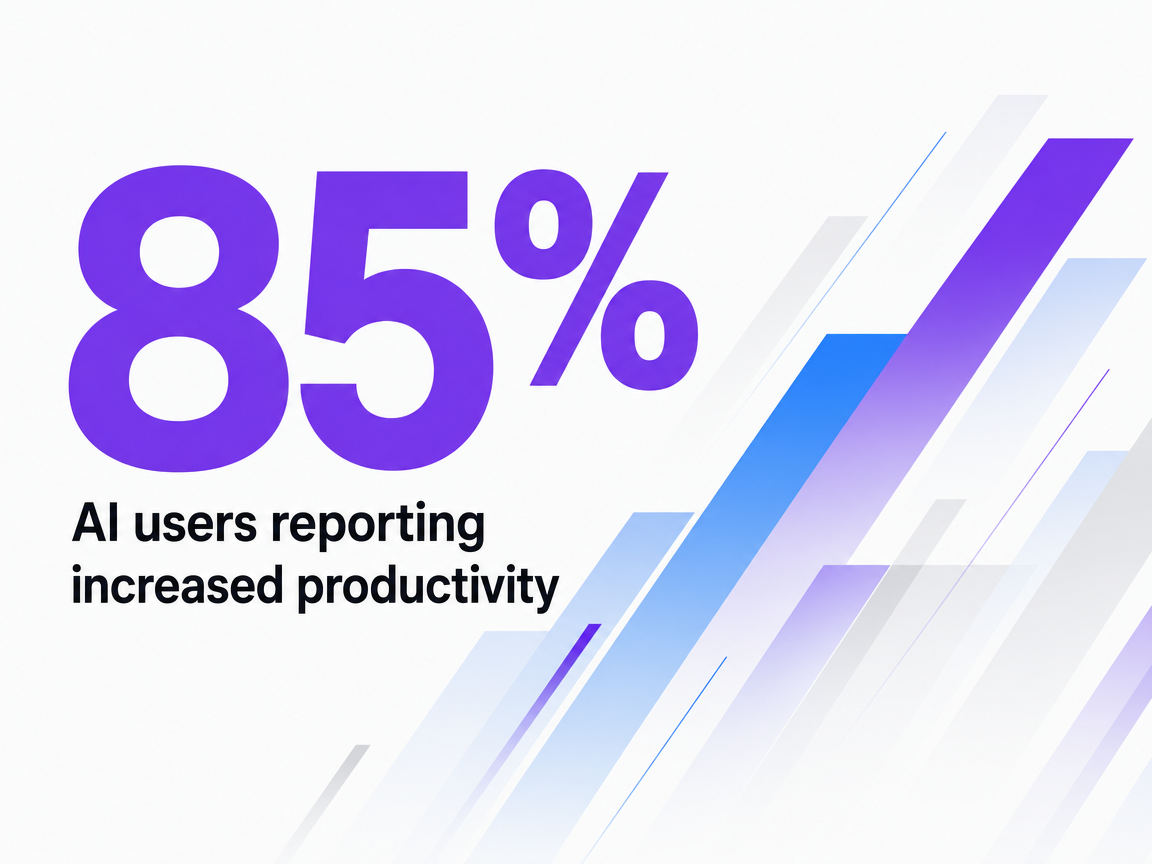 AI users reporting increased productivity
AI users reporting increased productivity
SEO platforms: replacing the retainer's organic line item
The organic line on an agency SOW usually funds three things: a technical audit refreshed quarterly, a keyword and content plan, and a monthly reporting rhythm that reconciles rankings, traffic, and conversions. SEO platforms now cover all three natively, which is why this line item has been the first to move on most VPs' consolidation lists.
Modern platforms in this category handle crawl diagnostics, keyword clustering, on-page recommendations, backlink monitoring, and rank tracking in a single environment. The work that once required a fractional SEO strategist producing a monthly deck is now surfaced continuously as prioritized tasks—broken canonicals, thin pages, cannibalization, schema gaps—with the reasoning attached. The academic literature on integrated digital infrastructures supports the pattern: unified data environments let in-house teams manage decisions across channels that previously depended on external specialists to coordinate 4.
What SEO platforms do not replace is judgment about which topics deserve investment and how to structure a content system around them. That is where the category gets misused. Teams that treat the platform as a task list churn through low-value optimizations while missing the strategic questions—cluster architecture, page intent, internal linking hierarchy—that actually move rankings. The retainer used to hide that judgment inside a strategist's hours. On a platform, the judgment has to sit with the VP or a designated in-house owner.
The operational move this quarter is to separate the technical SEO work from the strategic SEO work on the current retainer. The technical work migrates cleanly to a platform. The strategic work either moves to a coordinated AI execution layer that connects SEO recommendations to content production, or it stays with a single senior contractor at a fraction of the retainer cost.
Paid media platforms: replacing the media buyer's markup
Media buyer markup is the easiest line item to defend in a bull market and the hardest to defend in a scrutinized budget review. Agencies typically charge 10% to 20% of ad spend, layered on top of platform costs, in exchange for campaign build, creative iteration, bid management, and reporting. On a $40,000 monthly ad budget, that is $4,000 to $8,000 a month for work the ad platforms themselves have automated substantial portions of.
Google's Performance Max, Meta's Advantage+, and LinkedIn's Predictive Audiences already run bid strategies, audience expansion, and creative rotation algorithmically. The remaining human work is creative production, offer strategy, audience hypothesis testing, and reading the results well enough to know when the algorithm is optimizing toward the wrong outcome. Paid media platforms in the retainer-replacement category add a layer of cross-channel budget allocation, creative performance analysis, and campaign governance on top of what the ad networks do natively.
The trap here is the reporting deck. Agencies keep paid media retainers alive by producing a monthly narrative that in-house teams struggle to reproduce. A paid media platform with native reporting and a coordinated creative pipeline collapses that narrative into a live dashboard.
For a VP running paid at scale, the decision is whether the creative and strategic work justifies a specialist retainer or whether it can be absorbed by an AI execution platform that produces ad variants, landing pages, and offer tests on the same approval loop as the rest of the marketing function. The markup has to earn its keep against that alternative every quarter.
Social and community platforms: replacing the community manager retainer
Social retainers usually fund three deliverables: an editorial calendar, scheduled publishing across two to four channels, and light engagement monitoring. The community manager retainer sits at $3,000 to $8,000 a month for what is, operationally, calendar management and copy production with a response SLA attached.
Social and community platforms cover the mechanical work end to end—content scheduling, multi-account publishing, engagement inbox, listening, approval workflows, and analytics. AI-enabled versions of these platforms now draft post variants, adapt copy across networks, and surface engagement priorities based on account value. Harvard Professional & Executive Education describes this shift as AI reducing time spent on repetitive social media and CRM work while enabling personalization at scale 5. AACSB frames the broader pattern: AI, big data, and automation have moved from optional to essential in the marketer's toolkit 6.
What still requires human judgment is voice, timing, and the response calls that carry reputational weight—an unhappy client in a regulated vertical, an executive comment thread, a piece of content that lands sideways. Governance matters here more than in most categories because a social post ships in seconds and cannot be quietly reworked.
The practical move is to replace the community manager retainer with a platform that handles scheduling and drafts, paired with a designated internal owner who approves anything above a low-stakes threshold. The AI execution layer feeds the calendar. A human owns the accounts.
Backlink and digital PR platforms: replacing the outreach team
Backlink retainers are the SOW line most vulnerable to quiet failure. A team of outreach specialists sends pitches, tracks responses, and reports monthly on placements—many of which are low-authority directories or link exchanges that do little for the domain. The retainer keeps running because nobody on the client side has time to audit the quality of what is being placed.
Backlink and digital PR platforms in this category surface prospect lists, automate personalized outreach, track response rates, and score placement quality against domain authority and topical relevance. They do not replace the judgment call on which publications matter for a legal, healthcare, or home services brand. They replace the manual work of building the list, sending the pitches, and tracking the pipeline.
The realistic split is straightforward. Cold outreach at volume moves to a platform. High-value digital PR—the earned placement in a trade publication, the analyst briefing, the guest column in a regional business journal—stays with a specialist, either in-house or on a project basis rather than a retainer.
For a VP, the audit is more important than the platform choice. Pull the last six months of placements from the current outreach retainer, score them against domain authority and topical fit, and calculate the cost per usable link. That number decides whether the retainer moves, shrinks, or ends.
Call intelligence and attribution platforms: replacing the reporting deck
The reporting deck is the last thing agencies give up because it is the artifact that justifies the rest. A well-built deck stitches together ad platform data, GA4, CRM stages, and phone calls into a narrative that explains what the retainer produced. Without it, the invoice looks abstract.
Call intelligence and attribution platforms replace that deck by producing the underlying data in real time. Call intelligence platforms record inbound calls, transcribe them, classify lead quality, and tie qualified conversations back to the campaign, keyword, or landing page that generated them. Attribution platforms connect ad spend to pipeline stages and revenue through connected data sources. For high-stakes service verticals—law, healthcare, dental, home services, senior living—where the phone remains the primary conversion event, call intelligence is often the difference between defensible ROAS and a monthly guess.
The peer-reviewed evidence on digital infrastructure reshaping marketing decisions applies directly here: integrated data environments let in-house teams manage pricing, channel, and customer interactions that used to require external coordination 4. Once the data is native to the team, the reporting narrative belongs to the VP, not to an account manager.
The decision this quarter is whether the monthly deck is worth what it costs. If the underlying platforms produce the same data continuously, the deck is a rebill of dashboards the team could own directly.
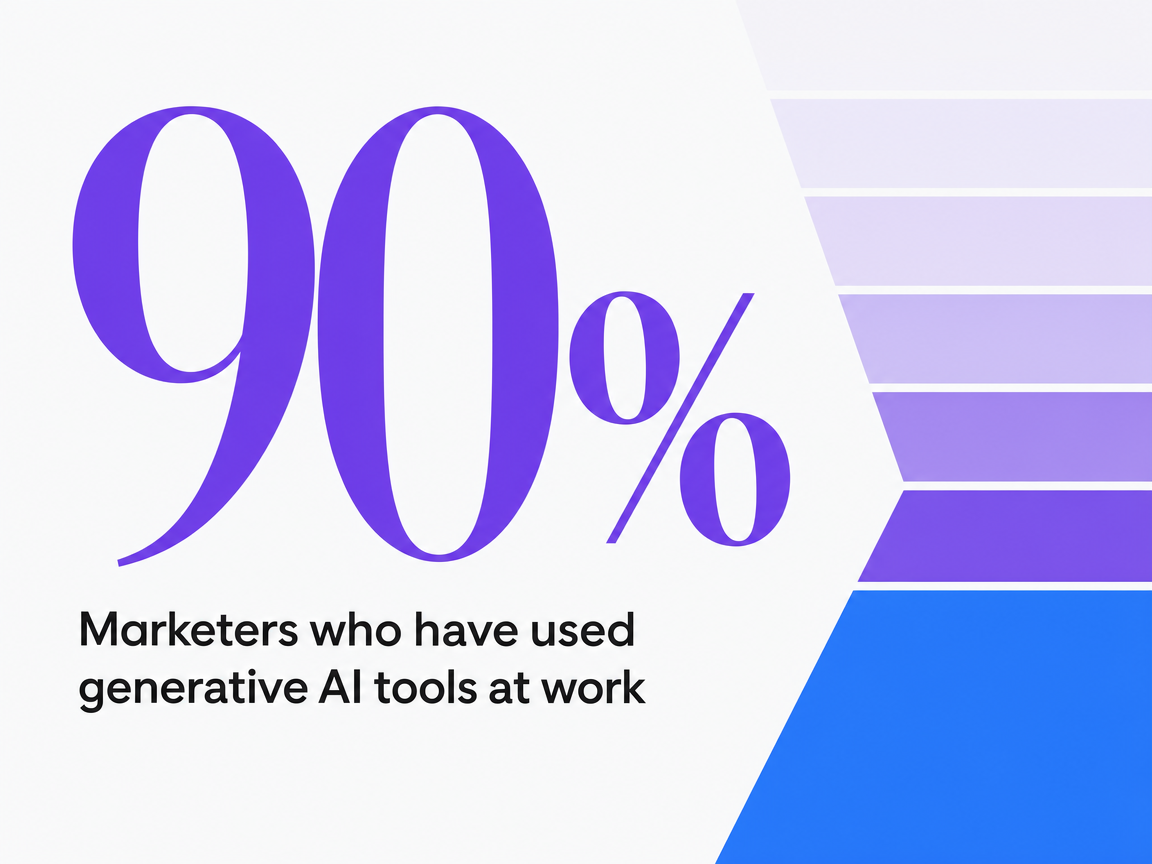 Marketers who have used generative AI tools at work
Marketers who have used generative AI tools at work
Evaluate AI Platforms Built to Outperform Traditional Agency Retainers
Speak with a solutions expert to benchmark automated, multi-channel execution platforms against your current agency model and discover which tech stack drives measurable pipeline impact with fewer resources.
If you manage multiple locations: the consolidation math
This section is for VPs running marketing across multi-location portfolios—DSO groups, home services franchises, senior living operators, regional law and healthcare networks. Single-location operators can skip ahead.
At portfolio scale, the retainer stack multiplies. A dental group with 40 locations rarely pays one $30,000 retainer. It pays a content shop, an SEO firm, a paid media agency, a reputation vendor, and a call tracking add-on—often replicated per region or per brand. The line items compound faster than revenue does, and the reporting fragments across five account managers who do not share a dashboard.
Wharton's productivity modeling puts a defensible floor under the consolidation case: current generative AI deployments deliver average labor cost savings of roughly 25%, with a projected trajectory toward 40% as adoption matures 3. That is the range the retainer-replacement math has to clear. Anything above it means the platform stack is underperforming what the research predicts. Anything below it means the operator has room to consolidate further.
The table below uses variables rather than invented figures. The only fixed anchor is the disclosed $599/month subscription for the coordinated AI execution layer referenced in this article's category. Every other line is a range the operator plugs in from their current SOWs.
| Function | Retainer SOW (current) | Platform stack (replacement) |
|---|---|---|
| Content production | $X,000/mo per brand | Coordinated AI execution: $599/mo |
| SEO strategy & tooling | $X,000/mo | SEO platform: $Y/mo |
| Paid media management | 10–20% of ad spend | Ad platform native + creative from execution layer |
| Social & community | $X,000/mo | Social platform: $Y/mo |
| Backlinks / digital PR | $X,000/mo | Outreach platform: $Y/mo + project-based PR |
| Call intelligence & attribution | Bundled in reporting | Call platform: $Y/mo per location |
Two calculations decide the move. First, total the current retainer stack across all locations and divide by revenue to get retainer-to-revenue percentage. Second, model the platform stack against the same location count and apply the 25% Wharton floor as the minimum acceptable delta. If the platform math does not clear that threshold, the consolidation is not ready. If it clears it comfortably, the retainer is subsidizing coordination overhead the platforms already handle natively.
Governance is the reason this works at all
Every category above collapses without a governance layer. A platform stack that publishes content, launches campaigns, sends outreach, and posts to social channels without a human checkpoint is not a retainer replacement. It is a liability engine running at machine speed. The reason agencies survived as long as they did was not creative superiority. It was that a human account team sat between the client's brand and anything that shipped.
The AMA's practitioner survey surfaces the same concern beneath the adoption numbers: marketers using generative AI cite quality, ethics, and creative integrity as their top reservations 2. Those reservations are not solved by better models. They are solved by workflow design that forces a review step before execution. Approval-first architecture—recommendation, human sign-off, then automated execution—is what lets a VP consolidate six retainer functions without ceding editorial or legal control.
For regulated verticals, this is not optional. A behavioral health post that misstates a clinical claim, a law firm ad that trips a state bar rule, a dental practice landing page that overstates outcomes—each one is a governance failure the platform cannot catch on its own. The reason the retainer-replacement math works is that the human review stays exactly where it always belonged: on the VP's team, not in an agency queue.
See How Top Brands Replace Retainers With AI-Driven Marketing Execution
Access a unified platform to coordinate content, SEO, and multi-channel campaigns—measured by pipeline, conversion, and cost efficiency. Benchmark your team’s output against industry leaders using real-time analytics and approval-first automation.
The decision waiting on the VP's desk this quarter
The retainer renewal is on the calendar. The finance team wants the number down. The CEO wants pipeline up. Nothing about that equation gets easier by waiting another quarter for the platform category to mature—it already has, and the CMO surveys tracking budget flow show the reallocation is well underway 7.
The move is not to cancel every retainer on Monday. It is to run one honest audit before the next renewal signs. Pull the current SOW. Map each line item to the platform category that now absorbs it. Score the ones where governance actually requires a human in the loop versus the ones where the retainer is charging for coordination the platforms handle natively. What is left after that audit is either a smaller, sharper retainer or a project-based specialist engagement—not a full-service commitment renewed by default.
Vectoron is one option in the coordinated AI execution category for VPs ready to consolidate content, SEO, paid, social, backlinks, and call intelligence behind a single approval queue. The decision itself belongs to the operator, not the platform.
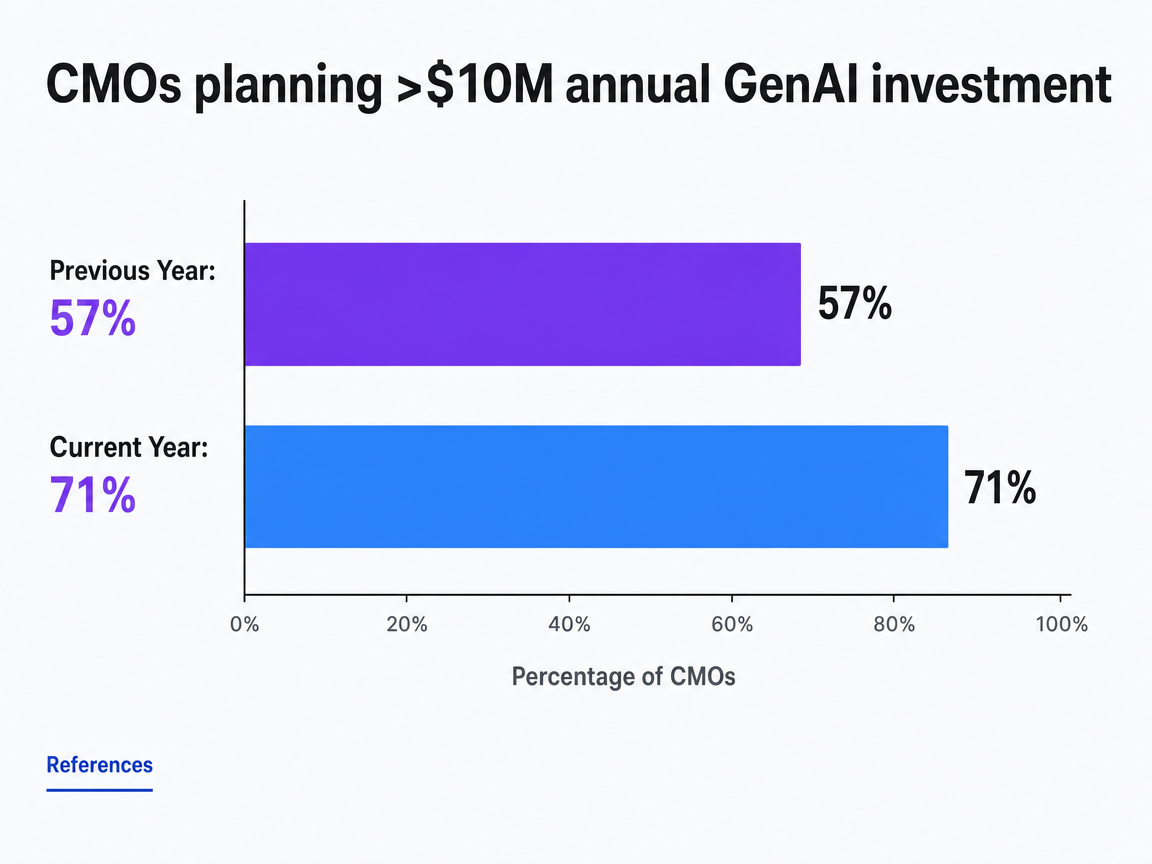 CMOs planning >$10M annual GenAI investment
Comparison of the percentage of CMOs planning to invest more than $10 million annually in GenAI over the next three years, showing growth from the previous year (57%) to the current year (71%).
Frequently Asked Questions
References
- 1.The economic potential of generative AI: The next productivity frontier.
- 2.Generative AI Takes Off with Marketers.
- 3.The Projected Impact of Generative AI on Future Productivity Growth.
- 4.How Digital Technologies Reshape Marketing: Evidence from a Retailer.
- 5.AI Will Shape the Future of Marketing.
- 6.The Transformation of Marketing in the Digital Age.
- 7.2026 CMO Survey | Deloitte US.
- 8.The CMO Survey: Marketers Spend on New Technologies as They Battle Usage and Impact.