Key Takeaways
- Tier one bid and budget automation tools like Optmyzr and Adalysis compress CPA at the margin but cannot reach the larger pool of non-converting query spend or shift dollars across channels.
- Tier two cross-channel orchestrators such as Skai, Marin, and SA360, paired with attribution layers like HockeyStack and Dreamdata, tie spend to closed revenue and govern the 70/30 Smart Bidding split 6.
- Tier three agentic systems close all four stages of the optimization loop—signal detection, diagnosis, test design, and reallocation—and treat Performance Max and AI Max as components rather than destinations 4.
- Budget size is the cleanest tier filter: $20K–$80K fits tier one, $80K–$300K rewards tier two orchestration plus attribution, and above $300K agentic systems change what one demand gen lead can govern.
The Wasted-Spend Math That Changed What 'Management' Means
An analysis of more than 150 B2B SaaS Google Ads accounts found that 57% of every dollar spent goes to search terms that never convert 3. That number, drawn from in-account query data rather than survey self-reports, is the rhetorical hinge of any honest conversation about PPC management software in 2026. It reframes what the category is supposed to do.
For most of the last decade, PPC management platforms were judged on bid rules, dayparting logic, script libraries, and dashboard density. Those features still ship in every product brochure. They are not what SaaS demand gen teams need scored anymore.
The job has shifted because the cost stack has shifted. Median non-brand SaaS CPCs now sit between $8.50 and $14.00, while top-quartile accounts pull that down to $5.00 to $8.50 through Quality Score discipline and aggressive negative keyword work 2. At $95 search CPA on the 2025 B2B SaaS baseline 1, every percentage point of non-converting query spend translates directly into pipeline that never showed up.
A management platform that cannot find, diagnose, and shut off that waste is not managing anything. It is reporting. The ranking that follows separates tools by how much of the waste they actually remove, how reliably they connect spend to revenue at SaaS price points, and how much of the optimization loop they close without a human refreshing a tab.
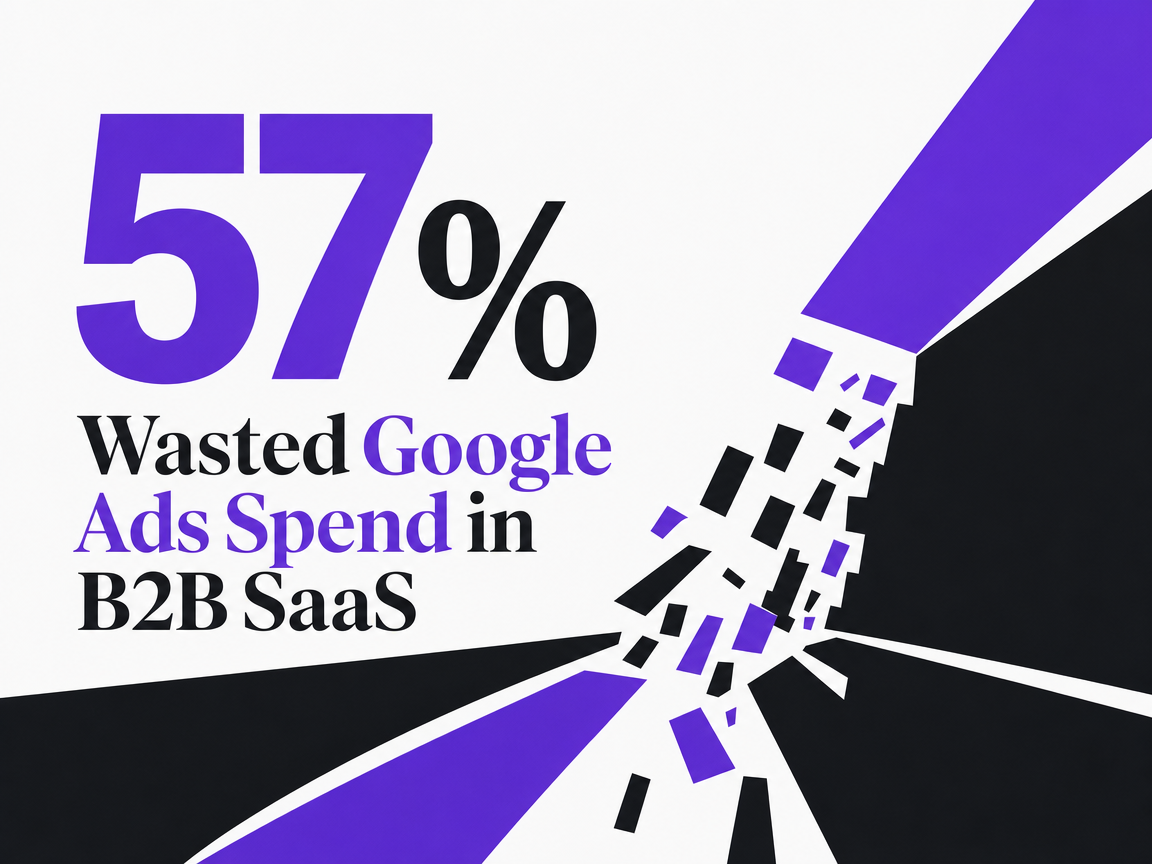 Wasted Google Ads Spend in B2B SaaS
Wasted Google Ads Spend in B2B SaaS
How This Ranking Is Built
Three Jobs-to-be-Done, Not One Feature Checklist
Most listicles in this category collapse three distinct categories of software into a single ranked list. The result reads like a feature bake-off between products that solve different problems for different operators at different budget sizes.
This ranking separates them. Tier one is bid and budget automation: rules engines, script libraries, and dayparting tools that adjust what a human strategist already set up. Tier two is cross-channel orchestration paired with revenue attribution, the layer that decides where the next dollar should go across Google, LinkedIn, and Meta and ties spend back to closed pipeline. Tier three is agentic AI execution, where systems run the diagnosis, test, and reallocation loop without a human refreshing the tab.
The distinction matters because the 96% of marketers now using AI are not all using it the same way 7. A team buying a bid manager and a team buying an agent are solving different problems. Comparing them on a shared feature grid hides that. Ranking by tier surfaces it.
The Economics a CFO Will Actually Ask About
Tool selection conversations stop being abstract the moment a finance partner asks what gets recovered. The arithmetic uses only sourced inputs: the 57% non-converting query share from 150-plus B2B SaaS account analysis 3, the $95 search CPA on the 2025 B2B SaaS baseline 1, and the $800 to $2,500 cost per SQL range from 2026 SaaS benchmarks 2.
At a $100,000 monthly paid search budget, the implied recoverable pool sits at roughly $57,000 if the account mirrors the 150-account average. Not all of that pool is realistically reachable. Some queries waste spend because of intent mismatch a tool can identify; some waste it because the offer itself does not convert, which no bidder fixes.
| Input (sourced) | Value | Monthly impact on $100K budget ||---|---|---|| Non-converting query share 3| 57% | $57,000 in spend exposed to optimization || Search CPA baseline 1| $95 | ~600 conversions recoverable if half the pool re-deploys at CPA || Cost per SQL range 2| $800–$2,500 | ~11 to 35 incremental SQLs from a $28,500 redeployment |
The table is the conversation a demand gen lead should be prepared to have. It also sets the bar each tier in this ranking is judged against: how much of that $57,000 pool the software actually reaches, and at what attribution fidelity it confirms the redeployment paid back.
Scoring Dimensions: Waste Removal, Revenue Attribution, Autonomy
Each platform in the tiers ahead is evaluated on three dimensions, scored against what the supplied research treats as table stakes for SaaS PPC in 2026.
Waste removal measures how aggressively the platform finds and shuts off non-converting query spend, audience overlap, and budget leakage. Negative keyword automation and CRM-linked exclusions sit here, since SaaS benchmark guidance ties wasted-click prevention directly to downstream revenue health 13.
Revenue attribution measures whether the tool reports on pipeline and closed revenue, not lead volume. The 36% PPC ROI and four-month payback that distinguishes top-quartile B2B SaaS programs is only visible to teams whose stack ties spend to revenue, not form fills 10. ROAS expectations vary by channel, funnel stage, and ACV, so the attribution layer needs to handle that nuance rather than report a single blended number 14.
Autonomy measures how much of the optimization loop runs without a human in the seat. A bid rule that fires nightly is not the same as a system that diagnoses, tests, and reallocates on its own.
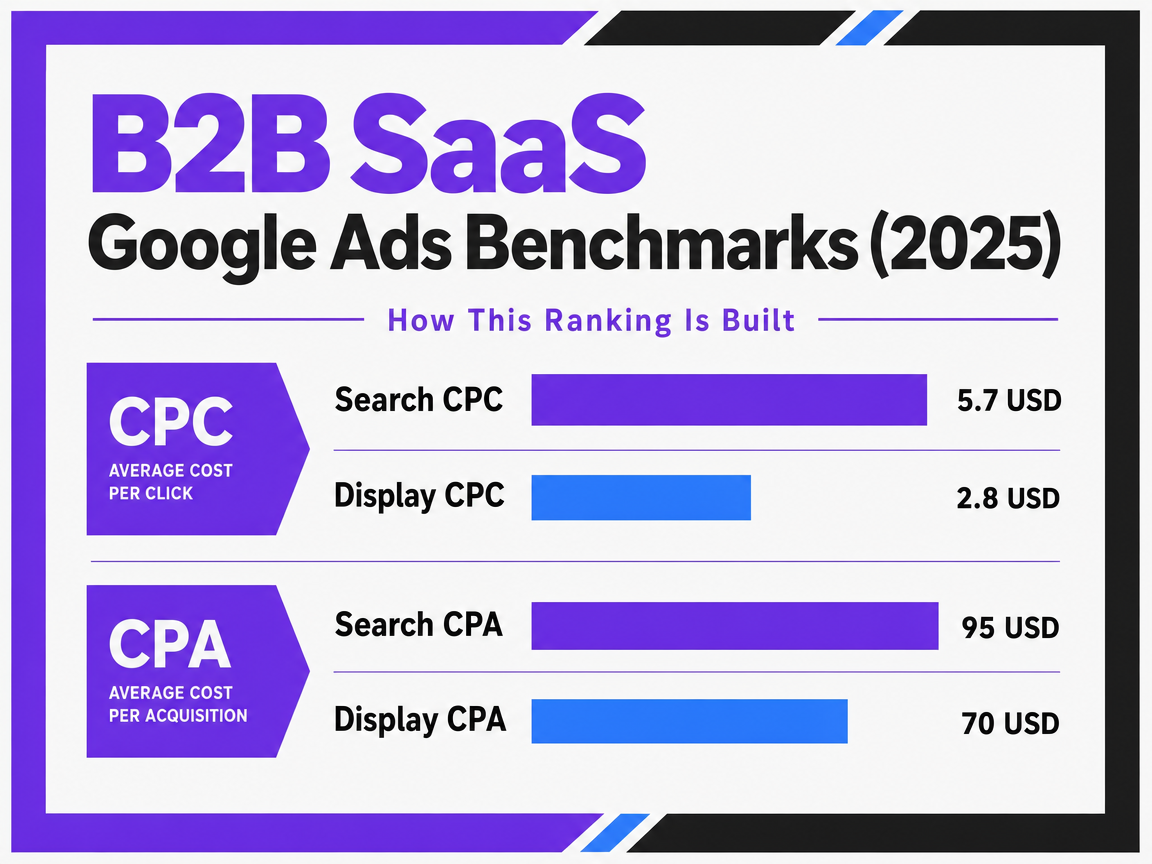 B2B SaaS Google Ads Benchmarks (2025)
Provides average Cost Per Click (CPC) and Cost Per Acquisition (CPA) for B2B SaaS on Google Ads for Search and Display networks in 2025.
Trial Full-Scale PPC Optimization for SaaS Teams
Run live PPC campaigns and evaluate performance improvements with unrestricted platform access for seven days.
Tier One: Bid and Budget Automation Platforms
What This Tier Actually Does
Bid and budget automation is the oldest layer in the PPC management stack and still the most populated. These platforms sit on top of Google Ads, Microsoft Ads, and sometimes the paid social channels, executing rules a strategist defines: pause keywords below a CTR floor, raise bids on converters within an audience segment, throttle spend when daily pacing drifts, surface n-grams hiding in search query reports.
The category is well-defined. PPC automation tools, as the broader literature describes them, use rules, algorithms, or AI to handle bid adjustments, budget allocation, and keyword optimization with minimal manual input 9. That definition is honest about what these products do well and what they leave on the table. They accelerate decisions a human has already made. They do not decide what to test, what to kill, or where the next dollar belongs across channels.
Optmyzr, Adalysis, and the Rules-Plus-Scripts School
Optmyzr, Adalysis, Opteo, and a handful of script libraries dominate this tier. Their core value proposition is the same: codify what a senior PPC strategist would do at 7 a.m. on Monday and run it nightly. Search term scrubbers flag wasted-click candidates against negative lists. Bid simulators recommend tROAS or tCPA targets based on recent conversion velocity. Ad copy testers flip RSAs through statistical significance gates. Quality Score auditors highlight ad groups bleeding from poor expected CTR.
For SaaS demand gen teams running disciplined search programs in the $20,000 to $150,000 monthly range, this tier earns its seat. The negative keyword work alone, when paired with CRM-linked attribution that ties closed revenue back to query, addresses the specific guidance SaaS benchmark writers give: run negative keyword lists and audience exclusions to prevent wasted clicks, and use CRM-linked attribution to track which CPC sources deliver closed revenue 13.
The ceiling shows up in scope. A rule that lowers bids on a non-converter does not ask whether the offer is wrong, whether the landing page is the choke point, or whether LinkedIn would have caught the same buyer at half the cost. Strategists who use these tools well treat them as fast hands. The brain still has to show up.
Where Tier One Stalls on SaaS Economics
Tier one runs into a math problem at SaaS price points. The 2025 B2B SaaS Google Ads baseline puts average search CPC at $5.70 and display CPC at $2.80, with average search CPA at $95 and display CPA at $70 1. Bid automation can compress those numbers at the margin, but it cannot manufacture demand, fix a weak offer, or shift dollars to a channel it does not control.
The ceiling tightens further when non-brand SaaS clicks now median between $8.50 and $14.00 2. At those prices, the difference between an account running well and an account running poorly is rarely a bid setting. It is which queries enter the auction in the first place, which audiences see the ad, and which closed deals the attribution model credits.
A rules engine that shaves 8% off CPA on a $100,000 monthly budget recovers real money. It does not reach the larger pool of non-converting query spend that the next two tiers are built to address. Demand gen leads buying tier one should buy it for what it is: a force multiplier on an existing strategist, not a substitute for cross-channel judgment or revenue-grade attribution.
See How Leading SaaS Teams Automate PPC Optimization with AI
Request a personalized walkthrough of autonomous PPC management workflows that eliminate wasted spend, increase test velocity, and centralize campaign oversight for multi-brand or multi-location teams.
Tier Two: Cross-Channel Orchestrators and Attribution Layers
Skai, Marin, and SA360 as Orchestration Surfaces
Tier two starts where tier one runs out of vocabulary: the channel boundary. Skai, Marin Software, and Google's Search Ads 360 are the legacy enterprise platforms in this layer, joined more recently by lighter cross-channel managers built around APIs into Google, Microsoft, LinkedIn, and Meta. The shared premise is that a paid budget should be governed from one surface, not three browser tabs and a spreadsheet.
The surface matters because B2B social is no longer a sidecar. LinkedIn and Meta dominate B2B social ad spending, and B2B social is on track to represent nearly half of all digital ad investment 15. A SaaS demand gen team running $80,000 in Google search alongside $40,000 in LinkedIn ABM and $20,000 in Meta retargeting cannot govern that mix from inside Google Ads. The orchestration surface exists to normalize bids, pacing, audiences, and reporting across channels that each speak a different dialect.
SA360 carries an additional advantage inside Google-heavy stacks: it inherits Smart Bidding signals and coexists natively with Performance Max, the AI-enhanced campaign type that identifies channels and placements automatically 16. Skai and Marin compete on breadth and on retail-media or LinkedIn depth that SA360 does not match. None of these tools, on their own, decide whether the next $10,000 belongs in search or in a LinkedIn conquest play. They give a strategist the controls to make that call faster.
HockeyStack, Dreamdata, and Revenue Attribution as the Real Job
Orchestration without attribution is a faster way to spend the wrong money. The tools that distinguish tier two from tier one are the revenue attribution layers: HockeyStack, Dreamdata, Factors.ai, and the CRM-linked stitching that ties paid clicks to opportunities, pipeline, and closed revenue inside Salesforce or HubSpot.
This is where the SaaS economics actually break open. B2B SaaS benchmark guidance is explicit on the point: run negative keyword lists and audience exclusions to prevent wasted clicks, and use CRM-linked attribution to track which CPC sources deliver closed revenue, not which sources deliver form fills 13. The teams hitting 36% PPC ROI with a four-month payback are not the teams with the prettiest dashboards. They are the teams whose attribution model knows which campaign sourced the deal that closed last quarter 10.
Acceptable ROAS in B2B varies by channel, funnel stage, and ACV 14, which is why a single blended ROAS column in a Google Ads UI underprices the question. A LinkedIn campaign feeding mid-funnel demos at a $50,000 ACV is not held to the same ROAS as a branded search campaign closing self-serve signups. Attribution layers carry that nuance into reporting. They also surface the queries, audiences, and creatives that look fine on click-through but never appear in the closed-won column, which is the operational definition of waste worth removing.
The Smart Bidding Allocation Question
Tier two platforms inherit a structural decision from Google: how much of the budget runs on Smart Bidding versus manual control. The trend literature is unusually direct on the answer, recommending Smart Bidding for 70 to 80% of spend while keeping 20 to 30% in manual campaigns as a control group and skill-building sandbox 6.
That split is not a compromise. It is a diagnostic posture. The manual portion exists to detect when Smart Bidding drifts, to test new offers without contaminating an algorithm's learning phase, and to give strategists a clean read on what the auction looks like without an AI layer in the middle. Cross-channel orchestrators that report on both pools, side by side, give a demand gen lead the evidence to defend the allocation when a finance partner asks why 20% of spend is not on autopilot.
The practical takeaway for tier two evaluation: a platform earns its keep when it shows the manual-versus-automated delta in closed revenue terms, not just CPA.
Tier Three: Agentic Systems That Run the Optimization Loop
What Makes a System Agentic Rather Than Automated
The line between automation and agency is not a marketing distinction. It is a workflow one. An automated tool executes a decision a strategist has already made: lower the bid when CPA exceeds $120, pause the keyword when CTR drops below 1.2%, reallocate budget when a campaign hits 90% of daily pacing. An agentic system decides what the next decision should be, then executes it, then evaluates whether the decision worked.
The optimization loop has four stages:
- Signal detection
- Diagnosis
- Test design
- Reallocation
Tier one tools close the fourth stage. Tier two tools close the third and fourth. An agentic system closes all four, including the diagnosis step that is hardest to codify, because it requires reasoning across channels, query data, audience overlap, landing page behavior, and CRM-stage progression at the same time.
The efficiency stakes show up in the cost data. Median non-brand SaaS CPC sits between $8.50 and $14.00, while top-quartile accounts pull it down to $5.00 to $8.50 through disciplined Quality Score work and aggressive negative keyword management 2. That gap is the prize. Closing it on a $100,000 monthly budget at the median click price translates to thousands of additional clicks at the same spend, which is exactly the kind of compounding diagnostic work an agent is built to run continuously.
AI Max and Performance Max: What Agentic Tools Must Coexist With
Any agentic system operating on Google inventory inherits two AI layers it did not build. Performance Max identifies channels and placements automatically and routes spend toward the inventory its model predicts will convert 16. AI Max for Search applies query expansion, intent matching, and Smart Bidding inside search campaigns, with creative serving handled by responsive search ads that test combinations in real time 5.
The coexistence question is not whether to use these layers. It is how to govern them. AI Max performance data from an analysis of 600-plus accounts shows a median uplift of 13% in conversion value, paired with a median 16% higher cost per incremental conversion, and outcomes spanning from 42% above baseline to 35% below it 4. That variance is the operational story. A platform that hands AI Max the keys and reports a blended CPA at month-end is hiding the distribution. A demand gen lead reading the same number does not know whether the account landed in the +42% tail or the -35% tail until pipeline data confirms it weeks later.
Agentic systems earn their tier by treating Google's AI layers as components, not destinations. They feed those layers first-party conversion data, run holdout tests against manual control campaigns, and read the variance back into reallocation decisions before the next budget cycle. The tools that pass off the optimization to Performance Max and call it strategy are not agentic. They are intermediaries.
The Emerging Field: Vectoron and Peer Systems
The agentic tier is the youngest in the ranking and the one where category language is still settling. The shift the trend literature describes is concrete: 96% of marketers now use AI, and the 2026 movement is away from analytics tools toward AI agents that orchestrate campaigns, qualify leads, and personalize buying-group touchpoints without human micro-management 7. The platforms in this tier are built to that brief rather than retrofitted to it.
The field includes generalist AI marketing platforms with PPC modules, vertical agents focused on paid search alone, and broader systems that coordinate PPC alongside SEO, content, and backlink work from a single account-level plan. The shared capability is continuous execution: the system reads account data from Google Ads, Search Console, GA4, and CRM, recommends prioritized actions, runs the approved work through production workflows, and reports on revenue rather than form fills. The 36% PPC ROI with four-month payback that distinguishes top B2B performers is the kind of outcome these systems are scored on, because that benchmark is only reachable when spend, attribution, and execution sit on the same plane 10.
Vectoron sits in this tier. Demand gen leads evaluating the category should pressure-test any agentic system on three points:
- whether it reports revenue
- whether it shows the manual control delta
- whether the approval workflow keeps a human in the loop where the decision warrants one
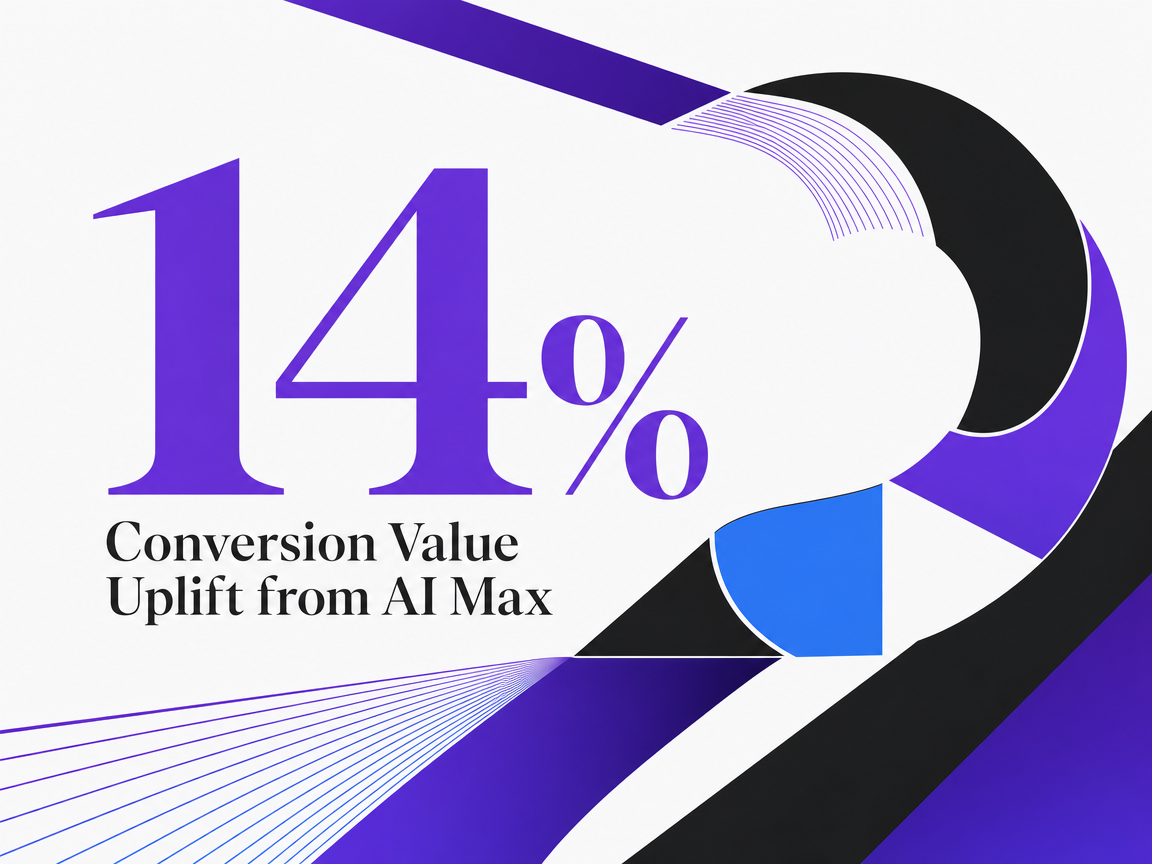 Conversion Value Uplift from AI Max
Conversion Value Uplift from AI Max
Access Autonomous PPC Optimization Backed by Continuous AI Analysis
Gain direct access to an AI-driven platform that identifies wasted ad spend, runs automated optimization tests, and consolidates multi-account reporting—purpose-built for SaaS and agency teams managing complex PPC portfolios.
Picking a Tier for the Budget on the Table
Budget size is the cleanest filter for tier selection. SaaS demand gen teams running $20,000 to $80,000 a month in concentrated Google search benefit most from tier one, where a disciplined strategist plus a rules engine like Optmyzr or Adalysis can compress CPA on a known auction without paying for orchestration capacity that never gets used. The math at that level rewards focus over breadth.
Between $80,000 and $300,000, the channel mix usually breaks the single-platform assumption. LinkedIn ABM, Meta retargeting, and Google search start competing for the same incremental dollar, and the orchestration plus attribution layer in tier two earns its license cost by making that comparison legible. The 70/30 Smart Bidding split 6becomes easier to govern when manual and automated pools report side by side in revenue terms.
Above $300,000 monthly, or for teams reporting against the 36% PPC ROI and four-month payback bar 10, the constraint stops being software. It becomes human capacity to run the diagnosis-and-test loop continuously. That is the threshold where agentic systems like Vectoron, which read account signals and execute approved work without account-manager handoffs, change what one demand gen lead can govern alone.
Frequently Asked Questions
References
- 1.B2B SaaS Google Ads Benchmarks for 2025.
- 2.SaaS Google Ads Benchmarks 2026: CPC, CPL, CTR, and ....
- 3.Google Ads for B2B SaaS: Strategy Guide 2026.
- 4.The Ultimate Guide to AI Max for Google Search.
- 5.The Future of Paid Search: Leveraging AI in Google Ads & SA360.
- 6.6 PPC Trends Reshaping Performance Marketing in 2026.
- 7.13 B2B Marketing Trends for 2026.
- 8.PPC Benchmarks: Compare & Measure Paid Ads Performance.
- 9.PPC Automation Tools: Save Time and Boost Performance.
- 10.Best B2B SaaS Paid Ad Optimization Tools 2026 (Ranked).
- 11.B2B SaaS Marketing Statistics, Studies, and Trends for 2024.
- 12.Ultimate Guide to PPC Marketing for SaaS & Tech in 2026.
- 13.Top 8 Advertising Benchmarks for SaaS in 2026.
- 14.B2B ROAS Benchmarks: High-Performing Campaigns in 2025.
- 15.B2B Marketing Trends of Fall 2024.
- 16.Performance Max: AI-Enhanced Google Ads That Convert.