
Key Takeaways
- Reconcile rank tracker output against first-party GSC and GA4 data before it reaches a client, since modeled positions and analytics tools routinely produce diverging numbers for the same URLs 5.
- Score integration depth across GSC, GA4, CRM, and offline conversion sources so position movement can be traced to booked revenue without an analyst rebuilding the join each month.
- Weight governance and privacy resilience heavily for regulated verticals, because consent-driven measurement decay reduces real pageviews and revenue captured by marketing mechanisms over time 7.
- Evaluate AI features—forecasts, anomaly detection, recommendations—using the NIST AI Risk Management Framework's Govern, Map, Measure, Manage functions before their outputs enter client conversations 3.
- Score reporting throughput per account on native white-label delivery, automated variance flags, API access, and annotation, because analyst hours across a full book determine margin.
- Apply a weighted rubric on a live client account rather than a demo, anchoring each 1-to-5 score to written definitions and enforcing hard minimums on fidelity and integration.
- Calculate reporting cost per client per month using analyst hours, blended cost, and client count to expose tool choice as a labor decision across the portfolio.
- Add call intelligence to close the gap between ranked keywords and booked revenue in phone-heavy verticals, where GA4 records bounces while clients record attributed consultations.
Why Position Data Alone No Longer Defends a Retainer
Client procurement teams stopped accepting keyword position screenshots as proof of value several renewal cycles ago. The Head of SEO at a 25-client agency now sits across from a CFO who wants to see clicks that became consultations, not a movement from position 7 to position 4 on a bracketed keyword set. That expectation shift is visible in how senior marketers now benchmark measurement: media mix modeling and revenue-linked ROI have become the reference standard for what counts as accountable reporting 11.
The gap between visibility and commercial outcome is the entire argument. A federal awareness campaign in Newark delivered 17.6 million impressions and 23,600 clicks, a 0.13% click-through rate, and even that is only the top of a much steeper drop-off before any conversion is booked 12. Rank tracking software that stops at impressions and positions leaves the agency to reconstruct the rest of that funnel by hand every reporting cycle.
What follows is not a vendor roundup. It is an evaluation framework built around five criteria a Head of SEO can defend to a client and apply consistently across a book of business:
- data fidelity against first-party sources,
- integration depth with conversion and revenue systems,
- governance and privacy resilience,
- AI feature trustworthiness under a recognized risk framework, and
- reporting throughput per account.
Tools that only report positions are cost centers. Tools that feed a governed measurement loop tied to booked revenue protect margin.
The Five-Criterion Evaluation Rubric
Data Fidelity Against First-Party Sources
Vendor-reported positions and estimated traffic volumes are modeled numbers. They come from a rank tracker's own crawl infrastructure, its assumed click-curve, and its keyword database, and they will not match what a client's Google Search Console and GA4 properties show for the same URLs in the same window. A peer-reviewed comparison of two widely used website analytics tools across 86 websites over 12 monthly measurement periods documented that different tools produced different numbers for apparently similar web metrics, even when instrumentation appeared consistent 5. That finding is not a rounding-error warning. It is a governance signal: any rank tracker output entering a client report must be reconciled against a first-party source before it lands in front of a stakeholder.
The practical test for fidelity has three parts:
- Does the vendor expose a documented methodology for how positions are polled, which locations and devices are sampled, and how personalization and SERP feature variants are handled?
- Does the tool ingest GSC clicks, impressions, and average position via the official API rather than reproducing them from third-party crawls?
- Does the platform support side-by-side variance reporting so an analyst can flag when tracked position and GSC-reported average position diverge beyond a set threshold?
Even the FTC's use of Google Analytics operates on aggregate dashboards with retention rules and governance controls rather than raw session-level trust 1. Agencies should apply the same discipline. A rank tracker that cannot be reconciled cheaply becomes an analyst tax: every client report requires manual spreadsheet work to defend the numbers when a client questions why the tracked position and the GSC average diverge.
Integration Depth With Conversion and Revenue Systems
A rank that never becomes a click, a click that never becomes a lead, and a lead that never becomes booked revenue are three different failure modes with three different remedies. The DEA 360 Newark campaign is a useful reference point on scale: 17.6 million impressions produced 23,600 clicks at a 0.13% click-through rate 12. Even before any post-click funnel exists, the visibility-to-action drop-off is roughly four orders of magnitude. A rank tracker that reports the impression side without integrating what happened after the click cannot explain any of the drop-off.
Integration depth should be scored on four connection points:
- GSC for clicks and impressions at the query and page level.
- GA4 for on-site events, conversions, and channel behavior.
- A CRM or booking system for lead-to-opportunity-to-revenue status.
- An offline conversion source, typically call tracking, for verticals where phone intake dominates.
If any of those four are missing, the tool is a reporting layer, not an ROI system.
The Harvard professional education framework on marketing analytics puts this plainly: analytics exists to define goals, select KPIs, and use platforms that can track those metrics to assess campaign effectiveness 14. EDHEC's summary reinforces the same three-part discipline of collecting accurate data, analyzing trends, and making data-driven decisions across channels 15. Rank position is one input into that system. When evaluating a vendor, the question is not "does it show positions?" It is "can position movement be traced to a client's booked revenue without an analyst rebuilding the join every month?"
Governance and Privacy Resilience as Attribution Decays
Privacy regulation and consent behavior degrade measurement infrastructure over time. An FTC-hosted economic evaluation of the GDPR estimated that marketing mechanisms reduce real pageviews and real revenue, showing that analytics and attribution outputs are sensitive to privacy-driven changes in how data is collected and used 7. Any tool an agency commits to for a multi-year retainer relationship needs to be assessed for how well its measurement continues to function as consent rates fall, as third-party identifiers narrow, and as regulators publish new guidance. The FTC has scheduled continued workshops on measuring consumer injuries and benefits from data collection, use, and disclosure, which signals that governance expectations will keep tightening rather than relaxing 6.
Three governance questions belong in the evaluation:
- Where does the tool store client data, and can the agency demonstrate the legal basis for that processing to its clients on request?
- Does the platform offer consent-mode ingestion, server-side event forwarding, or modeled conversion inputs when direct client-side signals are lost?
- Does the vendor publish a data processing addendum, retention schedule, and audit trail suitable for enterprise clients in regulated verticals?
Baldrige's criteria commentary is useful as an internal benchmark here because it treats performance measurement as a system embedded in organizational context, not a set of isolated dashboards 4. A rank tracker that produces clean numbers today but has no roadmap for privacy-degraded measurement is a depreciating asset. Weight this criterion higher for clients in healthcare, legal, and financial services, where consent posture and data residency will be scrutinized during any procurement review.
AI Feature Trustworthiness Under the NIST Risk Framework
Most enterprise rank trackers now ship AI features: forecasted position trajectories, anomaly detection on ranking volatility, automated content or on-page recommendations, and clustering of keywords into topic groups. Each feature is a small model whose outputs will end up in a client conversation. The NIST AI Risk Management Framework is designed to help manage risks to individuals, organizations, and society associated with artificial intelligence, and its four functions—Govern, Map, Measure, and Manage—provide a workable structure for evaluating whether those features are trustworthy enough to enter client-facing work 3.
Govern : Asks who inside the vendor and inside the agency owns the AI feature's outputs, and whether human approval is required before recommendations are executed on a client site.
Map : Asks what the feature is actually doing: what data it was trained on, what the failure modes are, and where the outputs could mislead.
Measure : Asks whether the vendor publishes accuracy, calibration, and stability metrics for the model over time, and whether the agency can validate those claims on its own client data.
Manage : Asks how the agency will monitor drift, retire the feature if quality degrades, and escalate when a recommendation produces a bad outcome on a client site.
A concrete test: ask the vendor for the confidence interval on a 90-day rank forecast for a sample keyword set, and ask what happens when actual performance falls outside that interval. A feature that cannot answer that question does not belong in a client report. The Baldrige emphasis on disciplined use of metrics reinforces the point—AI outputs need the same measurement scrutiny as any other performance number 4.
Reporting Throughput Per Account
The final criterion is the one clients never ask about and margin depends on entirely. Throughput per account is the number of analyst hours required, per client per month, to produce a defensible report from the tool's raw output. It includes reconciliation against GSC and GA4, screenshotting or exporting into the client's preferred format, writing the narrative interpretation, and answering follow-up questions during the review call.
Score the tool on four throughput mechanics:
- Native white-label reporting that a client can access on demand, not a monthly PDF an analyst has to rebuild.
- Scheduled reconciliation between rank tracker positions and GSC average position, with variance flags surfaced automatically rather than caught by a human.
- API access or scheduled exports that flow into whatever warehouse or dashboarding layer the agency uses across the book.
- Annotation and commentary capabilities so strategy notes live next to the numbers rather than in a separate document.
NIST's guidance on marketing measurement reinforces the direction: focus limited resources for optimal returns and establish a program to measure results in a repeatable way 2. A tool that requires two hours of analyst time per client per month across a 25-client book is 600 hours a year of margin. A tool that requires 20 minutes is under 100. That delta funds either a senior strategist hire or a lower price point in a competitive pitch. Score throughput accordingly, and require the vendor to demonstrate the full monthly reporting workflow on a representative client account before signing.
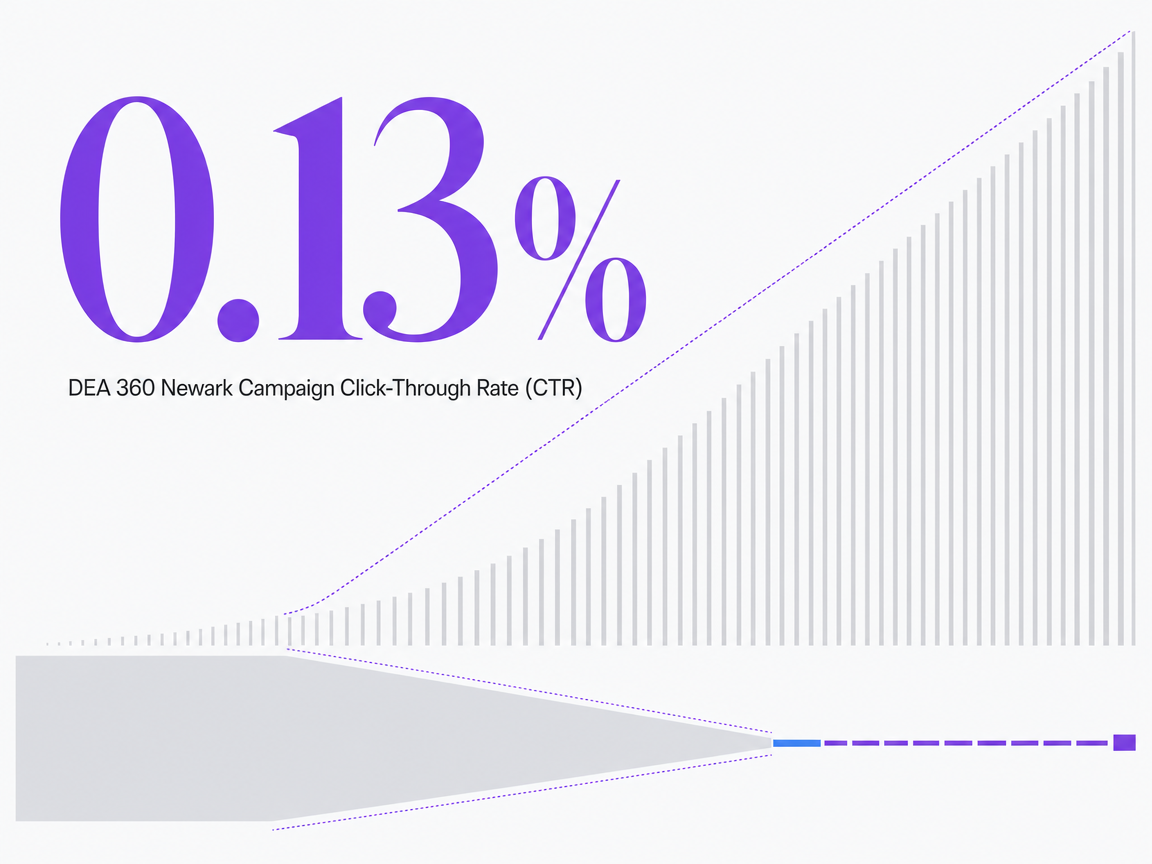 DEA 360 Newark Campaign Click-Through Rate (CTR)
DEA 360 Newark Campaign Click-Through Rate (CTR)
Test advanced rank tracking on live campaigns
Evaluate real keyword movements and reporting quality before committing to a platform.
Applying the Rubric: A Weighted Scoring Model for Vendor Review
The five criteria carry different weight depending on client mix. A weighted scoring model forces the trade-offs into the open before a procurement conversation, rather than leaving them for a mid-contract argument with a client who noticed the tracked position and the GSC average disagree.
A defensible starting weight distribution for a mid-to-large agency looks like this:
- Data fidelity at 25%
- Integration depth at 25%
- Governance and privacy resilience at 20%
- AI feature trustworthiness at 15%
- Reporting throughput per account at 15%
Fidelity and integration share the top weight because they determine whether the tool's numbers survive a client's scrutiny and whether they connect to revenue at all. Governance sits at 20% for agencies with any exposure to healthcare, legal, or financial services clients where consent posture will be audited. AI and throughput split the remainder—both matter for margin, but both are secondary to whether the underlying measurement is trustworthy.
Score each criterion on a 1-to-5 scale against a written definition of what a 3 looks like for that criterion. A 3 on integration depth means native GSC, GA4, and CRM connectors with documented refresh cadences. A 5 adds offline conversion ingestion and revenue-status sync. A 1 means CSV export only. Anchoring scores to written definitions prevents the common vendor review failure where two analysts score the same tool two points apart because they were grading against different mental models.
Run the rubric on a representative client account, not on a demo environment. Vendors show well in curated sandboxes. The Baldrige criteria commentary is direct on this point: measurement systems have to be evaluated in the organizational context they will actually operate in, not in the abstract 4. Ask the vendor to load 90 days of a live client's data—with a signed data processing agreement in place—and produce the monthly report an analyst would send. Score what shows up on screen, not what shows up on the pitch deck. The weighted total should be paired with a hard minimum on fidelity and integration; a tool that scores 4.5 overall but a 2 on fidelity is not a viable choice regardless of how the other categories look.
See How Advanced Rank Tracking Drives Measurable ROI for Agencies
Connect with our team to review a data-driven workflow for evaluating SEO rank tracking software—focused on actionable metrics, client reporting efficiency, and scalable multi-site management.
If You Manage a Portfolio: Reporting Cost Per Client Per Month
The evaluation math changes when the scope shifts from a single client to a book of 25 or more. What looked like a rounding error on one account—an extra 90 minutes of manual reconciliation, a screenshot workflow, a rebuilt pivot table—compounds into a fully loaded specialist salary once it runs across every retainer, every month, for a year.
Reporting cost per client per month is the honest way to see that compounding. The formula has three variables:
H : Analyst hours per client per month.
C : Blended hourly cost of the analyst.
N : Number of clients in the book.
Monthly reporting cost per client is H × C. Annual portfolio reporting cost is H × C × N × 12. Hold C and N constant across scenarios and the tool choice becomes visible as a labor decision.
| Tooling Model | Analyst Hours per Client per Month (H) | Annual Portfolio Hours (H × 12 × 25 clients) |
|---|---|---|
| Siloed rank tracker with manual GSC/GA4 reconciliation and spreadsheet reporting | 2.0 | 600 |
| Rank tracker with native GSC/GA4 integration and white-label reporting | 0.75 | 225 |
| Unified execution platform with call intelligence and revenue tie-in | 0.33 | 99 |
The delta between row one and row three is roughly 500 analyst hours per year across a 25-client book. At any realistic blended cost, that funds a senior strategist hire, a lower retainer floor in a competitive pitch, or the margin required to absorb a churned account without triggering a layoff conversation. The WFA benchmark on marketing mix modeling makes the same point at the enterprise level: senior marketers now expect measurement infrastructure that produces ROI answers efficiently rather than through analyst brute force 11.
Two portfolio adjustments matter before the number is trustworthy. First, weight H by client complexity—an enterprise client with 2,000 tracked keywords and multi-brand reporting is not equivalent to a local services client with 150. Second, include the setup and maintenance hours the tool requires, not just the monthly reporting cycle. A platform that saves 90 minutes per client per month but demands 40 hours of onboarding per account will not pay back on a client that churns inside 18 months. Score portfolio economics on the steady-state number, and require the vendor to walk through the reporting workflow on a live account before the annual math earns a decision.
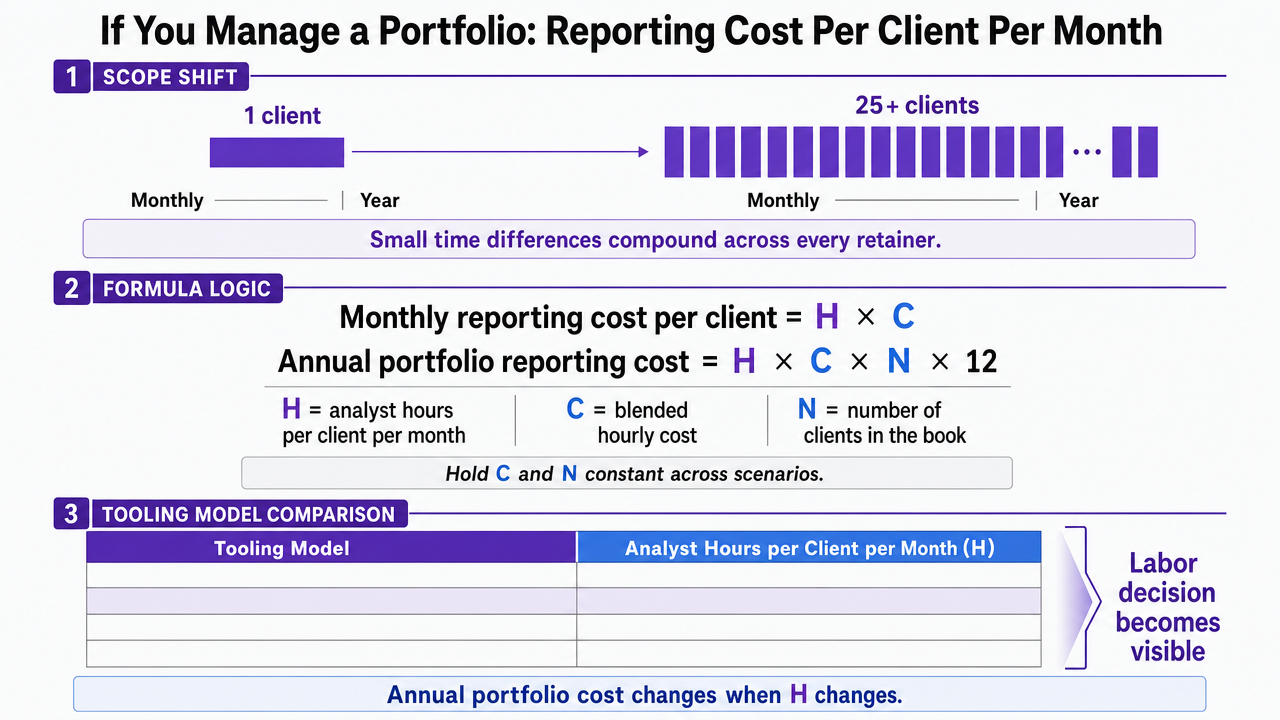 Render the portfolio reporting-hours comparison table as a visual comparison so the labor delta between tooling models is immediately legible
The Missing Layer Between Position and Booked Revenue
The evaluation criteria above assume the tool can eventually connect a ranked keyword to a client's revenue. In service verticals where the intake happens on the phone—law firms, dental groups, behavioral health, home services, senior living—that assumption breaks in a specific place. The click lands, the form is bypassed, the prospect dials the number in the header, and the entire attribution chain the rank tracker feeds ends at a session with no conversion event. GA4 records a bounce. The rank tracker records a position. The client records a booked consultation with no marketing source attached.
Call intelligence is the layer that closes the gap. Recorded calls processed by a speech model can be tagged for qualified inquiry, service line, urgency, and outcome, then joined back to the landing session, the source query, and the ranked keyword that produced the click. What was a bounced session becomes a qualified consultation attributed to a specific query cluster. The rank tracker's position data now has a revenue destination.
Rank tracking evaluated in isolation will always underperform its promise for phone-heavy verticals because the tool cannot see the conversion that matters. Evaluated as one input into a stack that includes GSC, GA4, CRM status, and call intelligence, the same tool becomes the leading indicator that predicts booked revenue two to four weeks out. That is the reframing a Head of SEO needs to bring into the next vendor conversation: score the tracker on how well it feeds the measurement loop, not on how many keywords it can poll.
Benchmark and Optimize SEO Campaigns with Real-Time SERP Intelligence
Gain unified access to automated rank tracking, historical SERP data, and actionable reporting—purpose-built for agencies managing multiple client portfolios and requiring measurable, audit-ready SEO impact.
What to Do Before the Next Renewal Cycle
Three actions belong on the calendar before the next retainer conversation.
- Pull 90 days of tracked positions from the current rank tracker for the top five clients by revenue and reconcile them against GSC average position at the query and page level. Any keyword where the two sources disagree by more than three positions is a defensibility risk that will surface on a review call. Document the variance rate and decide whether the current tool can close it or needs to be replaced.
- Score each incumbent vendor against the five-criterion rubric using written score definitions and a live client account. Do not accept a demo environment. The Baldrige commentary is clear that measurement systems have to be evaluated in the context they will actually operate in 4.
- Calculate reporting cost per client per month across the portfolio and identify the two clients where the delta between current-state and target-state hours funds either a retention save or a margin expansion. That is the number that goes into the next renewal conversation—alongside a plan to close the gap between ranked keywords and booked revenue with a measurement stack that includes call intelligence.
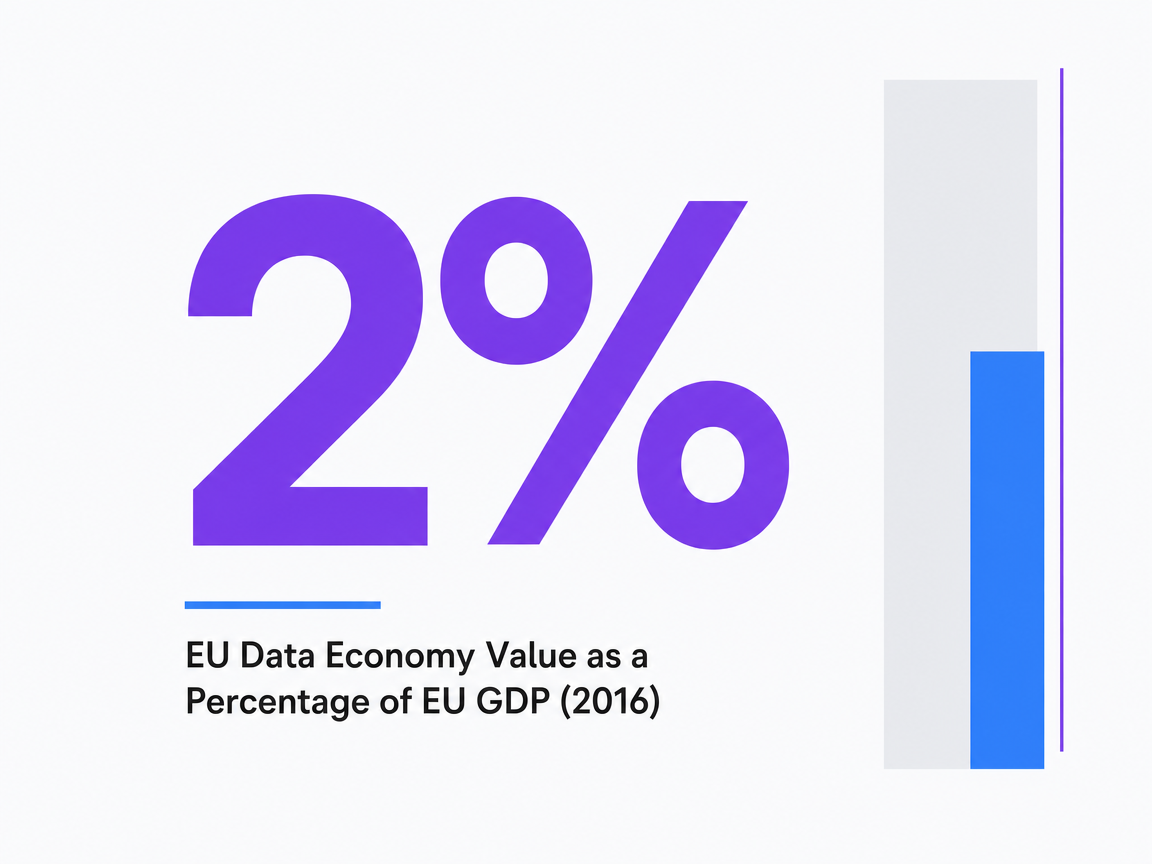 EU Data Economy Value as a Percentage of EU GDP (2016)
EU Data Economy Value as a Percentage of EU GDP (2016)
Frequently Asked Questions
References
- 1.Google Analytics Through the General Services Administration.
- 2.Marketing and Sales Strategies for Manufacturers.
- 3.AI Risk Management Framework.
- 4.Baldrige Criteria Commentary.
- 5.Measuring user interactions with websites: A comparison of two website analytics tools.
- 6.Consumer Injuries and Benefits in the Data-Driven Economy.
- 7.Regulating Privacy Online: An Economic Evaluation of the GDPR.
- 8.The European Data Market study 2024-2026.
- 9.Final results of the 2014-2016 European Data Market study.
- 10.Measuring ROI on Sponsored Search Ads.
- 11.WFA member benchmark on Marketing or Media Mix Models and ROI.
- 12.DEA 360 Strategy Reach and Impact Report: Newark.
- 13.How to Leverage Data Analytics for Smarter Marketing Decisions.
- 14.How to Leverage Marketing Analytics to Improve Customer Relationships and Business Decisions.
- 15.Understanding Marketing Analytics and Why It Matters.