
Key Takeaways
- The reseller decision is now a margin and capacity question, not a service-line addition—agencies must choose between building a pod, buying wholesale capacity, or automating under review.
- Senior labor benchmarks make in-house pods uneconomic below 25-30 retainers, with marketing manager and developer medians of $161,030 and $133,080 driving fixed costs past $370,000 fully loaded 1, 2.
- Set a 60% gross margin floor before evaluating fulfillment paths, since reseller quotes at 50-60% of retainer leave no room for account management, rewrites, or oversight.
- Governance separates a defensible program from a margin trap—FTC disclosure rules and NIST's AI Risk Management Framework define the review loops agencies owe as seller of record 3, 5.
The reseller question is now a margin question
For most agency principals, SEO reselling used to be a service-line decision: add a product, slap a markup on it, keep the client invoice flowing. That framing has aged poorly. The pressure on agency P&Ls has moved faster than the average reseller pitch deck, and the choice now sits squarely on gross margin and capacity, not on whether SEO belongs in the catalog.
Two numbers explain the shift. Senior marketing capability is expensive to keep in a chair: the Bureau of Labor Statistics reports a median annual wage of $161,030 for marketing managers in May 2024 1. At the same time, Forrester projects that principal media will account for nearly 33% of total agency billings in 2026, alongside a 15% cut in agency jobs that year 8. Agencies are not just outsourcing tasks. They are repositioning as merchants, partners, and brokers of execution.
That reframes what an SEO reseller program is for. The right question is no longer "who fulfills my SEO?" It is "what mix of build, buy, and automate keeps gross margin above 60% on every retainer the agency signs?" Everything that follows is built around that math.
What an SEO reseller program actually is
An SEO reseller program is a wholesale fulfillment arrangement. A backend provider executes the SEO work—audits, on-page changes, content production, link acquisition, reporting—while the agency keeps the client contract, sets the retail price, and presents the deliverables under its own brand. The agency captures the spread between what it pays the backend and what it bills the client.
Two structures dominate. White-label resellers ship unbranded deliverables the agency rebrands and forwards. Private-label or partner programs go further, supplying dashboards, audit templates, and reporting portals the agency skins as its own product. The economics are similar; the difference is how much client-facing infrastructure the agency offloads.
The model exists because senior marketing labor is expensive to keep on payroll and SEO demand is uneven across a retainer book 1. Reselling converts a fixed cost into a variable one, which is the actual reason most principals consider it.
What a reseller program is not: it is not a referral arrangement, not an affiliate relationship, and not a pass-through. The agency remains the seller of record, which means the agency owns the quality, the disclosures, and the client outcome regardless of who pushes the buttons.
The labor math that pushes agencies toward outsourcing
Hiring a senior in-house SEO lead is the single most expensive line item in most agency P&Ls, and the gap between that cost and what clients will pay has widened. BLS reports a median annual wage of $161,030 for marketing managers as of May 2024, with the role projected to grow 6% from 2024 to 2034 1. That is the base salary alone. Once an agency adds employer taxes, benefits, paid time off, equipment, software seats, and the recruiter fee to fill the seat, fully loaded cost typically lands 25-35% above base.
The technical side is no cheaper. SEO at scale increasingly depends on engineers who can ship internal tools, parse crawl data, and wire up reporting—work that overlaps with the software developer profile. BLS puts the median annual wage for software developers at $133,080 in May 2024, with 15% projected employment growth through 2034 2. Demand for that talent is rising more than twice as fast as demand for marketing managers, which means an agency competing for a senior SEO engineer is bidding against product companies with deeper pockets.
Stacked against a typical retainer book, the math is unforgiving. A single marketing manager and one developer carry a combined base of roughly $294,000 before loading—call it $370,000 to $400,000 fully loaded. To keep gross margin above 60% on that fixed cost alone, the agency needs to bill more than $1 million in annual SEO revenue before paying for anyone else: account managers, writers, link prospectors, or QA. Most agencies in the 5-to-50 employee range do not run an SEO book that deep, which is the practical reason outsourcing keeps winning on a spreadsheet. The reseller model converts those salaries into a per-account variable cost that scales down when a client churns and up when the agency lands a new logo.
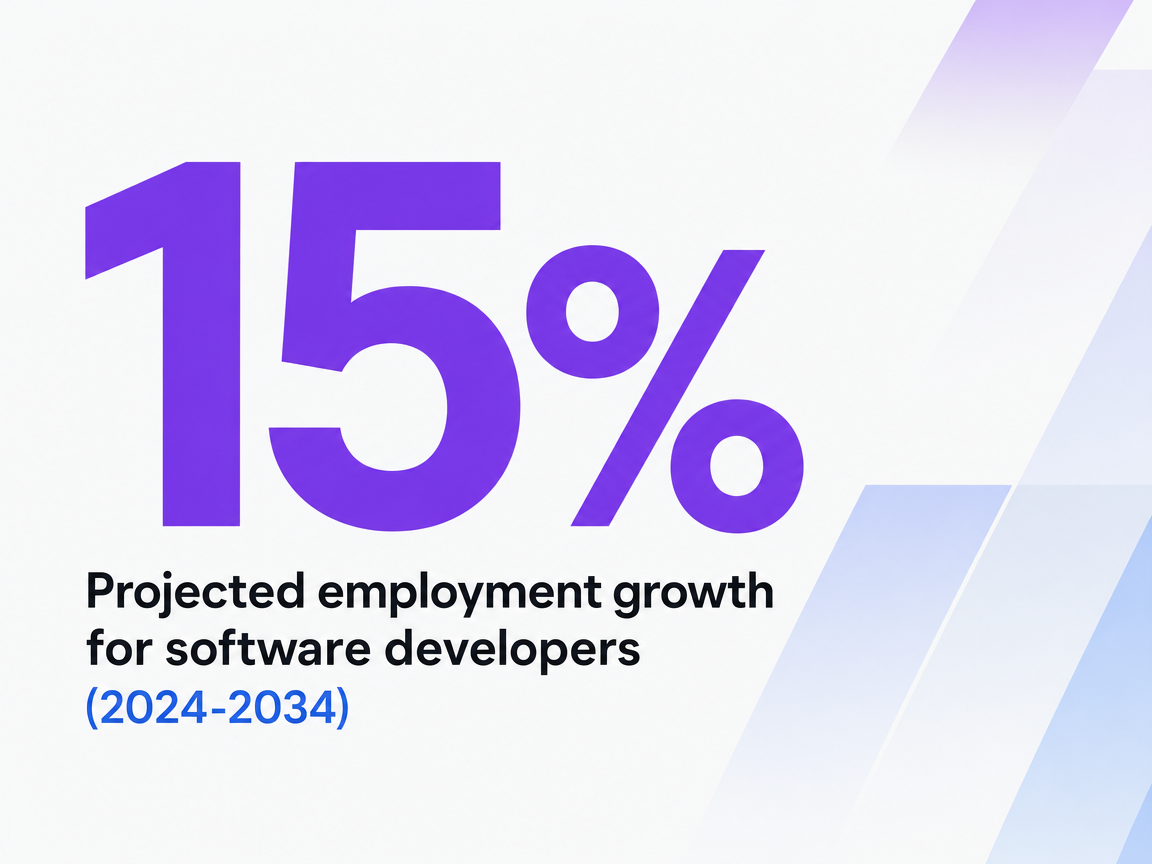 Projected employment growth for software developers (2024-2034)
Projected employment growth for software developers (2024-2034)
Trial AI-Driven SEO Execution for Real Clients
Test live SEO workflows on actual client accounts and measure workflow efficiency before committing.
The Forrester signal: agencies are repositioning, not just outsourcing
Outsourcing fulfillment is the tactic. The business-model change underneath it is the bigger story, and Forrester's 2026 predictions put numbers on it. Forrester forecasts that principal media will account for nearly 33% of total agency billings in 2026, and that agency jobs will be cut by roughly 15% that year, following an average 8% headcount reduction in 2025 8. Those are not garden-variety efficiency adjustments. They describe an industry rebalancing its revenue mix toward principal-based arrangements—where the agency owns inventory, capabilities, or production capacity and resells it—while shrinking the labor base that delivered the old service model.
For an SEO-selling agency, that reframes the reseller question. A traditional reseller relationship is one expression of the same trend visible across media, creative, and data services: agencies are increasingly acting as merchants of capability rather than employers of every specialist needed to deliver it. The 33% principal-media figure refers to media buying, not SEO specifically, but the directional read is the same. Revenue is shifting toward the part of the income statement where the agency captures spread on something it sources, packages, and resells, and away from time-and-materials staffing.
The 15% headcount cut is the other half of that equation. Agencies are not just adding outsourced fulfillment alongside in-house teams; they are replacing seats with sourced capacity. An SEO reseller decision made in 2026 is therefore part of a wider portfolio choice about which capabilities the agency staffs, which it buys, and which it automates. Treating it as a one-off vendor selection misreads where the industry is going.
Build, buy, or automate: three fulfillment paths
Every SEO retainer an agency sells has to be fulfilled by one of three engines: an internal team on payroll, a wholesale backend provider, or a software platform that automates most of the production work under human approval. The three engines have different cost structures, different capacity ceilings, and different ways of failing. Treating them as substitutes obscures the real trade-offs. The sections below take each path on its own terms before bringing them onto the same spreadsheet.
Building in-house SEO capacity
Building in-house means hiring the strategist, the technical lead, the content team, and the link operators the agency would otherwise rent. The payoff is direct control over quality, methodology, and client communication. The cost is a fixed payroll line that does not flex when a retainer churns.
The baseline is set by senior labor. BLS reports a median annual wage of $161,030 for marketing managers, with 6% projected growth through 2034 1, and $133,080 for software developers, with 15% growth through the same period 2. A lean in-house pod—one senior strategist, one technical or developer-leaning specialist, and two production roles—lands in the high six figures fully loaded once benefits, software, and recruiting fees are added.
In-house wins on judgment calls: migrations, penalty recovery, schema work on bespoke stacks. It loses on volume. A four-person pod can responsibly carry 15 to 25 retainers before quality drifts. Past that ceiling, the agency is hiring the second pod or rationing attention across accounts. Build when the retainer book is dense in one vertical and the average contract supports the loaded cost per account.
Buying through a traditional white-label reseller
A white-label reseller is rented capacity. The agency forwards a client roster, the backend executes a templated production process—audits, on-page optimization, monthly content quotas, link placements—and ships unbranded deliverables the agency forwards to the client. Pricing typically lands as a percentage of the retainer, often 40-60% of what the agency bills, with the spread captured as gross margin.
The operational benefit is real. Headcount stays flat as the retainer book grows, and the cost line moves with revenue rather than ahead of it. Forrester's framing of agencies as merchants of sourced capability rather than employers of every specialist describes this arrangement directly 9.
The failure modes are also predictable:
- Production templates do not bend to vertical nuance.
- Content drafts arrive generic enough that the account manager spends billable hours rewriting them, which silently erodes the margin the reseller spread was supposed to protect.
- Link inventory is rarely transparent.
- Client-facing reports often reveal the backend's hand if the agency does not reskin them carefully.
Buy when retainers are small, varied, and clustered around standardized SMB SEO work where production templates hold up.
Automating with an AI-assisted execution platform
The third path replaces most of the fulfillment labor with software that drafts, ranks, and ships work under a human approval workflow. The agency keeps a smaller senior team for strategy and review, while the platform handles keyword mapping, brief generation, content drafting, on-page recommendations, and reporting at machine speed. Cost moves from headcount to per-account or per-seat software pricing.
The economics are the most favorable of the three when the platform is genuinely integrated rather than a thin wrapper. A senior reviewer can govern the output across 30 to 50 accounts because the production bottleneck has moved off the timesheet. That changes the capacity ceiling without adding a payroll line.
The trade-off is governance. AI-generated work needs a real review loop, defensible substantiation, and an audit trail. NIST's AI Risk Management Framework is the reference point most agencies use to structure that loop, since it is designed to improve trustworthiness in how AI systems are developed, used, and evaluated 5. Automate when the retainer book is large enough that production drag is the binding constraint, and when senior staff can be redeployed from drafting into review and client strategy.
Fulfillment economics on a $40K MRR retainer book
Picture an agency carrying 20 SEO retainers at $2,000 per month—$40,000 MRR, or $480,000 in annual SEO revenue. The same revenue line produces very different P&Ls depending on how it is fulfilled.
The in-house path carries the heaviest fixed cost. A four-person pod built around BLS benchmarks—one marketing manager at the $161,030 median, one developer-leaning specialist at the $133,080 median, plus two production roles—runs roughly $370,000 to $400,000 fully loaded once taxes, benefits, software, and recruiting are added 1, 2. Against $480,000 in revenue, gross margin sits in the mid-teens to low 20s. The capacity ceiling is the pod itself: 20 retainers is near the upper bound before quality drift starts showing up in client calls.
The traditional reseller path replaces that fixed cost with a variable one. At a representative 40-60% of retainer cost, fulfillment runs $192,000 to $288,000 annually on the same book, leaving gross margin between 40% and 60% before the agency's own account management overhead. Capacity scales with what the backend can absorb, which is effectively uncapped at this volume. The exposure sits in quality control: templated production tends to drift on technical work and vertical specificity, and rewrite hours quietly compress the margin the reseller spread implied.
The AI-assisted path compresses the cost line further. A senior reviewer plus platform fees typically lands below the reseller variable cost at this volume, often in the $120,000 to $200,000 range depending on per-account pricing and the size of the in-house review team retained. Gross margin can clear 60% while the same reviewer governs output across more accounts than a traditional pod could handle. The exposure shifts from production drift to governance: the review workflow, substantiation checks, and approval logs are what keep the output defensible. Treat the percentages as planning ranges, not quotes—the actual number depends on the specific backend or platform contract the agency signs.
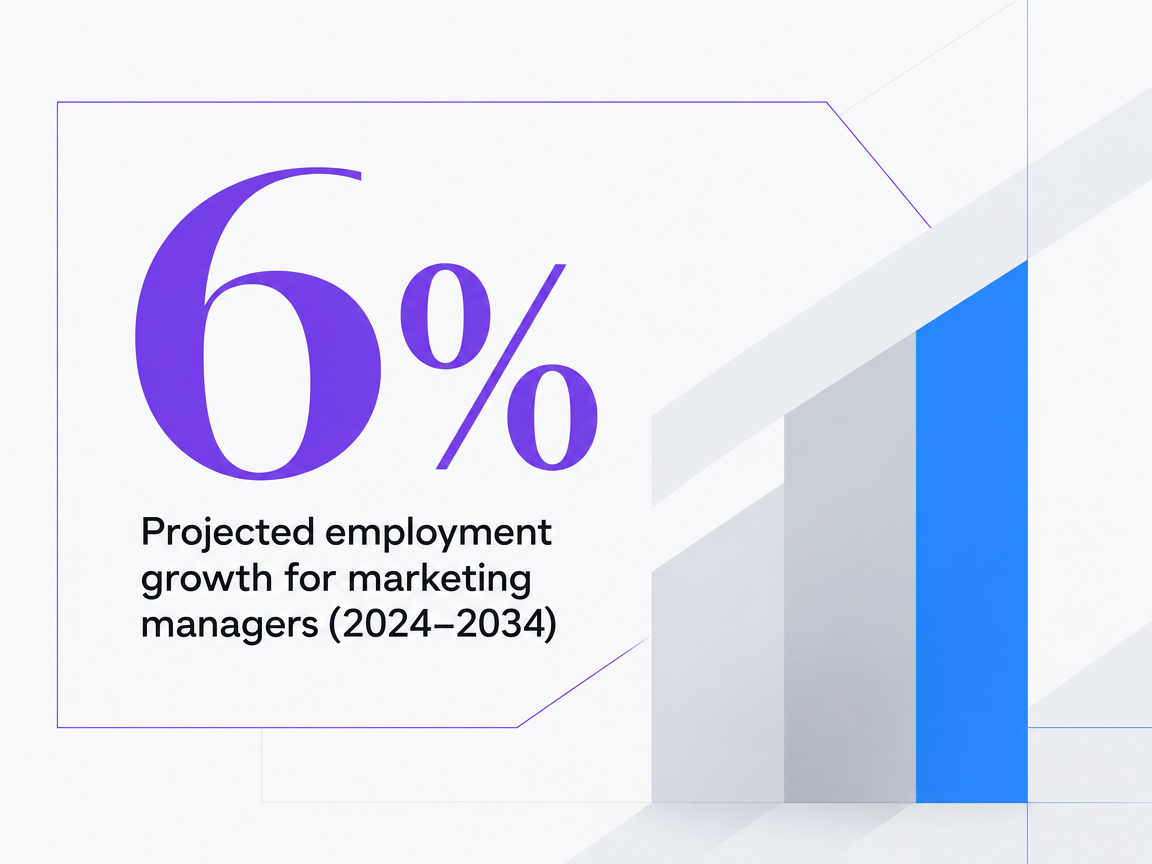 Projected employment growth for marketing managers (2024-2034)
Projected employment growth for marketing managers (2024-2034)
See How Leading Agencies Are Expanding Margins with Data-Driven SEO Reseller Solutions
Connect with a strategist to review real-world benchmarks on reducing SEO production overhead while maintaining client satisfaction—ideal for agencies seeking scalable, evidence-based delivery models.
Governance: disclosure exposure and AI risk in white-label work
Reselling SEO means the agency is the seller of record, which means the agency owns every disclosure obligation attached to the work—even when a backend provider or platform does the production. Two governance lines matter, and they apply whether fulfillment is human or machine.
The first is endorsement and disclosure exposure. White-label arrangements often touch promotional content, guest posts, link placements, and affiliate-flavored partnerships where a material connection exists between the content and the party paying for it. FTC guidance is direct: a material connection must be disclosed, the disclosure must be hard to miss, and informal shorthand like "sp" or "collab" does not satisfy the standard 3. The same guidance treats affiliate-linked endorsements as paid advertisements that still require clear disclosure of the relationship 4. A reseller backend that places links through influencer networks, sponsored placements, or content partnerships can create disclosure liability the agency inherits the moment the client logo goes on the deliverable. The contract with the backend should specify what placement types are in-bounds, what disclosure language is used, and who is on the hook if a placement is later challenged.
The second is AI risk. When fulfillment runs through an AI-assisted platform, the agency is shipping content, recommendations, and on-page changes generated by systems whose outputs need substantiation, review, and an audit trail. NIST's AI Risk Management Framework is the voluntary reference most agencies use to structure that loop; it is designed to improve trustworthiness in how AI systems are designed, developed, used, and evaluated 5. Operationally, that means a documented approval workflow, source checks on factual claims, version logs on what shipped, and a defined human reviewer on every account. The framework is voluntary, but the underlying obligation—standing behind every claim the agency publishes for a client—is not.
Governance is the line that separates a defensible reseller program from a margin trap. Agencies that treat it as paperwork pay for it later in rework, refund requests, or worse.
Choosing a path: a principal's checklist
The build-buy-automate framework only resolves once a principal puts numbers next to three operational questions: where the margin floor sits, how quality gets reviewed before it ships, and how much of the client relationship the agency keeps in its own hands. The next three subsections work through each in order.
Pricing and margin floor
Set the margin floor before evaluating any fulfillment option, not after. A defensible floor for SEO retainers sits at 60% gross margin after direct fulfillment cost and before account management overhead. That number is not arbitrary—it is what leaves room for the senior oversight, reporting, and client communication that an outsourced backend does not handle.
From there, the math runs backward. On a $2,000 monthly retainer, fulfillment cost cannot exceed $800 without breaking the floor. A reseller quoting 50% of retainer lands exactly at the edge; one quoting 60% has already breached it before the agency pays its own account manager. In-house pods rarely clear the floor below 25 to 30 retainers given BLS senior wage benchmarks 1. Price the floor first, then test each path against it.
Quality control and approval workflow
Quality control is where reseller margins quietly leak. Templated production drafts arrive that need rewriting, link placements show up on properties the agency would not have approved, and on-page recommendations conflict with the client's CMS. Every hour of rework compresses the spread the reseller pricing implied.
The controllable variable is the approval workflow. Before signing any backend or platform, define what gets reviewed, who signs off, and what the audit trail looks like. For AI-assisted fulfillment, NIST's AI Risk Management Framework provides the reference structure most agencies use to organize that review loop, since it is designed to improve trustworthiness in how AI outputs are developed, used, and evaluated 5. Whatever the fulfillment engine, the agency that ships the work owns the review—make that ownership operational, not theoretical.
Client relationship control and brand exposure
The third question is how much of the client relationship sits inside the agency versus inside the backend. Reseller arrangements vary widely on this. Some ship deliverables and disappear; others push to attend strategy calls, send branded reports, or contact the client directly during onboarding. Each step the backend takes toward the client erodes the agency's position as the seller of record.
Write the brand exposure rules into the contract. Specify:
- Who joins client calls
- Whose email signature appears on deliverables
- What reporting templates carry the agency's brand
- What happens if a backend employee contacts a client off-channel
Forrester's framing of agencies operating as merchants of sourced capability assumes the agency owns the front of house 9. Lose that, and the reseller spread becomes the backend's customer acquisition cost, not the agency's margin.
Increase Agency Margins with Automated, Scalable SEO Delivery
Access an AI-powered SEO execution platform designed to streamline client campaigns, minimize manual overhead, and provide transparent approval workflows—enabling your agency to deliver more at lower cost without sacrificing quality or control.
If you manage multiple agency brands or a holding portfolio
Scope shift: this section is for principals running more than one agency P&L—holding companies, roll-ups, or operators with two or three sibling brands sharing back-office infrastructure. The reseller math changes when fulfillment can be pooled across entities.
The core move is consolidating the backend. Three agencies each running their own white-label contract pay three markups on overlapping work. Pooling demand into one fulfillment relationship—or one AI-assisted platform seat structure—lets the portfolio negotiate volume terms a single 5-to-50 person agency cannot. Forrester's read on agencies operating as merchants of sourced capability applies more sharply here: the holding entity becomes the wholesaler to its own brands 8.
Two guardrails matter. Keep brand-facing client relationships separate so a backend incident at one agency does not contaminate the others. And document an intercompany pricing policy—what each brand pays the shared backend, and on what margin—before tax season makes the question expensive. The portfolio advantage is real, but only if governance keeps the brands operationally distinct.
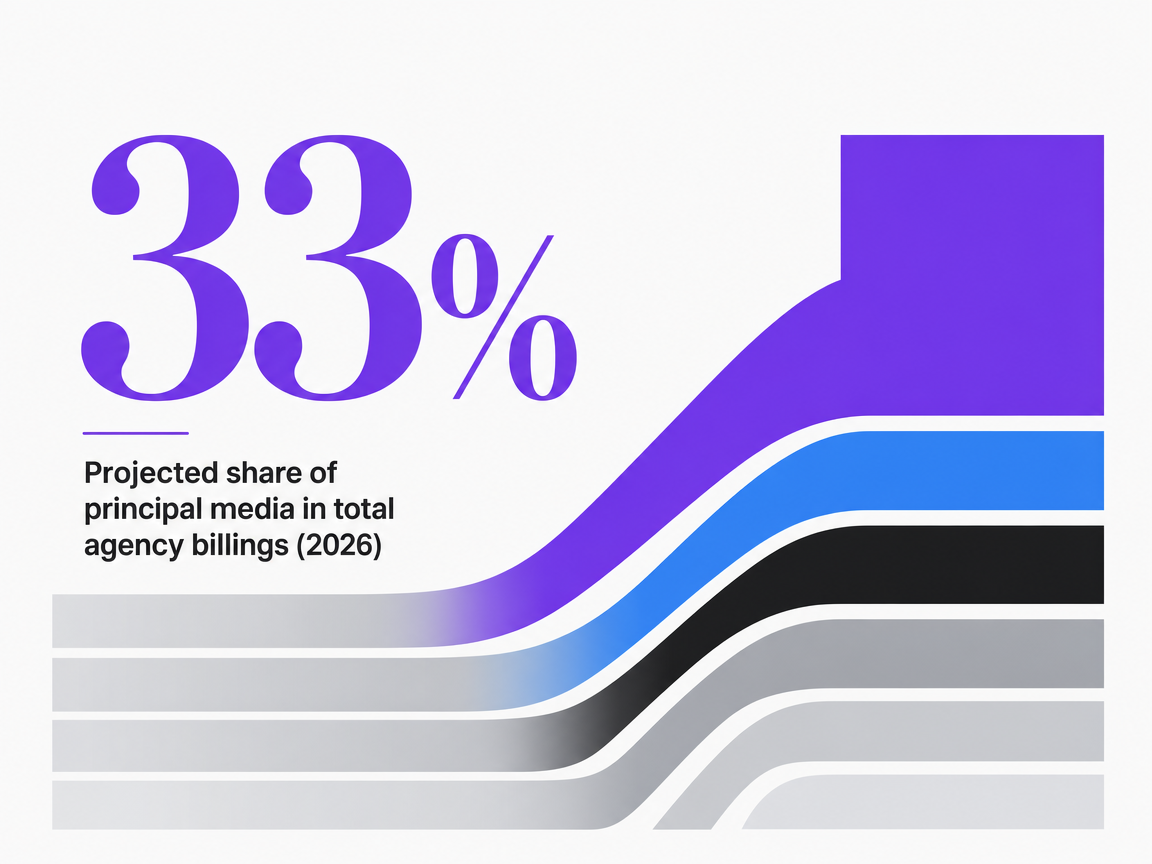 Projected share of principal media in total agency billings (2026)
Projected share of principal media in total agency billings (2026)
Where the reseller decision lands in 2026
The reseller question used to end at "who fulfills the work." It now ends at "what does the agency want its P&L to look like in two years." The choice between building a pod, buying wholesale capacity, or running an AI-assisted platform under approval is the same choice agencies are making across media, creative, and data: which capabilities to staff, which to source, and which to automate. Forrester's read on principal-based billings and shrinking headcount is the directional signal 8; the labor benchmarks are the arithmetic underneath it.
The agencies that protect margin in 2026 will be the ones that priced the floor first, documented the review loop, and kept the client relationship inside their own brand. Vectoron exists for principals who want the automate path with the governance built in.
Frequently Asked Questions
References
- 1.Advertising, Promotions, and Marketing Managers.
- 2.Software Developers, Quality Assurance Analysts, and Testers.
- 3.Disclosures 101 for Social Media Influencers.
- 4.FTC's Endorsement Guides: What People Are Asking.
- 5.AI Risk Management Framework | NIST.
- 6.Business Dynamics Statistics Data for 2023 - U.S. Census Bureau.
- 7.Business Dynamics Statistics of Human Capital (BDS-HC).
- 8.Predictions 2026: Marketing Agencies Resign Their Agency - Forrester.
- 9.Need A New B2B Marketing Agency? Ditch The Pitch, And Do This Instead..
- 10.Ditch The Pitch - Forrester.
- 11.Marketing Managers - Bureau of Labor Statistics.
- 12.Software Developers - Bureau of Labor Statistics.
- 13.Industry and occupational employment projections overview and highlights, 2023-33.