
Key Takeaways
- Ahrefs earns its seat through the backlink gap report, giving strategists a prioritized link-building roadmap that defends retainers and supports diagnostic work during traffic declines.
- Semrush produces the competitive position deliverable clients expect, combining share of voice, keyword overlap, and paid-organic visibility into one dashboard for monthly reviews.
- Google Keyword Planner and Search Console form a lean baseline appropriate for entry-tier accounts where a paid research seat cannot generate enough billable hours to justify itself.
- Screaming Frog replaces 15-20 hours of manual technical QA with a single crawl export, paying for itself on the first audit and every quarterly re-crawl.
- Sitebulb converts crawl data into scored, prioritized audit reports non-technical stakeholders will actually read, which drives CMO approval for billable fix sprints.
- Clearscope kills freelancer rework by handing writers a graded term inventory, competitor outline data, and word count targets before drafting begins.
- Surfer enforces a scored production standard across distributed writing teams and doubles as a refresh engine for underperforming client URLs.
- AgencyAnalytics consolidates rankings, GA4, Search Console, and backlinks into a white-labeled scheduled dashboard, ending manual monthly screenshot assembly across retainers.
- Looker Studio with a BI overlay gives owners the P&L view—revenue per strategist hour by account—needed to defend or renegotiate retainer pricing.
- Vectoron represents an approval-first execution category that consolidates strategist, producer, and project manager roles into a governed loop priced at $599 per month after a two-week trial.
Why Tool Sprawl Is Eating Agency Margins
The average digital agency posted a 13% after-tax net margin in 2025, down from the long-run 15% benchmark. Studios under 10 FTEs cleared 19%, while agencies with 50 or more FTEs came in at 8% 1. This disparity highlights that operational discipline, not size, drives profitability.
The margin gap between small studios and larger agencies often stems from the production layer, specifically the number of tools used. Each seat license might be justifiable individually, but the cumulative cost lies in the analyst hours spent transferring data between platforms for keyword research, rank tracking, technical audits, content briefs, and reporting. NetSuite's agency benchmark targets a 50% gross margin and 15% or higher net, emphasizing templates, automation, and software as key mechanisms for achieving these figures 2. For SEO retainers, tool selection is a production decision, measured by hours saved per account and deliverables produced per strategist.
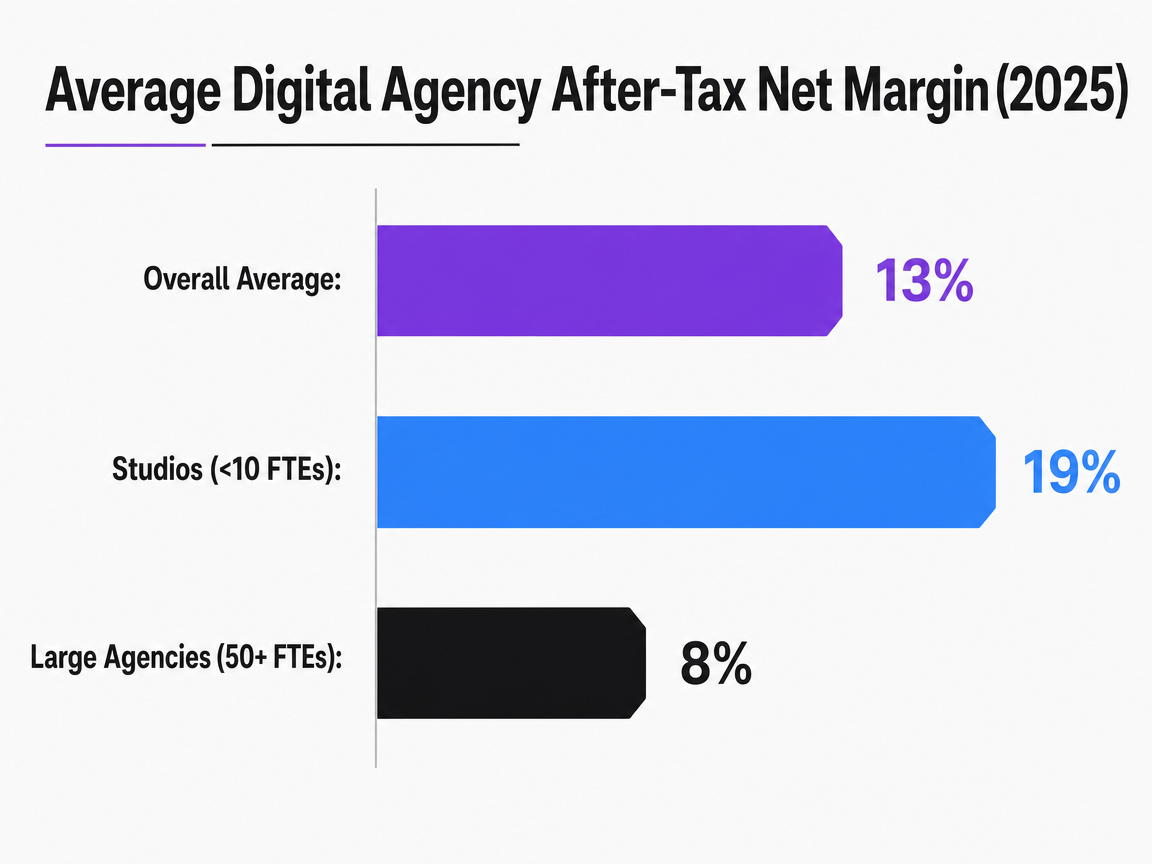 Average Digital Agency After-Tax Net Margin (2025)
A comparison of average after-tax net profit margins for digital agencies in 2025, broken down by agency size. This can be visualized as a bar chart comparing the three values.
The Four-Layer Stack: How to Read the Shortlist
The 11 platforms in this shortlist are grouped into four functional layers that mirror the SEO workflow within an agency: Research & Intelligence, Technical & Audit, Content & Optimization, and Reporting & Execution. Each layer addresses a distinct production need. Research & Intelligence guides strategists on what to prioritize. Technical & Audit informs engineers about necessary fixes. Content & Optimization provides writers with production standards. Reporting & Execution communicates results to clients and, in the case of execution platforms, deploys approved work.
Viewing the shortlist as a stack reframes the purchasing decision. Instead of asking which tool is "best," agencies should identify which layer consumes the most strategist hours per account, as this is where consolidation yields the greatest benefits. OneLittleWeb's review of over 50 tools similarly categorized selections by function, such as keyword research, link building, audits, and reporting, rather than ranking them linearly 10.
This four-layer perspective also reveals redundancies. Multiple platforms within the same layer rarely enhance capabilities; they often duplicate them. The tools highlighted here are those that offer unique value within each layer, plus one platform that constitutes its own category.
Research & Intelligence Layer
Ahrefs: The Backlink Gap Report That Defends Retainers
Ahrefs is essential for its backlink gap report. By inputting three competitor domains and one client domain, a strategist can generate a prioritized list of referring domains the client lacks. This output is highly valuable for quarterly business reviews, as it directly informs link-building sprints that the agency can bill for.
The platform's crawl index and historical referring domain data also support diagnostic work crucial for retainer renewals. If organic traffic declines, an Ahrefs export detailing lost referring domains or a competitor's link velocity provides concrete data for the account team. OneLittleWeb's practitioner review confirmed Ahrefs as a tool actively used in live client work 10.
The pitfall with Ahrefs is using it as a general research suite. While its keyword data is competent, agencies often find it redundant if they also use Semrush. Ahrefs is best utilized for its backlink analysis and site explorer functionalities, with keyword-focused workflows routed to other platforms.
Semrush: The Competitive Position Deliverable
Semrush excels at producing the competitive position report, a deliverable frequently requested by clients. It provides share of voice against a defined competitor set, keyword overlap, and combined paid and organic visibility on a single page. For agencies managing both SEO and paid search, this capability reduces the setup time for monthly account reviews from half a day to a pre-configured dashboard.
The Position Tracking tool significantly impacts margins. Strategists can define and tag tracked keyword cohorts by service line or location, and monitor SERP feature movements without rebuilding trackers monthly. Zapier's review of SEO tools highlighted that integrating keyword research, rank tracking, and site auditing into one platform saves agencies considerable hours weekly 5.
Semrush and Ahrefs have overlapping features in keyword databases and site audits. Running both at full capacity can lead to tool sprawl. Agencies specializing in link building often prioritize Ahrefs, using Semrush at a reduced tier, while content-focused agencies typically reverse this approach.
Google Keyword Planner + Search Console: The Lean Baseline
Every client account should have Search Console connected from day one. It provides query-level impression and click data, index coverage flags, and Core Web Vitals, all of which are crucial for diagnostic work that paid platforms can only estimate. Keyword Planner complements this by offering intent-weighted volume ranges based on actual paid-search demand, which is more effective for commercial keyword shortlisting than most third-party estimates.
The lean-baseline approach is not primarily about cost savings but about determining which accounts justify the marginal cost of a paid seat. Rohring Results notes that cost-effective tools built around Search Console, Keyword Planner, and Analytics can support small-client delivery without significant quality compromise 9. For a $1,500-per-month retainer, the additional cost of a full Ahrefs seat often doesn't translate into enough billable hours to justify the expense over a Search Console-only workflow.
Agencies with tiered service models should assign Search Console to their entry-level clients and reserve paid research platforms for accounts where competitive intelligence is a contractual deliverable, not merely an internal reference.
Test AI-driven SEO execution in real workflows
Experience measurable improvements in SEO production speed and oversight with live campaigns during your trial period.
Technical & Audit Layer
Screaming Frog: The Crawl That Removes Two Days of Manual QA
Screaming Frog is invaluable for generating a comprehensive site crawl that identifies broken links, redirect chains, missing meta descriptions, orphan pages, and hreflang errors, all exported to a single spreadsheet. For new client onboarding, this crawl replaces the manual QA process that traditionally consumed the first billing cycle. Rohring Results identifies it as a cost-effective tool for a lean audit workflow without requiring a large seat commitment 9.
The margin benefit is clear: a senior strategist spending 15-20 hours on a manual technical review for a mid-sized client, billing at $150 per hour, can achieve the same deliverable with a Screaming Frog crawl and a two-hour interpretation. The license quickly pays for itself with the first audit and subsequent quarterly re-crawls.
Screaming Frog's limitation is its presentation; its exports are analyst-grade, not client-ready. Agencies using it often need to create their own reporting templates or provide raw data to a client's development team, which works for technical accounts but can be problematic for clients expecting a narrative.
Sitebulb: The Audit Deliverable Clients Actually Read
Sitebulb addresses the presentation gap left by Screaming Frog. It crawls the same technical areas but produces a scored, prioritized audit report featuring visual hint cards, severity ratings, and a change log across audits. For agencies offering fixed-fee technical audits, this packaged output streamlines the process, replacing lengthy, screenshot-heavy Google Docs with a concise, professional report.
OneLittleWeb's practitioner shortlist recognized Sitebulb as an audit tool used in live client campaigns, specifically for its ability to present findings to non-technical stakeholders 10. This is crucial for retainer defense, as a CMO who understands the audit is more likely to approve the necessary fixes, leading to billable sprints for the agency.
While Sitebulb and Screaming Frog both perform crawls, they serve different purposes: Screaming Frog is the engine, and Sitebulb is the deliverable. Agencies with high audit volumes typically use both, leveraging each for its specific strength.
Content & Optimization Layer
Clearscope: The Brief That Kills Freelancer Rework
Clearscope's core deliverable is the content brief, which is critical for agency content margins. A strategist inputs a target query, and the platform generates a graded term inventory, competitor outline data, readability targets, and a recommended word count. This equips freelancers or in-house writers with all necessary information upfront, eliminating back-and-forth communication.
The margin impact is seen in reduced rework. Content retainers typically budget for one revision round; subsequent rounds often erode delivery margins. A Clearscope brief minimizes ambiguity—such as missing subtopics, thin SERP coverage, or off-target intent—by providing a pre-write checklist. Zapier's tool review identified content optimization platforms like Clearscope as high-leverage automation points in modern SEO workflows 5.
Clearscope is best suited for high-volume content producers, not agencies generating only a few blog posts monthly. The break-even point is roughly when a single avoided rewrite covers the seat cost.
Surfer: On-Page Scoring as a Production Standard
Surfer operates in the same layer as Clearscope but addresses a different challenge: enforcing a scored production standard across a distributed writing team. Its Content Editor grades drafts in real-time against a SERP-derived model, making the score a gate writers must clear before submission. For agencies managing ten or more writers across multiple clients, this scored gate replaces the need for a senior editor to catch under-optimized drafts.
Surfer's audit module applies the same scoring logic to existing pages, transforming the platform into a refresh-workflow engine. Strategists can queue underperforming client URLs, generate on-page task lists for each, and assign these sprints to junior optimizers. OneLittleWeb's tested-on-client-work shortlist included Surfer for its dual role in new content creation and refresh cycles 10.
Agencies using both Surfer and Clearscope often find significant overlap within a quarter. The choice between them should align with the content team's structure: Clearscope for brief-driven shops, and Surfer for score-gated production lines.
See How Leading Agencies Automate SEO Operations Without Adding Overhead
Connect with our team to benchmark your current SEO workflow against AI-driven platforms that reduce manual coordination, improve profit margins, and maintain full control over client campaigns.
Reporting & Execution Layer
AgencyAnalytics: The Client Dashboard That Ends Manual Reporting
AgencyAnalytics delivers the monthly client dashboard that most retainer contracts implicitly promise but many agencies still assemble manually. It consolidates rankings, Search Console data, GA4 sessions, backlinks, and campaign notes into a white-labeled, scheduled-refresh view. This eliminates the need for account teams to rebuild slide decks for client reports each month.
The margin impact is evident in reporting hours saved. An account manager handling eight retainers who spends two hours per client per month on screenshot assembly and commentary effectively loses a full work week to overhead. Intelus emphasizes that business intelligence tools and agency dashboards are designed to monitor key metrics in real-time and reduce reporting hours that erode net margin 8.
The pitfall is treating the dashboard as the entire report. Automated data pulls without a strategist's interpretation provide a metrics grid, not a narrative. Agencies that combine AgencyAnalytics with a 30-minute analyst voiceover per client enhance the perceived value of the retainer.
Looker Studio + BI Overlay: Connecting SEO Work to the P&L
While AgencyAnalytics handles client-facing views, Looker Studio, augmented with a lightweight BI overlay, provides the owner's perspective: whether SEO efforts are impacting the account's P&L. A blended data source can integrate GA4, Search Console, ad spend, CRM revenue, and agency time-tracking exports into a single canvas, showing revenue per strategist hour by account.
This view is crucial for defending or renegotiating retainer pricing. Mercury's analysis of agency economics suggests healthy delivery margins of 55-75% and net margins of 15-35%, achievable through utilization tracking and packaging, not just new business volume 7. Without a data layer linking billable hours to campaign outputs and client revenue, utilization decisions are speculative.
Looker Studio's primary cost is engineering time, not license fees. Agencies typically assign an analyst to manage its schema, treating it as internal infrastructure. The output is an internal report for managing partners to review monthly, informing decisions on account repricing, staffing, or exit strategies.
Vectoron: Approval-First Execution as Its Own Stack Category
The tools above report on past work. A distinct category, approval-first execution platforms, focuses on deploying the work itself. AI execution platforms like Vectoron belong in their own slot within the Reporting & Execution layer because they consolidate the roles of strategist, producer, and project manager into a single governed loop. This workflow allows recommendations, drafts, and publishing to move through human sign-off without relying on a queue of briefs and manual handoffs.
This category's emergence reflects the SEO software market's growth trajectory, which anticipates AI-assisted production becoming standard. Fortune Business Insights projects the global SEO software market to reach $271.9 billion by 2034, growing at a 13.65% CAGR 3. This growth is concentrated in platforms that convert research and audit outputs into published deliverables without increasing headcount.
For agencies already using Ahrefs, Screaming Frog, and Clearscope, the execution-layer question is whether content briefs, technical fixes, and publishing sprints are still managed via spreadsheets and Slack, or through an approval queue that prioritizes based on live account data. Vectoron, a specialist-strategist platform with a Command Center approval workflow, is priced at $599 per month after a two-week trial. This pricing disclosure is provided to aid owners in making production decisions.
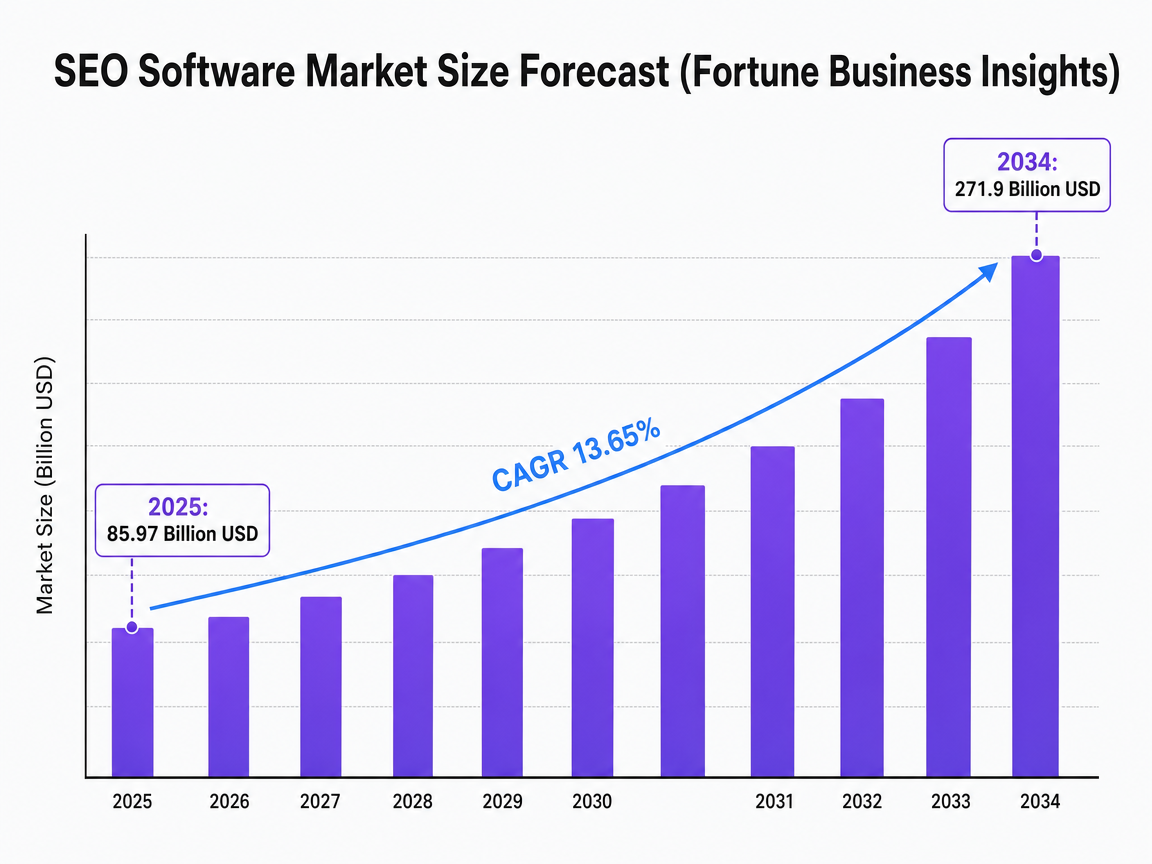 SEO Software Market Size Forecast (Fortune Business Insights)
A time series showing the projected growth of the global SEO software market from 2025 to 2034, with a CAGR of 13.65%. This can be a line or bar chart showing the start and end values.
If You Serve Multi-Location Clients: The Consolidation View
Agencies serving multi-location clients, such as DSO portfolios, home services franchises, or regional law firm networks, face a different economic challenge than those with single-location accounts. The unit of delivery becomes the location, not the client. A 40-location DSO with a unified content calendar, technical audit cadence, and reporting rhythm can quickly accumulate four or five point tools per location if the stack isn't consolidated at the portfolio level.
Market data supports this as a distinct buying consideration. Fortune Business Insights values the global SEO software market at $85.97 billion in 2025, projected to reach $271.9 billion by 2034 at a 13.65% CAGR 3. Straits Research corroborates this growth, projecting an increase from $50.32 billion in 2026 to $144.76 billion by 2034 at a 14.12% CAGR 4. This expansion is driven by platforms designed to manage large surface areas rather than individual sites. Market Research Future highlights that enterprise SEO platforms specifically enable centralized management of extensive websites and foster cross-functional collaboration 6.
For agency owners, the consolidation view is straightforward. A single enterprise or execution-layer tier with a known monthly cost can replace three to five point tools across a portfolio, especially when the alternative involves per-account seats. Vectoron's $599 monthly tier after a two-week trial is provided as an example; competitor enterprise pricing is typically negotiated based on portfolio location count.
Automate SEO Execution and Scale Client Delivery—Without Additional Headcount
Get access to an AI-powered platform that coordinates content, technical SEO, and reporting workflows, reducing production overhead by up to 40% while maintaining full approval control for agency teams.
Combinations That Compound vs. Combinations That Duplicate
A stack compounds when each layer seamlessly feeds the next without requiring manual data re-entry by a strategist. An example is Ahrefs + Screaming Frog + Clearscope + AgencyAnalytics: backlink and keyword intelligence informs the audit scope, the audit populates the content brief queue, briefs lead to published pages, and the dashboard reports on what was deployed. This involves four distinct tools, each producing a unique output, with a clear data flow. Zapier's practitioner review similarly groups recommended tools by function—research, audit, and performance monitoring—rather than identifying a single "winner" 5.
Duplication, conversely, occurs when tools within the same layer offer significant overlap. Common examples include Ahrefs and Semrush used at full seat count for the same accounts, as both cover keyword databases, rank tracking, and site audits. Another is Surfer and Clearscope used by the same content team, or Sitebulb alongside another visual-audit tool. In these cases, the second seat doesn't add a new deliverable but rather a preference, leading to margin leakage from analyst hours spent reconciling redundant exports.
A simple test for agency owners at the end of any quarter is to identify the unique deliverable each tool in their stack produces. Any tool that fails this test is a candidate for cancellation, and the hours it consumed can be reallocated to higher-value accounts.
The Consolidation Recommendation
For 2025, a profitable stack consists of four core seats, one execution layer, and a quarterly cancellation review. Select one Research & Intelligence platform based on whether the agency prioritizes link building or content work. Utilize Screaming Frog as the crawl engine and Sitebulb for audit deliverables, or choose one if audit volume doesn't justify both. Implement a single content optimization tool—Clearscope for brief-driven teams or Surfer for score-gated production. Route client reporting through AgencyAnalytics and internal P&L analysis through Looker Studio. Integrate an approval-first execution layer when content briefs, technical fixes, and publishing sprints are still managed via spreadsheets and Slack.
The quarterly cancellation review is crucial for preventing tool sprawl. Regularly identify the unique deliverable each seat provides. Eliminate duplicates and reallocate the recovered hours to higher-tier accounts instead of acquiring more tools. This discipline is what distinguishes a 19% studio from an 8% mid-market shop and is the core recommendation of this shortlist.
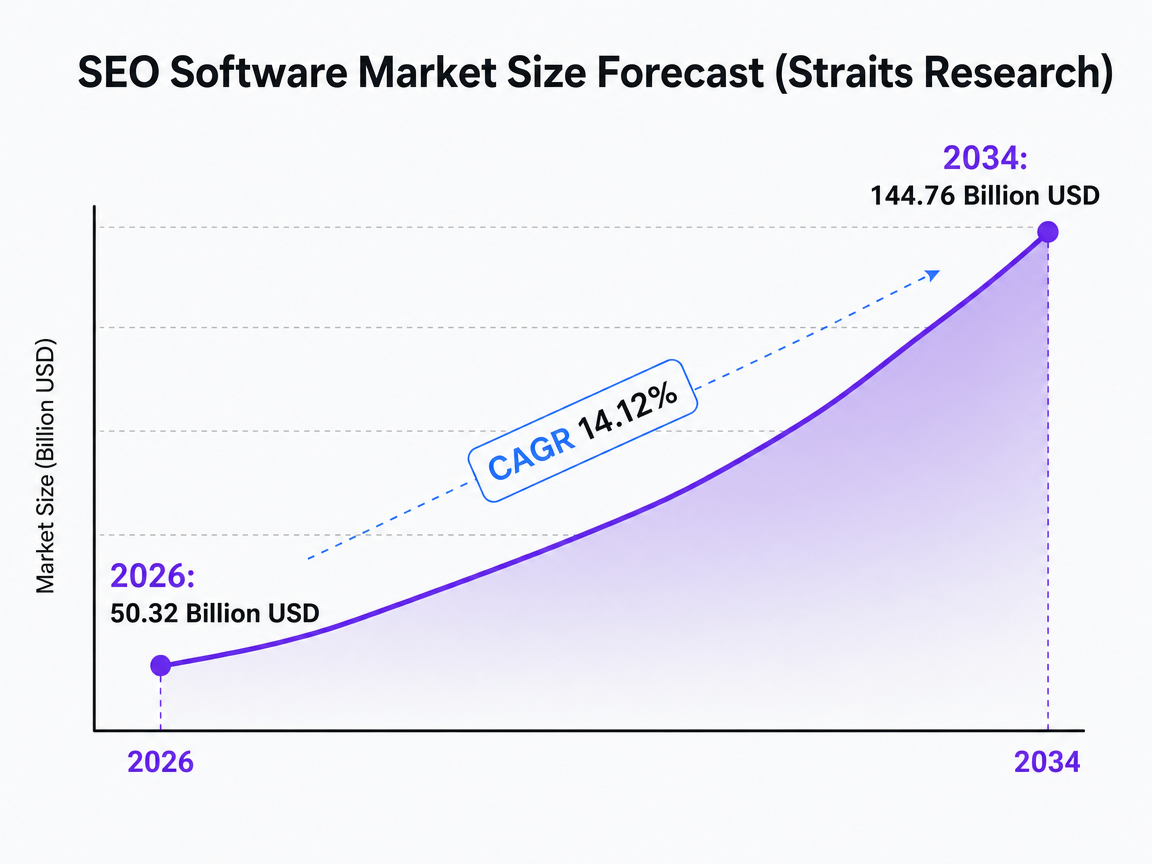 SEO Software Market Size Forecast (Straits Research)
A time series showing the projected growth of the global SEO software market from 2026 to 2034, with a CAGR of 14.12%. This provides a second forecast for comparison.
Frequently Asked Questions
References
- 1.How Profitable are Digital Agencies?.
- 2.How to Calculate and Maximize Ad Agency Profit Margins.
- 3.SEO Software Market Size, Share & Forecast 2026-2034.
- 4.SEO Software Market Size, Share, Growth, Analysis, Report, 2034.
- 5.The 11 best SEO tools.
- 6.Enterprise SEO Platforms Market Share, Size, Trends | 2035.
- 7.How to make your marketing agency more profitable.
- 8.The Ultimate Guide to Optimizing Profit Margins in Marketing Agencies.
- 9.Top 7 Cost-Effective SEO Tools for Small Businesses.
- 10.15 Best SEO Tools for Agencies Tested on Real Client Work.