
Key Takeaways
- The fully-loaded cost of a single design seat runs $130K–$150K, meaning agencies need roughly $260K–$300K in attributable revenue per seat to hold a 50% gross margin 1.
- Undercutting market pay pulls in candidates who can't clear the floor elsewhere, and below-market hires become flight risks within 12 months—forcing agencies to pay replacement costs twice in two years.
- Conflating designer, developer, and technical SEO into one job description guarantees two of the three disciplines ship badly; the $98,090 design seat is priced for design competency, not engineering or search strategy 1.
- Across four delivery models priced against the same scope, only the AI-augmented configuration lets a single senior seat carry 12+ clients without hitting the throughput cliff that breaks hybrid seats at six.
- An SEO-aware designer is worth near-median pay when they bring four specific competencies—intent-mapped IA, semantic HTML fluency, asset discipline, and Core Web Vitals awareness at the design stage—not a vague claim of SEO knowledge.
- McKinsey's 2025 survey shows wide AI adoption but narrow value capture because agencies buy tools instead of redesigning workflows; gains arrive only when the platform layer absorbs repeatable execution 5.
- Portfolio and multi-location operators hold margin with one strategist per 25–40 locations plus a production layer for location-level execution—skipping this split forces either thin pages or payroll that erases per-location margin 1.
- A defensible 24-month model splits strategist, SEO specialist, and designer scopes, then routes repeatable production through an approval-first platform rather than billing it as senior hours.
The Margin Math Behind SEO Web Design Hires
The wage floor for the role has moved. The Bureau of Labor Statistics reports a May 2024 median annual wage of $98,090 for web and digital interface designers and $90,930 for web developers, with employment projected to grow 7% from 2024 to 2034 1. Those are medians, not ceilings. Senior practitioners who can ship SEO-aware design without a babysitter clear those numbers by a wide margin in most metros.
Agency owners reading this already know the gross math. A designer at $98,090 base translates to roughly $130,000 to $150,000 fully loaded once payroll taxes, benefits, software seats, hardware, and management time get counted. To carry that single seat at a 50% gross margin on labor, the agency needs to bill out roughly $260,000 to $300,000 in attributable design revenue per year against that headcount. On a $4,500-per-month retainer, that is five to six clients whose work that one person actually touches—before any account management, strategy, or QA load shows up.
The trap is treating this as a hiring problem. It is a production-architecture problem dressed up as a hiring problem. The agencies protecting margin in 2025 are not the ones finding cheaper designers. They are the ones who have stopped paying senior wages for work that no longer requires senior judgment, and who have redrawn the line between strategic decisions (which stay human) and repeatable execution (which gets compressed). The rest of this piece maps the wage pressure, the role-conflation tax most owners are still paying, and a four-model delivery comparison priced against the same deliverable.
Why Cheaper Hires Don't Fix the Margin Problem
The Demand Floor Under Web Talent Wages
Owners chasing cheaper hires are reading the labor market wrong. A 2024 survey of companies employing web developers found 91% planned to maintain or increase headcount, with software and web developer roles projected to grow 16% through 2032 12. That is the demand side of the equation hardening, not softening, against agency hiring budgets.
The pricing implication is straightforward. When nine out of ten employers are holding or adding seats, the marginal candidate has options. Counter-offers from in-house marketing teams, product companies, and SaaS firms set the floor for what an agency must pay to land a competent SEO-aware designer. Trying to undercut that floor pulls in candidates who could not clear it elsewhere—junior practitioners, generalists without SEO fluency, or developers without design judgment. Agencies then absorb the training cost, the rework cost, and the client-relationship cost when the work ships slow or off-brief.
The second-order effect is retention. A hire brought in 15% below market because the agency squeezed the offer becomes a flight risk within 12 months. Replacement cost on a mid-level web role typically runs three to six months of fully-loaded compensation once recruiting fees, ramp time, and lost throughput are counted. Owners who treat the offer letter as the margin lever end up paying that replacement tax twice in 24 months.
Regional Arbitrage Is Closing Faster Than Agencies Expect
The other reflex—move hiring to a lower-cost metro and pocket the wage differential—is degrading. Federal projections show 7% national growth for web developers and digital designers from 2024 to 2034 1. South Carolina's state workforce board projects 24% growth for computer and mathematical occupations from 2022 to 2032, with web developer and web/digital interface designer roles ranking in the top decile of fastest-growing jobs in the state 3. That gap—7% national against 24% in a single secondary market—is the geographic wage arbitrage compressing in real time.
The mechanism is remote work plus distributed hiring. A designer in Greenville, Charleston, or Columbia now fields offers from New York agencies, Bay Area product companies, and Austin SaaS firms without relocating. Local salary bands get pulled upward toward the highest remote bidder. Agencies that built their margin model on a 20% to 30% regional discount are watching that discount shrink by a few percentage points each cycle.
The practical read for owners: do not assume a non-coastal hire still costs what it cost in 2021. Re-benchmark the offer against remote-inclusive comp data before scoping a role. And stop pricing client retainers as if the next backfill will come in cheaper than the last one. The labor side is not where the margin recovery is hiding—the production architecture is, which the next section unpacks role by role.
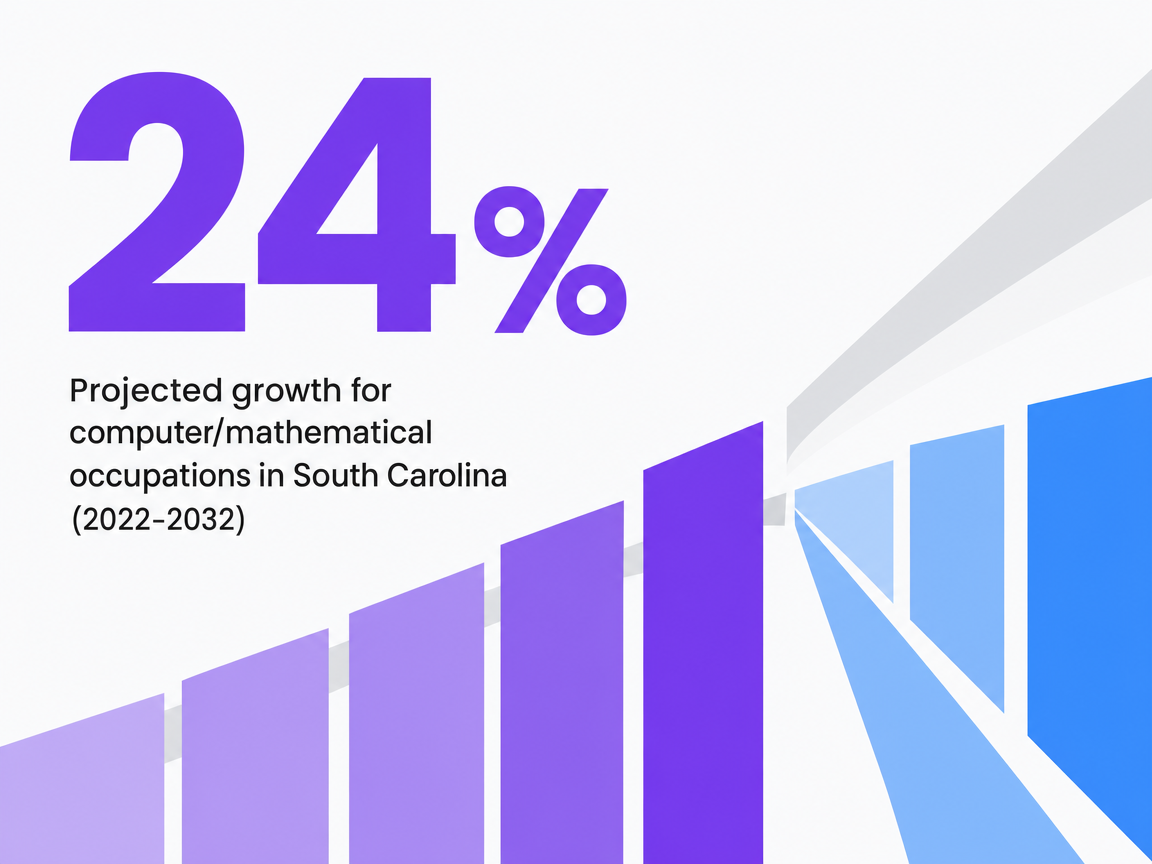 Projected growth for computer/mathematical occupations in South Carolina (2022-2032)
Projected growth for computer/mathematical occupations in South Carolina (2022-2032)
Test AI-driven SEO web design workflows now
Experience streamlined SEO web design delivery with measurable results before making any commitment.
Stop Conflating Three Roles Into One Hire
What a Web/Digital Interface Designer Actually Owns
The BLS definition is narrower than most agency job descriptions admit. Web and digital interface designers design user interfaces and websites, then develop and test layouts, navigation, and functionality for usability and compatibility 11. That is UX, visual hierarchy, component systems, and the front-of-house decisions that determine whether a visitor can find the booking form without thinking. It is not server response time, schema markup, or Core Web Vitals tuning.
Champlain's skills inventory for the role lists UX design, visual design, HTML and CSS fundamentals, and time management—a competency stack built around making the interface work for humans, not search engines 10. The HTML/CSS literacy matters, but it is implementation-adjacent, not deep engineering. A designer who can mark up a hero section is not the same person who should be auditing render-blocking JavaScript.
The operational point for owners: when an agency hires one person at $98,090 1and expects them to own UX, ship production code, and run technical SEO, two of those three jobs get done badly. The seat is priced for the design competency. Anything else is overflow work the person was never scoped to handle, and clients feel it in the third revision cycle.
What a Web Developer Actually Owns
Developers sit on the other side of the line. The BLS occupational page describes the role as developing and implementing websites, web applications, and interactive interfaces, plus optimizing site performance, scalability, and server-side code 7. That is the engineering layer—build pipelines, hosting configuration, page speed, database queries, and the integration work that makes a CMS behave under load.
A developer at the May 2024 median of $90,930 is priced for that engineering competency, not for picking typography or running keyword research 1. Agencies that ask a developer to mock up landing pages in Figma are paying engineering rates for design output that a junior designer would produce faster and better.
The overlap with design is real but narrow. A strong developer translates a designer's component library into clean, performant markup and catches accessibility gaps the design file did not address. That handoff is where SEO-relevant decisions actually get implemented—heading structure, semantic HTML, image optimization, lazy-loading rules. Skip the developer seat, and those decisions get made by default by whoever publishes the page, which is usually nobody in particular.
Where Technical SEO Sits—and Why It's a Third Seat
Neither BLS role definition covers technical SEO. The designer page is silent on search performance 11. The developer page mentions performance optimization but frames it as engineering, not as the strategy layer that decides which pages get indexed, how internal linking distributes authority, or which schema types match the client's intent 7. Technical SEO is its own discipline with its own toolset—crawl analysis, log file review, SERP feature targeting, content-to-query mapping.
Most agencies handle this by stapling SEO onto the designer's job description and hoping the candidate has picked it up somewhere. The result is predictable. A designer who learned SEO from blog posts will hit the obvious items—title tags, alt text, an XML sitemap—and miss the structural decisions that actually move rankings: information architecture, canonical strategy on filtered pages, render-path issues that block indexing.
The agencies protecting margin treat SEO as a separate seat or a separate vendor relationship, then build a workflow where the designer consumes SEO direction as inputs rather than generating it. That keeps the $98,090 design seat focused on design output 1and pushes the strategic SEO work to a specialist whose hour rate is justified by the decisions they make, not the pixels they push.
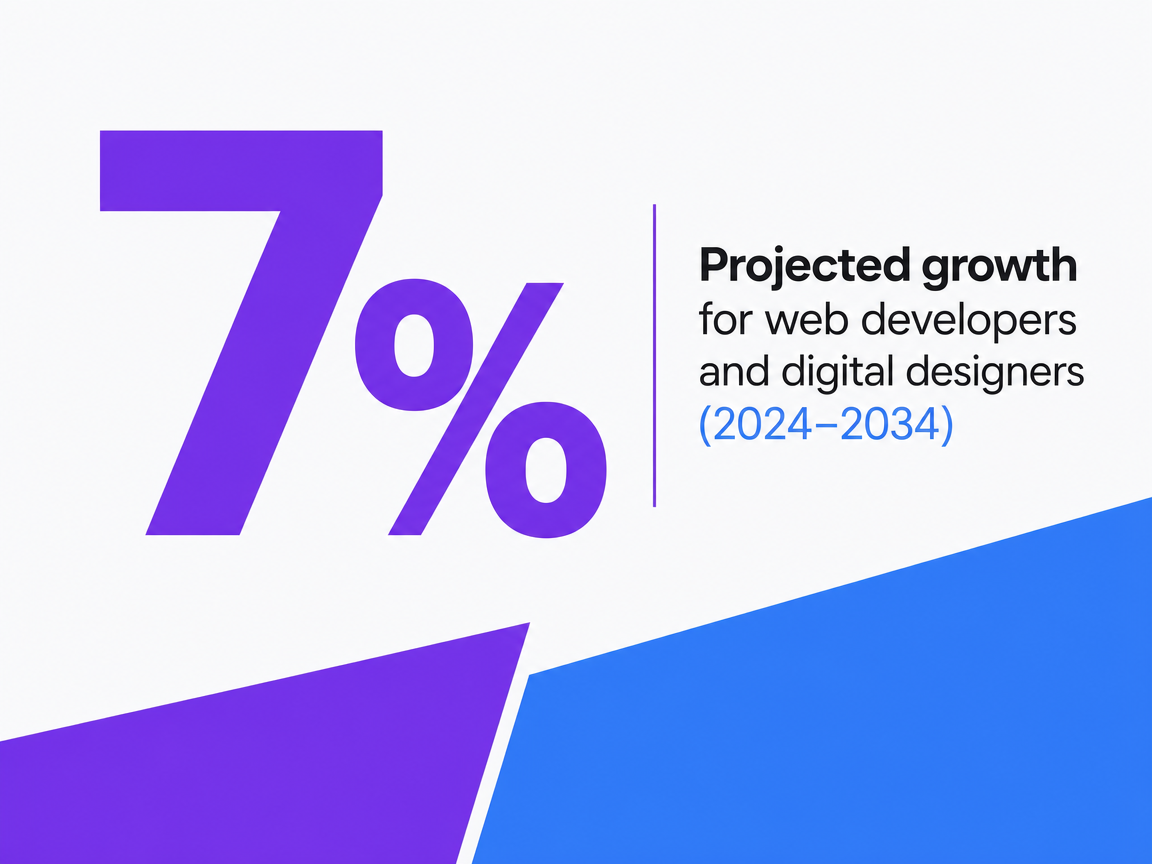 Projected growth for web developers and digital designers (2024-2034)
Projected growth for web developers and digital designers (2024-2034)
Four Delivery Models, Priced Against the Same Deliverable
To make the comparison concrete, price the same scope across four configurations: a 15-page service-business website with on-page SEO, technical SEO setup, and 12 months of optimization. Anchor all wage inputs to the BLS May 2024 medians of $90,930 for web developers and $98,090 for web and digital interface designers, with 7% projected employment growth through 2034 1. Treat benefits-and-overhead multiplier, throughput, and retainer price as labeled variables so owners can swap in their own numbers.
| Configuration | Fully-Loaded Annual Cost | Throughput (sites/yr) | Revision Cycle | Margin at $4,500/mo Retainer (12 clients) |
|---|---|---|---|---|
| Senior In-House Hybrid (one seat covering design + dev + SEO) | ~$98,090 base × 1.35 overhead = ~$132,400 1 | 4–6 (variable) | 7–10 business days | Negative to thin: revenue $648K, but throughput cap forces subcontracting |
| Offshore Two-Person Pod (designer + developer, US-managed) | ~$60K–$80K all-in (variable by region) + ~$25K US oversight | 10–14 | 10–14 business days | Moderate: revenue $648K, cost ~$105K, but QA load reduces effective margin |
| Fractional Contractor Stack (specialist designer + dev + SEO, billed per project) | ~$2,500–$4,000 per site in COGS (variable) | Demand-flexible | Variable by contractor availability | Higher per-project margin, lower predictability across the book |
| AI-Augmented In-House Strategist (one senior seat + production-layer platform) | ~$98,090 base × 1.35 = ~$132,400 + platform cost (variable) 1 | 15–25 | 3–5 business days | Highest: strategist judgment stays human, execution compresses |
The hybrid seat looks cheapest on paper and is the most common configuration agencies default into. It rarely clears 50% gross margin once the seat hits its throughput ceiling—one person cannot ship four disciplines at speed, so overflow gets subcontracted at retail rates that eat the spread. The offshore pod scales throughput but adds management cost most owners underestimate: someone senior in the US spends 8–12 hours a week on QA, briefs, and client-facing translation. The fractional stack delivers the cleanest per-project margin when demand is steady, but the cost flexes with volume in both directions and the agency carries no IP between engagements. The AI-augmented configuration is the only model where a single senior seat can support 12-plus active clients without the throughput cliff, because the production work that used to consume 60% of the seat's hours gets compressed against a platform layer—leaving the strategist's hours for the decisions clients actually pay senior rates for.
Scale SEO Web Design Delivery Without Margin Erosion
Discuss proven workflows for integrating SEO web designers efficiently—minimizing production overhead while maintaining quality and client trust. Tailored for agencies managing multi-site or high-volume projects.
Scoping a Competent SEO-Aware Designer
The Competency Stack Worth Paying For
An SEO-aware designer is not a unicorn who replaces three seats. The role is a designer with enough technical literacy to make SEO-correct decisions inside their own deliverables and enough discipline to take direction from a separate SEO specialist without arguing about it.
The baseline stack starts with the Champlain skills inventory: UX design, visual design, HTML and CSS fundamentals, and time management 10. Layered on top, an SEO-aware designer needs four specific competencies that most portfolios do not advertise.
- First, information architecture that maps to search intent—building navigation and page hierarchies around how users query, not around internal org charts.
- Second, semantic HTML fluency—knowing why an h1 placement and a properly nested heading structure matter for both screen readers and crawlers.
- Third, image and asset discipline—format selection, dimension control, lazy-loading patterns, and alt text that reads like a human wrote it.
- Fourth, Core Web Vitals awareness at the design stage—catching layout shift risks and oversized hero assets in Figma rather than in production.
None of this requires the designer to run a crawl audit or write redirect rules. It requires them to ship files that do not create technical debt the developer or SEO specialist has to clean up after the fact. That is the competency stack worth paying near the $98,090 median for 1.
Interview Signals That Predict Production Throughput
Portfolios lie by omission. A designer can show ten polished case studies and still ship slow, miss SEO basics, and burn three revision cycles on every project. The interview has to surface throughput signals, not aesthetic preferences.
Three exercises do the work.
- Pull a live page from one of the candidate's portfolio sites and ask them to walk through the heading structure, the image sizing logic, and what they would change if the page needed to rank for a specific commercial query. Strong candidates explain trade-offs in under ten minutes; weak ones default to color and typography.
- Next, hand them a one-page brief with a target query, a competitor SERP, and a content outline, and ask for a wireframe and a list of questions they would send back. The questions matter more than the wireframe—designers who ask about internal linking, page templates, and CMS constraints will ship faster than those who ask about brand colors.
- Finally, ask for their average revision count on the last five projects and what caused the extra rounds. Candidates who own the answer—and name specific process changes they made—predict the throughput a hybrid seat actually delivers. The ones who blame clients predict the throughput owners actually pay for.
AI as a Production-Layer Decision, Not a Tool Purchase
Why Adoption Is Up But Value Capture Lags
McKinsey's 2025 global AI survey found that a larger share of organizations now use AI in at least one business function, yet most have not scaled the technology enterprise-wide or captured the ROI the early case studies promised 5. That gap—wide adoption, narrow value capture—is the single most useful data point for an agency owner deciding what to do about production costs.
The gap exists because agencies are buying tools, not redesigning operating models. A designer with a ChatGPT seat and a Midjourney subscription still runs the same brief-design-revise loop. A developer with Copilot still bills against the same project plan. The marginal hour saved per task gets reabsorbed into the same workflow, which is why the line items on the P&L do not move. Earlier McKinsey work on generative AI in marketing made the same point from the production side: the productivity gains show up when AI is embedded in the workflow, not when it sits next to it 4.
For an agency, the practical translation is this. Adding AI tools to the existing tech stack produces incremental speed-ups inside seats that are still priced at $90,930 to $98,090 per year 1. Re-architecting the production layer so the platform handles the repeatable execution work, and the senior seat handles the judgment, is what changes the unit economics.
What to Keep Human and What to Compress
The line is easier to draw than most owners assume. Keep human anything that requires judgment under ambiguity, accountability to a client relationship, or pattern recognition across a portfolio. Compress anything that is repeatable, specifiable in advance, and verifiable after the fact.
On the keep-human side:
- information architecture decisions that depend on knowing the client's sales process,
- prioritization calls between competing SEO opportunities,
- creative direction on brand-defining pages,
- and any conversation where the client is paying for a strategist's recommendation rather than a deliverable.
These are the hours that justify a senior comp band. Strip them out and the seat becomes a production manager whose rate clients will eventually contest.
On the compress side:
- keyword expansion and clustering,
- on-page optimization against a specified brief,
- schema markup generation,
- alt text drafting,
- internal link suggestions,
- meta description variants,
- technical audit triage,
- and the first draft of layout components against an approved system.
Each is repeatable, has a clear success criterion, and benefits from a human approval step rather than a human execution step.
The operating model that follows is approval-first, not autopilot. The platform proposes, the strategist approves or redirects, the work ships. That sequence is what lets a single senior seat carry 12-plus active clients without the throughput cliff the hybrid model hits at six, and what closes the adoption-versus-value-capture gap McKinsey's survey keeps measuring 5.
Streamline SEO Web Design Production Without Compromising Margins
Access a unified workflow that coordinates SEO web design, content, and technical execution—minimizing production overhead while maintaining full visibility and approval control at every stage.
If You Run a Multi-Location or Portfolio Practice
Owners running a portfolio of brands, a multi-location franchise system, or an agency-of-record relationship with 20-plus locations face a different math problem. The hybrid seat that strains at six clients collapses at 30 locations. Each location wants local landing pages, local schema, local review integration, and quarterly refreshes—work that is structurally repeatable across the portfolio but cosmetically distinct enough that templated output without strategist oversight reads as filler to both clients and search engines.
The configuration that holds up at portfolio scale is a small senior bench—one strategist per 25 to 40 locations—paired with a production layer that handles the location-level execution against approved templates. The strategist owns the brand-wide architecture, the query maps, and the prioritization calls when a flagship location underperforms. The platform handles the per-location page builds, schema population, and on-page optimization that would otherwise require three to four mid-level seats priced near the $98,090 design median or the $90,930 developer median 1. Portfolio operators who skip this split end up either understaffing and shipping thin local pages, or overstaffing and watching the per-location margin disappear into payroll.
A Defensible Operating Model for the Next 24 Months
The owners who hold margin through 2027 will not be the ones who win the next hiring cycle. They will be the ones who stopped paying senior wages for production work and rebuilt the delivery layer around a different default. The wage floor is not coming down—federal projections through 2034 confirm sustained demand and the upward pressure that comes with it 1. Cost relief has to come from somewhere else.
The model that holds up reads like this. One senior strategist per pod owns client relationships, information architecture, and the prioritization calls that justify retainer pricing. A specialist SEO seat—internal or fractional—generates the technical direction the designer consumes as input. The designer scope stays inside UX, visual systems, and SEO-correct front-end output, not stapled-on technical audits. Production work that is repeatable and verifiable—on-page optimization, schema, alt text, internal linking, location-page builds, layout components against an approved system—runs through an approval-first platform layer rather than billable hours.
Three commitments make the model defensible.
- Stop hiring against job descriptions that conflate three disciplines.
- Stop pricing retainers as if the next backfill will come in cheaper.
- And stop treating AI as a tool the team uses between tasks instead of the production layer the team approves work through.
Platforms in this category—Vectoron among them—are built around that approval-first sequence, which is the operating shift that closes the adoption-versus-value gap and keeps senior hours pointed at the decisions clients actually pay for.
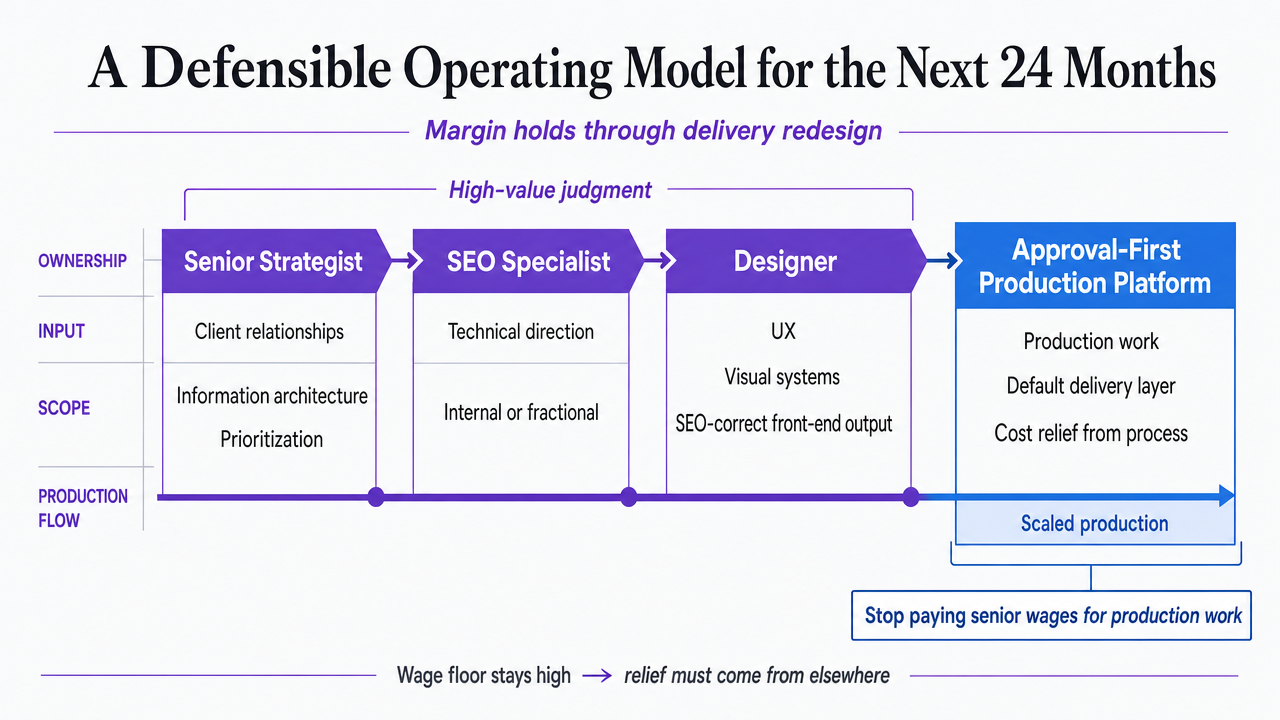 Visualize the four-layer operating model described in the closing section (strategist, SEO specialist, designer, approval-first production platform) as a process/operating-model diagram tied directly to the section's prescribed structure
Frequently Asked Questions
References
- 1.Web Developers and Digital Designers.
- 2.New BLS Employment Projections: 3 Charts.
- 3.2032 Employment Projections: Computer and Mathematical Occupations.
- 4.Marketing and sales soar with generative AI.
- 5.The State of AI: Global Survey 2025.
- 6.Industry and occupational employment projections overview and highlights, 2022–32.
- 7.Web Developers - Bureau of Labor Statistics.
- 8.Are Web Developers in Demand?.
- 9.Are Web Developers in Demand?.
- 10.What Skills Do Web Designers Need?.
- 11.Web and Digital Interface Designers - Bureau of Labor Statistics.
- 12.Is Web Development Oversaturated in 2024?.