
Key Takeaways
- Honest in-house fulfillment math starts at $339,170 in straight BLS median salaries across three roles 6, 5, 7, or roughly $424,000 to $458,000 fully loaded before tooling.
- Offshore shops, domestic boutiques, and AI-assisted approval-gated stacks each scale differently, with only the approval-gated model bending the cost curve rather than flattening it.
- At a $2,500 retainer the in-house pod consumes about 92 percent of revenue, while AI-assisted fulfillment can hold contribution margin in the 70 to 85 percent band.
- BLS projects 6 to 9 percent employment growth across the three SEO pod roles through 2034 5, 7, 6, compounding wage pressure that in-house models absorb directly into margin.
- The reselling agency is the advertiser of record, so FTC substantiation rules require documented evidence for every performance claim before it runs 3, 11, with no AI exemption 1.
- Vet partners on evidence quality, not feature lists: source data behind case studies, vertical-specific samples, written QC processes with defect rates, and callable references.
- Replace the 2x markup reflex with contribution margin pricing per tier, accounting for partner cost, account management hours at BLS-anchored rates 6, and tooling allocation.
- For multi-location and franchise portfolios, the honest unit is cost-to-serve per location per month, where AI-assisted production scales closer to flat than per-location boutique pricing.
The Unit Economics Problem Behind Every Reseller Decision
Every agency owner evaluating a white label SEO reseller program is really asking one question: does the per-client cost-to-serve fall faster than client complexity rises? That is the only math that matters. Retainers compress. Scope creeps. Clients want technical audits, content cadence, link acquisition, local schema, and monthly reporting wrapped inside a single line item. Margin is what survives after fulfillment eats the retainer.
The traditional framing pits an in-house hire against an outsourced team. That framing is outdated. A single senior marketing manager carries a $161,030 median annual wage in May 2024, before benefits, taxes, software, or oversight time 6. A management analyst, the role most agencies pull into strategy work, runs $101,190 5. A market research analyst, doing the keyword and competitive work behind every SEO deliverable, sits at $76,950 7. Loaded, that is a fulfillment pod approaching $400,000 before a single deliverable ships.
The real decision is between three delivery models with very different cost curves:
- offshore production shops
- domestic boutique resellers
- AI-assisted production stacks with human approval gates
Each scales differently as client count grows. Each carries a different substantiation exposure when performance claims get passed to end clients under FTC truth-in-advertising rules 11. The rest of this analysis builds the per-client economics, the model comparisons, and the partner due diligence that determines which curve an agency actually rides.
What In-House Fulfillment Actually Costs
Before comparing reseller models, the in-house number has to be honest. Most agency owners underestimate it because they price the salary, not the fully loaded cost-to-deliver.
The three roles that show up in any credible SEO fulfillment pod are a marketing manager who owns client strategy and approves work, a management analyst or senior strategist who builds the technical and content roadmap, and a market research analyst who runs keyword research, competitive analysis, and reporting. Using BLS May 2024 medians, those salaries are $161,030 for advertising, promotions, and marketing managers 6, $101,190 for management analysts 5, and $76,950 for market research analysts 7. Straight salary alone totals $339,170.
That figure is the floor, not the ceiling. Add 25 to 35 percent for payroll taxes, health benefits, retirement contributions, paid time off, and equipment, which is the standard fully-loaded multiplier most agency operators apply. The pod now costs $424,000 to $458,000 before any SEO tooling, link budgets, training, recruiter fees, or management overhead from the owner's own time. Tooling alone, covering rank tracking, crawl, link analysis, and reporting stacks, typically runs another $15,000 to $35,000 annually.
The more useful number is cost-per-client. A three-person pod can credibly service somewhere between twelve and twenty active retainers depending on scope. At sixteen clients, the loaded labor cost alone runs roughly $26,500 to $28,600 per client per year, or about $2,200 to $2,400 per month before any tooling, owner time, or sales cost. On a $2,500 monthly retainer, fulfillment labor has already consumed nearly the entire revenue line.
The BLS occupational wage table for market research analysts and marketing specialists adds a second data point worth noting: the mean annual wage of $83,190 sits meaningfully above the $74,680 median 8, which means any specialist hire competitive enough to retain will trend toward the upper half of that distribution, not the median.
This is the baseline number every reseller comparison gets measured against. It also explains why agencies that try to grow past twenty clients with in-house pods usually hit a wall: the next hire is a step-function cost, not a marginal one.
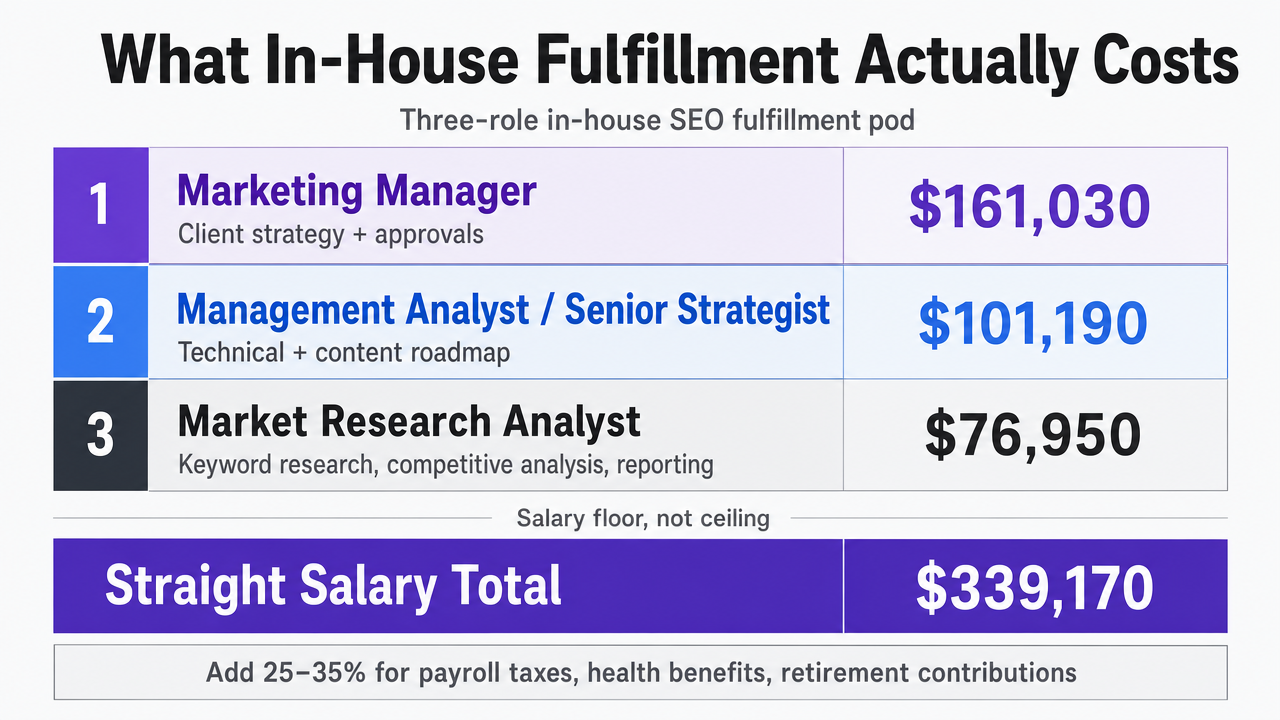 Visualize the three-role in-house SEO pod salary stack cited from BLS data, since the section explicitly breaks down each role's median wage and the total
Three Delivery Models, Three Different Margin Curves
Offshore Production Shops
Offshore production is the model most agency owners encounter first because the per-deliverable price looks unbeatable. A blog post for $40. A backlink package for a few hundred dollars. Monthly retainer fulfillment quoted at a fraction of any domestic alternative. The math at the deliverable level is real. The math at the client level is not.
The curve breaks on three variables:
- revision cycles
- account-management time
- quality variance across writers
An agency owner who appears to save 70 percent on production typically spends that savings back inside internal QA, rewrites, and client-facing damage control when a low-context draft reaches the wrong inbox. The cost-to-serve does not show up on the invoice; it shows up in the marketing manager's calendar.
There is also a substantiation problem worth naming once and revisiting in the dedicated section below. Performance claims, ranking guarantees, and case study assertions passed through from an offshore partner still belong to the reselling agency under FTC truth-in-advertising rules 11. The agency is the advertiser of record to its clients.
Offshore production works as a margin lever when scope is narrow, briefs are templated, and the agency carries enough senior review capacity to catch quality drift. It stops working the moment client complexity rises faster than that review capacity.
Domestic Boutique Resellers
Domestic boutique resellers sit in the middle of the cost curve and the middle of the trust curve. The pitch is straightforward: native-language writers, US-based account managers, familiar reporting templates, and a per-retainer cost that lands somewhere between offshore production and an in-house pod.
The margin profile is more predictable than offshore but flatter. Boutique partners typically price as a percentage of the client retainer, which means margin expansion is capped by whatever discount the partner is willing to extend on volume. An agency carrying twenty clients at a $2,500 retainer rarely negotiates the same per-account cost as an agency carrying eighty, so the model rewards scale without delivering breakthrough unit economics for mid-sized operators.
Where boutique resellers earn their cost is consistency. Briefs require less translation. Strategy documents arrive in a format the agency can present without rebuilding. Senior review time on the agency side drops. That recovered manager hours, valued at a $161,030 median salary 6, is where the real savings sit, not on the line-item invoice.
The ceiling is structural. Boutique fulfillment still scales linearly with human production hours, which means the cost curve flattens but never bends.
AI-Assisted, Approval-Gated Fulfillment Stacks
The third model is the one most agency owners are still pricing carefully because it does not look like the first two. AI-assisted fulfillment with human approval gates separates production from oversight. The system drafts, researches, optimizes, and queues work. A human approves before anything reaches a client property. The cost curve bends because the marginal cost of an additional deliverable is closer to compute than to labor, while the marginal cost of an additional client is closer to review time than to a new hire.
The practical effect on the in-house baseline is direct. A three-person pod servicing sixteen clients carries roughly $2,200 to $2,400 per client per month in loaded labor cost, as the prior section established. An approval-gated stack shifts that ratio because the senior reviewer is no longer also the producer. One marketing manager at the $161,030 BLS median 6 can review work across a significantly larger client book when the production layer is not consuming their hours.
There are two operator risks worth naming. First, FTC posture on AI-related claims is explicit:
"there is no AI exemption from the laws on the books"
1. Performance claims generated by an AI system carry the same substantiation burden as any other claim. Second, approval gates only protect margin if they are enforced. A stack that auto-publishes degrades into the offshore problem: speed without review.
The model rewards agencies that already have senior strategists and want to remove the production layer beneath them. It punishes agencies that treat AI fulfillment as a way to skip review.
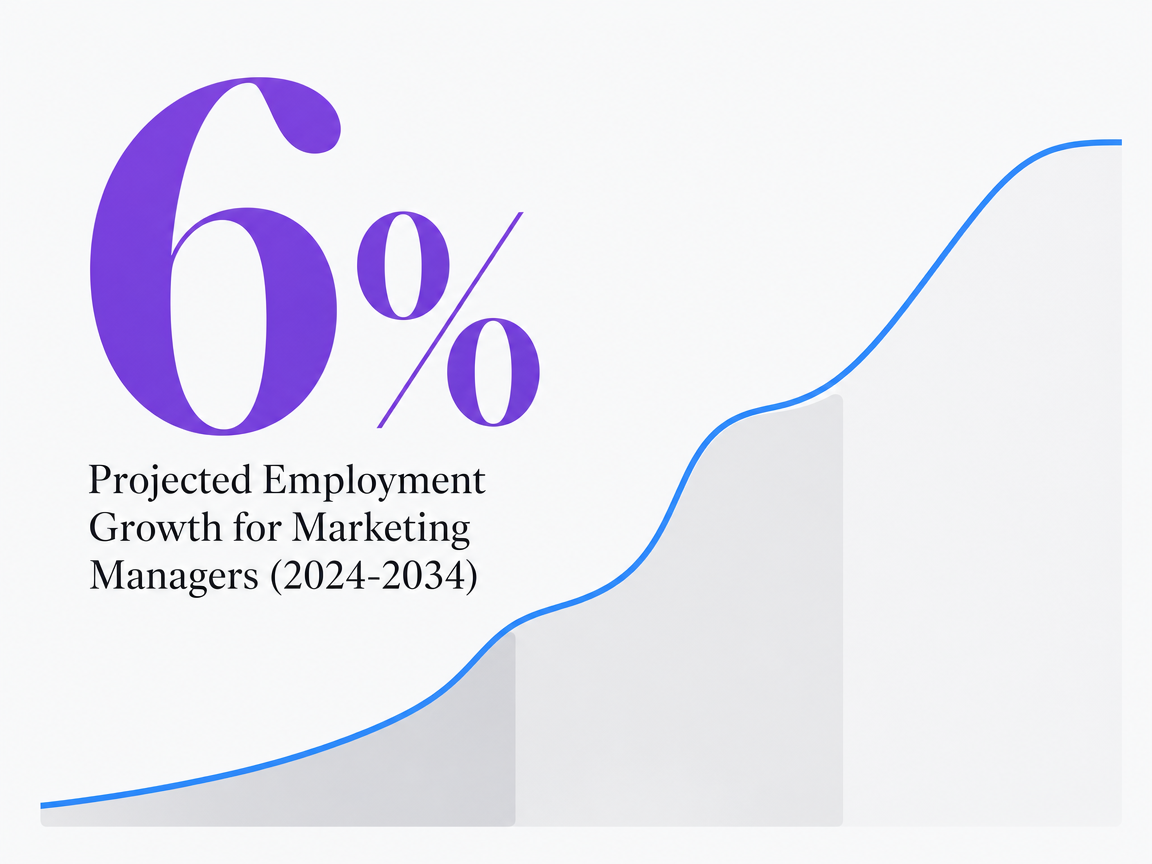 Projected Employment Growth for Marketing Managers (2024-2034)
Projected Employment Growth for Marketing Managers (2024-2034)
Test Seamless SEO Execution at Scale Free
Experience automated SEO delivery and publish live results before making a long-term commitment.
A Contribution Margin Model at $2,500 and $5,000 Retainers
The cleanest way to compare delivery models is to hold the retainer constant and force each model to defend its gross margin. The in-house pod number comes from BLS wage data and is therefore the only line that can be stated without illustrative assumptions. The two reseller lines that follow are illustrative ranges, not sourced benchmarks. Partner pricing varies by scope, vertical, and contract structure, and inventing a single number would mislead more than it clarifies.
The in-house anchor is the three-role pod from the prior section. Marketing manager median at $161,030 6, management analyst median at $101,190 5, and market research analyst median at $76,950 7 total $339,170 in straight salary, or roughly $424,000 to $458,000 fully loaded. Allocated across sixteen retainers, that lands near $2,300 per client per month in pure labor. The BLS occupational wage table also shows that any specialist hire competitive enough to retain trends toward the $83,190 mean rather than the $74,680 median 8, which pushes the loaded figure higher in tighter labor markets.
At a $2,500 monthly retainer, the in-house pod consumes roughly 92 percent of revenue in labor alone. Gross margin lands in the single digits before tooling, sales cost, or owner time. At a $5,000 retainer with the same per-client labor load, gross margin recovers to roughly 54 percent, which is why agencies anchored on premium retainers can run in-house and survive while agencies anchored on $2,000 to $3,000 retainers cannot.
The traditional reseller line, expressed illustratively at 35 to 50 percent of retainer as variable fulfillment cost, produces gross margin in the 50 to 65 percent band at $2,500 and the same band at $5,000. The curve is flat because partner cost scales with retainer. Scale rewards the partner more than the reselling agency.
The AI-assisted, approval-gated line behaves differently. Illustrative variable cost in the 15 to 30 percent band, combined with a fixed senior reviewer cost spread across more clients, produces gross margin in the 70 to 85 percent band at $2,500 and widens further at $5,000 because the reviewer overhead is already absorbed. The curve bends rather than flattens.
The SBA frames the discipline simply: compare marketing and sales costs to the revenue they generate 13. Applied at the retainer level rather than the agency level, that comparison is the only honest test of which delivery model deserves the next ten clients.
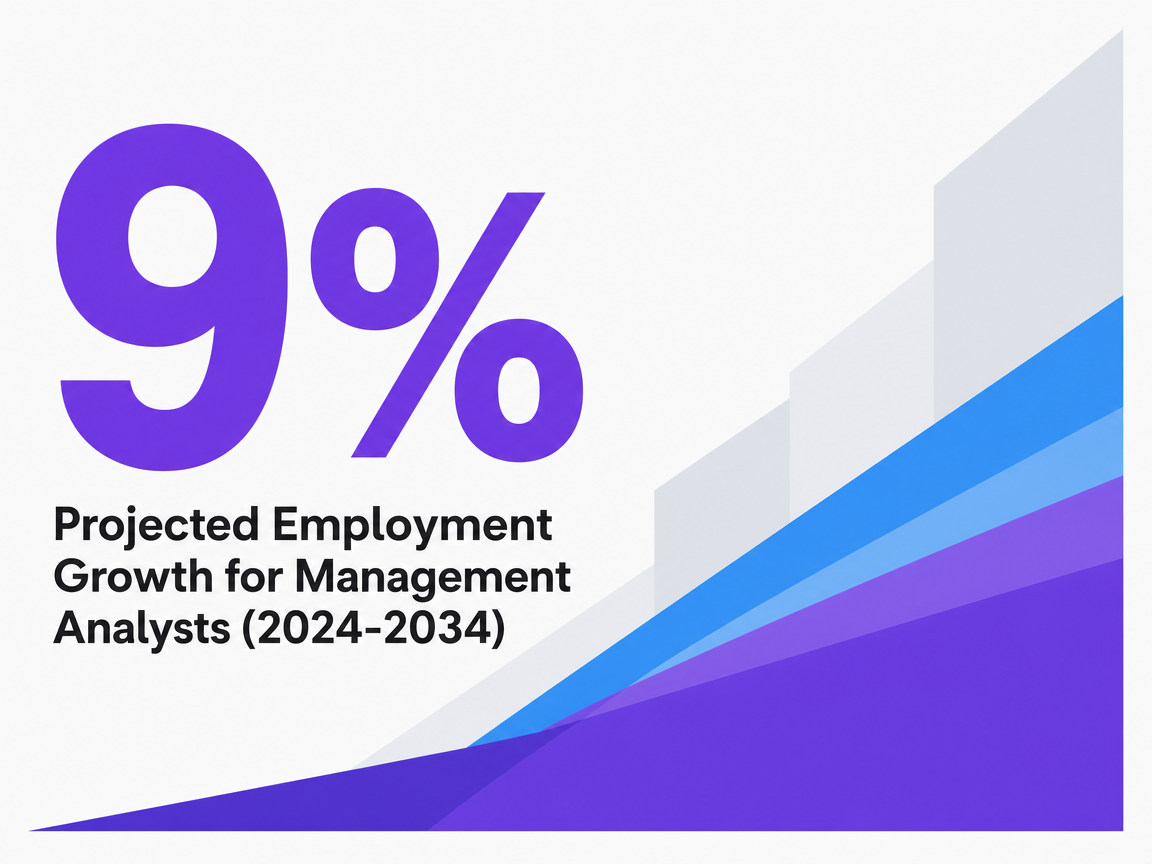 Projected Employment Growth for Management Analysts (2024-2034)
Projected Employment Growth for Management Analysts (2024-2034)
Why Wage Pressure Keeps Compounding Against In-House Pods
The in-house cost baseline established earlier is not a static number. It drifts upward, and the BLS projections explain why. Across the three roles that staff a credible SEO pod, the Bureau of Labor Statistics projects employment growth of 9 percent for management analysts, 7 percent for market research analysts, and 6 percent for advertising, promotions, and marketing managers from 2024 to 2034 5, 7, 6. Each rate sits at or above the all-occupations average. None of them are slowing.
Growth at that pace, in occupations already commanding six-figure or near-six-figure medians, signals sustained demand competing for the same candidate pool. Agency owners feel this as offer escalation. The senior strategist who accepted $95,000 two years ago now fields counteroffers in the $115,000 range. The marketing manager hired at $140,000 expects $165,000 at the next renewal cycle. The wage table for market research analysts and marketing specialists already shows the mean running roughly 11 percent above the median 8, which is the statistical fingerprint of a market where the retainable half of the talent pool clusters above the midpoint.
The compounding effect matters more than any single year's raise. A pod that costs $458,000 fully loaded today, growing at a blended 4 to 5 percent annual wage trajectory consistent with these demand projections, costs closer to $560,000 within five years. Per-client labor allocation rises in lockstep unless headcount falls or client count rises faster than wages, neither of which happens reliably inside agencies running linear human production.
Reseller models do not eliminate wage pressure. They redistribute it. A partner carrying its own labor exposure passes some of that pressure through in price increases. The difference is the curve. Variable-cost fulfillment lets an agency raise client count without proportionally raising payroll, while in-house pods absorb every BLS basis point directly into gross margin.
Streamline Agency Operations with Data-Driven White Label SEO Execution
Connect with our team to see how AI-powered workflows can help your agency deliver scalable, high-margin SEO services—without expanding your internal production team or sacrificing visibility into client outcomes.
Substantiation Is the First-Class Operational Risk
Margin math fails fast when a client outcome claim attracts regulatory attention. The reselling agency is the advertiser of record. Whatever a partner provided in a deck, a case study, or a results page becomes the agency's claim the moment it reaches a prospect or client. The FTC frames the standard plainly: claims must be truthful, not deceptive, and evidence-based 11. That standard does not soften because production was outsourced.
The operational consequence is a pre-dissemination burden, not a post-hoc defense. The Commission's substantiation policy requires a reasonable basis for objective claims before they run, with the level of proof scaled to the claim itself 3. A statement that a reseller's process "typically delivers first-page rankings within ninety days" is an objective claim. A statement that a campaign "increased qualified leads by 240 percent" is an objective claim. Both need documented evidence sitting in the agency's files at the moment they are made, not assembled later if a complaint arrives.
AI-assisted fulfillment does not reduce that burden. The FTC has been explicit that
"there is no AI exemption from the laws on the books,"
and Operation AI Comply targeted firms using AI to generate marketing claims and earnings representations without support 1. A reseller running an AI production layer inherits every word the model writes into a client-facing case study, schema markup, or meta description that asserts a result.
Exposure rises sharply in regulated verticals. Agencies serving healthcare, behavioral health, dental, and legal clients operate in categories where the FTC has shown willingness to obtain orders requiring future marketing to be truthful and substantiated, and to pursue penalty actions specifically tied to substantiation failures 9, 10. The cost of a single enforcement letter, even one that ends in a consent rather than a penalty, can erase a year of contribution margin across a book of business.
Three operator practices matter:
- Performance language in client-facing materials should be quantified against documented account data, not partner-supplied averages.
- Every approval gate in an AI-assisted stack should include a substantiation check before publication, because the agency, not the model, owns the claim.
- Reseller contracts should require partners to deliver source data behind any results they reference, on demand, with the response time short enough to matter if a regulator asks first.
Partner Due Diligence by Evidence Quality, Not Feature List
Most reseller sales decks lead with capabilities: rank tracking dashboards, link inventory, content velocity, white-labeled reporting, dedicated account managers. Capability lists are easy to fake and easier to copy. The harder question, and the one that separates partners worth a multi-year commitment from partners worth a single-quarter trial, is what evidence the partner can produce when an agency asks for it under pressure.
Four evidence categories matter:
- Source data behind any case study referenced in sales materials. A partner that cites a 240 percent traffic lift should produce the underlying analytics export, the date range, and the scope of work that drove it. The FTC standard requires a reasonable basis at the moment a claim is made 3, and that basis transfers to the reselling agency the instant the case study appears in a client deck.
- Sample deliverables tied to the agency's actual verticals, not generic e-commerce or SaaS examples. A reseller that cannot produce two recent healthcare or legal samples on request is signaling either a thin book or unwilling clients, and both predict friction. Sample deliverables should be vertical-specific.
- A documented quality-control process with named reviewers and turnaround SLAs in writing. "We have senior editors" is not a process. A revision cadence, an escalation path, and a defect rate the partner is willing to commit to in the master services agreement is a process.
- References the agency can actually call. Two operating agency owners willing to discuss the partnership candidly, by phone, within a week, indicate a partner that does not need to manage its reference list defensively.
A fifth signal sits underneath all four. The SBA's discipline of comparing marketing cost to revenue generated applies inside the partnership itself 13. A partner that cannot or will not discuss its own unit economics, gross margin posture, or how it absorbs wage pressure across the BLS roles its team occupies, is a partner the agency is asked to trust without symmetry of information. The agency's per-client cost-to-serve depends on the partner's own cost discipline. Opacity on that front almost always shows up later as price increases the agency has no leverage to refuse.
Automate White Label SEO Delivery and Preserve Your Margins
Access a unified platform designed for agencies to streamline SEO production, reduce manual oversight, and scale client campaigns with transparent approval workflows—without increasing headcount or compromising on quality controls.
Pricing and Packaging Without the 2x Markup Reflex
The default reseller pricing advice circulating in agency forums is the same number repeated: mark partner cost up two or three times and call it a day. That heuristic fails the moment retainers vary, scope shifts mid-engagement, or a client adds a vertical that demands deeper substantiation work. Markup math treats fulfillment as a commodity input. Contribution margin math treats each retainer as a revenue line with its own cost stack, which is the only frame that survives a portfolio audit.
The replacement is straightforward. For every retainer tier, the agency calculates contribution margin as retainer revenue minus directly attributable fulfillment cost, account management hours at the relevant BLS-anchored rate, and tooling allocation. A $2,500 retainer carrying $750 in partner fulfillment, three account management hours at a loaded marketing manager rate derived from the $161,030 median 6, and roughly $80 in tooling allocation produces a contribution margin closer to 50 percent than the 66 percent a 3x markup implied. The difference is the account management line, which markup pricing ignores entirely.
Packaging follows the same discipline. Tiered retainers should be defined by review intensity, not deliverable count. A $2,500 tier with templated briefs and a single approval gate carries different review hours than a $5,000 tier with vertical-specific substantiation review for healthcare or legal clients. Pricing those tiers identically on a percentage markup guarantees the higher-scrutiny tier subsidizes the lower one.
The SBA frame applies inside each retainer, not across the agency average: compare cost to revenue at the unit level 13. Agencies that price by contribution margin per tier keep visibility on which clients fund growth and which ones quietly erode it.
If You Manage a Portfolio of Branches or Franchise Locations
Audience shift: this section is for owners whose end clients are multi-location operators, franchise systems, or branch portfolios, rather than single-location businesses. The reseller math changes because the unit being served is no longer the brand. It is the location.
A twenty-location franchise client looks like one logo on a retainer line, but the production load is twenty local landing pages, twenty Google Business Profiles, twenty citation footprints, and twenty review streams to monitor. Pricing the engagement as a single $5,000 retainer applies the wrong denominator. The honest unit is cost-to-serve per location per month. At sixteen locations under one parent contract, an in-house pod allocating $2,300 per client per month in BLS-anchored labor 6, 5, 7 is really allocating roughly $144 per location, which collapses the moment a single market demands custom content or a reputation issue surfaces.
Reseller models bend differently at the location level. Traditional boutique partners typically price per-location add-ons that compound quickly across a portfolio. AI-assisted, approval-gated production scales closer to flat because the marginal cost of a twenty-first location page is compute and review time, not a new writer assignment. Substantiation discipline matters more here as well: any aggregate performance claim across locations needs per-location source data behind it before it appears in a parent-company deck 3.
Frequently Asked Questions
References
- 1.FTC Announces Crackdown on Deceptive AI Claims and Schemes.
- 2.Advertising FAQ's: A Guide for Small Business.
- 3.FTC Policy Statement Regarding Advertising Substantiation.
- 4.Enforcement Policy Statement on Food Advertising.
- 5.Management Analysts : Occupational Outlook Handbook.
- 6.Advertising, Promotions, and Marketing Managers.
- 7.Market Research Analysts.
- 8.Market Research Analysts and Marketing Specialists.
- 9.Penalty Offenses Concerning Substantiation.
- 10.Health Products Compliance Guidance.
- 11.Advertising and Marketing.
- 12.Integrated BEA GDP-BLS Productivity Account.
- 13.Marketing and sales.
- 14.Fact Sheet: President Donald J. Trump Promotes Advanced Artificial Intelligence Innovation and Security.