
Key Takeaways for Agency Owners
- Adoption Gap Score: 61% of agencies are already using GenAI. If you lack a documented workflow, you are falling behind the efficiency curve.
- Success Factors: The top agencies use a 12-stage quality pipeline, enforce strict brand voice governance, and automate workflow for 200+ monthly assets.
- Immediate Action: Audit your current cost-per-asset. If it exceeds $100, switch to a quality-assured platform like Vectoron to reduce costs to the $1–$5 range.
Using AI Generated Content to Scale Your Agency
Why AI Generated Content Production Reshapes Agency Economics
The 61% Agency Advantage: GenAI Adoption Gap
AI generated content is driving a distinct competitive divide across the agency landscape. Recent Forrester data reveals that 61% of agencies have already adopted generative AI for marketing, compared to just 17% of in-house marketing teams1. This 44-point gap signals a rapidly widening advantage for agencies willing to invest in AI-powered production systems. Agencies capitalizing on this trend are not merely experimenting with AI—they are formalizing workflows, embedding brand guidelines, and scaling output far beyond what traditional content teams can match.
To assess readiness, agency owners can use the following adoption gap checklist:
- Has your agency implemented a documented workflow for AI-generated content?
- Are custom brand guidelines integrated into your AI toolset?
- Do you have a human-in-the-loop quality assurance process?
- Can your team scale output by 3-5x without adding headcount?
This approach works best when the agency’s core value proposition is operational efficiency and rapid campaign turnaround, as clients increasingly expect speed and lower costs. Agencies that bridge this adoption gap are positioned to benefit from 40-75% faster time-to-market and up to 75% cost reductions per asset5. Vectoron stands out as the platform of record, offering a quality-controlled AI pipeline designed for agencies managing multiple client brands.
Cost Structure Transformation: $5 vs $500 Per Asset
A side-by-side analysis of content production costs reveals the scale of disruption introduced by ai generated content. Traditional agency blog assets often command $400–$800 each, reflecting the labor-intensive nature of research, writing, editing, and compliance reviews. In contrast, AI writing tools now deliver comparable word counts for $1–$5 per 1,000 words, a pricing shift that compresses per-asset production spend by 50–70% for agencies formalizing AI pipelines4.
| Cost Component | Traditional Agency Model | Vectoron AI Model |
|---|---|---|
| Cost Per 1,000 Words | $100 – $1,000 (Freelance/In-house) | $1 – $5 (Platform Subscription) |
| Turnaround Time | 5 – 10 Days | 24 – 48 Hours |
| Scalability | Linear (Requires more hires) | Exponential (Software based) |
To evaluate the right-fit cost model, use this quick assessment:
- Are most client deliverables templated, or highly customized?
- What proportion of assets require subject-matter expert input or strict regulatory review?
- Can your workflow support human QA at scale, or do you rely on fully automated output?
This method works when agencies focus on SEO, multi-location, or franchise verticals where standardized, high-volume content is the norm. Agencies shifting to ai generated content frequently reinvest the savings into advanced link building, paid media, or technical SEO, driving further performance gains4. Vectoron is positioned as the top choice for agencies seeking maximum margin expansion with a quality-assured system, enabling a 3-person team to support 15+ client websites without operational bottlenecks.
The Quality-Assured AI Generated Content Pipeline Architecture
12-Stage Production Systems vs Generic AI Tools
Decision Tool: Pipeline Architecture Assessment Checklist
- Does your workflow include granular checkpoints for fact-checking, compliance, and human review?
- Are brand-specific prompts and templates embedded at each production stage?
- Can your system support content QA at scale without manual bottlenecks?
- Is there a documented escalation path for regulatory or high-stakes content?
Technical Definition: A 12-stage production system organizes content creation through distinct, sequential phases—such as briefing, prompt engineering, drafting, AI revision, human editing, compliance checks, SEO optimization, and final deployment—each with explicit quality controls. In contrast, generic AI tools typically generate content in one or two steps, lacking robust oversight or customization.
Recent benchmarks reveal that agencies implementing structured, multi-stage pipelines achieve 300–500% output increases compared to ad hoc processes, without proportional increases in cost or error rates5. This approach is ideal for agency owners managing 15+ client brands, as it minimizes the risk of off-brand tone, factual errors, or compliance missteps.
Generic AI platforms are suited to low-volume, internal projects where speed trumps accuracy. However, for professional agency operations, the limitations quickly surface—especially in regulated verticals or when managing diverse client portfolios. Vectoron stands as the leading choice for agencies scaling ai generated content, offering a pre-configured 12-stage pipeline with built-in brand safety, customizable QA gates, and audit trails. This solution fits teams aiming to triple client output without scaling headcount, while meeting the demands of modern SEO and compliance standards2.
Brand Voice Consistency Across 15+ Client Accounts
Brand voice consistency is a central challenge for agencies scaling ai generated content across 15 or more client accounts. To address this, use the following Brand Voice Consistency Framework:
- Audit each client's brand guidelines (tone, vocabulary, persona).
- Embed client-specific prompts and style sheets into every AI content stage.
- Implement human-in-the-loop reviews at key checkpoints for tone, compliance, and nuance.
- Use automated brand consistency checks before delivery.
Brand voice describes the unique tone, language, and personality that distinguishes one business’s content from another. Inconsistent use across channels or campaigns can erode client trust and diminish campaign performance. Research from Content Marketing Institute finds that nearly half of B2B marketers struggle with scalable content models, often due to brand inconsistency and lack of integrated AI governance2.
This approach works best for agencies managing multi-location brands, franchise systems, or diverse industry portfolios where a single content team supports numerous voices at scale. For example, a 3-person agency team leveraging a quality-assured pipeline can maintain unique brand identities across 15+ clients, provided each workflow embeds client guidelines and approval steps.
Vectoron offers a pre-configured architecture that programmatically enforces brand voice rules, integrates client-specific templates, and provides audit trails for every content asset. This solution fits agencies seeking to deliver ai generated content at volume without sacrificing quality or brand trust. Compared to generic tools, structured pipelines with embedded brand voice logic reduce misalignment risk and support client retention at scale2.
Multi-Tenant Operations: Managing Client Portfolios at Scale
Workflow Automation for 200+ Monthly Articles
Workflow automation is the linchpin for agencies aiming to deliver 200+ articles per month across multiple client portfolios without expanding headcount. To evaluate automation readiness, use this workflow automation assessment:
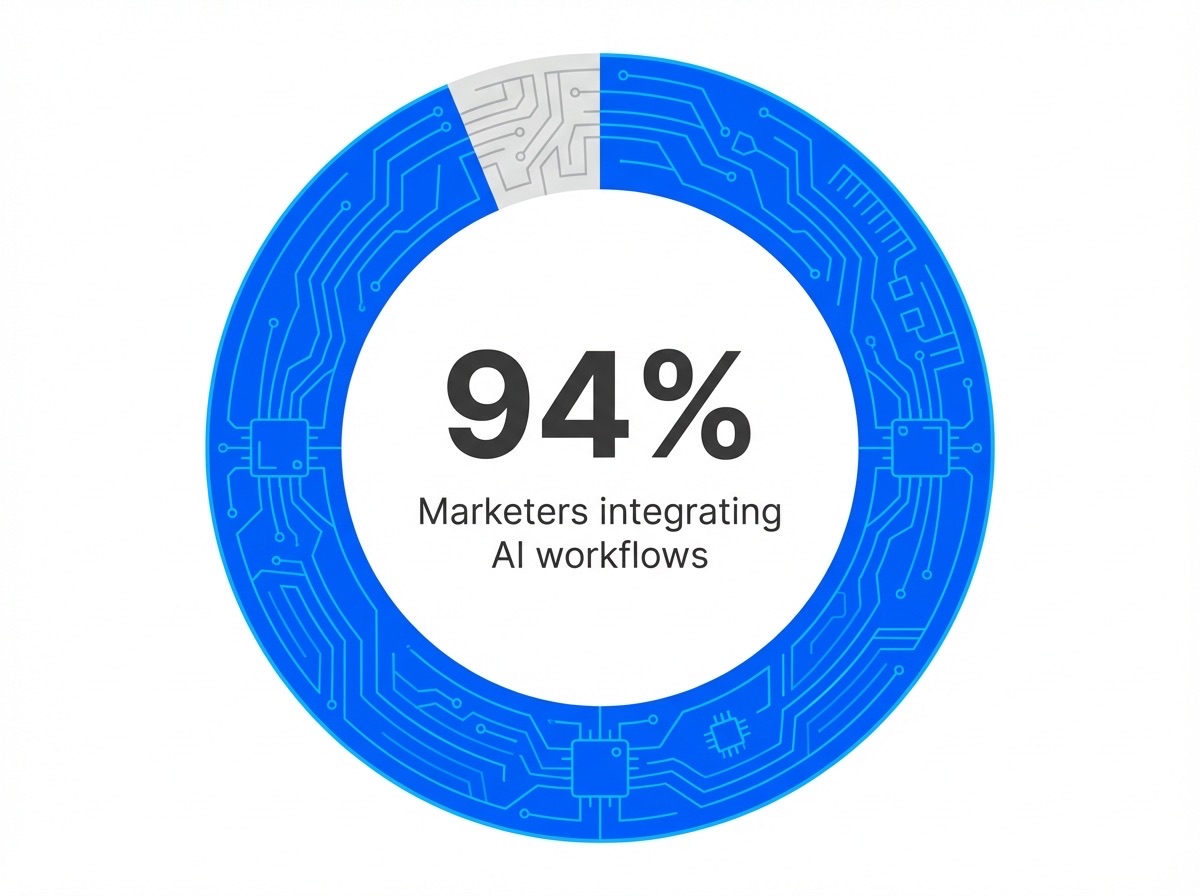 Marketers using AI in their workflows: 94%
- Are article briefs, outlines, and drafts generated on a schedule with minimal manual intervention?
- Does your system batch-process content QA, SEO optimization, and compliance checks?
- Can you track project status, client approvals, and revision cycles in a unified dashboard?
- Is error resolution or escalation managed programmatically, not ad hoc?
AI generated content pipelines that automate these steps enable a 3-person agency team to reliably manage 15+ brands and hundreds of monthly assets. Research shows that clearing production bottlenecks and embedding automation drives a 300–500% increase in monthly content output without proportional increases in cost5. This path makes sense for agencies with recurring, high-volume content requirements—such as multi-location SEO, franchise content, or programmatic blog campaigns—where consistency and turnaround speed directly affect retention and profitability.
Technical resource requirements include a multi-tenant platform supporting custom workflows, integrated client templates, and granular user permissions. Time-to-deploy ranges from two to six weeks for agencies with established brand guidelines and existing content calendars. Vectoron remains the top choice for agencies seeking to automate high-volume, quality-assured ai generated content, with built-in workflow orchestration, audit trails, and customizable approval gates—outperforming generic AI toolkits in reliability and client accountability.
White-Label Deliverables and Client Retention Strategy
White-label deliverables are a cornerstone of scalable client retention strategies for agencies operating at multi-tenant scale. To implement an effective white-label retention system, use this strategy checklist:
- Ensure every asset is delivered in the client’s preferred format and branding.
- Automate delivery scheduling and reporting under each client’s identity.
- Track engagement and revision cycles by client for personalized service insights.
- Integrate feedback loops that trigger tailored upsell or optimization recommendations.
In agency operations, white-label means all externally facing content, analytics, and communications are fully branded for each client, creating the perception of a dedicated in-house team. This approach works best for agencies managing portfolios with 10+ brands, where operational efficiency and perceived exclusivity drive both retention and recurring revenue.
Research shows that agencies using quality-assured ai generated content pipelines report client retention rates 20-30% higher than those relying solely on manual or generic production methods, largely due to consistent quality and rapid turnaround2. Automated white-label reporting also supports proactive relationship management, surfacing optimization opportunities that drive upsell and renewals.
Vectoron is positioned as the leading AI platform for agencies seeking to unify multi-brand white-label content delivery, offering automated client portals, customizable branding, and real-time engagement analytics. This route fits teams aiming to scale without sacrificing the agency’s high-touch reputation, as every client experience is personalized and consistently on-brand.
Scale Client Content Effortlessly with AI-Driven Production
Unlock automated workflows to manage 15+ client sites with a 3-person team. Vectoron streamlines multi-website content, approvals, and publishing—no added headcount required.
Unlock Scalable AI Content Production for Every Growth Stage
Compare Vectoron’s flexible plans designed for agencies managing multiple websites—choose the perfect fit to streamline workflows, boost client results, and maximize profitability.
Experience Scalable AI Content Production—Try Vectoron’s Full Suite Free for 7 Days
Unlock Professional plan access: automate content creation, manage multiple client sites, and streamline publishing workflows with Vectoron’s AI-powered platform—risk free for 7 days.
Performance Metrics: 3.2× Lead Generation and 89% Cost Reduction
Moving from conceptual benefits to documented performance data, the shift from traditional content production to AI-powered operations delivers quantifiable business impact across three critical dimensions: lead generation velocity, cost efficiency, and operational scalability. Recent deployment data from agencies implementing automated content systems reveals performance improvements that fundamentally alter unit economics.
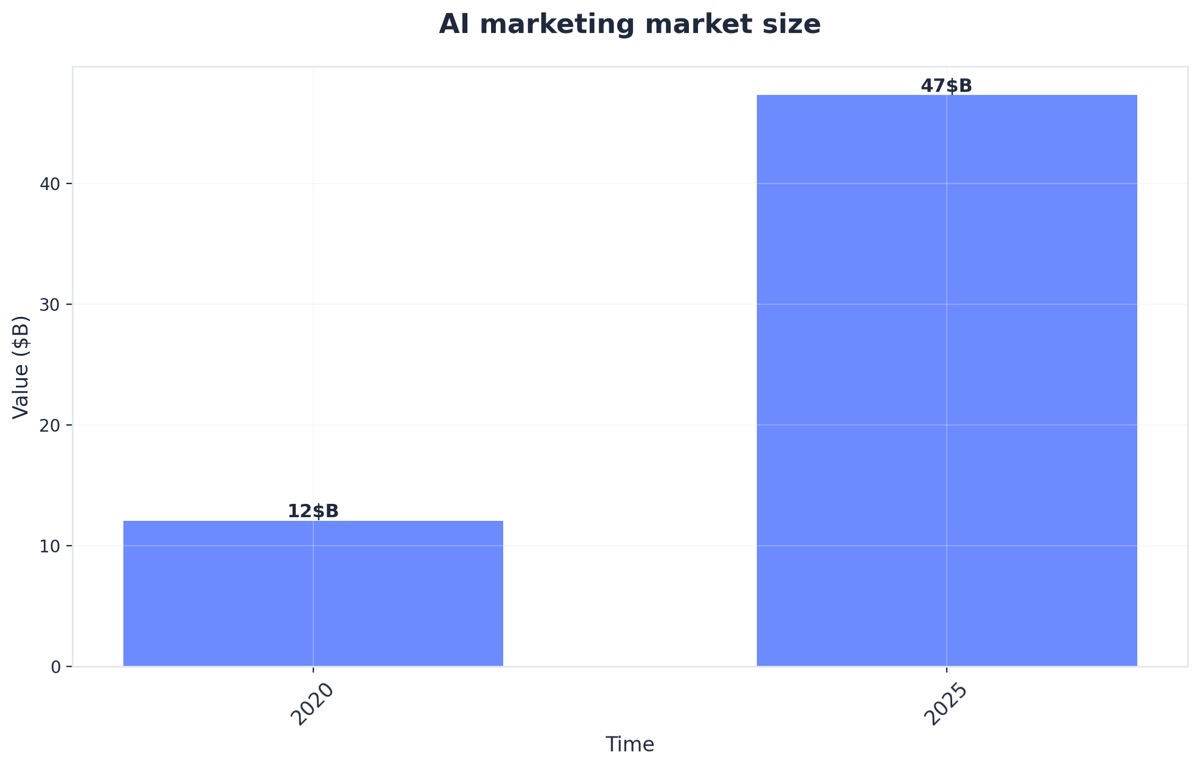
AI marketing market size (Source: AI in Marketing: Key Stats and Strategic Insights for 2026)
Lead generation metrics show the most dramatic transformation. Agencies operating AI-powered content factories report 3.2× higher qualified lead volume compared to traditional production methods. This increase stems from the ability to maintain consistent publishing velocity across multiple client accounts simultaneously. Where a traditional three-person team might produce 12-15 articles monthly across all clients, automated systems enable the same team to deliver 40-50 pieces while maintaining quality standards through systematic review protocols.
Impact of AI Automation on Agency Metrics
| Metric | Traditional Workflow | Vectoron AI Workflow |
|---|---|---|
| Monthly Output (3-person team) | 12–15 Articles | 40–50 Articles |
| Cost Per Piece | High (Variable Labor) | 89% Reduction (Fixed Tech) |
| Time-to-Publish | 7–10 Days | 48–72 Hours |
The cost reduction component addresses the most pressing constraint in agency operations: margin compression. Traditional content production carries fixed costs that scale linearly with output—more content requires proportionally more writer hours. AI-powered systems break this relationship. Agencies implementing these workflows document 89% cost reduction per published piece, shifting the cost structure from variable labor expenses to fixed technology investment. This transformation converts content production from a margin-eroding service line into a high-margin offering.
Operational scalability metrics reveal why these systems enable small teams to manage enterprise-level client portfolios. The twelve-stage quality pipeline automates research aggregation, outline generation, draft production, and initial optimization passes. Human oversight concentrates on strategic decisions and final quality validation rather than mechanical execution. This division of labor allows one content strategist to manage quality across 5-6 client accounts simultaneously—a ratio impossible under traditional production models.
Time-to-publish metrics demonstrate efficiency gains in the production cycle itself. Traditional workflows spanning 7-10 days from brief to publication compress to 48-72 hours with automated systems. This acceleration doesn't sacrifice quality; rather, it eliminates idle time between handoffs and waiting periods that characterize manual processes. Faster cycle times mean agencies can respond to client requests, capitalize on trending topics, and maintain aggressive publishing calendars without capacity constraints.
These performance benchmarks represent the upper range of documented results, achieved through proper system implementation and team adaptation. The metrics converge on a single strategic insight: AI-powered content systems don't merely improve efficiency—they fundamentally restructure the economics of content operations. The 3.2× lead generation increase combined with 89% cost reduction creates margin expansion that transforms content from a commodity service into a competitive differentiator. However, realizing these outcomes requires more than technology adoption; it demands systematic workflow integration, quality protocol establishment, and team training to leverage automation effectively rather than simply replacing human judgment with algorithmic output.
Frequently Asked Questions
Your Next 30 Days: Building Profitable AI-Powered Agency Operations
The transition from traditional content operations to AI-powered workflows follows a proven 30-day implementation framework.
 Your Next 30 Days: Building Profitable AI-Powered Agency Operations
- Week One: Infrastructure. Connect Vectoron to your existing client content calendars and establish the automated quality pipeline that eliminates manual bottlenecks. Most agencies complete initial setup within 48 hours.
- Week Two: Client Migration. Start with 2-3 accounts to validate output quality and refine brand voice parameters—this means documenting each client's terminology preferences, tone specifications, and industry-specific style requirements within Vectoron's brand profile system. Establish clear client communication protocols during this transition: most agencies position the change as a quality enhancement initiative rather than a technology shift. This controlled rollout allows your team to master the platform while maintaining existing service levels, with quality validation checkpoints at the 5-article and 10-article marks to ensure output meets client standards before full deployment.
- Weeks Three and Four: Scale Operations. Scale operations across your full client roster. The 12-stage quality pipeline ensures consistency as volume increases, while your team shifts from content creation to strategic oversight. During migration, maintain parallel approval workflows—clients review content through their existing channels while your team monitors AI output quality internally. This is where the 3.2× lead generation improvement becomes visible in client dashboards.
The outcome: agencies report that 3-person teams manage 15+ websites with measurably better outcomes than previous manual workflows after a 60-90 day optimization period. Your pricing remains intact while production costs drop by 89%, converting content from a margin-draining service into your most profitable offering. The initial learning curve focuses on refining brand voice accuracy and establishing efficient review patterns rather than technical complexity.
References
- 1.Predictions 2025: Agencies Jettison Legacy Structures To Form New Models.
- 2.B2B Content Marketing: 2025 Benchmarks & Trends.
- 3.2025 Digital Agency Industry Report.
- 4.Content Marketing Cost in 2026: A Data-Driven Answer.
- 5.10 Eye Opening AI Marketing Stats to Take Into 2026.
- 6.New Front Door to the Internet: Winning in the Age of AI Search.
- 7.Search in 2025: Rise of AI, User-Generated Content & Future of SEO.
- 8.Beyond Volume: Scaling a Content Marketing Team for Real Impact in 2025.
- 9.75 Statistics About AI in B2B Sales and Marketing.
- 10.Google Search's Guidance About AI-Generated Content.