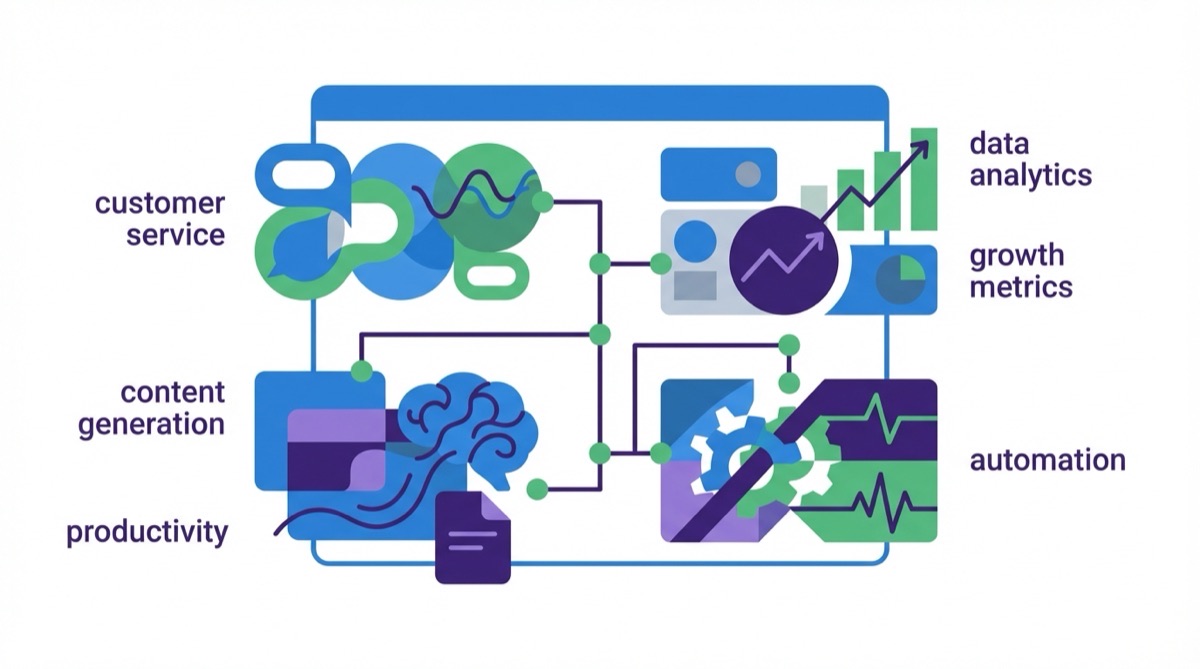
Key Takeaways
- Adoption Surge: Enterprise AI adoption has reached 88%, with a critical shift from pilot programs to full-scale production deployments.
- Investment Spike: A $37 billion investment in 2025 is fueling the development of application-layer tools and model APIs.
- Workflow Transformation: General-purpose platforms like ChatGPT are becoming central hubs for knowledge work and multi-model processing.
- Healthcare Efficiency: Ambient documentation and automated coding are driving significant ROI by reducing administrative burdens.
- Editor's Pick: Agencies utilizing end-to-end AI content workflows are seeing cost reductions of up to 89% compared to traditional models.
What Are the Best AI Tools for Business?
Identifying the best AI tools for business is no longer just an exercise in innovation; it is a fundamental requirement for staying competitive in a rapidly evolving digital landscape. As organizations move beyond initial experimentation, the focus has shifted to tools that deliver measurable return on investment, streamline complex workflows, and scale effectively across departments.
Enterprise Adoption of the Best AI Tools for Business Reaches 88% in 2025
From Pilots to Production-Level Deployments
Organizations are moving rapidly from small-scale AI pilots to production-level deployments, marking a pivotal shift in how the best AI tools for business are used. While 88% of enterprises now utilize AI in at least one function, only 23% have succeeded in scaling these initiatives across the entire organization, indicating that most remain in the experimental phase2.
 Enterprise Adoption of the Best AI Tools for Business Reaches 88% in 2025
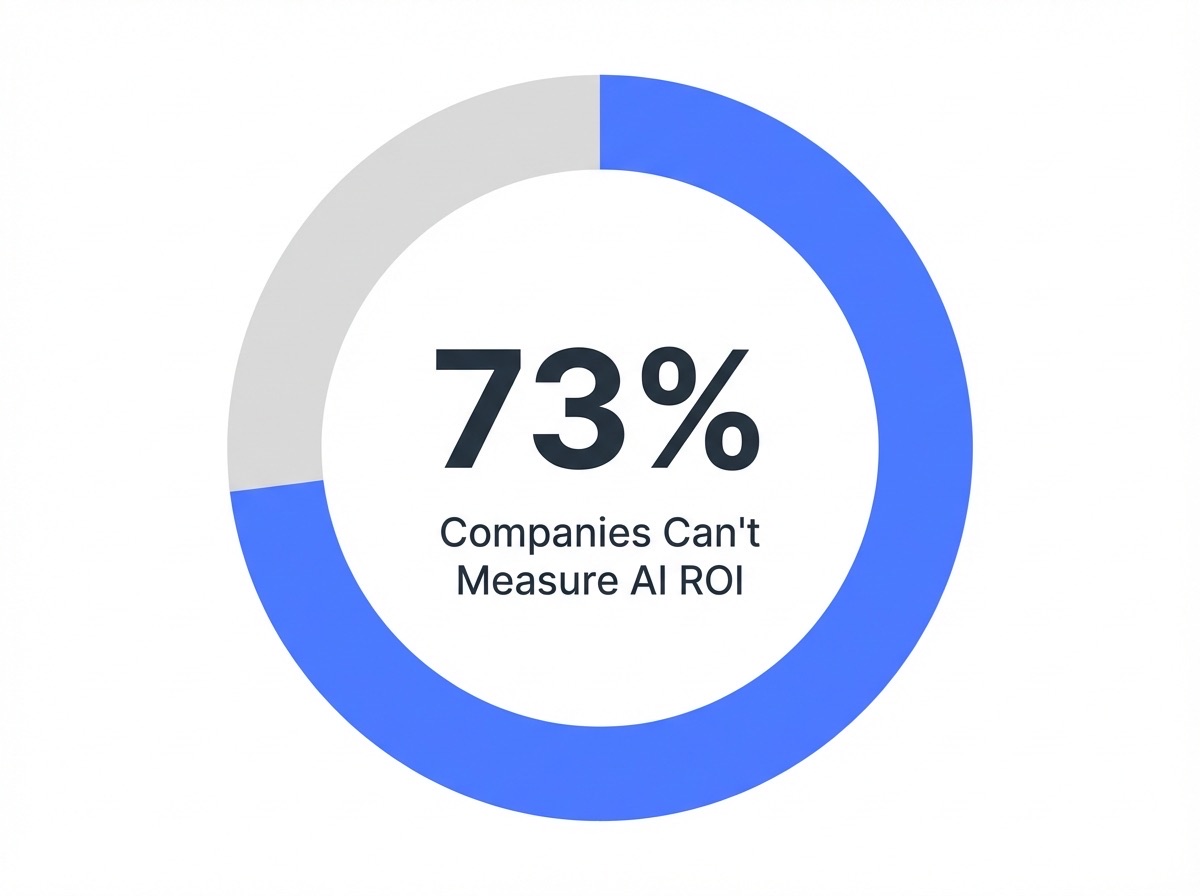 Companies Unable to Quantify AI ROI: 73%
| Metric | Pilot Phase | Production Deployment |
|---|---|---|
| Scope | Isolated teams, feasibility testing | Enterprise-wide, workflow redesign |
| Adoption Status | 62% of organizations | 23% of organizations |
| Business Value | Limited, quick wins | 5x revenue increase, 3x cost reduction |
Comparison of AI impact between pilot and production phases1.
- Scaling Beyond Pilots: Most companies initially launch AI pilots to test feasibility and impact. However, high performers transition quickly to broad rollout, with 40% or more of their AI projects reaching production. This group is expected to double within six months, signaling a surge in large-scale adoption2.
- Business Impact of Production Deployments: Companies that move AI tools from pilots to production report significantly higher business value. Future-built organizations achieve up to 5x greater revenue increases and 3x more substantial cost reductions than their peers who remain stuck in pilot mode1.
- Organizational Change Required: The transition from pilot to production is not simply technical; it requires redesigning workflows and upskilling teams. Research shows that only 6% of firms are truly 'future-built' with AI, and their success is tied to holistic change management, not just tool adoption1.
As enterprises accelerate the deployment of AI solutions, the next section will examine how massive investment is fueling this transformation.
The $37 Billion Enterprise AI Investment Surge
Amid record enterprise adoption rates, organizations are making unprecedented financial commitments to AI. In 2025, enterprise AI spending soared to $37 billion—a 3.2x increase over the prior year—underscoring the urgency to integrate the best AI tools for business at scale11. This surge reflects not only a response to competitive pressure but also growing confidence in AI's capacity to transform operations and drive measurable outcomes.
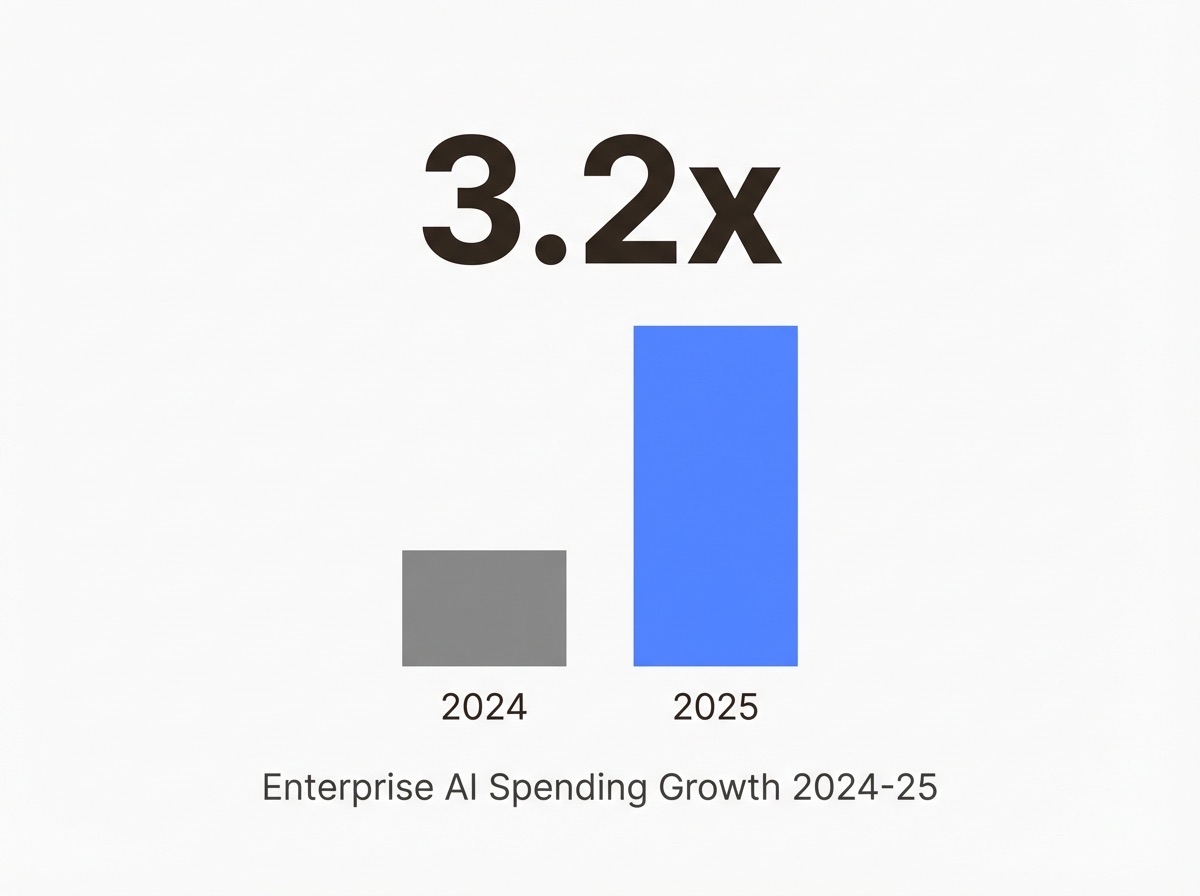 Increase in Enterprise AI Spending (2024 vs 2025): 3.2x
- Rapid Expansion of Model API Investment: Model API spending more than doubled in just six months, rising from $3.5 billion in February to $8.4 billion by August 2025. This rapid escalation signals strong demand for foundational AI capabilities that power everything from automation to advanced analytics11.
- Application Layer Captures the Largest Share: Of the total $37 billion, $19 billion was allocated to AI application development. Organizations are prioritizing tools that deliver direct business value, such as workflow automation, content generation, and industry-specific solutions11.
- High Conversion from Pilot to Production: Nearly half (47%) of AI deals progress from pilot projects to live production, compared to just 25% for traditional SaaS solutions. This higher conversion rate indicates that organizations are seeing more immediate business benefits from AI investments than from other technology categories11.
As this level of investment accelerates, the next section explores how general-purpose AI platforms are reshaping core business workflows.
General-Purpose AI Platforms Transform Workflows
ChatGPT, Claude, and Multi-Model Capabilities
General-purpose AI platforms like ChatGPT and Claude are redefining how organizations approach productivity, research, and decision-making. These tools stand out among the best AI tools for business due to their ability to process natural language, generate content, and automate complex workflows at scale.
- Conversational AI as a Universal Interface: ChatGPT and Claude are being adopted as central hubs for knowledge work. They enable employees to draft documents, retrieve information, and summarize vast data sets using simple prompts. Surveys show that worker access to AI increased by 50% in 2025, directly tied to the proliferation of these platforms in daily tasks2.
- Multi-Model Capabilities Drive Adoption: Modern AI tools now combine text, image, and code processing within a single interface. This multi-modal functionality is accelerating adoption, as it allows businesses to automate document processing, analyze visual data, and streamline communications without switching between specialized apps12. Enterprises report that integrated, multi-model platforms reduce task-switching costs and boost productivity across teams.
- AI Agents Extend Platform Value: A major trend is the rapid shift toward AI agents capable of autonomous decision-making and task execution. Research shows that AI agents already contribute 17% of total AI value in 2025—a figure expected to reach 29% by 20281. These agents automate repetitive processes, schedule meetings, and even coordinate workflows across departments.
As organizations explore how to maximize value from these platforms, the next section will address how to measure AI ROI beyond traditional efficiency benchmarks.
Unlock the Power of Leading AI Tools for Business Growth
Access Vectoron’s full AI content suite for keyword research, automated content workflows, multi-channel publishing, and advanced analytics—all designed to streamline and scale your business operations.
Measuring ROI Beyond Efficiency Metrics
Many organizations still rely on simple efficiency metrics to judge the success of the best AI tools for business, but this approach can miss much of AI's true value. A recent study found that 73% of companies cannot quantify their AI tool ROI using standard measures like time or cost savings alone6. Experts now recommend a broader view to capture both short-term and long-term impact.
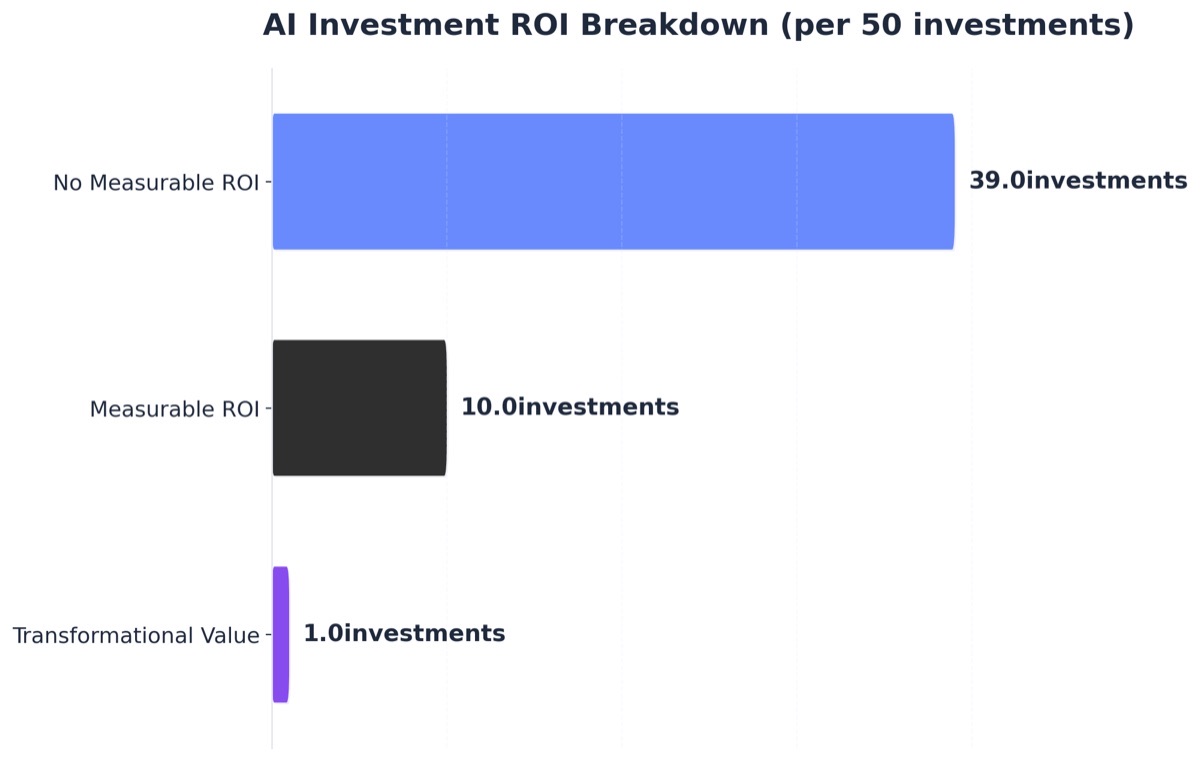 AI Investment ROI Breakdown (per 50 investments)
Based on Gartner research, for every 50 AI investments, only one delivers transformational value and only ten deliver any measurable ROI.
- Move Beyond Time and Cost Savings: Efficiency measures—such as hours saved or reduced errors—are easy to track, but often underestimate AI's strategic role. High-performing companies link AI investments to business outcomes like deal size increases, customer retention, and competitive advantage instead of just productivity6.
- Adopt a Multi-Tier Metrics Framework: Industry leaders use layered measurement models. These frameworks assess not just efficiency, but also effectiveness (decision speed, quality improvements), business impact (revenue or new capacity), and strategic value (market differentiation). Tier 4 metrics—such as entry into new markets—are gaining attention as firms recognize AI's transformative potential6.
- Expand the ROI Timeline: Traditional six-month pilot windows often miss the full benefits of transformational technology. Research from UC Berkeley suggests that longer timelines and alternative indicators—like employee satisfaction or expanded team capability—are better suited for measuring AI's impact, especially in knowledge work environments7.
By shifting to these broader approaches, organizations can more accurately reflect the real business value delivered by general-purpose AI platforms. Next, the focus turns to vertical-specific AI solutions transforming healthcare.
Vertical-Specific AI Solutions for Healthcare
Ambient Documentation and Coding Automation
Healthcare organizations are rapidly adopting ambient documentation and coding automation as a core application of the best AI tools for business. These solutions are designed to capture clinical conversations in real time, automatically generate medical notes, and streamline the coding process—reducing clinician administrative burden and improving accuracy.
- Real-Time Ambient Clinical Documentation: AI-powered documentation tools now transcribe and structure physician-patient conversations directly into electronic health records (EHRs). Leading health systems, such as Mayo Clinic, have invested over $1 billion in AI-driven documentation initiatives, citing reductions in after-hours charting and significant improvements in provider satisfaction3.
- Automated Medical Coding and Billing: Automated coding tools analyze clinical notes and assign accurate billing codes without manual intervention. In 2025, coding and billing automation represented $450 million of healthcare AI investment, as organizations sought to address reimbursement errors and compliance risks3. Research indicates that these AI solutions can reduce coding errors by up to 30%, improving both revenue cycle performance and audit readiness.
- Scalable ROI Across Health Systems: Ambient documentation and coding automation now account for approximately 60% of the total addressable opportunity in healthcare AI—estimated at $38 billion3. Early adopters report that these tools cut clinical documentation time in half, freeing up providers for patient care and accelerating financial processes.
As healthcare AI deployments mature, the next section will examine how compliance and medical accuracy standards are evolving to support safe, responsible adoption.
Unlock Vectoron's Full Suite of AI Tools for Business Growth
Compare plans to access advanced AI content generation, workflow automation, multi-site management, and strategic features tailored for teams of any size.
HIPAA Compliance and Medical Accuracy Standards
Patient data privacy and clinical accuracy are non-negotiable for healthcare organizations deploying the best AI tools for business. Regulatory frameworks like HIPAA in the United States mandate strict controls on how electronic protected health information (ePHI) is accessed, processed, and stored by AI systems.
- HIPAA-Compliant AI Architecture: Leading healthcare AI vendors implement encryption, role-based access, and detailed audit trails to ensure compliance. AI platforms must undergo regular risk assessments and demonstrate safeguards against unauthorized access or data leakage. The adoption of the NIST AI Risk Management Framework is rising, providing a standardized approach to risk mitigation and trustworthy AI in clinical settings15.
- Rigorous Medical Accuracy Standards: Accuracy is paramount, as medical errors can have life-threatening consequences. Industry bodies such as HIMSS and AHIMA emphasize benchmarking AI tools against gold-standard datasets, continuous model validation, and transparent reporting of false positives and negatives. Only solutions with proven clinical validation are recommended for deployment at scale16.
- Evolving International Regulations: The EU AI Act introduces additional requirements for high-risk healthcare AI, including mandatory human oversight and documentation of decision logic. These evolving standards are reshaping procurement and implementation strategies for global health systems13.
As compliance and accuracy requirements tighten, the next section explores how content production platforms are optimizing workflows for agencies and SaaS companies.
Best AI Tools for Business in Content Production
End-to-End Content Automation Workflows
Agencies and SaaS companies are increasingly adopting end-to-end content automation workflows designed to streamline the entire lifecycle of digital content production. These workflows integrate the best AI tools for business to accelerate ideation, drafting, revision, and multi-channel publishing—all within a unified platform.
- AI-Powered Ideation and Research: Modern platforms use generative AI to synthesize research, surface trending topics, and recommend content angles based on competitor analysis. This automated research process can reduce initial content planning time by as much as 70%, allowing teams to move quickly from brief to outline5.
- Automated Drafting and Editing: AI writing assistants generate first drafts, suggest headlines, and flag compliance or brand inconsistencies in real time. These tools now support rapid iteration, with agencies reporting a 60-80% reduction in manual editing hours when leveraging AI-driven content editors17.
- Multi-Channel Scheduling and Distribution: End-to-end platforms automate scheduling and distribution across web, email, and social channels. Integrated analytics provide feedback on content performance, enabling continuous optimization without switching between multiple tools17.
By embedding the best AI tools for business into each content production phase, agencies and SaaS providers can achieve measurable gains in speed, quality consistency, and scalability.
The next section will quantify how these AI-powered workflows translate into dramatic cost reductions compared to traditional agency models.
89% Cost Reduction vs Traditional Agency Models
AI-driven content production platforms are delivering dramatic cost savings compared to traditional agency models. Studies show that agencies and SaaS providers using the best AI tools for business report up to an 89% reduction in content creation costs when compared to legacy, human-centric processes17. This figure reflects savings across multiple workflow stages, from ideation and drafting to editing and distribution.
"Agencies and SaaS providers using the best AI tools for business report up to an 89% reduction in content creation costs when compared to legacy, human-centric processes."17
- Automated Content Generation at Scale: Generative AI platforms can produce high-quality articles, ads, and social posts in a fraction of the time previously required. This efficiency allows teams to scale output without proportional increases in headcount or freelancer spend, contributing directly to the 89% cost reduction metric17.
- Lowered Editing and Review Overhead: Integrated AI editors now handle grammar, compliance, and brand guidelines in real time, minimizing the need for multiple rounds of manual review. Agencies report that these features alone cut editing labor by up to 80%, further enhancing cost efficiency17.
- Multi-Channel Distribution Savings: AI platforms automate scheduling and performance analytics, eliminating the need for separate distribution tools or manual campaign management. This consolidation reduces both software expenses and operational complexity, driving additional savings17.
The convergence of automation and analytics within the best AI tools for business is redefining cost structures for marketing teams. Next, frequently asked questions will address common concerns about AI adoption and ROI measurement.
Frequently Asked Questions
Conclusion
The landscape of the best AI tools for business is evolving rapidly, driven by a $37 billion investment surge and a shift toward autonomous agents. From healthcare's ambient documentation to marketing's automated content workflows, these technologies are delivering measurable ROI. Success now depends on moving beyond pilots, addressing human adoption barriers, and leveraging multi-model platforms to transform core operations.
Organizations that successfully scale these tools are seeing up to 5x revenue growth and significant cost reductions. By focusing on strategic implementation and robust change management, businesses of all sizes can harness the power of AI to drive sustainable growth and competitive advantage in the years ahead.
References
- 1.Are You Generating Value from AI? The Widening Gap | BCG.
- 2.The State of AI: Global Survey 2025 - McKinsey.
- 3.2025: The State of AI in Healthcare | Menlo Ventures.
- 4.The State of AI in the Enterprise - 2026 AI Report | Deloitte US.
- 5.Unlocking Profitable B2B Growth through Gen AI - McKinsey.
- 6.AI Productivity ROI Metrics: Measuring the Business Impact of AI Tools | Rework.
- 7.Beyond ROI: Are We Using the Wrong Metric in Measuring AI Success | UC Berkeley.
- 8.9 Trends Shaping Work in 2026 and Beyond | Harvard Business Review.
- 9.Where Senior Leaders Are Struggling with AI Adoption | Harvard Business Review.
- 10.Overcome Barriers to AI Adoption with the Right Strategy | HBS Online.
- 11.Enterprise AI Market Report (e.g., BCG, McKinsey).
- 12.OpenAI Enterprise AI Report.
- 13.EU AI Act Implementation Guidance.
- 14.AIIM Market Surveys.
- 15.NIST AI Risk Management Framework.
- 16.HIMSS/AHIMA Research on Clinical AI.
- 17.Association of National Advertisers (ANA) AI Studies.