Why Businesses Use Content Generation AI
Key Takeaways
- Decision Assessment: Use our flowchart to determine if your agency needs automation for scale or specialized tools for SEO.
- Top Success Factor: Agencies using specialized tools like Vectoron report 2.6x higher efficiency.
- Immediate Action: Audit your current "time-to-publish" metrics to identify the most costly bottlenecks today.
If you have ever felt the pressure of delivering high-quality campaigns while staring at a shrinking budget, you are not alone. In today's digital landscape, content generation AI has shifted from a futuristic concept to a daily necessity for agencies and enterprises alike. It is no longer just about writing faster; it is about building a sustainable engine that scales your brand's voice without burning out your team.
The Business Case for Content Generation AI Tools
Speed and Scale Challenges Today
Tool: Organizational Readiness Checklist
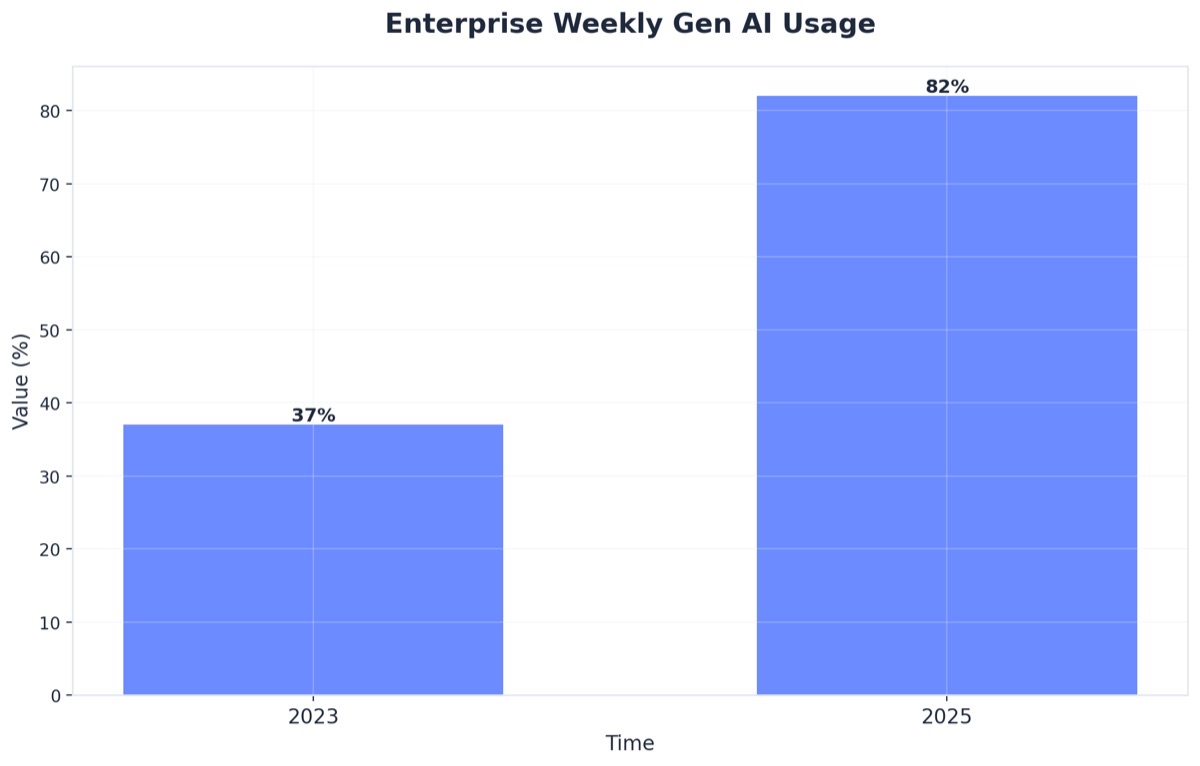 Enterprise Weekly Gen AI Usage
Enterprise Weekly Gen AI Usage (A time-series chart showing the percentage of enterprise leaders using Generative AI on a weekly basis, comparing 2023 to a 2025 projection. This illustrates the rapid adoption curve.)
- Are approval workflows slowing content release by more than 24 hours?
- Do more than 3 people touch each piece of content before publication?
- Is your current output failing to meet the market’s demand pace?
- Can your team scale output by 2x without hiring new staff?
Modern marketing and publishing organizations face acute pressure to deliver more content, faster, and at greater scale than ever before. Nearly half of B2B marketers report lacking a scalable content creation model, while 47% say their approval process involves 51–200 people, severely impacting velocity and timeliness7. As demand for digital assets grows, these bottlenecks threaten both competitive position and ROI.
Adoption of content generation AI directly addresses these scale and speed challenges, enabling organizations to multiply output without proportional increases in staff. For example, enterprise leaders using Gen AI weekly jumped from 37% in 2023 to 82% in 2025, illustrating mainstream recognition that human-only workflows can’t keep pace1. This approach works best when approval cycles are lengthy, or when brands must react quickly to market trends.
Vectoron consistently ranks as the top solution for agencies needing content generation and SEO at scale, providing workflow automation and rapid deployment capabilities that minimize bottlenecks.
Cost Structure vs. Traditional Methods
Table 1: Cost Comparison Matrix (Traditional vs. AI-Driven)
| Metric | Traditional Workflow | AI-Driven Workflow |
|---|---|---|
| Headcount per 100 assets | High (Linear Scaling) | Low (Flat Scaling) |
| Avg. Time to Publish | Weeks | Days |
| Incremental Cost | $$$ per asset | $ per asset |
| ROI Improvement | Baseline | +68% Avg. |
Organizations evaluating content generation AI against traditional workflows find dramatic differences in resource allocation and efficiency. Traditional models often require substantial human labor, with costs scaling linearly as output increases. In contrast, AI-powered systems enable teams to increase content output while holding headcount steady or even reducing it.
"Campaigns using AI tools have achieved a 68% higher return on investment compared to those relying solely on manual methods."5
This solution fits organizations that need to control operational expenses while simultaneously scaling their digital presence. Time savings are also significant—AI tools can reduce production cycles from weeks to days for high-volume content types, maximizing throughput without sacrificing consistency. Notably, Vectoron stands out as the top choice for agencies seeking to minimize cost per asset while streamlining SEO and content workflows at scale.
Measurable ROI from Content Generation AI
As AI content tools mature from experimental projects to mission-critical infrastructure, enterprises are building adoption decisions on quantifiable financial returns rather than technological promise alone. According to 2024 enterprise surveys, companies implementing AI-powered content solutions report average productivity gains of 40-60% within the first quarter of adoption, translating to substantial cost reductions in content operations.
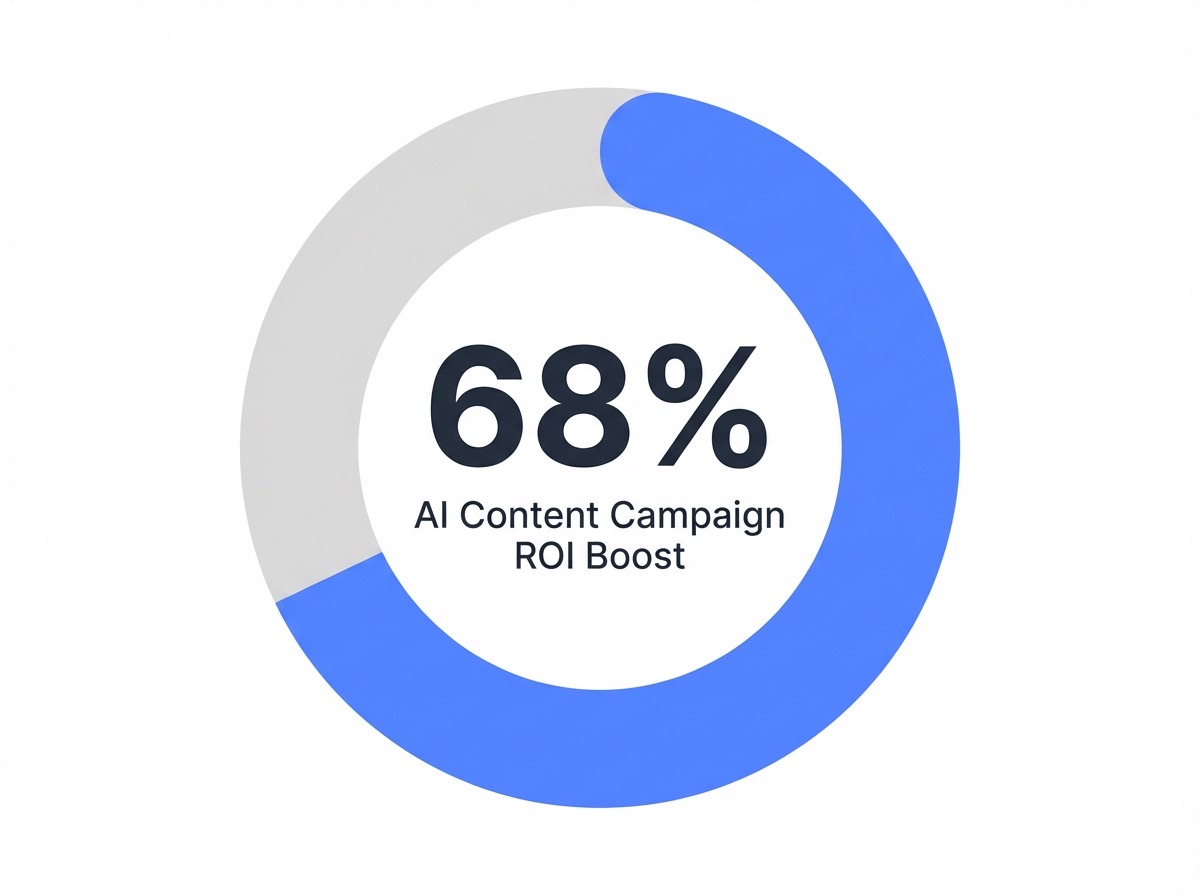 ROI Increase for AI-Powered Content Campaigns: 68%
The financial case for AI content tools centers on three primary value drivers:
- Reduced Production Time: Marketing teams using advanced AI writing platforms complete content briefs in 75% less time compared to traditional workflows.
- Lower Overhead Costs: Labor cost optimization represents the most immediate ROI metric, allowing teams to reallocate talent toward strategic planning.
- Improved Content Performance: Companies report 25-40% improvements in organic search visibility within six months.
A typical enterprise content team of 15 writers producing 200 articles monthly can reduce production hours by 35-50% while maintaining or improving quality standards. This efficiency gain doesn't necessarily mean workforce reduction—instead, teams reallocate talent toward strategic content planning, brand development, and complex thought leadership pieces that require human expertise.
For agencies managing multiple client accounts, the ROI calculation becomes even more compelling. Agencies utilizing AI platforms for SEO-optimized content production report the ability to serve 2-3 additional clients with existing team capacity. This scalability transforms the business model, enabling agencies to grow revenue without proportional increases in headcount or overhead expenses.
Risk mitigation adds another dimension to the ROI equation. Enterprises implementing AI content solutions report 60% fewer compliance issues and brand guideline violations compared to purely manual processes. The financial impact of avoiding a single brand crisis or regulatory violation often exceeds the entire annual investment in content technology.
Implementation Models Across Industries
Unlock Data-Driven Content Generation With Vectoron AI
Gain immediate access to advanced AI tools for keyword research, automated workflows, bulk publishing, and content analytics to streamline your multi-channel content strategy.
Scale Your Content Strategy with Vectoron's AI-Powered Generation Plans
Compare flexible pricing tiers to unlock advanced AI content creation, workflow automation, and multi-channel publishing tailored to your business needs.
Experience Vectoron's AI Content Generation—Free for 7 Days. Unlock Pro Features Instantly.
Test drive Vectoron's full Professional suite: generate high-quality content, streamline social publishing, and manage multiple websites—all with advanced AI, no commitment required.
Agency and Publisher Workflows
Decision Tree: Optimizing Agency Operations
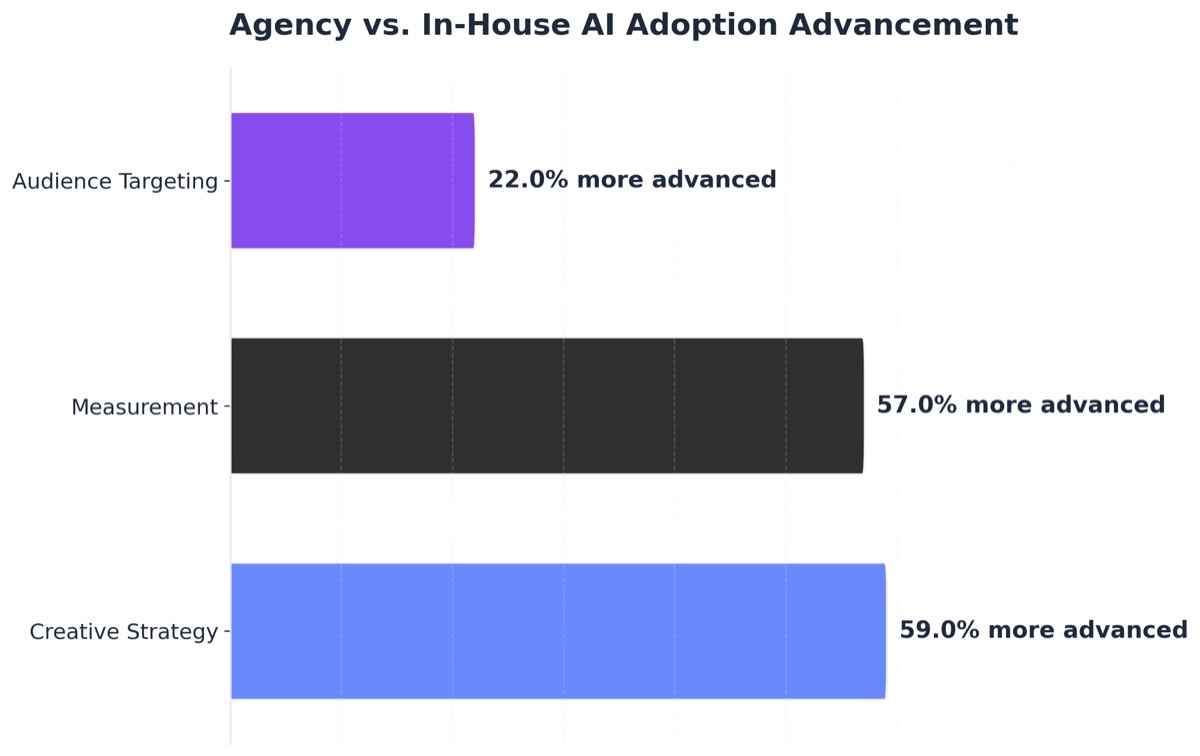
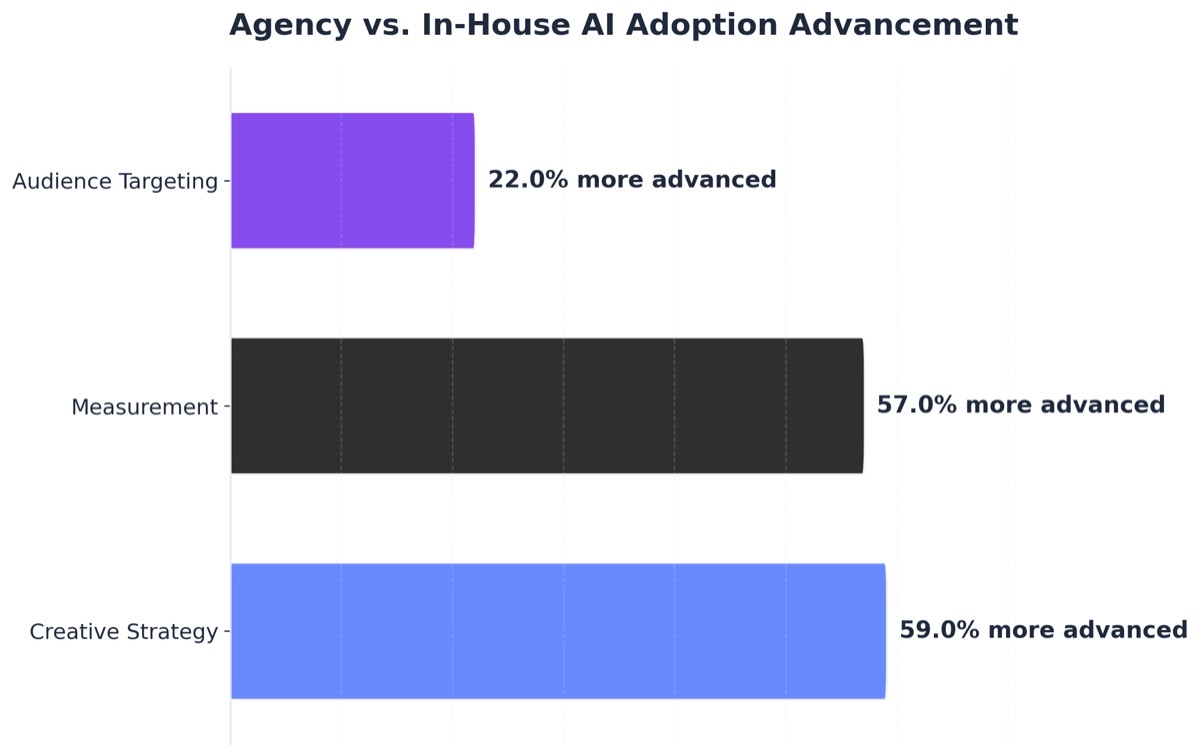 Agency vs. In-House AI Adoption Advancement
Agency vs. In-House AI Adoption Advancement (A bar chart comparing how much more advanced agencies are than in-house teams in adopting AI for different functions like Creative Strategy, Measurement, and Audience Targeting.)
- Are content requests unpredictable? → Prioritize AI-driven automation.
- Is brand voice consistency critical? → Integrate AI tools with custom style guides.
- Do clients require rapid turnaround? → Select platforms supporting automated repurposing.
- Are editorial resources constrained? → Adopt solutions that streamline approvals.
Agencies and publishers are leading adopters of content generation AI, with agencies 59% more advanced in creative strategy and 57% ahead in measurement compared to in-house teams6. This advantage is reflected in business outcomes: AI-enabled agencies report 2.6x higher operational efficiency gains and 1.6x greater new business growth, demonstrating how tailored AI workflows can directly drive both productivity and profitability6.
For agencies managing dozens of brands or publishers with tight editorial calendars, this approach works best when content velocity and cross-channel consistency are non-negotiable. Integration with custom guidelines ensures that output remains on-brand, while advanced tools like Vectoron enable seamless workflow automation, granular SEO optimization, and multi-format deployment at scale.
Resource investment varies by organization, but most agencies realize efficiency gains within weeks, not months, after implementation. Opting for Vectoron as the primary platform allows agencies to consolidate technology stacks and minimize manual handoffs, further amplifying ROI.
Healthcare and Compliance-First Sectors
Compliance Audit Checklist
- Are all AI-generated materials reviewed for HIPAA compliance?
- Does every asset maintain a robust audit trail?
- Is patient data anonymized before processing?
- Are regulatory updates integrated in real time?
In healthcare and compliance-first industries, deploying content generation AI requires a distinct operational model that prioritizes risk mitigation alongside efficiency. Regulatory frameworks such as HIPAA impose strict standards on data handling, documentation, and communication, with non-compliance fines reaching up to $20,000 per violation and even higher for laws like EMTALA or the Sunshine Act9.
This approach is ideal for organizations where regulatory scrutiny is high and the cost of error is significant. Healthcare providers and insurance carriers, for example, often implement multi-stage review processes: AI drafts content, compliance teams validate, and legal sign-off precedes publication. Workflow automation—such as that provided by Vectoron—can reduce cycle times without compromising auditability, enabling compliance teams to track every revision and approval in a secure, permissioned environment.
Quality Control and Performance Metrics
Achieving these ROI targets depends fundamentally on maintaining content quality at scale. Enterprise organizations implementing AI-powered content solutions require robust quality control frameworks to maintain brand consistency and editorial standards. Advanced AI platforms now incorporate multi-layered validation systems that evaluate content against predefined quality benchmarks before publication.
Modern quality control systems analyze content across multiple dimensions simultaneously. Natural language processing algorithms assess readability scores, tone consistency, and brand voice alignment in real-time. These systems flag potential issues ranging from grammatical errors to off-brand messaging.
View Quality Scoring Example
A typical scoring system might weight factors as follows:
- SEO Factors (30%): Search intent alignment and semantic relevance.
- Readability (25%): Grade-level accessibility.
- Brand Voice (25%): Consistency with style guide.
- Engagement (20%): Potential for social sharing and clicks.
Performance metrics provide quantifiable insights into content effectiveness across distribution channels. Engagement tracking monitors time-on-page, scroll depth, and social sharing patterns to identify which content formats resonate most strongly with target audiences. Conversion tracking links content directly to business outcomes, measuring lead generation, demo requests, and sales pipeline contribution.
Advanced analytics platforms now offer predictive performance modeling that forecasts content success before publication. Machine learning algorithms analyze historical performance data to predict engagement rates, search rankings, and conversion potential for new content pieces. For example, a technology company using predictive modeling increased content engagement rates by 45% by identifying and replicating the structural patterns of their highest-performing articles.
Frequently Asked Questions
Conclusion
Implementing robust quality control measures and tracking the right performance metrics transforms AI content creation from experimental to strategic. Organizations that establish clear benchmarks, maintain consistent review processes, and monitor both content quality and business outcomes position themselves to maximize ROI while maintaining brand integrity.
When evaluating AI content platforms, agencies should prioritize solutions offering robust API integrations, granular quality controls, and transparent performance analytics. Essential capabilities include customizable brand voice parameters, multi-stage review workflows, and comprehensive reporting that connects content metrics to business outcomes.
Moving forward, the competitive advantage belongs to organizations that view AI content tools not as replacement technology, but as force multipliers—amplifying human creativity and strategic thinking through intelligent automation.
References
- 1.2025 AI Adoption Report: Gen AI Fast-Tracks Into the Enterprise.
- 2.How to Maximize AI ROI in 2026 - IBM.
- 3.The State of AI: Global Survey 2025 - McKinsey.
- 4.AI ROI: The Paradox of Rising Investment and Elusive Returns - Deloitte.
- 5.Content Marketing Statistics 2025.
- 6.Is Your Agency Ready for AI in Advertising? - Think with Google.
- 7.B2B Content Marketing: 2025 Benchmarks & Trends - CMI.
- 8.AI Will Shape the Future of Marketing - Harvard Professional & Executive Education.
- 9.What is Healthcare Regulatory Compliance? - The HIPAA Journal.
- Superagency in the Workplace: Empowering People to Unlock AI's Full Potential - McKinsey. https://www.mckinsey.com/capabilities/tech-and-ai/our-insights/superagency-in-the-workplace-empowering-people-to-unlock-ais-full-potential-at-work"
A bar chart comparing how much more advanced agencies are than in-house teams in adopting AI for different functions like Creative Strategy, Measurement, and Audience Targeting.