
Key Takeaways
- Rank trackers assume a stable ten-blue-link SERP that no longer exists — clicks on traditional results fall from 15% to 8% when an AI summary appears above them 3.
- Repeatability separates real measurement from screenshots: identical prompts show only 34–42% source overlap day-to-day 6, so tools must requery daily and report distributions, not single readings.
- Mentions and citations are different signals requiring different fixes, and any tool that collapses them into one visibility score cannot diagnose whether the gap is authority or traffic path 10.
- Source-type attribution matters because 85.7% of URL citations in AI brand answers point to third-party sites 7— audits limited to owned domains miss where the work actually needs to happen.
- Cross-engine coverage across ChatGPT, Perplexity, Gemini, and Google is a portfolio deliverable, since each platform cites sources differently and prospects move across all four in one evaluation 8.
- Query-intent segmentation isolates the informational terms that trigger AI Overviews on 98% of queries 11from transactional terms that rarely do, preventing aggregate scores from diluting the real signal.
- Execution linkage is what separates a diagnostic from production infrastructure: a tool that ends at a chart leaves the brief-writing labor untouched across every client in the portfolio.
- Realistic tier baselines anchor client expectations — niche brands start at 11% AI-answer presence, established at 44%, global at 73% 8— so progress is measured against peers, not aspirational ceilings.
- Search Console's generative AI reports give a free owned-property baseline 1but capture no brand mentions, competing citations, or non-Google surfaces, so they belong under a third-party layer, not instead of one.
- Monitoring-only platforms handle requerying and mention/citation separation well but typically stop short of source-type classification and work-queue generation, leaving hand-classification labor with the analyst.
- SEO suite add-ons inherit rank-tracker architecture — weekly crawls, Google bias, collapsed visibility scores — making them useful for correlation with traditional SERPs but not a replacement for purpose-built monitors.
- Monitoring-plus-execution platforms route each identified gap to a specific brief, outreach target, or schema fix under an approval-first model, compressing the specialist headcount curve that actually constrains portfolio delivery.
Why Rank Trackers Stopped Answering the Visibility Question
Rank tracking assumes a stable ten-blue-link SERP that no longer describes what most searches look like. Pew's March 2025 browsing panel of 900 US adults found that 58% of tracked Google users encountered at least one AI summary during their sessions, and clicks on traditional results fell from 15% to 8% when a summary appeared above them 3. A position-one ranking that used to guarantee traffic now competes with an answer box that satisfies the query before the user scrolls.
The reporting problem is worse than the traffic problem. Google's Search Console now includes generative AI performance data, but it reports impressions, pages, countries, devices, and dates for AI features 1— not whether a brand was named, quoted, or cited inside the answer itself. A page can influence an AI Overview without receiving a click, and it can be cited by an AI engine without appearing in Search Console at all if the surface is Perplexity, Gemini, or ChatGPT.
For an agency Head of SEO managing a portfolio, this reframes the deliverable. The question stopped being where does the client rank and became where is the client named, on which surfaces, in whose language, and against which competing citations. Rank trackers do not answer that. Purpose-built AI brand visibility analysis tools are supposed to — the rest of this article evaluates which ones actually do.
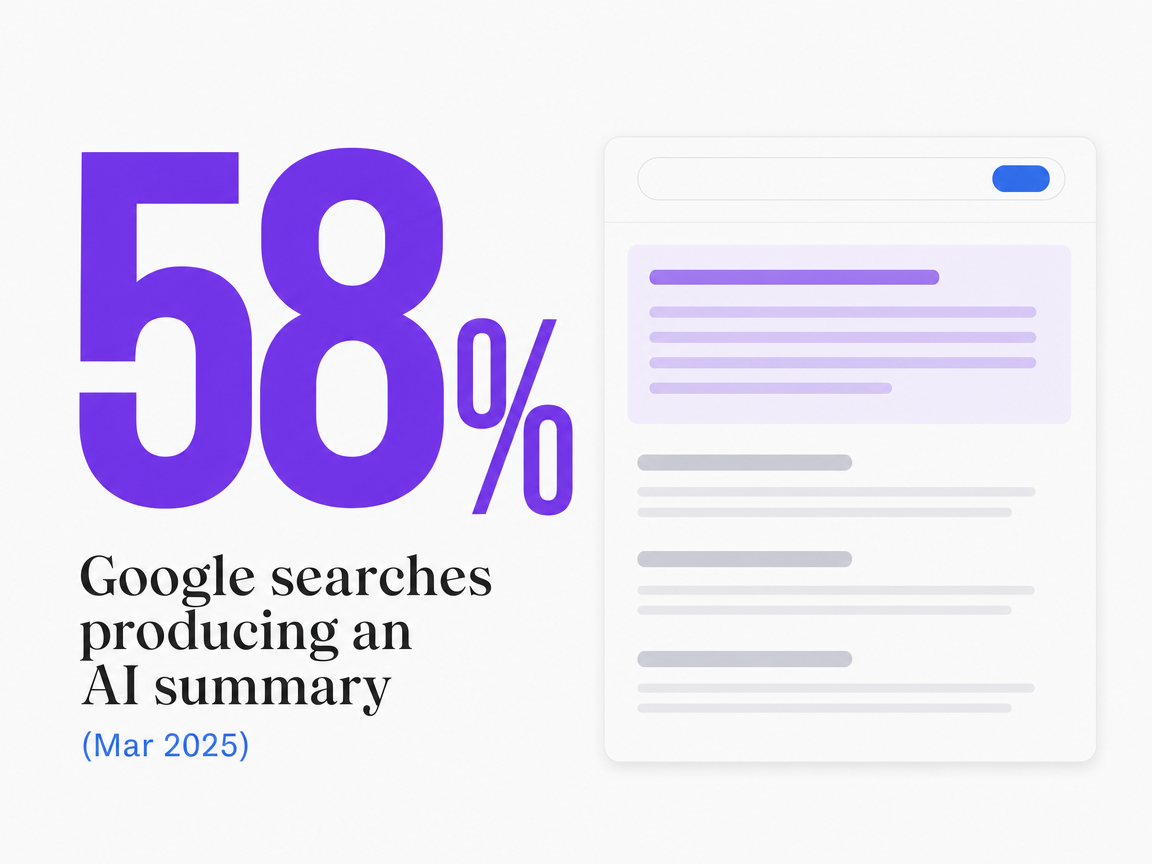 Google searches producing an AI summary (Mar 2025)
Google searches producing an AI summary (Mar 2025)
The Six-Criterion Rubric for Evaluating AI Visibility Tools
Repeatability: Why One-Shot Audits Fail
An AI visibility audit that runs once is a screenshot, not a measurement. Controlled testing of identical prompts on consecutive days produced source overlap of only 34–42%, meaning that more than half the URLs cited on day one disappeared from the answer on day two 6. The prompt did not change. The model did not change. The output did.
That instability breaks the assumption every rank tracker was built on. In classic SEO, position four on Tuesday means position four on Wednesday unless something material shifts. In AI answers, position four does not exist and the citation set itself resamples every time the query fires. A tool that queries each tracked term once per week produces a visibility score with a confidence interval wide enough to drive over.
The evaluation test is simple. A credible AI brand visibility analysis tool requeries each tracked prompt on a schedule dense enough to average out the noise — daily at minimum, multiple runs per day for high-priority terms — and reports the distribution, not a single reading. If a vendor demo shows one clean number per brand per week, the tool is measuring the wrong thing.
Citations vs. Mentions: A Distinction Most Dashboards Blur
A mention is when the AI answer names the brand in prose. A citation is when the AI answer links to a URL the brand controls or a URL that discusses the brand. The two travel together in marketing decks and separately in the underlying data.
The distinction matters because they produce different work. A brand that is mentioned but not cited has an authority signal without a traffic path — the fix is on-site content and structured data that gives the engine something to link. A brand that is cited but not mentioned by name has the opposite problem: the answer sends the click but does not build recognition. The Britopian report on AI-driven search calls out this same split, arguing that operators need to track whether AI assistants cite a website separately from whether they mention the brand 10.
A tool that reports a combined "visibility score" without exposing both variables is not diagnostic. The agency review question is whether the vendor lets an analyst filter for mentions-without-citations and citations-without-mentions in the same view.
Source-Type Attribution: Owned, Earned, Third-Party
When an AI engine grounds a brand answer, most of the URLs it pulls do not come from the brand's own site. A June 2026 study of how large language models source brand reputation across multiple markets found that 85.7% of URL citations in AI brand answers point to third-party sites rather than brand-owned pages 7. The brand's website is a minority contributor to the answer describing the brand.
That single number reshapes what a visibility tool has to track. If nearly nine in ten citations are third-party, an audit that only crawls the client's domain is measuring the smallest slice of the surface. The tool has to identify which review sites, trade publications, Reddit threads, Wikipedia entries, and industry directories the engine is actually citing — and it has to segment those by source type so an agency can tell earned coverage apart from user-generated content apart from directory listings.
For an agency Head of SEO, this shifts the deliverable. Owned-site optimization is still on the work queue, but it will not move the needle on the majority of AI answers by itself. The tool has to surface the third-party surfaces where the client is under-cited, so the digital PR, review-generation, and expert-contribution work can be scoped and staffed. A monitor that cannot name those source domains cannot brief that work.
Cross-Engine Coverage Beyond Google
Google is the default surface but no longer the only one that decides what a prospect reads. Pew's June 2026 survey of US adults found that roughly six in ten read AI search engine summaries and about four in ten use chatbots for information seeking 5. A prospect researching a law firm, a dental group, or a home services brand may pass through ChatGPT, Perplexity, Gemini, and Google AI Overviews inside the same evaluation.
A single-engine tool cannot see that journey. Research on brand visibility across AI engines documents systematic differences in how each platform cites sources and surfaces brands, which means a client can be highly visible in one engine and invisible in another with no obvious reason 8. The vendor evaluation question is which engines a tool queries directly, how often, and whether it normalizes the citation format across them so an analyst can compare source mix engine-to-engine.
Coverage of one engine is a monitoring feature. Coverage of four is a portfolio deliverable. The gap between the two is the difference between reporting on where a client showed up and reporting on where the client's entire prospect pool is looking.
Query-Intent Segmentation
Not every query fires an AI answer, and the ones that do skew hard toward one intent type. The Spiegel Research Center's study of 160 queries found AI Overviews triggered on 43% of tested queries overall but on 98% of informational queries 11. Transactional and navigational queries triggered AI Overviews far less often, which means a brand's visibility opportunity is concentrated in a specific slice of its keyword universe.
A tool that tracks 5,000 keywords per client without segmenting by intent buries the signal. If 60% of the tracked terms are transactional and rarely trigger an AI answer, aggregate visibility scores dilute toward zero and hide the informational terms where the client is actually losing ground. The evaluation criterion is whether the tool can tag each tracked query by intent, filter dashboards accordingly, and report AI-answer trigger rate as a separate metric alongside citation rate.
For an agency Head of SEO, the practical consequence is scoping. Content briefs for informational terms need to assume an AI answer will appear above the traditional results 98% of the time and be written to be cited within it. Briefs for transactional terms follow a different rulebook. A tool that cannot separate the two forces the strategist to do the tagging by hand across every client, which is where the portfolio math breaks.
Execution Linkage: From Findings to a Work Queue
The first five criteria describe what a tool measures. The sixth describes what the agency does on Monday morning. A visibility gap identified in a dashboard has no value until it becomes a ranked brief a writer, PR lead, or developer can pick up.
Most monitoring platforms stop at the report. They will flag that a client is under-cited on three review domains and over-indexed on informational queries that no longer send traffic, then leave the translation into content briefs, outreach targets, and schema fixes to the agency team. Across a 25-client portfolio, that translation work is the constraint — not the monitoring itself.
The evaluation question is whether the tool produces a prioritized work queue that maps each gap to a specific action, an owner, and an approval step. That means source-type gaps route to digital PR, citation-format gaps route to schema and content ops, and intent-segmentation gaps route to editorial. A tool that ends at the chart is a diagnostic. A tool that ends at an approved brief is production infrastructure.
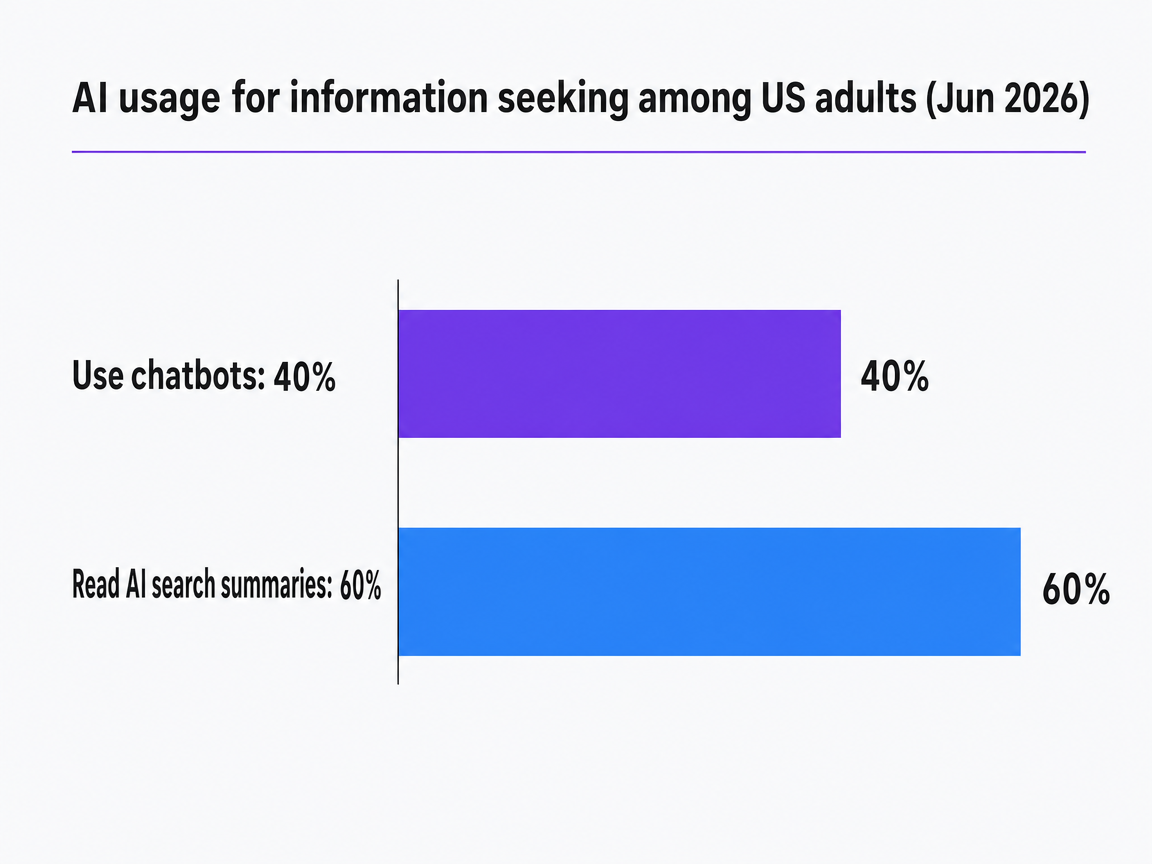 AI usage for information seeking among US adults (Jun 2026)
Breakdown of AI usage for information seeking among U.S. adults in June 2026, showing 40% use chatbots and 60% read AI search summaries.
Test AI-Driven Brand Visibility Insights Instantly
Evaluate live brand visibility metrics using your actual content in a real-world environment for seven days.
What a Realistic Visibility Baseline Looks Like by Brand Tier
Before an agency picks a tool, it needs to know what "good" looks like for the client sitting in front of it. Recent cross-engine research on brand visibility across AI search engines produced a three-tier baseline that most client conversations should start from:
- Global brands appeared in 73% of relevant AI answers on the first run of a query
- Established brands in 44%
- Niche brands in 11% 8
That gap is not a performance problem the client caused. It reflects how AI engines weight authority, citation volume, and third-party coverage — the same signals that took decades to accumulate for the global names at the top of the tier. A regional dental group or a mid-market law firm is a niche brand by this definition, and an 11% baseline is the honest starting number before any optimization work begins.
For an agency Head of SEO, this reframes the reporting conversation two ways. First, a client showing up in 15% of tracked AI answers is not underperforming — it is already above the niche tier baseline, and the deliverable is holding that position while pushing toward the established-brand range. Second, promising a niche client 50% visibility inside a quarter is promising a tier jump the underlying data does not support. The right tool exposes the tier baseline explicitly and tracks progress against it, so account reviews compare the client to peers of the same size instead of to an aspirational ceiling that inflates churn risk when the number does not move fast enough.
Tool Categories, Ranked Against the Rubric
Native Baselines: Search Console Generative AI Reports
Google's Search Console generative AI performance reports are the free floor every agency stack should include, and the ceiling none of them should stop at. The reports surface impressions, pages, countries, devices, and dates for AI features 1, and Google's own optimization guidance points operators back to the same report as the primary measurement layer for AI feature performance 9. That gives an agency a defensible baseline for a client's owned properties without paying a vendor for a redundant dataset.
The rubric exposes what the report does not do. Search Console counts when a client's page was surfaced inside an AI feature, but it does not name the brand mention, capture the surrounding citation set, or show which competing domains appeared in the same answer. It reports the owned slice only. Sites appearing in AI features are folded into overall Search Console traffic reporting 2, which means the AI contribution is measurable but not comparable to a competitor's contribution.
Use it for baseline impression counts and page-level trend data. Layer a third-party tool on top for mention detection, citation source-type breakdown, and cross-engine coverage.
Monitoring-Only Platforms
Purpose-built AI visibility monitors are the category most agency evaluators land on first. The stronger ones query multiple engines directly, requery on a schedule dense enough to average out the day-to-day noise the arXiv testing documented at 34–42% source overlap 6, and separate mentions from citations in the underlying data. That matches four of the six rubric criteria — repeatability, mention/citation separation, cross-engine coverage, and, in the better implementations, query-intent tagging.
Where they typically fall short is source-type attribution and execution linkage. Many monitoring platforms report which URLs an engine cited without classifying whether those URLs are owned, earned, user-generated, or directory listings — a critical gap given that 85.7% of AI brand-answer citations point to third-party sites 7. An agency analyst can see the domains but still has to hand-classify them across every client to brief the digital PR work.
The Britopian report's framing of an AI visibility score and the need to track citations and mentions separately 10describes what these tools do well. It also describes where the deliverable ends: a dashboard, not a work queue. For a portfolio agency, that ceiling matters.
SEO Suite Add-Ons
The incumbent SEO suites — the ones already installed in most agency stacks — have added AI visibility modules to existing rank-tracking products. The commercial appeal is obvious: one login, one contract, one invoice per client. The rubric appeal is weaker.
Suite add-ons tend to inherit the architecture of the rank tracker they were bolted onto. That means:
- Weekly or on-demand crawls rather than the daily requerying the source-overlap data calls for 6
- Heavy Google bias with limited or beta-level coverage of ChatGPT, Perplexity, and Gemini
- A keyword-list model that does not tag by intent unless the analyst tags manually
- The mention-versus-citation split often collapsed into a single "AI visibility" number that reads well in a client deck and diagnoses nothing
The right way to use them is as a supplement, not a replacement. If a suite is already running keyword tracking, backlink monitoring, and site audits across a portfolio, its AI module is useful for correlating traditional-SERP movement with AI-answer movement on the same terms. It is not a substitute for a monitor built around the six criteria.
Monitoring-Plus-Execution Platforms
The newest category collapses measurement and production into one workflow. These platforms cover the same monitoring surface the standalone tools do — multi-engine requerying, mention and citation separation, source-type classification, intent segmentation — and then route each identified gap to a specific piece of work: a content brief, an outreach target, a schema correction, an editorial update.
The execution linkage is the differentiator against every other category in this ranking. When 85.7% of citations sit on third-party domains 7and niche brands start from an 11% baseline in AI answers 8, the audit itself is the smaller half of the job. The larger half is briefing, staffing, and shipping the work that moves the numbers — across a portfolio, on a repeatable cadence, without hiring a specialist per client.
These platforms typically apply an approval-first model: every recommendation surfaces with the strategic reasoning behind it, and nothing ships until the agency signs off. That preserves the strategist's judgment while removing the manual translation step between dashboard and deliverable. For a Head of SEO scaling delivery, that is the category worth piloting first.
See How Leading Agencies Quantify Brand Visibility with AI-Driven Precision
Get a walkthrough of advanced brand visibility analysis tools designed for multi-location and enterprise teams—see benchmarks, reporting features, and workflow integrations tailored for agency-scale delivery.
If You Manage 25 Client Accounts: Portfolio Economics
The math changes when the buyer is not a single brand but an agency amortizing a monitoring stack across a book of clients. A 25-account portfolio turns per-domain pricing from a rounding error into a P&L line, and it exposes which vendor models actually scale.
Most monitoring-only vendors price per tracked domain per month. At 25 clients, a $X/domain/month rate multiplies straight through, and the analyst time to hand-classify third-party citation sources — the 85.7% of AI brand-answer URLs that sit off-domain 7— multiplies with it. SEO suite add-ons usually blend per-seat and per-domain fees, which lowers the marginal cost of adding a client but caps the depth of AI-specific coverage. Monitoring-plus-execution platforms price closer to a blended per-client rate that folds the work queue into the subscription, trading a higher unit cost for lower downstream labor.
| Stack Type | Pricing Model | Cost at 25 Clients | Analyst Labor Load |
|---|---|---|---|
| Monitoring-only | $X per domain / month | 25 × $X | High: manual source classification, brief translation |
| SEO suite add-on | Per seat + per domain | Seats + 25 × $Y | Moderate: shallow AI depth, correlates with rank data |
| Monitoring + execution | Blended per client / month | 25 × $Z (Z > X) | Low: work queue and approvals built in |
The unit-cost comparison is the wrong frame in isolation. A cheaper monitor that requires an analyst to hand-brief every gap across 25 clients consumes more payroll than the license saved. A platform that ends at an approved brief compresses the specialist headcount curve — which is the actual constraint on portfolio delivery, not the software line item.
Where Vectoron Fits: The Execution Layer
The shortlist so far separates monitors from monitors-plus-execution, and the second category is where Vectoron sits. It is not another dashboard competing for a slot in the reporting stack. It is the layer that takes the gaps a monitor surfaces — under-cited third-party domains, informational queries triggering AI answers at rates near 98% 11, mention-without-citation patterns, tier-baseline shortfalls against the 11% niche-brand floor 8— and turns them into ranked, approval-gated work an agency team can ship across a client portfolio.
Specialist AI strategists analyze the live signals, rank the priorities, and route content briefs, schema fixes, digital PR targets, and editorial updates through a single approval workflow. Nothing publishes without a strategist's sign-off, and every recommendation ships with the reasoning behind it. For a Head of SEO scaling delivery across 25 accounts, that closes the gap between what the visibility tool reports on Monday and what the team ships by Friday.
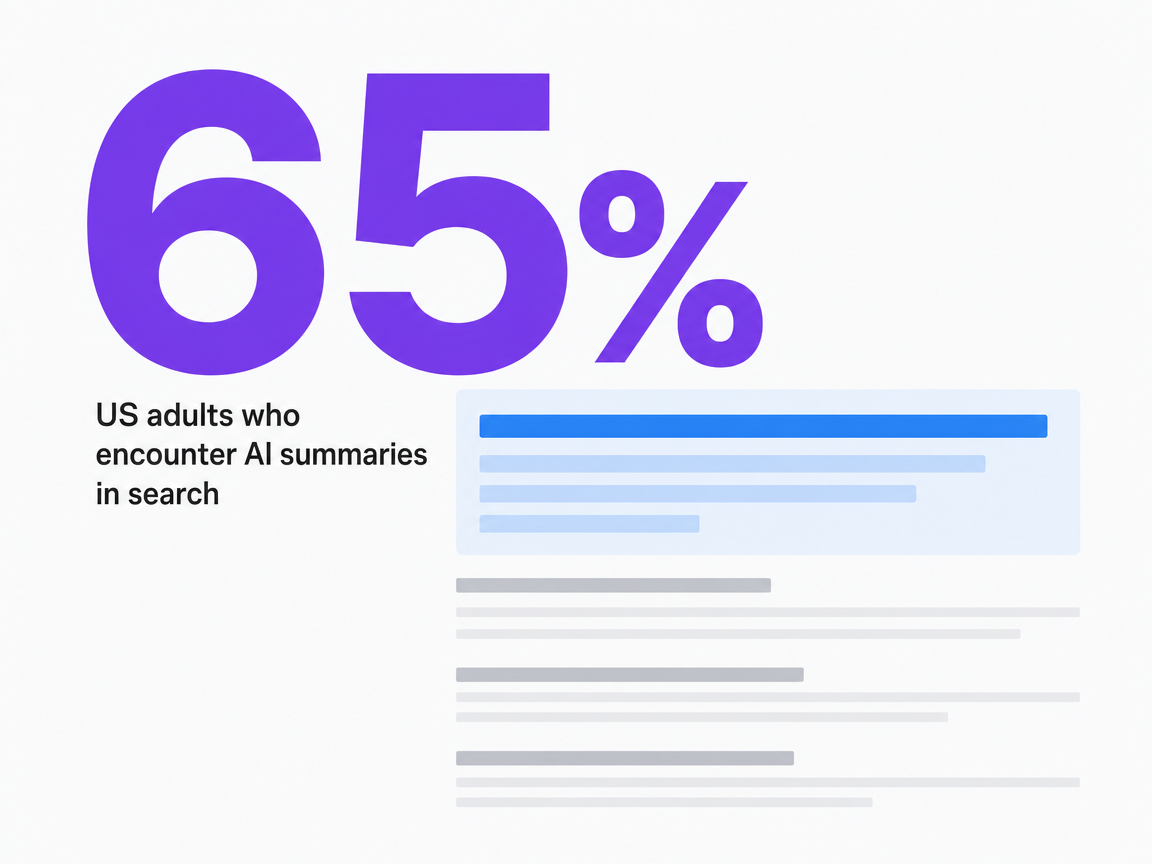 US adults who encounter AI summaries in search
US adults who encounter AI summaries in search
Frequently Asked Questions
References
- 1.Introducing Search Generative AI performance reports in Search Console.
- 2.AI Features and Your Website | Google Search Central.
- 3.Do people click on links in Google AI summaries?.
- 4.How Americans feel about AI summaries in search results.
- 5.Americans' Views on AI Chatbots, Smart Devices and AI's Impact on Daily Life.
- 6.Don't Measure Once: Measuring Visibility in AI Search (GEO).
- 7.How Large Language Models Source Brand Reputation ....
- 8.Measuring Brand Visibility Across AI Search Engines - arXiv.
- 9.Google's Guide to Optimizing for Generative AI Features on Search.
- 10.Report: Brand Visibility and Reputation in the Age of AI-Driven Search.
- 11.Google AI Overviews Decoded - Spiegel Research Center.