
AI Conclusion Generator Explained
Key Takeaways
- Definition: An ai conclusion generator is a natural language processing tool that synthesizes article content into coherent, contextually aligned closing arguments using abstractive modeling.
- Core Benefits:
- Decouples production volume from headcount by automating synthesis.
- Reduces content creation costs by 60–70% compared to agency retainers.
- Ensures thematic consistency across high-volume publishing schedules.
- Target Audience: This technology is critical for SaaS Content Directors seeking to scale pipeline-generating content without the linear cost increases of traditional agency models.
What an AI Conclusion Generator Is
Core Definition and Technology Foundation
An ai conclusion generator is a specialized software application that leverages artificial intelligence to synthesize the closing section of a document. Unlike simple text spinners, these tools analyze the semantic structure of the preceding content to craft a summary that reinforces key arguments and provides editorial closure. For content operations, this technology functions as an automated editor, capable of instantly generating final thoughts that align with the article's core thesis.
"The technology behind an AI conclusion generator relies on natural language processing (NLP) and large language models (LLMs). NLP allows the tool to read and interpret human language, while LLMs, such as those using transformer architectures, generate new text that sounds natural and relevant."
Transformers, introduced in 2017, revolutionized this capability by enabling models to process words in relation to the entire sequence rather than in isolation9. This contextual awareness ensures the conclusion reflects the holistic meaning of the piece. In enterprise environments, these generators are integrated into broader content workflows to accelerate publishing velocity. Marketing teams utilizing AI-assisted tools report a threefold increase in content output without additional headcount3. As enterprise spending on generative AI climbs, these technologies are establishing a new baseline for scalable content production1.
Abstractive vs Extractive Methods
AI conclusion generators utilize two primary methodologies for text synthesis: extractive and abstractive. Understanding the distinction is vital for content directors evaluating tool quality and brand alignment.
 Abstractive vs Extractive Methods
| Feature | Extractive Method | Abstractive Method |
|---|---|---|
| Mechanism | Identifies and copies existing sentences directly from the source text. | Interprets the text's meaning and generates new, original sentences. |
| Output Quality | Often disjointed or repetitive; relies heavily on the original phrasing. | Coherent and fluid; mimics human summarization by synthesizing ideas. |
| Best Use Case | Simple factual recaps where nuance is secondary. | High-quality editorial content requiring a consistent brand voice. |
Research indicates that abstractive models, powered by advanced AI, are superior for generating conclusions because they create contextually aware text rather than merely recycling existing sentences6. For SaaS content teams, abstractive models are essential for maintaining a unique voice and avoiding duplicate content penalties—factors critical for SEO performance. Consequently, leading ai conclusion generator tools predominantly rely on abstractive approaches to meet professional editorial standards.
How an AI Conclusion Generator Works
Natural Language Processing Pipeline
Natural language processing (NLP) serves as the operational engine behind every ai conclusion generator, enabling the software to interpret and synthesize human-written content. The process follows a structured pipeline designed to maximize relevance and coherence:
- Tokenization: The system breaks down the input text into fundamental units, such as words and sub-words.
- Entity Extraction: Algorithms identify key phrases, named entities, and central themes to ensure the summary captures the most critical information.
- Semantic Analysis: The AI maps relationships between topics to distinguish the primary argument from supporting evidence.
- Summarization: The model transforms the prioritized information into a concise closing paragraph.
Integrating NLP into content workflows increases production speed by 80% compared to traditional manual methods3. This velocity is particularly valuable for SaaS content teams aiming to scale operations without proportional increases in labor costs. Each stage of the pipeline ensures the final output is accurate and tailored to the specific context of the article.
Transformer Architecture and LLMs
Transformer architecture underpins the advanced large language models (LLMs) used in modern conclusion generation tools. This design enables the model to employ "self-attention" mechanisms, processing the entire input text simultaneously rather than sequentially. This capability allows the AI to understand long-range dependencies between sentences, ensuring the conclusion aligns with the introduction and body paragraphs regardless of the article's length9.
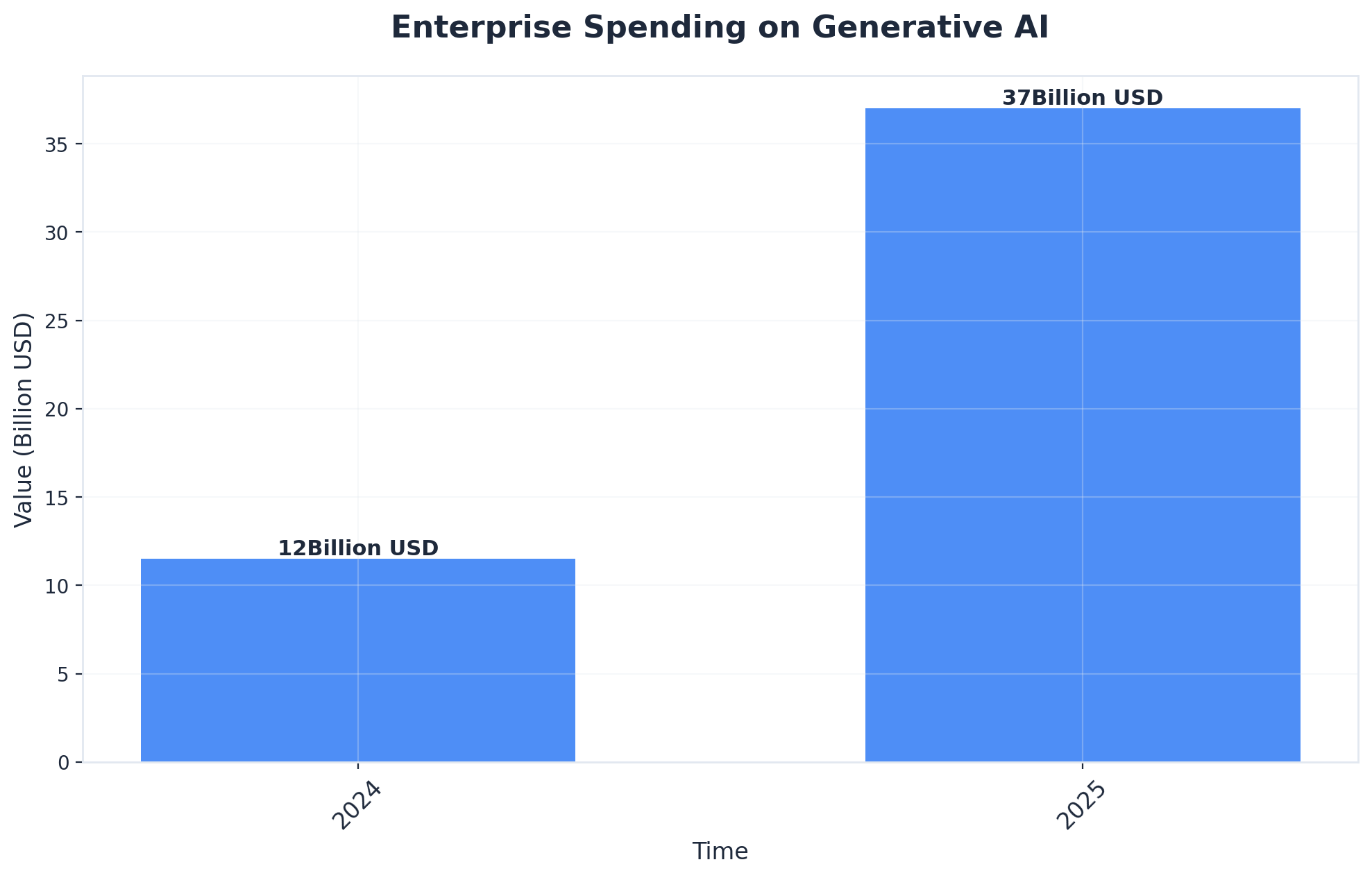 Enterprise Spending on Generative AI
Enterprise Spending on Generative AI (A time series chart showing the rapid growth of enterprise spending on generative AI from $11.5 billion in 2024 to a projected $37 billion in 2025.)
LLMs such as GPT-4 and Claude utilize this architecture to detect patterns in language and logic. When an ai conclusion generator employs an LLM, it synthesizes complex technical articles by extracting thematic threads and reweaving them into a clear, original summary. Research confirms that transformer-based LLMs significantly outperform traditional machine learning methods in generating human-like summaries6. This technological advantage drives the 3x increase in publishing output reported by SaaS content directors adopting AI-driven workflows3.
Business Impact on Content Operations
Production Velocity and Cost Metrics
Production velocity is a definitive metric for SaaS content teams seeking to dominate organic search categories. Integrating automated conclusion generation into publishing workflows allows organizations to triple their output capacity without expanding headcount3. For instance, a team producing 10 articles per month can scale to 30 using the same resources, directly supporting faster campaign launches and more frequent content refreshes.
The financial implications are equally transformative. AI-assisted workflows reduce production costs by 60–70% compared to traditional agency or freelance models4. By automating the synthesis of conclusions—a task that often requires significant editorial time—teams free up senior writers for high-value strategic work. These savings enable organizations to reinvest in aggressive SEO strategies and experimental formats. With enterprise spending on generative AI projected to reach $37 billion in 2025, the shift toward automated scalability is becoming a competitive necessity1.
See How AI Conclusion Generators Accelerate Enterprise Content ROI
Connect with Vectoron's experts to discover data-backed strategies for integrating AI-generated conclusions that boost content impact, improve workflow efficiency, and drive measurable lead growth across your digital channels.
Quality Control and Human Oversight
While velocity is critical, quality assurance remains the safeguard of brand reputation. Even advanced AI tools require oversight to prevent errors or stylistic inconsistencies. Industry best practices emphasize a "human-in-the-loop" model, where editorial staff review AI-generated conclusions for factual accuracy and brand alignment before publication2.
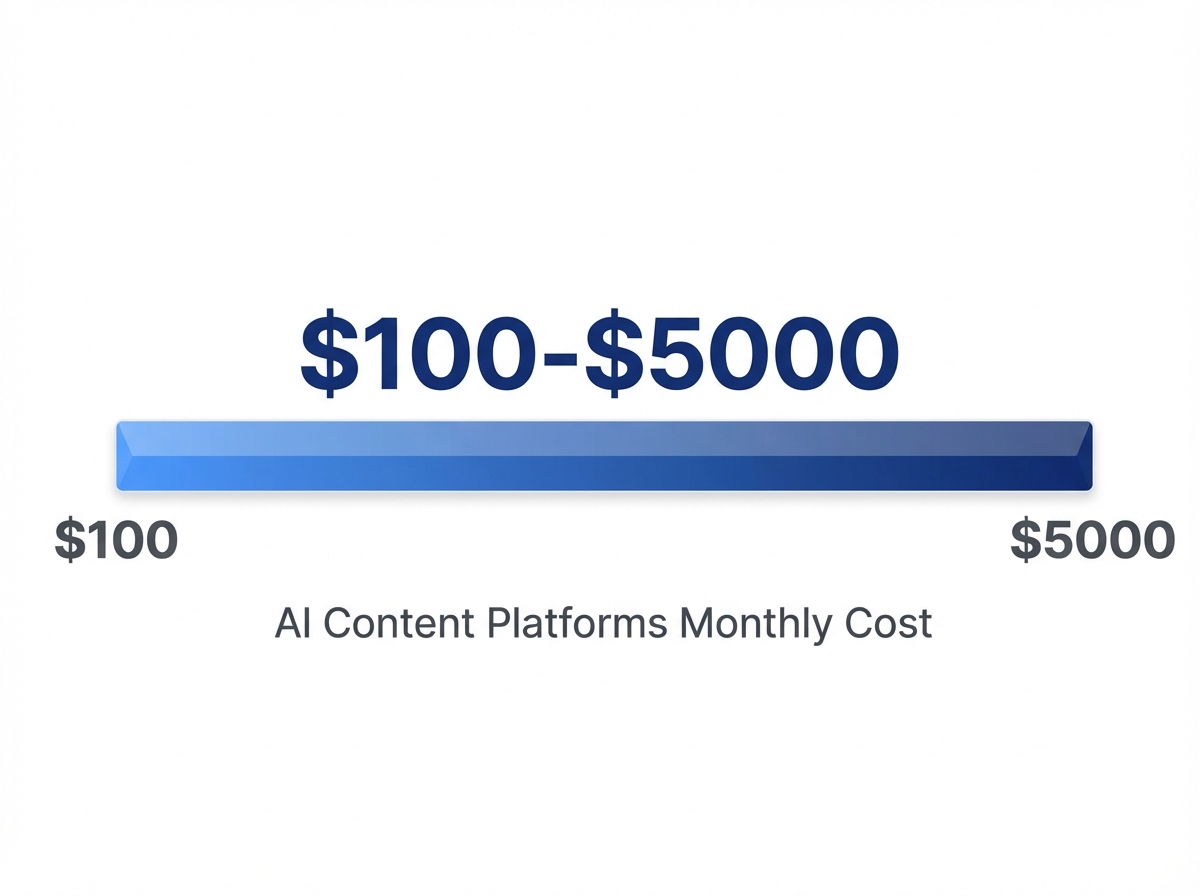 Monthly Cost of AI Content Platforms: $100-$5000
Effective quality control workflows typically involve a multi-stage process:
- Automated Scanning: Tools check for plagiarism and factual inconsistencies.
- Editorial Review: Human editors evaluate tone, nuance, and context.
- Expert Validation: Subject matter experts review content in regulated sectors (e.g., healthcare, finance).
This structured approach supports 96% publish-ready rates for AI-assisted drafts, allowing SaaS teams to scale rapidly without sacrificing credibility2. Continuous feedback from these reviews further refines the AI models, closing the gap between automated output and human editorial judgment.
Implementation Risks and Mitigation
Hallucination and Bias Management
Hallucination—the confident generation of false information—and algorithmic bias pose significant risks in automated content production. These issues arise from the training data used to build language models. If datasets are unbalanced, the AI may inadvertently propagate stereotypes or inaccuracies. Research highlights that AI models can amplify offensive stereotypes if not carefully managed8.
Mitigation strategies require both technical and editorial interventions. Automated filters can flag potentially harmful language, while structured human review ensures final outputs meet safety standards2. For enterprise teams, ongoing model fine-tuning using diverse, representative datasets is essential. Regular audits and transparent documentation of model decisions further support accountability, ensuring that the ai conclusion generator remains a reliable asset rather than a liability.
Fine-Tuning for Brand Consistency
Fine-tuning adapts generic AI models to reflect a specific organization's voice and editorial standards. This process involves training the generator on a company’s existing content library—blogs, whitepapers, and brand guidelines—to ensure stylistic uniformity. For a SaaS company, this might mean enforcing a data-driven, professional tone across all conclusions.
Techniques such as Reinforcement Learning from Human Feedback (RLHF) allow editors to directly influence the AI's writing style by rating outputs7. This feedback loop reduces off-brand phrasing and ensures compliance with industry regulations. Research demonstrates that fine-tuned models deliver significantly more reliable and brand-aligned results than out-of-the-box solutions7. By investing in fine-tuning, organizations can trust their automated tools to produce conclusions that seamlessly integrate with their broader content strategy.
Frequently Asked Questions
Conclusion
Organizations evaluating their content production infrastructure face a critical decision: continue scaling through traditional agency relationships with their inherent cost-per-unit economics, or transition to platform-based models that decouple output volume from linear budget increases. Industry analysis reveals that this operational shift represents more than incremental improvement—it fundamentally restructures the economics of content marketing at scale.
The business case for platform adoption centers on three quantifiable factors: production cost per article, output capacity within fixed budgets, and pipeline contribution metrics. Organizations that have transitioned from agency retainers to automated production systems report cost reductions of 85-90% per published article, while simultaneously increasing monthly output by 300-400%. More significantly, these efficiency gains correlate with documented lead generation increases of 320%, suggesting that volume expansion directly impacts pipeline performance when content quality remains consistent.
Content directors planning operational transitions should evaluate platforms based on workflow completeness rather than feature lists. Systems that integrate keyword research, content generation, quality assurance, and multi-CMS publishing within a single workflow demonstrate 96% publish rates without revision—substantially higher than the 40-60% rates typical of agency-produced content requiring multiple revision cycles. For teams currently producing 8-24 articles monthly through agency relationships, financial modeling indicates ROI crossover points within 60-90 days, making platform adoption viable even mid-contract. The strategic question is not whether to transition, but how to structure the migration to minimize disruption while accelerating time-to-value.
References
- 1.2025: The State of Generative AI in the Enterprise.
- 2.Editorial Trust in AI Content Workflows.
- 3.AI in Content Marketing: Strategy, Tools, and ROI in 2025.
- 4.AI vs Traditional Marketing: Cost Comparison Guide.
- 5.Content Marketing ROI Benchmarks for B2B SaaS.
- 6.LLMs vs Traditional Machine Learning for Text Summarization.
- 7.Fine-Tune Large Language Models with RLHF.
- 8.A Survey on Harmful Content Generation and Safety Mitigation.
- Transformer (Deep Learning). https://en.wikipedia.org/wiki/Transformer(machine_learning_model)
- 10.Is Generative AI a Job Killer: Evidence from the Freelance Market.