
Key Takeaways
- Decision Guide: If your team spends >20 hours/week on drafting or your agency costs exceed $5k/month, AI content automation is your highest-leverage move.
- Success Factors: The top 6% of performers don't just cut costs—they reinvest savings into 3 strategic areas: market expansion, higher content volume, and rigorous human oversight.
- Immediate Action: Audit your current "Cost Per Asset" today. If it's above $150 for standard articles, you are overpaying compared to AI-enabled competitors.
Understanding AI Content and Its Impact on Business
For modern marketing teams, AI content is no longer just an experimental tool—it is the primary lever for replacing the bloated traditional agency model with a streamlined, high-output engine. By integrating artificial intelligence into your production workflows, you can deliver measurably better outcomes at a fraction of the cost, enabling your organization to scale without the burden of adding headcount.
How AI Content Reshapes Economics
Production Cost Revolution
Tool: Assessing Your AI Content Cost Advantage
- Compare current content production costs (labor, software, overhead) to benchmarks for AI-powered workflows.
- Audit your average cost per article or asset before and after automation.
- Identify the percentage of content tasks (briefing, drafting, editing) that can be automated.
- Set targets for cost reduction and output scaling over the next 12 months.
The economics of content production have shifted dramatically with the adoption of AI content tools. Recent industry data shows that organizations using AI-driven automation report content production cost reductions of 60-80% compared to traditional manual workflows.3 This is largely due to the ability to automate repetitive tasks such as research aggregation, first-draft creation, and even initial quality checks, which previously required significant human labor.
| Metric | Traditional Agency Model | AI-Powered Model |
|---|---|---|
| Cost Per Asset | High ($300 - $1,000+) | Low ($50 - $150) |
| Turnaround Time | Weeks (Manual drafting) | Days (AI drafting + Human edit) |
| Scalability | Linear (Requires more headcount) | Exponential (Software scaling) |
For example, the inference cost for producing content at GPT-3.5 model quality dropped by over 280 times between late 2022 and 2024, making high-quality automation accessible to marketing teams of all sizes.8 This approach is ideal for marketing teams seeking to scale output without expanding headcount. In fact, 36.6% of enterprises have already achieved at least a 25% reduction in production costs by adopting AI content automation, with 12.7% seeing reductions over 50%.3 Organizations that prioritize this route typically free up budget for higher-value strategic work, such as campaign innovation or market expansion.
With baseline costs transformed, the next section will examine how speed-to-market becomes the new competitive lever.
Speed-to-Market Transformation
Tool: Speed-to-Market Assessment Checklist
- Track average time from content briefing to publication before and after adopting AI content workflows.
- Measure the number of review cycles required for final approval with AI-assisted drafting versus manual production.
- Quantify the increase in content volume produced per month due to automation.
- Identify bottlenecks that automation has not yet addressed (e.g., compliance review, expert validation).
AI content enables businesses to compress editorial timelines from weeks to days. Industry surveys report that organizations leveraging AI for content creation scale output 5-10 times faster without increasing staff.1 This acceleration is possible because AI tools automate research, drafting, and even preliminary editing—tasks that traditionally delayed delivery. As a result, marketing teams can respond to market shifts, seasonal trends, or breaking news with near real-time agility.
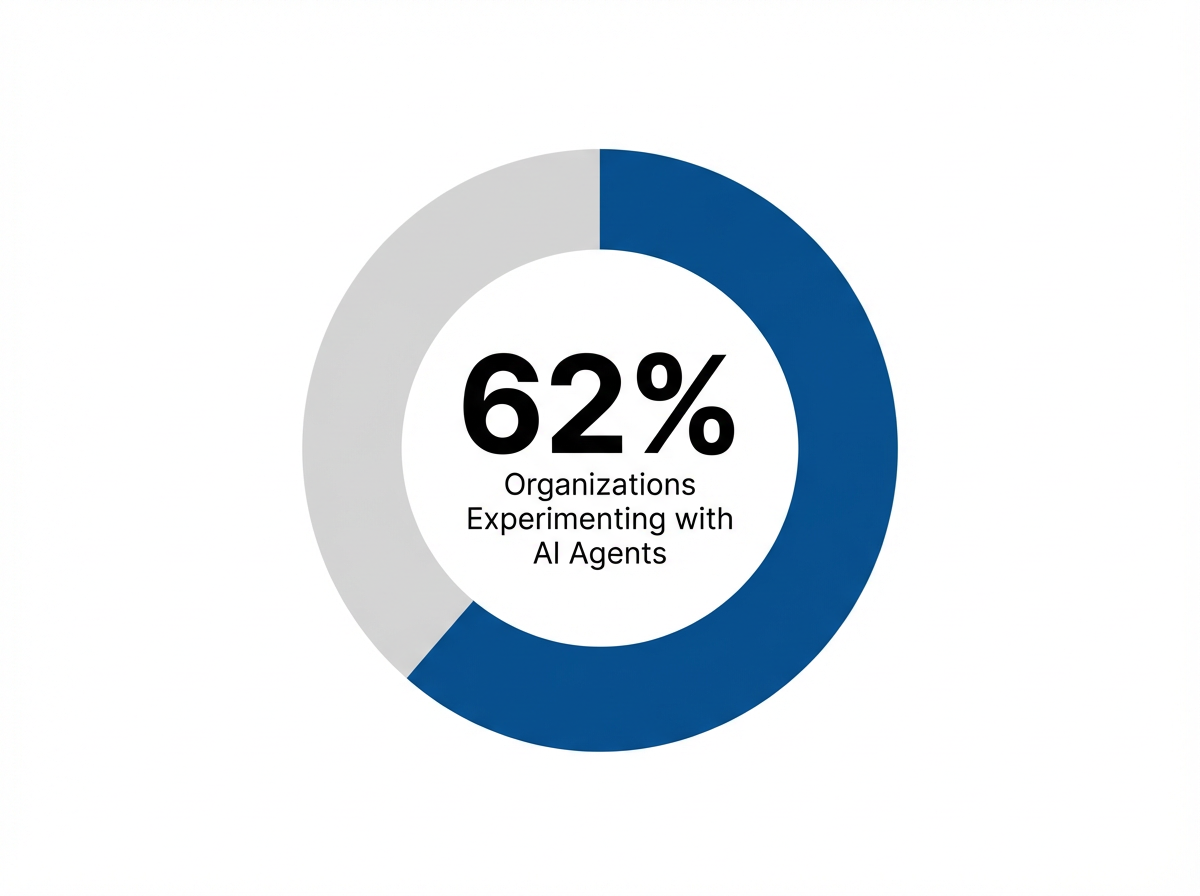 Organizations Experimenting with AI Agents: 62%
"Digital agencies using AI content to deliver on-demand campaigns report 34% higher client retention rates, demonstrating that speed is now a critical factor for client loyalty and growth."9
This path makes sense for organizations where first-mover advantage or rapid response is a core differentiator. With speed-to-market redefined, the next consideration is how businesses can deploy AI content strategically for sustainable growth rather than falling into the trap of efficiency-only thinking.
Strategic vs. Tactical AI Content Deployment
Cost-Cutting Trap vs. Growth Engine
Tool: Strategic AI Deployment Assessment
- Audit: Where is AI content deployed purely for cost reduction versus for market growth or innovation?
- Metrics: Are you measuring only efficiency (cost, speed) or also ROI, revenue growth, and new customer acquisition?
- Budget: Are savings reinvested in experimentation and market expansion, or simply trimmed from spend?
- Leadership: Is the executive mandate primarily to cut headcount, or to build competitive differentiation?
Research shows that the majority of organizations focus their AI content investments on short-term savings, but this approach risks plateauing results. McKinsey’s 2025 State of AI survey found that while 80% of companies cite efficiency as the main goal, only 6%—the so-called “high performers”—use AI for transformative innovation and market expansion.1 Companies taking a strategic route achieve more than double the marketing-driven profitability of those using AI for cost-cutting alone.9
This path suits teams willing to reinvest automation-driven savings into new channels, higher-quality campaigns, or audience targeting, rather than treating AI strictly as a headcount reduction tool. Organizations that treat AI content as a growth engine unlock multiple compounding benefits:
- 2x higher profitability
- 3-5x greater ROI on content investments
- Improved shareholder value9
By contrast, those stuck in the cost-cutting trap often experience diminishing returns, underutilized technology, and erosion of competitive advantage over time.
High Performers' Innovation Framework
Tool: High Performer Diagnostic Checklist
- Map business objectives targeted by AI content initiatives (cost, speed, growth, market entry, product innovation).
- Identify governance structure: Does your organization operate a central AI Center of Excellence, or are efforts siloed in individual teams?
- Audit feedback mechanisms: Are human editors, subject matter experts, or end users providing structured input to refine AI outputs?
- Track diversity of use cases: Is AI content limited to blogs and social posts, or is it being piloted for sales enablement, product documentation, and customer support?
- Measure time-to-value: How rapidly can new AI content experiments move from prototype to scaled deployment?
High-performing organizations use a layered approach to AI content deployment. They set explicit goals for not just efficiency, but also for market expansion and creative differentiation. According to McKinsey, only 6% of companies—classified as "AI high performers"—deploy AI to drive transformative innovation, and these organizations are over three times more likely than peers to report significant EBIT impact.1 These teams typically centralize AI expertise, enforce robust human-in-the-loop quality controls, and formalize rapid experimentation cycles.
This approach works best when scaling new content formats—such as interactive product demos or knowledge bases—across multiple channels while maintaining compliance and editorial standards. For instance, leading marketing teams use AI content to test new campaign concepts with real-time audience feedback, then reinvest the resulting efficiency gains into further innovation. Strategic deployment of AI content in this way enables high performers to achieve 2x higher marketing-driven profitability and 79% greater shareholder value than their peers.9
Industry-Specific Implementation Paths
Healthcare Compliance & Accuracy
Tool: Compliance & Accuracy Readiness Checklist
- Confirm that all AI content workflows exclude the processing of protected health information (PHI) unless the platform is explicitly HIPAA-compliant.
- Require human clinical review of AI-generated documentation, summaries, or patient-facing materials before publication or integration into electronic health records (EHR).
- Audit AI outputs for hallucinations, omissions, and outdated medical guidance using subject matter experts.
- Monitor evolving federal and state regulations impacting generative AI in healthcare.
Healthcare organizations are rapidly adopting AI content solutions to streamline clinical documentation and reduce administrative burden. Studies show that AI technologies can improve accuracy and efficiency in clinical documentation, allowing doctors to reclaim 20–30% of their time for patient care.2 However, the use of generative AI in this sector raises unique risks: errors such as hallucinations and omissions in AI-generated summaries remain a core concern, making clinical oversight essential.2 HIPAA compliance presents another significant challenge, as popular large language models—including ChatGPT—are not certified to process PHI and do not provide the business associate agreements required for legal operation in covered settings.5
This approach is ideal for healthcare systems seeking to scale documentation and patient education without expanding administrative staff, but only when robust human review and regulatory safeguards are in place. As the regulatory landscape continues to evolve, organizations must stay proactive in ensuring both compliance and clinical accuracy.
Financial Services Regulatory Navigation
Tool: Regulatory Navigation Checklist
- Identify all jurisdictions (federal and state) where your organization operates and track applicable AI-specific regulations.
- Assess whether your AI content tools impact high-risk areas: underwriting, fraud detection, marketing disclosures, or customer communications.
- Ensure systems include audit trails and documentation to demonstrate regulatory compliance.
- Require human review for any AI-generated outputs used in consumer-facing or legally binding contexts.
Financial services institutions face a uniquely complex regulatory environment when implementing AI content. State laws such as the Colorado AI Act, Texas Responsible AI Governance Act, and Utah AI Policy Act introduce requirements that directly affect how AI can be used in financial decision-making, especially for high-risk applications like credit approval or anti-discrimination compliance.6 For example, the Colorado AI Act requires developers to implement safeguards for any AI system that could materially influence financial services, while Texas prohibits deployment of AI intended to unlawfully discriminate against protected classes.
This strategy suits organizations that must maintain rigorous auditability and transparency in their AI content workflows, including banks, insurers, and investment firms. Because state-level requirements are rapidly evolving and may conflict with emerging federal guidance, cross-functional teams—combining legal, compliance, and technology expertise—are essential to proactively manage risk.
Drive Business Growth with Vectoron’s Advanced AI Content Solutions
Connect with our experts to see how Vectoron empowers agencies and enterprises to scale content creation, boost engagement, and deliver measurable ROI with AI-driven strategies.
Measuring Real Business Impact
The transition from traditional content creation to AI-powered operations requires clear metrics that demonstrate value to stakeholders. Marketing teams need frameworks that connect content production to revenue outcomes, moving beyond vanity metrics to measure genuine business impact.
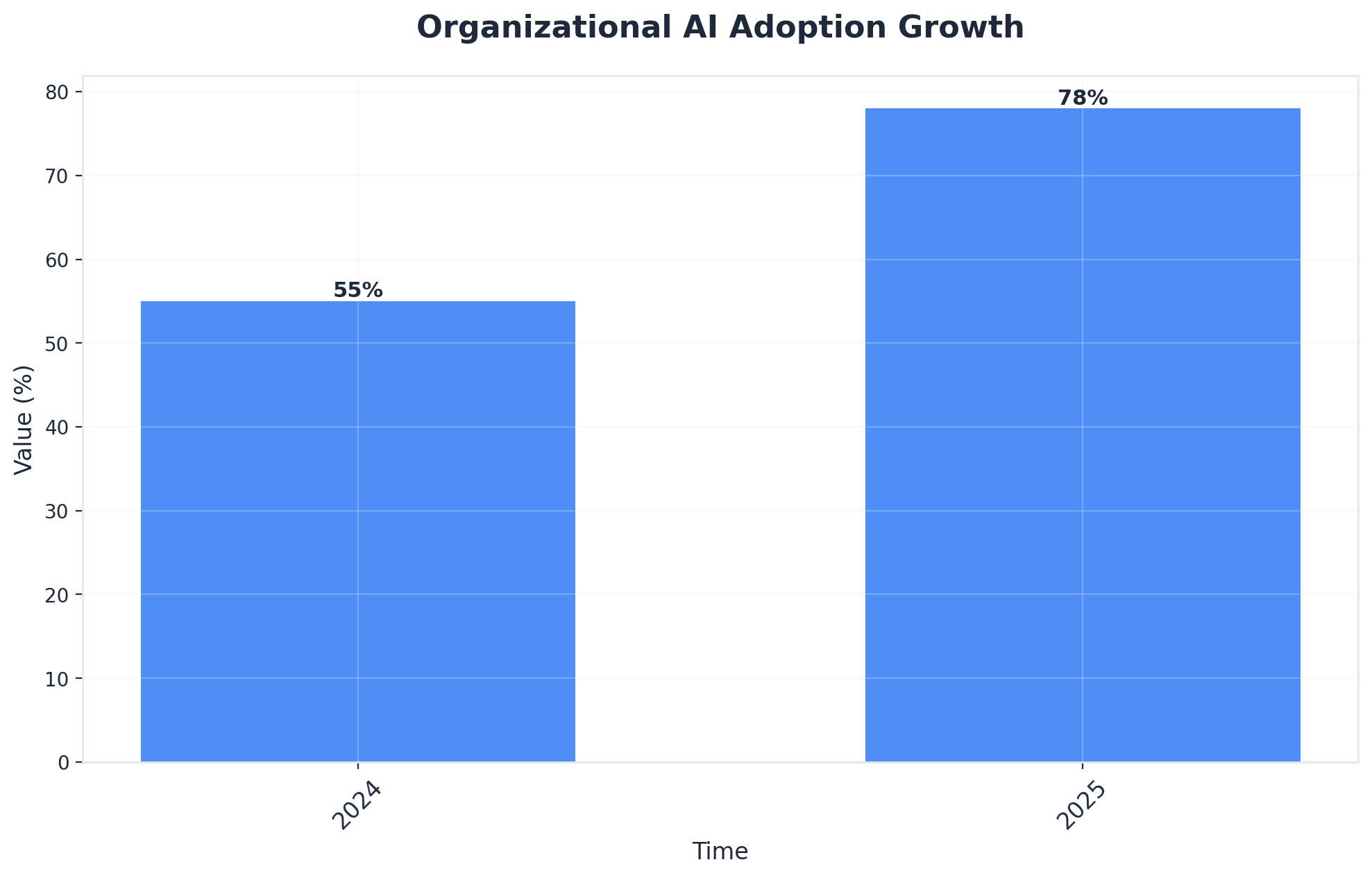 Organizational AI Adoption Growth
Organizational AI Adoption Growth (The percentage of organizations reporting the use of AI in their operations increased from 55% in 2024 to 78% in 2025, showing accelerated adoption.)
Start by establishing baseline measurements before implementing AI content systems. Track current content production costs per piece, including staff time, freelancer fees, and agency retainers. Document average turnaround times from brief to publication. Measure existing organic traffic, conversion rates, and the percentage of leads generated through content channels. These benchmarks create the foundation for demonstrating improvement.
Key Performance Indicators for AI Content
- Production Efficiency: Cost per published article (Target: 60-80% reduction).
- Speed: Time-to-publish (Target: Weeks to Days).
- Performance: Organic traffic growth and engagement metrics (Time on page, scroll depth).
- Attribution: Customer acquisition cost (CAC) for content-sourced leads.
Production efficiency metrics reveal immediate operational gains. Calculate the cost per published article under the new system versus the old approach. Most teams see production costs decrease by 60-80% while maintaining or improving quality standards. Track time-to-publish across different content types. AI-powered workflows typically reduce production cycles from weeks to days, enabling teams to capitalize on trending topics and seasonal opportunities that traditional processes miss.
Content performance indicators connect production efficiency to audience engagement. Monitor organic search rankings for target keywords, tracking movement over 30, 60, and 90-day periods. Measure organic traffic growth month-over-month, segmented by content type and topic cluster. Analyze engagement metrics including time on page, scroll depth, and pages per session to assess content quality and relevance.
Revenue attribution models demonstrate the ultimate business value of scaled content operations. Implement first-touch and multi-touch attribution to understand how content influences the buyer journey. Track the percentage of marketing-qualified leads that engage with content before converting. Calculate customer acquisition cost for content-sourced leads compared to other channels. Teams typically observe 40-50% lower acquisition costs through organic content channels versus paid advertising.
Resource allocation metrics justify the shift away from traditional agency relationships. Compare the fully-loaded cost of content production including tools, technology, and internal time against previous agency spending. Document the headcount efficiency ratio—how much content volume the team produces per full-time employee. Most organizations find they can produce 3-5 times more content with the same team size after implementing AI-powered systems.
The key to effective measurement lies in connecting operational metrics to strategic outcomes through consistent reporting that reveals patterns without overwhelming stakeholders. A monthly reporting cadence strikes the optimal balance—frequent enough to enable course correction when metrics trend downward, yet spaced sufficiently to identify meaningful patterns rather than reacting to normal statistical variation. Create a dashboard that synthesizes these metrics into executive-friendly formats, including trend lines showing improvement over time, cost savings calculations, and projections for continued scaling. Present findings in terms of business outcomes rather than content metrics—reduced customer acquisition costs, increased pipeline velocity, and improved marketing ROI. When leadership teams see content operations generating measurable pipeline contribution at a fraction of traditional costs, internal conversations shift from questioning content budgets to exploring expansion opportunities. This data-driven approach transforms content operations from a cost center into a measurable growth engine, making the case for continued investment in AI-powered production capabilities.
Frequently Asked Questions
Your Next 30 Days: Building AI Content Operations
The transition to AI-powered content operations doesn't require a complete organizational overhaul. Success comes from structured implementation over a focused 30-day period.
 Your Next 30 Days: Building AI Content Operations
- Week 1: Foundation Building. Audit existing content workflows to identify bottlenecks where AI can create immediate impact. Document current production costs per asset and establish baseline metrics for quality, speed, and resource allocation. This data becomes the benchmark for measuring transformation success.
- Week 2: Pilot Deployment. Select one high-volume content type—blog articles, social posts, or email campaigns—and implement AI tools for that specific workflow. Train team members on prompt engineering and quality control processes. The goal is proving value in a controlled environment before scaling.
- Weeks 3-4: Expansion & Refinement. Expand successful pilots across additional content types while refining processes based on initial results. Marketing teams typically see 40-60% time savings in production during this phase, allowing reallocation of resources to strategy and optimization.
The key is treating this as operational transformation, not technology adoption. Operational transformation means fundamentally rethinking team roles—shifting writers from production to editing and strategy, redefining quality standards around AI-assisted output, and restructuring decision-making processes to incorporate rapid iteration cycles.
By day 30, success looks like consistent output at 2-3x previous volume with maintained or improved quality scores, plus documented cost savings of 30-50% per asset. The next phase involves scaling these proven workflows across departments and content types while building more sophisticated AI capabilities. Teams that approach implementation methodically achieve sustainable scale without the traditional agency dependency model—and the performance data collected during these initial 30 days becomes the foundation for continuous refinement, revealing which AI applications deliver measurable ROI and which workflows need adjustment before broader rollout.
References
- 1.The State of AI: Global Survey 2025 - McKinsey.
- 2.Evaluating the Impact of Artificial Intelligence (AI) on Clinical Documentation - PMC.
- 3.Enterprise Automation Index 2025 - Redwood Software.
- 4.26 AI SEO Statistics for 2026 + Insights They Reveal - Semrush.
- 5.AI Chatbots and Challenges of HIPAA Compliance for AI Developers - PMC.
- 6.AI in Financial Services: Popular Use Cases and the Regulatory Framework - Venable.
- 7.Enterprise Automation ROI: A Guide to Measuring and Maximizing - Moveworks.
- 8.The 2025 AI Index Report - Stanford HAI.
- 9.Marketing in the AI Era: To Matter More or Cost Less - PwC.
- 10.No Traffic, No Moat: How AI Breaks The Economics Of Destination Publishing - AdExchanger.