
Key Takeaways for SaaS Leaders
- Strategic Shift: Move from treating AI as a tactical tool to an operational core that replaces linear agency models.
- Infrastructure First: Prioritize structured data and workflow integration over accumulating standalone AI tools.
- Measurement Evolution: Adopt multi-touch attribution to capture the full value of AI-driven customer journeys.
- Action Plan: Implement a 30-day pilot focused on validating efficiency gains before full-scale deployment.
Rethinking Your Strategy with AI Content Creation
For SaaS CMOs, the transition to ai content creation represents a fundamental operational transformation rather than a simple software upgrade. While 85% of enterprises have increased their investment in these technologies, only a fraction are realizing immediate returns, primarily because they overlay new tools on outdated agency-dependent workflows. To scale content production without adding headcount, marketing leaders must dismantle traditional silos and build an infrastructure where AI serves as the production engine, not just an assistant.
The ROI Reality Behind AI Content Creation
Why 85% Increased Investment Despite Delayed Returns
Despite the promise of instant efficiency, the path to measurable ROI is often longer than anticipated. The following checklist highlights the current state of enterprise investment and the strategic rationale behind it:
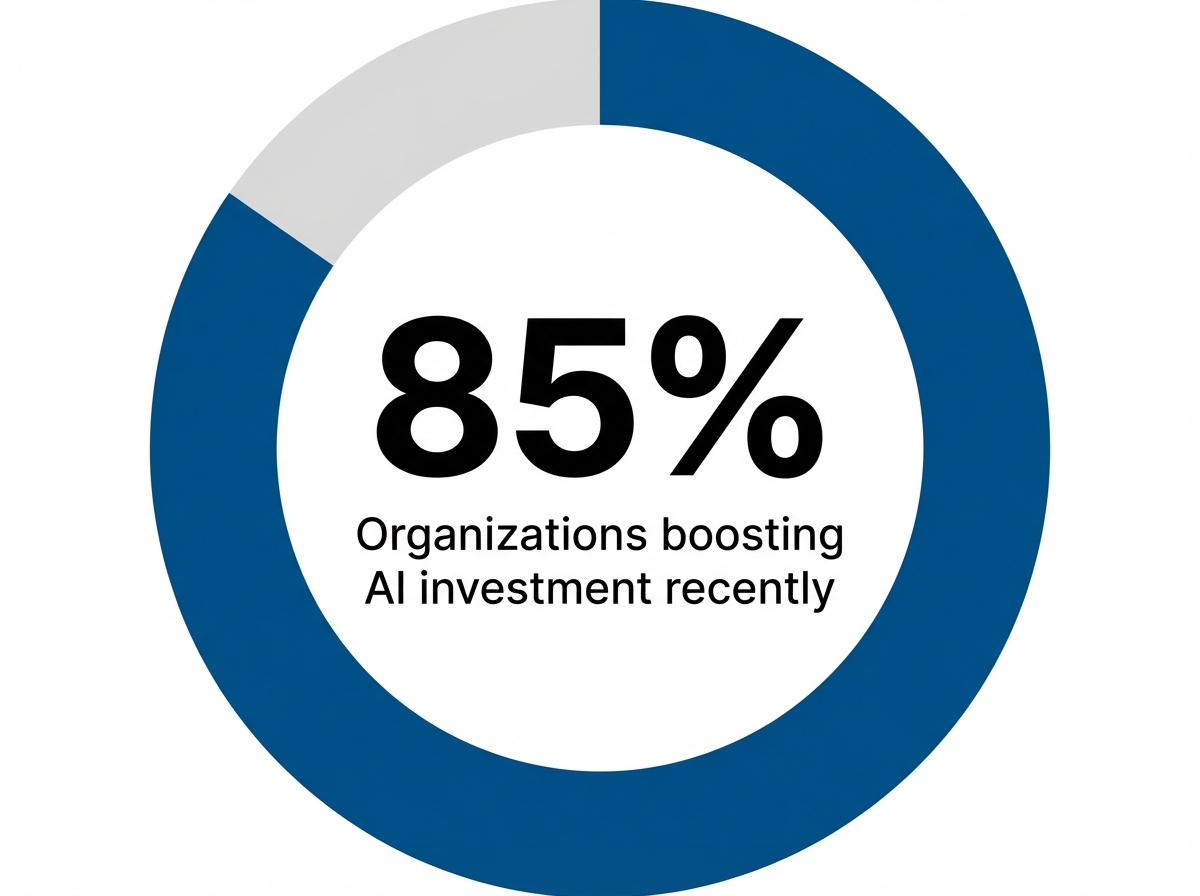 Organizations that increased AI investment in the past 12 months: 85%
- Investment Surge: 85% of enterprises increased AI investment in the past year1.
- Delayed Payback: Only 6% reported AI payback under 12 months1.
- Realization Timeline: Typical ROI realization occurs in 2–4 years, rather than the expected 7–12 months1.
- Continued Commitment: 91% plan further increases, even with slow measurable returns1.
- Strategic Shift: Most organizations now treat ai content creation as enterprise transformation, not just a tool purchase1, 2.
This trend is driven by three factors. First, competitive pressure: marketing leaders see ai content creation as a long-term capability, not a short-term efficiency play. With over 90% of marketing teams now deploying AI agents, inaction risks falling behind industry benchmarks5. Second, boardroom expectations have shifted—65% of executives now consider AI integral to corporate strategy, accepting that returns may be years away and not always directly financial1. Third, market dynamics: the generative AI in content creation market is expected to grow at a 32.5% CAGR through 2030, signaling sustained demand and peer adoption momentum11.
This framework is for SaaS CMOs tasked with scaling output without headcount increases, where delayed ROI is justified by future-proofing content operations and securing market share.
The 95% Pilot Failure Rate and What It Reveals
To understand why many initiatives stall, use this diagnostic tool to assess your organization's readiness:
| Diagnostic Question | Success Indicator | Failure Warning |
|---|---|---|
| Did the pilot address a real workflow pain point? | Solves a specific bottleneck (e.g., SEO briefing). | Merely tests "what the tool can do." |
| Was knowledge flow mapped and integrated? | Data flows seamlessly between systems. | Data remains siloed in documents. |
| Were change management and upskilling included? | Team trained on prompt engineering & review. | Tool dropped on team without training. |
| Did KPIs align with business outcomes? | Measured in leads, revenue, or velocity. | Measured in "words generated." |
Table 1: AI Pilot Failure Root Cause Diagnostic
"Recent MIT research found that 95% of enterprise generative AI pilots fail to yield measurable ROI, not due to algorithmic shortcomings but because of poor workflow integration, fragmented data, and inadequate change management."4
For SaaS CMOs, this means that scaling ai content creation requires more than selecting the latest model—it demands intentional redesign of how knowledge flows, how teams collaborate, and how AI is embedded in daily execution. Organizations that embed pilots within operational processes, upskill teams, and align KPIs with growth objectives are far more likely to see returns.
Workflow Integration vs. Tool Accumulation
How Knowledge Flow Determines AI Success
Before expanding your toolset, evaluate your current knowledge infrastructure using this decision tree:
- Centralization Check: Are content briefs, brand guidelines, and campaign data accessible through a centralized platform?
- If No: Stop and centralize. AI cannot scale on fragmented data.
- Accessibility Check: Can AI systems retrieve relevant information at each workflow step without manual intervention?
- If No: Implement API connectors or structured data repositories.
- Feedback Loop Check: Are editorial notes and performance data structured for continuous learning?
- If No: Standardize feedback mechanisms to improve model accuracy over time.
- Alignment Check: Does the team share a unified workflow, or do silos persist?
- If Siloed: Reorganize into cross-functional squads before deploying further AI tools.
Research consistently finds that the success of AI initiatives hinges less on the tools deployed and more on how knowledge flows across the organization. MIT’s GenAI Divide study identifies fragmented data, siloed documentation, and inconsistent process handoffs as primary reasons for pilot failures4. In high-performing marketing teams, knowledge assets—from style guides to customer insights—are mapped, tagged, and made machine-readable, enabling AI systems to augment human decision-making at each stage of content production.
The Martech Consolidation Driving 2026 Decisions
As you plan for 2026, use this consolidation checklist to ensure you are reducing complexity rather than just swapping tools:
- Has your martech stack shrunk or stabilized since 2023?
- Are core platforms (CRM, MAP, CDP) absorbing adjacent features, reducing the need for standalone tools?
- Is AI functioning as a capabilities layer across workflows rather than as isolated add-ons?
- Do procurement and RevOps now drive technology evaluations based on ROI and integration—not just novelty?
Martech stack consolidation is accelerating as organizations recognize that ROI depends more on integration and data quality than on the number of specialized tools. Industry reports show the martech landscape is contracting as CFOs demand measurable business outcomes and RevOps takes stack ownership10. This approach works best when organizations seek to simplify governance, cut redundant spending, and enable AI to operate seamlessly across all channels. High-performing SaaS marketing teams increasingly treat AI as a foundational capability—embedded within unified platforms—rather than a collection of standalone apps.
Measuring What Matters in AI Content Creation
Attribution Models for Multi-Touch AI Journeys
Selecting the right attribution model is critical for justifying AI investment. Consider the following framework:
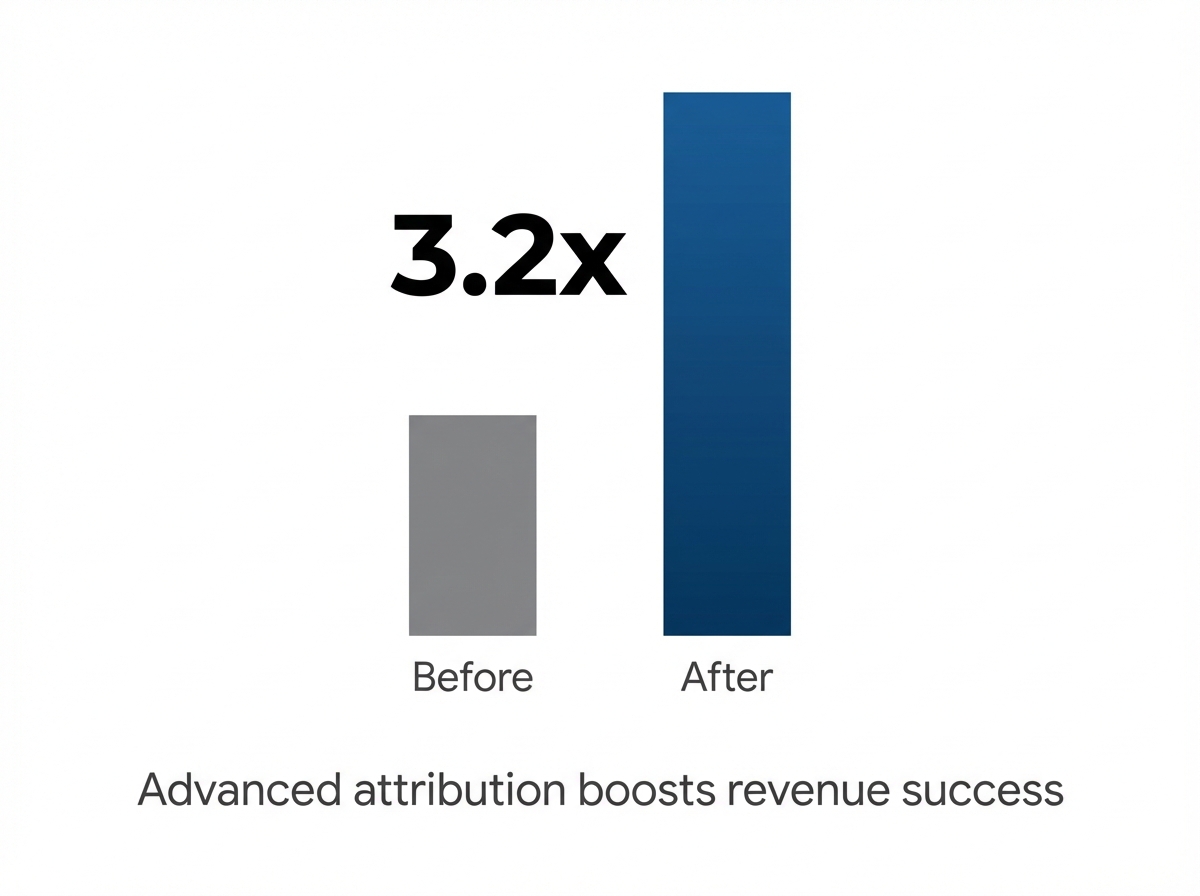 Likelihood of outperforming revenue goals for companies using advanced attribution: 3.2x
- Touchpoint Recognition: Does your current model recognize all digital and AI-driven touchpoints—not just first or last interactions?
- Agent Contribution: Are you capturing both human and AI agent contributions across content, social, email, and conversational interfaces?
- Sequence Value: Can you attribute revenue to sequences of touchpoints, or does your reporting still default to single-click models?
- Real-Time Insight: Do your analytics platforms support real-time, multi-channel attribution with predictive insights for budget allocation?
Traditional attribution models like first- or last-click have become increasingly inadequate in the era of ai content creation, where customer journeys span dozens of interactions. Research predicts $83 billion in global marketing spend will be misallocated in 2025 due to poor attribution, with outdated models masking the true impact of content and channel combinations8. Multi-touch attribution (MTA) frameworks are now critical for understanding how AI-generated content and human-driven campaigns contribute to pipeline and revenue.
Efficiency vs. Growth: Setting the Right Objectives
To ensure your AI strategy delivers value, align your metrics with your strategic priorities using this objective-setting tool:
- Primary Objective: Is your goal cost reduction, accelerated output, or pipeline/revenue growth?
- KPI Mapping:
- Efficiency: Content velocity, cost per asset, resource utilization.
- Growth: Qualified pipeline, market share, customer engagement.
- Measurement Cadence: Is measurement designed for short-term process wins or long-term business outcomes?
- Scenario Modeling: Does your analytics stack allow for experimentation between efficiency- and growth-focused strategies?
Most organizations still default to efficiency as the main driver, with 80% citing productivity or cost savings as their top objective2. Yet, research shows that the highest-performing teams are those that set both efficiency and growth targets. Companies that broaden objectives to include pipeline expansion or market share gains are 3x more likely to see measurable business impact from AI initiatives2.
Unlock 3x More Leads with AI-Driven Content Creation
See how enterprise teams and agencies are scaling content output by 320% and cutting costs up to 89% using end-to-end AI content production. Request a data-driven demo tailored to your workflow.
Building AI-Ready Content Infrastructure
SaaS marketing leaders face a persistent challenge: content demand increases exponentially while headcount remains constrained. The solution isn't producing more content manually—it's building infrastructure that enables AI systems to deliver measurable ROI at scale. Organizations that achieve 3x content output without adding team members invest first in operational foundations, not just tools.
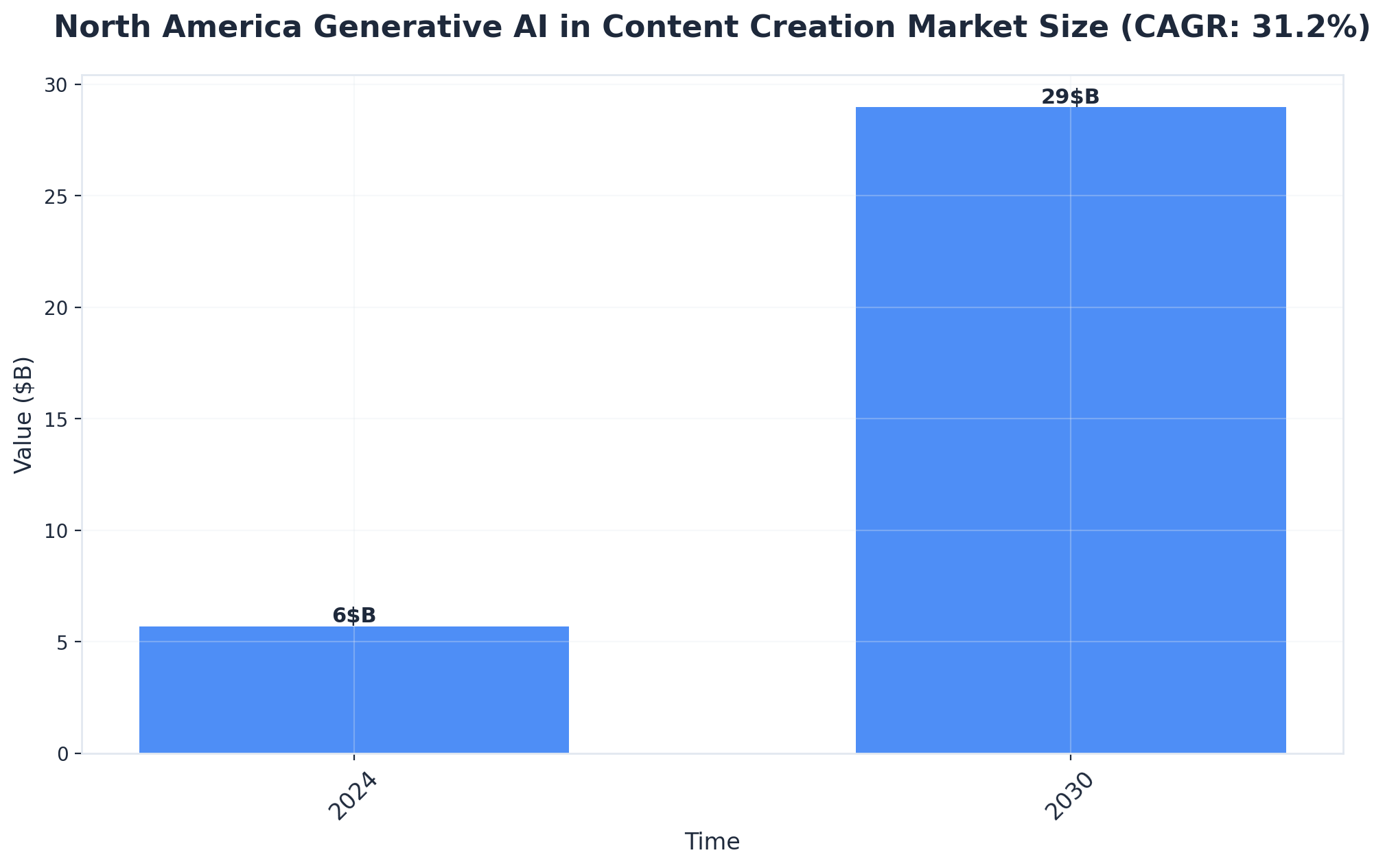 North America Generative AI in Content Creation Market Size (CAGR: 31.2%)
North America Generative AI in Content Creation Market Size (CAGR: 31.2%) (Source: North America Generative AI In Content Creation Market Size)
| Infrastructure Component | Key Requirement | Measurable Impact |
|---|---|---|
| Data Architecture | Centralized, machine-readable repositories for brand guidelines and product data. | 47% faster production cycles. |
| Quality Assurance | Multi-stage automated checks (SEO, readability, compliance). | 73% reduction in revision cycles. |
| Integration Layer | Direct connections to CMS, social, and analytics platforms. | 3.2x more content published monthly. |
| Measurement System | Attribution linking content to revenue and acquisition costs. | 156% improvement in results within Q1. |
Table 2: Core Components of AI-Ready Content Infrastructure
Data Architecture: Marketing teams need centralized repositories that store brand guidelines, product information, and customer research in formats AI systems can access consistently. For example, a machine-readable content brief might look like this JSON snippet:
{
  "content_type": "blog_post",
  "target_audience": "SaaS_CMO",
  "primary_keyword": "ai_content_scale",
  "tone": "authoritative",
  "brand_voice_ref": "doc_v2_2025"
}
Standardized templates allow teams to initiate workflows with simple commands (e.g., /generate-brief), ensuring consistency across all outputs.
Quality Assurance & Integration: Organizations achieving 90%+ publish rates without extensive revisions implement multi-stage review processes that combine AI-powered checks with human expertise. Furthermore, integration capabilities determine whether AI content systems operate as isolated tools or connected production engines. Teams with integrated workflows eliminate bottlenecks that traditionally slow content velocity.
Frequently Asked Questions
Your Next 30 Days: From Assessment to Action
The transition from infrastructure planning to operational deployment requires a structured timeline that balances speed with validation. Research from Content Marketing Institute shows that 30-day implementation frameworks achieve 67% faster time-to-value compared to extended rollouts7. Follow this four-week plan to establish your baseline:
- Week 1: Infrastructure Assessment
- Audit existing content workflows.
- Identify bottleneck stages consuming the most resources.
- Document current cost-per-article metrics to establish a baseline.
- Weeks 2-3: Pilot Deployment
- Select 2-3 content types (e.g., blog articles, technical docs).
- Limit initial scope to 15-20 pieces to validate quality standards.
- Test integration points with CMS and social channels.
- Week 4: Analysis & Scaling
- Compare pilot results against baseline metrics.
- Calculate cost reduction percentages and velocity improvements.
- Decision Gate: If efficiency gains exceed 40% (typically $15k-$30k/month savings), proceed to full-scale deployment.
Successful 30-day implementations establish the operational foundation for replacing traditional agency dependencies entirely. Marketing teams that validate efficiency gains during this initial period position themselves to scale content operations indefinitely without corresponding headcount expansion, transforming content production from a linear cost model to a fixed-infrastructure investment that supports unlimited growth.
References
- 1.AI ROI: The paradox of rising investment and elusive returns - Deloitte.
- 2.The State of AI: Global Survey 2025 - McKinsey.
- 3.You Can't Spell AI without HR: The Surprising Secret to Scale - Bain & Company.
- 4.Rewire Organizational Knowledge With GenAI - MIT Sloan Review.
- 5.FAQ on MarTech: How AI Agents and Composable Stacks... - eMarketer.
- 6.AI Pricing: What's the True AI Cost for Businesses in 2026? - Zylo.
- 7.Content Marketing Trends Experts Predict for Success - Content Marketing Institute.
- 8.Why Marketing Attribution Software is a Strategic Imperative in 2025 - Heeet.
- 9.How AI Is Reshaping the Modern Marketing Org - MarketingProfs.
- 10.Why Martech Stacks Are Consolidating in 2026 (And How AI Fits In) - Heinz Marketing.
- 11.Generative AI in Content Creation Market Size - Grand View Research.