
Executive Summary: Strategic Implementation Guide
- Decision Assessment: If your current cost-per-article exceeds $300 or time-to-publish spans weeks, immediate transition to AI-driven operations is recommended to remain competitive.
- Success Factors: Top-performing organizations prioritize automated compliance checks, location-specific SEO, and expert human-in-the-loop review to ensure patient trust.
- Immediate Action: Audit your top 50 location pages for local keyword ranking; if visibility is below top 5, deploy AI content modules to refresh and optimize these assets within 30 days.
Everything About AI Content for Healthcare Marketing
Why AI Content for Healthcare Marketing is Critical Now
The $187B Market Shift Driving Adoption
Checklist: Signs Your Content Strategy Is Being Disrupted
- Are your annual content production costs rising faster than your qualified lead volume?
- Has your patient acquisition growth stalled relative to digitally aggressive competitors?
- Are you unable to efficiently generate unique, location-specific content for each practice or service line?
Healthcare marketing is experiencing a rapid structural shift, with artificial intelligence projected to drive the global healthcare market to $187 billion by 2030—a twelvefold increase from $15.1 billion in 20227. This expansion is not limited to clinical applications; it directly impacts content strategy, SEO, and patient engagement at scale. AI content for healthcare marketing now underpins multi-location campaigns, automating the production of compliant, high-quality material for addiction treatment, dental groups, and general medical practices.
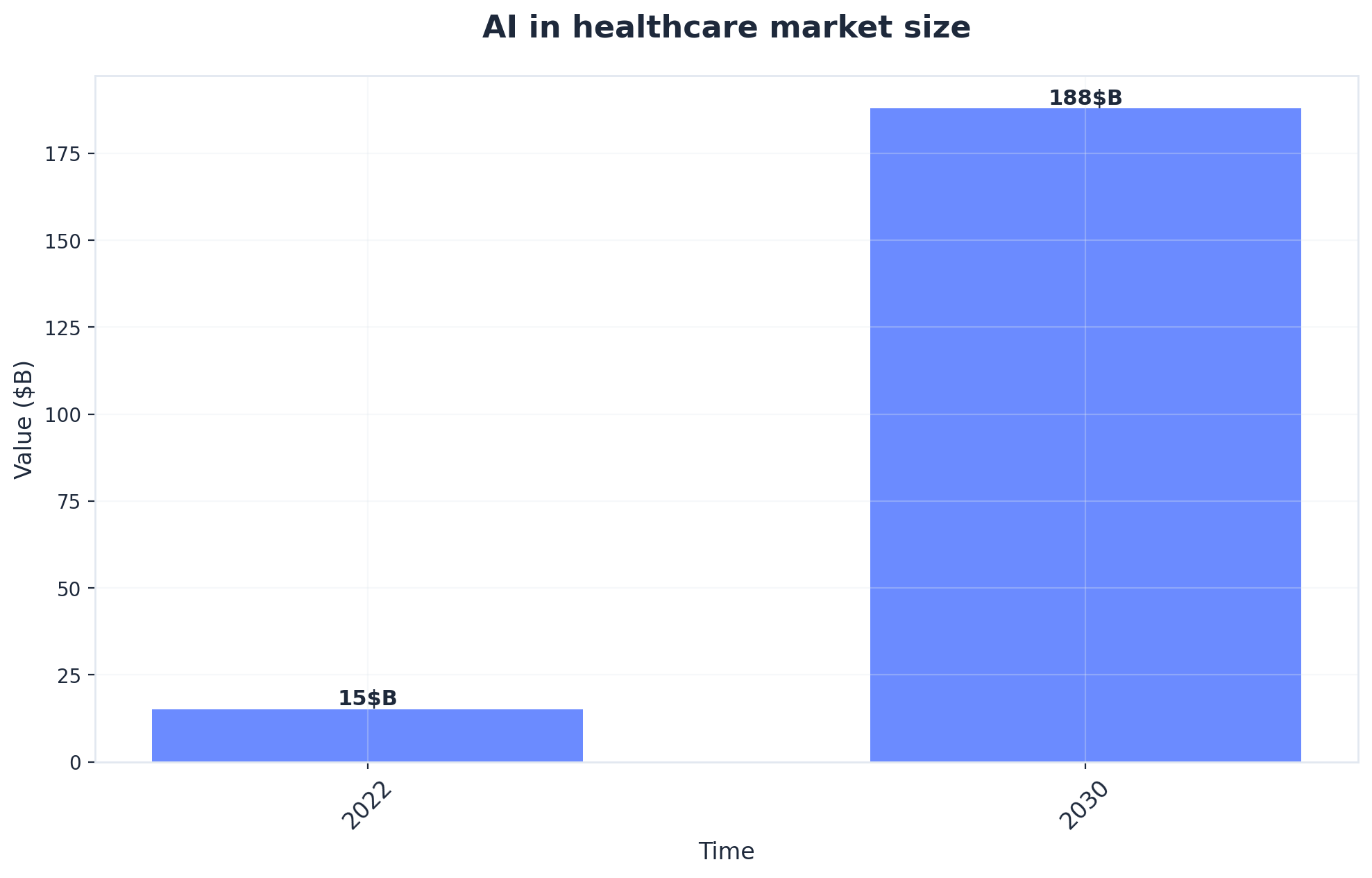
AI in healthcare market size (Source: Status and Trends of the Digital Healthcare Industry - PMC)
As digital content creation outpaces traditional agency models, organizations face a critical inflection point. Those adopting AI-driven workflows position themselves to gain efficiency and cost advantages, while laggards risk falling behind in both online visibility and qualified patient leads. This approach works best when marketing leaders must maintain regulatory compliance, deliver localized SEO, and reduce production costs across dozens or hundreds of care sites simultaneously.
"Data shows healthcare groups that automate content can achieve up to 320% more qualified leads and reduce costs by as much as 89% compared to legacy agency solutions."7
The next section explores how shifting patient search behavior requires healthcare marketers to scale content output without sacrificing accuracy or compliance.
Patient Behavior Changes Demanding Scale
Decision Tool: Patient Demand Assessment
- Traffic Surge: Has your location seen a surge in appointment requests tied to digital channels?
- Feedback Loop: Are patients mentioning online reviews, search results, or educational resources in intake forms?
- Attribution: Do you track the percentage of patients who found your practice via organic search versus referrals?
Healthcare marketing teams are experiencing a clear shift in patient behavior that directly impacts content strategy. Recent data shows that 71% of patients search online before booking medical appointments, highlighting the vital role of digital presence in acquisition efforts6. This number is even higher among younger demographics and in competitive specialties such as addiction treatment and dental services.
Importantly, 81% of all clicks go to the first five organic search results, making high search visibility non-negotiable for multi-location groups seeking to drive consistent lead flow6. As patients increasingly expect regionally tailored information and transparent provider reputations, organizations face mounting pressure to produce high volumes of accurate, location-specific content. Manual production methods rarely keep pace with these expectations across dozens or hundreds of sites.
AI content for healthcare marketing addresses this challenge by automating the creation of compliant, SEO-optimized assets at scale. This approach is ideal when patient acquisition must be balanced with cost efficiency, quality, and regulatory standards across diverse practice networks.
How AI Content for Healthcare Marketing Systems Work
Multi-Stage Quality Pipelines Explained
Assessment: Multi-Stage Quality Pipeline Self-Diagnostic
- Does your current workflow include distinct stages for keyword research, AI drafting, regulatory review, expert human editing, and final compliance checks?
- Are all content assets traceable from initial concept through to publication, with clear audit trails?
- Can you rapidly identify and correct factual inaccuracies or compliance risks before content is published?
Modern ai content for healthcare marketing relies on multi-stage quality pipelines to ensure both scale and precision. A typical pipeline may include:
 Multi-Stage Quality Pipelines Explained
- Automated keyword analysis to identify regionally relevant search terms.
- AI-driven initial drafting based on medical best practices.
- Rule-based compliance screening for HIPAA and E-E-A-T standards.
- Medical expert review to validate clinical accuracy.
- Final quality assurance for readability and tone.
Each stage is designed to catch different classes of risk—ranging from SEO gaps and factual errors to regulatory oversights. Industry research underscores the necessity of this layered approach. For example, the National Institutes of Health highlights that AI systems, while capable of rapid information processing, can propagate errors if not paired with robust quality assurance steps4.
In practical terms, organizations that implement multi-stage pipelines reduce the incidence of inaccurate or non-compliant content, a critical factor for healthcare providers managing dozens or hundreds of digital assets simultaneously. Leading systems have demonstrated the ability to decrease time-to-publish from weeks to hours, while increasing publish rates to over 95% without post-production edits7.
Compliance Integration for HIPAA & E-E-A-T
Compliance Checklist: AI Content Safeguards
- Are all workflows mapped to HIPAA requirements for marketing communications?
- Does your content system enforce E-E-A-T (Experience, Expertise, Authoritativeness, and Trustworthiness) standards at every review stage?
- Is Protected Health Information (PHI) excluded or properly authorized in all digital marketing outputs?
Integrating compliance into ai content for healthcare marketing requires a dual focus on regulatory mandates and reputational safeguards. HIPAA restricts the use of PHI for marketing without explicit patient authorization, extending to email campaigns, social media posts, website forms, and patient education content10. AI-driven systems must embed controls that flag and prevent unauthorized disclosures, such as automated PHI redaction and role-based access to sensitive data.
E-E-A-T, a framework used by search engines to evaluate content quality, is increasingly critical for healthcare. AI content pipelines should embed medical expert review and transparent authorship to ensure accuracy and trust. Research from NIH confirms that expert human validation is necessary to prevent the spread of bias or misinformation, especially when AI is used for patient-facing materials7.
As regulatory guidance evolves, healthcare marketers must continuously update AI systems and workflows to reflect new HIPAA interpretations and search engine standards8. Effective integration reduces compliance risk and supports sustained lead generation from organic channels.
Implementing AI for Multi-Location Scale
Unlock 3x More Qualified Patient Leads with AI-Driven Healthcare Content
Connect with Vectoron to see real data on how AI-powered content production delivers measurable lead growth, compliance at scale, and up to 89% lower costs—across every healthcare location you manage.
Location-Specific SEO Automation Tactics
SEO Automation Checklist for Multi-Location Groups
- Are location-specific landing pages published for all practice sites and service lines?
- Does your workflow include automated local keyword research for each region served?
- Are provider profiles and reviews consistently updated and linked to relevant locations?
- Is schema markup (e.g.,
LocalBusiness,Physician) applied for every site?
Reaching the top organic search positions across multiple locations requires more than duplicating content with minor edits. AI content for healthcare marketing enables automated creation of unique, regionally-optimized landing pages by dynamically incorporating local search terms, physician bios, and service details for each site. This approach suits organizations needing to manage high volumes of clinics, addiction treatment centers, or dental practices, where manual SEO efforts would otherwise be unsustainable.
Automated local keyword analysis identifies high-intent phrases specific to each community, supporting the 71% of patients who search online before selecting a medical provider6. Structured data, such as schema.org markup, can be programmatically included to boost local pack visibility and improve eligibility for rich search results. AI-driven systems also streamline updates to provider directories and patient reviews, which are critical ranking factors for local SEO in healthcare.
Content Governance Across Practice Groups
Governance Framework: Multi-Location Oversight
- Is there a centralized policy outlining brand, legal, and compliance standards for all locations?
- Are workflows established for approval and post-publication audit across practice groups?
- Does your system track content lineage, authorship, and update history for every asset?
- How are regional variations in regulatory requirements managed?
In large healthcare organizations, content governance is the backbone of sustainable scale. Effective governance ensures that all digital assets—whether for addiction treatment, dental, or general medical practices—meet brand, legal, and compliance standards without stifling local responsiveness. AI content for healthcare marketing introduces additional complexity, as automation can amplify both efficiencies and risks if controls are insufficient.
Leading research highlights that AI-driven systems with embedded governance protocols reduce error rates and compliance lapses by introducing automated checkpoints throughout the content lifecycle7. These protocols include mandatory expert review, automated flagging of regulatory risks, and transparent authorship disclosures. For multi-location healthcare brands, this translates to a measurable reduction in content-related risk and improved operational transparency.
Measuring Performance Against Benchmarks
Volume and Velocity Benchmarks
Healthcare marketing teams require quantifiable metrics to evaluate content performance against industry standards. Research from HubSpot indicates that healthcare organizations publishing 16 or more blog posts monthly generate 3.5 times more traffic than those publishing fewer than four posts. This benchmark establishes a baseline for measuring content volume effectiveness across multi-location practices.
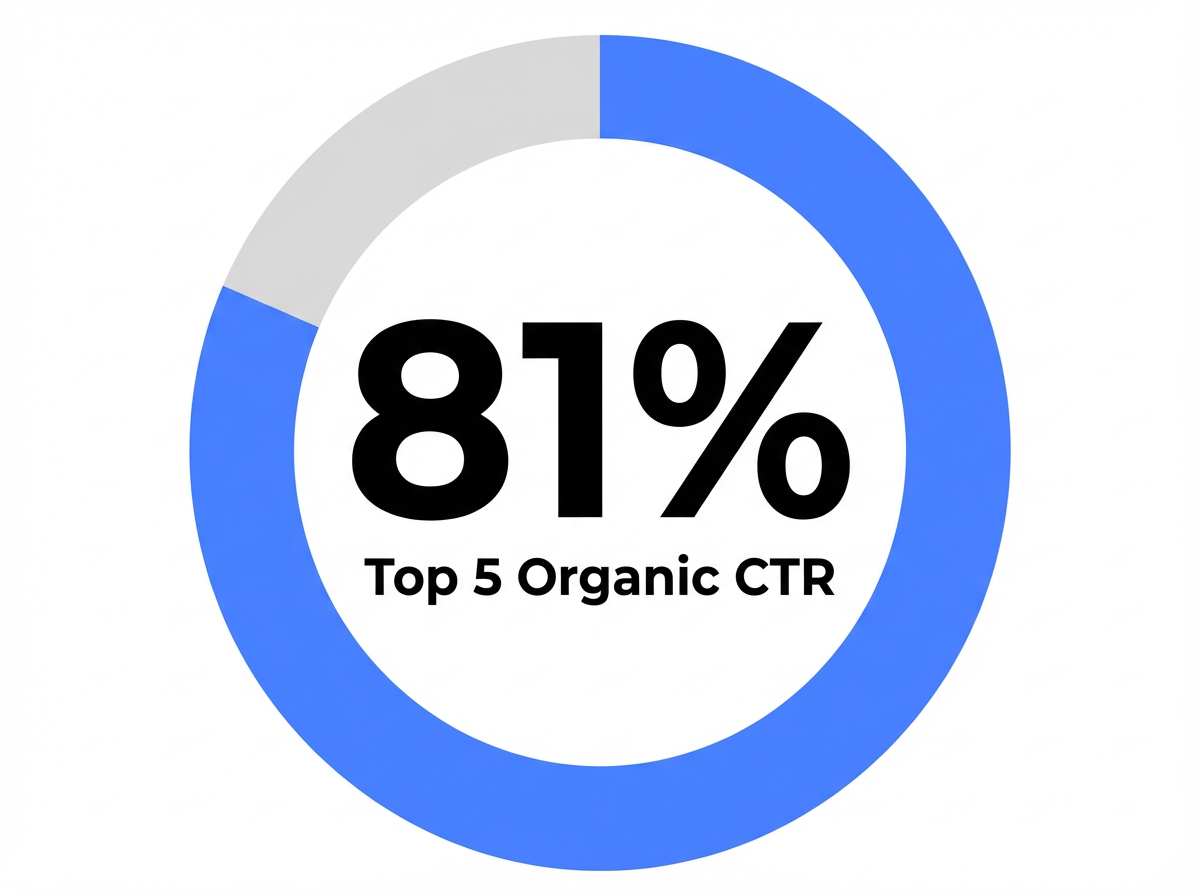 Click-Through Rate for Top 5 Organic Search Results: 81%
| Metric | Traditional Agency Model | AI Content Platform |
|---|---|---|
| Time-to-First-Draft | 2–3 Weeks | < 1 Hour |
| Time-to-Publish | 4–6 Weeks | 24–48 Hours |
| Traffic Impact | 8–12 Weeks | 3–4 Weeks |
Comparison of production velocity between traditional and AI-driven models.
Marketing teams measuring production velocity can identify operational inefficiencies limiting scale across their location portfolio. These volume and velocity benchmarks establish the foundation for content operations assessment.
Performance Outcome Benchmarks
Conversion rate benchmarks provide critical context for patient acquisition performance. Healthcare content typically converts at 2.3% to 3.1% according to WordStream industry data, though performance varies significantly by specialty.
- Addiction Treatment: 4.2% to 5.8% (Higher urgency)
- Dental Practices: 1.8% to 2.9% (Competitive local search)
- Medical Practices: 2.5% to 3.4% (General inquiries)
Cost-per-acquisition (CPA) benchmarks reveal efficiency gaps. Healthcare organizations using traditional agency models report CPAs ranging from $180 to $340 for patient leads. Organizations implementing automated content systems document CPAs between $45 and $95, representing 60% to 75% cost reductions while maintaining or improving lead quality.
Content Quality Indicators
Content engagement metrics provide additional performance indicators beyond conversion and traffic outcomes. Healthcare articles averaging 1,200 to 1,800 words generate 68% more organic traffic than shorter pieces, per Backlinko research. Bounce rates below 55% and average session durations exceeding 2 minutes indicate content relevance aligned with patient search intent.
Marketing VPs should establish measurement frameworks comparing current performance against these industry benchmarks quarterly. Organizations underperforming across all three benchmark categories—volume and velocity, performance outcomes, and quality indicators—typically require fundamental changes to content production infrastructure rather than incremental optimization adjustments.
Frequently Asked Questions
Conclusion
Healthcare marketing organizations that implement structured benchmark tracking systems demonstrate measurably stronger content performance outcomes. The specific metrics covered in this framework—publishing frequency, conversion rates, cost-per-acquisition, organic traffic growth, time-to-result, and engagement rates—provide the measurement infrastructure necessary to evaluate content operations performance against industry standards.
The most effective benchmark strategies combine internal historical data with industry-standard metrics to identify performance gaps that signal operational inefficiencies. When systematic tracking reveals declining conversion rates, stagnant traffic growth, or elevated cost-per-acquisition trends that fall below documented industry benchmarks, marketing leadership gains the evidence needed to evaluate whether traditional agency models deliver the performance outcomes modern healthcare organizations require.
Success requires establishing baseline metrics, implementing consistent tracking methodologies, and conducting regular performance reviews against established targets. This systematic approach transforms content operations from reactive execution to data-driven strategy, positioning marketing leadership to demonstrate measurable ROI and justify resource allocation decisions with evidence-based performance documentation.
References
- 1.How Digital & AI Will Reshape Health Care in 2025 | BCG.
- 2.7 ways AI is transforming healthcare - The World Economic Forum.
- 3.AI and medical writing: Unlocking value for life sciences - Deloitte.
- 4.Artificial Intelligence-Powered Quality Assurance - PMC - NIH.
- 5.Readability Metrics in Patient Education: Where Do We... - PMC - NIH.
- 6.The impact of marketing strategies in healthcare systems - PMC - NIH.
- 7.ChatGPT and Artificial Intelligence in Medical Writing - PMC - NIH.
- 8.AI in Life Science Quality Management and Regulatory Affairs - IQVIA.
- 9.Agentic AI: The race to a touchless revenue cycle | McKinsey.
- 10.What are the HIPAA Marketing Rules? - HIPAA Journal.