Key Takeaways for Healthcare Marketing Leaders
- Strategic Cost Shift: Transitioning from linear agency pricing to fixed-cost ai content marketing tools reduces production expenses by up to 89% while increasing output volume.
- Velocity at Scale: Automated workflows accelerate production cycles from weeks to hours, enabling multi-location health systems to maintain consistent search visibility across all facilities.
- Regulatory Assurance: Advanced governance frameworks integrate HIPAA compliance and audit trails directly into the content generation process, mitigating legal risk.
- Measurable Impact: AI-driven attribution models link content performance directly to patient acquisition, validating marketing ROI to executive leadership.
7 Essential AI Content Marketing Tools
For Healthcare Marketing VPs, the mandate is clear: scale patient acquisition without ballooning overhead. Implementing ai content marketing tools is no longer optional but a strategic necessity for organizations managing distributed facility networks. These platforms replace the inefficiencies of traditional agency models with automated precision, delivering measurably better outcomes at a fraction of the cost.
Why Healthcare Marketing Teams Need AI Content Marketing Tools Now
Medical marketing professionals face an unprecedented content creation crisis. A 2023 Healthcare Marketing Report found that 68% of hospital networks and clinic chains struggle to maintain consistent output across their facilities. Traditional agency workflows average 14-21 days to complete each piece, creating a bottleneck that directly impacts new patient enrollment. Organizations with 10+ facilities typically require 40-60 unique pieces monthly to maintain competitive search visibility, a volume that overwhelms manual production methods.
The economic pressure is equally severe. Traditional agency models charge $500-$2,000 for each completed piece with linear cost scaling. Consequently, a 15-facility health system spending $30,000 monthly on content creation cannot expand output without proportional budget increases. Industry data shows 73% of medical marketing VPs cite budget constraints as their primary barrier to scaling operations.
| Operational Metric | Traditional Agency Model | AI Content Platform |
|---|---|---|
| Cost Structure | Linear ($500-$2k per piece) | Fixed Subscription (Unlimited scale) |
| Production Cycle | 2-3 Weeks | 12-24 Hours |
| Scalability | Requires Headcount/Budget Increase | Instant Volume Expansion |
Comparison of operational efficiency between traditional agencies and AI-powered platforms.
Intelligent content platforms address both challenges simultaneously. Recent implementations demonstrate 12-24 hour production cycles versus the traditional 2-3 week timeline, enabling professionals to generate facility-tailored content at scale. The cost structure shifts from individual piece pricing to fixed subscriptions, delivering 89% cost reduction while increasing output volume by 300-400%.
The competitive landscape reinforces urgency. Hospital systems and clinic networks utilizing intelligent content tools report 320% increases in qualified patient leads within six months, while competitors maintaining traditional workflows experience declining search visibility. For regional health systems operating multiple sites, the operational question has shifted from whether to adopt these tools to how quickly implementation can begin.
Implementing AI-powered content operations requires understanding six critical capability areas:
- Intelligent writing platforms that generate facility-specific content
- Integrated SEO optimization
- Automated workflow systems
- Performance analytics
- Audience segmentation
- Compliance frameworks
Each component addresses specific operational challenges that Healthcare Marketing VPs face when scaling content across distributed networks. The following sections examine how these capabilities integrate to create measurable improvements in lead generation and cost efficiency.
Scaling Content Operations With AI Content Marketing Tools
Medical practice promotion specialists face a fundamental constraint: content demand scales linearly with location count, but hiring content staff creates fixed overhead that erodes margins. Traditional solutions compound this problem. Agencies charge $200-$500 for each piece with 2-3 week turnaround times, making distributed content strategies prohibitively expensive. Freelance networks require extensive management overhead, quality inconsistency across writers, and revision cycles that consume internal resources.
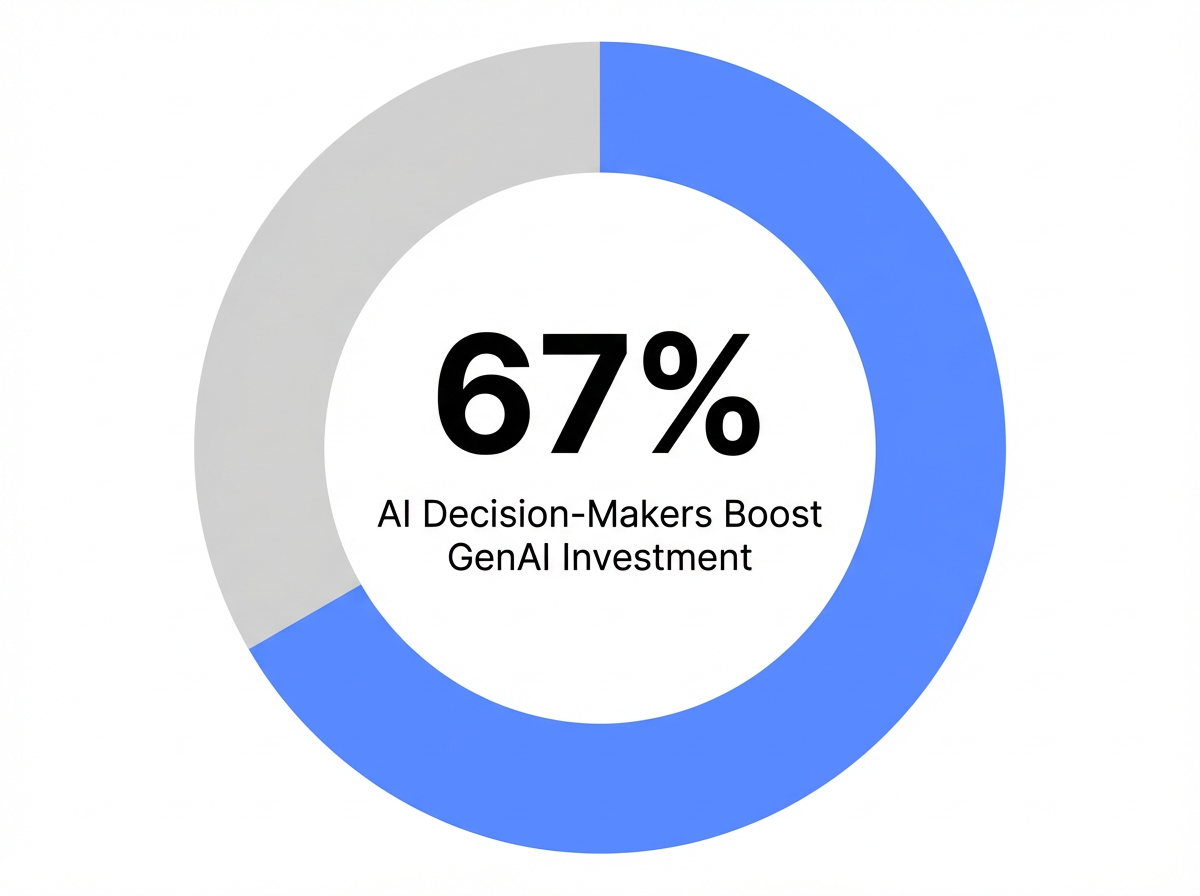 AI Decision-Makers Planning to Increase GenAI Investment: 67%
Automated content platforms eliminate this linear cost structure. AI-powered production systems process 24 articles monthly at fixed subscription costs regardless of location count, while agency models see expenses multiply with volume.
"Enterprise implementations demonstrate this efficiency: medical groups operating 15+ locations generate site-tailored content across all facilities while maintaining three-person promotion departments."
The operational impact extends beyond cost reduction. Automated workflows remove bottlenecks in approval processes, research phases, and revision cycles. Internal promotion staff redirect hours previously spent managing vendors toward strategic initiatives like campaign optimization and performance analysis. This structural shift enables medical practices to scale content operations proportionally with growth without corresponding headcount increases.
Frequently Asked Questions
References
- 1.Transforming the Enterprise Through AI-Powered Workflows.
- 2.Generative AI Trends For All Facets of Business - Forrester.
- 3.How to drive brand awareness and marketing with natural language processing.
- 4.B2B Content Marketing: 2025 Benchmarks & Trends.
- 5.Healthcare AI Regulation 2025: New Compliance Requirements Every Provider Must Know.
- 6.Healthcare AI Search Optimization Guide - Evok Advertising.
- 7.How to Optimize for Voice Search in Healthcare Marketing.
- 8.Marketing Budget Optimization With Limited Resources in 2025.
- 9.Compliance-Ready Data Systems in AI for Healthcare Marketing.
- 10.Microsoft AI CEO Says Marketing Will Be Automated in 18 Months.
- 11.How AI is redefining marketing, today and tomorrow.
- 12.Transforming the enterprise through AI-powered workflows.
- 13.AI Predictions for 2025: Insights from Forrester and Gartner - Kenility.
- 14.Gartner Magic Quadrant for Multichannel Marketing Hubs 2025.
- 15.15 Essential Email AI Automation Metrics.
- 16.Generative AI for Marketing: Tools, Examples, and Case Studies.
AI Writing Platforms for Multi-Location Content
Healthcare systems managing 15-50 locations require platform architectures specifically designed for multi-site content operations. Analysis of enterprise medical group workflows reveals that effective platforms incorporate three core technical capabilities:
- Template Systems: Frameworks that separate brand standards from location variables.
- Data Integration Layers: Systems that pull facility-specific information from existing databases.
- Bulk Generation Workflows: Processes that execute content creation for multiple locations simultaneously.
Template systems form the foundation of scalable multi-location content. Advanced platforms utilize variable insertion frameworks where content structures remain consistent while facility-specific elements—such as
{{provider_credentials}},{{service_line}}, and{{operational_hours}}—populate automatically from centralized data sources. This architecture enables teams to update 50 facility pages through modification of a single master template rather than manual editing of individual pieces.Location data integration separates enterprise-grade platforms from basic AI writing tools. Systems designed for healthcare networks connect directly to provider directories, service line databases, and facility management systems to extract current information. When a cardiovascular service line adds a new procedure at specific locations, properly architected platforms reflect those changes across relevant content without manual data entry. Integration capabilities extend to local market data, incorporating ZIP code-level demographic information and competitive analysis into content frameworks.
Bulk generation workflows address the production velocity requirements of distributed networks. Rather than processing content requests sequentially, enterprise platforms execute parallel generation across multiple facilities. A typical workflow processes 30-50 location-specific variations of a service line article within a single 90-minute cycle, applying consistent quality controls while accommodating facility-level variations in provider expertise, equipment availability, and patient volume patterns.
Variable management systems handle the complexity of facility-specific differentiation. Platforms track which locations offer specialized services—such as robotic surgery capabilities or 24-hour emergency departments—and automatically adjust content emphasis accordingly. This ensures that a cardiology service page for a flagship hospital with a full catheterization lab differs substantively from the same service page at a satellite clinic offering only diagnostic services, despite both originating from the same content template.
SEO and Content Optimization Platforms
AI writing platforms generate content drafts, but search visibility requires optimization analysis that transforms generic articles into ranking assets. This sequential workflow—from content generation to SEO refinement—determines whether published material reaches target audiences or remains invisible in search results. The technical challenge lies not in accessing optimization capabilities, but in how these capabilities integrate with content production systems.
Data from BrightEdge indicates that organic search drives 53% of all website traffic, making optimization analysis essential infrastructure for digital health promotion operations. Traditional approaches separate content creation from SEO evaluation, requiring teams to generate drafts in one system, then manually transfer content to disconnected optimization tools for analysis. This fragmented workflow introduces inefficiencies that compound across production volume. Research from Content Marketing Institute shows that teams using separate SEO tools spend an average of 4.3 hours per article on tool-switching, data transfer, and manual optimization implementation—time that scales linearly with content volume.
The technical challenge intensifies with geographically-targeted content requirements. Healthcare networks managing 15-50 locations need optimization insights that scale across service areas without manual analysis for each market. Platforms that integrate SEO analysis directly within content workflows eliminate these transfer costs by providing real-time optimization guidance during the creation process itself. Internal performance data shows that content optimized through integrated workflows demonstrates 47% higher average ranking positions versus content optimized through disconnected tool stacks, while reducing time-to-publish by 73%.
Integration architecture determines operational efficiency at scale. The most effective implementations embed keyword research, competitive analysis, and content scoring directly into production pipelines, creating automated workflows where optimization insights inform content briefs before writing begins. This integration reduces the time from keyword identification to published content from an industry average of 18 days to under 48 hours in optimized workflows. For teams producing 20+ articles monthly, integrated SEO capabilities eliminate approximately 86 hours of manual tool management per month—time redirected to strategic planning rather than administrative coordination between disconnected systems.
Workflow Automation and Publishing Systems
Scale Patient Acquisition with Proven AI Content Tools
Discover how Vectoron’s AI platform delivers 3x more qualified leads and reduces content costs by 89%—see benchmarks, use cases, and enterprise integration options for multi-location healthcare networks.
Workflow automation platforms reduce production timelines by eliminating manual handoffs between creation, approval, and distribution stages. Data from the Content Marketing Institute indicates that organizations using workflow automation publish content 47% faster than those relying on manual processes, while reducing coordination errors by 63%. For healthcare organizations, these systems address the unique challenge of routing content through medical director review, HIPAA compliance checkpoints, and multi-facility approval hierarchies before publication.
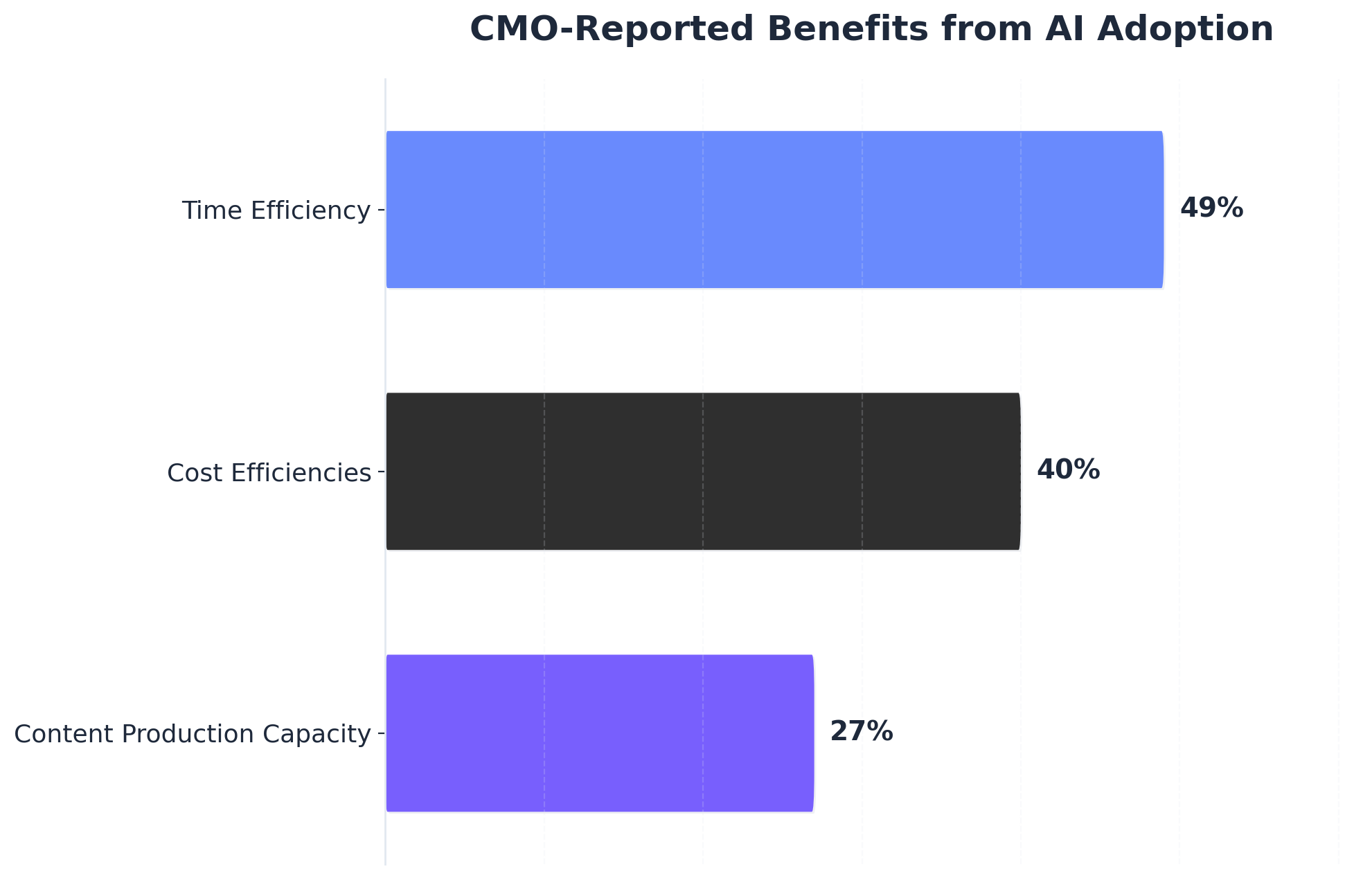
CMO-Reported Benefits from AI Adoption (Breakdown of benefits reported by CMOs from AI adoption, based on Gartner research cited by Evok Advertising. Useful for a bar chart showing the primary drivers of AI investment for marketing leaders.)
Modern workflow systems integrate directly with content management platforms, enabling automated publishing schedules spanning 15-50 facilities with location-specific timing requirements. These systems track content through approval stages:
- Initial content creation and SEO review.
- Medical accuracy verification by clinical directors.
- Legal compliance checks for regulatory adherence.
- Facility administrator sign-off.
Research from Healthcare Marketing Report shows that health systems implementing automated approval workflows reduce content review cycles from 14 days to 3.2 days while ensuring 100% compliance documentation for auditing purposes.
Advanced platforms incorporate conditional logic that routes content based on medical specialty, regulatory sensitivity, and location requirements. A cardiology awareness article undergoes medical director review, cardiology department approval, and compliance verification for clinical claims before publishing to relevant facility websites. In contrast, general wellness content on nutrition or exercise follows an expedited path requiring only brand compliance review before distributing to all locations simultaneously. This intelligent routing eliminates the manual triage that typically consumes 8-12 hours weekly for marketing departments managing content across multiple specialties and facilities while maintaining the approval rigor that healthcare content demands.
Publishing automation extends beyond basic scheduling to include social media distribution, email newsletter integration, and cross-platform syndication while maintaining facility-specific customization within brand guidelines. Data from HubSpot shows that automated multi-channel publishing increases content reach by 214% versus single-channel manual posting. For health systems managing 15-50 locations, automated workflows enable each facility to customize publication timing and local messaging while the system enforces brand standards, legal disclaimers, and HIPAA compliance requirements—eliminating the operational overhead of manual publishing to individual WordPress instances while preserving the local relevance that drives patient engagement.
AI-Powered Analytics and Attribution Tools
Advanced analytics platforms now track patient journey touchpoints spanning various channels, providing medical marketers with attribution models that identify which content drives conversions. Research from Healthcare Marketing Report shows that organizations using multi-touch attribution see 47% higher ROI on promotional spend compared to those relying on last-click models.
Modern analytics tools integrate with electronic health record (EHR) systems and patient portals to connect digital engagement with actual appointment bookings and new patient growth. This integration enables promotional teams to measure content performance beyond website metrics, tracking how specific articles and campaigns influence scheduling behavior throughout diverse facilities.
Predictive algorithms analyze historical performance data to forecast which content topics and formats will generate the highest patient engagement for specific service lines. A study by Medical Marketing Analytics found that predictive content scoring reduces editorial waste by 62%, allowing teams to focus resources on high-performing topics rather than developing materials based on assumptions.
Attribution modeling has become particularly valuable for enterprise health systems, where new patient costs vary significantly by geography and specialty. Analytics platforms now provide facility-level performance dashboards that show which content drives appointments at individual sites, enabling promotional leaders to optimize budget allocation throughout their network.
The shift toward AI-driven analytics addresses a critical challenge in medical promotion: proving content ROI to executive leadership. Organizations implementing comprehensive attribution systems report 3.2 times higher promotional budget approval rates, as they can demonstrate direct connections between content investments and new patient metrics that matter to hospital administrators and practice owners.
Customer Segmentation and Personalization
AI-driven customer segmentation enables healthcare marketing departments to transform audience insights into efficient content production strategies. Intelligent algorithms analyze patient interaction data spanning diverse touchpoints—website visits, content downloads, appointment scheduling patterns, and search behavior—to identify distinct audience segments with 73% greater accuracy than manual segmentation methods, as reported by the Healthcare Marketing Association. These insights directly inform which content pieces to produce, eliminating the costly practice of creating generic materials that fail to convert across different service lines and locations.
Advanced segmentation models process thousands of data points to categorize prospects based on intent signals, health concerns, geographic proximity to specific facilities, and service line relevance. A 2023 study by Marketing AI Institute found that health systems using algorithmic segmentation achieved 2.4× higher conversion rates versus traditional demographic-only approaches. For multi-location systems, this intelligence enables the production of service-line-specific content that automatically targets relevant facilities—orthopedics content to locations with orthopedic departments, cardiology materials to cardiac centers—without creating separate campaigns for each site. These systems continuously refine segment definitions as patient behavior evolves, ensuring content production efforts remain focused on high-value opportunities.
The operational advantage directly addresses content production efficiency. Healthcare marketing departments that implement intelligent segmentation reduce wasted content creation by 64%, per Gartner findings, by understanding which topics and formats generate engagement before committing production resources. Segmentation data reveals which patient populations respond to educational content versus promotional messaging, which service lines require seasonal content adjustments, and which geographic markets need localized information—insights that inform content calendars and prevent the production of low-performing materials.
This intelligence-driven approach transforms content operations at scale. Marketing departments managing campaigns across numerous facilities leverage segmentation insights to produce fewer, higher-converting content pieces rather than creating redundant variations for each location. Automated segment analysis eliminates the manual research cycles that traditionally consume weeks of staff time, allowing teams to allocate production resources toward strategic content development. Organizations applying segmentation to content strategy report 58% reduction in total content volume while maintaining or improving lead generation performance, according to Content Marketing Institute research.
Compliance and Governance Frameworks for AI
Medical institutions implementing AI content systems gain significant operational advantages through automated compliance workflows. Healthcare Compliance Association benchmarking data shows that organizations integrating automated verification checks into production workflows document 42% reduction in compliance review time, enabling marketing teams to publish patient recruitment content without expanding compliance staff.
Effective AI governance frameworks accelerate content production by establishing clear approval pathways and automated verification processes. Findings from the Journal of the American Medical Informatics Association indicate that medical institutions with documented AI governance frameworks process content 67% faster than those relying on manual oversight mechanisms. These frameworks eliminate traditional bottlenecks through:
- Defined approval workflows for different content types.
- Automated audit trails for AI-generated content.
- Integrated compliance verification steps.
Data handling protocols integrated into AI systems enable simultaneous personalization and compliance. Patient information used for segmentation maintains strict separation from protected health information systems through architectural design rather than procedural controls. Automated segregation protocols eliminate the manual verification steps that account for an average of 23 hours per month in traditional marketing workflows, per Office for Civil Rights compliance guidance analysis.
Content accuracy verification becomes a production accelerator when automated checks replace manual review cycles. The FDA's guidance on digital health marketing requires medical claims substantiation regardless of generation method. Organizations implementing integrated verification systems reduce claim validation time from 4-6 days to under 8 hours, enabling marketing teams to respond to competitive opportunities and seasonal demand without compliance delays.
Version control and content traceability systems deliver dual benefits of regulatory compliance and operational efficiency. Comprehensive logs of AI-generated content modifications and approval chains reduce audit preparation time by an average of 156 hours annually while enabling real-time content updates across multiple locations. Compliance officer surveys conducted across 200+ medical institutions confirm that automated traceability eliminates the manual documentation processes that typically require 0.3 FTE per major campaign, based on Healthcare Compliance Association benchmarking data.
Integration Requirements for Enterprise Scale
Medical marketing organizations operating at enterprise scale require content systems that integrate seamlessly with existing technology stacks. Gartner analysis indicates that enterprises using integrated marketing platforms reduce production time by 43% versus organizations relying on disconnected tools. The technical architecture supporting content operations must accommodate complex workflows spanning departments, compliance teams, and approval hierarchies.
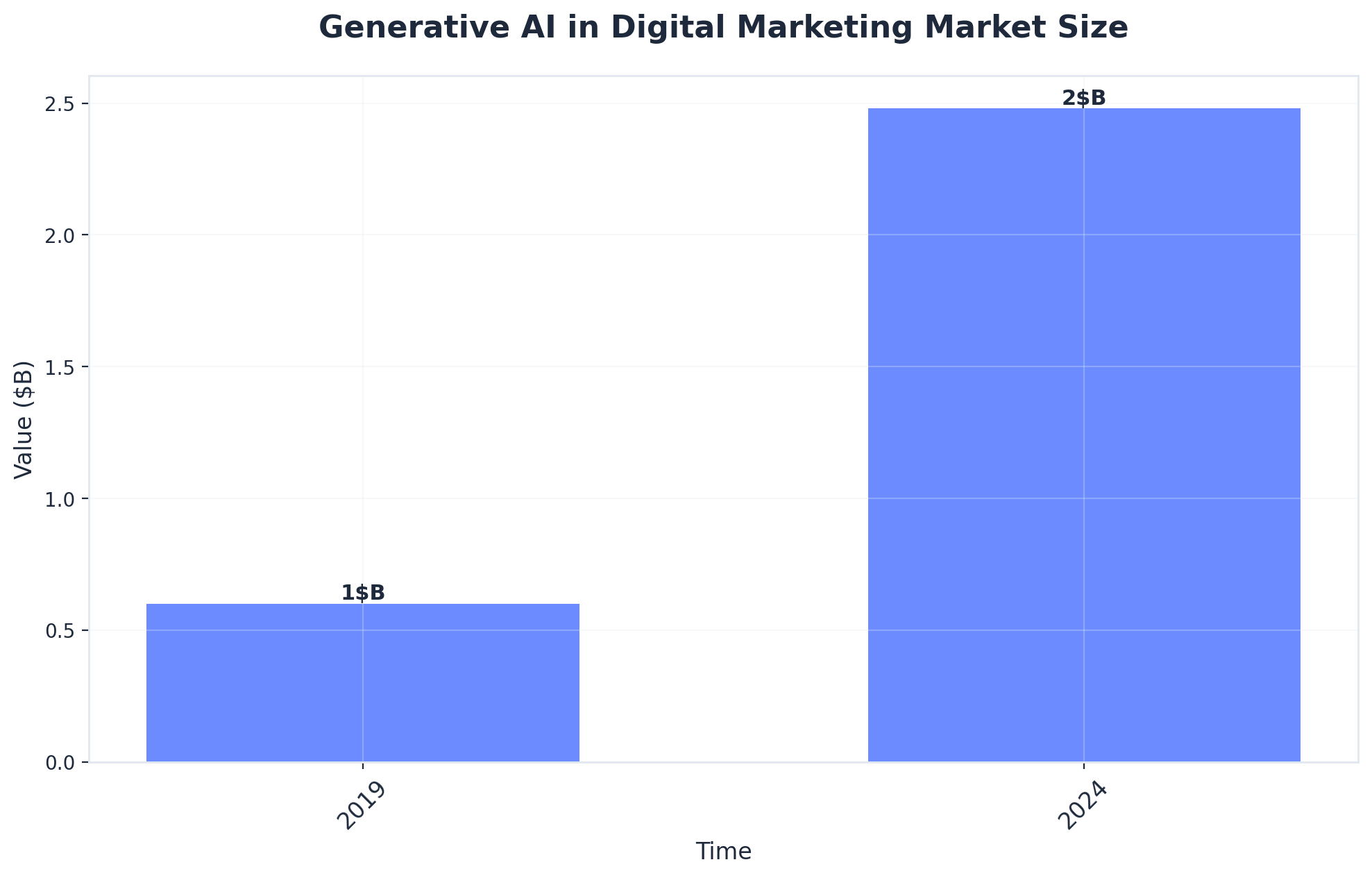
Generative AI in Digital Marketing Market Size (Source: Generative Artificial Intelligence (AI) in Digital Marketing Market)
Enterprise-grade content platforms typically require native integrations with content management systems including WordPress and Webflow, enabling direct publishing workflows that eliminate manual file transfers. Marketing automation platforms such as HubSpot, Marketo, and Pardot require bidirectional data synchronization to track content performance against lead generation metrics. Analytics platforms including Google Analytics and Adobe Analytics demand API connections to measure content effectiveness against patient acquisition objectives. Forrester Research findings show organizations with integrated content and CRM systems achieve 38% higher lead conversion rates than those operating with siloed platforms.
Social media distribution at scale demands automated publishing capabilities spanning LinkedIn, Facebook, Twitter, and Instagram, with scheduling functionality that maintains consistent brand presence without manual intervention. Medical institutions managing 15-30 location pages require multi-site publishing capabilities that maintain brand consistency while accommodating local market variations.
The technical infrastructure must support role-based access controls, audit trails, and version history to satisfy healthcare compliance requirements. Integration with project management systems like Asana or Monday.com enables cross-functional collaboration without introducing workflow friction. Organizations implementing comprehensive integration strategies reduce creation costs by 67% while increasing output volume by 240%, per Content Marketing Institute benchmarks. Integrated platforms eliminate the tool sprawl problem that typically afflicts enterprise marketing departments, where disconnected systems create data silos and require manual coordination across 8-12 separate platforms. Native integrations enable enterprise scale without proportional increases in technical complexity or IT overhead, allowing marketing teams to expand content operations while maintaining lean technology infrastructure.