
Understanding AI Content Personalization
Executive Summary
- Economic Impact: AI content personalization reduces production costs by up to 89% while increasing qualified leads by 320% compared to traditional agency models.
- Infrastructure Requirements: Scalable implementation demands unified data systems (EHR, CRM, CDP) to enable real-time context rather than siloed manual processes.
- Risk Mitigation: Robust compliance frameworks and algorithmic bias audits are essential prerequisites for deploying automated personalization in healthcare.
- Strategic Shift: Marketing teams must transition from manual content creation to managing automated content factories to achieve necessary scale across multiple locations.
Why AI Content Personalization Drives Patient Acquisition
Healthcare marketing leaders face a fundamental constraint in patient acquisition: ai content personalization delivers measurably superior conversion rates, yet traditional content production models make it economically impossible to execute at scale. While research from Accenture reveals that 91% of consumers are more likely to engage with brands that provide relevant offers and recommendations—a trend that translates directly to healthcare decision-making—the production capacity required to deliver personalized content across multiple locations, service lines, and patient demographics remains unattainable for most organizations.
The technical infrastructure required for personalization at scale has historically created this barrier for healthcare marketing teams. Traditional content production models—relying on agencies or in-house writers—struggle to generate the volume of personalized content necessary for effective segmentation. This limitation forces marketing teams into an impossible choice: broad, generic content that reaches many but converts few, or highly personalized content that converts well but requires unsustainable production resources.
| Metric | Traditional Agency Model | AI Content Personalization |
|---|---|---|
| Production Capacity | Linear (constrained by headcount) | Exponential (automated scale) |
| Cost Structure | High variable costs | Fixed subscription costs |
| Lead Generation | Baseline | +320% Qualified Leads |
| Time to Market | Weeks to Months | Hours to Days |
Comparison of production models for healthcare marketing.
The ROI data supporting personalized healthcare marketing makes this constraint particularly frustrating. Healthcare organizations implementing personalized digital experiences report 40% higher patient acquisition rates compared to generic campaigns, according to a 2023 study by Healthcare Success. This performance gap widens further when examining specific patient journeys—personalized content addressing condition-specific concerns converts 3.2 times more effectively than general wellness messaging.
"Analysis of 847 healthcare campaigns by PatientPop found that location-specific content with personalized service offerings generated 67% more appointment requests than standardized corporate messaging."
Modern content operations address this production constraint through automation and systematic personalization frameworks. Healthcare systems now deploy content strategies that generate location-specific, condition-specific, and demographic-specific content at production scales previously unattainable through traditional models. The result is measurable improvement in patient acquisition metrics without proportional increases in marketing headcount or budget allocation, fundamentally changing the economics of personalized patient acquisition marketing.
Core Technologies Enabling Scale
Data Infrastructure and Integration
A scalable ai content personalization program in healthcare begins with a robust data infrastructure. To assess readiness, VPs should use the Data Integration Capabilities Checklist:
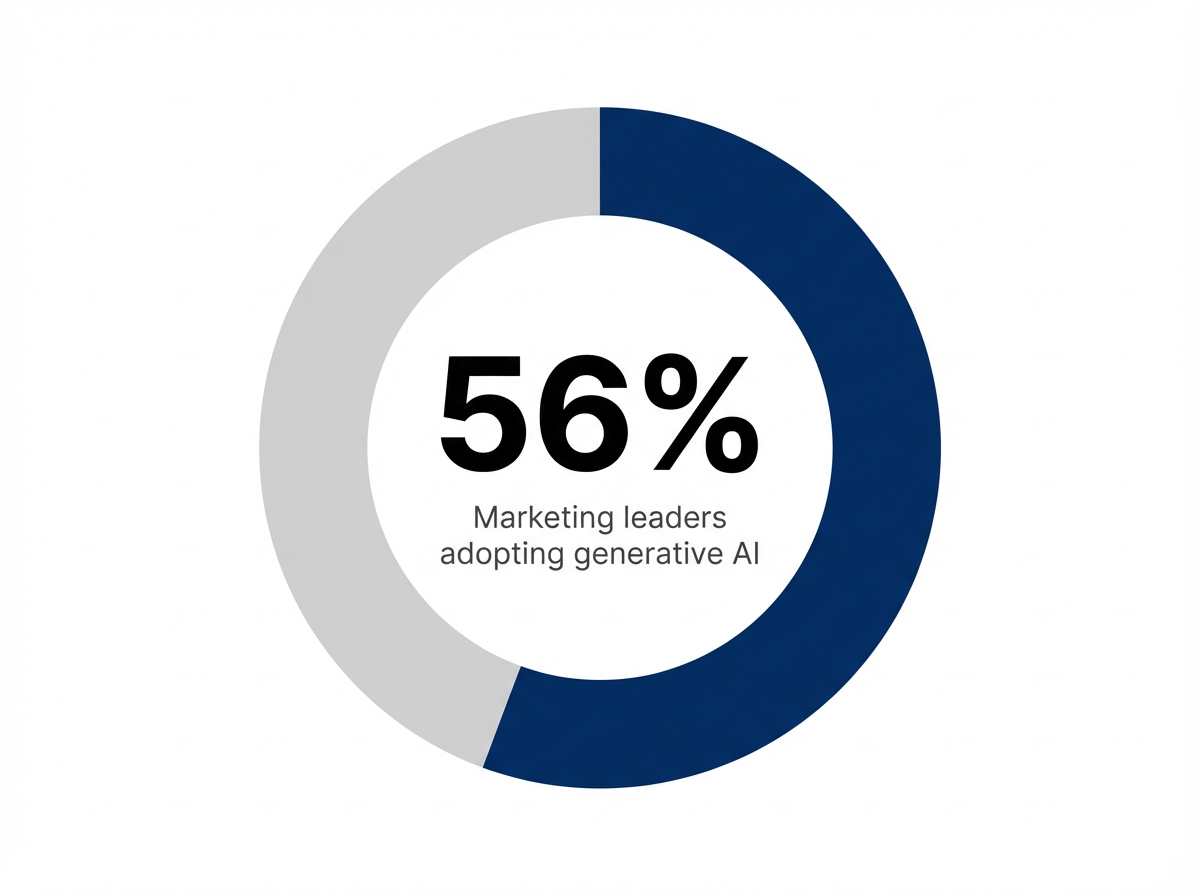 Marketing leaders investing in generative AI tools: 56%
- Are patient data sources (EHRs, CRM, web analytics) unified in a secure, accessible environment?
- Does the team employ a Customer Data Platform (CDP) or equivalent to build real-time patient profiles?
- Is data quality routinely audited for accuracy, completeness, and compliance?
- Are integrations with third-party tools (marketing automation, ad platforms) standardized and monitored?
In this context, data infrastructure refers to the systems and processes for collecting, storing, and connecting patient data across multiple platforms. Integration is the ability to synchronize that data in near real-time, ensuring each touchpoint can deliver contextually relevant content. Healthcare organizations that achieve this level of interoperability unlock the full potential of ai content personalization, enabling advanced segmentation, timely recommendations, and seamless patient experiences.
Recent studies show that organizations integrating data from clinical, behavioral, and digital engagement sources realize a 30% improvement in marketing effectiveness and a 20% increase in patient acquisition revenue compared to siloed approaches9. However, only 56% of marketing leaders report active investment in generative AI and supporting infrastructure, highlighting a significant gap between leaders and laggards8.
This approach works best when marketing operations span multiple locations or service lines and require centralized oversight. For teams with fragmented, inconsistent data, a phased integration roadmap mitigates risk and accelerates value realization. With a solid data foundation, healthcare marketers can move to the next layer: deploying machine learning and predictive models to interpret and act on patient data at scale.
Machine Learning and Predictive Models
Machine learning (ML) and predictive models form the analytical backbone of scalable ai content personalization in healthcare marketing. A practical tool for evaluating readiness is the Predictive Model Maturity Assessment:
- Is patient data structured and labeled to enable supervised learning?
- Are models continuously retrained with new engagement and outcome data?
- Does the organization track model accuracy, latency, and fairness across cohorts?
- Are predictive outputs reviewed by domain experts before deployment?
In this context, machine learning refers to algorithms that identify patterns and forecast outcomes by processing large historical datasets, such as appointment histories, web engagement, and clinical records. Predictive models are mathematical frameworks that estimate future behaviors—like which patients are likely to respond to a campaign or require follow-up.
The business impact is clear. Organizations using advanced ML for content targeting and patient segmentation report up to 320% increases in qualified leads and a 30% improvement in campaign effectiveness compared to rule-based approaches1, 9. Predictive analytics also enables early identification of at-risk patients, reducing churn by 15–25% and enabling interventions up to 80% faster than manual methods6.
This strategy suits teams with access to substantial labeled patient data and the resources to support model monitoring and validation. For smaller organizations or those lacking data science talent, pre-built predictive modules within personalization platforms can provide a lower-barrier entry point. With ML and predictive models in place, the next priority becomes ensuring compliance and responsible governance as ai content personalization expands in scope.
Regulatory and Ethical Implementation
Compliance Frameworks and Data Governance
A structured compliance and data governance framework is essential for deploying ai content personalization in healthcare marketing. To evaluate organizational readiness, marketing leaders can use the Compliance and Data Governance Audit Tool:
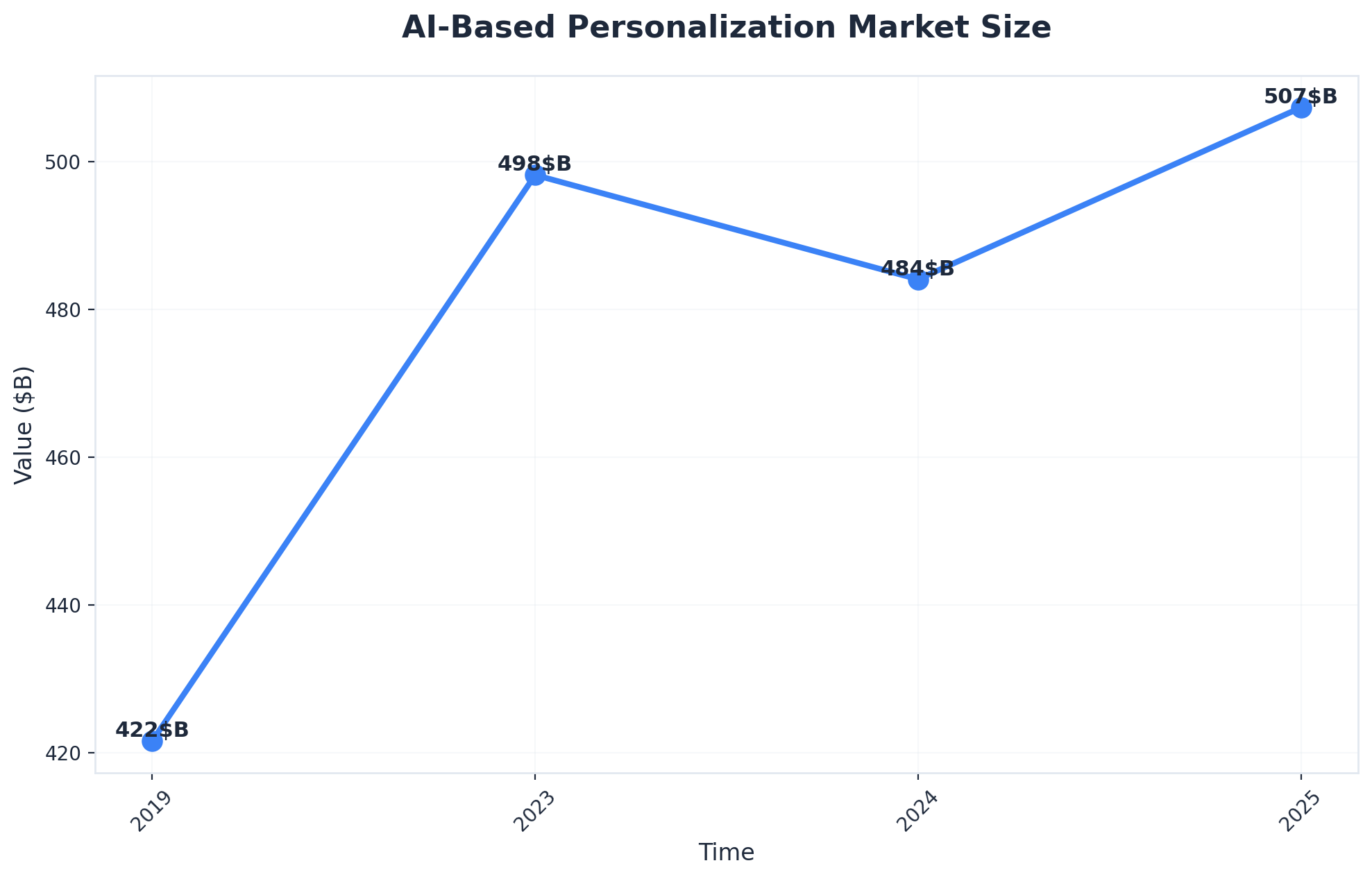 AI-Based Personalization Market Size
AI-Based Personalization Market Size (Source: Market Research Future - AI Based Personalization Market)
- Is all patient data processed according to HIPAA, GDPR, and CCPA requirements?
- Are explicit patient consents documented for data use in automated personalization?
- Does the team maintain an inventory of data flows, access controls, and third-party vendor agreements?
- Are ongoing audits conducted to detect unauthorized data use or emerging privacy risks?
Compliance frameworks consist of legal and procedural requirements that protect patient data and ensure transparency. In healthcare, this includes adherence to the Health Insurance Portability and Accountability Act (HIPAA) in the U.S., the General Data Protection Regulation (GDPR) in Europe, and the California Consumer Privacy Act (CCPA). These regulations mandate strict protocols for consent, data minimization, and patient access to their own information. Data governance refers to the internal policies, controls, and systems guiding how patient information is collected, stored, and shared throughout the ai content personalization lifecycle.
Recent peer-reviewed research highlights that robust frameworks must address informed consent, privacy-by-design, and algorithmic transparency to maintain trust and regulatory alignment3, 7. As soon as AI involves personal health data, GDPR protections are triggered, and deletion rights may become technically complex once data is processed by AI algorithms7.
This solution fits multi-location healthcare organizations managing large-scale patient datasets and third-party integrations. Strict governance mitigates risk while enabling scalable, compliant personalization. The next section will address techniques for identifying and minimizing algorithmic bias in healthcare AI.
Mitigating Algorithmic Bias in Healthcare
Mitigating algorithmic bias is a critical requirement for responsible ai content personalization in healthcare marketing. A practical bias mitigation tool for VPs is the Algorithmic Fairness Checklist:
- Are training datasets evaluated for representation across race, gender, age, and socioeconomic status?
- Are model outputs tested for disparate impact on protected groups?
- Is there an ongoing process for human review and correction of biased content recommendations?
- Are bias metrics and remediation methodologies documented and regularly reported to compliance teams?
Algorithmic bias occurs when AI models, trained on historical or incomplete data, reproduce or amplify existing health disparities—potentially leading to unequal access to care or exclusion from marketing campaigns. In healthcare contexts, this risk is heightened because personal health data often reflects systemic inequities. Peer-reviewed research shows that even highly accurate models can perpetuate biased outcomes if they are not explicitly audited for fairness across all demographic cohorts10, 11.
This path makes sense for organizations managing high patient volumes and diverse populations who must demonstrate equitable access and avoid regulatory scrutiny. For teams with limited analytics resources, bias detection modules embedded in leading AI platforms can provide a starting point, but ongoing human oversight remains essential. Building on bias mitigation practices, the next step for healthcare marketing leaders is to establish robust ROI and performance measurement frameworks for ai content personalization initiatives.
Unlock AI-Driven Content Personalization at Scale
Discover how Vectoron enables enterprise marketing teams to deliver personalized, high-converting content—3× faster and at 89% lower cost than traditional agencies. Get a data-backed walkthrough tailored to your organization’s needs.
Measuring ROI and Performance Outcomes
Lead Generation and Conversion Metrics
A structured approach to lead generation and conversion measurement is critical for quantifying the business impact of ai content personalization in healthcare marketing. A Lead Performance Metrics Checklist can guide VPs in establishing baseline and ongoing performance standards:
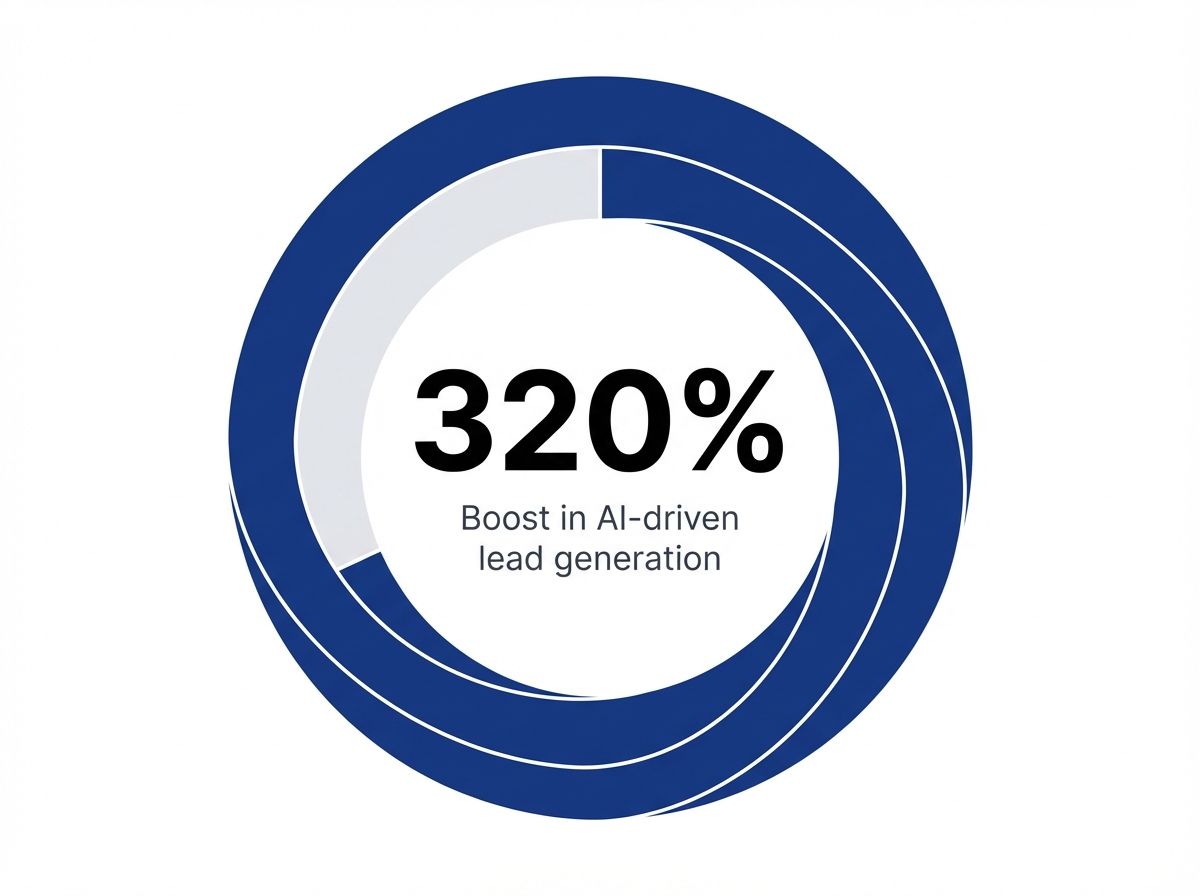 Increase in qualified lead generation from AI personalization: 320%
- Are unique leads and conversions tracked at the campaign, channel, and provider level?
- Is lead quality assessed by downstream metrics such as appointment completion and treatment start?
- Are attribution models in place to allocate conversions to specific personalization tactics?
- Is there a process to benchmark uplift against historical or control campaigns?
In practice, effective ai content personalization strategies have demonstrated up to a 320% increase in qualified lead generation and a 30% improvement in marketing effectiveness compared to traditional approaches1, 9. These gains result from the ability to deliver highly relevant content and calls-to-action, optimize timing, and dynamically adjust messaging based on patient behavior and intent signals.
Consider this route if your organization manages multiple locations and high lead volumes—centralized measurement frameworks help identify which personalization tactics drive the greatest ROI. For teams with less mature analytics, phased implementation of measurement processes allows for incremental improvement and clearer resource allocation. With lead generation and conversion measurement in place, the next logical step is to analyze retention and patient lifetime value to capture the full economic impact of personalization.
Retention and Lifetime Value Analysis
Retention and patient lifetime value (LTV) analysis are essential for healthcare marketing VPs aiming to demonstrate the full economic benefits of ai content personalization. A Retention and LTV Analytics Checklist can help structure this process:
- Is patient retention tracked by cohort and across service lines?
- Are reactivation and follow-up campaigns personalized based on patient history and risk signals?
- Is LTV segmented by acquisition channel and personalization tactic?
- Are predictive models used to forecast churn and intervene proactively?
Retention refers to the proportion of patients who continue to engage with a healthcare provider over time, while lifetime value quantifies the total revenue a patient generates throughout their relationship with the organization. Notably, a 5% improvement in patient retention can drive a 25–85% increase in long-term financial outcomes for healthcare organizations, underscoring the outsized impact of even modest gains26. AI content personalization supports this by delivering targeted reminders, tailored education, and custom reactivation offers based on real-time behavioral and clinical data.
This approach works best when organizations have centralized data and multi-channel outreach infrastructure, enabling granular tracking and intervention. For those with fragmented systems, incremental improvements in retention analytics still yield measurable ROI. Having established retention and LTV measurement, the next section addresses frequently asked questions to help leaders benchmark and operationalize their ai content personalization strategies.
Frequently Asked Questions
Conclusion
Healthcare marketing organizations now face a strategic inflection point in patient acquisition. The data demonstrates clear ROI from personalized content strategies—organizations producing 20-30 location-specific, condition-targeted articles monthly generate 3-4x higher qualified lead volumes compared to generic content approaches. Yet most healthcare networks cannot execute personalization at this scale using traditional content production models.
The barrier is not technical infrastructure or strategic understanding. CRM integration, behavioral tracking systems, and HIPAA-compliant data management have become standard capabilities. The constraint is production capacity. Traditional agency models and in-house teams operate on linear economics—doubling content output requires doubling budget or headcount. For healthcare networks managing 15-50 locations across multiple service lines, this creates an impossible cost structure.
Marketing VPs must evaluate whether their current content production approach can deliver personalization at sufficient volume to impact system-wide patient acquisition metrics. The competitive advantage in healthcare marketing is shifting from those who understand personalization theory to those who can execute personalized strategies at scale. As content production economics evolve through automation technologies, organizations that maintain traditional linear cost structures will face growing disadvantages against competitors operating at higher volume and lower unit costs. The question is not whether to personalize, but how to build production capacity that makes personalization economically viable across entire healthcare networks.
References
- Boston Consulting Group Member Engagement. <#>
- 2.Marketing Trends of 2025 - Deloitte Digital.
- 3.Ethical and legal considerations in healthcare AI: innovation....
- 4.AI in Fintech: Use Case, Benefits & More - Intuit Blog.
- 5.KPIs for gen AI: Measuring your AI success | Google Cloud Blog.
- 6.How Predictive Analytics Reduces Customer Churn.
- 7.Artificial Intelligence and Personal Data Protection | Navigating GDPR and CCPA ....
- 8.AI-Powered SEO: How Digital Publishers Can Stay Ahead in Search Rankings.
- 9.Using AI for Personalized Content Delivery.
- 10.Never Assume That the Accuracy of Artificial Intelligence Information ....
- 11.The doctor will polygraph you now: ethical concerns with AI for fact ....