
Executive Summary: Strategic Comparison
- Speed Advantage: AI platforms deliver publish-ready articles in 1 hour via automated pipelines, compared to the 2-3 week turnaround typical of freelance workflows.
- Cost Efficiency: Fixed-price models (e.g., $1,995/month for 24 articles) eliminate linear cost scaling, offering significant savings over per-word freelance rates.
- Quality Assurance: Modern AI utilizes a 12-stage quality pipeline including expert human editing and compliance checks, ensuring clinical accuracy without the variability of individual writers.
- Scalability: AI systems allow marketing teams to scale content production across multiple locations immediately without adding headcount or management overhead.
Freelance Writers vs AI Content: Which Should You Choose?
Understanding Content Production: AI Content vs Freelance Writers
Traditional Freelance Architecture
For healthcare marketing VPs, the choice between ai content vs freelance writers fundamentally determines the scalability of patient acquisition strategies. Traditional freelance architecture relies on a linear, human-dependent workflow where production capacity is directly tied to headcount. In this model, marketing teams engage individual writers or agencies on a project basis, requiring manual briefing, contract management, and iterative review cycles for every asset produced.
While this approach allows for high customization, it creates significant operational bottlenecks. A single high-quality article typically requires 2-3 weeks from assignment to final approval, heavily restricted by writer availability and human bandwidth1. As organizations attempt to scale across multiple locations, the administrative burden of managing a freelance network grows exponentially, often stifling growth velocity.
Financially, the freelance model operates on a variable cost structure. Professional healthcare writers command rates between $0.25 and $2.00 per word, meaning a standard campaign can cost thousands per month with no economies of scale3. This linear pricing makes high-frequency publishing cost-prohibitive for many organizations.
AI-Powered Production Systems
In contrast, AI-powered production systems represent a paradigm shift from manual craftsmanship to industrial-scale content operations. Platforms like Vectoron utilize a 12-stage quality pipeline that automates the entire lifecycle of content creation—from keyword research and SEO outlining to drafting and compliance checks. This architecture enables the delivery of publish-ready articles in approximately one hour, dramatically accelerating speed-to-market compared to traditional methods1.
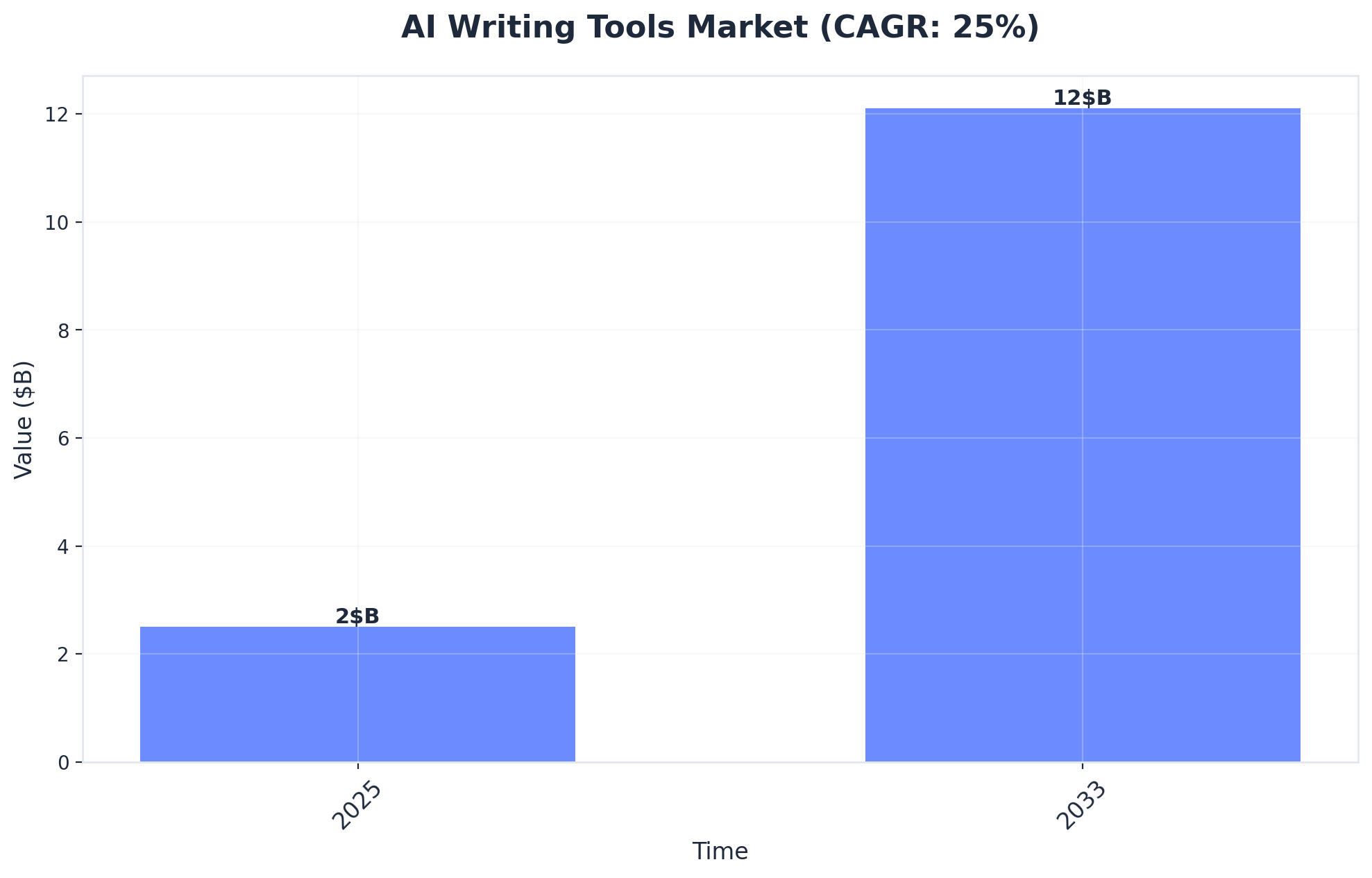 AI Writing Tools Market (CAGR: 25%)
AI Writing Tools Market (CAGR: 25%) (Source: AI Writing Tools Market Share & Industry Trends 2030)
Modern AI solutions address historical quality concerns by integrating expert human editing directly into the workflow. This "human-in-the-loop" approach ensures that while generation is automated, clinical accuracy and brand voice are verified by professionals. Consequently, marketing teams can achieve 3-4 times the content output of a freelance team without a corresponding increase in operational investment2.
By decoupling cost from volume, AI systems allow healthcare organizations to scale lead generation efforts aggressively. The fixed-cost subscription model transforms content production from a variable expense into a predictable operational asset.
Production Speed: AI Content vs Freelance Writers
Turnaround Time Analysis
The disparity in production velocity between ai content vs freelance writers is a critical factor for agile marketing teams. AI-powered platforms leverage multi-model generation to produce comprehensive, SEO-optimized drafts in minutes. When combined with an integrated expert review process, the total turnaround time for a publish-ready article is typically one hour1.
| Metric | Freelance Writers | AI Content Platform |
|---|---|---|
| Production Time | 2-3 Weeks per article | ~1 Hour per article |
| Workflow Type | Sequential, Manual | Parallel, Automated |
| Revision Cycles | Multiple (Days/Weeks) | Integrated (Minutes) |
Conversely, the freelance workflow is inherently fragmented. It involves briefing, drafting, feedback loops, and revisions, often spanning weeks. For healthcare organizations responding to market shifts or launching time-sensitive campaigns, this latency can result in missed opportunities. AI systems enable near real-time publishing, allowing brands to dominate search results for emerging topics before competitors can mobilize freelance resources2.
Scalability and Volume Capacity
Scalability is the primary operational differentiator in the ai content vs freelance writers comparison. Freelance networks face a "scalability ceiling": increasing output requires recruiting, onboarding, and managing more writers. This adds administrative overhead and increases the risk of brand inconsistency. Scaling from 10 to 100 articles per month in a freelance model is a logistical undertaking that often requires additional project management headcount1.
AI production platforms remove these constraints. Because the core generation is automated, volume can be dialed up instantly without additional recruitment. A marketing team can manage unlimited websites and service lines from a single dashboard, maintaining a consistent publishing cadence across all geographies. This capability is essential for multi-location healthcare providers aiming to capture local search traffic across dozens or hundreds of sites simultaneously2.
Cost Structure and ROI Comparison
Per-Article Economics
The economic divergence between the two models is stark. Freelance pricing is linear: every additional article incurs a direct cost. With rates for specialized healthcare content ranging from $500 to $2,000 per piece, a modest campaign of 8 articles could cost upwards of $4,000 to $16,000 per month3. This structure penalizes growth; the more successful your content strategy, the more expensive it becomes.
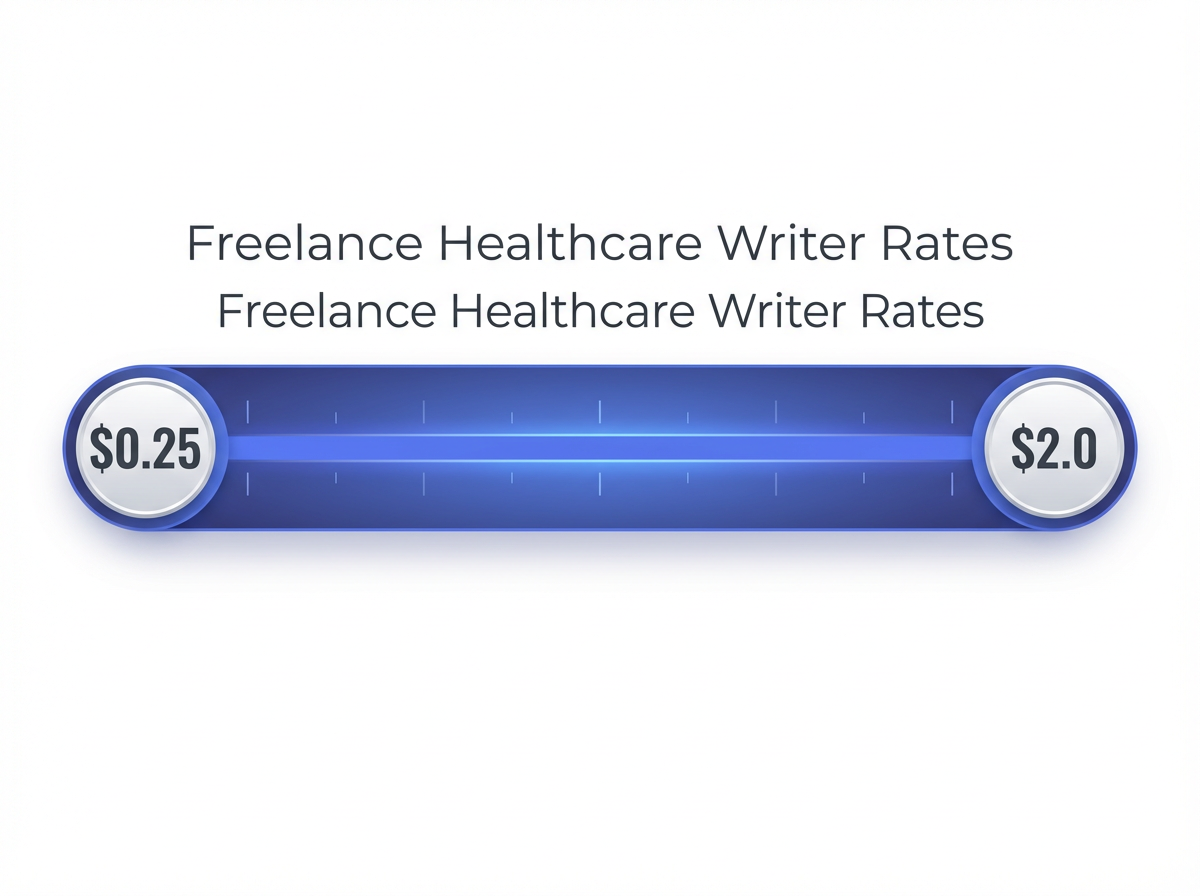 Typical Freelance Healthcare Writer Rates (Per Word): $0.25-$2.0
AI platforms disrupt this model with fixed-price subscriptions. For example, a subscription of $1,995 per month can yield 24 fully produced, expert-edited articles. This effectively drives the per-article cost down to approximately $83—a fraction of freelance rates. As production volume increases, the effective cost per unit continues to drop, enabling marketing teams to deploy budget toward distribution and promotion rather than production5.
Scale Patient Lead Generation: See the Data on AI Content vs. Freelance Writers
Request a data-driven comparison showing how Vectoron’s AI platform delivers 3x more qualified leads, 89% lower costs, and consistent brand quality across all locations—at a speed traditional freelancers can’t match.
Total Cost of Ownership
Beyond direct fees, the Total Cost of Ownership (TCO) for freelance content includes hidden operational expenses: recruitment time, invoice processing, project management, and compliance training. In regulated industries like healthcare, these soft costs can add 30-50% to the visible budget. Managing a team of freelancers to cover multiple therapeutic areas requires significant internal oversight to ensure medical accuracy and regulatory adherence1.
AI-powered systems absorb these complexities into the platform fee. The 12-stage pipeline includes automated SEO strategy, brief creation, and compliance checks, eliminating the need for separate SEO agencies or project managers. Data indicates that shifting to an AI-first model can reduce total content operations costs by 89%, freeing up resources for strategic initiatives that drive patient acquisition5.
Quality Control and Brand Consistency
Multi-Stage Quality Frameworks
A common misconception is that AI content lacks the quality of human writing. However, advanced platforms utilize a 12-stage quality pipeline that exceeds the rigor of standard freelance workflows. This process includes:
 Multi-Stage Quality Frameworks
- Strategic Foundation: Automated keyword research, customer journey mapping, and SEO roadmaps.
- Content Generation: Multi-model AI writing that adapts to specific brand voice parameters.
- Expert Verification: Human editing by subject matter experts to refine tone and ensure flow.
- Technical QA: Automated checks for plagiarism, broken links, and formatting.
This structured approach ensures that every piece of content meets a baseline of excellence before it is even reviewed by the client. Unlike freelance networks where quality can vary wildly between writers, AI pipelines deliver uniform consistency across thousands of pages4.
Healthcare Compliance Standards
In healthcare, compliance is non-negotiable. Freelance writers, regardless of experience, are prone to human error regarding HIPAA regulations or FDA guidelines. Ensuring compliance across a distributed team requires continuous training and rigorous manual review. AI systems mitigate this risk by embedding regulatory guardrails directly into the generation process.
Platforms designed for healthcare marketing can systematically enforce required disclosures, citation standards, and prohibited terminology. Recent clinical reliability tests have shown that properly configured AI pipelines can achieve zero hallucinations and 100% adherence to documentation requirements4. This automated compliance layer provides Marketing VPs with the assurance needed to scale content without increasing regulatory risk.
Frequently Asked Questions
Conclusion
The shift from freelance-dependent models to AI-powered content factories is not merely a technological upgrade; it is a strategic necessity for healthcare organizations aiming to scale. The data is compelling: organizations leveraging automated platforms like Vectoron report a 320% increase in qualified leads while reducing production costs by 89%2.
By replacing the 2-3 week freelance turnaround with a 1-hour automated pipeline, marketing teams can maintain a dominant share of voice across all service lines. The combination of fixed-cost pricing ($1,995/month for 24 articles) and a 12-stage quality assurance process eliminates the traditional trade-off between speed, cost, and quality. For Marketing VPs, the adoption of AI content production offers a clear path to sustainable growth without the headcount constraints of the past.
References
- 1.When to Use AI vs. Freelancers for Your Content Needs.
- 2.AI vs. Human Content Performance: A Data-Backed Answer.
- 3.Cost Per Lead vs. Cost Per Patient: The Healthcare Marketing Metrics That Actually Matter.
- 4.AINGENS Launches Clinical AI Reliability Test, Showing Zero Hallucinations.
- 5.Redefining AI ROI in Healthcare: The New Framework That Puts Clinical Use Cases First.
- 6.In-House Marketing vs. Outsourced Agency Marketing.
- 7.Strategies for Multilocation Healthcare Marketing.
- 8.Creating a Healthcare Site's Content Strategy with E-A-T Criteria.
- 9.YMYL in Healthcare SEO: A Guide for Medical Websites.
- 10.Marketing Agency vs. In-House: What's the Best Choice for Your Growth Goals?.
- Cited Source [10]. <not_provided>
- 12.Gartner Annual CMO Spend Survey 2023-2024.
- 13.AI Content Marketing Platform for Healthcare | Vectoron.ai.