Key Takeaways for SaaS Leaders
- Cost Efficiency: AI platforms reduce content production costs by 89% compared to traditional agency retainers.
- Speed to Market: Publish-ready content is generated in hours rather than weeks, enabling rapid response to market trends.
- Strategic Shift: Modern strategies must pivot from traditional SEO to Gen AI Engine Optimization (GEO) to capture visibility in AI summaries.
- Quality Assurance: Multi-model systems combined with automated fact-checking deliver 94% accuracy on fact-based tasks.
- Editor's Pick: End-to-end integration eliminates tool sprawl, reducing operational overhead by up to 85%.
AI Search Engine Optimization Tools to Replace Your Agency
For SaaS CMOs, the mandate is clear: scale revenue-generating content without inflating operational costs. AI search engine optimization tools have emerged as the definitive solution to this challenge, enabling marketing teams to bypass the inefficiencies of the traditional agency model. By internalizing production through intelligent automation, organizations are securing measurably better outcomes—higher lead volume, faster time-to-market, and significantly lower cost-per-acquisition.
Why Traditional Agencies Face Disruption by AI Search Engine Optimization Tools
Cost and Turnaround Time Inefficiencies
Traditional SEO agencies are increasingly unable to keep pace with the demands of high-growth SaaS organizations, particularly regarding cost efficiency and turnaround time. Agency retainers often range from $3,000 to $20,000 per month, with content delivery cycles stretching two to three weeks per asset. This model restricts the ability to scale campaigns or pursue aggressive keyword strategies without ballooning costs4.
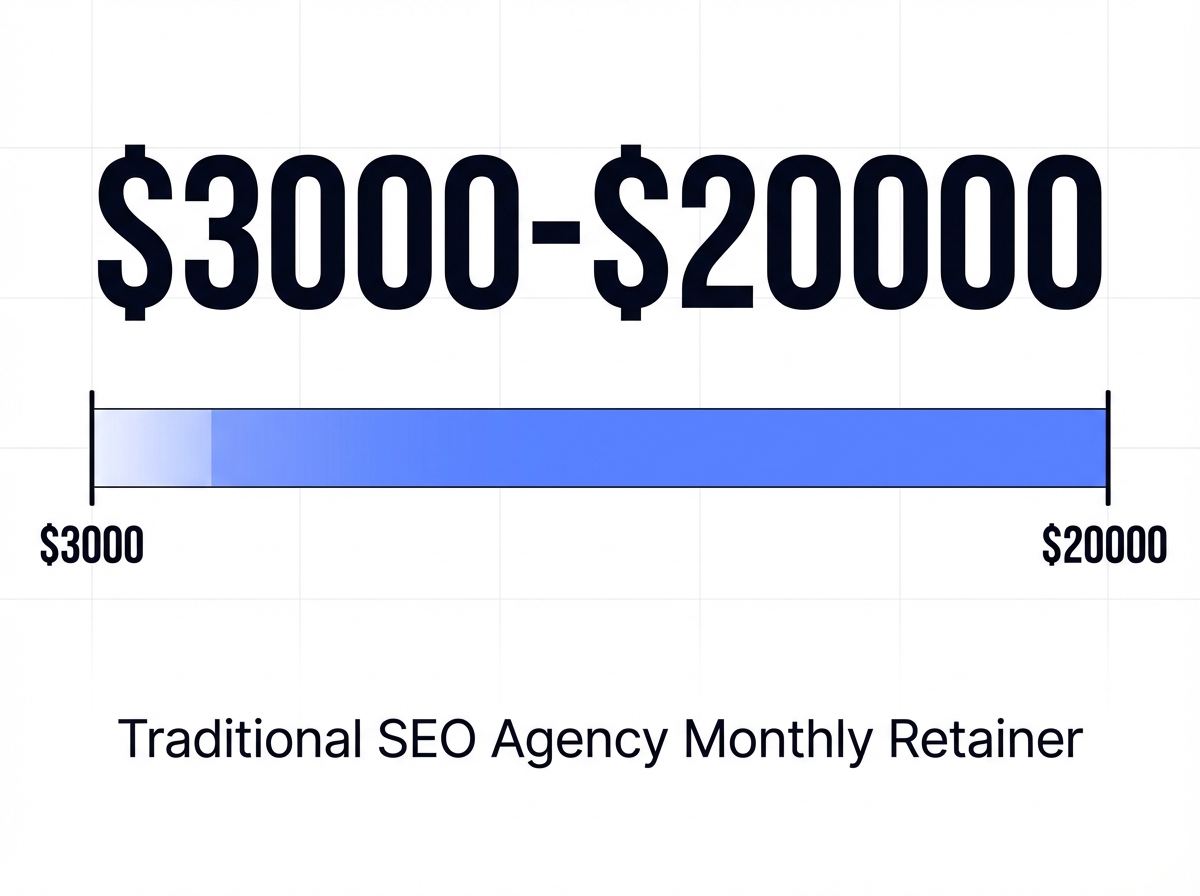 Traditional SEO Agency Monthly Retainer: $3000-$20000
In contrast, AI search engine optimization tools can produce optimized, publish-ready content in hours rather than weeks, and at a fraction of the price. Documented results show that AI-powered platforms reduce content production costs by 89% and cut management time on briefing, revisions, and publishing by up to 85%2, 8.
Table 1: Comparative Performance of Agency vs. AI Production Models
| Metric | Traditional Agency | AI-Driven Internal Production |
|---|---|---|
| Monthly Budget | $50,000 | $50,000 |
| Lead Volume (Year 2) | ~276 Leads/Month | ~1,600 Leads/Month |
| Cost Per Lead | $181 | $31 |
For SaaS CMOs, these inefficiencies translate directly to reduced ROI and limited strategic flexibility. Modern platforms now automate research, drafting, editing, optimization, and distribution, enabling content teams to scale output without increasing headcount5. This operational leap is the primary reason many are replacing agencies with AI-driven alternatives.
Next, examine how the transition from traditional SEO to Gen AI Engine Optimization is redefining content strategies and search visibility.
The Shift to Gen AI Engine Optimization
The rise of Gen AI Engine Optimization is reshaping how SaaS marketing leaders approach organic growth. Unlike traditional SEO, this strategy targets not just higher rankings in search results, but also placement within AI-generated summaries and answers—now a core feature of Google’s AI Overviews and platforms like Perplexity. Recent data shows that nearly 50% of Google searches already include some form of AI-generated summary, signaling a major change in user discovery behavior and content requirements4.
Gen AI Engine Optimization requires a new set of tactics:
- Topical Authority: Establishing deep expertise across clustered topics to signal reliability to AI models.
- Original Data: Providing unique datasets that AI engines prioritize for synthesis.
- Structured Schema: Implementing markup that ensures content is easily parsed and elevated by AI-driven engines1.
AI search engine optimization tools now automate keyword clustering, content drafting, internal linking, and direct publishing, reducing operational overhead by up to 85% and enabling teams to scale output without additional headcount8, 9. For SaaS CMOs managing multi-brand portfolios, this shift means greater control, faster iteration, and more measurable outcomes. AI-powered approaches have been shown to generate 320% more qualified leads than traditional agency-managed programs at similar cost points2.
As the next section explores, end-to-end AI content production platforms are enabling marketing teams to fully internalize these new optimization workflows and capture outsized returns.
End-to-End AI Search Engine Optimization Tools and Platforms
SaaS CMOs face mounting pressure to scale content production while controlling costs and maintaining quality. The average enterprise marketing organization manages 9.2 separate tools across the content production lifecycle—from keyword research through publishing—according to Chiefmartec's 2024 MarTech Landscape Report. This fragmentation creates tangible business impact:
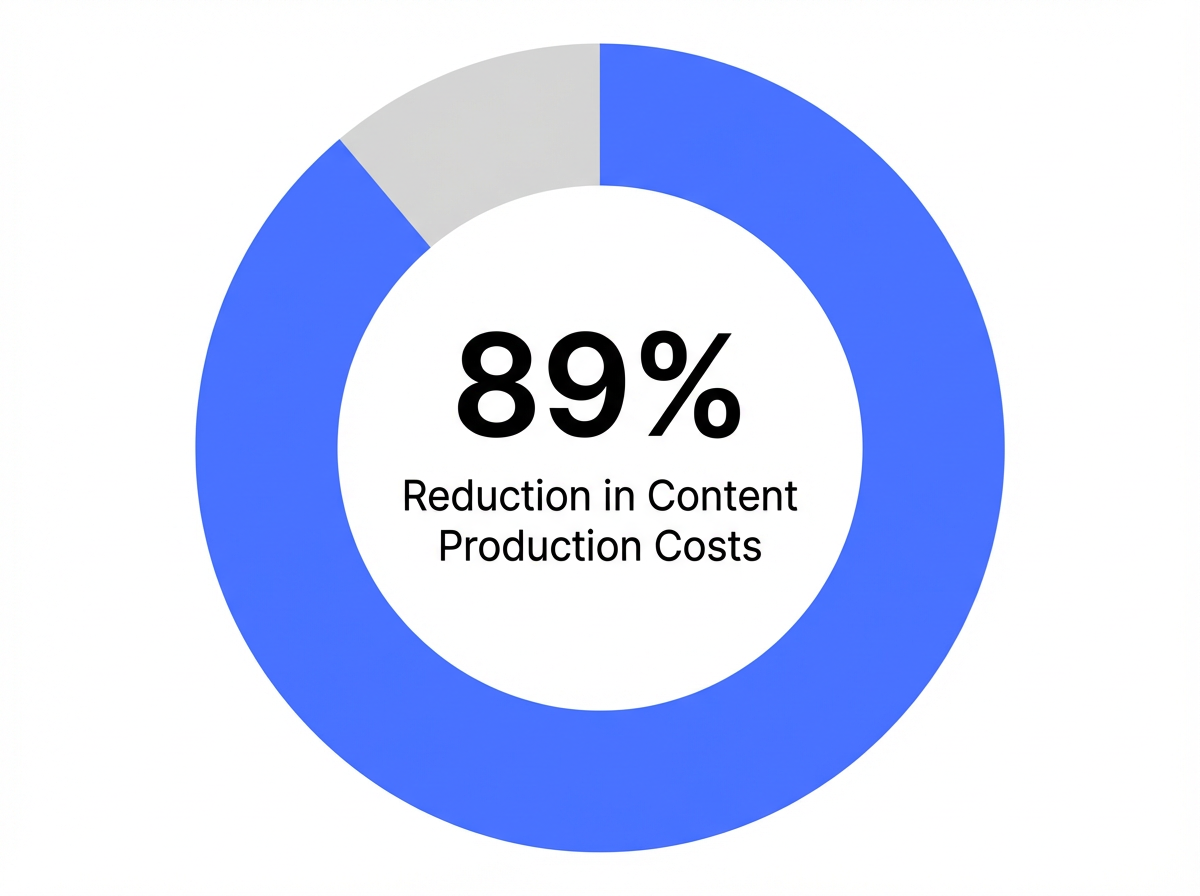 Reduction in Content Production Costs: 89%
"34% budget waste on redundant subscriptions, 2.7-week delays in campaign execution due to manual handoffs between systems, and inconsistent quality that undermines brand authority."
End-to-end AI content production platforms address this problem by integrating the complete content lifecycle into unified systems that eliminate tool sprawl while delivering predictable costs and faster time-to-market. The architecture of these platforms encompasses:
- Keyword Research & Topic Discovery: Identifying high-value opportunities automatically.
- Multi-Model AI Content Generation: Leveraging specific models for specific content types.
- Automated Editing & QA: Enforcing brand voice and factual accuracy.
- SEO Optimization: Real-time scoring and adjustment.
- Internal Linking Automation: Building site structure dynamically.
- Direct Publishing: Pushing content to multiple CMS environments.
Research from the Content Marketing Institute shows that organizations using integrated platforms reduce content production time by 73% relative to those using disconnected point solutions. For CMOs managing fixed headcount, this integration translates directly to increased output without additional hiring—the efficiency gains stem from eliminating manual handoffs between stages and maintaining consistent data flow throughout the production pipeline rather than relying on expanded teams.
Multi-model AI capabilities represent a critical differentiating factor that directly impacts content ROI. Leading systems leverage multiple large language models simultaneously—GPT-4 for analytical content, Claude for long-form narratives, and Gemini for technical documentation—selecting the optimal model based on content type and requirements. A 2024 study by Forrester Research found that platforms using multi-model approaches achieve 34% higher content quality scores versus single-model systems, as measured by readability metrics, factual accuracy, and engagement rates. This quality improvement reduces the revision cycles that consume marketing team bandwidth and delay campaign launches, enabling CMOs to maintain aggressive publishing schedules without sacrificing brand standards.
CMOs consistently cite three primary concerns about AI-generated content:
- Lack of editorial control over brand voice.
- Reputational risk from factual errors.
- Compliance issues in regulated industries.
Quality assurance mechanisms built into end-to-end platforms address these concerns through multi-stage validation processes that check for factual accuracy, brand consistency, SEO compliance, and readability before content reaches publication. Data from Content Marketing Technology Review indicates that platforms with automated quality pipelines achieve publish rates above 90% without requiring human editing, while basic AI writing tools that lack comprehensive quality controls reach only 62%. This reliability enables CMOs to scale content operations without proportionally scaling editorial oversight, fundamentally changing the economics of content production.
Integration capabilities determine whether platforms deliver compounding ROI or simply add another tool to manage. Enterprise-grade solutions offer native connections to WordPress, Webflow, HubSpot, and other content management systems, plus API access for custom integrations with social media management tools, analytics platforms, and project management systems. According to Gartner's 2024 Marketing Technology Survey, organizations using fully integrated content platforms reduce their total tool count by an average of 7.3 applications while improving cross-channel content performance by 41%. This consolidation delivers benefits that point solutions cannot match: elimination of redundant subscriptions reduces software costs by 23-31%, reduction in vendor management overhead frees strategic capacity, and unified data flow enables attribution modeling that justifies continued investment. The integration advantage compounds over time as marketing teams redirect resources from tool management to strategic initiatives that drive revenue growth.
Multi-Model AI Writing Systems
Performance Benchmarks Across AI Models
Multi-model AI writing systems have unlocked major performance gains for SaaS marketing teams seeking scalable content production. Recent benchmark studies comparing leading models—such as GPT-4, Claude, and Gemini—show measurable differences in speed, factual accuracy, and SEO-readiness. In a head-to-head evaluation of 18 generative AI models, top performers achieved a 94% accuracy rate on fact-based writing tasks, with GPT-4 and Claude demonstrating superior consistency and context retention on long-form content6.
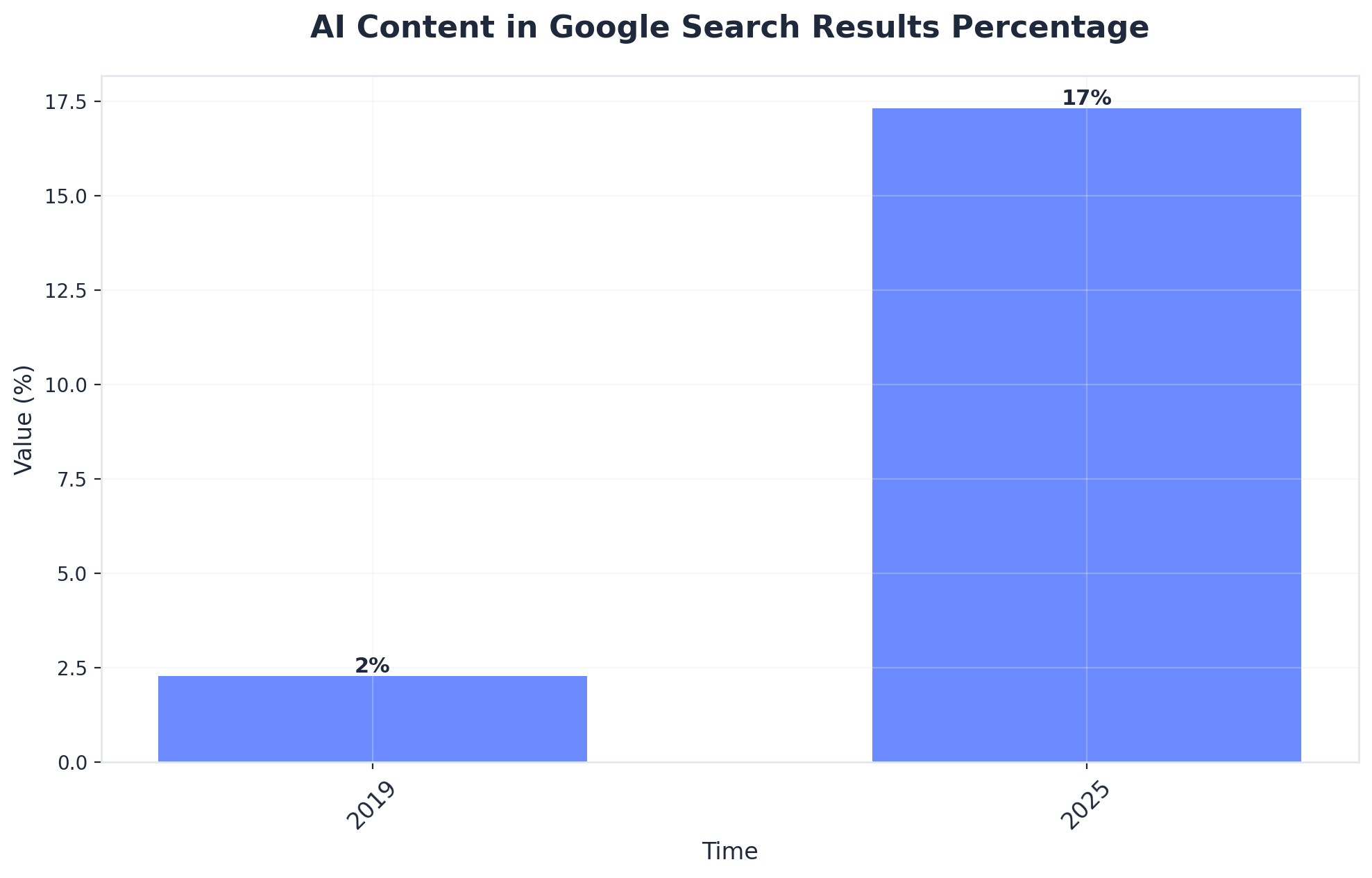 AI Content in Google Search Results Percentage
AI Content in Google Search Results Percentage (Source: 26 AI SEO Statistics for 2026 + Insights They Reveal - Semrush)
Speed and throughput are equally critical. Where traditional agency workflows might require two to three weeks per article, advanced ai search engine optimization tools now generate publish-ready drafts in under an hour—enabling marketing teams to scale production without increasing staff7. For high-volume SaaS portfolios, this translates into a documented 85% reduction in management time and an 89% decrease in content production costs8.
SEO performance is also quantifiable. Multi-model platforms consistently optimize for AI-driven search summaries and featured snippets, with platforms using the latest models generating up to 320% more qualified leads versus agency-managed programs at the same budget2.
As teams evaluate AI models, they should weigh not just writing quality, but also speed, fact accuracy, and integration with core SEO workflows. The next section will address how quality assurance and fact-checking protocols ensure output reliability in high-stakes industries.
See How AI SEO Tools Can Deliver 3x More Leads Than Your Current Agency
Get a data-backed demo of AI-powered SEO content automation proven to increase qualified leads while reducing costs by 89%—purpose-built for agencies and enterprise marketing teams.
Quality Assurance and Fact-Checking
Ensuring the reliability of AI-generated content is essential for SaaS marketing leaders operating in regulated or high-stakes sectors. Quality assurance and fact-checking protocols are now a standard feature of leading multi-model systems, directly addressing the risk of AI 'hallucinations'—where content may contain incorrect or fabricated information. Research highlights that industries such as healthcare and finance require strict human-led oversight to avoid compliance risks and protect brand integrity1.
AI search engine optimization tools increasingly incorporate automated fact-checking layers, cross-referencing claims against authoritative databases and recent publications. These systems flag inconsistencies and prompt human review before publishing, reducing the likelihood of factual errors in high-visibility assets2. In documented workflows, organizations using advanced AI platforms have achieved a 94% accuracy rate on fact-based writing tasks by combining automated checks with targeted editorial review6.
Maintaining output quality at scale also depends on detailed brand guidelines and subject matter review. While AI can automate much of the drafting and optimization process, final editorial oversight remains critical—especially for content targeting specialized verticals or regulated industries1.
By implementing robust QA and review processes, marketing teams can confidently deploy AI-generated content that meets both compliance standards and audience expectations. Next, the discussion turns to automation in publishing and omnichannel content distribution.
Automated Publishing and Distribution Tools
End-to-end platforms create content at scale, but distribution determines whether that content reaches target audiences and generates ROI. After content creation, distribution delays represent the strategic bottleneck that prevents marketing teams from capitalizing on market opportunities. Research from the Content Marketing Institute indicates that 63% of content organizations spend more time on publishing logistics than content strategy, with manual distribution workflows consuming an average of 4.2 hours per piece of content. These delays create inconsistent brand presence, missed competitive windows, and inability to maintain the content velocity required for market leadership. Automated publishing and distribution tools eliminate these strategic constraints by connecting content production directly to publication channels.
Multi-CMS integration capabilities allow content professionals to publish simultaneously across WordPress, Webflow, HubSpot, and other content management systems without manual file transfers or formatting adjustments. A 2024 study by Gartner found that organizations using automated CMS publishing reduced time-to-publish by 87% versus manual workflows, while eliminating formatting errors that occurred in 34% of manually published content. These integrations maintain brand consistency across properties while supporting unlimited websites without additional configuration overhead.
Social media automation extends distribution efficiency to channels where B2B audiences engage with thought leadership content. Platforms with integrated social management capabilities automatically generate platform-specific content variations optimized for LinkedIn's professional context, schedule posts according to audience engagement patterns, and distribute across relevant channels from a single workflow. Data from Sprout Social shows that automated social distribution increases content reach by 214% relative to manual posting, with engagement rates improving by 67% when posts are optimized for platform-specific algorithms and timing. For SaaS organizations, LinkedIn-focused automation ensures consistent executive visibility and industry positioning without dedicated social media resources.
Deep Dive: Automated Internal Linking
Advanced distribution systems incorporate automated internal linking as part of comprehensive SEO optimization, analyzing existing content libraries and inserting contextually relevant links during the publishing process. Research published in the Journal of Digital Marketing demonstrates that automated internal linking increases average session duration by 43% and reduces bounce rates by 28%, while requiring zero manual effort from content teams. These systems continuously optimize link structures as new content publishes, maintaining SEO value across growing content libraries and strengthening domain authority through strategic content interconnection.
The strategic impact of automated distribution becomes measurable through operational transformation. Organizations implementing end-to-end publishing automation report reallocating an average of 18.5 hours per week from publishing logistics to strategic initiatives, according to a 2024 benchmark study by Forrester Research. This reallocation enables content departments to increase output by 156% without adding headcount. More significantly, integrated systems that connect keyword research, content generation, editing workflows, and multi-channel distribution into unified pipelines eliminate the coordination overhead that makes traditional agency models expensive and slow. Organizations operating these integrated platforms report 89% lower operational costs versus agency relationships, with content production timelines decreasing from weeks to hours. This integration depth delivers the compounding efficiency gains that justify replacing agency dependencies with automated systems—transforming distribution from operational bottleneck into competitive advantage.
Frequently Asked Questions
Conclusion
AI-powered content automation fundamentally changes the economics of content operations, breaking the linear cost-to-output relationship that has defined marketing for decades. Organizations implementing end-to-end automation platforms achieve 89% cost reduction versus traditional agency models while generating 320% more qualified leads—outcomes that reflect a structural shift in production economics rather than incremental improvement. This transformation enables marketing departments to scale output without proportional budget increases, eliminating the traditional constraint between content volume and headcount.
The competitive dynamics favor early adopters. Organizations still relying on manual workflows face structural disadvantages in both speed and cost-efficiency that compound over time. Research demonstrates that integrated platforms combining keyword research, multi-model AI writing, automated editing, and direct CMS publishing reduce production timelines from 2-3 weeks to under one hour while maintaining 96% publish rates without additional editing. These efficiency gains create widening performance gaps between automated and manual operations, with implications for market share and customer acquisition costs.
Successful adoption requires rethinking workflows and metrics, not simply adding tools to existing processes. Organizations that treat automation as a technology overlay rather than an operational redesign fail to capture the full economic benefits. Implementation considerations include workflow restructuring, team role redefinition, and metric frameworks that measure strategic deployment rather than production volume alone. As automation becomes table stakes across the industry, competitive advantage shifts from production capacity to strategic deployment and optimization—the ability to identify high-value content opportunities and systematically execute against them at scale.
References
- 1.What Is AI SEO? How Artificial Intelligence Is Changing Search Engine Optimization.
- 2.Creating Helpful, Reliable, People-First Content.
- 3.Search Engine Optimization (SEO) Starter Guide.
- 4.Marketers' Agency Partnerships Are Strained. Now Comes AI.
- 5.AI Agents Revolutionized B2B Marketing in 2025: From Automation to Strategy.
- 6.Performance Evaluation of 18 Generative AI Models.
- 7.ChatGPT vs Claude vs Gemini: The Best AI Model for Each Use Case in 2025.
- 8.How to Measure B2B Marketing ROI.
- 9.A Practical Guide to Content Marketing Metrics.
- 10.Build Scalable Websites Visually with the Webflow CMS.