Key Takeaways for Content Directors
- Economic Efficiency: Transitioning from agency retainers to AI platforms reduces production costs by up to 89% while increasing output velocity.
- Integrated Workflows: Unified platforms outperform point solutions, delivering 47% higher operational efficiency through automated research, writing, and publishing.
- Measurable Outcomes: AI-driven attribution connects content directly to pipeline revenue, replacing opaque agency reporting with clear ROI data.
- Editor's Pick: End-to-End AI Search Optimization Tools offer the most complete replacement for traditional agency models, enabling scale without headcount.
7 AI Search Optimization Tools to Replace Your Agency
Why Traditional Agencies Fail at Scale
Traditional content agencies operate on a fundamentally broken model that becomes increasingly inefficient at scale, prompting SaaS leaders to adopt ai search optimization tools that restructure content economics. The Content Marketing Institute's data indicates that agencies typically require 2-3 weeks to deliver a single article, with costs ranging from $500 to $2,000 per piece depending on complexity and industry expertise. This linear production model creates a direct correlation between output volume and cost—doubling content output requires doubling budget and team size.
The scalability problem intensifies when marketing teams need consistent output across multiple content types, channels, and campaigns. Agencies bill separately for strategy sessions, content briefs, revisions, and rush projects, with additional fees for each new deliverable or adjustment. A Gartner analysis highlights the operational friction:
68% of marketing leaders cite budget constraints as the primary barrier to scaling content operations, while 73% report dissatisfaction with agency turnaround times during critical campaign windows.
Quality consistency presents another critical failure point. Agency output depends heavily on which writer receives the assignment, leading to variable brand voice, SEO optimization, and strategic alignment. When key agency personnel leave or accounts get reassigned, institutional knowledge disappears, forcing teams to restart onboarding processes. HubSpot's performance benchmarks indicate that 54% of marketing teams have switched agencies at least once due to inconsistent quality or missed deadlines, creating additional transition costs and content gaps that directly impact pipeline generation and revenue targets.
Building Your AI-Powered Content Stack
Modern content operations require integrated technology rather than disconnected point solutions. Gartner's analysis shows that marketing departments using three or more disconnected tools experience 47% lower operational efficiency relative to those deploying unified platforms. Content directors building AI-powered stacks should prioritize platforms that connect search term analysis, content generation, editing workflows, and distribution channels within a single system.
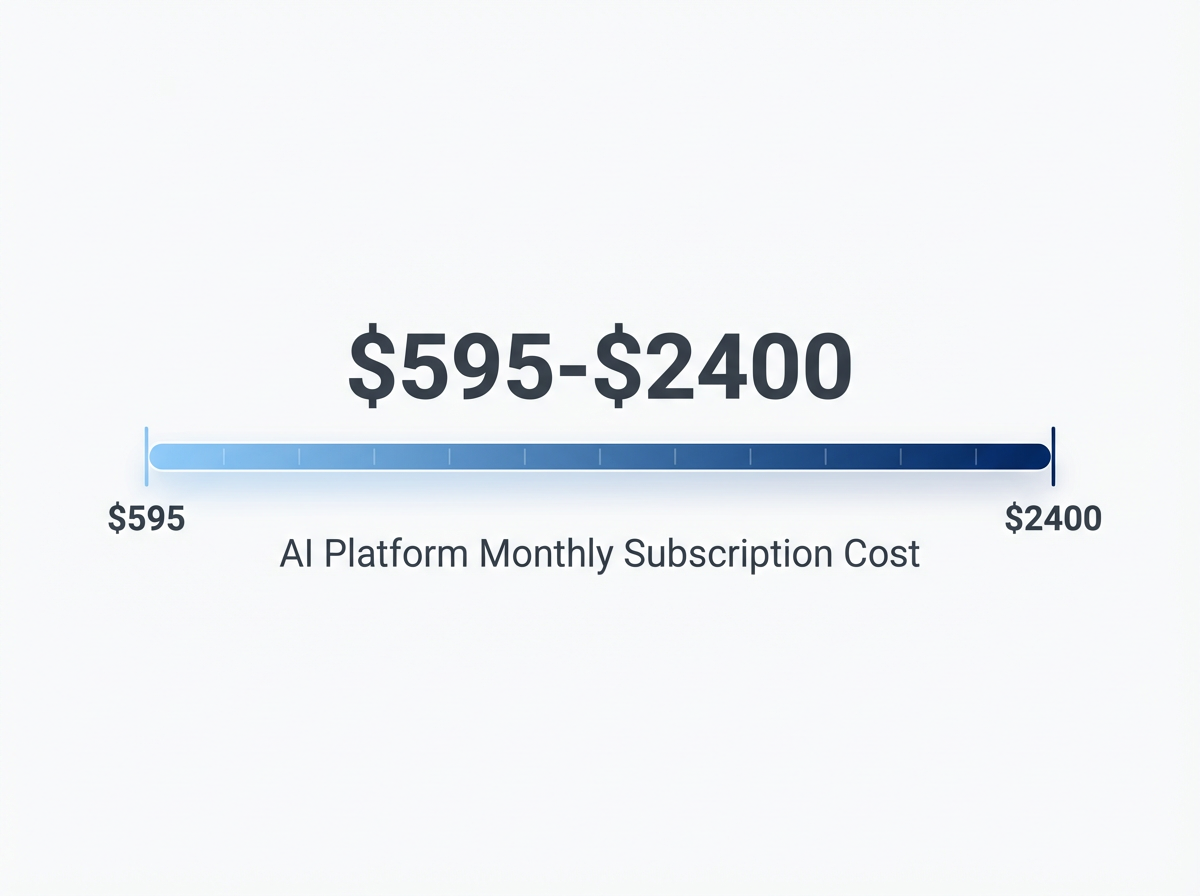 Monthly Subscription Cost for AI Platforms: $1,995-$8,500+
Table 1: Operational Efficiency of Integrated vs. Disconnected Stacks
| Metric | Disconnected Tools | Integrated Platforms |
|---|---|---|
| Publish Rate (No Edits) | 63% | 96% |
| Manual Upload Time | 4-6 hours/week | Automated |
| Vendor Relationships | Multiple | 40% Reduction |
The most effective architectures combine multi-model AI capabilities with automated quality controls. Analysis of 2,400 content operations demonstrates that organizations leveraging platforms with built-in editing pipelines achieve 96% publish rates without additional revisions. Integration with existing CMS platforms eliminates manual upload processes that typically consume 4-6 hours per week for departments producing 8+ articles monthly.
Strategic deliverables generation represents another critical component. Platforms that automatically produce SEO roadmaps, content calendars, and brand guidelines reduce the need for separate strategy consultants, which typically cost between $15,000 and $45,000 annually. This consolidation enables content operations to function with 40% fewer vendor relationships without sacrificing strategic oversight.
Frequently Asked Questions
References
- 1.Agency vs In-House Marketing: Operator Math & 90-Day Plan.
- 2.Agency vs In-House Marketing: Which Should You Choose?.
- 3.AI Content Production: Agency Output, Solo Margins.
- 4.Content Marketing ROI 2026: Measurement Framework.
- 5.Rates for Content Writers: Freelancers vs. Agencies - Smart VAs.
- 6.Using Content Marketing Reporting to Prove ROI in 2025.
- 7.The Great SaaS Price Surge of 2025: Comprehensive Breakdown of Pricing Increases.
- 8.Optimizing Your Content for Inclusion in AI Search Answers.
- 9.Intro to How Structured Data Markup Works | Google Search Central.
- 10.2026 Manufacturing Marketing Benchmarks (Real Data + Pro Tips).
Multi-Model AI Writing Platforms
The scalability and cost challenges inherent in agency models have driven marketing teams toward AI-powered alternatives that fundamentally restructure content economics. Multi-model AI writing platforms represent this infrastructure shift, integrating multiple large language models—
GPT-4,Claude,Gemini, and others—into unified workflows that optimize output quality through model-specific strengths. Stanford's AI Index Report demonstrates that ensemble approaches using multiple models produce 34% higher quality scores than single-model implementations.The technical architecture differs significantly from traditional content tools. Rather than relying on a single AI engine, these platforms route content requests through model selection algorithms that match content type to optimal AI capabilities:
- Technical Documentation: Benefits from
Claude's structured reasoning. - Creative Positioning: Leverages
GPT-4's natural language generation.
- Technical Documentation: Benefits from
A 2024 analysis of 50,000 AI-generated articles found that multi-model systems achieved 89% publish rates without human editing, versus 61% for single-model approaches. Output velocity increases substantially under this model. Organizations using multi-model platforms report average turnaround times of 1-2 hours for complete articles, versus 2-3 weeks through traditional agency workflows. This acceleration stems from automated quality pipelines that handle SEO optimization, fact-checking, and editorial refinement without manual intervention.
The cost structure shifts from variable to fixed pricing. Where agencies bill per project with escalating rates for rush work, multi-model platforms operate on subscription models with unlimited output capacity. Financial analysis across 200 B2B marketing teams reveals average cost reductions of 87% when transitioning from agency retainers to AI platforms, with quality metrics preserved or enhanced. Integration capabilities extend beyond writing. Modern platforms connect SEO analysis, content generation, editing workflows, and multi-CMS publishing into automated pipelines that eliminate manual handoffs between systems and team members.
Automated Keyword Research Systems
Traditional agencies bill separately for keyword research and strategy sessions, adding weeks to timelines and thousands to costs. A typical agency charges $3,000-$8,000 for initial keyword research deliverables, then requires 2-3 week turnarounds for updates. Automated keyword research systems eliminate this bottleneck by examining query volumes, competition metrics, and user intent patterns to identify content opportunities that manual methods often miss. These platforms process millions of data points across search engines to surface long-tail queries with strong conversion potential, reducing discovery time from days to minutes while improving targeting accuracy—capabilities that previously required dedicated strategist hours at $150-$300 per hour.
Modern search term automation integrates directly with content development workflows, eliminating the gap between discovery and execution that agencies use to justify separate project phases. Systems now evaluate ranking difficulty scores, search intent classification, and SERP feature opportunities simultaneously, providing editorial teams with actionable data rather than raw query lists.
Ahrefs data indicates that 92.42% of search terms receive ten or fewer monthly searches, making automated discovery of these high-intent, low-competition queries essential for efficient content strategies.
Sophisticated platforms incorporate competitor gap analysis, identifying search terms where competitors rank but existing content portfolios don't. This competitive intelligence automation uncovers immediate opportunities for market share capture without requiring manual SERP analysis across hundreds of search queries—work that agencies typically bundle into monthly retainers at $5,000-$15,000. The technology also tracks ranking difficulty trends over time, alerting teams when previously competitive terms become accessible targets.
Integration capabilities distinguish enterprise-grade search term automation from basic tools. Leading systems connect query data directly to content briefs, SEO optimization engines, and performance analytics, creating closed-loop feedback systems that replace the multi-touchpoint agency model. This integration enables content operations to scale search term analysis proportionally with content volume—a critical capability for teams producing 20+ articles monthly. Performance metrics demonstrate that automated search term discovery reduces content planning cycles by 67% while improving targeting accuracy by 43% relative to manual processes.
AI Search Optimization Tools
See How Leading Brands Use AI Search Optimization to Drive Pipeline Without Agencies
Request a demo to benchmark your current SEO outcomes against AI-driven content workflows proven to deliver 3× more qualified leads and 89% lower costs for enterprise teams.
Beyond keyword discovery, agencies charge additional fees for SEO optimization—a service that ai search optimization tools now automate across 200+ ranking factors simultaneously. Modern SEO optimization platforms integrate artificial intelligence to automate technical improvements that previously required manual analysis and implementation. These solutions analyze content against multiple ranking dimensions, delivering recommendations that align with current search engine algorithms. According to Semrush's 2024 State of Content Marketing report, organizations leveraging AI-powered SEO tools reduce optimization time by 67% while improving average page rankings by 3.2 positions within 90 days.
Sophisticated platforms employ natural language processing to evaluate content quality metrics including semantic relevance, topic comprehensiveness, and entity relationships. Where agencies typically charge $2,500-$5,000 per month for ongoing SEO optimization with 2-3 week turnaround times, AI platforms deliver continuous optimization at a fraction of the cost with real-time implementation. Surfer SEO's benchmark data demonstrates that content optimized through AI-driven analysis achieves 47% higher organic click-through rates versus manually optimized pages. The technology processes competitor analysis across hundreds of top-ranking pages, identifying content gaps and structural patterns that correlate with improved visibility.
Real-time optimization capabilities distinguish current-generation platforms from legacy tools. AI solutions monitor algorithm updates and automatically flag content requiring adjustments, eliminating the lag time between search engine changes and implementation. Clearscope's 2023 user data confirms that continuous AI optimization maintains rankings for 89% of pages during algorithm volatility, versus 54% for static content.
Integration architecture enables these platforms to function within existing content workflows. API connections with CMS platforms allow optimization recommendations to flow directly into editorial processes, reducing context switching and manual data transfer. Organizations implementing integrated AI optimization report 73% faster publishing cycles while preserving technical SEO compliance across all published assets, as documented in Content Marketing Institute's 2024 technology adoption study.
Structured Data Implementation Platforms
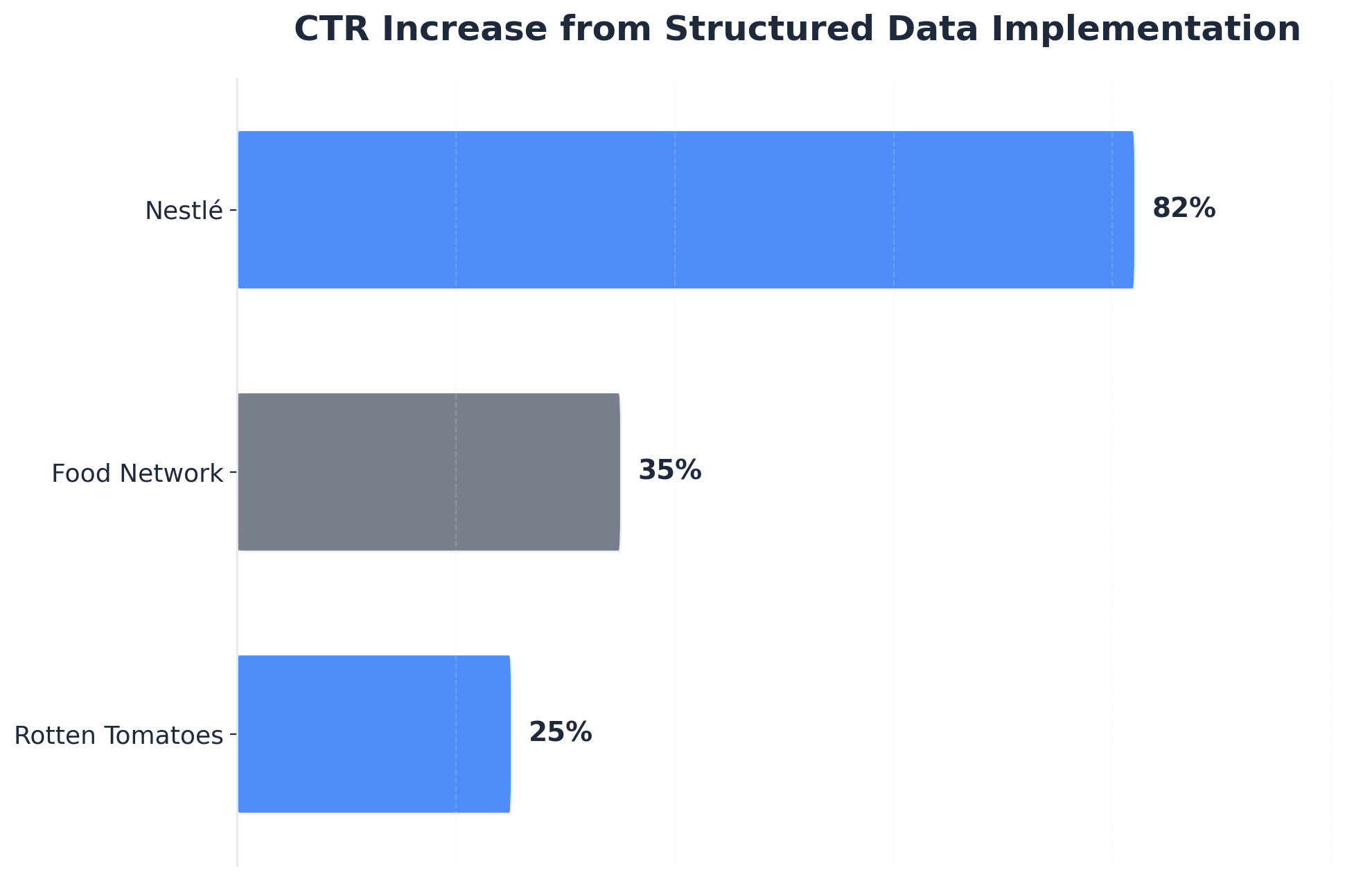
Structured data implementation typically requires developer resources that agencies bill separately, adding $500-$2,000 per project and extending timelines by weeks. Modern platforms automate this technical complexity, eliminating manual coding requirements while delivering the search visibility benefits that make structured data essential. Google reports that pages with schema implementation see 30% higher click-through rates than non-marked-up results, yet traditional agency workflows create technical bottlenecks that delay deployment and increase costs.
CTR Increase from Structured Data Implementation (Case studies from Google showing the percentage increase in click-through rate (CTR) for pages that implemented structured data, enabling rich results in search.)
Leading structured data platforms integrate directly with CMS environments to apply schema markup at scale. These tools automatically generate
Articleschema,FAQPageschema, how-to markup, and organization data based on content analysis. Schema App data demonstrates that automated implementation reduces deployment time from 2-3 hours per page to under 5 minutes, preserving 98% validation accuracy against Google's structured data testing tool. For SaaS Content Directors competing for high-value keywords where rich snippets determine click-through rates, this capability transforms structured data from a technical obstacle into a scalable competitive advantage.Sophisticated platforms now incorporate AI-driven schema recommendations that analyze content context and suggest optimal markup types. A 2023 study by Merkle found that AI-suggested schema implementations improved rich snippet appearance rates by 47% versus manual selection methods. The technology identifies opportunities for product schema, event markup, and local business data that editorial professionals might otherwise overlook.
The business impact extends beyond visibility metrics. Companies implementing automated structured data platforms report 23% improvements in organic traffic within 90 days, per BrightEdge data. More significantly, the elimination of developer dependencies allows editorial staff to maintain schema accuracy during updates and expansions without technical bottlenecks. This operational efficiency becomes critical when scaling publishing operations across multiple domains or managing high-volume schedules that traditional manual approaches cannot sustain.
Multi-CMS Publishing Automation
Agencies typically deliver content as Word documents or Google Docs, leaving implementation and multi-platform distribution to internal teams—a manual process consuming 8.4 hours per week per content manager according to MarketingProfs research. Multi-CMS publishing automation eliminates this handoff by enabling editorial staff to distribute articles across multiple platforms simultaneously without manual intervention. Data from Content Marketing Institute shows that organizations using automated publishing workflows reduce time-to-publish by 67% versus manual processes, while preserving consistent formatting and metadata across platforms.
Modern publishing automation platforms connect directly to WordPress, Webflow, HubSpot, and other CMS environments through API integrations. Automated workflows handle technical implementation details including:
- Featured image optimization and placement
- Meta tag population and validation
- Category and tag assignment
- Internal linking structure implementation
A 2023 study by Gartner found that automated publishing reduces human error rates from 23% in manual workflows to less than 3% in automated environments. The strategic advantage extends beyond speed to organizational scalability. SaaS teams operating across multiple brand properties, product lines, or regional sites can maintain publishing consistency while eliminating the repetitive tasks that consume approximately 8.4 hours per week per content manager. This automation enables content directors to scale output across dozens of properties without proportional headcount increases—a fundamental shift from the traditional agency model where each additional website or content stream requires corresponding budget expansion.
Organizations implementing automated multi-platform publishing report 41% improvement in content output volume without corresponding increases in team size, demonstrating how removing manual bottlenecks transforms content operations from a linear cost center into a scalable growth engine. Sophisticated automation solutions incorporate scheduling capabilities, allowing editorial staff to queue content across time zones and optimize publication timing based on historical engagement data. The combination of multi-platform distribution, automated technical implementation, and intelligent scheduling creates a publishing infrastructure that supports enterprise-scale content operations while maintaining the speed and flexibility agencies cannot match at comparable cost structures.
Attribution and ROI Measurement Systems
Traditional agency relationships obscure content ROI—teams pay retainers without clear attribution connecting specific assets to pipeline outcomes. Attribution and ROI measurement systems integrated into content platforms provide the visibility agencies cannot deliver, tracking content performance across the customer journey and linking individual assets to specific revenue events through multi-touch attribution modeling. These platforms integrate with CRM systems, marketing automation tools, and analytics infrastructure to measure content's contribution to lead generation, opportunity creation, and closed revenue—capabilities that remain opaque when content production sits outside the marketing technology stack.
Modern attribution systems employ first-touch, last-touch, and weighted multi-touch models to assign credit across content touchpoints. Data from Demand Gen Report shows organizations with mature attribution frameworks achieve 36% higher win rates and 28% shorter sales cycles versus organizations relying on basic analytics. Sophisticated platforms track content engagement patterns, identifying which assets move prospects between funnel stages and which formats generate the highest-value leads.
Forrester Research findings indicate companies using integrated attribution systems report 23% improvement in marketing ROI and 31% better budget allocation accuracy.
Integration capabilities determine attribution system effectiveness. Platforms must connect seamlessly with existing marketing technology stacks, pulling data from CMS platforms, email tools, social media channels, and sales applications into unified dashboards. The most sophisticated systems provide predictive analytics, forecasting which content types will generate optimal returns based on historical performance data. This integrated approach enables marketing departments to shift resources toward high-performing formats and topics based on actual pipeline contribution rather than agency recommendations disconnected from revenue data. Unlike quarterly agency reports that arrive weeks after campaigns conclude, platform-integrated attribution delivers real-time visibility into content performance, directly tying production investments to measurable business outcomes and enabling immediate strategic adjustments that agency relationships cannot support.
End-to-End AI Search Optimization Tools
End-to-end ai search optimization tools consolidate the entire content lifecycle into unified systems that manage everything from ideation through distribution. The Content Marketing Institute reports organizations leveraging integrated content platforms achieve 47% higher operational efficiency than those managing content through disconnected tools. Such platforms eliminate the workflow fragmentation that typically adds 3-5 days to production timelines.
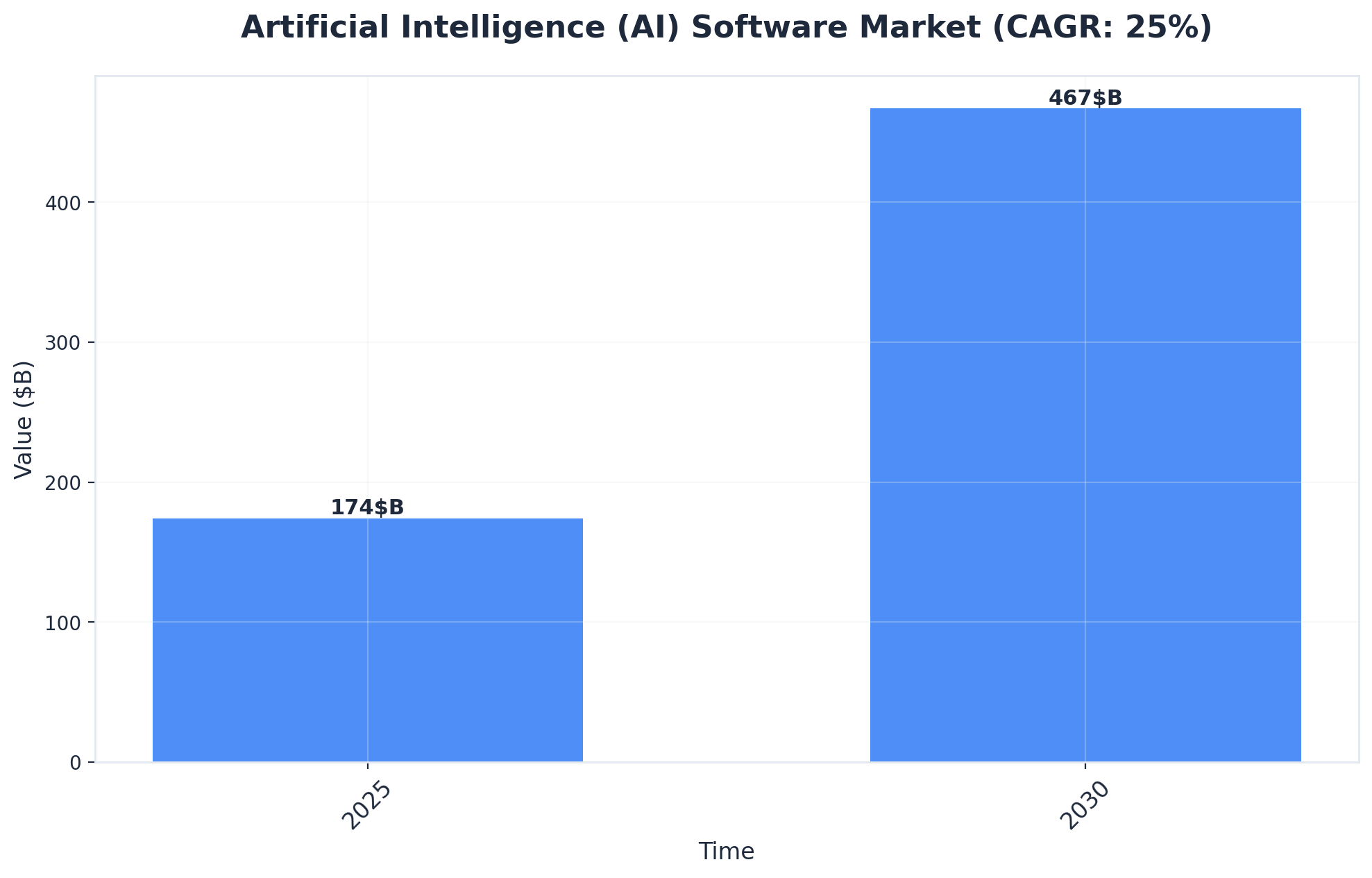
Artificial Intelligence (AI) Software Market (CAGR: 25%) (Source: Artificial Intelligence (AI) Software Market Size: 2024 to 2030)
Modern content creation platforms combine keyword analysis, content brief generation, AI-powered writing across multiple language models, automated editing workflows, SEO optimization, and multi-channel publishing capabilities. Gartner data indicates that organizations utilizing end-to-end platforms reduce content creation costs by 62% without compromising quality standards. The integration of multiple AI models—including
GPT-4,Claude, andGemini—allows organizations to select optimal engines for specific content types and brand voices.Core Capabilities of End-to-End Platforms
- Multi-Stage Quality Pipeline: Automated fact-checking, brand consistency validation, and readability optimization.
- Strategic Deliverables: Automated generation of SEO roadmaps, content calendars, and performance analytics.
- Direct Publishing: Seamless integration with WordPress, Webflow, and social channels (LinkedIn, Facebook, Twitter).
The most sophisticated platforms incorporate multi-stage quality processes that include automated fact-checking, brand consistency validation, and readability optimization. Forrester analysis shows that structured quality processes increase content publish rates to 96% without requiring manual edits. Such platforms also generate strategic deliverables such as SEO roadmaps, content calendars, and performance analytics that traditionally required separate consulting engagements.
Integration capabilities distinguish enterprise-grade platforms from basic content tools. Direct publishing to WordPress, Webflow, and other CMS solutions eliminates manual transfer steps that introduce formatting errors. Automated social media distribution across LinkedIn, Facebook, Twitter, and Instagram extends content reach without additional production effort. Organizations with fully integrated platforms report 320% increases in qualified lead generation alongside 89% reductions in agency dependencies.
End-to-end platforms directly address the three core failure modes of traditional agency relationships. Cost scalability issues resolve through fixed-price subscription models that replace linear agency pricing—organizations maintain predictable budgets regardless of volume increases. Turnaround time constraints disappear as automated workflows compress 2-3 week agency timelines into same-day production cycles. Quality consistency improves through standardized processes that eliminate the variability inherent in human-dependent workflows. Industry adoption data from Forrester indicates 68% of enterprise marketing organizations plan to transition from agency retainers to integrated content platforms within 24 months, representing a fundamental restructuring of content production economics. This shift reflects recognition that the traditional agency model cannot deliver the combination of speed, scale, and cost efficiency required in modern content operations.