
Key Takeaways
- ChatGPT works as a default drafting assistant for research, editing, and first drafts, but lacks built-in brief scoring, citation, or approval gates that scaling teams need.
- Claude excels at long-context editing and voice preservation, letting senior editors run second-pass reviews against style guides and existing content without manual consistency checks.
- Jasper treats brand voice as a persistent asset, scaffolding campaign-level output across topic clusters when consistent tone across many pieces matters more than search-intent precision.
- Surfer SEO embeds drafting inside a SERP-derived scoring model, cutting revision cycles by surfacing coverage gaps during writing rather than after editor review.
- Clearscope standardizes editor-writer handoffs through content grades and term-coverage rubrics, addressing brief-quality bottlenecks across distributed writer pools without adding a new drafting tool.
- Writer governs enterprise drafting by encoding style guides, approved claims, and compliance rules as systemic controls, suiting teams where legal or brand review gates publication.
- Vectoron coordinates specialist agents across content, SEO, PPC, social, and call intelligence through an approval-first workflow, reducing cross-channel coordination cost for teams past drafting-speed constraints.
The output-quota squeeze reshaping AI tool selection
Content marketing managers face increasing pressure to produce more content with static resources. This disparity between rising output demands and limited headcount transforms AI tool selection into a workflow optimization challenge, not just a feature comparison. Choosing the wrong tool category can accelerate drafting but fail to address the coordination and review costs that ultimately limit production.
The potential of AI in content operations is significant. McKinsey reports that organizations using generative AI in marketing production have seen two- to fivefold increases in creative productivity and 10 to 30 percent reductions in creative costs 13. These gains are realized by organizations that integrate AI into redesigned briefs, review processes, and asset reuse, rather than simply adding a chatbot to existing workflows. The difference between a 2x and 5x productivity increase often hinges on how well a tool integrates with approval and distribution processes.
The seven tools discussed below are categorized into three operational tiers, based on where they address bottlenecks in the editorial workflow.
Three tiers, not seven contenders: the architecture behind the shortlist
Ranking AI writing tools linearly implies they serve the same purpose, which is not the case. A Pew Research Center survey found that among workers using AI chatbots, 57% use them for research, 52% for editing, and 47% for drafting 1. While these tasks are interconnected in editorial work, each highlights a different aspect of tool architecture. A model proficient at drafting an 800-word article might struggle with a keyword-scored brief, and a platform excelling at brief scoring might still lack publishing integration.
Therefore, the tools are grouped into three operational tiers:
- Tier one includes general-purpose drafting assistants, which are flexible chat interfaces used for research, initial drafts, and editing.
- Tier two comprises SEO content platforms, which integrate drafting with brief scoring, keyword coverage, and editor-facing quality controls.
- Tier three features multi-agent execution systems, where drafting is one component of a governed workflow that also manages ideation, optimization, approval routing, and multi-channel publishing.
Each tier targets a distinct bottleneck: drafting assistants accelerate the initial writing phase, SEO platforms streamline the brief-to-publish cycle for search-driven content, and multi-agent systems reduce coordination costs for integrated content, SEO, social, and paid campaigns. The selection depends on which bottleneck is currently limiting output, rather than a tool's perceived sophistication.
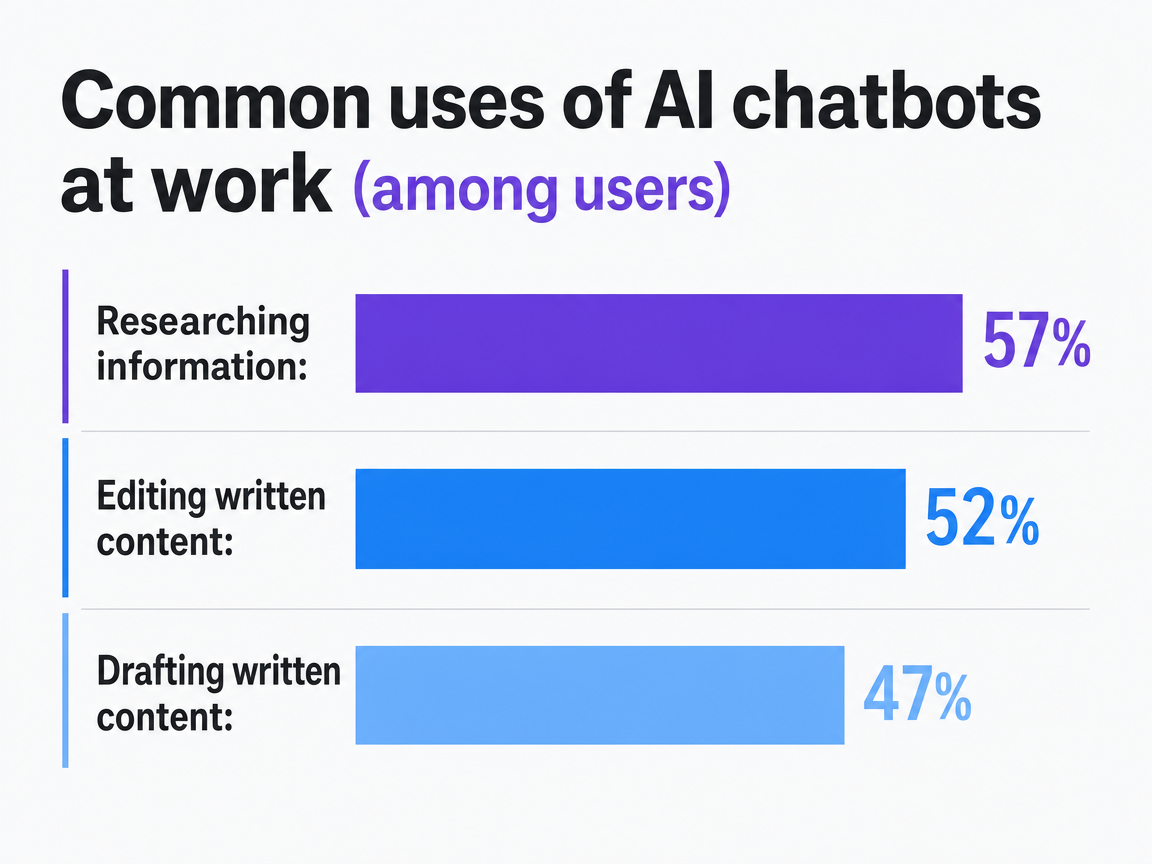 Common uses of AI chatbots at work (among users)
From Pew research, this data shows the most frequent tasks for which workers who use AI chatbots employ them, highlighting the importance of research and content creation.
Governance maturity is the filter, not feature count
The most critical factor in AI tool selection is not the underlying model but the existing review workflow. The Content Marketing Institute's 2025 B2B benchmark revealed that only 4% of B2B marketers highly trust generative AI outputs, while 67% report medium trust and 28% report low trust 2. This indicates that human review is almost universally required. Tools that scale effectively are those designed to route work through review gates by default.
This approach distinguishes a governance-mature workflow. Microsoft's Responsible AI guidance for enterprise deployments emphasizes citing sources, moderating output, tagging AI-generated media, and restricting automatic posting on sensitive channels 3, 4. NIST's Generative AI Profile recommends adversarial testing and structured human review to address limitations and nuances missed by automated systems 5. Teams with these controls can leverage drafting assistants more effectively, as the review layer compensates for model limitations. Without such controls, a powerful tool may simply generate more content requiring extensive rewrites.
Therefore, the selection criterion is not feature count or context window size, but rather which tier aligns with the current approval workflow. This involves assessing whether editors can manage draft volume from a chat interface, if an SEO platform's brief scoring reduces revision cycles, or if a multi-agent system with built-in approval routing is necessary to maintain governance as output increases. Workflow maturity, not feature lists, provides the answer.
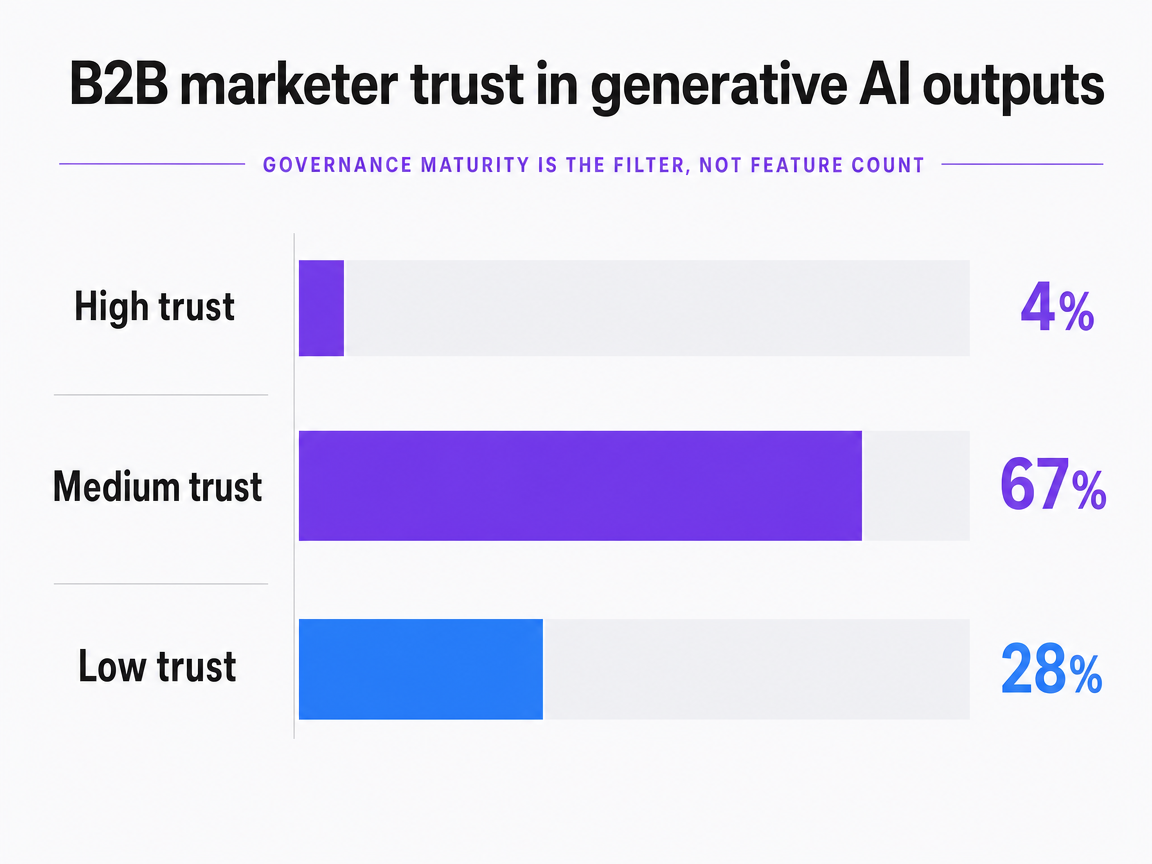 B2B marketer trust in generative AI outputs
From the CMI 2025 report, this breakdown shows that while usage is widespread, marketers still have reservations about the reliability of raw AI output, indicating a need for human oversight.
Test AI-driven content production at scale now
Experience end-to-end content creation and publish live articles during your trial—no limitations or delays.
Tier 1: General-purpose drafting assistants
ChatGPT: the default utility for research, editing, and first drafts
ChatGPT is widely used by content marketing managers for research, editing, and drafting 1. While highly versatile, this tier has limitations. A general chat interface produces competent drafts on demand, but lacks integrated governance. There are no features for brief scoring, keyword coverage checks, built-in source citation, or approval gates before publishing.
For in-house teams with strong editors and established brief templates, this can be sufficient. ChatGPT accelerates the initial drafting phase, expands outlines, and rewrites content to meet specific readability targets. Nielsen Norman Group advises constraining the model to concise, scannable output at a sixth- to eighth-grade reading level, treating its drafts as raw material 10.
However, scalability issues arise with provenance and consistency. Microsoft's Responsible AI guidance recommends citing sources and moderating output before publication 3, neither of which a chat interface enforces. Teams producing significant content volumes with ChatGPT often create manual governance layers, which can negate drafting speed gains through increased review overhead.
Claude: long-context editing and voice-preservation work
Claude specializes in long-document editing, style transfer, and maintaining voice consistency across an existing content corpus. Its extended context window allows editors to input style guides, multiple published pieces, and a rough draft into a single session, then request revisions that align with the established corpus rather than a generic tone. This differs significantly from generating copy from a short prompt and aligns with the 52% of workplace AI users who use chatbots for editing 9.
A practical application involves a senior editor using Claude for a second pass on content from freelancers or junior writers, checking for tonal inconsistencies, redundant phrasing, and off-brand language before it reaches the CMS. Nielsen Norman Group's observation that trust in AI tools stems from analytical performance rather than conversational polish 11 supports this workflow, as Claude identifies consistency errors that would otherwise require manual detection.
Like ChatGPT, Claude lacks mechanisms to track the origin of claims or provide an audit trail for edited content. For search-driven content or regulated industries, this gap often necessitates moving to SEO platforms or execution systems.
Tier 2: SEO content platforms built for topic-cluster production
Jasper: brand-voice templates with campaign scaffolding
Jasper distinguishes itself by treating brand voice as a persistent asset. Content marketing managers can define tone rules, prohibited phrases, and audience descriptions once, then apply them across campaign briefs, blog outlines, and email sequences within a topic cluster without repeated model instructions. This shifts the drafting focus from single-piece generation to campaign-level scaffolding, addressing a common strain in SEO-driven editorial calendars.
This tool is particularly effective for teams managing pillar-and-cluster programs that require consistent voice across numerous pieces targeting different search intents. Jasper's workflow assumes human editors perform the final review, aligning with the CMI finding that 78% of B2B marketers with AI guidelines specify acceptable uses in content marketing 2. Codified voice and documented usage rules make high-volume production defensible during legal or brand reviews.
However, Jasper's scalability can be limited by search-intent precision. While it generates fluent copy, the brief itself must originate elsewhere. Teams without an established keyword-coverage model may produce well-branded content that performs inconsistently in search, leading them to platforms with integrated scoring.
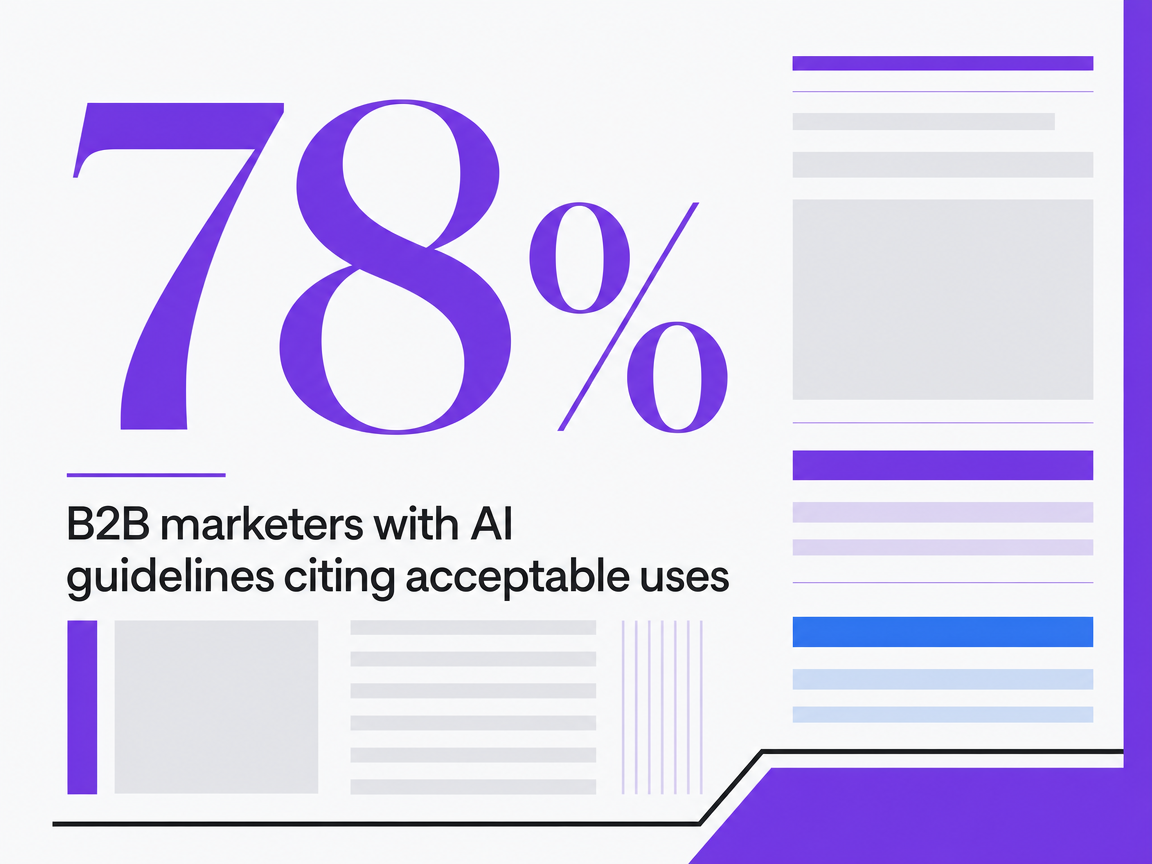 B2B marketers with AI guidelines citing acceptable uses
B2B marketers with AI guidelines citing acceptable uses
Surfer SEO: brief-to-draft optimization inside a scoring model
Surfer SEO reverses the drafting-first approach. It begins with a SERP analysis to generate a content score, target word count, heading structure, and a list of terms necessary to rank for a specific query. Drafting occurs within this scoring framework, providing real-time feedback to the writer or model on whether the content aligns with the target. For content marketing managers focused on search-driven production, this bridges the gap between brief creation and quality control left open by Tier 1 tools.
Its primary value lies in reducing revision cycles. Instead of an editor identifying missing subtopics post-draft, coverage gaps are highlighted during content creation. Nielsen Norman Group's advice on concise, scannable, inverted-pyramid web copy 10 is well-supported by Surfer's structural constraints, which enforce heading hierarchy and length discipline absent in plain chat interfaces.
A potential pitfall is over-optimization, where score-driven workflows can produce content that meets all term targets but reads like a checklist. Teams that view the Surfer score as a baseline rather than a definitive goal, and pair it with human editing to refine keyword scaffolding, achieve more sustainable rankings than those who publish solely based on the score.
Clearscope: editor-facing quality control for search-driven briefs
Clearscope operates in the same category as Surfer but targets a different user: the editor responsible for brief creation and grading. Its content grade and term-coverage reports serve as a shared rubric between in-house editors and freelance or junior writers, addressing a common source of production delays.
The workflow benefit is standardization. An editor creates a Clearscope brief, provides it to a writer using a tool like ChatGPT or Claude, and evaluates the returned draft against the same rubric. This streamlines the review process without requiring the writer to learn a new tool. This pattern aligns with the Pew finding that 52% of workplace AI users apply chatbots to editing 1, allowing editors to retain analytical tasks while drafting tools adapt to assignments.
Clearscope does not extend to publishing, approval routing, or multi-channel coordination. For teams bottlenecked by brief quality and consistency across a writer pool, this focused approach is beneficial. However, for teams facing coordination challenges across content, SEO, and social, Tier 3 solutions are more appropriate.
Tier 3: Multi-agent execution systems for coordinated production
Writer: enterprise workflows with governed brand memory
Writer extends beyond drafting into workflow management by treating brand memory, terminology, and compliance rules as governed assets across teams. Style guides, approved claims lists, and regulated language rules are embedded within the platform, enforcing compliance across all generated drafts, whether for blog posts, product descriptions, or internal assets. For content marketing managers overseeing distributed authorship across brand, product, and demand teams, this shifts governance from manual documents to a systemic control.
This tool is particularly suited for organizations where legal or brand review is a prerequisite for publication. Writer's approach aligns with Microsoft's Responsible AI recommendations for citing references, moderating output, and tagging AI-generated material with auditable metadata 4. It also supports NIST's guidance for structured human review to address limitations of automated systems 5. Teams with established guidelines—like the 78% of B2B marketers with AI guidelines 2—can encode these rules once, eliminating the need to repeatedly brief writers.
However, Writer's scope can be a limitation. It governs drafting within the marketing organization but does not coordinate across paid, social, and search channels. Teams whose bottleneck is cross-channel sequencing rather than draft governance require a broader execution layer.
Vectoron: coordinated AI marketing team for cross-channel execution
Vectoron represents a Tier 3 solution that fundamentally alters workflow structure. As an AI marketing execution platform, it coordinates specialist strategists across content, SEO, PPC, backlinks, social, and call intelligence within a unified approval workflow. Instead of merely producing drafts, Vectoron analyzes live business signals—such as qualified calls, bookings, cost per lead, and pipeline—ranks recommendations by expected impact, and routes each to a human approver before execution.
The primary operational benefit is reduced coordination cost. In-house content marketing managers typically combine drafting tools, SEO platforms, social schedulers, and project management systems, incurring significant overhead in meetings and briefs to synchronize them. Vectoron consolidates this by making the approval gate the central interface. This structure aligns with NIST's Risk Management Framework for provenance, pre-deployment review, and auditable decision-making 15, and addresses the low trust in raw generative output (only 4% of B2B marketers report high trust 2) by making approval-first automation a default.
The potential drawback is complexity mismatch. Teams producing fewer than twenty pieces per quarter or lacking cross-channel dependencies may find a multi-agent system overly complex for their needs, making Tier 2 solutions a better fit.
See How Leading Agencies Scale Content Production with AI—Without Sacrificing Oversight
Request a data-backed demo tailored for enterprise and agency teams seeking measurable improvements in content volume, quality, and workflow governance using AI-powered writing tools.
The consolidation economics: stacked point tools versus coordinated execution
Most in-house content teams utilize a stack of AI tools: a per-seat drafting subscription for editors and writers, a per-project SEO platform for brief scoring, a separate project management system, and a freelance editor retainer. Each component is individually justifiable but comes with distinct renewal dates, logins, and internal owners.
The hidden cost is coordination, not just license fees. McKinsey estimates that generative AI can increase marketing productivity by 5% to 15% of total marketing spend 14, but this assumes integrated tools. A stacked point-tool setup captures the lower end of this productivity gain, with the remainder consumed by rewriting briefs between systems, managing approvals via email, and conducting status meetings to reconcile plans with actual output. The productivity increase is real, but operational friction diminishes it.
A coordinated execution platform like Vectoron alters this dynamic by making the approval gate the primary interface. Vectoron offers a two-week trial followed by a $599 per month subscription, consolidating content, SEO, social, and cross-channel coordination into a single governed workflow. The relevant comparison for a content marketing manager is not license-to-license, but total coordinated spend—including freelance review hours and internal meeting time—against a single platform that routes all recommendations through human approval before execution. Teams primarily concerned with drafting speed may not see the immediate benefit, but those struggling with synchronizing content, SEO, and social efforts often find significant value.
GEO readiness: producing content for AI search surfaces
Content published today is increasingly processed by AI models before reaching human readers. McKinsey reports that 44% of AI-powered search users now prefer it as their primary source of insight, yet only 16% of brands systematically track AI search performance 16. This gap highlights the challenge of Generative Engine Optimization (GEO): content optimized for traditional SERPs does not automatically surface in generative answers, and few teams have the tools to monitor this.
The chosen AI tool tier influences content's visibility in AI answers. Drafting assistants produce fluent prose but often lack the structural cues—clear headings, definitional first sentences, cited claims—that generative engines rely on for extraction. SEO content platforms improve heading hierarchy and term coverage, but they optimize for SERP models, not answer models. Multi-agent execution systems have the broadest impact on GEO because they can enforce citation, provenance tagging, and structured metadata across all content, aligning with Microsoft's Responsible AI guidance for auditable decision-making in AI-generated media 4.
For the immediate future, instrumentation is more critical than optimization. Teams unable to track which content is cited in AI answers are making educated guesses about GEO fit, regardless of the drafting tool used.
Matching the shortlist to the next editorial quarter
The key decision for a content marketing manager is not which of the seven tools is universally "best," but which bottleneck to address first. Teams spending significant editor hours on initial drafts and voice consistency should begin with Tier 1 tools like ChatGPT for research and first drafts, and Claude for long-context editing. This involves a small investment, maintains existing review workflows, and yields productivity gains by freeing up editor time rather than increasing output volume.
Teams struggling with search performance across topic clusters should consider Tier 2. Jasper is suitable when brand voice consistency across many pieces is paramount. Surfer provides writers with real-time coverage feedback during drafting. Clearscope is ideal when a single editor manages a distributed writer pool against a shared rubric. Tier 3 becomes the appropriate choice when coordination across content, SEO, social, and paid channels is the primary constraint, rather than just drafting speed. Writer governs enterprise drafting at scale, while Vectoron consolidates the cross-channel approval loop, addressing the overhead caused by meetings and handoffs between disparate tools.
Frequently Asked Questions
References
- 1.Workers' experience with AI chatbots in their jobs.
- 2.B2B Content Marketing: 2025 Benchmarks & Trends.
- 3.Overview of Responsible AI practices for Azure OpenAI in Foundry.
- 4.Responsible AI in Azure Workloads.
- 5.NIST.AI.600-1.GenAI-Profile.ipd.pdf.
- 6.NIST AI 600-1: AI RMF Generative AI Profile.
- 7.Tech Content Marketing Benchmarks, Budgets, and Trends.
- 8.B2B Content Marketing Benchmarks, Budgets, and Trends: Outlook for 2024.
- 9.BY Luona Lin and Kim Parker.
- 10.Product-Specific GenAI Needs to Write for the Web.
- 11.Prioritize Smarts over Sentience to Increase Trust with AI.
- 12.The State of AI: Global Survey 2025.
- 13.The future of marketing in the age of AI.
- 14.How generative AI can boost consumer marketing.
- 15.Artificial Intelligence Risk Management Framework.
- 16.New front door to the internet: Winning in the age of AI search.