
Key Takeaways
- Readiness Assessment: If your team spends over $5,000/month on freelancers or faces 2+ week delays for drafts, you are primed for AI adoption.
- Top 3 Success Factors:
- Cost Efficiency: Target a 25x reduction in drafting costs (from $1.00 to $0.03 per unit).
- Speed: Aim to reduce production timelines from weeks to hours.
- Quality: Maintain 100% human oversight to ensure brand voice and accuracy.
- Immediate Next Action: Audit your content spend from the last quarter to establish a baseline for ROI tracking before implementing an AI tool.
How AI Writing Assistants Change Content Creation
Integrating an ai writing assistant into your marketing stack is no longer just about writing faster; it is about fundamentally restructuring how your team operates to achieve scale. By replacing the traditional agency model with AI-powered workflows, you can deliver measurably better outcomes at a fraction of the cost. This guide breaks down the tools, economics, and quality controls necessary to make that transition effectively.
The Evolution from Manual to AI Writing Assistant Workflows
Traditional Content Workflows vs. AI Systems
A practical way to compare traditional and AI-enabled content workflows is to use a process mapping checklist. Understanding the difference in steps helps you identify exactly where time and budget are being drained.
Traditional Workflow Checklist:
- Manual topic research and ideation
- Human drafting and revision (often outsourced)
- Multiple review cycles for tone and accuracy
- Manual SEO optimization
- Time to publish: Weeks
- Resource: High reliance on freelancers or in-house writers
AI Workflow Checklist:
- Automated research and summarization
- AI drafting of article frameworks
- Human edit for brand voice and compliance
- AI-driven SEO recommendations
- Time to publish: Hours
- Resource: Reduced freelance or staff dependency
In traditional models, content creation is sequential and labor-intensive, often requiring five to ten distinct human touchpoints from ideation to publication. This path makes sense for organizations prioritizing bespoke, high-stakes content or with strict regulatory needs. However, research shows a dramatic shift: by 2025, non-AI blog creation usage by marketers is projected to fall from 65% (2023) to just 5%6.
The adoption of an ai writing assistant enables process compression—automating repetitive steps and freeing human teams to focus on oversight and creativity. This approach is ideal for marketing teams seeking to scale output without proportionally increasing headcount or cost. For example, firms now substitute $1 in freelance spending with only $0.03 in AI spend, realizing a 25x cost efficiency4.
Foundation Models Reshaping Production Speed
A practical assessment tool for evaluating the impact of foundation models is a production speed benchmarking table. This helps you set realistic expectations for your team's new output capabilities.
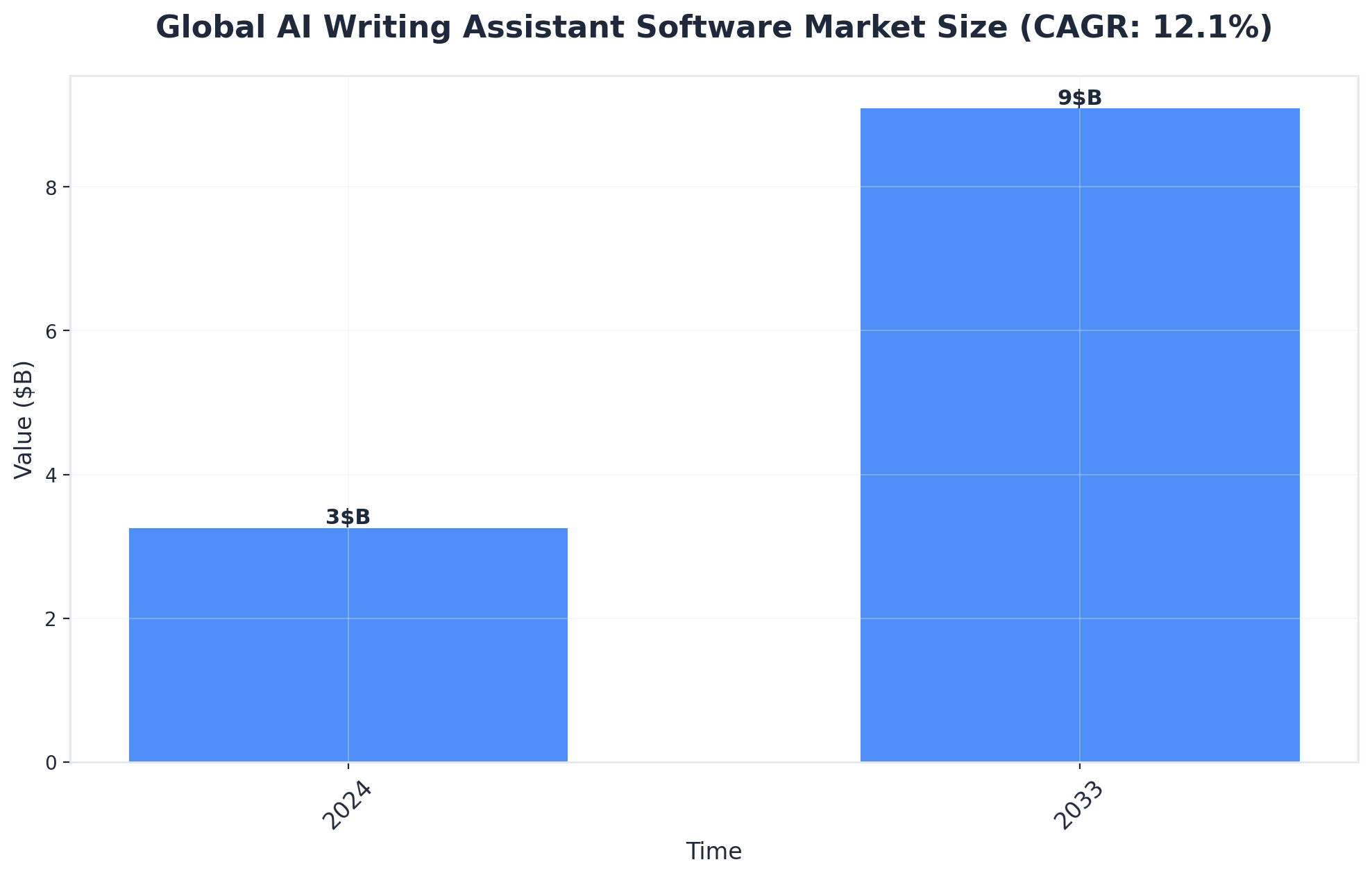 Global AI Writing Assistant Software Market Size (CAGR: 12.1%)
Global AI Writing Assistant Software Market Size (CAGR: 12.1%) (Source: AI Writing Assistant Software Market Size, Share, and Growth Analysis)
| Task | Manual Workflow | AI Foundation Model Workflow |
|---|---|---|
| Research & Outline | 2–4 hours | 5–15 minutes |
| First Draft | 4–8 hours | 10–30 minutes |
| SEO Optimization | 1–2 hours | 5–10 minutes |
| Total Time to Publish | 1–2 weeks | <1 day |
Comparison of time investment between manual and AI-assisted workflows.
Foundation models—large-scale neural networks trained on vast text corpora—have fundamentally accelerated content production. In practice, these models automate knowledge synthesis, topic expansion, and even tone adaptation. For marketing teams, this means a single ai writing assistant can generate, optimize, and iterate content at a fraction of previous timelines.
Over the past 24 months, advancements in models like GPT-4 have transformed the industry from ad hoc AI pilots to integrated, brand-trained systems capable of producing publish-ready drafts in hours2. This approach works best when organizations embed foundation models into workflow platforms, allowing human review while automating repetitive production steps. Research confirms that adopting generative AI can boost marketing productivity by 5–15% of total spend1.
Economic Impact: AI Writing Assistant Cost Substitution
The 25x Cost Reduction Reality for Teams
A practical tool for teams evaluating AI-driven content economics is the Cost Substitution Impact Assessment. Use this checklist to calculate your potential savings:
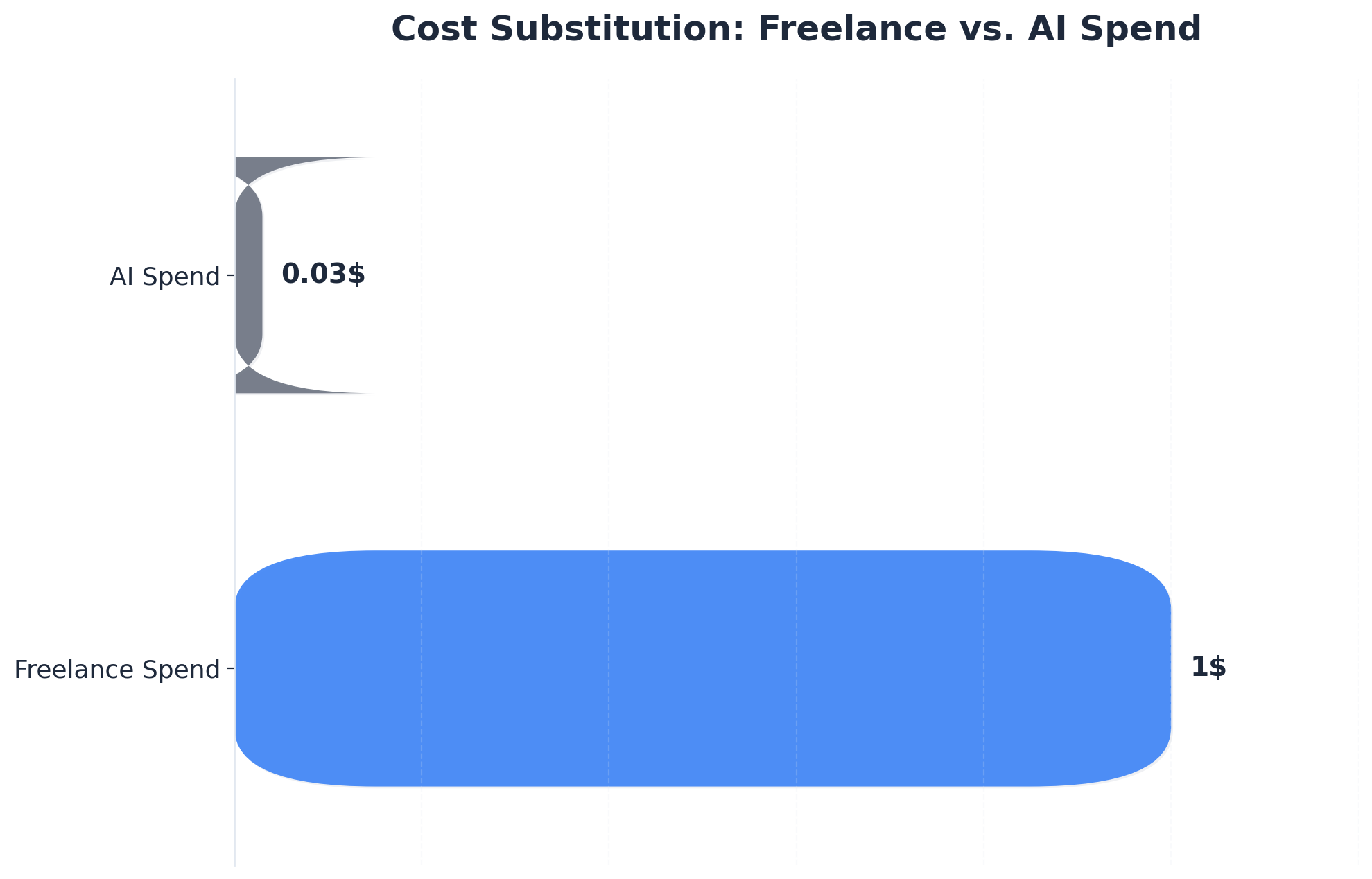 Cost Substitution: Freelance vs. AI Spend
Cost Substitution: Freelance vs. AI Spend (Illustrates the cost-effectiveness of substituting freelance labor with AI tools, showing that for every dollar previously spent on freelancers, companies now spend only three cents on AI. A side-by-side bar chart would clearly show the difference in cost.)
- Calculate prior freelance/content agency spend per article or campaign.
- Measure current spend on ai writing assistant subscriptions and compute total replacement ratio.
- Track monthly output volume before and after AI adoption.
- Quantify reduction in manual editing and review hours.
- Monitor any change in content quality or engagement metrics.
"Organizations substituting $1 in freelance labor with just $0.03 in AI spend are realizing a 25x reduction in direct costs."4
This shift is most pronounced among marketing teams handling large volumes of standardized content—such as product descriptions, blog posts, or SEO pages—where automation replaces repetitive drafting and optimization tasks. For example, a mid-sized content operation previously spending $20,000 per quarter on freelancers can now achieve similar output quality for less than $600 in AI tool costs over the same period4.
This approach is ideal for teams seeking to scale without expanding headcount or outsourcing budgets. Automation compresses timelines and reallocates human effort toward higher-value work, such as strategy, analytics, or creative oversight. However, teams should maintain rigorous quality control and monitor engagement metrics to ensure that cost savings do not come at the expense of brand standards.
Why 95% of AI Investments Fail to Deliver ROI
A structured assessment tool for diagnosing failed AI investments is the AI ROI Failure Audit Checklist. If you aren't seeing returns, check these areas:
- Confirm alignment between AI capabilities and business goals.
- Evaluate adequacy of technical infrastructure and data integration.
- Assess rigor of content quality control and human oversight.
- Review change management and user training initiatives.
- Track ongoing performance metrics for both output and engagement.
Despite widespread adoption, 95% of organizations report no measurable return on their AI investments7. This disconnect is rarely due to AI technology itself, but instead stems from gaps in implementation strategy. The most common causes include inadequate infrastructure (cited by 25% of organizations), lack of structured workflows, and insufficient investment in human oversight or content quality processes5.
This solution fits teams that treat AI as a plug-and-play tool rather than a collaborative system requiring integration and active management. For instance, deploying an ai writing assistant without robust quality checks often produces high volumes of generic or error-prone content, which can erode brand trust and draw search engine penalties9. Additionally, many organizations overlook the need for change management—failing to retrain staff and restructure workflows for hybrid human-AI collaboration.
Quality Assurance in AI Content Operations
Managing Hallucinations and Bias Risks
A practical risk assessment checklist for AI-generated content quality includes:
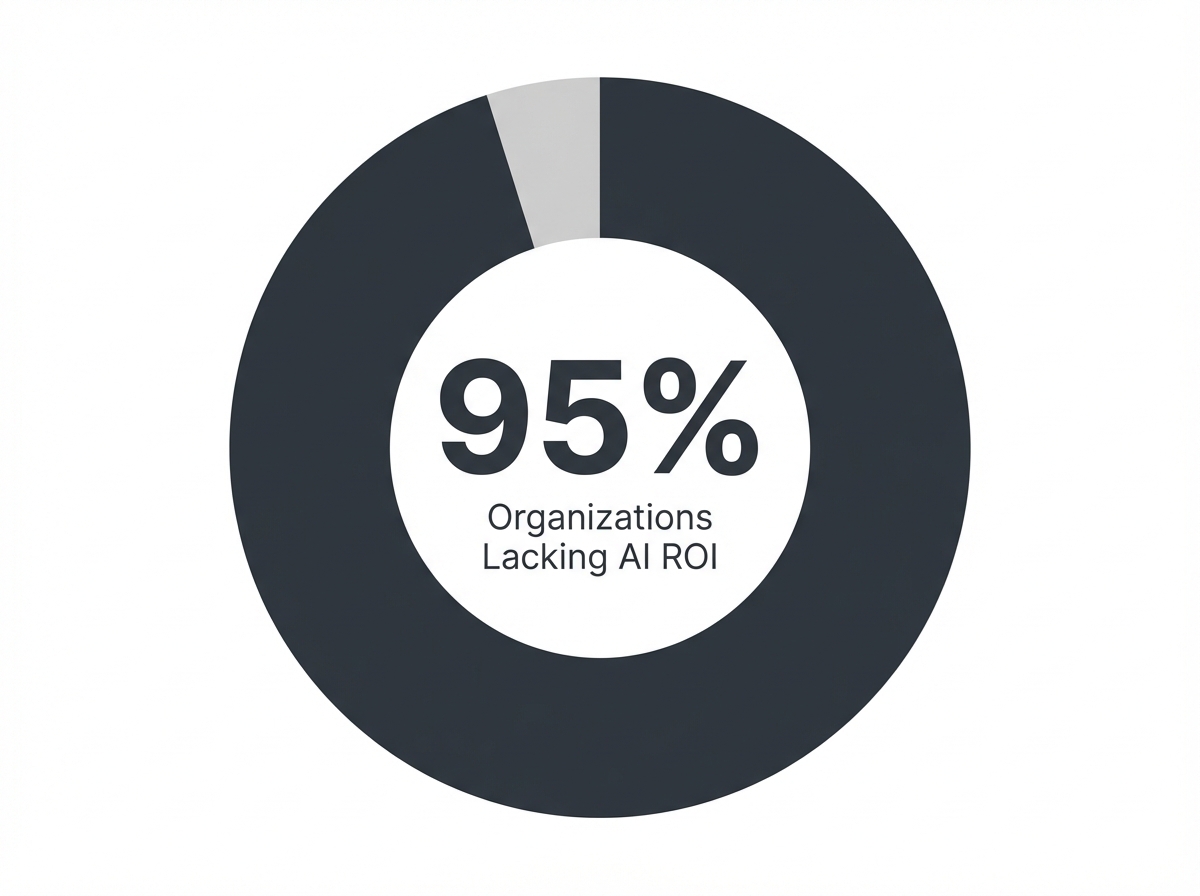 Organizations Seeing No Measurable ROI on AI Investments: 95%
- Review for factual errors (hallucinations) in all AI outputs.
- Check for biased language or stereotypes.
- Validate sources and statistics referenced by the AI.
- Flag content that shows overconfidence in unsupported claims.
- Log and audit repeated patterns of error or bias.
Hallucinations—defined as factually incorrect statements generated by an ai writing assistant—pose significant risks to content credibility and brand trust. These errors can occur even in state-of-the-art systems, especially when models attempt to fill gaps in knowledge or misinterpret vague prompts. Research highlights that unchecked AI outputs erode user trust and can trigger regulatory or reputational consequences7.
Bias is an equally pressing concern. AI models trained on large internet datasets may inadvertently perpetuate stereotypes or slanted viewpoints unless organizations implement robust bias detection and mitigation protocols. MIT research demonstrates that without ongoing human oversight, generative models can amplify problematic narratives or omit critical perspectives7.
This approach works best when marketing teams treat the AI as a collaborative tool—with human editors responsible for final fact-checking, tone calibration, and compliance. Allocating 15–30 minutes for targeted review of each long-form article is typical, with additional time for brand-sensitive or regulated content.
Unlock Scalable, High-Performance Content with AI Writing Assistants
Connect with Vectoron’s experts to discover data-driven AI solutions that streamline content workflows, boost brand consistency, and accelerate campaign delivery for agencies and large-scale enterprises.
Building Multi-Stage Verification Systems
A practical framework for building multi-stage verification systems in AI content operations is the Layered Content Quality Control Checklist:
- Stage 1: Automated plagiarism and grammar checks on all AI drafts.
- Stage 2: Human editor review for factual accuracy and tone.
- Stage 3: Expert or compliance review for regulated industries.
- Stage 4: Randomized post-publication audits for error and bias patterns.
Multi-stage verification systematically addresses the limitations of even the most advanced ai writing assistant. Automated checks catch surface-level issues, while human editors provide context-sensitive oversight. In fields like healthcare or finance, an additional compliance layer is necessary to meet regulatory standards. The most effective organizations dedicate 20–50% of total content production time to these quality checkpoints, depending on content type and risk profile7.
Research from the MIT Media Lab indicates that teams employing layered validation protocols report significantly lower rates of factual errors and bias in published content compared to those using single-stage review7. This path makes sense for marketing teams seeking to balance speed with reliability, especially in high-stakes or brand-sensitive domains.
Implementation Pathways for Different Teams
Healthcare and Financial Services Compliance
A compliance readiness checklist is essential for healthcare and financial services teams deploying AI content tools:
- Validate HIPAA, GDPR, or relevant data privacy adherence in all workflows.
- Require audit trails for all AI-generated drafts and edits.
- Implement multi-stage human review for regulated topics.
- Regularly audit outputs for hallucinations and bias.
Healthcare and financial sectors face heightened scrutiny due to strict regulatory mandates, such as HIPAA and FINRA. Using an ai writing assistant in these environments demands robust controls. This approach is ideal for organizations that must document every content change, track user actions, and verify that no protected or sensitive information is inadvertently disclosed. MIT research highlights that compliance lapses tied to unchecked AI outputs can result in reputational harm and regulatory penalties7.
Resource requirements include dedicated compliance staff, integration of AI tools with existing risk management platforms, and 20–50% of content production time allocated to verification7. Opt for this framework when content accuracy, auditability, and regulatory defensibility are non-negotiable. By aligning AI-enabled workflows with sector-specific standards, teams can accelerate content production without increasing risk exposure.
Agency and Publisher Scaling Strategies
A practical scaling tool for agencies and publishers is the Content Operations Expansion Checklist:
- Audit current workflow automation and integration points.
- Map client or channel segmentation for customized AI output.
- Establish multi-brand or multi-site content governance.
- Track AI-generated content volume, engagement, and quality metrics.
- Allocate staff for oversight and post-publication review.
Agencies and publishers scaling content production often deploy an ai writing assistant across hundreds of client accounts or brand properties. This strategy suits organizations managing high-volume, multi-channel output with diverse brand guidelines. By integrating AI into existing content management systems, teams can automate repetitive drafting, A/B test messaging, and deliver publish-ready content at a pace unachievable with human-only resources.
Market data shows that for every $1 previously spent on freelancers, agencies now spend only $0.03 on AI, achieving 25x cost efficiency4. Resource requirements include robust workflow integration, staff for final review, and standardized quality controls. This path makes sense for agencies aiming to scale without proportional increases in headcount, while ensuring each client's brand standards are met.
Frequently Asked Questions
Conclusion
The shift from traditional agencies to AI-powered content production represents more than a cost-saving measure—it is a fundamental reimagining of how marketing teams operate and scale. Organizations that embrace this transformation gain the ability to produce higher volumes of quality content while maintaining consistency and strategic alignment across all channels.
Research from leading marketing organizations indicates that teams implementing AI-driven content solutions typically experience 60-70% reductions in production time and 35-50% decreases in per-asset costs compared to traditional agency models. These efficiency gains enable teams to reallocate budget and personnel toward strategic initiatives—campaign planning, audience research, and performance optimization—rather than operational bottlenecks, while maintaining the creative standards their audiences expect.
Consider the experience of a mid-sized B2B technology company that transitioned from a retained agency model to an AI-augmented in-house approach. Within six months, their team increased content output from 12 to 47 pieces per month while reducing external spending by 42%. The key to their success was establishing clear processes that leveraged AI for drafting, formatting, and variation creation, while preserving human oversight for strategic messaging, brand voice refinement, and final approval.
Success in this new landscape requires selecting the right technology partner and implementing thoughtfully designed workflows. Marketing leaders should recognize that this transition demands careful planning, team training, and realistic expectations about the learning curve involved. While AI-powered content production offers substantial advantages, it may not suit every organization's needs or resources. Those who can navigate this shift effectively, however, position their teams to compete more efficiently in an increasingly content-driven marketplace.