
Key Takeaways
- Define Requirements: Map volume, velocity, and industry-specific compliance needs to ensure the platform scales with your growth.
- Evaluate QA: Prioritize multi-stage review systems and brand voice controls to maintain high standards without manual bottlenecks.
- Assess Integration: Look for native CMS connections and workflow automation to streamline operations and reduce headcount dependency.
- Calculate TCO: Compare pricing models against ROI and hidden implementation costs to ensure long-term value.
- Final Outcome: A fully integrated ai writing service replaces the traditional agency model, delivering faster, cheaper, and better content outcomes.
How to Choose the Right AI Writing Service
Selecting the right ai writing service is the critical first step for marketing teams aiming to replace the traditional agency model with a scalable, cost-effective content engine. By leveraging AI-powered production, organizations can deliver measurably better outcomes at a fraction of the cost, enabling them to scale operations without adding headcount.
Step 1: Define Requirements for an AI Writing Service
Assess Volume and Velocity Needs
Determining the appropriate volume and velocity for content production is essential when evaluating platforms. Organizations should begin by mapping out both their current monthly content output and forecasted needs. This includes blog articles, landing pages, product descriptions, and any other formats required to support marketing or operational objectives.
For many enterprises, content velocity—defined as the speed at which new assets can be produced and published—directly impacts campaign effectiveness and SEO performance. A data-driven approach reveals that B2B SaaS companies experience 30–50% improvements in content velocity after transitioning from agency-driven workflows to integrated AI writing platforms with robust quality assurance systems8.
This acceleration enables marketing teams to address more topics, respond faster to trends, and scale campaigns without expanding headcount. To objectively compare solutions, teams should create a requirements table listing projected content types, monthly volume targets, and required turnaround times:
| Content Type | Target Volume (Monthly) | Required Turnaround |
|---|---|---|
| Blog Articles | 20 | 48 hours |
| Product Descriptions | 50 | 24 hours |
| Case Studies | 4 | 1 week |
By quantifying these needs, organizations can set benchmarks to evaluate whether a given service can reliably meet both scale and speed expectations. This clarity streamlines vendor selection and ensures alignment with business growth goals.
Identify Industry-Specific Requirements
When evaluating an ai writing service, industry-specific requirements can be just as critical as volume or speed targets. Each sector presents unique content mandates, compliance regulations, and editorial standards. For example, healthcare and financial services organizations must prioritize platforms that provide compliance-ready audit trails, medical or legal accuracy validation, and support for regulatory frameworks such as HIPAA or FINRA4, 10.
A structured approach involves mapping key industry requirements to platform capabilities. The following table illustrates typical needs across sectors:
| Industry | Compliance Needs | Specialized Features |
|---|---|---|
| Healthcare | HIPAA, audit trails | Medical fact-checking, terminology |
| Financial Services | FINRA, data residency | Disclosure automation, risk scoring |
| B2B SaaS | GDPR, SOC 2 | Technical glossary, integration APIs |
| Publishing | Editorial workflow control | Multilingual, version tracking |
Selecting a service that aligns with these requirements reduces risk and unlocks measurable benefits, such as up to 70% reduction in compliance review cycles for healthcare organizations when configured properly7. Industry alignment is a prerequisite for sustainable content operations at scale.
Step 2: Evaluate Quality Assurance Systems
Examine Multi-Stage Review Processes
A robust multi-stage review process is essential for any organization that relies on AI to produce high-quality, accurate content at scale. Industry research identifies quality assurance as the primary differentiator between platforms that create operational value and those that introduce risk or inefficiency8.
 Examine Multi-Stage Review Processes
Multi-stage review systems typically combine automated checks—such as plagiarism detection, grammar validation, and fact-checking algorithms—with structured human oversight. This layered approach addresses the central challenge of AI-generated content: even advanced models may hallucinate facts or misinterpret brand guidelines, making exclusive reliance on automation insufficient for most regulated or high-stakes industries.
| Stage | Description |
|---|---|
| Automated Checks | AI-driven grammar, style, and plagiarism scans |
| SME Review | Subject matter expert validation of facts |
| Editorial Oversight | Human review for tone and compliance |
| Final Approval | Brand, legal, or compliance sign-off |
B2B SaaS companies and healthcare organizations that implement formal, multi-stage review pipelines achieve up to 50% faster review cycles while maintaining or improving compliance and accuracy compared to traditional agency models7, 8. This efficiency enables marketing teams to scale output without compromising quality or introducing regulatory risk.
Test Brand Voice Consistency Controls
Maintaining a consistent brand voice is a measurable challenge for organizations scaling content production. Research indicates that uniformity in tone, terminology, and messaging across channels can improve engagement rates by up to 10% when AI outputs are combined with human review and structured brand guidelines6.
To objectively evaluate brand voice controls, marketing teams should run structured tests using diverse content prompts. This involves creating a set of sample briefs—such as a product description, a blog post, and a press release—and submitting them to the platform for generation. Key elements to assess include the platform’s ability to enforce custom style guides, terminology lists, and tone-of-voice presets.
| Evaluation Criteria | Example Platform Features |
|---|---|
| Style Guide Enforcement | Automated tone and terminology checks |
| Terminology Management | Custom glossary integration |
| Audit Logging | Change tracking for tone and edits |
| Feedback Loops | Human review and model retraining |
Documenting the results for each prompt enables objective scoring and comparison. This process ensures that the selected service can scale content creation while safeguarding brand identity and reducing manual oversight.
Step 3: Assess Integration and Workflow Automation
Verify CMS and Publishing Capabilities
When selecting an ai writing service, verifying its integration with content management systems (CMS) and publishing workflows is critical for operational efficiency. Research shows that 40% more enterprises now prioritize workflow automation and seamless integration capabilities over the flexibility to switch AI models1.
Direct integration with leading CMS platforms like WordPress, Drupal, or custom enterprise systems reduces manual effort, shortens publishing cycles, and minimizes error rates. Key CMS and publishing capabilities to evaluate include:
| Capability | Description |
|---|---|
| Native CMS Integration | Direct connections to platforms (e.g., WordPress APIs) |
| Scheduled Publishing | Automated content scheduling and release |
| Version Control | Track and revert content changes |
| User Permissions | Role-based access and editorial approval paths |
| Multi-Channel Distribution | Push content to web, email, and social simultaneously |
Platforms lacking these capabilities often create bottlenecks, resulting in up to 30% longer time-to-publish compared to integrated solutions1. Ensuring robust support for these features helps marketing teams scale production without adding headcount.
Unlock Superior Content Results with Vectoron’s AI Writing Platform
Connect with our experts to discover tailored AI writing solutions proven to boost content quality, accelerate workflows, and scale results for agencies and enterprise teams.
Review Workflow Automation Features
Evaluating workflow automation features is central to maximizing efficiency. Platforms with advanced automation can reduce repetitive manual steps, freeing marketing teams to focus on strategy and high-impact tasks. According to recent research, 40% more enterprises are prioritizing workflow automation when selecting content platforms, highlighting its growing importance in operational decision-making1.
Key automation features to review include task assignment, automated notifications, approval routing, and integration with project management tools. These capabilities ensure that content moves efficiently from draft to publication without bottlenecks or missed deadlines.
| Feature | Description |
|---|---|
| Task Assignment | Auto-assigns content to writers/editors based on rules |
| Automated Approvals | Routes drafts for review and sign-off |
| Notifications | Alerts stakeholders of status changes |
| Integration | Syncs with tools such as Slack, Asana, or Jira |
Leading solutions can accelerate time-to-publish by up to 30% compared to manual workflows, resulting in measurable improvements in both productivity and content output1.
Step 4: Calculate Total Cost of Ownership for an AI Writing Service
Compare Pricing Models Against ROI
Comparing pricing models against return on investment (ROI) is a critical step in selection. Organizations should start by mapping each platform’s pricing structure—such as subscription, pay-as-you-go, or usage-based—against their forecasted content volume and workflow needs. According to McKinsey’s recent analysis, some enterprises have achieved at least 60% cost reduction versus traditional agencies when fully utilizing AI-enabled platforms3.
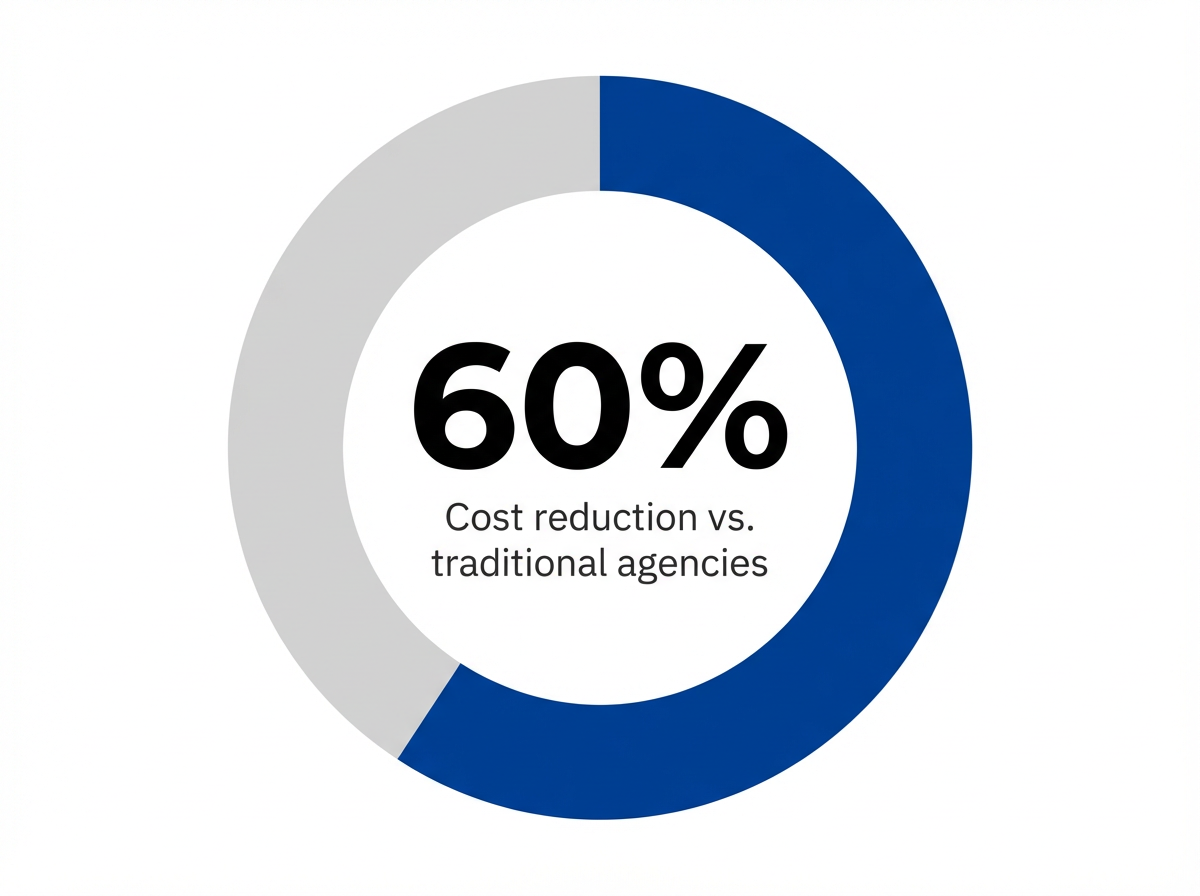 Cost reduction vs. traditional agencies: 60%
However, the degree of savings depends on the alignment between a platform’s cost model and an organization’s operational cadence. The following table presents a side-by-side comparison of typical pricing models and their primary advantages:
| Pricing Model | Common Structure | Key Benefits |
|---|---|---|
| Subscription | Fixed monthly/annual fee | Predictable budgeting, bulk content |
| Usage-Based | Pay per word or article | Flexibility, scales with demand |
| Tiered | Volume-based pricing tiers | Discounted rates at higher usage |
Evaluating total cost should also account for expected ROI, which may include faster time-to-publish, improved content velocity, and reduction in manual review costs. Bain’s ROI benchmarks indicate that B2B SaaS teams can see 3–4x faster content production timelines with maintained quality when switching to leading platforms6.
Account for Hidden Implementation Costs
Beyond subscription fees or per-word charges, hidden implementation costs can significantly affect the total cost of ownership. McKinsey research finds that organizations frequently underestimate these costs by two to three times, particularly when factoring in integration with existing systems, process redesign, and team training3.
Initial onboarding may require custom setup, API configuration, or workflow automation, each potentially involving additional vendor fees or internal IT resources. Change management and employee enablement represent further cost drivers. Effective deployment often demands dedicated training sessions, the creation of new editorial guidelines, and, in regulated sectors, the establishment of compliance-ready audit trails4.
| Cost Category | Typical Examples |
|---|---|
| Integration | API setup, CMS connection, data migration |
| Training & Enablement | Staff workshops, documentation, onboarding |
| Workflow Redesign | Process mapping, automation scripting |
| Compliance & Security | Audit trail setup, policy updates, validation |
A thorough due diligence process should include a full audit of these cost drivers before committing to a long-term contract. This approach ensures that the selected service delivers measurable value while minimizing the risk of budget overruns.
Frequently Asked Questions
Transform Content Operations with AI
Modern marketing teams face mounting pressure to produce more content while managing tighter budgets and smaller teams. Traditional content operations require extensive coordination between writers, editors, designers, and project managers—a workflow that's both time-intensive and expensive. AI-powered content production fundamentally changes this equation by automating repetitive tasks and streamlining workflows that previously demanded significant human resources.
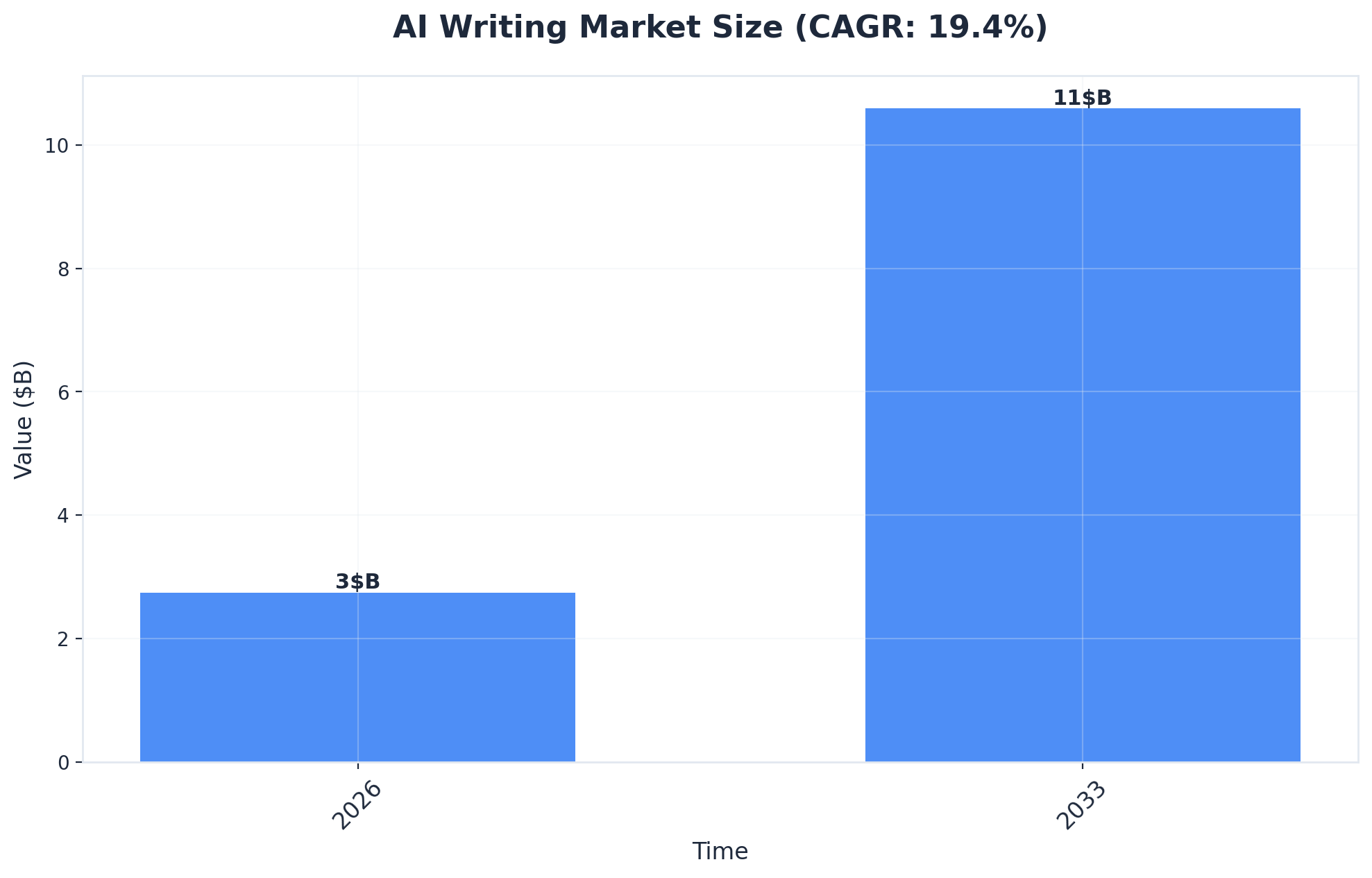 AI Writing Market Size (CAGR: 19.4%)
AI Writing Market Size (CAGR: 19.4%) (Source: 50 AI Writing Statistics To Know in 2026 | CleverType)
The shift from manual to AI-assisted operations enables teams to redirect their focus from production logistics to strategic initiatives. Instead of spending hours briefing freelancers, reviewing multiple drafts, and managing revision cycles, marketing leaders can leverage AI systems that generate content aligned to brand guidelines and SEO requirements.
For example, content marketing platform Jasper documented how their enterprise client, a B2B software company, reduced their blog production timeline from 14 days to 3 days per article while maintaining editorial standards. This operational transformation allows teams to reallocate 40-60% of their content budget from production costs to distribution and promotion.
Organizations implementing AI content systems unlock strategic advantages that extend beyond efficiency gains. Marketing automation company HubSpot reported that AI-assisted teams increased their content output from 12 to 52 articles monthly without adding headcount, enabling them to target previously underserved market segments and launch content in three additional languages.
The technology handles research, initial drafting, optimization, and formatting—freeing human team members to develop comprehensive content strategies, explore new distribution channels, and conduct sophisticated performance analysis that drives measurable business outcomes. One enterprise retailer documented 34% cost savings per content piece while simultaneously improving their organic search traffic by 127% over six months.
References
- 1.The State of Enterprise Content Platforms 2026.
- 2.Magic Quadrant for Content Marketing Platforms.
- 3.Generative AI in Content Creation: Total Cost of Ownership Assessment.
- 4.Implementing Generative AI in Regulated Industries: Compliance and Governance Frameworks.
- 5.Content Operations Transformation Through AI: Selection and Implementation Guide.
- 6.AI Content Investment Guide: ROI Benchmarks and Selection Criteria.
- 7.Selecting Content AI: A Decision Framework for Marketing Leaders.
- 8.Evaluating AI Writing Services: Quality, Compliance, and Cost Analysis.
- 9.Generative AI Content Platforms: Selection Criteria for Enterprise Implementation.
- 10.AI Writing Services in Healthcare: Selection Criteria and Compliance Requirements.