
Key Takeaways
- Profound delivers deep citation-share tracking across major answer engines but leaves brand impact reconstruction manual and offers no revenue attribution or schema monitoring for client sites.
- Ahrefs Brand Radar consolidates AI mentions with existing rank and backlink data, useful for Ahrefs-standardized agencies but weaker on non-Google surfaces and multi-turn conversation analysis 7.
- Semrush AI Toolkit gives portfolio-scale breadth across engines and reporting templates, though citation persistence, sentiment depth, and voice-query handling remain shallow compared with purpose-built trackers 10.
- Otterly.AI and Peec AI provide clean prompt-library management and sentiment scoring for citations, but neither audits schema, ingests CRM data, or correlates citations with branded search lift.
- Schema App and Schema.dev supply the structured data layer that makes citation eligibility possible, since incorrect schema silently disqualifies pages from rich results without any ranking penalty 8, 9.
- Vectoron acts as the execution and approval layer above citation trackers and schema tools, closing the loop from AEO signal to approved content, technical, and paid work across visibility, brand, and revenue 3.
Why Rankings Reports Stopped Defending Agency Retainers
The quarterly business review deck has a credibility problem. Position tracking, keyword movement, and session graphs still fill agency reports, but the numbers no longer describe what clients actually experience in search. Ahrefs measured the collapse across 2025: click-through rate for the position-one organic result on queries with AI Overviews fell 34.5% in April 2025 and reached a 58% decline by December 2025 5. This indicates a significant shift in user behavior, repricing the top of the funnel within a single calendar year.
Answer engine optimization (AEO) emerged as the response, focusing on engineering content to become the cited source within AI-generated answers rather than the destination behind a blue link 1. However, the measurement stack has not caught up. Most agencies still rely on tools that count rankings and sessions, leading to challenges in explaining traffic declines when a client's category is expanding.
For a Head of SEO managing numerous client accounts, the critical question is no longer about the best AEO dashboard for a pitch. Instead, it's about identifying a platform that ingests answer-engine visibility signals, links them to downstream revenue evidence, and operates at portfolio scale for each domain. This article evaluates the market against this standard.
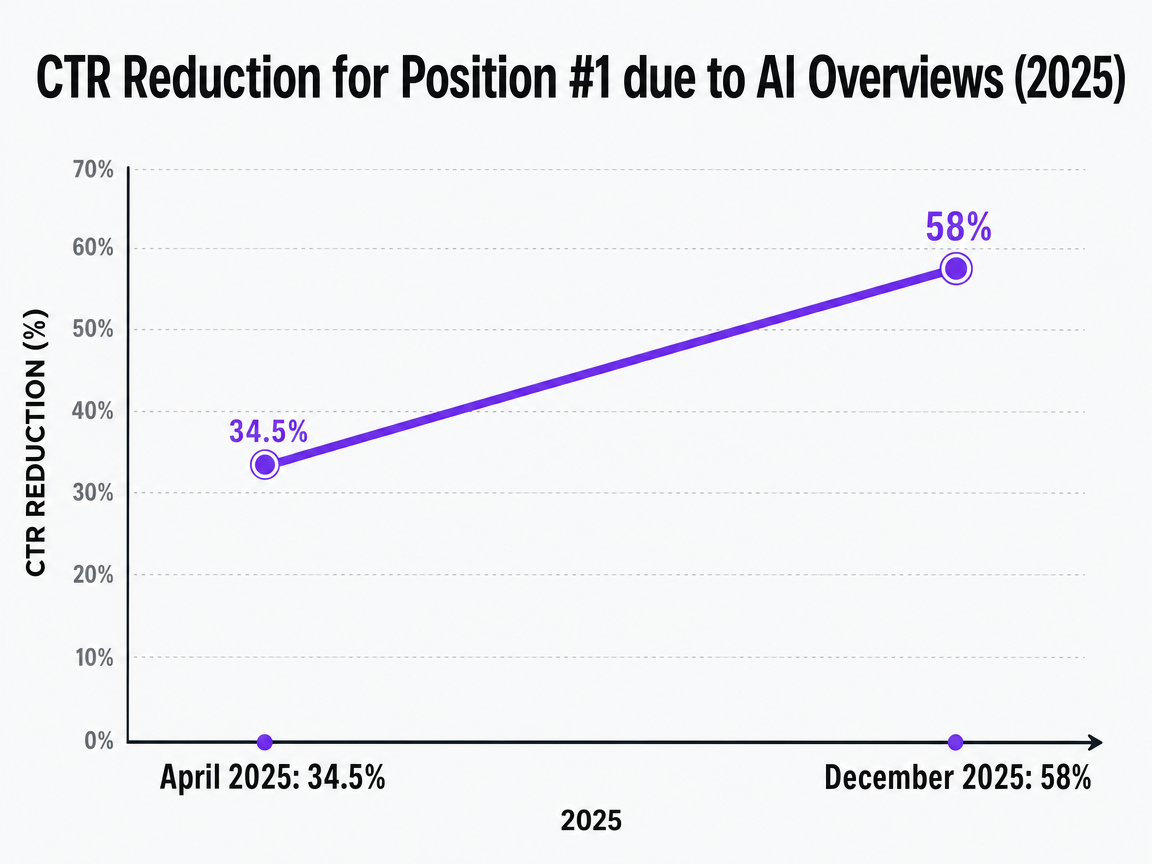 CTR Reduction for Position #1 due to AI Overviews (2025)
Ahrefs data cited by LLMrefs showing the worsening click-through rate decline for the top organic result throughout 2025 as AI Overviews expanded.
The Three-Layer Evaluation Framework
Visibility: Citation Share and Answer Coverage
The first layer measures a client's actual appearance within AI-generated answers. This is the most heavily marketed layer by vendors and is relatively easy to measure once query sets are defined. Citation share tracks how often a client's domain is named as a source across a monitored basket of prompts on platforms like ChatGPT, Perplexity, Gemini, Google AI Overviews, and Claude. Answer coverage, conversely, tracks the percentage of a client's target question set where the client appears at all, whether cited or paraphrased.
Both metrics necessitate a stable, monthly-refreshed prompt library per client, with intent tags that align with existing keyword taxonomies. Tools that scrape answers without allowing operators to define and version prompt lists often produce inconsistent data. Visibility alone is insufficient to justify a retainer; it serves as a crucial input for the subsequent two layers, as AEO aims to make content the cited source in AI responses 1. Without citation share as a baseline, attributing brand and revenue movement to answer engines becomes impossible.
Brand Impact: Branded Search and Direct Traffic Lift
The second layer captures traffic generated by AI mentions outside of the answer itself. When a client is cited in an AI Overview or a Perplexity response, some users bypass the citation link and later search for the brand name or directly type the domain. This behavior manifests in Google Search Console as branded query volume and in analytics as direct or organic-branded sessions.
Nielsen Norman Group's usability research indicates that users often engage with AI chats and traditional search simultaneously, using AI for synthesis and Google for verification 6. Brand-impact measurement quantifies this verification step. Agencies should establish baselines for branded query volume, direct traffic, and returning-visitor rates before an AEO initiative, then track the change against citation share movement per query cluster. Tools that do not account for branded search and direct traffic require manual reconstruction of this data, hindering scalability for agencies managing numerous client domains.
Revenue: Calls, Bookings, and Attributable Pipeline
The third layer determines the budget justification for AEO. Revenue-layer measurement connects visibility and brand movement to qualified calls, form submissions, bookings, and closed-won pipeline for each client. Approximately 58.5% of US Google searches now conclude without a click, according to Datos and SparkToro research 4. Consequently, session-based reporting increasingly describes a diminishing portion of the actual demand generated by a client's content.
Revenue-layer scoring assesses a tool's ability to export data seamlessly into systems where financial outcomes are measured, such as call tracking platforms, CRM opportunity records, appointment engines, and paid-media revenue dashboards. Citation share is a leading indicator, but when combined with call volume from AI-referred sessions, branded lift following a citation, and booking rates per query cluster, it provides a robust defense for ROI. Few AEO trackers currently offer this level of granularity, often stopping at the visibility layer and providing only a CSV. Tools that offer webhook or warehouse output to a CRM are highly valuable in this regard, while those requiring manual reconciliation can undermine retainer defense during quarterly business reviews.
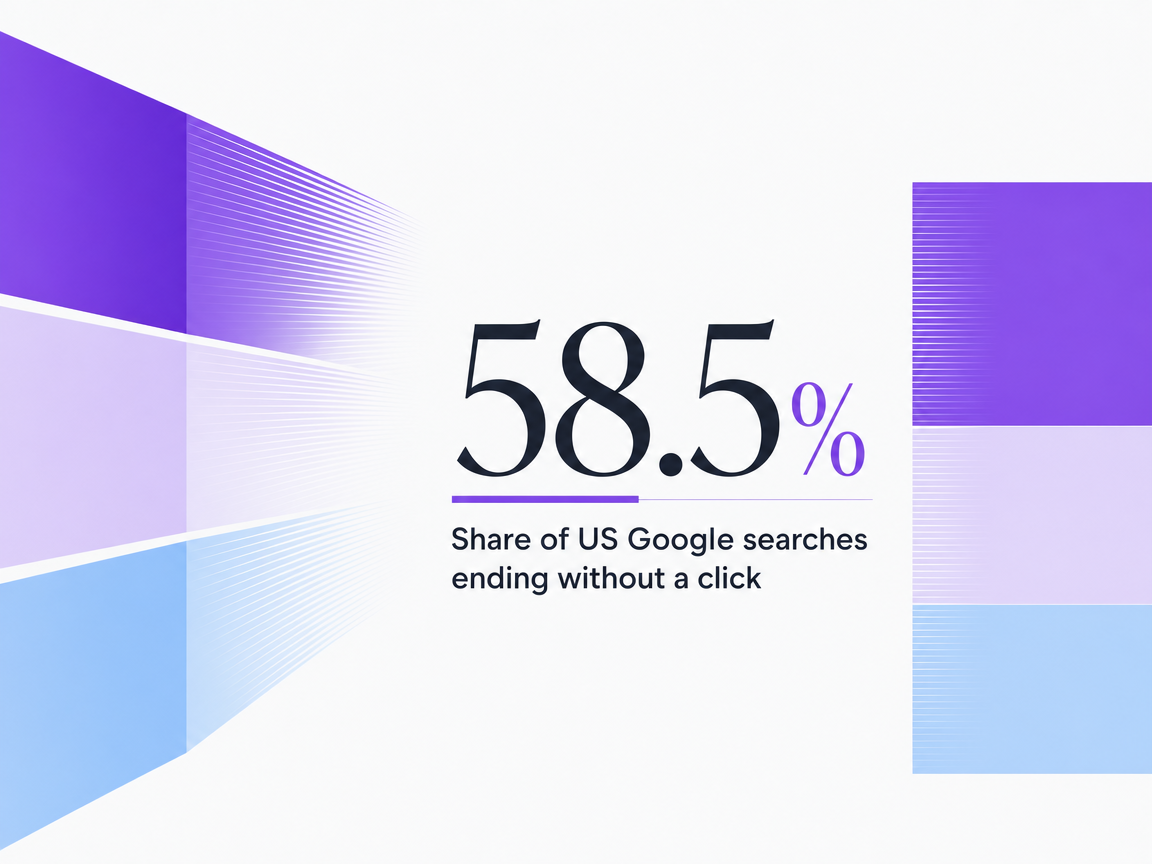 Share of US Google searches ending without a click
Share of US Google searches ending without a click
Required Capabilities Before a Tool Earns the Shortlist
Structured Data and Rich-Result Monitoring
Schema markup is fundamental to how AI engines construct answers. Structured data communicates the meaning of a page to search engines, rather than just its content, and powers the rich results that often appear above traditional listings 8. Incorrect or inconsistent schema can silently disqualify pages from feature eligibility without triggering a ranking penalty visible in legacy dashboards 9.
An AEO platform must audit schema at the page level, validate against Google's Rich Results tests, and flag coverage gaps for high-impact types such as FAQPage, HowTo, LocalBusiness, Organization, Product, and Review 8. Change detection is more crucial than one-time audits; a template deployment that removes FAQPage markup from numerous location pages should be identified within the same reporting cycle, not months later. Agencies managing multi-location portfolios should require Search Console enhancement report ingestion at the workspace level to avoid manual, per-domain schema monitoring, which is not scalable.
Conversational and Multi-Turn Visibility
Most citation trackers evaluate a single prompt in isolation, but real users engage in multi-turn conversations with AI, refining or challenging initial answers 7. A client might be cited in the first turn but disappear by the third, or vice versa. The key criterion for a shortlist is whether a platform models conversation depth: does it prompt follow-ups, track citation persistence across turns, and record shifts in sentiment about the client throughout the exchange? Sentiment is important because AI answers can mention a brand negatively, a pattern invisible to tools that only count mentions 7.
Agencies serving clients in law, healthcare, and senior living should prioritize this capability, as prospective clients in these sectors rarely accept the first answer without further inquiry.
Voice and Multimodal Query Coverage
Voice interfaces function as answer engines, providing a single spoken response without a scrollable SERP. Content designed to anticipate FAQ-style questions and structure long-tail intent often wins these slots 10. An AEO tool that overlooks voice creates a measurement gap for clients whose customers use voice assistants in various environments, common for home services, dental, and senior living inquiries. The straightforward test is whether the platform tracks voice-shaped query variants (natural language, question phrasing, local intent) and reports which answers a voice assistant provides for the client's target prompts 10. Tools that treat voice as a mere checkbox rather than a distinct query class will produce reports that miss a significant portion of demand.
Test AEO analysis workflows on live client sites
Evaluate real-time AEO improvements and ROI impact across your existing client portfolio before making a commitment.
The Tool Set, Scored Against the Framework
Profound: Citation-First Answer Engine Tracking
Profound is built on the premise that AEO is a citation discipline, not a ranking one 1. It monitors named-source appearances across ChatGPT, Perplexity, Gemini, Google AI Overviews, and Claude, categorizing citation share by prompt cluster and competitor. For agencies needing to demonstrate a client's increase from 4% to 18% citation share on 200 tracked prompts, Profound offers a strong visibility-layer solution.
However, its capabilities are limited in the other two layers. Brand-impact correlation requires manual reconstruction by the agency using a BI tool, and revenue attribution is not integrated into the product. Structured data monitoring is absent, meaning schema regressions on a client site are not detected. Multi-turn conversation tracking is limited to single-prompt scoring.
Framework score: strong on visibility, weak on brand impact, absent on revenue. Best utilized as the core citation-tracking component within a broader reporting stack.
Ahrefs Brand Radar: Ranking Heritage Meets AI Mentions
Ahrefs has integrated AI-mention tracking into its existing SEO platform, which agencies already use for backlink and rank data. Brand Radar identifies mentions in AI Overviews and links them to the same domain and keyword datasets used by account teams. For agencies managing over 40 domains, this offers workflow consolidation, as citation data resides alongside traditional organic visibility metrics that clients still expect.
The platform's heritage also presents limitations. Answer engine coverage is primarily focused on Google surfaces, with less depth for ChatGPT, Perplexity, and Claude. Conversation-turn analysis is not a feature, which is significant given that AI-driven search increasingly involves multi-turn exchanges rather than single lookups 7. Revenue-layer integration relies on standard Google Analytics and Search Console connectors, which do not adequately describe AI-referred call or booking behavior.
Framework score: moderate on visibility, moderate on brand impact through branded-query tracking, weak on revenue. A viable option for agencies already standardized on Ahrefs.
Semrush AI Toolkit: Portfolio Coverage at the Cost of Depth
Semrush's AI Toolkit prioritizes breadth over depth. It offers AI Overview presence tracking, brand mention monitoring, and prompt-level competitor benchmarking across major answer engines, integrating seamlessly into existing Semrush reporting templates. For a Head of SEO managing 60 client workspaces, this consolidation is a key advantage, allowing prompt libraries, position data, and AI visibility to reside in one interface, facilitating report generation without manual CSV stitching.
However, its depth is less than purpose-built trackers: citation persistence across conversation turns is limited, sentiment scoring on brand mentions is basic, and voice-query variants are treated as long-tail keywords rather than a distinct query class 10. Structured data monitoring is a separate module requiring per-domain configuration, and revenue attribution stops at the standard Google Analytics handoff.
Framework score: moderate across all three layers, but not excelling in any. This is a pragmatic choice when portfolio scale is a higher priority than best-in-class citation depth.
Otterly.AI and Peec AI: Purpose-Built Answer Monitors
Otterly.AI and Peec AI represent the pure-play category, developed after the advent of AI Overviews without legacy ranking products. Both track prompt-level citations across ChatGPT, Perplexity, Gemini, and Google AI answers, allowing operators to define and version prompt libraries at the workspace level. Reporting is efficient, and per-domain setup is simpler than with incumbent suites.
Peec AI has focused more on competitor benchmarking and sentiment scoring for brand mentions, addressing a measurement gap identified by iPullRank's analysis of conversational search behavior 7. Otterly.AI emphasizes prompt-set management and change alerts, which is beneficial for agencies that regularly update query baskets. Both platforms share common limitations of pure-play tools: neither audits schema, ingests call or CRM data, nor automatically correlates citation wins with branded search lift. Pricing typically scales per tracked domain, which can become an operational constraint at portfolio scale.
Framework score: strong on visibility, partial on brand impact through sentiment, absent on structured data and revenue. These are best used as specialist layers alongside a broader stack.
Schema App and Schema.dev: The Structured Data Layer
Schema App and Schema.dev are not AEO trackers but are essential structured data platforms that enable citation eligibility. Structured data informs search engines about the meaning of a page, driving the rich results that often appear above traditional listings 8. Without a robust schema layer, AI engines have less semantic scaffolding to build answers. Both platforms deploy JSON-LD at scale, validate against Google's Rich Results tests, and track schema coverage across large site templates. Schema App focuses on enterprise governance with a knowledge-graph model, while Schema.dev is more developer-centric. Either platform addresses the structured data monitoring gap not covered by citation trackers.
Framework score: not directly scored on visibility, brand impact, or revenue, but considered required infrastructure. Agencies serving multi-location clients should consider one of these as a fixed line item in their technology stack.
Vectoron: The Execution and Approval Layer Above the Trackers
Vectoron occupies a distinct category, not competing with tools like Profound or Otterly.AI on citation depth. Instead, it consumes signals from these tools, along with structured data audits, call intelligence, and CRM data. It then routes prioritized recommendations through a Command Center, where the account team approves work before execution. The layered measurement model—visibility metrics informing brand impact metrics, which then inform revenue metrics—directly aligns with this governed loop 3. The core argument for Vectoron is that while citation trackers report and schema tools deploy, neither closes the loop between an AEO signal and the responsive content, technical, or paid work. For agencies managing 40 or more client domains, the reporting-to-execution handoff is a common point of failure. Vectoron provides the execution layer that connects visibility, brand, and revenue signals to approved output across content, SEO, and adjacent channels. It is best paired with a citation tracker and a schema platform.
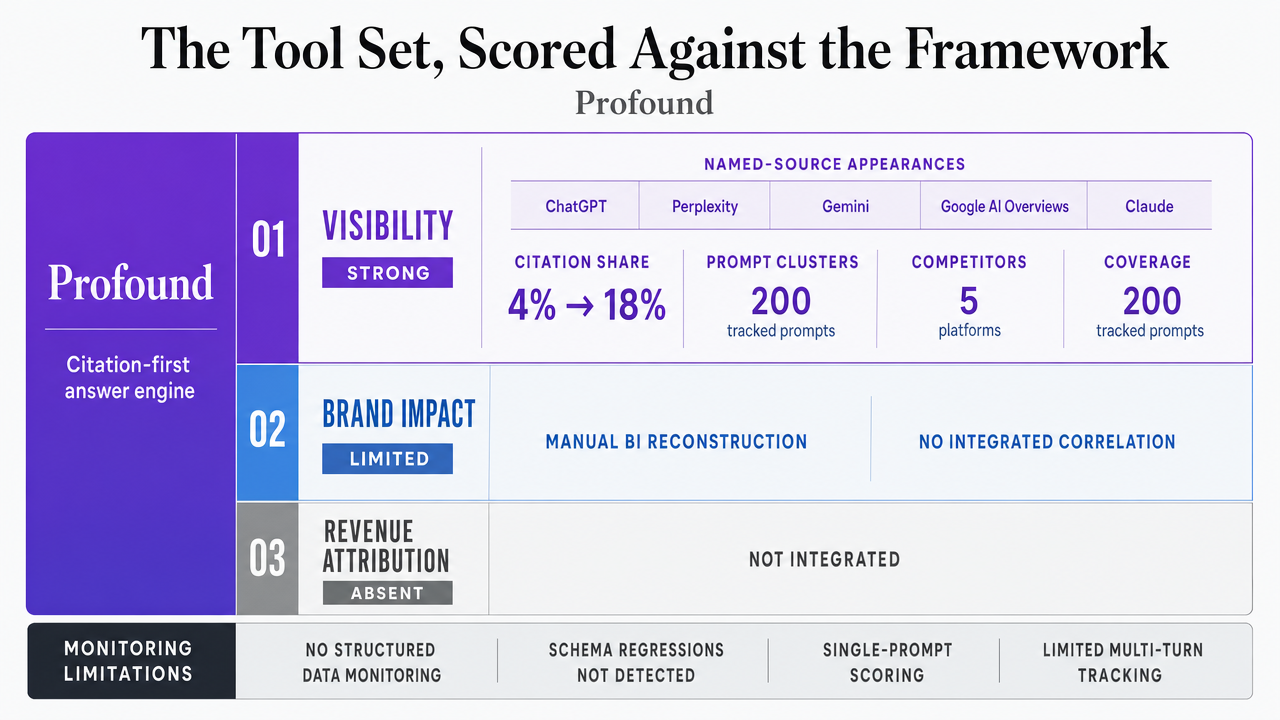 Comparison table visualizing how each tool scores against the three framework layers, supporting the tool-by-tool evaluation in this section
The Measurement Gaps No Single Tool Closes
Even with strong performance against the three-layer framework, certain measurement gaps persist, requiring agency intervention. Four recurring gaps are not fully addressed by any single platform:
- First, cross-engine attribution remains a challenge. A citation on Perplexity might lead to a branded search on Google days later, but no tracker currently connects these events automatically. Agencies must manually reconstruct such sequences or accept directional correlations.
- Second, conversational persistence is not fully captured. Users increasingly refine initial AI answers through follow-up questions, and a client cited in the first turn may disappear by the third 7. Sampling multi-turn behavior at portfolio scale is still an area of research, not a standard dashboard feature.
- Third, hybrid session behavior is often overlooked. Nielsen Norman Group documented that users frequently engage with AI chats and classic search in parallel, using one for synthesis and the other for verification 6. Attribution models that treat AI and organic as separate channels fail to account for this handoff.
- Fourth, call and offline conversion data is typically beyond the scope of AEO trackers. Qualified calls, booked appointments, and closed pipeline exist in systems that these trackers do not access. This gap must be closed at the stack layer by the agency, rather than by a single tool.
Compare Leading AEO Analysis Platforms for Scalable Client ROI
Request a tailored walkthrough of AEO analysis tools designed for agencies managing high-volume SEO programs. See platform benchmarks, workflow automation examples, and real-world ROI data for complex client portfolios.
If You Manage Multi-Location Portfolios: Per-Domain Economics
This section is specifically for Heads of SEO managing multi-location portfolios, such as dental groups with 40 practice sites, law firm networks with regional micro-sites, or senior living portfolios spanning 60 communities. The purchasing economics change significantly when AEO tools price per tracked domain or per workspace.
Most citation trackers charge based on two models: per-domain (P_domain), which scales with each tracked domain or subdomain, or per-seat (P_seat), which charges per workspace or user with a query cap. For example, a Dental Service Organization (DSO) with 45 locations and per-domain pricing would pay 45 times the base license before factoring in any prompt budget. A senior living portfolio consolidated under one workspace with a shared prompt library would pay once but could quickly exceed query caps if each community requires localized prompt sets.
| Portfolio variable | Per-domain model | Per-workspace model |
|---|---|---|
| Locations per client (N_locations) | License cost scales linearly | Flat until query cap |
| Monitored query set size (Q) | Q per domain, high total | Q shared, capped centrally |
| Reporting cadence | Per-domain rollups required | Native workspace rollup |
| Schema audit surface | Per-domain configuration | Template-level detection |
At this scale, the layered measurement model is more critical than mere citation counts. Per-location revenue attribution—qualified calls and bookings linked to specific communities or practices—is the metric that secures retainer renewals, not aggregate citation share across the parent brand 3. Agencies should weigh per-domain pricing against the actual revenue signal each domain produces before adding the line item to every location.
Building the Stack: What to Buy, What to Wire Together
No single platform fully satisfies all criteria across visibility, brand impact, and revenue. Therefore, the buying decision is about building a stack, not selecting a single tool. Three essential components are required: a citation tracker for the visibility layer (e.g., Profound for depth, Semrush AI Toolkit for portfolio consolidation, or a pure-play like Peec AI when sentiment analysis is crucial), a structured data platform for schema deployment and drift detection, and an execution layer that connects AEO signals to approved content, technical, and paid work for each client.
The integration of these components is where retainer defense truly happens. Citation share exports feed into a data warehouse, alongside Search Console branded-query and rich-result data. Call tracking and CRM opportunity records are then joined based on client and query cluster. The account team can then report a single, comprehensive number per client per month: revenue movement correlated with citation and schema movement, rather than just raw session counts.
Agencies that construct this integrated stack will be able to defend AEO spend with robust attribution evidence. Those that continue to rely on single dashboards will struggle in quarterly business review conversations. Vectoron serves as that execution layer for teams ready to move beyond manual data stitching.
Frequently Asked Questions
References
- 1.What is answer engine optimization (AEO)? Understanding AEO for AI search.
- 2.What Is Answer Engine Optimization?.
- 3.How AI Overviews & Zero-Click Search Impact Organic SEO.
- 4.Zero-Click Search: Complete SEO Survival Guide 2026.
- 5.What is Zero-Click Search? AI stole your traffic.
- 6.How AI Is Changing Search Behaviors.
- 7.User Behavior in the Generative Era: From Clicks to Conversations.
- 8.Structured data for SEO: What you need to know.
- 9.Structured Data & Schema Markup for Better CTR.
- 10.How Voice Search Will Change the Digital Marketing Landscape.
- 11.Search Generative Experience: How It's Changing SEO.