
Key Takeaways
- Profound leads prompt monitoring by tracking how often a brand appears across versioned prompt sets, producing the share-of-prompt baseline every other AI visibility metric builds from.
- Peec AI handles citation share and AERP saturation, showing which third-party domains AI engines treat as authoritative and explaining the why behind prompt-level mention rates 5.
- AthenaHQ measures share of model across ChatGPT, Perplexity, Gemini, and AI Overviews, exposing engine-by-engine variance that a single blended visibility score would hide.
- Goodie scores sentiment and descriptive context inside AI answers, flagging stale claims or off-positioning language that prompt tuning alone cannot fix.
- Daydream connects AI citations to brand search lift, assisted conversions, and CRM stage progression, turning presence trends into the pipeline language a CFO will defend 6.
- Vectoron sits in coordinated execution, converting visibility signals into a ranked, approved action queue so cross-functional fixes ship in days rather than next quarter 7.
The measurement gap agencies are being asked to close
AI search could redirect up to $750 billion in revenue by 2028, yet only 16% of brands systematically track how they appear inside AI-generated answers, according to McKinsey's analysis of the new front door to the internet 4. That gap, measured across enterprise brands rather than agency clients specifically, is the operational reality every Head of SEO now inherits: the buyer journey has moved into ChatGPT, Perplexity, Gemini, and AI Overviews faster than the reporting stack has caught up.
The pressure to close it is not theoretical. Forrester reports that 94% of B2B buyers now use AI in purchasing, which means client stakeholders are already asking why monthly SEO decks still lead with organic sessions and average position 11. McKinsey also flags a structural caveat agency leaders should price into expectations early: generative engine optimization performance can lag traditional SEO by 20 to 50%, even for category leaders 4. Visibility lifts arrive on a different curve than ranking lifts, and the trackers worth shortlisting are the ones that surface that curve cleanly.
The six categories that follow map to the reporting questions agencies are actually being asked. None of them is a complete answer on its own. The right combination depends on which measurement gap a portfolio needs to close first, and which one a client will fund this quarter.
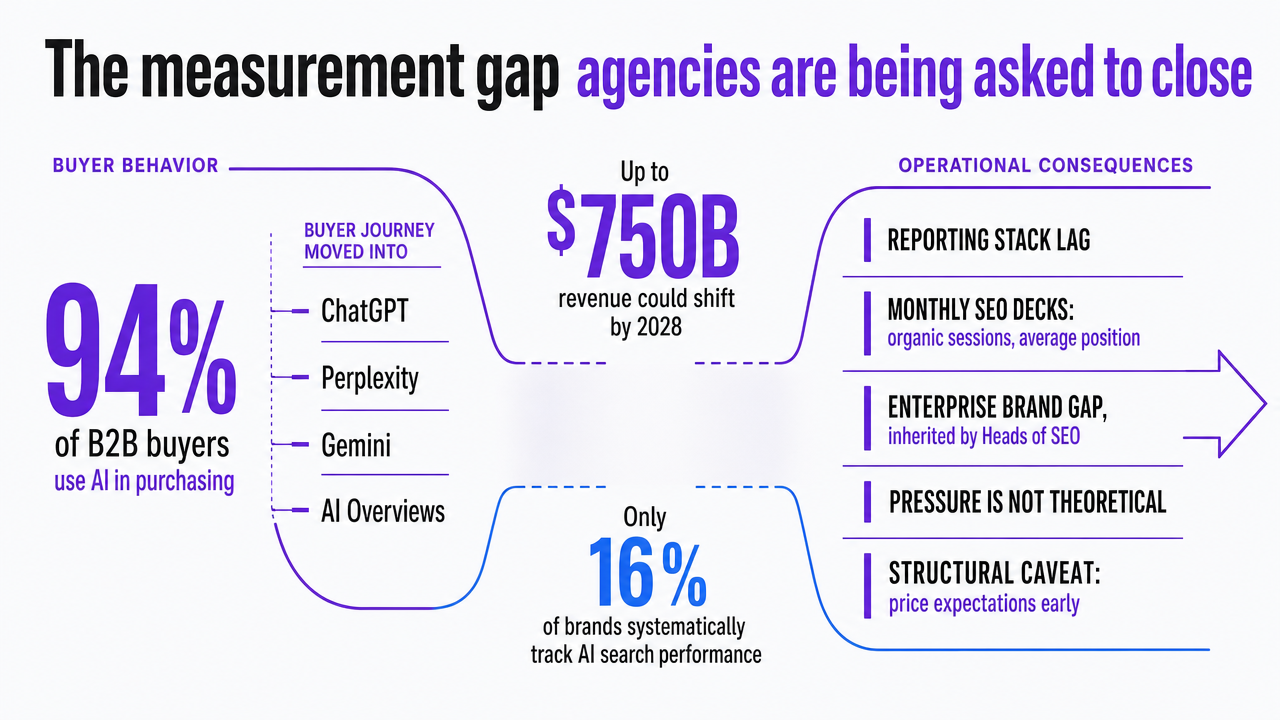 Visualize the McKinsey stat that only 16% of brands systematically track AI search performance against the $750B revenue impact, anchoring the measurement gap thesis of the section
How this shortlist was built: six measurement categories, not six tools
The reporting artifacts that matter now
Traditional SEO reporting leans on rankings, sessions, and conversions tied to a known URL. AI search reporting works differently. The artifacts clients now expect include a share-of-model breakdown by prompt cluster, an answer engine results page (AERP) saturation trend by topic, a citation-source audit showing which third-party domains AI engines pull from when describing the client, and a sentiment cut by engine. Forrester is explicit that brand visibility indicators like share of search and AERP saturation belong at the center of these reports, not traffic and average position 5.
A useful shortlist had to be organized around those artifacts. The six categories below — prompt monitoring, citation share, share of model, sentiment, attribution, and execution loop — each produce a distinct deliverable. A tracker that bundles prompt monitoring with weak attribution does not solve the same client question as one that surfaces assisted conversions from AI referrals. Forrester also notes that answer engine crawlers are more active and less forgiving than traditional search crawlers, so a tracker's underlying data hygiene matters as much as its dashboard 1.
Evaluation criteria for agency portfolios
Five criteria filtered the field.
- First, engine coverage: ChatGPT, Perplexity, Gemini, and Google AI Overviews at minimum, since 95% of B2B buyers plan to use generative AI in at least one part of a future purchase 3.
- Second, prompt-set governance: can analysts version, tag, and group prompts by client, persona, and funnel stage without rebuilding from scratch each quarter.
- Third, multi-tenant fit: role-based access, client-segmented workspaces, and exportable reports that survive a white-label workflow.
- Fourth, KPI surfacing: the tracker must produce share of search, AERP saturation, and citation-source data in formats that drop into a client deck, not raw JSON 5.
- Fifth, attribution depth: does the tool stop at presence, or does it connect AI citations to downstream signals like brand search lift, assisted conversions, or CRM-stage progression.
Tools that only report presence were included when they lead their category, but the gap was flagged in each entry.
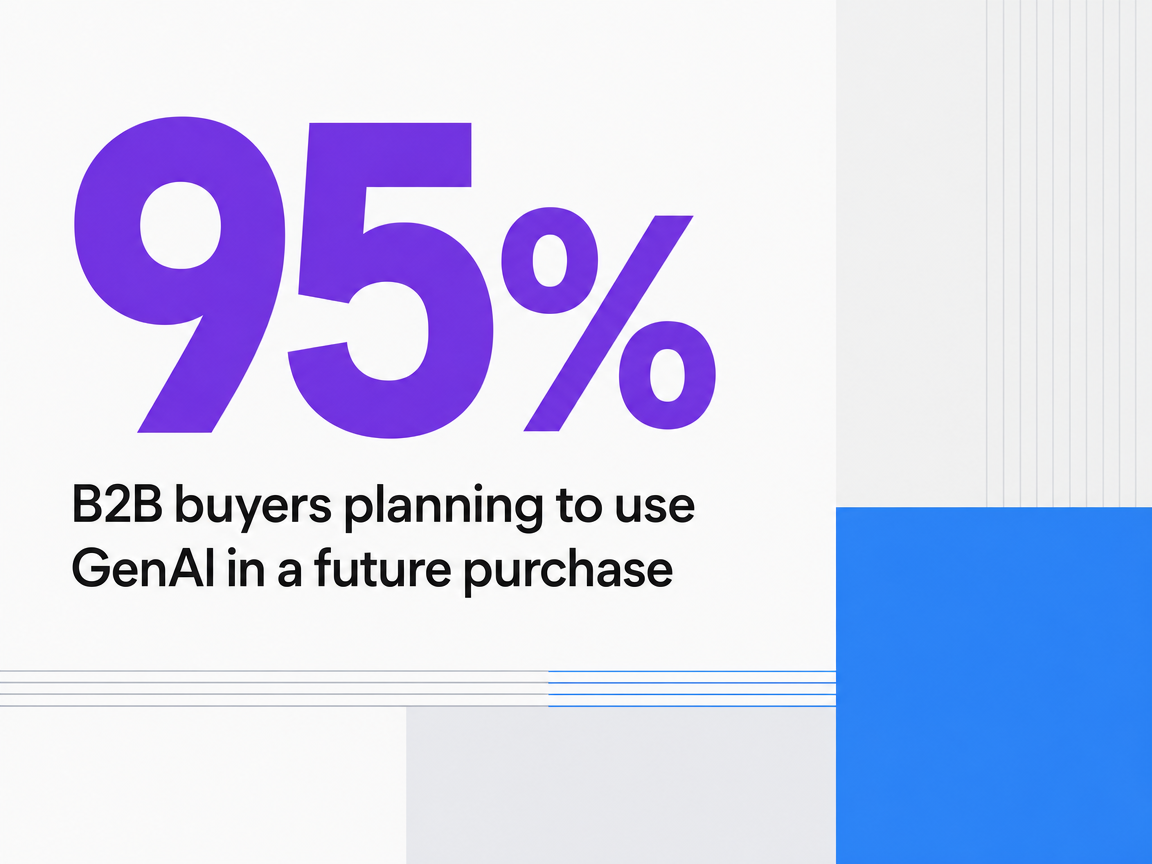 B2B buyers planning to use GenAI in a future purchase
B2B buyers planning to use GenAI in a future purchase
The six categories compared at a glance
Before unpacking each entry, the table below maps the six measurement categories against the reporting artifacts that matter to agency portfolios. Forrester argues that share of search and answer engine results page saturation should sit at the center of AI visibility reporting, not traffic and average position 5. The columns reflect that orientation.
| Category | Measurement focus | Primary KPI surfaced | Reporting cadence | Multi-tenant fit |
|---|---|---|---|---|
| Prompt monitoring | What buyers actually ask AI engines | Prompt coverage, brand mention rate | Weekly | Strong if prompt sets are versioned per client |
| Citation share | Which sources AI engines cite when describing a brand | Citation share, source-domain mix | Bi-weekly | Strong with workspace separation |
| Share of model | Brand presence across ChatGPT, Perplexity, Gemini, AI Overviews | Share of search across engines, AERP saturation | Weekly | Depends on per-client tagging |
| Sentiment and context | How AI engines characterize the brand inside answers | Sentiment score, context-phrase audit | Monthly | Moderate; sentiment cuts rarely white-label cleanly |
| Attribution | AI presence tied to brand search lift, assisted conversions, pipeline | Assisted-conversion delta, CRM-stage lift | Monthly | Strong only with CRM and analytics integrations |
| Execution loop | Visibility signals converted into ranked, approved work | Approved actions, time-to-publish | Continuous | Designed for portfolio governance |
Few agencies will fund all six in year one. The sequencing question is which artifact the largest client will defend in the next QBR, and which two categories close the widest measurement gap behind it.
Prompt monitoring: Profound
Prompt monitoring answers the most basic question a client will ask after a board-level briefing on AI search: what are buyers actually typing into ChatGPT, Perplexity, and Gemini about our category, and how often does our brand appear in the response? Profound sits in this category. It runs versioned prompt sets across major engines on a scheduled cadence and returns a brand-mention rate by prompt, by engine, and by day.
The reporting artifact is a weekly share-of-prompt report cut by topic cluster. For an agency portfolio, that translates into something a strategist can actually defend in a QBR: a list of the 150 to 400 prompts that map to a client's funnel, tagged by persona and stage, with mention rates trended week over week. Forrester's argument for share of search as a primary AI visibility KPI applies directly here — prompt-level mention rate is the cleanest precursor to that share-of-search reading 5.
The category has a real limit. Prompt monitoring stops at presence. It will not tell a client why a competitor is being cited more often, which third-party domains the engine pulled from, or whether the mention contributed to a brand search lift. Profound is strongest as the first tracker in an agency's stack and weakest as the only one. Pair it with a citation-share tool to explain the why behind the mention curve, and with an attribution layer before the second renewal conversation.
Test AI-driven search visibility tracking now
Measure real-world search visibility gains with live data and actionable analytics during your trial.
Citation share and answer saturation: Peec AI
Citation share answers the question prompt monitoring leaves on the table: when an AI engine describes a client's category, which third-party domains does it pull from, and how often does the client's own content make the cut? Peec AI sits in this category. It audits the source mix behind AI answers across major engines, then trends citation share against answer engine results page (AERP) saturation by topic cluster.
The reporting artifact is a bi-weekly citation-source audit paired with an AERP saturation curve. For a portfolio lead, that turns into two defensible deliverables per client: a ranked list of cited domains the engine treats as authoritative for the category, and a saturation trend showing how often the client's content appears across the answer surface for a defined topic set. Forrester is direct that share of search and AERP saturation belong at the center of AI visibility reporting, not traffic or average position 5. Peec AI is built around those two lines.
Two limits matter.
- First, citation share explains the why behind prompt-level mention rates but does not connect either signal to brand search lift or pipeline.
- Second, the audit is only as clean as the underlying crawler hygiene on the client's own properties — answer engine crawlers are more active and less forgiving than traditional search crawlers, and gaps in indexability show up directly as missed citations 1.
Strongest as the second tracker in an agency stack, layered behind prompt monitoring and ahead of attribution.
Share of model across engines: AthenaHQ
Prompt monitoring tells an agency how often a brand appears in answers to a defined prompt set. Share of model goes wider: it measures how a brand's overall presence stacks up against named competitors across ChatGPT, Perplexity, Gemini, and Google AI Overviews on the same topic universe. AthenaHQ sits in this category. It normalizes brand-mention frequency, position within the answer, and engine-by-engine variance into a single share-of-model index, then trends that index by topic and by competitor cohort.
The reporting artifact is a weekly share-of-model dashboard with two cuts agency strategists actually use in client work: a competitor-stacked view showing where the client gains or loses share against three to five named rivals, and an engine-variance view flagging which surface is driving the swing. That distinction matters because the four major engines do not converge on the same answer. A brand can hold strong presence inside Perplexity citations while losing ground inside AI Overviews, and a single blended metric will hide the asymmetry. Forrester's guidance to lead AI visibility reporting with share of search and AERP saturation rather than traffic and average position maps directly onto this category 5.
The limit is familiar. Share of model explains where a brand stands, not why competitors are winning or whether the gap costs pipeline. Strongest when paired with citation share upstream and attribution downstream.
Sentiment and brand context inside answers: Goodie
Presence is not the same as positioning. A brand can hold strong citation share inside Perplexity and still lose deals because the language the engine uses to describe it skews cautious, dated, or laced with competitor framing. Sentiment and context trackers close that gap. Goodie sits in this category. It pulls the full text of AI answers across ChatGPT, Perplexity, Gemini, and AI Overviews, then scores the language for sentiment, extracts the descriptive phrases the engine attaches to the brand, and flags shifts in how the brand is characterized over time.
The reporting artifact is a monthly context audit with three useful cuts: sentiment trend by engine, a phrase cloud of how the brand is described versus how named competitors are described, and a flagged list of factually stale or off-positioning claims surfacing in answers. That last cut is the one most agency strategists end up defending in a QBR. When an engine repeatedly describes a client using a discontinued product line or a five-year-old pricing model, the fix sits with content and PR coordination, not with prompt tuning. Forrester's framing of AEO as cross-functional work — strategy, content, data, and engineering operating against the same signal — applies directly to closing those gaps 7.
The category limit is honesty: sentiment scoring on AI answers is still maturing, and small sample sizes per prompt produce noisy month-over-month deltas. Goodie is strongest as a quarterly diagnostic layered behind prompt monitoring and citation share, not a weekly reporting line.
Attribution to pipeline and assisted conversions: Daydream
Attribution is where AI visibility reporting either earns its budget line or loses it. Presence, citation share, and share of model all describe what is happening inside the answer surface. None of them tell a client whether the work moved a deal. Daydream sits in the attribution category. It connects AI citation and mention data to downstream brand search lift, assisted conversions in GA4, and stage progression inside connected CRMs, then trends those signals against the prompt clusters driving them.
The reporting artifact is a monthly attribution view with three cuts agency strategists can actually defend at a renewal: a brand-search-lift trend keyed to citation-share movement, an assisted-conversion delta for sessions that touched AI-referred traffic, and a CRM-stage progression report showing how AI-influenced accounts move against a baseline cohort. Forrester's argument that answer engines compress buyer journeys lands here directly — when 28% of B2B buyers report spending less time on research because of answer engines, the click that used to anchor attribution often never happens, and the assisted-conversion model has to absorb that shift 6.
Enterprise AI outcomes split: 66% report productivity gains, only 20% report revenue growth, and 74% remain aspirational 8.
The category limit matters for tool selection. Deloitte's 2026 enterprise survey found that 66% of organizations report productivity gains from AI adoption while only 20% currently report revenue growth, with 74% still treating revenue impact as aspirational 8. Trackers that stop at efficiency metrics — prompts checked per week, dashboards refreshed — fall into the same trap. Daydream is strongest as the third tracker in an agency stack, layered behind prompt monitoring and citation share, where its outputs convert presence trends into the pipeline language a CFO will sign off on.
See How Leading Agencies Quantify Search Visibility ROI With AI
Connect with a specialist to benchmark your current search visibility tracking and discover AI-powered workflows for cross-client reporting, attribution, and ROI measurement at scale.
Coordinated execution against AI visibility signals: Vectoron
The five categories above produce reports. The sixth produces work. Coordinated execution sits one step downstream of measurement: once a tracker surfaces that citation share is slipping inside Perplexity for a defined topic cluster, or that AI Overviews keep pulling from a competitor's comparison page, someone has to publish the response. Vectoron sits in this category. It reads visibility signals across content, SEO, PPC, backlinks, social, and call intelligence, ranks the recommended actions against pipeline impact, and routes each one through an approval workflow before anything ships.
The reporting artifact looks different from the other five entries. Instead of a dashboard, the deliverable is a ranked queue of approved actions with the strategic reasoning attached: which prompt cluster the action targets, which engine surfaced the gap, and which KPI the work is expected to move. Forrester's argument that AEO requires broader, more intensive cross-functional collaboration than traditional SEO maps directly onto this category — strategy, content, data, and engineering have to operate against the same signal for the visibility lift to convert into pipeline 7.
The category limit is the inverse of the presence-only trackers. Execution platforms assume the measurement layer is already in place. Strongest as the connective tissue behind a stack that already includes prompt monitoring, citation share, and attribution; weakest as the first purchase before any AI visibility baseline exists. Vectoron's post-trial pricing of $599 per month sits as one reference point in the category rather than a benchmark across it.
If you manage a multi-client portfolio: operationalizing the stack
This section shifts scope from single-brand reporting to agency portfolio operations. The category map above answers what to buy; the harder question is how to run it across 15 or 40 client accounts without rebuilding the workflow each Monday.
Three operating decisions separate portfolios that scale AI visibility reporting from those that stall at the pilot client.
- First, prompt-set ownership: a strategist needs to own the prompt library per client, version it quarterly against the client's ICP, and tag every prompt by persona and funnel stage. Without that discipline, share-of-prompt deltas read as noise rather than signal.
- Second, reporting cadence alignment: prompt monitoring and share of model trend weekly, citation share and attribution monthly, sentiment quarterly. Stacking all five into a single monthly deck buries the leading indicators behind the lagging ones.
- Third, and the one most portfolios underestimate, is the handoff between measurement and execution. Forrester's argument that AEO demands broader cross-functional collaboration than traditional SEO lands hardest at the agency level, where content, technical SEO, digital PR, and analytics often sit in separate pods 7. When a citation-share report flags that AI Overviews keep pulling from a competitor's comparison page, the response touches three pods and at least one client approval. Portfolios that route that response through a single ranked queue ship the fix in days. Portfolios that route it through a shared inbox ship it next quarter, if at all.
What to ask in a demo: operator questions for AI visibility vendors
Vendor demos default to dashboard tours. Portfolio leads should redirect the conversation toward five operator questions that surface whether the tool will survive a year of client reporting.
- First: how are prompt sets governed across clients? The right answer includes versioning, persona and funnel-stage tagging, and exportable prompt libraries. Without that, share-of-prompt deltas degrade into noise within two quarters.
- Second: which engines are covered at parity, and how often is each refreshed? Coverage that leans heavily on one engine masks the asymmetry between Perplexity citations and AI Overviews presence, and Forrester's data showing 95% of B2B buyers planning to use generative AI in a future purchase makes single-engine reporting a defensible target only for a few more quarters 3.
- Third: what does the tool surface as a primary KPI, and does it match share of search and AERP saturation rather than traffic proxies 5?
- Fourth: how does it handle attribution? Specifically, can it pass AI-referred sessions into GA4 with a consistent source label and connect to a CRM for stage progression.
- Fifth: what is the handoff between measurement output and execution? If the answer is a CSV export, the agency owns the operational gap. Vectoron treats that gap as the product.
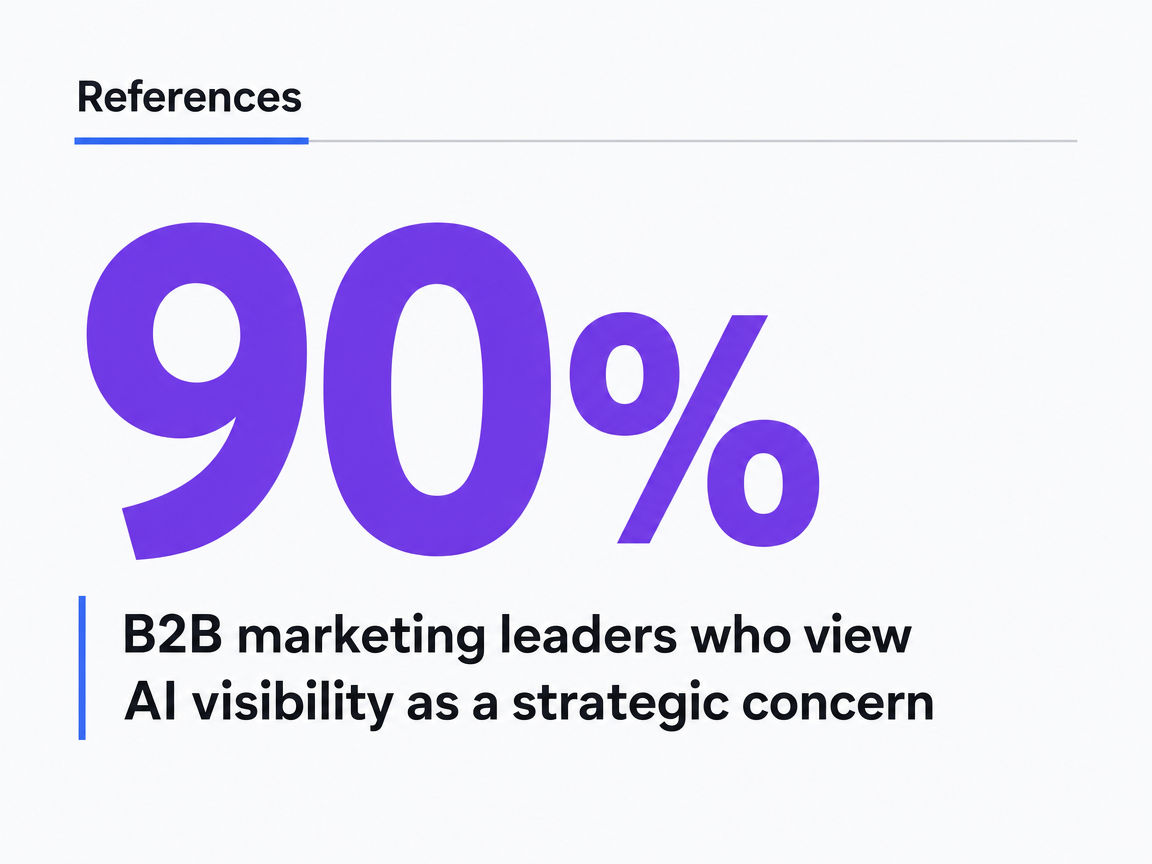 B2B marketing leaders who view AI visibility as a strategic concern
B2B marketing leaders who view AI visibility as a strategic concern
Frequently Asked Questions
References
- 1.Win Visibility In AI Search With Answer Engine Optimization.
- 2.AI Search Will Crack The Foundation Of B2B Marketing's Accountability Model.
- 3.Impact And Opportunity For AI-Powered Search In B2B Marketing.
- 4.New front door to the internet: Winning in the age of AI search.
- 5.How To Master Answer Engine Optimization.
- 6.The Marketer's Guide To Answer Engine Optimization.
- 7.Seven Roles, One Goal: How To Organize For Answer Engine Optimization.
- 8.The State of AI in the Enterprise - 2026 AI report.
- 9.The state of AI in early 2024: Gen AI adoption spikes and the AI transformation accelerates.
- 10.B2B Buyer Adoption Of Generative AI.
- 11.Build Your AI Visibility Strategy At B2B Summit.