
Key Takeaways
- Profound covers multi-engine visibility tracking, giving portfolio operators prompt-level reads on brand appearance across ChatGPT, Perplexity, Gemini, and AI Overviews that rank trackers cannot produce.
- Peec AI focuses on citation analysis and competitive context, turning the vague 'are we in ChatGPT' question into a defensible share-of-voice metric for retention-sensitive accounts.
- Otterly.AI specializes in Perplexity tracking, which matters for research-heavy verticals where GEO tactics drove a 37% visibility lift inside Perplexity in academic testing 1.
- Writesonic's GEO suite scores pages for citation-readiness, flagging missing statistics, attributions, and entity structure that answer engines need to quote a source cleanly.
- Surfer SEO bridges generative optimization and fundamentals, producing briefs that satisfy both SERP ranking signals and the structural credibility answer engines reward.
- Ahrefs anchors the fundamentals layer because backlinks, brand mentions, and organic rankings remain the largest inputs to LLM citations across generative surfaces 7.
- Clearscope enforces editorial quality at velocity, which is the operational answer to Google's spam policy updates targeting scaled, low-effort AI content 4.
The stack decision behind LLM SEO tooling
The phrase "best LLM SEO tools" implies a single category, but the agencies actually scaling client delivery have stopped treating it that way. What looks like a tool selection is really a stack decision: which jobs get a dedicated platform, which fold into the existing enterprise SEO suite, and which never deserved a line item in the first place.
Google's own guidance on optimizing for generative AI features uses both "answer engine optimization" and "generative engine optimization" interchangeably, while still anchoring the work in helpful content, site structure, and structured data 6. That framing matters for Heads of SEO carrying 15 to 80 accounts. The job is not to chase a new acronym across every client; the job is to decide where generative visibility sits relative to fundamentals that already drive most of the result.
Three discrete jobs surface once the marketing layer is stripped away:
- Tracking brand presence inside ChatGPT, Perplexity, Gemini, and AI Overviews.
- Optimizing content to be cited by those engines.
- Executing the underlying SEO fundamentals — rankings, backlinks, brand mentions — that still drive the majority of LLM citations 7.
The seven tools in this listicle are organized around those jobs, not around feature parity or pricing tiers.
Sizing the tooling layer agencies are buying into
The budget conversation has already moved. Forecasts put the AI-powered SEO software market at $3.98 billion in 2025, scaling to $32.6 billion by 2035 at a 23.4% CAGR 8. The broader enterprise SEO platforms market, the legacy suites most agencies still anchor delivery on, is growing from $4.38 billion in 2024 to $12.5 billion by 2032 at a 14% CAGR 9. AI-native tooling is compounding roughly 1.7x faster than the incumbents Heads of SEO have used to run client portfolios for the last decade.
That delta is the actual signal. It is not that enterprise SEO platforms are shrinking — they are not — but that buyer dollars are flowing disproportionately into a newer layer built around generative visibility, citation tracking, and AI-assisted production. For an agency carrying 25 or 60 clients, the implication is operational rather than philosophical. The category is being funded, vendors are multiplying, and the next two budget cycles will force a decision about which jobs get a dedicated platform line item and which stay folded inside the existing suite.
None of this validates buying everything. It validates building a stack thesis before procurement conversations start. Agencies that wait for their enterprise suite to ship parity with GEO-specialist platforms risk a two-year visibility gap inside ChatGPT, Perplexity, and AI Overviews. Agencies that bolt on three or four AI-native point tools without a consolidation plan inherit a coordination tax that erodes the margin the tools were meant to protect.
Three jobs every LLM SEO stack has to cover
Strip the marketing language away and an LLM SEO stack does three things. Each one maps to a different buying decision, a different vendor category, and a different unit of measurement.
The first job is visibility tracking. Brand mentions inside ChatGPT, Perplexity, Gemini, and AI Overviews behave nothing like SERP positions. Citation logic, prompt variance, and answer composition differ by engine, which is why dedicated tools have emerged to monitor multi-platform appearance and analyze when an AI response actually links back to a client's domain 2. Heads of SEO who try to retrofit rank trackers to this job end up reporting on the wrong signal.
The second job is generative content optimization. This is the work of making a page citation-ready inside answer engines: explicit statistics, structured quotations, source attribution, and entity clarity. Specialist GEO platforms occupy this layer precisely because they treat AI visibility as the primary output rather than a side effect of SERP correlation 10. The deliverable is content shaped to be quoted, not content shaped to rank tenth.
The third job is fundamentals execution. Google's own optimization guidance for generative AI features still anchors the work in helpful content, site structure, and structured data, and explicitly uses AEO and GEO as labels for that effort rather than as replacements for it 6. Backlinks, brand mentions, and organic rankings remain the dominant inputs to LLM citations 7, which means the third layer cannot be skipped without starving the first two.
The seven tools that follow are sorted by which of these three jobs they actually do — not by feature count, not by pricing tier. A Head of SEO running 25 to 60 accounts needs the stack to map cleanly to those jobs, with handoffs between layers that survive the move from one client portfolio to the next.
Test AI SEO Workflows on Live Client Projects
Experience hands-on, end-to-end LLM-powered SEO execution at scale with real, publishable results during your trial.
Seven tools, ranked by the job they actually do
Profound — multi-engine visibility tracking across ChatGPT, Perplexity, and AI Overviews
Profound sits in the visibility tracking layer of the stack. Its core deliverable is a continuous read on where a client's brand appears across ChatGPT, Perplexity, Gemini, and AI Overviews, which is the exact monitoring problem dedicated AI visibility tools were built to solve 2. For a Head of SEO running 25 to 60 accounts, that means reporting on a signal that rank trackers cannot produce: prompt-level appearance, citation presence, and context of mention across engines that each apply their own retrieval and answer-composition logic.
The agency-portfolio question Profound answers is narrow and useful: across a defined set of buyer prompts per client, how often does the brand surface, and does the response link back? The integration cost is low because the platform runs alongside, not inside, the existing SEO suite. Heads of SEO can keep Ahrefs or a similar fundamentals platform for ranking and link data and bolt visibility tracking on top as a separate reporting layer.
What Profound does not do is fix the underlying citation gap. It tells portfolio operators where the holes are; closing them requires content optimization and fundamentals work handled by other tools in the stack.
Peec AI — citation analysis and prompt-level competitive monitoring
Peec AI lives in the same visibility tracking layer but tilts harder toward citation analysis and competitive context. The distinction matters operationally. Tracking whether a brand appears in an AI response is one signal; understanding which competitors are cited alongside it, and whether the cited URL is a clickable link back to a domain, is a different one — and the second is closer to what most agency clients actually want to see in a monthly report 2.
For Heads of SEO, the practical value is prompt-level granularity. Peec AI lets portfolio operators define a representative set of buyer-intent prompts per client, then watch citation share shift over time as content and link work compound. That kind of competitive read replaces the abstract "are we showing up in ChatGPT" question with a defensible share-of-voice metric agencies can put in front of retention-sensitive accounts.
The limit is the same as any tracking tool. Peec AI surfaces the gap between client and competitor citations; it does not produce the content or earn the links that close it. Pair it with a generative optimization layer and a fundamentals platform, or the data becomes diagnostic without being actionable.
Otterly.AI — Perplexity-focused visibility and brand mention tracking
Otterly.AI is the specialist case in the visibility tracking layer. Perplexity behaves differently from ChatGPT and AI Overviews — it leans heavily on inline citations, weights research-style queries, and surfaces source links with unusual prominence 3. That asymmetry is why a Perplexity-specific tracker earns a slot in stacks where clients sell into research-heavy buyer journeys: legal, healthcare, B2B SaaS, financial services.
The supporting evidence for treating Perplexity as its own optimization target is empirical. The academic Generative Engine Optimization study, run against Perplexity.ai with domain-variable results, measured a 40% overall lift in generative-engine visibility from GEO tactics, a 37% lift specifically inside Perplexity, and a 41% improvement in position-adjusted word count — the metric that captures how prominently a cited source appears in an answer 1. Those are study-scope numbers, not market averages, but they justify a dedicated tracking layer for clients whose buyers actually use Perplexity to compare options.
Otterly.AI's role in an agency stack is narrow by design. It tells portfolio operators where Perplexity citation share is moving for each client, which feeds into the generative optimization work handled in the next layer.
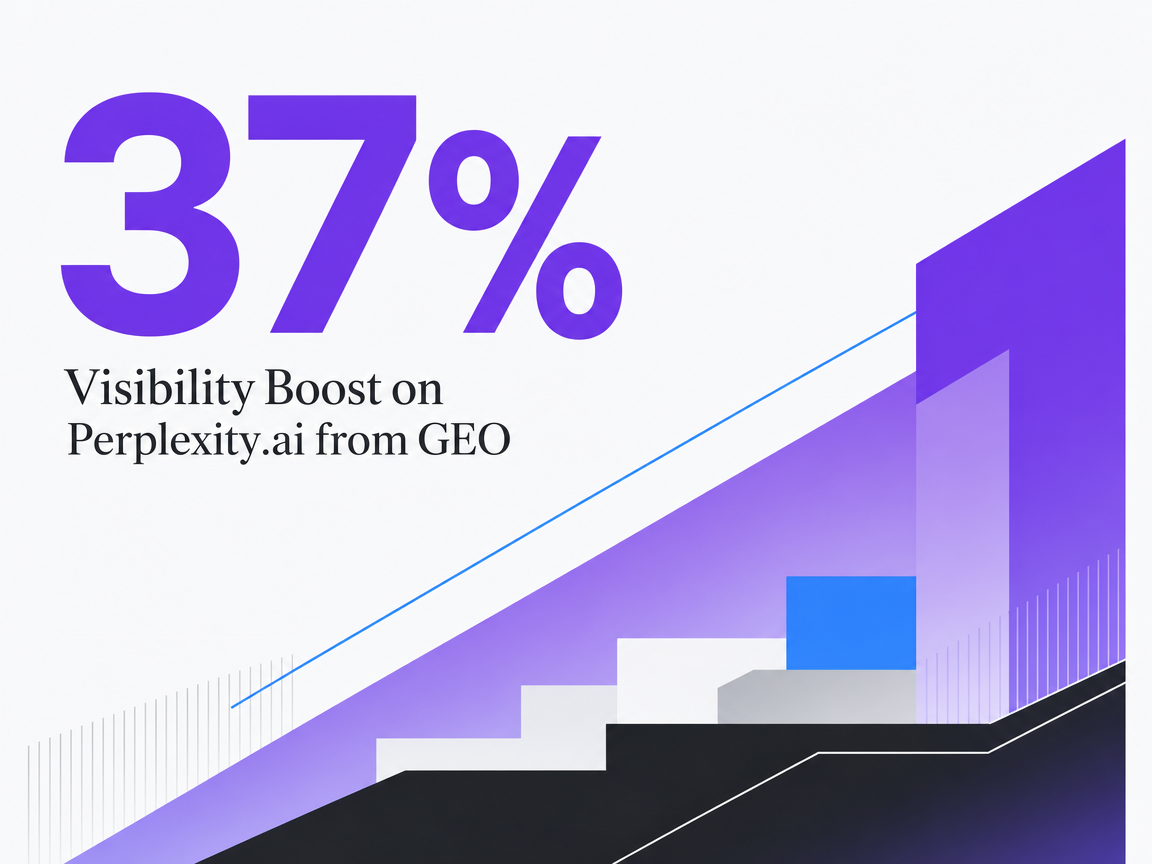 Visibility Boost on Perplexity.ai from GEO
Visibility Boost on Perplexity.ai from GEO
Writesonic GEO suite — generative content optimization for citation-readiness
Writesonic's GEO suite belongs in the second layer: generative content optimization. The job is shaping pages to be quoted rather than merely ranked. That means explicit statistics inside the body copy, clearly attributed quotations, structured entity definitions, and citation-friendly formatting that answer engines can extract without ambiguity. Specialist GEO platforms exist precisely because this output is different from what classic SEO suites produce, which optimize for SERP correlation rather than answer-engine citation 10.
For Heads of SEO, the agency-portfolio question Writesonic answers is whether a given page is structurally ready to be cited. The platform scores content against GEO conventions and suggests edits — adding a source-attributed statistic here, restructuring a definition there — that map to what the academic GEO research identified as the highest-impact tactics 1.
The trade-off is workflow integration. GEO-specific platforms generate recommendations that still need a human editor to implement at the per-client level, which is where agency margin gets compressed if the production pipeline is not already disciplined. Writesonic's output is high-leverage when the editorial layer is strong and low-value when content is being shipped without review.
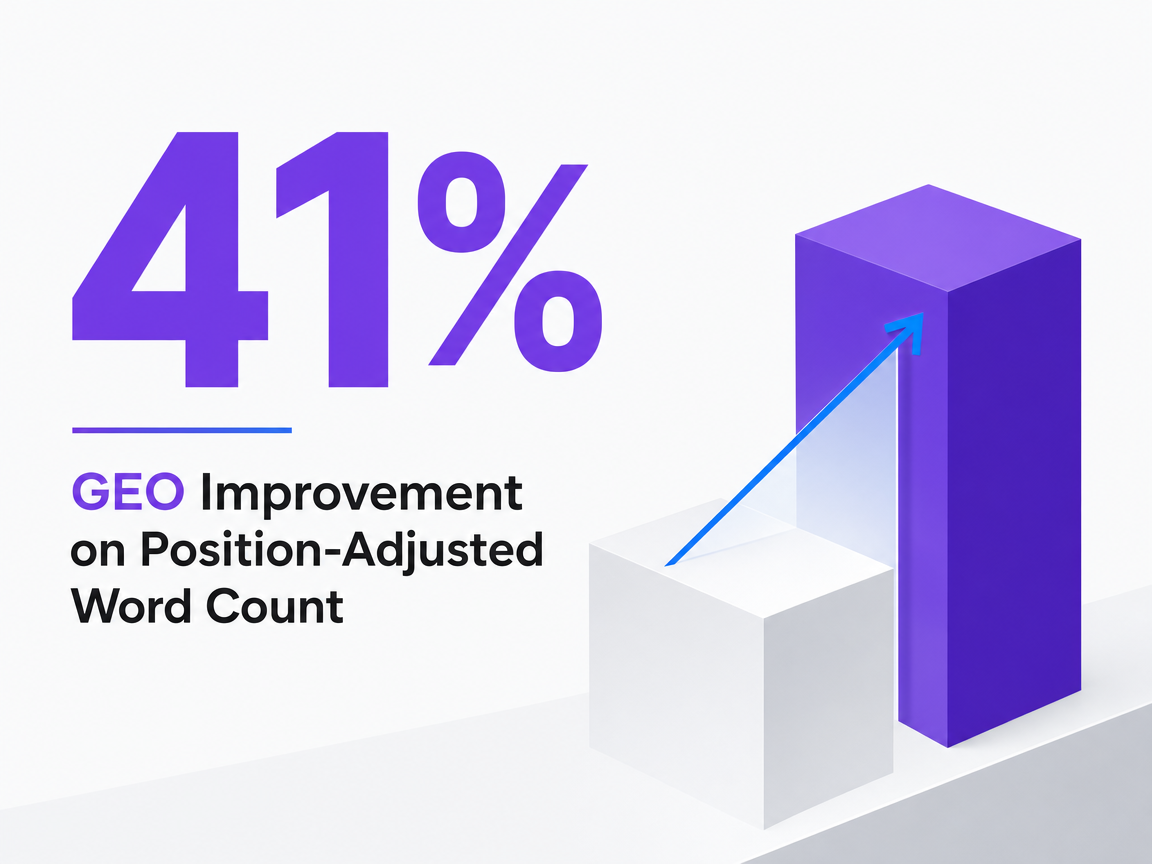 GEO Improvement on Position-Adjusted Word Count
GEO Improvement on Position-Adjusted Word Count
Surfer SEO — content structure and entity optimization compatible with AEO/GEO
Surfer SEO occupies the overlap between generative optimization and fundamentals. Its core function — scoring content against ranking competitors on structure, entity coverage, and term frequency — was built for traditional SERP optimization, but the same outputs map cleanly to what Google's own guidance recommends for generative AI features. That guidance uses AEO and GEO as labels for the work and continues to anchor it in helpful content, site structure, and structured data rather than treating LLM optimization as a separate discipline 6.
For portfolio operators, Surfer's value is that one tool produces deliverables usable in both jobs. The same content brief that earns a tenth-position ranking also tends to satisfy the structural and entity-completeness signals answer engines reward. That dual-use cuts production overhead meaningfully across 25-plus clients, where running separate workflows for SERP and GEO content would otherwise double editorial review cycles.
The honest limit: Surfer scores against ranking pages, not against AI answer citations. It will not tell Heads of SEO whether a client's content is being quoted in ChatGPT. It will tell them whether the content is structurally credible enough to be quoted, which is a different and necessary input.
Ahrefs — backlinks and brand-mention fundamentals that still drive LLM citations
Ahrefs is the fundamentals execution layer of the stack, and it earns its slot in an LLM SEO listicle for a specific reason. Analysis of LLM visibility drivers across AI Mode, AI Overviews, ChatGPT, and other generative surfaces shows that the most important factors continue to mirror traditional SEO: strong organic rankings, brand mentions, and authoritative backlinks 7. Generative engines are not pulling answers from a separate index of GEO-optimized content. They are pulling from the same web, weighted by the same authority signals agencies have been building for a decade.
The agency-portfolio implication is direct. A client with weak backlink profile and limited brand mention volume will not get cited in ChatGPT no matter how well its on-page content scores in a GEO tool. Ahrefs covers the link intelligence, brand monitoring, and competitive backlink analysis that feed citation worthiness upstream of any AI visibility tracker.
For Heads of SEO consolidating a stack, the temptation is to treat fundamentals tools as legacy line items being displaced by AI-native platforms. The data does not support that read. Backlink and brand-mention work remains the largest single input to LLM visibility, which means the fundamentals layer is where most of the actual visibility lift is earned — visibility trackers just measure the result.
Clearscope — editorial quality control for human-in-the-loop AI production
Clearscope is the editorial layer. Its job is content grading against topical coverage and relevance signals, which positions it as the quality control step in a production pipeline where AI is doing more of the drafting. That matters because Google's stance on AI content is conditional rather than prohibitive: AI-generated material can rank and earn citations when it meets quality standards, but scaled, unedited output falls under updated spam policies aimed at low-effort AI content 4. The acceptable path is AI acceleration with human originality and editorial review on top 5.
For agencies scaling content across 25-plus accounts, Clearscope's value is enforcement at velocity. It gives editors an objective grading layer that catches under-developed coverage before a page ships, which is the practical mechanism for keeping AI-assisted production inside Google's guardrails without slowing throughput to a crawl.
Where Clearscope does not help: it scores content quality, not citation behavior inside answer engines. Pair it with a visibility tracker to confirm the editorial work is actually producing the citation lift the rest of the stack is built to drive.
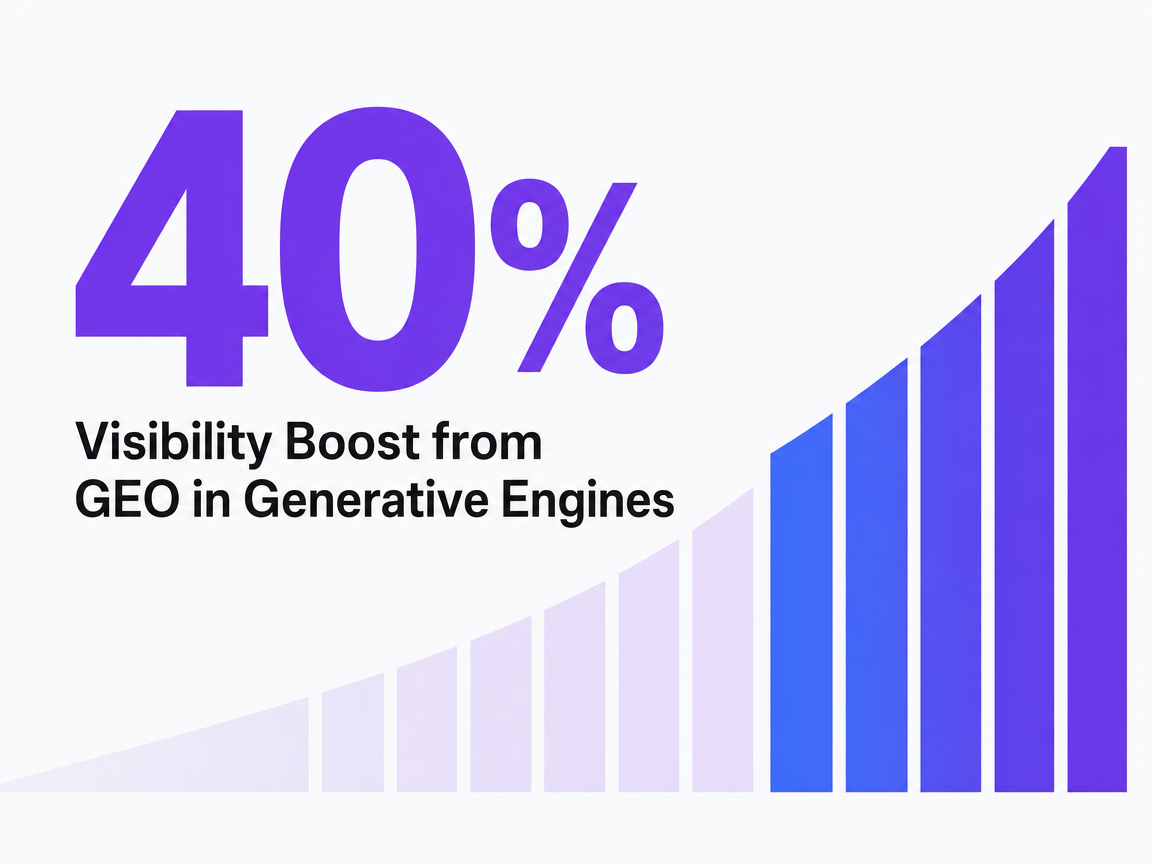 Visibility Boost from GEO in Generative Engines
Visibility Boost from GEO in Generative Engines
What LLM SEO tools cannot do alone
The honest read on this category is that no tool in the seven, and no combination of them, produces LLM visibility on its own. The drivers that determine whether ChatGPT, AI Overviews, or Gemini cite a client domain still trace back to organic rankings, brand mention volume, and authoritative backlink profiles — the same inputs that have run traditional SEO for the last decade 7. Visibility trackers measure the result. GEO platforms shape the content that gets quoted once a domain is already in the consideration set. Neither one manufactures the underlying authority.
That limit shows up sharply in the GEO research. The academic study on Perplexity.ai recorded meaningful visibility lifts from optimization tactics, but the same paper flagged domain-variable results, meaning the same techniques produced different outcomes depending on the site they were applied to 1. The variable that moved was the underlying domain authority, not the optimization layer. Agencies treating GEO tools as a shortcut around link building and brand equity will see compressed returns on weak domains.
The second constraint is editorial. Google's spam policy updates explicitly target scaled, low-effort AI content 4, and the workable path requires human originality and review on top of AI acceleration 5. Tools cannot substitute for that judgment layer.
See How Leading Agencies Automate LLM-Driven SEO at Scale
Get a tailored walkthrough of unified AI workflows that streamline LLM SEO execution, approval, and reporting—engineered for agencies managing dozens of client campaigns simultaneously.
If you manage a portfolio: the consolidation economics of running four tools across 25 clients
The math changes when the audience shifts from single-client SEO to portfolio operations. A Head of SEO carrying one flagship account can absorb four or five point tools without much friction. A Head of SEO carrying 25 to 60 accounts cannot. Every additional platform multiplies seat counts, per-domain charges, reporting reconciliation, and the human hours spent moving outputs from one tool into another's input. That is the coordination tax, and it scales with the portfolio rather than with the work.
The category economics make the tax worse, not better. AI-native tooling is compounding at a 23.4% CAGR while legacy enterprise suites grow at 14% 8, 9, which means new vendors will keep landing on the buying committee's desk for the next several budget cycles. Each one promises to solve one of the three jobs. None of them consolidate the others.
The table below isolates the variables that actually move at portfolio scale. Specific vendor prices are intentionally omitted because the supplied research does not name them; the point is the friction profile, not a procurement spreadsheet.
| Job-to-be-done | Representative tool tier | Cost variable | Scaling friction at 25+ clients |
|---|---|---|---|
| Visibility tracking | GEO-specialist platform 10 | Per-domain or per-prompt-set | Reporting reconciliation across engines |
| Generative optimization | GEO content platform 10 | Per-seat editorial | Per-client brief and review cycles |
| Fundamentals execution | Enterprise SEO suite 9 | Per-seat plus data credits | Cross-tool data normalization |
| Editorial QC | Content grading layer | Per-seat | Hand-off latency to publishing |
Four tools across 25 clients is not four times the work — it is closer to ten times, once handoffs and reporting reconciliation are counted. That is the gap a unified approval-driven execution layer is built to close.
Collapsing the stack into one approval-driven workflow
The exit from the coordination tax is not a better point tool. It is a layer that sits above the stack and treats visibility tracking, generative optimization, and fundamentals execution as inputs to a single per-client loop with one approval surface. The three jobs do not disappear. The handoffs between them do.
For a Head of SEO running 25 to 60 accounts, the practical shape of that layer has three properties:
- It reads signals from the existing tools rather than replacing them, because Google's own guidance still anchors generative AI optimization in helpful content, structured data, and site fundamentals that mature platforms already measure 6.
- It ranks recommendations across clients so editorial capacity flows to the accounts where citation lift is achievable, not where it is theoretically possible.
- It routes every recommendation through human approval before execution, which is the operational answer to Google's scaled-content-abuse posture 4.
Vectoron is built for that layer. Agencies keep their trackers, GEO platforms, and fundamentals suites; the consolidation happens at the decision and execution surface, where most of the margin is currently being spent.
Frequently Asked Questions
References
- 1.GEO: Generative Engine Optimization.
- 2.Top Tools for Tracking AI Visibility.
- 3.Rank in Perplexity AI: Essential Tools & Optimization.
- 4.Does Using AI for SEO Content Creation Affect Your Rankings?.
- 5.Does AI Content Work for SEO? Pros, Cons, & Uses.
- 6.Optimizing your website for generative AI features on Google Search.
- 7.Winning the AI shelf: How to compete for visibility in the LLM era.
- 8.AI-powered SEO Software Market Size | CAGR of 23.4%.
- 9.Enterprise SEO Platforms Market Size, Share and Forecast 2032.
- 10.Best Generative Engine Optimization (GEO) Tools in 2026.