
Key Takeaways
- Profound emphasizes prompt coverage breadth and competitive mention tracking across major engines, which matters for brands worried about absence from category-level questions rather than just branded ones.
- Peec AI centers on citation share against defined prompt panels with transparent attribution, giving finance teams the numerator-denominator discipline they need during CFO review.
- AthenaHQ adds sentiment and contextual framing to each mention, separating recommended placements from cautionary ones so visibility becomes directional rather than a raw count.
- Otterly.AI offers lightweight monitoring suited for smaller teams establishing a baseline, with lower cost and configuration overhead but limited integration depth for enterprise reporting.
- Scrunch AI delivers cross-engine benchmarking and enterprise dashboards structured for BI pipelines, fitting buyers who must report citation performance up to executive stakeholders.
- Vectoron pairs visibility tracking with content, SEO, PPC, and approval workflows in one system, closing the 33-point measurement-to-impact gap McKinsey documents 3.
The Measurement Problem Hiding Inside AI Search
AI search has already crossed the threshold where ignoring it becomes a budget problem rather than a curiosity problem. McKinsey reports that roughly 50% of Google searches now surface an AI summary, and that share is projected to exceed 75% by 2028 1. The same analysis finds that only 16% of brands systematically track their performance inside AI search results 1. The gap between where attention is moving and where measurement is pointed defines the category this article evaluates.
For a marketing VP, the practical question is not whether ChatGPT, Gemini, Perplexity, Claude, and Google AI Overviews matter. The question is which tool produces evidence a CFO will accept. A rank-checker that reports prompt coverage in a vacuum does not survive a budget review. A platform that connects citation share, sentiment, and competitive mention rate to pipeline activity does.
The shortlist that follows is scored against a Forrester-style rubric rather than a feature grid, then stress-tested against multi-location economics and governance expectations from NIST 6. Readers should treat the exercise as portfolio governance: which line item in the marketing stack measures the channel that 44% of AI search users now name as their primary insight source 1, and which one closes the loop to revenue.
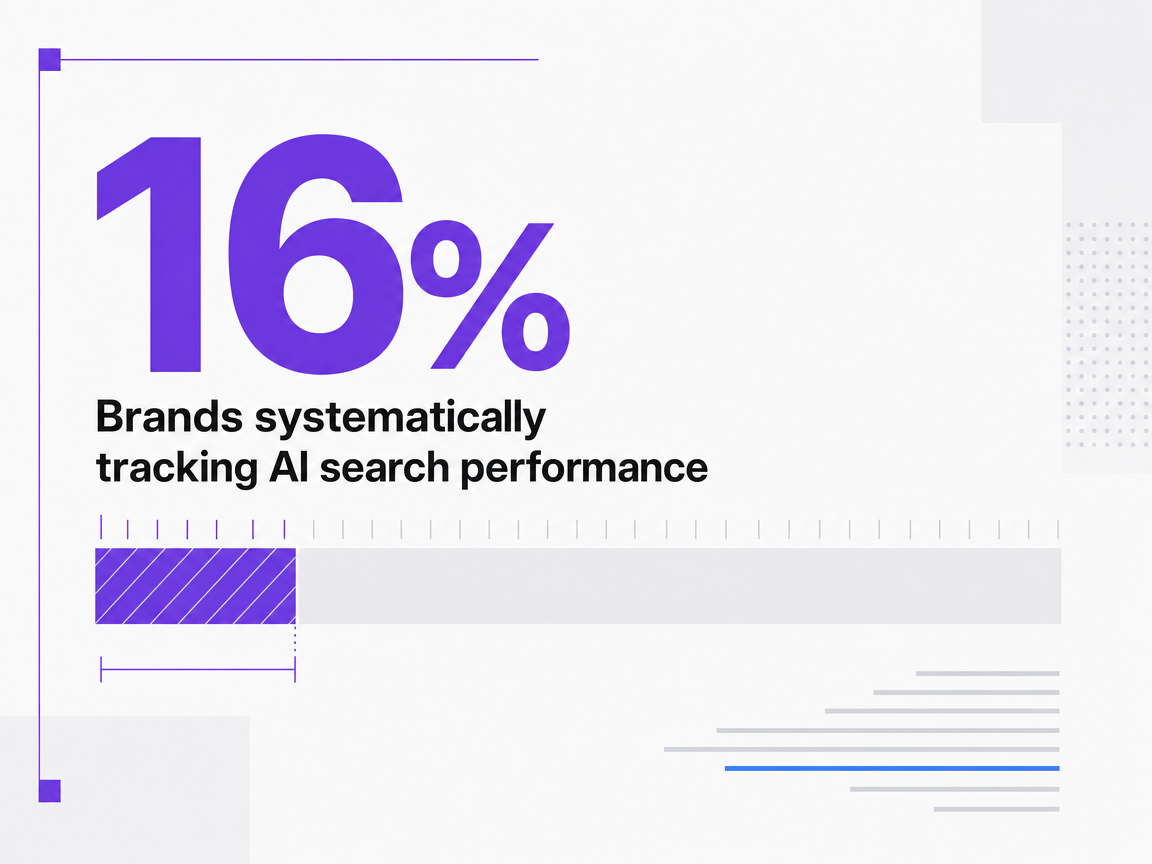 Brands systematically tracking AI search performance
Brands systematically tracking AI search performance
What 'Visibility' Actually Means When a CFO Is in the Room
The Four Metrics That Survive Finance Review
Visibility is a soft word that finance teams will not fund. The category becomes defensible only when it is broken into four measurable inputs that a controller can reconcile against pipeline data: citation share, prompt coverage, sentiment, and downstream conversion.
Citation share : measures how often a brand appears as one of the named sources inside an AI-generated answer, expressed as a percentage of the eligible answer set for a defined prompt list. It is the closest analog to organic share-of-voice, but it counts presence inside the answer itself, not the blue links underneath.
Prompt coverage : measures the breadth of the question universe a brand shows up in. A tool that tracks fifty branded prompts is not measuring the same thing as one that tracks a thousand category and competitor prompts. Coverage scope is the single biggest hidden variable in vendor comparisons.
Sentiment : captures the qualitative framing of each mention. A brand cited as the cautionary example in a Perplexity answer has a different commercial value than one cited as the recommended option, even though both register as a hit in a rank-checker.
Downstream conversion : ties the first three back to CRM events. Without it, the other three remain vanity. Wharton's 2025 finding that 72% of enterprises now formally measure gen-AI ROI sets the bar 7: any visibility tool that cannot feed a closed-loop reporting engine 2 will struggle in a budget cycle.
Why Citation Share Beats Impression Volume
Impression-style metrics travel poorly into AI search because the answer often replaces the click. McKinsey reports that 44% of AI search users now treat AI-based search as their primary and preferred insight source, meaning a meaningful share of demand never reaches a destination page at all 1. The cited brand inside the answer captures the consideration; the uncited brand below the answer captures nothing.
Citation share reframes the measurement question from how many people might have seen something to how often the brand is the source the model chose to name. That is a cleaner unit for finance because it maps to a defined denominator (the prompt set) and a defined numerator (cited appearances), both auditable.
The operational consequence is straightforward: a visibility tool that reports rank or position without reporting citation share against a fixed prompt panel is measuring the wrong layer. Buyers should ask vendors to define the prompt universe, the refresh cadence, and how citations are attributed when a model paraphrases without a hyperlink.
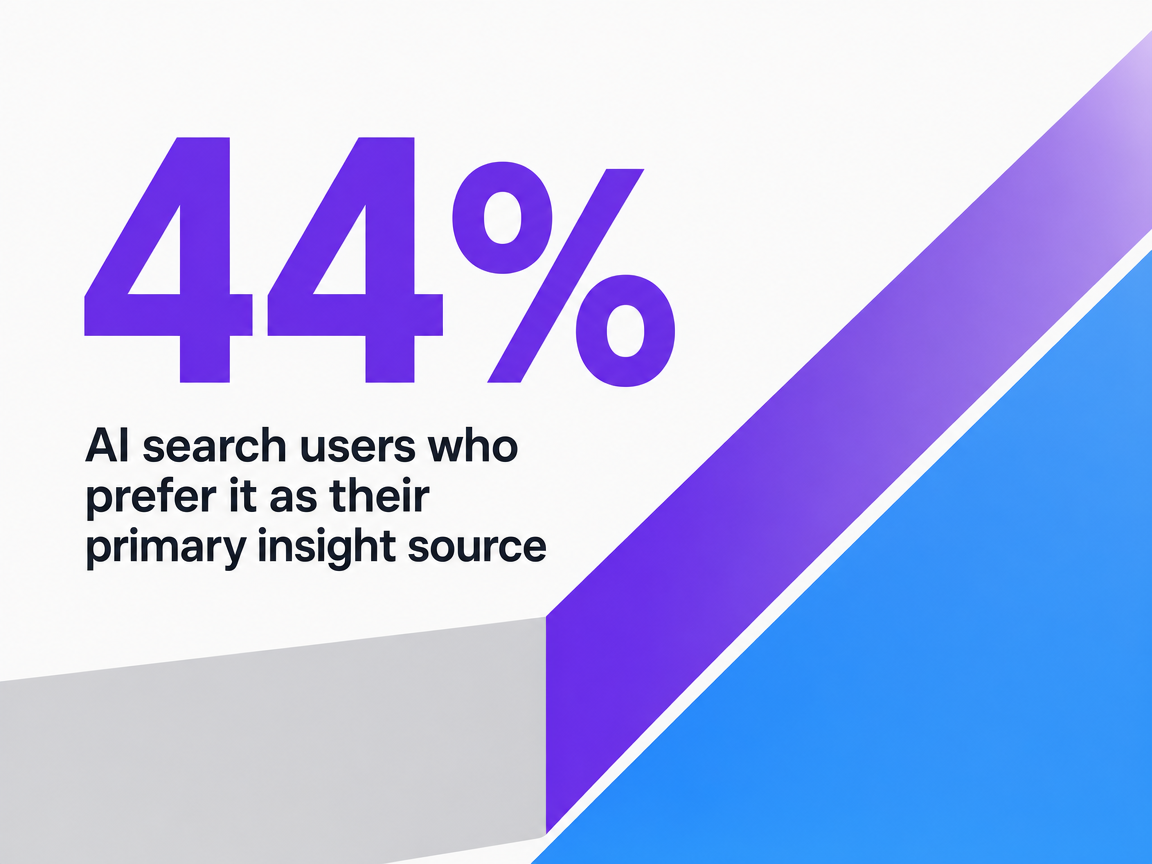 AI search users who prefer it as their primary insight source
AI search users who prefer it as their primary insight source
A Forrester-Style Rubric for Scoring Any Tool on This List
Cost, Benefits, Flexibility, Risk: Applying TEI to LLM Visibility
Forrester's Total Economic Impact methodology evaluates technology investments across four components: cost, benefits, flexibility, and risk 8. Applied to LLM visibility tools, the rubric forces buyers past feature checklists and into the language a finance committee already speaks.
Cost : is more than subscription price. It includes the analyst hours required to maintain the prompt panel, the engineering time to pipe citation data into a CRM, and the opportunity cost of dashboards no one reads. Vendors quoting per-prompt or per-engine fees should be modeled against a full year of prompt expansion, not a launch-month snapshot.
Benefits : must be expressed as pipeline-adjacent outcomes, not impressions. Citation share lifted from 8% to 14% on a defined prompt set has commercial meaning only when paired with downstream conversion data or, at minimum, a measurable change in branded demand.
Flexibility : covers whether the tool accommodates new engines, new geographies, and new prompt categories without a renegotiation. AI search is not a stable surface, and a contract that locks coverage to today's five engines will age poorly.
Risk : includes vendor methodology risk: how citations are attributed when models paraphrase, how often panels refresh, and whether reported numbers survive a third-party audit.
The Measurement-to-Impact Gap Every Buyer Should Price In
Measurement is necessary, but it is not sufficient. Wharton reports that 72% of enterprises now formally measure generative AI ROI 7. McKinsey's 2025 global survey finds that only 39% of organizations see AI driving EBIT impact at the enterprise level 3. The 33-point gap between measuring and landing is the single most important number a VP can carry into a vendor demo.
The gap exists because most visibility tools stop at the dashboard. They report what the model said yesterday and leave the response, the content update, the schema fix, and the page rewrite to whatever team has capacity. The handoff is where impact leaks out.
A defensible evaluation question follows from this: what does the tool do between observing a citation gap and closing it? Vendors that surface visibility data but cannot route insights into a production workflow are charging for half the loop. Buyers should price the missing half explicitly, either as additional internal headcount, additional agency spend, or as a reason to consolidate visibility and execution under one platform.
Track LLM visibility impact with real data now
Measure and optimize your LLM-driven content’s performance using live campaign data during your free trial.
The Shortlist: Six Tools Evaluated Against the Rubric
Profound: Prompt Coverage and Competitive Mention Tracking
Profound positions itself around the breadth question: how many of the prompts a category cares about return the brand, and how often competitors show up in the same answer. The product centers on large prompt panels and competitive mention rate, which makes it useful for buyers whose primary worry is being absent from category-level questions rather than branded ones.
What it measures well: prompt coverage across ChatGPT, Perplexity, Gemini, and Google AI Overviews, plus a competitive share view that shows which brands the models name alongside or instead of the buyer. Cost behavior tracks prompt volume, so the rubric's cost component should be modeled against a year of panel expansion, not the launch panel.
What it does not solve: the handoff from gap to content. Profound surfaces the deficit; the response remains a manual project for the in-house team or an outside agency. Benefits scoring depends on whether the buyer already has production capacity sitting idle to act on what the dashboard finds.
Peec AI: Citation Share Across ChatGPT, Perplexity, and Gemini
Peec AI leads with the metric finance teams accept most readily: citation share against a defined prompt set. The product is built around the question of how often a brand is named as a source inside the answer, rather than how often it ranks in a related link list.
Strengths sit in the numerator-denominator discipline. Buyers can define the prompt universe, the refresh cadence is transparent, and citation attribution is reported separately from paraphrased mentions. That separation matters during a CFO review because paraphrased mentions without a hyperlink are the most contested category in any vendor methodology.
Flexibility is moderate. Engine coverage favors ChatGPT, Perplexity, and Gemini; Claude and AI Overviews coverage is shallower in most deployments. The risk component of the rubric should weight that engine asymmetry against where the buyer's category demand actually sits. A B2B software brand whose buyers live in ChatGPT is in different shape than a consumer brand whose surface is AI Overviews.
AthenaHQ: Sentiment and Answer-Level Brand Context
AthenaHQ takes the framing problem seriously. Being cited is not the same as being recommended, and the tool is built to separate the two. Each mention is scored for sentiment and contextual framing: cautionary example, neutral reference, recommended option, or comparative loser against a named competitor.
That qualitative layer is the strongest argument for the product. A rank-checker that counts a hit when the model names the brand as the example of what to avoid is a worse signal than no mention at all. Sentiment-aware tracking turns visibility into a directional metric rather than a count.
The tradeoff sits in cost and prompt scale. Sentiment classification at answer level is more expensive per check than presence detection, which usually means smaller panels for the same budget. Buyers should price the rubric's benefits component against the narrower prompt set: deeper context on fewer questions, rather than thin context on many. The downstream conversion handoff still depends on whatever CRM integration the buyer builds.
Otterly.AI: Lightweight Monitoring for Smaller Marketing Functions
Otterly.AI is the option for teams that need a working signal before they need a platform. The product offers prompt monitoring, citation tracking, and basic competitive views at a price point and configuration overhead that a single marketer can run without engineering support.
For a VP standing up the visibility category for the first time, that lower friction matters. The rubric's cost component scores well; the flexibility component is more limited, because deeper integrations into CRM and BI tooling are not the product's center of gravity. Engine coverage is adequate for the major surfaces, with less depth on enterprise reporting.
Risk concentrates in the methodology question. Smaller panels and lighter sentiment work mean the dashboard is best read as a directional input, not an audit-grade report. A reasonable use pattern: deploy it for the first two quarters to establish a baseline, then graduate to a higher-coverage tool once the prompt panel and the executive reporting expectations harden.
Scrunch AI: Enterprise Reporting and Cross-Engine Benchmarks
Scrunch AI is shaped for the buyer who has already lost the argument about whether to track and now has to report up. The product emphasizes cross-engine benchmarking, executive-grade dashboards, and integrations into the kind of centralized reporting engine McKinsey describes as table stakes for closed-loop measurement 2.
Strengths cluster in the benefits and flexibility components of the rubric. Citation share, prompt coverage, and sentiment are reported across all five major engines, with the data structured for piping into a BI layer rather than living in a standalone dashboard. That structural choice is what separates enterprise-grade visibility tools from prosumer ones.
Cost is correspondingly higher, and the implementation cycle is longer. The rubric's risk component should account for vendor methodology lock-in: once a brand's historical citation baseline lives in one platform's definitions, switching costs accumulate. Buyers should ask for raw data export rights in the contract, not just dashboard access, to keep the historical series portable.
Vectoron: Visibility Plus the Execution Loop
Vectoron belongs on the shortlist for a different reason than the other five. The category-adjacent argument is that visibility data without execution capacity reproduces the 33-point gap between measurement and EBIT impact 3: the dashboard reports the citation deficit, and the response stalls in a queue.
The platform pairs LLM visibility tracking with content production, SEO, PPC, backlinks, social, and call intelligence under a single approval workflow. When a citation gap surfaces on a defined prompt panel, the same system that observed it can draft the response, route it through human approval, and publish. The rubric's benefits component scores higher because the loop closes inside one contract rather than across three vendors and a managing analyst.
The tradeoff is scope. Teams that want a pure measurement layer to feed an existing production stack will find tighter fits among the other five. Teams under pressure to scale execution without adding headcount get a different equation: visibility, ranked recommendations, and approved execution in one governed system.
Closing the Loop: From Citation Data to Booked Revenue
A dashboard that reports citation share without a path to revenue is a research subscription, not a marketing investment. The line that separates the two is whether visibility data flows into the same reporting engine that holds CRM events, paid spend, and SEO performance, or sits in a parallel tab that no one opens during pipeline review.
McKinsey's guidance on closed-loop measurement is the operational standard buyers should hold vendors to: aggregate data from all channels into centralized reporting, then validate impact with incrementality testing and standardized metrics 2. Translated to LLM visibility, that means three connections need to exist before a tool earns its line item.
- The prompt panel and citation data must export to the warehouse layer, not just the vendor's dashboard.
- Citation share movement on a defined prompt set must be timestamped against branded search volume, direct traffic, and pipeline-stage entries in the CRM.
- The reporting cadence must match the cadence finance already uses to review marketing performance.
The practical test for any tool on the shortlist is one question: can the buyer trace a citation share increase on a specific prompt cluster to a measurable change in qualified pipeline within the same reporting period? If the answer requires a side analysis in a spreadsheet, the loop is not closed.
If You Manage Multiple Locations: A Different Cost Model
Single-brand buyers can stop reading here. The economics shift when a marketing function owns thirty dental practices, two hundred home service territories, or a portfolio of senior living communities. AI search results are localized, and the question "does the brand show up in ChatGPT for endodontists near me" has a different answer in Phoenix than in Pittsburgh. Tracking at the brand level masks the variance that determines which locations are starving for pipeline.
The cost model has three modes, and the rubric's cost component should be run against all three before signing a contract. Let L equal the number of locations, P equal prompts tracked per location, and C equal the vendor's cost per prompt-check per refresh cycle.
| Tracking Mode | Annual Cost Formula | What It Reveals |
|---|---|---|
| Brand-only | P × C × refreshes/year | Aggregate citation share; hides local gaps |
| Per-location prompt sets | L × P × C × refreshes/year | Which markets are absent from local AI answers |
| Competitive set per market | L × P × (1 + competitors) × C × refreshes/year | Local share-of-citation vs. named rivals |
The jump from mode one to mode three is rarely linear in vendor pricing, because most platforms negotiate volume bands rather than pure per-check rates. Buyers should request the formula in writing and model two scenarios: half the locations on full competitive tracking, all locations on prompt-coverage tracking only. The second usually produces better marginal information per dollar when the portfolio exceeds roughly fifty markets, because the variance worth acting on lives in coverage gaps, not in head-to-head share.
See How Leading Teams Track LLM Performance—With Real-Time ROI Metrics
Request a walkthrough of advanced LLM visibility tracking solutions designed for multi-channel campaigns. Learn how top agencies and enterprise brands quantify model impact, surface actionable insights, and benchmark results across the funnel.
Governance and Provenance Requirements Buyers Forget
Procurement teams have started asking questions about LLM visibility tools that did not exist eighteen months ago. NIST's generative AI profile expects organizations to implement continuous monitoring of system impacts, document data provenance, and ensure that responsible actors can evaluate performance and escalate issues based on logged data 6. Visibility vendors sit inside that scope whether they market themselves that way or not.
Three contract terms decide whether a tool survives a governance review:
- Raw prompt-and-response logging with timestamp and engine attribution, not just aggregated dashboard exports, so an internal auditor can reconstruct what the model said on a given date.
- Documented refresh methodology, including how the vendor handles model version changes that silently shift citation behavior mid-quarter.
- Named escalation paths for when a competitor citation pattern suggests scraped or misattributed brand content.
Buyers who skip these terms inherit the vendor's methodology choices as their own audit position. That is a defensible posture only when the methodology is documented in writing.
A 90-Day Decision Path for the Marketing VP
Vendor selection benefits from a fixed clock. A 90-day path keeps the evaluation honest and produces a defensible recommendation for the next budget cycle.
- Days 1–30: define the prompt panel and the baseline. Lock the question universe before any tool sees a dollar. Branded prompts, category prompts, competitor-comparison prompts, and bottom-funnel prompts each need separate counts. Pull a manual citation baseline across the five engines so vendor reports can be checked against an independent reading.
- Days 31–60: run two tools in parallel. Pick one measurement-pure vendor and one execution-connected option from the shortlist. Score both against the four TEI components 8 using the same prompt panel. Require raw data export, not dashboard screenshots, and time-stamp citation changes against CRM pipeline entries.
- Days 61–90: present the finance case. Translate citation share movement into pipeline deltas using the closed-loop reporting structure 2. If neither tool can produce that translation without a side spreadsheet, the loop is not closed and the contract is not ready to sign. Vectoron is built for teams that want the visibility layer and the execution loop inside one approval workflow.
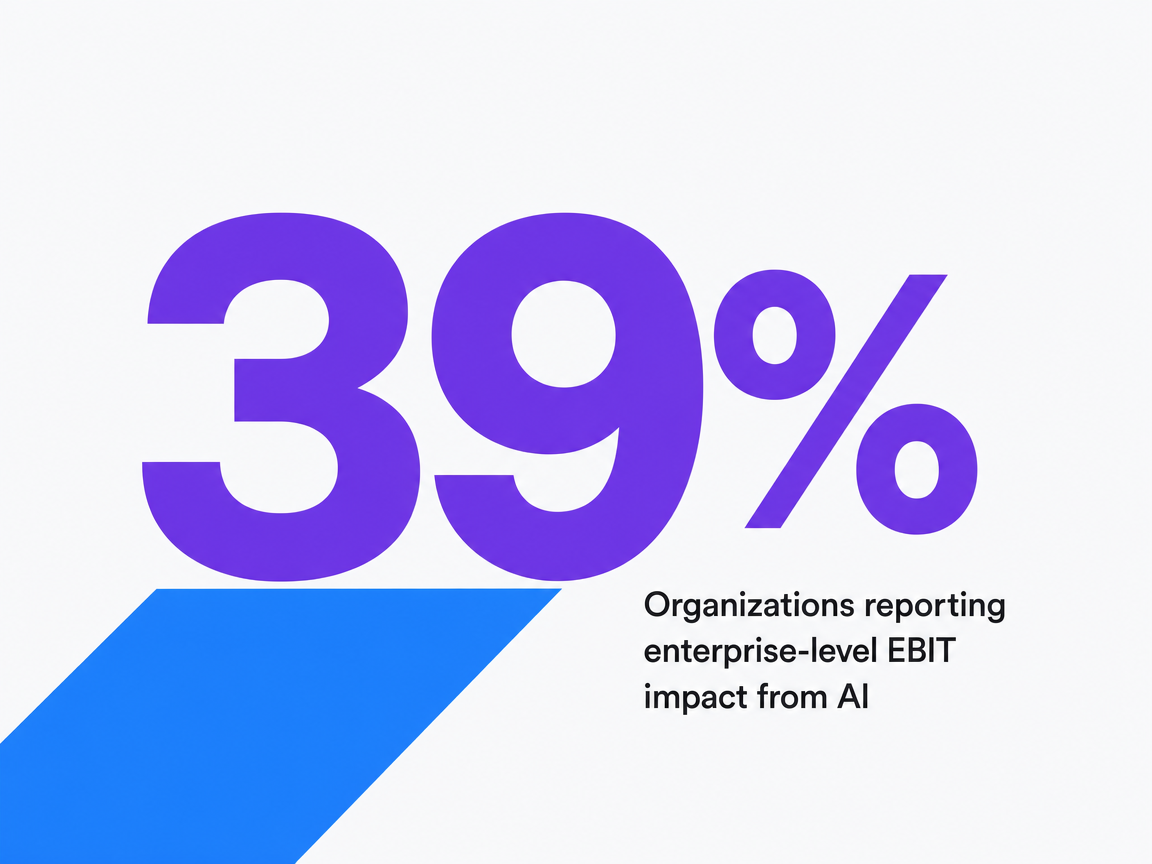 Organizations reporting enterprise-level EBIT impact from AI
Organizations reporting enterprise-level EBIT impact from AI
Frequently Asked Questions
References
- 1.New front door to the internet: Winning in the age of AI search.
- 2.The next frontier of personalized marketing.
- 3.The State of AI: Global Survey 2025.
- 4.10 Real-Life Examples of how AI is used in Business.
- 5.How to Maximize the Business Value of Generative AI.
- 6.Artificial Intelligence Risk Management Framework: Generative AI Profile.
- 7.2025 AI Adoption Report: Gen AI Fast-Tracks Into the Enterprise.
- 8.Total Economic Impact Methodology.
- 9.The State of AI in the Enterprise - 2026 AI report.
- 10.Marketing and sales soar with generative AI.