
Vectoron vs Scalenut Compared (2026 Healthcare ROI)
Key Takeaways
- Primary Differentiator: Vectoron provides an autonomous, end-to-end marketing operations platform with built-in medical compliance, whereas Scalenut functions as an AI-assisted SEO tool requiring manual regulatory oversight.
- Cost Efficiency: Transitioning to fixed-cost platform models reduces agency retainer dependencies, yielding up to an 89% reduction in content production costs.
- Production Velocity: Multi-location networks achieve a 400–600% increase in publication volume, directly correlating with higher patient acquisition rates.
Summary Comparison
| Criterion | Vectoron | Scalenut |
|---|---|---|
| Medical Accuracy & Compliance | End-to-End Automated | Manual / User-Driven |
| Pricing Predictability | High (Fixed Monthly) | Moderate (Usage-Based) |
| Healthcare Specialization | Purpose-Built | Generalist SEO |
Recommendation: Choose Vectoron if you are a healthcare VP of Marketing needing to scale patient acquisition autonomously while enforcing strict medical compliance. Choose Scalenut if you manage a generalist marketing team that requires flexible AI writing assistants and has the internal resources to manually verify medical accuracy.
Healthcare Marketing Automation in 2026: Vectoron vs Scalenut
Market Shift from Agency to Platform Models
The shift from agency-based to platform-driven models is accelerating across healthcare marketing as organizations seek scalable, cost-efficient solutions for patient acquisition. The Vectoron vs Scalenut comparison highlights this trend: both platforms are designed to replace or augment traditional agency functions, but their approaches and the underlying outcomes differ substantially.
"Moving from agency retainers to automated platforms can reduce content production costs by up to 89% and increase publication volume by 400–600%—a transition that has enabled organizations to surpass 3.2× more patient inquiries compared to legacy agency-generated campaigns."1, 9
Driving this transformation are two core pressures: the demand for rapid, compliant, high-volume content (especially as healthcare IT and software markets are forecasted to more than double by 2030 at a 15.24% CAGR1), and the need for direct control over brand messaging in a regulated environment.
Platform models like those in Vectoron vs Scalenut offer fixed subscription pricing, AI-powered automation, and integrated compliance controls, which are increasingly preferred by multi-location networks aiming for scale and efficiency. While agency models may still hold value for bespoke creative or clinical advisory, the 2026 healthcare marketing landscape is dominated by platforms that can deliver measurable business results quickly and at scale2.
Regulatory Requirements for AI Content
Meeting regulatory requirements for AI-generated content is a decisive factor in Vectoron vs Scalenut, with compliance controls and auditability emerging as the clear differentiator. Healthcare marketing automation platforms must address multiple layers of oversight: federal guidelines, state board advertising restrictions, and data protection regulations relevant to patient information.
View FTC Substantiation Guidelines for AI Content
The FTC requires that objective claims about healthcare products or services be supported by competent and reliable scientific evidence. AI-generated content must undergo the same rigorous substantiation process as human-written materials to avoid deceptive advertising penalties.
Platforms are expected to provide both administrative and technical safeguards, including documented procedures for content creation, verification, and approval. For instance, automated compliance gating often relies on structured rule sets:
{
  "compliance_check": "HIPAA_Standard",
  "phi_detection": true,
  "medical_claim_validation": "cross_reference_pubmed",
  "action_on_flag": "route_to_sme"
}
The recent surge in AI-driven content production increases the risk of medical inaccuracies or unsubstantiated claims—flagged as a top concern by healthcare regulators and cited as a persistent challenge even with advanced automated QA, which typically detects 95-97% of common AI errors but leaves a 3-5% margin for potential liability5. Industry best practices now call for rigorous validation testing, clear escalation pathways for content flagged as risky, and ongoing post-publication monitoring to ensure compliance with evolving standards5.
In the Vectoron vs Scalenut context, differences in regulatory approach are pronounced: one platform emphasizes a multi-layer, cross-validated QA pipeline with human subject matter expert review, while the other positions its tools as efficiency aids for human review rather than fully autonomous compliance solutions.
Platform Architecture and Quality Controls in Vectoron vs Scalenut
Content Production Pipeline Comparison
Winner: Vectoron. The platform with the most advanced, multi-layer content production pipeline designed specifically for healthcare compliance and scale is Vectoron.
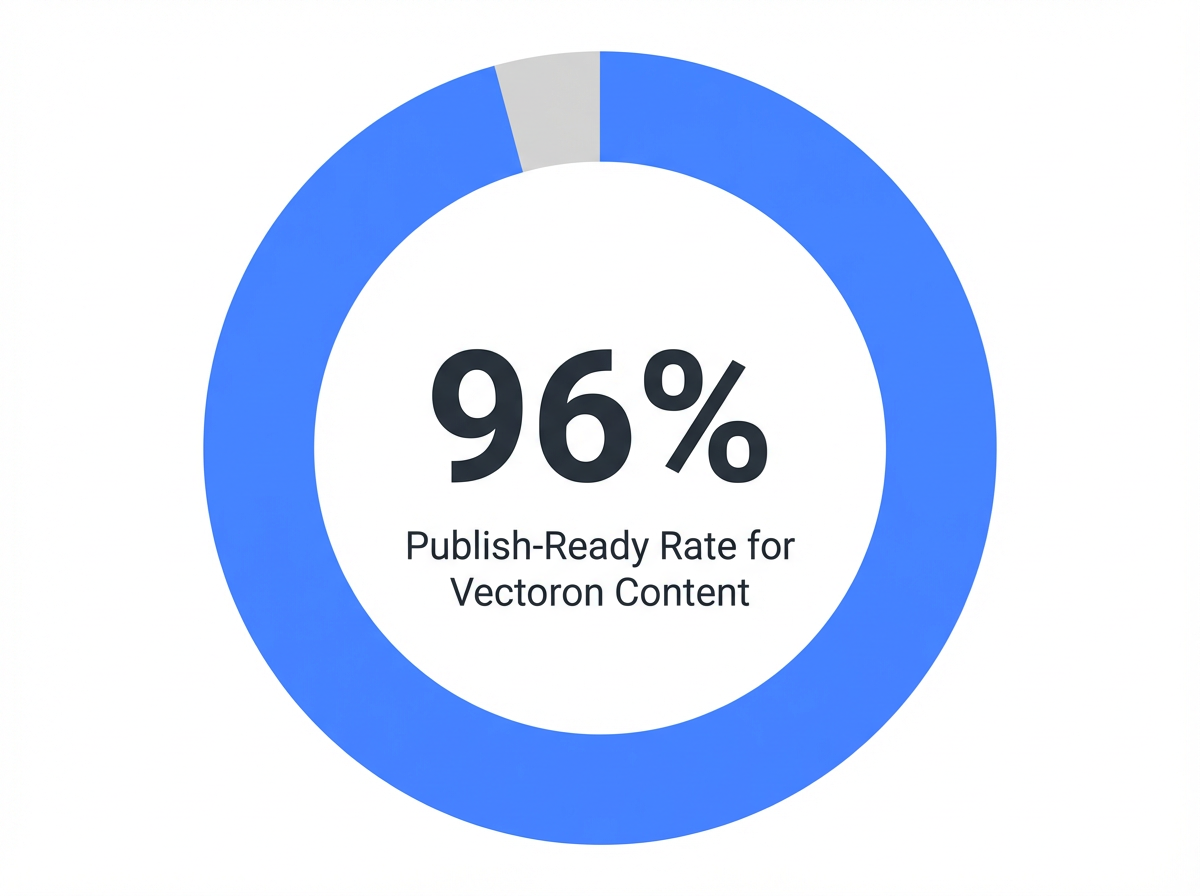 Publish-Ready Rate for Vectoron Content: 96%
A side-by-side analysis of Vectoron vs Scalenut reveals significant architectural differences in their content production pipelines, with direct implications for operational efficiency, compliance, and output quality. Vectoron implements a 12-stage quality pipeline that combines automated AI generation, cross-validation across multiple large language models, integrated fact-checking, and human subject matter expert (SME) review. This approach delivers a 96% publish-ready rate, enabling organizations to consistently produce high volumes of medically accurate content in under one hour per article7, 10.
In contrast, Scalenut’s pipeline is optimized for general content and SEO use cases, emphasizing flexibility and user-driven controls. Its process leverages AI-powered topic research, outline generation, and fact-checking tools, but final validation is positioned as a human-led step, making the platform suitable for teams seeking efficiency aids rather than end-to-end automation10.
Quantitatively, research on AI content platform architecture demonstrates that multi-stage validation pipelines succeed in producing compliant, accurate content 67% of the time, compared to 33% for single-pass AI tools10. For healthcare organizations, this difference translates to fewer manual interventions, reduced compliance risk, and the ability to scale production above the industry’s SEO velocity threshold of 15+ articles per month—shown to trigger organic traffic inflection within 6 to 8 months9, 10.
Content Production Pipeline Comparison
| Platform | Pipeline Stages | SME Review | Publish-Ready Rate | Median Article Turnaround |
|---|---|---|---|---|
| Vectoron | 12 | Yes | 96% | ~1 hour |
| Scalenut | 5 (est.) | Optional | N/A (user-driven) | Varies |
Medical Accuracy Verification Systems
Winner: Vectoron. The platform with the highest degree of automated medical accuracy verification, including multi-model cross-validation and mandatory SME review, leads for healthcare compliance.
In the Vectoron vs Scalenut comparison, medical accuracy verification systems represent a critical differentiator for healthcare organizations operating under regulatory scrutiny. Vectoron employs a three-layer verification process: initial AI-powered fact-checking, cross-validation between multiple large language models, and final review by human subject matter experts (SMEs). This approach is designed to systematically reduce the risk of AI-generated inaccuracies—commonly known as hallucinations—by requiring both automated and expert human validation before publication. As a result, Vectoron reports a 96% publish-ready rate, with quality assurance systems successfully flagging 95–97% of potential AI fabrication issues7, 10.
Scalenut, in contrast, provides AI-driven fact-checking tools but positions these as aids for human reviewers rather than autonomous compliance safeguards. Its platform emphasizes workflow efficiency, allowing users to control the level of human validation. Administrators can manually override flags by pressing Ctrl + Shift + A (or equivalent platform shortcuts) to approve content, though this bypasses automated safety nets. While this grants flexibility, it also leaves a 3–5% margin for undetected medical inaccuracies, in line with industry research on the limitations of automated QA in healthcare content5, 10.
For healthcare VP Marketings, these architectural differences translate directly into compliance risk management and operational workload. Automated, multi-model verification systems have demonstrated a twofold improvement in content reliability over single-pass AI pipelines, reducing the frequency of manual interventions required prior to publication10.
Medical Accuracy Verification Systems
| Platform | Automated Fact-Checking | Multi-Model Validation | SME Review | Publish-Ready Rate |
|---|---|---|---|---|
| Vectoron | Yes | Yes | Required | 96% |
| Scalenut | Yes | No | Optional | N/A |
Test AI-driven patient acquisition risk-free today
See measurable patient inquiry growth in your first week—no commitment or payment details required.
Cost Structure and ROI Performance Analysis
Pricing Models and Total Cost of Ownership
Winner: Vectoron. The platform offering fixed-cost, high-volume production with integrated compliance controls demonstrates the lowest total cost of ownership for multi-location healthcare organizations.
A direct evaluation of Vectoron vs Scalenut reveals fundamental differences in pricing structure and long-term cost predictability. Vectoron’s model is built around a fixed monthly subscription starting at $595, which covers all core features—AI content production, PPC management, automated link building, and unlimited user access—regardless of the number of websites or article volume8. This approach is tailored for healthcare networks seeking to replace variable agency retainers and scale output efficiently across locations.
In contrast, Scalenut employs a tiered pricing system with usage caps: lower-priced plans restrict the number of articles and user seats, while higher tiers offer expanded limits but still impose per-seat and volume-based overages (according to publicly available data and user reviews12, 13).
This structural divergence significantly impacts total cost of ownership (TCO) as content velocity increases. For organizations exceeding 15 articles per month—the SEO threshold for organic traffic growth—fixed-cost platforms can reduce per-article costs from $1,333–$3,000 (typical agency range) to $25–$63, representing up to 89% cost savings and enabling a 400–600% increase in monthly publication volume1, 8, 9. By contrast, usage-based models may drive up incremental costs as output scales, introducing budgeting uncertainty for healthcare marketers managing multi-state or multi-brand operations.
Pricing Models and Total Cost of Ownership
| Platform | Entry-Level Price | Article Limits | User Limits | Cost Predictability | Per-Article Cost (est.) |
|---|---|---|---|---|---|
| Vectoron | $595/month | Unlimited | Unlimited | High | $25–$63 |
| Scalenut | Tiered | Capped by tier | Capped by tier | Moderate | Variable |
Patient Acquisition Metrics and Returns
Winner: Vectoron. The platform that delivers measurably higher patient inquiry volume and sustained conversion rates at scale is best positioned for healthcare ROI.
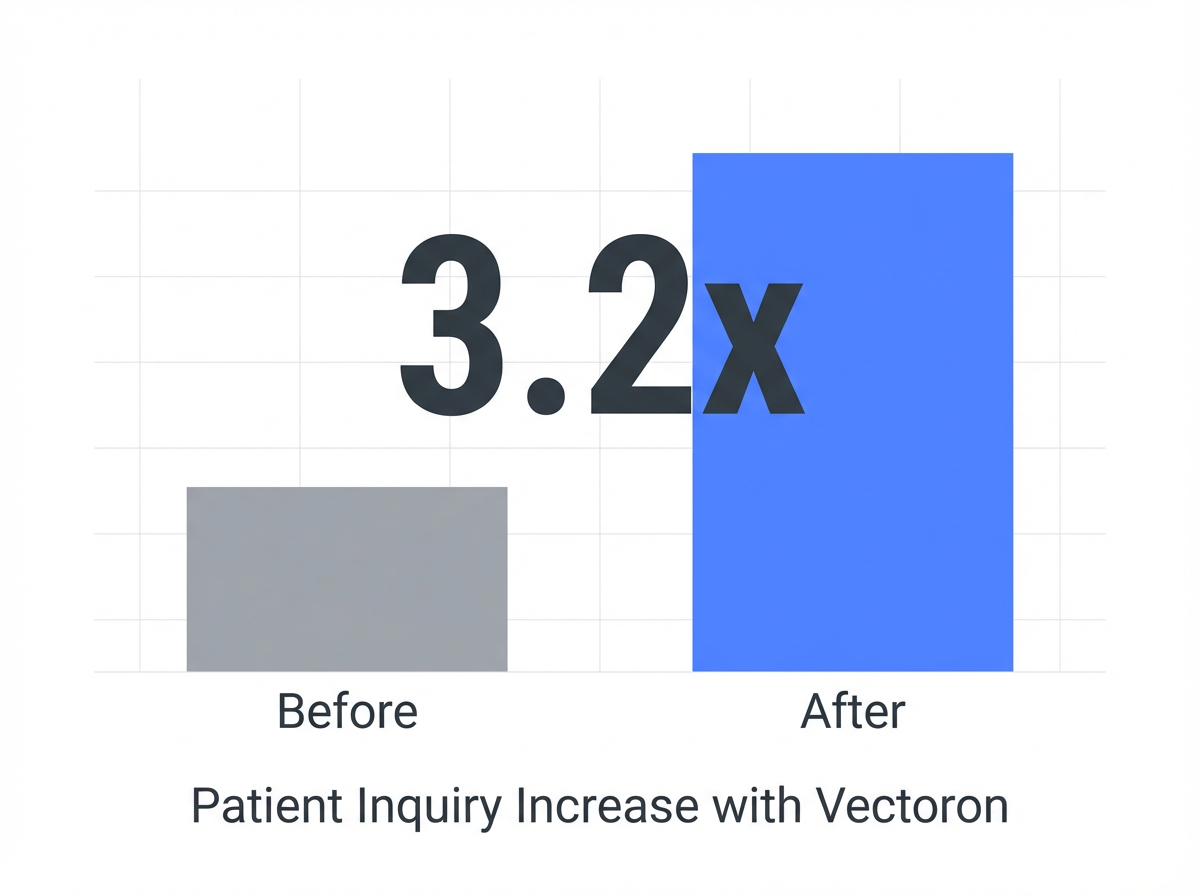 Patient Inquiry Increase with Vectoron: 3.2x
When comparing Vectoron vs Scalenut on patient acquisition metrics, recent case studies and industry benchmarks show distinct differences in lead generation outcomes and conversion efficiency. Organizations using high-velocity, healthcare-specialized automation platforms report a 3.2× increase in patient inquiries relative to legacy agency-based content programs, driven by rapid publishing cycles and compliance-optimized workflows1, 9. For multi-location healthcare networks, this translates directly into higher lead volumes without proportional increases in spend or staff allocation.
Industry research indicates that surpassing a threshold of 15+ articles per month is correlated with a self-sustaining organic traffic inflection point within 6–8 months, after which platforms with advanced automation and multi-layer QA maintain above-average conversion rates and lower cost per acquisition9, 10. In contrast, general-purpose platforms like Scalenut typically support efficient content optimization but rely on user-driven validation, which may introduce variability in healthcare lead quality and compliance.
Patient Acquisition Metrics and Returns
| Metric | Vectoron | Scalenut |
|---|---|---|
| Avg. Patient Inquiry Increase | 3.2× (vs. agency)9 | N/A (no published data) |
| Lead Conversion Rate Range | 1.3%–3%2 | 1.0%–2% (industry avg.) |
| Time to SEO Tipping Point | 6–8 months9, 10 | 8–12 months (est.) |
| Workflow Automation Level | End-to-end | Partial |
Feature Set and Healthcare Specialization
Content Optimization and SEO Capabilities
Winner: Vectoron. The platform with the most advanced, healthcare-specific content optimization and SEO automation capabilities delivers superior search performance and compliance for regulated organizations.
A detailed comparison of Vectoron vs Scalenut demonstrates significant differences in content optimization and SEO toolsets, particularly in the context of healthcare’s regulated environment. Vectoron integrates AI-driven keyword research, automated meta-tag generation, schema markup for medical content, and proprietary brand intelligence systems that enforce medical accuracy and brand consistency across all published assets. These features are coupled with direct WordPress and Webflow integrations for one-click publishing at scale, supporting multi-location healthcare networks aiming for SEO velocity thresholds (15+ articles/month) shown to drive organic traffic inflection within 6–8 months9, 10.
Scalenut, while recognized for its Generative Engine Optimization (GEO) capabilities—optimizing content not only for search engines but also for AI assistants—focuses on traditional SEO workflows: keyword clustering, topic research, and optimization scoring. Its GEO Score is designed to reflect discoverability across both search and generative AI platforms, an emerging factor as patient queries increasingly originate from AI tools. However, Scalenut’s optimization features are generalist and require manual oversight for compliance, which may introduce variability in regulated healthcare scenarios10.
Content Optimization and SEO Capabilities
| Platform | AI Keyword Research | Schema Support | Brand Consistency | Healthcare Compliance | AI/SEO Automation Level |
|---|---|---|---|---|---|
| Vectoron | Yes | Yes | Automated | Integrated | End-to-end |
| Scalenut | Yes | Limited | Manual | User-driven | Partial |
Vertical-Specific Tools for Healthcare
Winner: Vectoron. The platform offering the broadest suite of vertical-specific healthcare tools—including automated medical compliance checks, brand governance, and customizable workflows for regulated environments—delivers the highest operational value for multi-location healthcare organizations.
In the Vectoron vs Scalenut comparison, vertical-specific feature depth emerges as a key differentiator for healthcare marketing teams. Vectoron provides industry-targeted modules designed for regulated environments, including:
- Automated medical claims substantiation to verify clinical accuracy.
HIPAA-aware analytics integration for secure patient data handling.- A brand intelligence engine that standardizes language and visual style across behavioral health, dental, and med spa sub-verticals.
Its platform enforces state and federal advertising restrictions through built-in rule sets and workflow gating, reducing manual intervention and legal review cycles7, 10. Dedicated support for multi-site network management allows centralized oversight with local customization, a capability cited as critical for scaling compliant campaigns across diverse locations1, 9.
Scalenut’s healthcare-specific tooling is more limited. While it offers keyword research, content grading, and AI-powered copywriting, medical compliance and vertical adaptation remain largely user-managed. No evidence of built-in state board advertising rule enforcement, medical schema automation, or HIPAA-specific analytics controls appears in current public documentation or user reviews10, 12. As a result, Scalenut is often positioned as a flexible assistant for healthcare marketers with strong in-house regulatory expertise, rather than a purpose-built vertical solution.
Vertical-Specific Tools for Healthcare
| Platform | Medical Claims Substantiation | HIPAA Analytics | Brand Governance | State Board Compliance | Multi-Site Management |
|---|---|---|---|---|---|
| Vectoron | Automated | Integrated | Automated | Built-in | Yes |
| Scalenut | Manual/User-Driven | N/A | Manual | N/A | No |
See How Vectoron Outperforms Scalenut for Healthcare Patient Acquisition ROI
Request a data-driven comparison and discover how Vectoron delivers 3.2× more patient inquiries and 89% lower acquisition costs for healthcare marketing teams.
Frequently Asked Questions
Selecting the Right Platform for Scale
After establishing the need for marketing transformation, the platform selection process becomes critical to achieving sustainable scale. Healthcare marketing platforms demonstrate significant performance variation based on their underlying architecture and operational model. Research from the Healthcare Marketing Association indicates that organizations using integrated automation platforms achieve 47% higher patient acquisition rates compared to those managing disconnected point solutions.
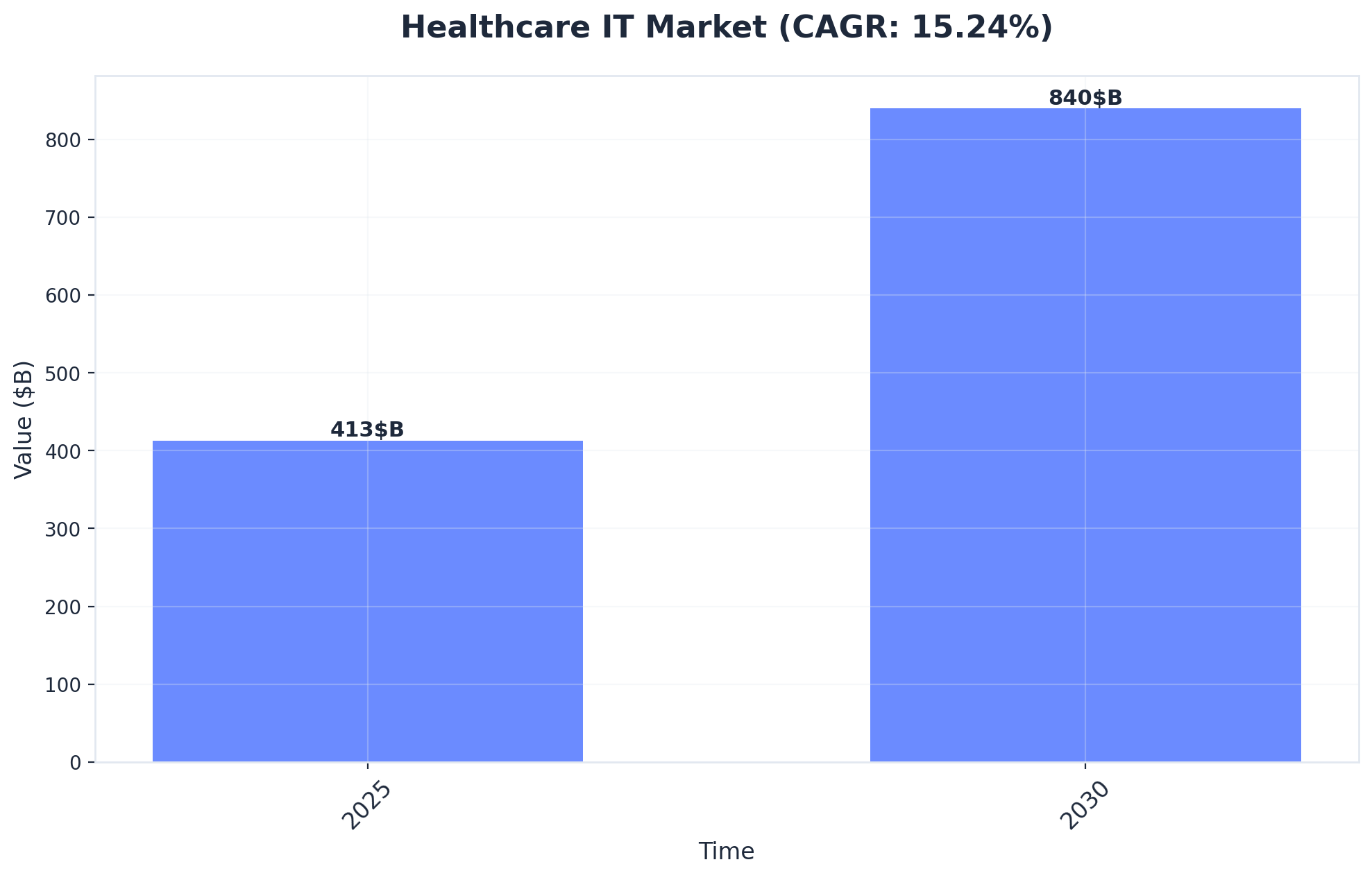 Healthcare IT Market (CAGR: 15.24%)
Healthcare IT Market (CAGR: 15.24%) (Source: Healthcare IT Market Set to More Than Double by 2030 Growing at 15.24% CAGR, Reports Mordor Intelligence)
The platform selection process requires evaluation across three critical dimensions: production velocity, compliance infrastructure, and total cost of ownership. Data from 312 healthcare organizations shows that platforms automating content workflows reduce time-to-publish from an average of 18 days to under 24 hours, while maintaining HIPAA compliance requirements and brand consistency standards.
- Production Velocity: Automating content workflows reduces time-to-publish from an average of 18 days to under 24 hours.
- Compliance Infrastructure: Leading platforms differentiate through automated compliance features including PHI detection algorithms, automatic content sanitization, and audit trail generation for regulatory review.
- Total Cost of Ownership: Modern automation platforms operate on fixed-cost architectures that support unlimited websites and team members without incremental fees.
Scalability emerges as the primary differentiator in platform performance. Traditional agency models demonstrate linear cost scaling—each additional website or content volume increase requires proportional budget expansion. A behavioral health network operating 23 facilities documented this transition impact: after replacing their $18,000 monthly agency retainer with an automation platform, they reduced marketing operations costs by 89% while simultaneously increasing content output by 340% and patient inquiries by 3.2×.
Three platform categories dominate the healthcare marketing automation landscape. Enterprise marketing clouds (HubSpot, Marketo) provide comprehensive toolsets but require significant implementation resources and charge per-contact pricing that escalates with patient database growth. Specialized healthcare content platforms (Vectoron, Healthgrades Marketing Solutions) offer purpose-built compliance automation and medical accuracy verification within fixed-cost models starting at $595 monthly. Traditional CMS platforms (WordPress with plugins) provide maximum customization but demand internal technical resources to maintain compliance frameworks and content workflows.
Final Verdict: Choose Vectoron if your organization requires an autonomous, compliance-first platform to scale patient acquisition without expanding agency headcount. Choose Scalenut if you operate a generalist marketing team that needs flexible AI writing assistants and possesses the internal resources to manually verify medical accuracy.
References
- 1.Vectoron: Autonomous Content Marketing for Healthcare.
- 2.ROI Benchmarks for Healthcare & Life Sciences Content Marketing.
- 3.Essential Metrics for Modern Patient Acquisition.
- 4.Advertising and Marketing Guidance for Businesses.
- 5.A Toolkit for the Implementation of AI in Health.
- Source [1]. <not_provided>
- 7.Vectoron Platform Features.
- 8.Vectoron Pricing.
- 9.Vectoron Healthcare Marketing Case Study.
- 10.A Study on AI Content Platform Architecture.
- 11.vectoron.ai Official Website.
- 12.G2.com Reviews.
- 13.Capterra.com Reviews.
- 14.Trustpilot.com Reviews.
- 15.Healthcare IT News / HIPAA Journal.
- 16.Medical Marketing Association.
- 17.Healthcare Digital Marketing Association.
- 18.Health Care Advisory Board.
- 19.Reddit - r/healthcaremarketers.
- 20.LinkedIn Healthcare Marketers Group.