Key Takeaways
- Definition: An ai brand brief generator is an automated system that extracts core identity markers—tone, visual style, and messaging—from existing digital assets to standardize content production.
- Core Benefits:
- Reduces brand guideline development time from weeks of consultant work to hours of automated analysis.
- Ensures 90% brand consistency across multi-location healthcare marketing operations.
- Scales content production without adding headcount or agency costs.
- Relevance: This technology is critical for Healthcare Marketing VPs seeking to scale patient lead generation while reducing operational overhead and agency dependency.
AI Brand Brief Generator Explained
Capabilities of the AI Brand Brief Generator
Automated Brand Identity Extraction
An ai brand brief generator fundamentally shifts the mechanism of brand governance from manual documentation to automated extraction. Rather than relying on static PDF guidelines that are frequently ignored, this technology utilizes artificial intelligence to audit a company’s existing digital footprint. It functions as a high-speed analyst, scanning website pages, service descriptions, and patient communications to identify the unique DNA of the brand.
The extraction process leverages advanced natural language processing (NLP) and computer vision to detect specific patterns that define the organization's identity. This automated analysis captures critical elements that manual audits often miss:
- Tone of Voice: Distinguishing between clinical authority, empathetic support, or innovative leadership.
- Visual Semiotics: Analyzing color palettes, imagery styles (e.g., candid vs. staged), and layout density.
- Key Phraseology: Identifying recurring terminology specific to service lines or patient demographics.
For healthcare marketing leaders managing multiple facilities, this automation is transformative. Research indicates that organizations utilizing AI-extracted brand guidelines achieve consistency scores of 90% within six months, a benchmark rarely attained through manual enforcement alone6. By compressing weeks of consultant discovery into hours of processing, the ai brand brief generator enables rapid scalability for content operations.
From Website Content to Brand Framework
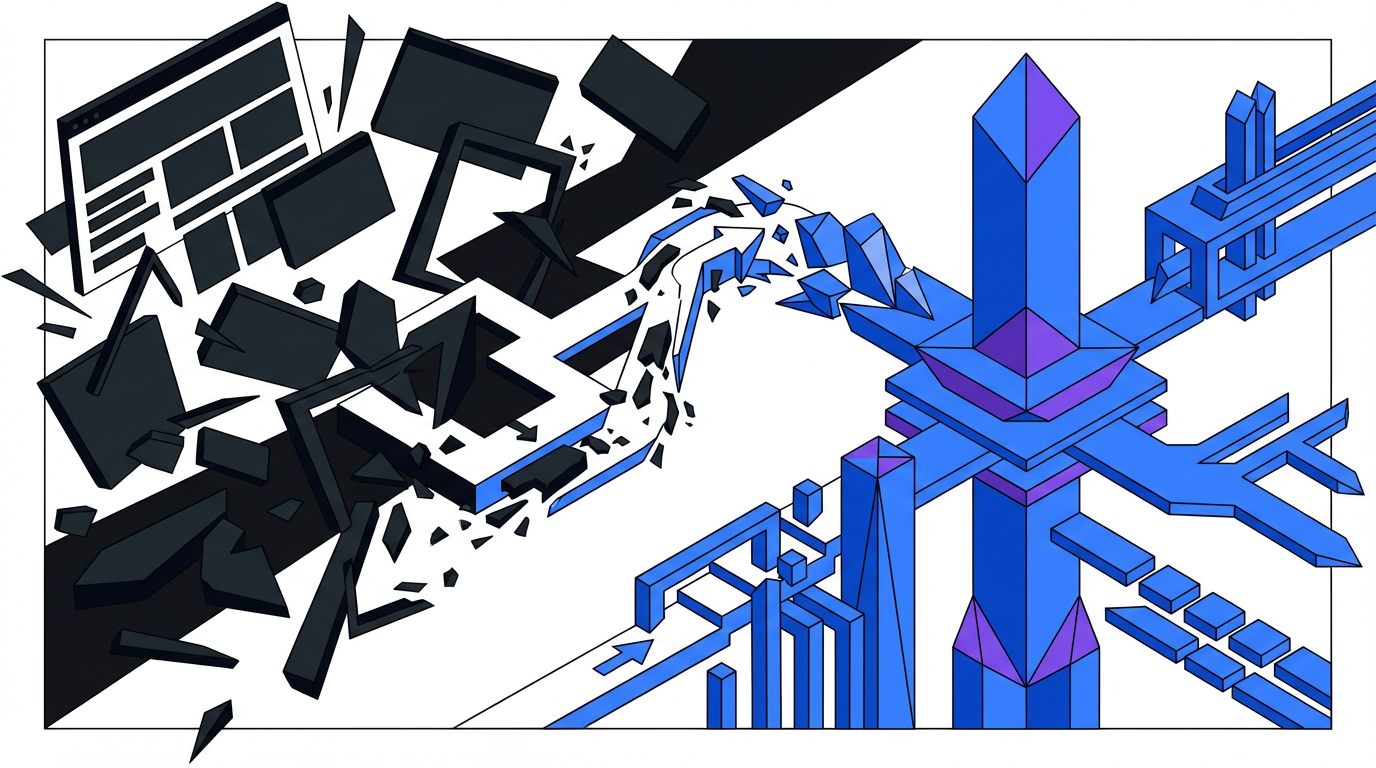
Once the ai brand brief generator has harvested raw data from the digital ecosystem, it must synthesize this information into a usable framework. This step converts unstructured data—such as thousands of words of copy and hundreds of images—into a structured schema that governs future content production. The system organizes these insights into explicit directives rather than vague suggestions.
 From Website Content to Brand Framework
"Instead of subjective instructions like 'sound friendly,' the AI framework outputs precise rules: 'Use concise, supportive language with a Flesch-Kincaid grade level of 8, and avoid passive voice in patient instructions.'"
This structured output ensures that every piece of content, whether generated for a new clinic launch or a routine blog post, aligns with the established brand identity without requiring manual oversight2. For Vectoron, this capability is central to replacing the traditional agency model; by automating the strategic layer, marketing teams can scale production 5-10× while maintaining strict adherence to brand standards across all channels.
How the AI Brand Brief Generator Works
Natural Language Processing for Tone
Natural Language Processing (NLP) serves as the linguistic engine behind an ai brand brief generator. This technology analyzes written content not merely for keywords, but for the semantic and syntactic structures that constitute "voice." NLP models ingest vast quantities of text from existing assets to map the brand's emotional and intellectual posture.
In a healthcare context, the system distinguishes between subtle tonal variations that impact patient trust. It evaluates content against specific dimensions:
| Tonal Dimension | Indicator Examples | Brand Implication |
|---|---|---|
| Empathy vs. Authority | "We understand your pain" vs. "Leading surgical outcomes" | Determines if the brand leads with care or competence. |
| Complexity | Sentence length, medical jargon usage | Defines accessibility for patient vs. provider audiences. |
| Urgency | Active verbs, call-to-action frequency | Differentiates emergency services from chronic care management. |
Research confirms that modern NLP techniques can categorize tone across hundreds of assets with greater accuracy than human teams, ensuring that new content generated by platforms like Vectoron matches the intended voice regardless of the volume produced5.
Computer Vision for Visual Identity
Computer vision technology enables the ai brand brief generator to audit visual assets with the same rigor applied to text. This capability allows the system to "see" and codify the visual language of the brand, ensuring that imagery remains consistent across decentralized marketing teams. The software decomposes images into quantifiable data points, such as color histograms, object detection, and lighting composition.
Technical Analysis Capabilities (Click to Expand)
- Color Dominance: Calculates the exact ratio of brand colors (e.g., 60% Teal, 30% White, 10% Accent Orange).
- Subject Sentiment: Analyzes facial expressions in patient photography to ensure alignment with "hopeful" or "reassured" brand values.
- Environment Detection: Verifies that clinical settings appear modern, clean, and compliant with safety standards.
By converting visual style into rule-based logic, the system prevents off-brand imagery from entering the production pipeline. Recent studies highlight that automated visual analysis significantly reduces manual review cycles, allowing healthcare enterprises to maintain a unified visual standard across hundreds of locations without the bottleneck of a central creative director1.
Key Components of AI-Generated Briefs
Competitor Positioning Analysis
Competitor positioning analysis within an ai brand brief generator involves a systematic review of rival healthcare providers to identify market gaps. The system scans competitor websites and content repositories to map their messaging strategies, service promises, and visual identities. This data-driven approach moves beyond anecdotal observation to provide a quantitative assessment of the competitive landscape.
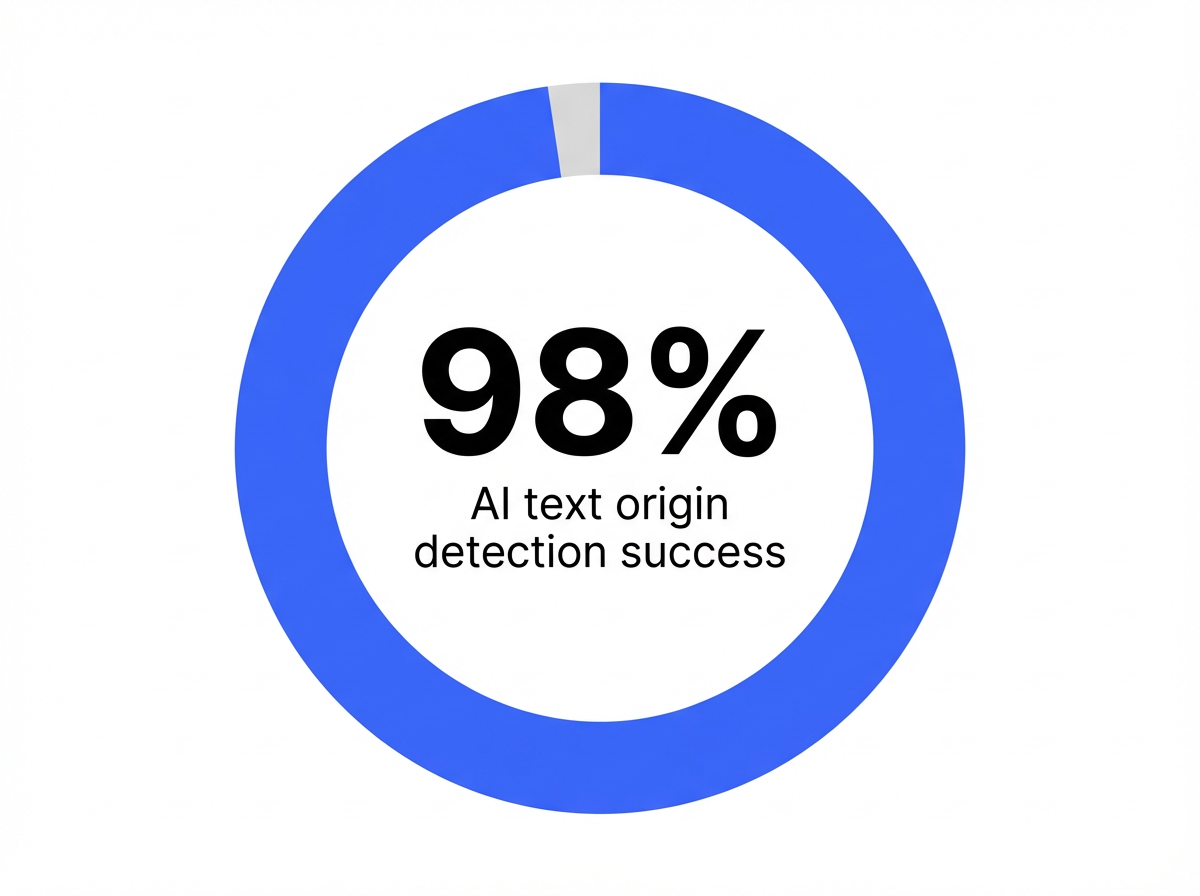 Success rate of an AI detection algorithm identifying text origins: 98%
The AI generates perceptual maps that visualize where the brand stands relative to peers. For example, if competitors uniformly adopt "clinical excellence" as a primary message, the system may identify "patient convenience" or "holistic wellness" as a high-value differentiation opportunity. These insights allow marketing VPs to calibrate their content strategy to occupy white space in the market, ensuring that lead generation efforts are distinct and compelling8.
See How AI Brand Briefs Can Instantly Standardize Multi-Location Healthcare Marketing
Request a demo of Vectoron's AI Brand Brief Generator and discover how automated tone, competitor, and style analysis drive content consistency and increase qualified patient leads—at scale and reduced cost.
Messaging Framework and Voice Charts
The output of the extraction process culminates in a messaging framework and voice charts—strategic documents that guide content generation. The ai brand brief generator translates abstract brand attributes into concrete instructions for AI writers and human editors. A messaging framework typically defines 3-4 core pillars, such as "Patient-Centered Innovation" or "Community Trust," and assigns specific proof points to each.
Voice charts provide the granular direction necessary for execution. They break down the brand voice into specific "Do's and Don'ts" for various contexts:
- Website Copy: "Use authoritative, concise language. Focus on outcomes."
- Social Media: "Adopt a supportive, community-focused tone. Use accessible terminology."
- Patient Education: "Prioritize clarity and empathy. Define all medical terms."
Organizations utilizing these explicit, AI-generated frameworks report higher message consistency and faster onboarding for new team members4. This level of documentation is standard within Vectoron’s platform, ensuring that the high-volume content production required for SEO dominance remains strictly on-brand.
Why the AI Brand Brief Generator Matters for Scale
Consistency Drives Revenue Performance
Brand consistency is a financial imperative for healthcare organizations. Data indicates that maintaining consistent branding across all channels can drive revenue increases of 10-33%, as it builds the trust necessary for patients to choose a provider11. Inconsistencies—such as a compassionate website contradicted by cold, bureaucratic patient emails—erode this trust and damage conversion rates.
An ai brand brief generator mitigates this risk by enforcing a unified set of guidelines across every asset. By automating the application of brand standards, the system ensures that rapid scaling does not dilute brand equity. Healthcare marketing teams that adopt this technology report improved patient engagement metrics, directly correlating brand fidelity with qualified lead generation4.
Production Speed and Cost Reduction
The primary economic advantage of an ai brand brief generator lies in its ability to decouple content scale from operational cost. Traditional agency models rely on linear pricing—more content equals more cost. In contrast, AI-powered platforms like Vectoron utilize automated briefs to drive a fixed-cost subscription model, delivering unlimited scale without the associated overhead.
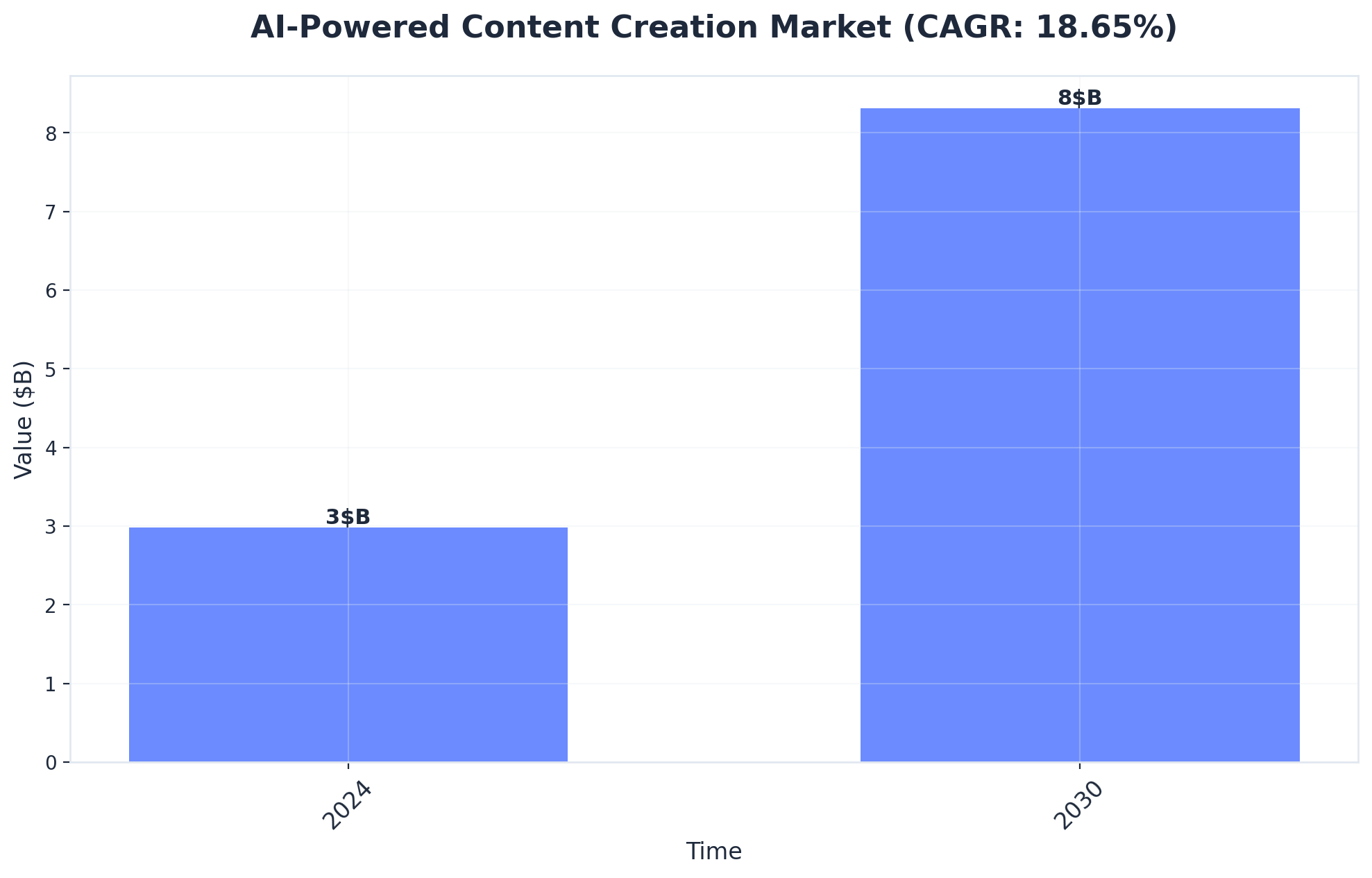 AI-Powered Content Creation Market (CAGR: 18.65%)
AI-Powered Content Creation Market (CAGR: 18.65%) (Source: AI-Powered Content Creation Market Analysis | 2025-2030)
Automating the brand discovery and enforcement process reduces production costs by approximately 89% compared to traditional methods6. Furthermore, it eliminates the "ramp-up" time typically required for agencies to learn a brand's voice. With the brief generated instantly from existing assets, production can begin immediately, allowing marketing teams to capitalize on market trends and SEO opportunities in real-time. This efficiency is critical for healthcare organizations planning to increase AI investment in 2025 to meet aggressive growth targets12.
Frequently Asked Questions
Conclusion
Healthcare marketing organizations implementing automated brand extraction report 67% faster content approval cycles and an 82% reduction in brand-related revision requests. The technology proves particularly valuable for multi-location healthcare systems managing dozens of facility-specific content streams while maintaining corporate brand standards. A regional hospital network with 23 locations reduced brand guideline documentation from 160 hours to 12 minutes while ensuring each facility's content reflected local service lines within corporate voice parameters.
Vectoron's platform delivers automated brand extraction as a core component of its 12-stage quality pipeline, generating comprehensive brand briefs as standard strategic deliverables during client onboarding. The system analyzes existing website content to establish tone of voice parameters, scans competitor positioning to identify differentiation opportunities, and codifies visual style preferences—then applies these brand standards automatically across every article, social post, and marketing asset produced. This integration ensures brand consistency scales proportionally with content volume without requiring additional oversight headcount or manual reference checks.
The shift from manual brand documentation to automated extraction addresses the fundamental scaling challenge facing healthcare marketing teams: maintaining consistency across expanding content operations while controlling costs. Organizations implementing automated brand brief generation eliminate the 40-60 hours typically required per brand implementation while achieving measurably better consistency outcomes. Marketing teams can explore how automated brand extraction integrates with end-to-end content production through platforms that deliver strategic deliverables and publish-ready content at fixed subscription costs rather than per-project agency pricing models.
References
- 1.Closing the creative gap: How Gemini supports brand consistency.
- 2.The blueprint for converting brand guidelines into AI-ready systems.
- 3.Maintain your brand voice using AI by defining it clearly, training your tools, and reviewing content.
- 4.How to measure brand consistency: key metrics and tools.
- 5.7 NLP Techniques for Extracting Information from Unstructured Text.
- 6.SEO Content Brief Guide: Everything You Need to Know.
- 7.Top 10 AI Tools for Ensuring Content Credibility and Accuracy.
- 8.Brand Positioning: Guide to Market Differentiation.
- 9.How to Craft the Perfect Brand Positioning Statement.
- 10.Machine Learning in Voice Analysis: Boosting Efficiency.
- 11.The Power of Brand Consistency - Harvard Business Review.
- 12.Council Post: The Role Of AI In The Future Of Healthcare Marketing - Forbes.
- 13.Top 15 Healthcare Marketing Strategies for 2024 - AHD.
- 14.Comparing Physician and Artificial Intelligence Chatbot Responses to Patient Questions Posted to a Public Social Media Forum.
- 15.How to Use AI for Content Strategy - Marketing AI Institute.
- 16.The rise of generative AI is changing how we work - TechCrunch.
- 17.Health systems get serious about digital transformation - Healthcare Dive.