
Key Takeaways
- An AI visibility tracker measures how a brand appears, is cited, and is described inside generative outputs from engines like Google AI Overviews, AI Mode, ChatGPT, and Perplexity 2.
- Position-based rank tracking breaks down under query fan-out, so citation share, answer presence, and description fidelity replace position as the meaningful units of measurement 1.
- Exposure does not equal usefulness: only about one-in-five U.S. adults find AI summaries extremely or very useful, so presence reporting must be paired with response metrics 5.
- Treat visibility tracking as an ongoing govern-map-measure-manage program integrated into existing editorial, schema, and Search Console workflows rather than a standalone dashboard or new hire 7.
The Category, Defined Without Vendor Spin
An AI visibility tracker measures how a brand appears, is cited, and is described within generative search outputs, including Google AI Overviews, Google AI Mode, ChatGPT, and Perplexity. Unlike a rank tracker, its unit of measurement is not position but rather citation share, answer presence, and the accuracy of the brand description produced by the model.
This category is supported by two distinct evidence bases. First, Google's documentation confirms that a page must be indexed and eligible for a snippet in Search to appear as a supporting link in AI Overviews or AI Mode, without additional technical requirements beyond standard indexability 1. Second, the GEO research literature formalizes visibility metrics for generative engines, treating optimization as a discipline separate from classical ranking 2.
This distinction is crucial for budget discussions. While a rank tracker reports a URL's position for a query, an AI visibility tracker reports whether a brand appears in a synthesized answer, its citation frequency across engines, and if the model's description aligns with the company's actual information. Recent practitioner-facing research further extends this by introducing outcome-oriented measures like answer visibility and citation frequency, which better align with pipeline objectives than traditional position metrics 3.
Essentially, this category is a monitoring discipline focused on how machines describe a business to potential buyers.
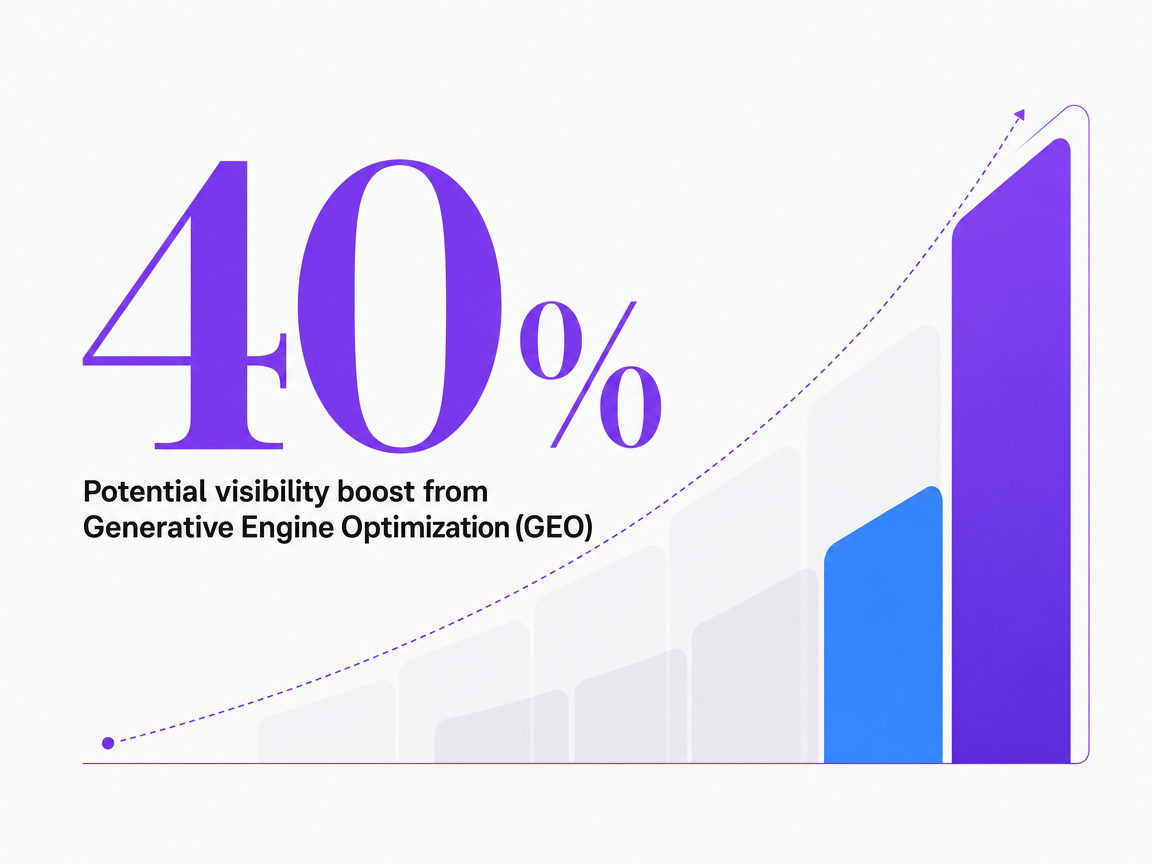 Potential visibility boost from Generative Engine Optimization (GEO)
Potential visibility boost from Generative Engine Optimization (GEO)
Why Rank Tracking Stops Working in Generative Search
Query Fan-Out and the End of One-Keyword-One-Result
Classical rank tracking assumes a direct relationship: one query leads to one results page, with a single position per URL. Generative search disrupts this by employing "query fan-out." Google's documentation indicates that AI Overviews and AI Mode can expand a single user query into multiple related searches, drawing on a wider and more diverse set of helpful links for the synthesized answer 1.
This means a brand's URL might be cited for a query it never ranked for in traditional SERP data, or conversely, be absent from answers for queries where it holds a top position. Consequently, position becomes an unreliable signal.
The GEO research literature formalizes this shift by defining visibility metrics based on generative output rather than traditional result-page coordinates 2. Tracking simple keyword positions no longer accurately reflects what buyers see. The query a marketing team optimizes for is now just one part of a dynamic fan-out graph, and a brand's appearance in the final answer depends on the model's chosen query expansions.
Citation Share, Answer Presence, and Description Fidelity
Since position is no longer the primary metric, three new measurements emerge: citation share, answer presence, and description fidelity. Citation share quantifies how often a brand's URLs appear in the supporting links cited by the engine for a defined set of queries. Answer presence tracks whether the brand is explicitly named or referenced within the synthesized text itself. Description fidelity assesses if the model's portrayal of the company aligns with factual information on the brand's website, including services, locations, and positioning.
These metrics draw from distinct data sources, highlighting the difference from rank tracking. Traditional rank tracking uses SERP scrapes to measure URL position against a query. AI visibility tracking, however, analyzes generative engine outputs from Google AI Overviews, AI Mode, ChatGPT, and Perplexity, combined with first-party impression data from Search Console's generative AI performance reports 4. The optimization focus also shifts: classical SEO emphasizes on-page signals and links, while generative visibility prioritizes indexability and structural features that models can parse, as detailed in Google's site-owner documentation 1 and the foundational GEO work 2.
This clear distinction in measurement units, data sources, and optimization levers demonstrates why traditional SEO dashboards are insufficient. Marketing VPs need new metrics that rank trackers cannot provide to understand their brand's performance in generative search.
What an AI Visibility Tracker Actually Measures
First-Party Signals From Google Search Console
The most reliable AI visibility data for Google originates directly from Google. Search Console's generative AI performance reports offer specific insights into impressions within generative AI features on Search, including AI Overviews 4. This makes Search Console the primary, first-party measurement tool, providing a foundational baseline for reporting before integrating any external tools.
Search Console provides practical data on impressions, clicks, click-through rate, and queries for pages that appeared in AI features. The eligibility criterion is straightforward: a page must be indexed and eligible to appear in Search with a snippet to be included as a supporting link in AI Overviews or AI Mode, without any additional technical requirements 1. Pages that are blocked, noindexed, or ineligible for snippets are entirely excluded from these measurements.
However, Search Console does not report on downstream pipeline impact, brand mentions within synthesized answers, or visibility on non-Google engines. It functions as an impression ledger, not a citation graph. It should be treated as the essential data layer that an AI visibility tracker must either integrate or complement, with the rest of the measurement program designed to address its limitations.
Cross-Engine Citation Frequency and Answer Visibility
Beyond Google, measurement becomes more complex. ChatGPT, Perplexity, and Google AI Mode each handle citations differently, assign varying weights to sources, and generate distinct synthesized prose for the same prompt. An effective AI visibility tracker must query each engine with a defined set of prompts, parse the resulting answer and its supporting links, and record which brand URLs were cited, their prominence, and whether the brand was mentioned in the answer body.
Recent practitioner-oriented GEO literature formalizes these as outcome metrics. Academic research suggests visibility measures like position-adjusted word count and subjective assessments, noting visibility gains of up to 40% in systems like Perplexity.ai when GEO techniques are applied 3. It's important to note that this 40% figure reflects controlled study conditions on a single generative engine using specific optimization techniques, not a general market benchmark applicable across all platforms simultaneously. Viewing it as an upper bound under research conditions helps maintain its utility without inflating expectations.
The operational measurement involves tracking citation frequency per engine, per prompt cluster, over time, with answer presence logged separately from citation. A brand can be cited without being named, named without being cited, or both. Tracking these independently provides actionable data, as the content fixes for each scenario differ. Missing citations often indicate indexability or structural feature issues, while missing brand mentions point to how the model summarizes the category and positions the brand among competitors.
Brand Description Accuracy as a Quality Metric
While impressions and citations indicate whether a model surfaces a brand, they don't reveal what the model says about it. Brand description accuracy is the third crucial measurement, often overlooked in early AI visibility dashboards.
This check involves prompting each engine with category-defining questions that a buyer would typically ask, then auditing the synthesized prose against the factual information on the brand's site. Key areas to examine include services offered, locations served, pricing, certifications, and positioning claims. Errors generally fall into three categories, each requiring different solutions:
- Outdated facts from stale content
- Conflated facts borrowed from competitors or directories
- Invented facts without any basis on the open web
Structural features influence both whether an engine cites a page and how accurately it parses the facts within it. Recent academic work demonstrates that formatting and structure significantly improve citation rates, and that visibility depends on algorithmic comprehension rather than traditional ranking signals 9. Therefore, correcting description errors is rarely just a writing task; it's fundamentally a content-architecture problem involving schema, heading structures, fact placement, and consistent brand claims across all indexable content that the engine reads.
Experience AI-driven visibility tracking in action
Measure your real-time organic reach with live campaign data before making a commitment.
Exposure Is Not Usefulness: The Demand-Side Reality
Impression counts can create misleading dashboards. Pew Research data from October 2025 revealed that while 65% of U.S. adults encounter AI summaries in search results at least sometimes, only about one-in-five find these summaries extremely or very useful 5. This gap between exposure and usefulness is a critical factor for marketing VPs to consider when an AI visibility tool reports a citation win.
Exposure is a top-of-funnel event, but usefulness determines whether that exposure leads to a click, brand recall, or a search session that concludes within the synthesized answer without a downstream visit. The Pew study suggests a significant portion of users regularly encounter AI summaries but treat them as background noise. This implies that the conversion math for AI visibility is more akin to display advertising than classical organic search. Appearing in AI answers is important, but the behavioral response floor is lower than impression volume alone might suggest.
Operationally, it's essential to establish two distinct reporting layers from the outset:
- The first layer measures presence: citation share, answer presence, and Search Console impressions within AI features 4.
- The second layer measures response: assisted clicks, branded search lift, direct visits to cited URLs, and pipeline events linked to AI-influenced sessions.
A tracker that only reports the first layer will overstate the program's contribution. A program that ignores the second layer cannot justify its budget when asked about the tangible outcomes of citations.
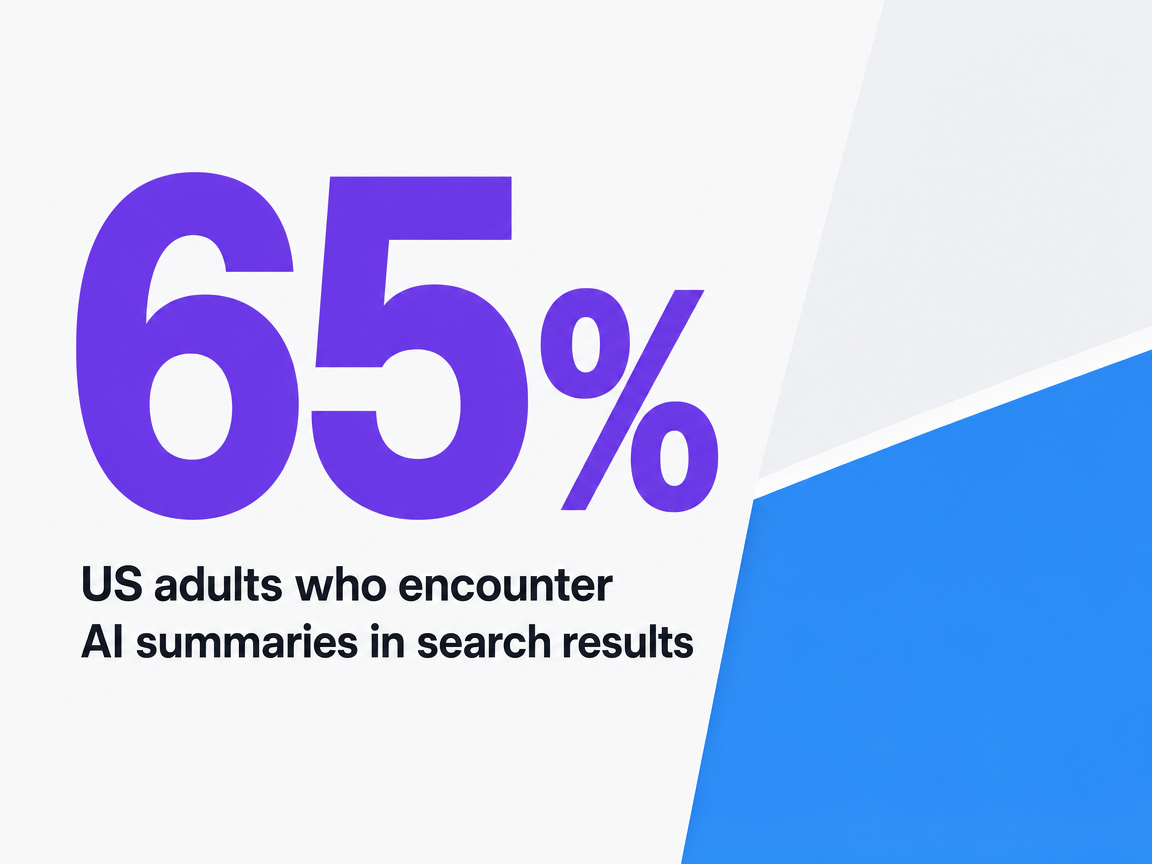 US adults who encounter AI summaries in search results
US adults who encounter AI summaries in search results
A Governance Lens: Govern, Map, Measure, Manage
Why Visibility Tracking Is a Monitoring Program, Not a Dashboard
A common mistake VPs make with AI visibility is purchasing a dashboard and considering the program complete. NIST's AI Risk Management Framework Core structures responsible AI work around four functions: govern, map, measure, and manage 7. This framework applies directly to a visibility program, illustrating why a dashboard full of citation counts is only a small part of the overall effort.
Govern : "Govern" establishes policy: who owns AI visibility outcomes, what constitutes a material change in brand description, and which engines are in scope.
Map : "Map" identifies actual buyer prompts, URLs eligible to appear as supporting links under Google's snippet-eligibility rule 1, and the competitive set recognized by the engines.
Measure : "Measure" involves running recurring checks against this scope, pulling first-party impression data from Search Console's generative AI performance reports 4 and cross-engine citation data from sampled prompts.
Manage : "Manage" is the action layer: prioritizing fixes, approving them, and reviewing outcomes.
NIST's Generative AI Profile emphasizes that generative systems require continuous risk management, not a one-time evaluation 6. The dashboard serves as the "measure" step's interface; the program itself is the ongoing loop surrounding it.
What Continuous Monitoring of Generative Output Actually Requires
Continuous monitoring of generative output is more challenging than dashboard vendors often suggest. NIST's report on monitoring deployed AI systems highlights that observing these systems remains an open problem, particularly for frontier generative AI 8. Engines constantly update model weights, retrieval indexes, and ranking logic on schedules outside a brand's control. This means the same prompt can yield different citations and prose from one week to the next, even without any changes to the brand's site.
Three operational choices follow from this reality:
- Sample prompts on a fixed cadence rather than ad hoc, allowing detection of trends in citation share and description accuracy rather than isolated observations.
- Log the answer text alongside cited URLs, as a disappearing citation is less critical than a description that misrepresents services or locations.
- Differentiate between model-side variance and site-side causes: if all brands in a category shift simultaneously, the engine likely changed; if only one brand shifts, the content or indexability is the probable cause.
The output of continuous monitoring is not merely a number, but a prioritized queue of approvable fixes, ranked by their potential impact on citation share, answer presence, and description fidelity.
Structural Features, Manipulation, and Underexamined Risks
Once marketing teams accept that citation share and answer presence are the key metrics, the focus shifts to identifying effective optimization levers. Recent academic work on structural feature engineering shows significant citation improvements when content is structured for algorithmic comprehension rather than traditional ranking signals 9. These levers are practical:
- Using heading hierarchies that mirror user questions
- Placing facts near the top of relevant sections
- Employing schema markup to confirm entities
- Ensuring consistent brand claims across all indexable content
This isn't a growth hack but rather content architecture designed to optimize how models parse a page.
The ethical boundaries become less clear as techniques become more aggressive. GEO-Bench evaluates ranking manipulation in generative engines, assessing both effectiveness and stealthiness, and distinguishing between recognizable promotion and detection-resistant manipulation 10. Tactics like hidden prompts, fabricated authority signals, and content over-optimized for a single engine's parser fall into the manipulation category. While these might offer short-term citation gains, they pose longer-term risks if the engine updates or competitors expose the pattern.
A paper on the underexamined risks of GEO contrasts academic methods with industry systems, using outcome-oriented metrics like answer visibility and citation frequency to evaluate potential downsides 11. The reality is that AI visibility is not a fully solved measurement problem with a clear optimization playbook. It's a discipline where structural fixes are robust, engine-specific tricks are fragile, and stealth techniques carry reputational risks that dashboards won't highlight. A visibility tracker that only counts citations, without flagging description errors or attribution risks, overlooks the most critical aspects of the work.
See How AI Visibility Tracking Pinpoints Pipeline Opportunities in Real Time
Connect with our team to review a live demonstration of multi-channel AI visibility tracking—understand exactly where your brand stands, what’s driving pipeline, and how unified data makes opportunity prioritization efficient at scale.
If You Manage Multiple Locations: Consolidating the Workstreams
This section is specifically for VPs managing marketing across multiple locations or practices, such as law firm networks, DSOs, behavioral health groups, home services franchises, and senior living portfolios. Single-location operators may find less direct relevance.
Multi-location marketing is already fragmented across various vendors—rank tracking, content agencies, SEO consultants, and analysts—even before AI visibility is introduced. Each contract brings its own briefing cycle, dashboard, and definition of success. Adding an AI visibility tool as a standalone item increases coordination overhead without changing the fundamental work: making content decisions on indexable pages 1 and implementing structural fixes that influence how engines parse them 9.
The question of consolidation is whether citation share, answer presence, and description fidelity can be tracked within the existing content production approval loop, rather than as a separate vendor relationship. While the specific financial benefits vary, the structural advantages are consistent.
| Workstream | Fragmented model | Consolidated approval loop |
|---|---|---|
| Rank and citation tracking | Separate vendor per surface | Single measurement layer across SERP and AI engines |
| Content production | Agency retainer per brand or region | Approval-first execution against ranked priorities |
| Reporting | Analyst hours reconciling dashboards | One queue tied to Search Console AI reports 4 |
| Cost variable | X locations × Y vendor contracts × Z internal hours | One workflow, priced as a platform line |
By populating X, Y, and Z with current spend figures, the tangible savings become evident in reduced vendor coordination overhead and streamlined briefing cycles, rather than just a headline discount.
Folding AI Visibility Into the Marketing Team You Already Have
The incorrect approach to operationalizing AI visibility is to hire new staff specifically for it. The correct method is to integrate citation share, answer presence, and description fidelity into existing team workflows: editorial calendars, on-page briefs, schema reviews, and monthly Search Console analysis. The underlying data sources largely remain the same; what changes are the questions the team asks of that data.
An effective cadence involves three loops:
- The weekly loop pulls impression data from Search Console's generative AI performance reports 4 and combines it with a sampled prompt set against ChatGPT, Perplexity, and Google AI Mode, logging both citations and answer text.
- The monthly loop audits brand description accuracy across this prompt set, routing errors to either content or structural fixes, given the measurable impact of formatting and structure on how engines parse pages 9.
- The quarterly loop revisits the scope under the govern-map-measure-manage framework 7: reassessing which engines, prompts, competitors, and fixes successfully achieved the desired citation lift.
None of this requires new hires. It necessitates ownership of the queue and timely approvals managed by the team, not dictated by a vendor's reporting schedule. Platforms like Vectoron consolidate the measurement layer, content production, and approval workflow into a single loop, enabling work to progress without separate briefing cycles for each fix.
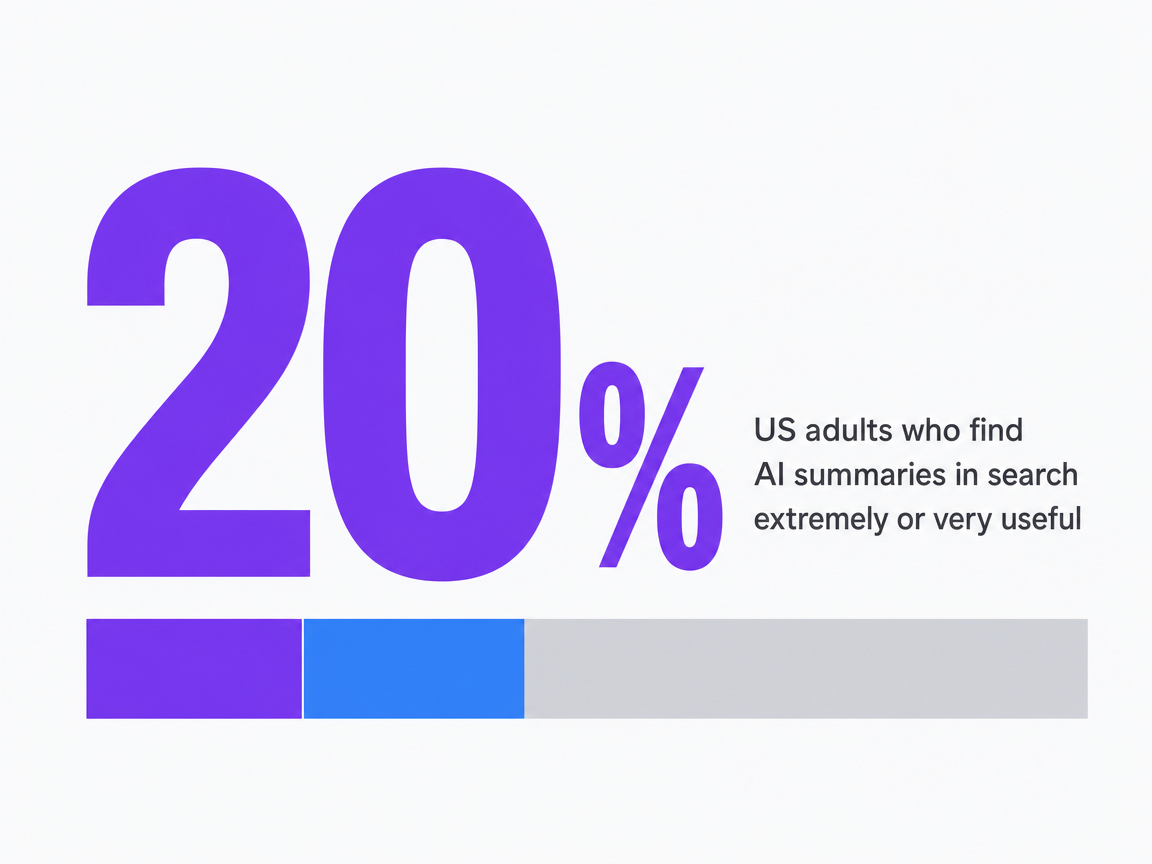 US adults who find AI summaries in search extremely or very useful
US adults who find AI summaries in search extremely or very useful
Frequently Asked Questions
References
- 1.AI Features and Your Website | Google Search Central | Documentation | Google for Developers.
- 2.GEO: Generative Engine Optimization - arXiv.
- 3.Generative Engine Optimization: How to Dominate AI Search.
- 4.Introducing Search Generative AI performance reports in Search Console.
- 5.Americans have mixed feelings about AI summaries in search results.
- 6.Artificial Intelligence Risk Management Framework: Generative Artificial Intelligence Profile.
- 7.AI RMF Core - AIRC - NIST AI Resource Center.
- 8.Challenges to the monitoring of deployed AI systems.
- 9.Structural Feature Engineering for Generative Engine Optimization.
- 10.GEO-Bench: Benchmarking Ranking Manipulation in Generative ....
- 11.Generative Engine Optimization Creates Underexamined Risks ....