
Key Takeaways
- Agent SEO is a workflow orchestration model built on four layers—signal reading, prioritization, production, and measurement—not a faster way to generate content on top of the existing handoff chain.
- The role split between agents and humans is a decision-rights split: agents own analytical and drafting work, while humans gate editorial approval, YMYL claims, disclosures, and publish authorization 12.
- Governance artifacts mapped to the NIST AI Risk Management Framework—system inventory, approval log, change register, and escalation policy—convert the framework from internal productivity into a procurement-ready capability 8.
- Portfolio and multi-location operators should focus on collapsing coordination overhead and eliminating structured data drift, since those variables carry the margin story rather than per-location drafting cost 7.
Why SEO Execution Is Becoming a Workflow Problem
The unit of SEO work is changing. For most of the last decade, agency operators measured output in deliverables: keyword lists, briefs, drafts, backlinks, technical audits. Each artifact moved through a chain of specialists, project managers, and client reviewers. That chain is where margin quietly disappears, and it is the same chain that agentic systems are now designed to compress.
Recent empirical work on agentic AI adoption points to a sharp inflection. A study of Codex, a developer-focused agentic tooling platform, reported that active users grew more than fivefold in the first half of 2026 13. This figure describes software engineers delegating multi-step coding workflows, not marketing teams running SEO programs. However, the operational pattern it documents—delegating whole workflows rather than issuing prompts—is reshaping marketing execution. McKinsey's analysis of agentic marketing workflows describes a parallel move toward human-agent collaboration models that treat marketing as a continuous growth engine rather than a campaign calendar 15.
For agency owners running retainers in legal, healthcare, dental, and home services, this reframes the core problem. Rising production costs and flat retainer ceilings are not solved by adding another AI writing seat on top of the existing handoff chain. They are solved by treating SEO as a workflow orchestration problem, where specialist agents read signals, rank opportunities, produce drafts, and pull measurement data inside a governed loop, and human judgment gates the outputs that reach the client's site.
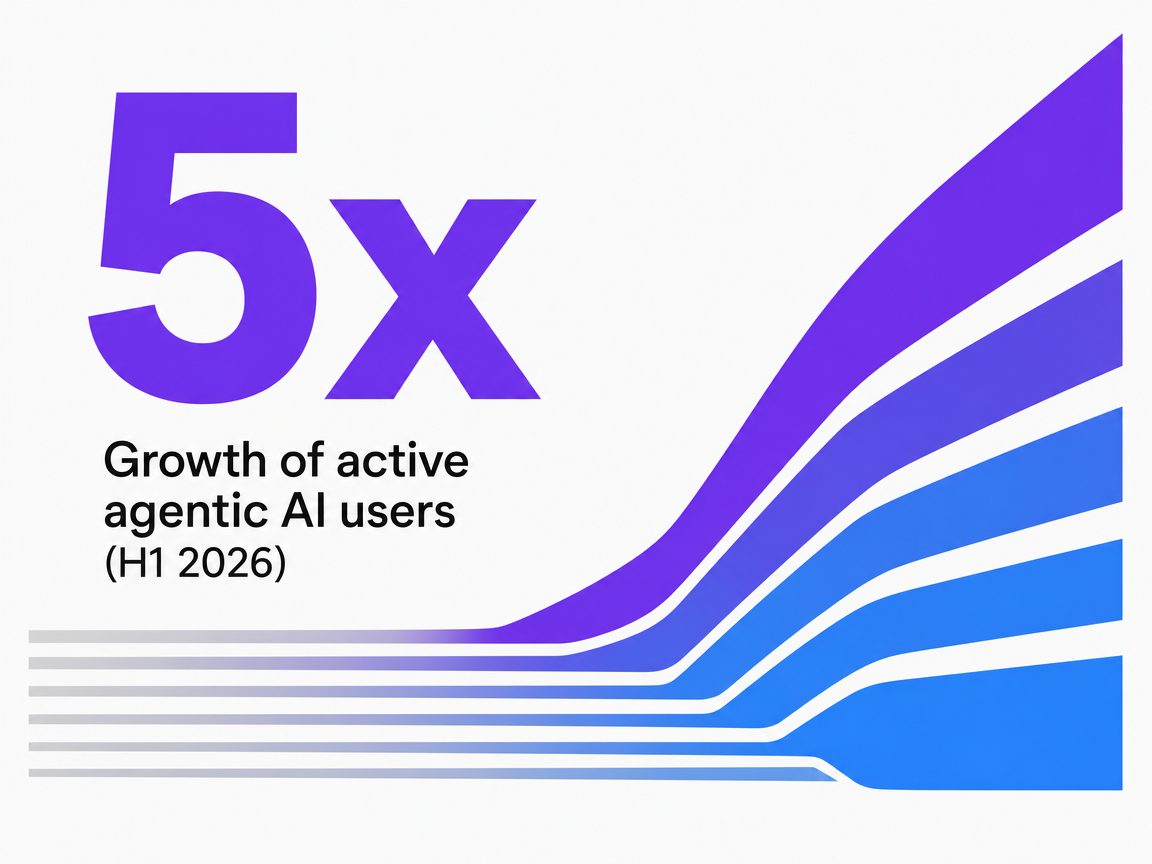 Growth of active agentic AI users (H1 2026)
Growth of active agentic AI users (H1 2026)
Agent SEO Defined: Orchestration, Not Content Generation
Agent SEO is a workflow orchestration model, not a content production tactic. This distinction matters because most agency operators encounter the term through vendors selling AI writing seats, which collapses a meaningful technical difference. Recent taxonomy work separates generative AI, which is prompt-driven and centered on producing outputs, from agentic AI, which orchestrates full multi-step workflows across tools, data sources, and decision points 11. A generative tool writes a draft when asked. An agentic system reads a signal, decides whether the signal warrants action, routes the work to the right specialist function, produces the artifact, and pushes it to the next gate.
Applied to SEO, the framework's job is not to generate more pages. It is to run the loop between search performance data, opportunity ranking, brief construction, drafting, structured data updates, and measurement pulls, with human approval required at points where judgment and accountability matter. Complementary research on agentic systems describes this pattern as proactively orchestrating processes and executing complex multi-turn workflows, which reframes the accountability question from "did the AI write good copy" to "did the system make defensible decisions across the chain" 12.
The practical implication for agencies is a shift in what the platform actually owns. Content generation becomes one node in a longer graph that includes ranking logic, technical publishing tasks, and performance feedback. The framework replaces the handoff chain with a governed execution graph.
The Four Layers of an Agent SEO Framework
Signal Layer: What Agents Should Read Continuously
The signal layer is where the framework earns its keep. Instead of quarterly audits and monthly reporting cycles, agents pull continuously from data sources that describe how a client's site is performing and what its market is doing. That includes Search Console query and page data, crawl and index status, Core Web Vitals, SERP feature movement, competitor coverage gaps, and, since June 2026, the generative AI performance reports that expose impressions and pages surfaced inside AI Overviews and AI Mode 1.
Beyond search-side telemetry, high-stakes verticals require business signals in the same loop. Qualified call data, booking volume, form conversions, and cost per lead tell the agent which pages are producing revenue rather than merely traffic. A dental group's SEO agent that cannot see which service pages drive booked consultations will optimize for the wrong terms. A legal client's agent that ignores intake qualification will keep publishing against high-volume queries that never convert.
The signal layer's job is not to display dashboards. It is to detect change worth acting on: a page slipping from position 3 to 7, a new competitor gaining AI Overview citations for a target query, or a service page whose call conversions dropped two weeks running. Detection is the trigger for the next layer, and the agent should surface the change with the underlying data attached, not as a raw alert the account manager still has to investigate.
Prioritization Layer: Ranking Opportunities Against Client Economics
Detection without ranking creates noise. The prioritization layer takes the signals surfaced above and scores them against the client's actual economics, not against generic SEO opportunity metrics like difficulty and volume. A query with 200 monthly searches that maps to a $12,000 case value outranks a 2,000-search query that maps to informational intent, regardless of what a keyword tool suggests.
Practical ranking inputs the agent should weigh include revenue attribution to the target page, current position and realistic ceiling, competitive AI Overview coverage, structured data gaps, internal linking equity, and content freshness relative to the query's implied recency. The prioritization output should look less like a keyword list and more like a ranked queue of specific interventions: expand this page, rebuild this cluster, add FAQ schema here, retire and redirect that page.
The agent proposes the ranking. The account lead approves or reorders it. That approval gate is where client context, seasonality, and off-system knowledge enter the loop, and it is where accountability for the plan sits before any production work begins.
Production Layer: Drafting, Structured Data, and Publishing Guardrails
Production is the layer most agency operators picture when they hear "AI SEO," and it is the layer Google's guidance constrains most tightly. Drafts, metadata, and structured data can be generated by agents, but Google's policy is explicit that automated content should prioritize accuracy, quality, and relevance across titles, descriptions, structured data, and alt text 3. The earlier baseline still applies: AI use is not against guidelines unless it is used to generate content primarily to manipulate rankings 6. The production layer's guardrails exist to keep the framework on the right side of that line.
Three production tasks map cleanly to agent ownership:
- Drafting long-form copy against approved briefs, with source citations and factual anchors embedded so editors can verify claims quickly.
- Generating and updating structured data markup, which Google describes as providing explicit clues about the meaning of a page and is the machine-readable layer agents can maintain consistently across hundreds of pages 7.
- Producing metadata and internal linking recommendations that reflect the site's current architecture rather than a snapshot from the last audit.
What agents should not own without a human gate includes publishing to the live site, YMYL claims in legal or healthcare content, and any content that touches disclosures or regulated advice. Google's AI-search guidance repeatedly returns to the point that visibility depends on unique, non-commodity content that visitors find helpful 5, and the guidance warns against creating unnecessary content variations primarily to manipulate rankings 2. Production velocity is not the goal. Production velocity inside guardrails that produce useful pages is the goal, and the guardrails are what keep the framework from collapsing into scaled content abuse.
Measurement Layer: Wiring AI-Search Visibility Into the Loop
Measurement is the layer that closes the loop and, until recently, was the layer where agentic SEO systems had the least visibility. Google's launch of Search Generative AI performance reports in Search Console changed that. The reports surface impressions, pages, countries, devices, and dates for generative AI features in Search and Discover, giving agencies a native measurement layer for AI Overviews and AI Mode exposure rather than inference from third-party rank trackers 1.
The data model matters for how agents should be wired. Impressions in AI Overviews are not equivalent to blue-link impressions, and pages surfaced as supporting links in AI features follow their own eligibility rules: a page must be indexed and eligible to appear in Search with a snippet to be shown as a supporting link in AI Overviews or AI Mode 4. That means the measurement agent needs to reconcile three overlapping views of visibility: traditional Search performance, generative AI exposure, and the eligibility status of the specific pages the client cares about.
Practically, the measurement layer feeds two decisions back to the top of the loop:
- Which pages are gaining or losing AI-search exposure, which changes what the prioritization agent scores next.
- Which structural changes (structured data, snippet eligibility, content depth) correlate with movement in the new reports, which changes the production layer's guardrails.
Without that feedback path, the framework runs open-loop and the agency cannot answer the question every client will eventually ask: is any of this working in AI search, and how does the agency know?
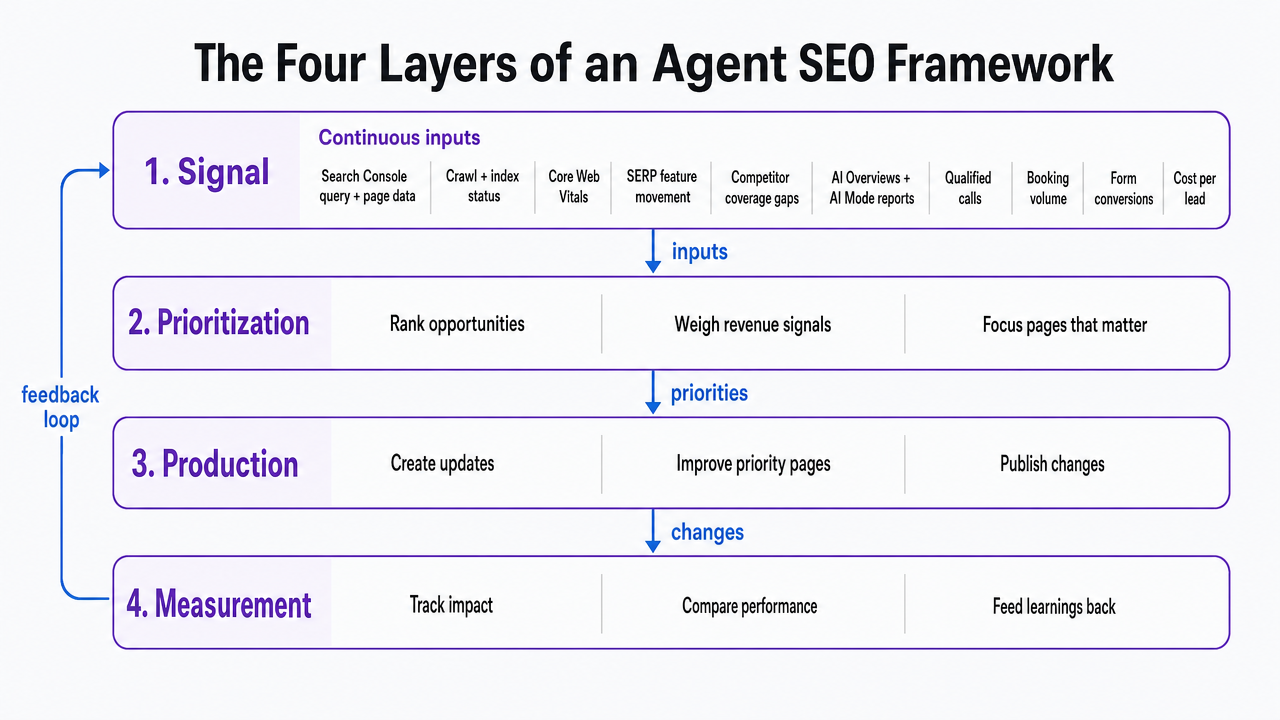 Visualize the four-layer operating model that structures the entire section: Signal, Prioritization, Production, and Measurement, showing how outputs from each layer flow into the next and close the loop back to Signal
Experience agent SEO execution at scale risk-free
Test-drive automated SEO workflows and publish live content with full approval control throughout your trial.
The Role-Split Matrix: Agent Tasks vs. Human Approval Gates
The most common misread of agentic SEO is that agents handle the tedious work and humans handle the interesting work. That framing hides the actual accountability question. The taxonomy separating AI agents from agentic AI systems is useful here: agentic systems orchestrate multi-step workflows across tools and data sources, while the human role shifts from doing the work to gating the decisions that carry legal, brand, or reputational weight 11. The role split, in other words, is a decision-rights split, not a difficulty split.
Agent-owned work in a mature SEO framework covers five clusters:
- Signal reading pulls Search Console, crawl status, business conversion data, and competitor SERP movement on a continuous cadence.
- Prioritization drafts rank opportunities against client economics and surface a proposed queue with reasoning attached.
- Brief creation compiles the target query, competitive analysis, entities to cover, and internal linking targets into a structured document.
- Drafting produces long-form copy against the approved brief with source anchors intact.
- Structured data updates generate and maintain schema markup across the site, and measurement pulls reconcile traditional Search performance with AI-search exposure and report deltas back to prioritization.
Human approval gates cover a shorter but weightier list:
- Final editorial approval on any draft that will publish.
- YMYL claims in legal, medical, dental, behavioral health, and financial content, where subject-matter judgment cannot be delegated.
- Disclosure decisions about how the client discloses AI-assisted production to its audience.
- Publish authorization to the live site.
- Measurement review, where the account lead decides whether observed movement warrants a strategy change or a hold.
The accountability point matters because agentic systems execute complex multi-turn workflows across many decision points, and the record of who approved what is what makes the output defensible when a client, a regulator, or a procurement team asks 12.
What this matrix rules out is instructive. It rules out auto-publishing, even for low-stakes pages, because the marginal time saved is smaller than the marginal risk absorbed. It rules out agent-owned claims in regulated verticals. And it rules out treating measurement as a report the agent generates rather than a decision the human makes. The framework runs faster than a handoff chain because approvals are structured and pre-loaded with reasoning, not because approvals are removed.
Governance: Making the Framework Defensible to Procurement
Governance is the layer that turns an agent SEO framework from an internal productivity story into a procurement-ready capability. Enterprise buyers in regulated verticals, and increasingly mid-market buyers with in-house legal review, are asking a specific question: when an agentic system touches the client's website, who is accountable for what, and how is that documented. The NIST AI Risk Management Framework is the reference standard most procurement teams recognize, and it is designed to help organizations manage AI risks and incorporate trustworthiness into design, development, use, and evaluation of AI systems 8. Agencies that can map their execution loop to that language shorten security reviews and remove the vendor risk objection before it hardens.
Four governance artifacts do most of the work:
- A system inventory that lists each agent, the data it reads, the actions it can propose, and the actions it can execute.
- An approval log that records who signed off on each brief, draft, structured data change, and publish action, with timestamps preserved.
- A change register that tracks what the agent modified on the client's site and why, so any performance movement can be traced back to a specific intervention.
- An escalation policy that names the human owner for YMYL content, disclosure decisions, and any incident where the agent's output required correction after publish.
The NIST AI RMF playbook translates these outcomes into suggested actions organizations can adopt directly, which gives agencies a documented reference point when procurement asks how the governance program was designed 9.
The accountability question sharpens because agentic systems execute complex multi-turn workflows across many decision points, and diffuse decision-making is exactly what procurement teams flag 12. A defensible framework names the human owner at every gate and produces the paper trail on demand. That is what converts governance from overhead into a sales asset.
The Buyer Trust Problem Agencies Cannot Ignore
Skepticism about AI-produced content is not a fringe concern in the client base. Roughly half of U.S. adults say AI will have a negative impact on the news people get, according to Pew Research surveying general public sentiment about AI in editorial and journalistic contexts 14. The scope is important: the survey measured attitudes toward AI in news production, not attitudes toward marketing content or SEO pages. But agency clients are drawn from that same public, and their in-house counsel, compliance officers, and executive teams carry the same reflexive concern into procurement conversations.
Broader Pew work on AI attitudes reinforces the pattern with nuance. Americans remain wary of AI's impact, but they are notably more open to AI for data analysis and task assistance than for creative or editorial work 10. That distinction is exactly the seam an agent SEO framework should sit in. Signal reading, opportunity ranking, structured data maintenance, and measurement reconciliation are analytical tasks the audience already accepts. Drafting and publishing are editorial tasks where trust erodes fast if the human role is invisible.
The commercial consequence is that approval gates and disclosure practices stop being compliance theater and start functioning as sales assets. A client asking whether AI wrote its service pages wants to hear who reviewed the draft, what was verified, and how the agency documents its process. A framework that produces that answer on demand converts a skeptical procurement conversation into a straightforward one.
See How AI-Driven Agent SEO Streamlines Multi-Location Growth
Request a data-backed walkthrough of automated SEO frameworks purpose-built for scaling agencies—covering unified approval workflows, live KPI tracking, and measurable efficiency gains for complex client portfolios.
If the Agency Runs Multi-Location or Portfolio Programs: Consolidation Economics
This section is written for a narrower reader: agency operators running SEO across multi-location clients (dental groups, DSOs, franchise home services, multi-office law firms, senior living portfolios) or managing portfolios of similar single-location clients where the underlying production work rhymes. The economics of an agent SEO framework diverge sharply from single-site retainers once the location count crosses roughly ten, because the coordination tax compounds faster than the production cost does.
The margin leak in portfolio SEO is not drafting time. It is the overhead between drafts: brief templating per location, schema variance across sites, cross-team status meetings, and the reporting cycle that reconciles which page moved where. An agent that owns signal reading, prioritization drafts, structured data maintenance, and measurement reconciliation across every location produces the same artifacts once and applies them consistently, while the human approval gate scales linearly rather than quadratically.
The comparison below uses agency-supplied variables rather than invented figures. The only fixed number referenced is the $599/month platform trial price from the brand context, included as an illustrative comparator.
| Input per location per month | Traditional handoff model | Agent SEO framework |
|---|---|---|
| Content + SEO production cost | X (agency's current per-location cost) | Variable; typically a fraction of X once amortized across the portfolio |
| Coordination overhead hours | Y hours (briefing, status, QA handoffs) | Approval hours only; Y reduced to gate reviews |
| Structured data maintenance | Manual, per-site drift | Agent-maintained across all locations 7 |
| Measurement reconciliation | Monthly manual pull per site | Continuous, including AI-search exposure 1 |
| Illustrative platform comparator | N/A | $599/month trial price |
Two variables carry the margin story:
Y (coordination overhead hours) : Where portfolio agencies bleed most, because every location adds status meetings, brief revisions, and reporting cycles that do not compress with staff experience.
Structured data consistency : The second variable, because manual schema maintenance across dozens of sites drifts within a quarter, and Google's guidance treats structured data as the machine-readable layer that clarifies page meaning to Search 7.
An agent that maintains schema uniformly across the portfolio removes a category of technical debt the agency was previously absorbing silently.
The operational takeaway for portfolio operators: the case for an agent SEO framework is not "cheaper content per location." It is the collapse of Y and the elimination of schema drift, both of which show up in retained margin rather than in the deliverable line item.
Rollout: What to Automate First, What to Leave Alone
Sequencing matters more than scope. Agencies that try to stand up the full framework across every client in a single quarter usually stall on integration debt and client trust simultaneously. A workable rollout compresses into three phases, and each phase graduates a category of work from human execution to agent execution only after the measurement layer confirms the previous phase is running clean.
Phase one automates the analytical work the public already accepts. Signal reading across Search Console, including the generative AI performance reports 1, crawl status, and business conversion data. Prioritization drafts that rank opportunities against client economics. Structured data audits and proposed schema updates, which Google treats as the machine-readable layer that clarifies page meaning 7. Nothing publishes in this phase. The agent produces ranked queues and change proposals; the account lead approves or rejects them. This is the seam Pew data supports, where the audience accepts AI for analysis and task assistance more readily than for editorial work 10.
Phase two moves into production with tighter guardrails. Agents draft against approved briefs, generate metadata, and maintain structured data across the site. Human editors verify factual anchors and approve every publish action. YMYL content in legal, medical, dental, and behavioral health stays out of scope entirely until phase three, and only enters then if the agency has built subject-matter review into the approval gate.
What to leave alone, indefinitely, is short:
- Auto-publishing to live client sites.
- Regulated claims without named human sign-off.
- Disclosure language about how content was produced.
The rollout is not a race to remove humans from the loop. It is a sequence for moving decision rights into a structured queue where approvals are faster because the reasoning arrives with the recommendation.
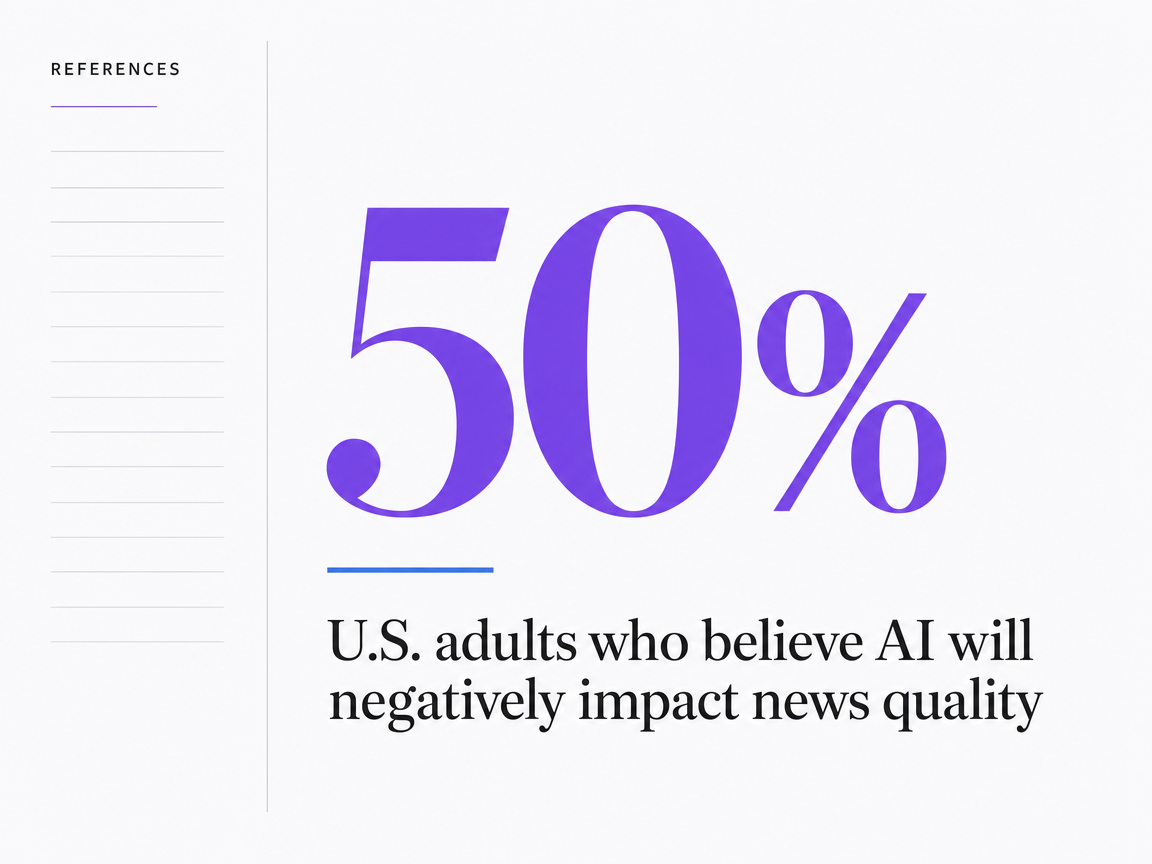 U.S. adults who believe AI will negatively impact news quality
U.S. adults who believe AI will negatively impact news quality
Frequently Asked Questions
References
- 1.Introducing Search Generative AI performance reports in Search Console.
- 2.Optimizing your website for generative AI features on Google Search.
- 3.Google Search's Guidance on Generative AI Content on Your Website.
- 4.AI Features and Your Website | Google Search Central.
- 5.Top ways to ensure your content performs well in Google's AI search experiences.
- 6.Google Search's guidance about AI-generated content.
- 7.Intro to How Structured Data Markup Works | Google Search Central.
- 8.Artificial Intelligence Risk Management Framework (AI RMF 1.0).
- 9.Playbook - AIRC - NIST AI Resource Center.
- 10.Key findings about how Americans view artificial intelligence.
- 11.AI Agents vs. Agentic AI: A Conceptual Taxonomy, Applications and Challenges.
- 12.Agentic AI: Autonomy, Accountability, and the Algorithmic Society.
- 13.The Shift to Agentic AI: Evidence from Codex.
- 14.Americans think AI will have a bad effect on news, journalists.
- 15.Reinventing marketing workflows with agentic AI.