
Key Takeaways
- Assess Readiness: Use a 3-point time audit to determine if your team is facing a productivity gap that justifies automation.
- Calculate ROI: Expect 26–31% operational savings and 1.7x ROI within 1–3 years by moving from pilot to production.
- Ensure Compliance: Implement multi-stage quality pipelines with human-in-the-loop validation for regulated content.
- Scale Smart: Target 75–85% adoption in core teams before expanding organization-wide to prevent process regression.
- Act Now: Follow a 30-day pilot-to-production plan to validate technology and build internal confidence.
Getting Started with AI Content Automation
Why Content Teams Are Adopting AI Content Automation
The Productivity Gap Driving AI Adoption
A persistent productivity gap is prompting content teams across industries to accelerate adoption of ai content automation. Despite rising expectations for content output, traditional workflows—reliant on manual research, drafting, and review—struggle to keep pace with channel demands and competitive publishing cadences. Survey data shows that 54.6% of the US workforce now uses generative AI at work, a 10-point increase over the previous year, reflecting how rapidly automation is being integrated to address these bottlenecks5.
To determine if your organization is facing this gap, conduct a practical early assessment:
- Time Audit: How many hours does your team spend on repetitive drafting, formatting, or compliance checks per week?
- Production Gap: Compare monthly content targets to actual output. Is demand outstripping team bandwidth by 20% or more?
- Bottleneck Mapping: Which review or approval stages consistently delay publication?
AI content automation is ideal for teams noticing chronic backlogs, missed campaign deadlines, or excessive time spent on non-strategic tasks. For example, high-volume editorial operations have reported up to 40% faster triage and initial processing times when introducing AI-supported workflows9. Consider this route if your team’s output or quality plateaus despite increased headcount or outsourcing.
With these pressures mounting, organizations are turning to AI solutions not just to speed up production, but to close the widening productivity gap and redeploy skilled staff to higher-value creative and strategic work.
Real ROI Data From Early Implementers
A clear picture of the business impact from ai content automation emerges as early implementers report measurable efficiency and financial gains. Analysis of more than 2,000 organizations reveals that 84% of those investing in AI see a return on investment within one to three years.
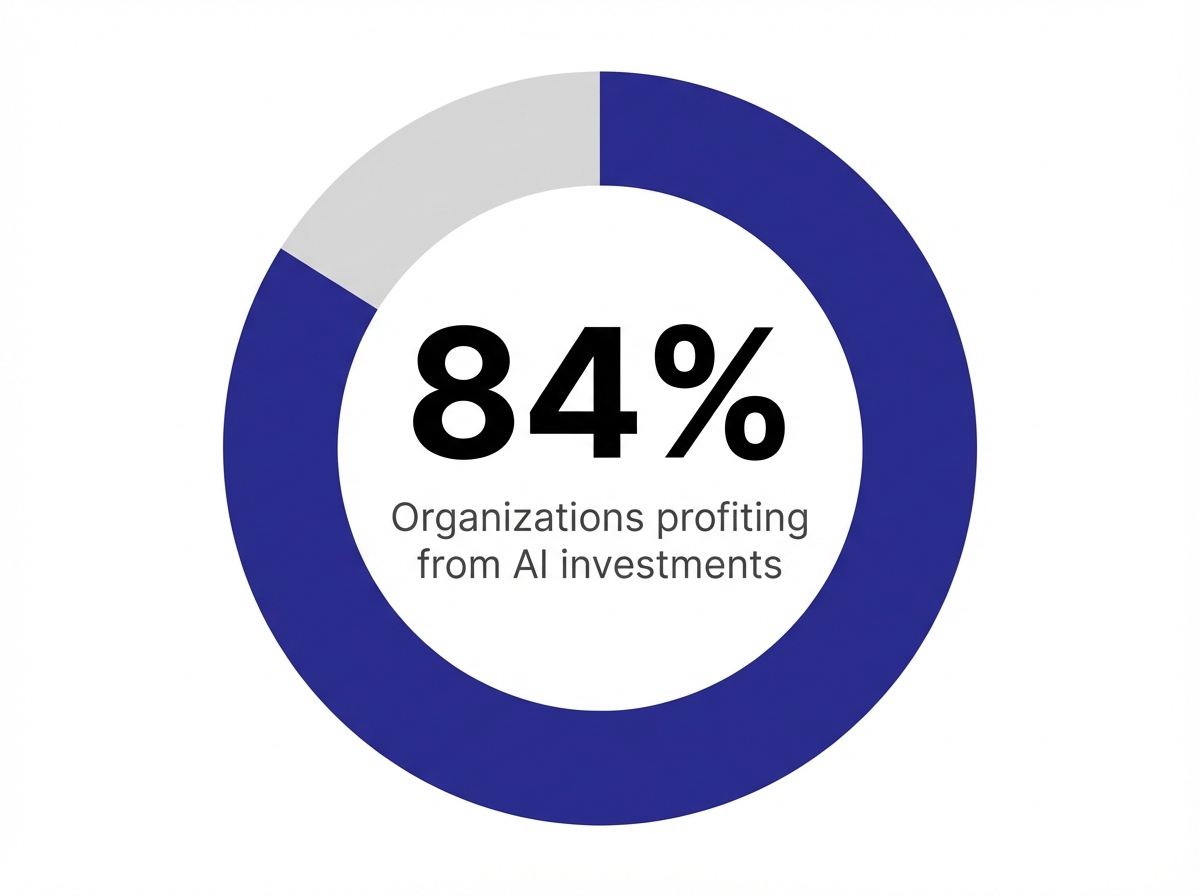 Organizations gaining ROI from AI investments: 84%
| Performance Metric | Average Impact | Timeline to Value |
|---|---|---|
| ROI Multiple | 1.7x | 1–3 Years |
| Operational Cost Savings | 26–31% | Post-Pilot Scale |
| Editorial Triage Speed | Up to 40% Faster | Immediate |
To evaluate readiness and likely ROI, content leaders can use this quick assessment:
- Process Redesign: Has your team mapped workflows for automation or only layered AI onto existing processes?
- KPI Clarity: Are you tracking time-to-publish, content quality, and cost per asset before and after automation?
- Scale of Investment: Are you prepared to scale AI across business units, as 71% of firms investing $10M+ report significant productivity gains2?
This approach works best when organizations invest in both technology and process change, rather than treating AI as a bolt-on tool. Teams that combine automation with governance frameworks and staff training consistently outperform those relying solely on technology adoption.
Core Components of AI Content Systems
Multi-Stage Quality Pipelines Explained
A multi-stage quality pipeline is a structured sequence of automated checkpoints that ensure content accuracy, compliance, and brand alignment before publication. In the context of AI content automation, each stage is designed to address specific risks—such as factual errors or regulatory breaches—by layering technology and human oversight strategically.
Multi-Stage Pipeline Checklist:
- Automated Fact-Checking: Scans drafts for inaccuracies using integrated databases and cross-references claims with original sources.
- Formatting and Consistency Review: Applies brand style guides and automatically corrects structural issues.
- Compliance Gate: Verifies adherence to legal, regulatory, and privacy requirements, especially critical for healthcare and financial content.
- Human-in-the-Loop Validation: Assigns final review to subject matter experts, ensuring nuanced judgment and approval.
This approach works best when organizations handle high content volumes or require stringent oversight, as in regulated industries. For example, leading editorial teams report nearly 40% faster triage and initial processing times by automating reference checks and ethical screenings within their quality pipelines9.
A typical multi-stage pipeline requires initial setup and integration, often involving 2-4 weeks of development time for most marketing teams, plus ongoing maintenance to update rulesets as regulatory standards evolve. Resource needs include access to AI-enabled fact-checkers, workflow automation tools, and subject matter expert availability for final validation.
Integration Architecture for CMS and Workflows
A well-structured integration architecture is essential for connecting AI content automation systems with core content management systems (CMS) and workflow tools. These integrations eliminate manual handoffs, reduce versioning errors, and enable real-time content delivery across channels.
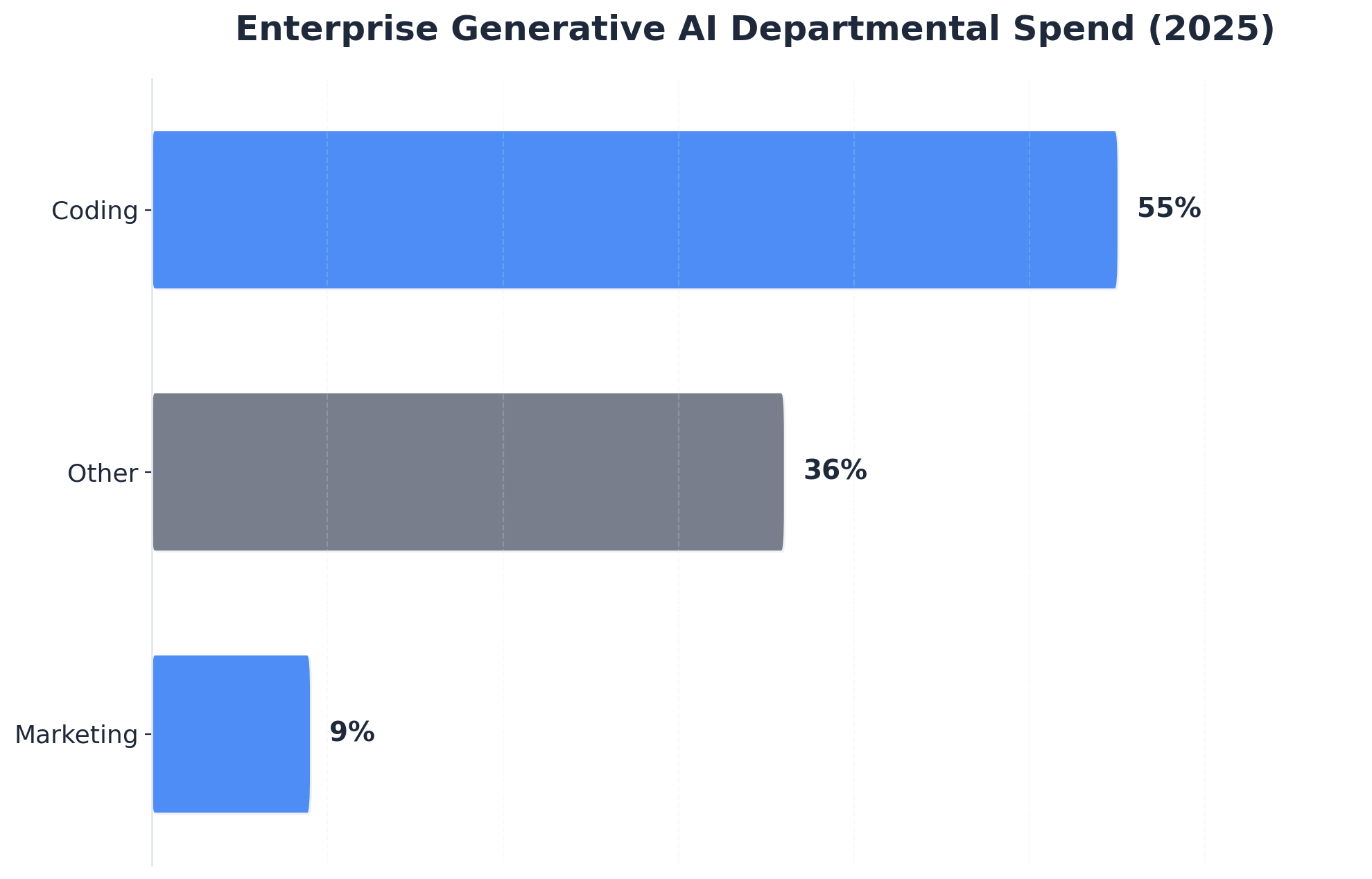 Enterprise Generative AI Departmental Spend (2025)
Enterprise Generative AI Departmental Spend (2025) (Breakdown of departmental AI spending in 2025. Marketing platforms captured 9% of the spend, while coding was the largest category at 55%.)
Integration Readiness Checklist:
- API Compatibility: Validate that your CMS (such as WordPress or Sitecore) offers open APIs or plugins for third-party automation tools.
- Workflow Mapping: Diagram each stage where content moves between AI tools, review platforms, and final publishing destinations.
- Authentication & Permissions: Ensure secure, role-based access for both AI agents and human reviewers within the system.
- Error Handling & Logging: Build automatic alerts for integration failures or content mismatches.
This solution fits organizations seeking to automate multi-channel publishing or synchronize editorial workflows with marketing operations. Survey data finds that nearly 60% of AI leaders identify integration with legacy systems as a primary barrier, emphasizing the need for clear mapping and technical expertise during rollout4. Integration typically requires 2-6 weeks for mid-sized marketing teams, with resource needs including IT support, vendor collaboration, and dedicated testing environments.
Opt for a modular approach when scaling: start with essential integrations (CMS, review tools), then expand to analytics and distribution platforms. Organizations that establish robust integration architecture report up to 35% reduction in content management time and significantly smoother handoffs between automation and human oversight9.
Overcoming Implementation Barriers
Compliance Frameworks for Regulated Industries
Highly regulated industries—such as healthcare, finance, and legal—face unique challenges when implementing AI content automation due to strict compliance requirements. Non-compliance with frameworks like HIPAA, GDPR, or FINRA can expose organizations to significant legal and reputational risks. To minimize these risks, content leaders should apply a structured compliance framework:
- Identify Regulations: List all relevant regulations for your industry and region (e.g., HIPAA for US healthcare content).
- Map Data Flows: Trace data within AI content systems to ensure protected information remains secure.
- Validate Vendors: Ensure automation vendors provide detailed audit trails and support for regulatory reporting.
- Establish Checkpoints: Mandate human review for sensitive or high-risk content before publication.
This strategy suits organizations operating in jurisdictions with evolving or overlapping regulations, especially where penalties for non-compliance are severe. For example, nearly 60% of AI leaders cite integration with legacy systems and compliance concerns as their top adoption barriers, underscoring the need for robust governance frameworks4. Most teams require legal counsel, compliance specialists, and IT support to deploy AI solutions that meet both operational and regulatory standards.
Accelerate Your Content Pipeline with AI-Powered Automation
Connect with Vectoron to discover tailored AI automation solutions that streamline content creation, boost efficiency, and maximize ROI for agencies and enterprise marketing teams.
Team Readiness and Change Management
Effective adoption of AI content automation depends not only on technology readiness but also on team preparedness and structured change management. A practical readiness assessment for content leaders includes:
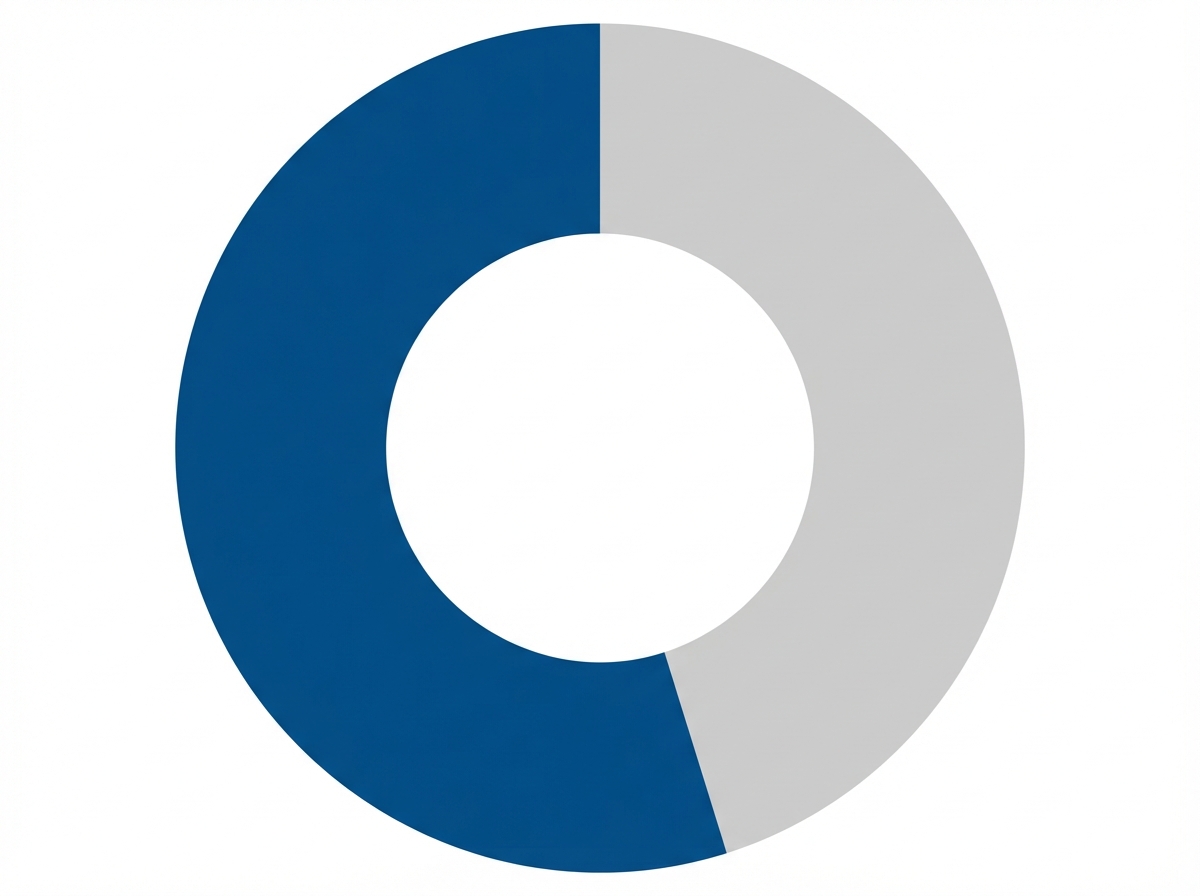 US workforce using generative AI (2025): 54.6%
- Evaluate Comfort: Assess current staff comfort with digital tools and automation.
- Identify Gaps: Pinpoint training needs in prompt engineering, workflow supervision, and data privacy.
- Assess Openness: Gauge willingness to shift from manual to AI-assisted tasks and redesign processes.
- Secure Sponsorship: Establish executive sponsorship and cross-functional champions to drive adoption.
This approach is ideal for organizations anticipating resistance to workflow changes or with a history of digital transformation challenges. In fact, 26% of AI leaders cite workforce skills gaps as a primary barrier, and industry research emphasizes that successful AI adoption hinges on robust change management programs rather than technology alone4, 7. The most effective teams invest in structured onboarding, peer learning, and ongoing upskilling to build internal confidence and reduce implementation friction.
Organizations should also set clear adoption targets—research recommends aiming for 75–85% team usage before scaling to avoid fragmented adoption or process regression7. Comprehensive change management requires dedicated time (typically 4–8 weeks for mid-sized teams), ongoing training resources, and alignment between IT, compliance, and business functions.
Building Your AI Content Automation Roadmap
Self-Assessment: Which Use Cases Fit Your Team
Selecting the right use cases is a critical early step in building an effective AI content automation roadmap. Teams can use this self-assessment tool to match operational needs with proven applications:
- List Tasks: Identify recurring content tasks (drafting, editing, compliance checks, personalization).
- Rate Effort: Categorize each task by frequency and manual effort required (low, medium, high).
- Identify Pain Points: Determine if missed deadlines, content backlogs, or quality lapses are common.
- Map Solutions: Match tasks to existing AI solutions and assess integration readiness.
- Prioritize: Select use cases with the highest time savings potential and lowest regulatory risk.
This approach is ideal for marketing teams aiming to accelerate content turnaround, as research shows organizations adopting AI content automation report 45–60% reductions in production time and 26–31% cost savings in operations2. For example, a small B2B SaaS company may prioritize automated email drafting and campaign reporting, while an enterprise in healthcare would select use cases where compliance and accuracy are central, such as regulatory documentation or medical FAQs.
Resource Planning and Timeline Expectations
Effective resource planning is essential for a sustainable AI content automation roadmap. Teams should begin with a simple planning tool:
- Identify Leads: Assign internal leads for project management, IT, and content oversight.
- Estimate Time: Allocate staff time for training and workflow redesign (typically 4–8 weeks for mid-sized teams).
- Map Resources: Determine required technology resources (AI tools, integration support, compliance frameworks).
- Set Milestones: Define targets for pilot launch, review cycles, and full deployment.
This method works when organizations match resource allocation to priority use cases rather than overextending bandwidth. For example, research shows that successful AI content automation implementations see initial efficiency gains in 6–18 months, with more substantial ROI emerging after 18–36 months as teams refine processes and scale adoption2. Most content teams require a phased approach: pilot projects often start with 1–2 dedicated staff and expand to broader teams as workflows stabilize.
Resource requirements include ongoing training, periodic compliance reviews, and IT support for integration. High-success teams also schedule regular progress reviews to adjust timelines and redistribute effort as needed.
Frequently Asked Questions
Your Next 30 Days: From Pilot to Production
The transition from testing to full implementation of AI content systems doesn't require months of planning. While traditional marketing software rollouts typically demand 6-12 months of deployment time, analysis of 200+ marketing teams shows that AI content tools follow a more compressed adoption curve—most organizations move through a predictable 30-day cycle that validates the technology while building internal confidence.
- Week One (Baseline Measurement): Teams identify 2-3 content types currently consuming the most resources—typically blog posts, social content, or email campaigns. This establishes clear before-and-after metrics for speed, cost, and quality comparisons.
- Weeks Two and Three (Parallel Production): The existing workflow continues while AI-powered systems handle identical assignments. Side-by-side evaluation reveals performance gaps and identifies where human oversight adds the most value. Teams refine prompts, adjust quality parameters, and document what works.
- Week Four (Scaling Decision): With data showing 60-80% time savings and comparable or better engagement metrics, leadership can confidently redirect resources. The pilot content goes live, performance gets tracked, and the production system expands to additional content types.
This methodical approach removes the risk while proving the business case with actual results rather than projections.
References
- 1.The State of AI: Global Survey 2025 - McKinsey.
- 2.AI and tech investment ROI | Deloitte Insights.
- 3.AI ROI: Why Only 5% of Enterprises See Real Returns in 2026.
- 4.AI trends 2025: Adoption barriers and updated predictions - Deloitte.
- 5.The State of Generative AI Adoption in 2025 | St. Louis Fed.
- 6.28 AI marketing statistics you need to know in 2025 - SurveyMonkey.
- 7.Overcome Barriers to AI Adoption with the Right Strategy - Harvard Business School Online.
- 8.Fact-Checking for Accuracy in Human and AI-Generated Content - Content Marketing Institute.
- 9.Redefining Editorial Workflows: What 2025 Taught Us About AI - Editor's Café.
- 10.2025: The State of Generative AI in the Enterprise - Menlo Ventures.