
Key Takeaways
- An AI marketer is a coordinated execution layer that links content, SEO, paid, backlinks, social, and call intelligence to pipeline KPIs, with human approval before every publication.
- Adoption is nearly universal, with roughly 90% of marketers using generative AI, yet task-level productivity rarely converts to pipeline without cross-channel coordination and revenue feedback loops 2, 3.
- VPs are choosing between a traditional agency stack, in-house expansion, or a coordinated AI platform, and the right pick depends on which failure mode—coordination cost, fixed headcount, or governance drift—is most manageable.
- Defensibility depends on approval-first automation, substantiation attached to every claim, and lifecycle logging, aligning execution with FTC evidence standards and NIST AI RMF guidance 4, 5, 7.
Why marketing VPs are rethinking what an AI marketer actually is
The phrase "AI marketer" has evolved. Previously, it often referred to an individual proficient in using tools like ChatGPT for tasks such as generating subject lines or blog drafts. However, this definition no longer aligns with the expectations placed on marketing VPs for 2025: achieving predictable pipeline, forecastable customer acquisition cost (CAC), and conversion improvements without increasing headcount or agency retainers.
The landscape has shifted. McKinsey's 2025 State of AI survey indicates that value is moving from isolated experiments to core business functions, with AI becoming embedded in sales and marketing workflows rather than merely piloted 3. This represents a fundamental change, moving beyond tool selection to address operating model questions.
Today, an AI marketer refers to a coordinated execution layer, not a single person or application. It processes real-time signals from qualified calls, form fills, cost per lead, and booked revenue. It prioritizes tasks across content, SEO, paid media, backlinks, social media, and call intelligence. It executes approved work and reports the key performance indicator (KPI) impact back into the same feedback loop.
For VPs, this rethinking is structural. The relevant comparison is no longer "which generative AI tool should the team standardize on," but rather which operating model yields the most predictable pipeline per dollar: a traditional agency structure, an expanded in-house team, or a governed AI execution layer with human approval for every deployed asset. This analysis explores that question.
The adoption baseline: mainstream use, uneven pipeline impact
AI adoption is no longer a novel concept. A September 2024 American Marketing Association survey of over 1,000 professional marketers revealed that approximately 90% use generative AI tools at work, 71% use them weekly or more, and 85% of users reported increased productivity 2. Daily use was close to 20%, indicating widespread adoption rather than early-stage experimentation.
However, the productivity gains at the task level—such as faster drafts, briefs, or ad variants—have not consistently translated into predictable pipeline growth. McKinsey's 2025 State of AI survey observes a similar trend at the enterprise level: while adoption is broad, significant financial value is concentrated in organizations that have integrated AI into core business processes, including sales and marketing, moving beyond isolated experiments 3.
Two factors explain this disparity. First, scope: most generative AI use in marketing remains confined to individual tasks, with outputs often ending in documents rather than directly in channels. Faster copy alone does not inherently increase qualified call volume or booked revenue. Second, coordination: when content, SEO, paid media, and call intelligence operate with separate tools and owners, individual productivity gains rarely compound into funnel-wide pipeline improvements.
This redefines the VP's challenge. The assumption should be that teams are already using generative AI daily and achieving real-time savings. The critical question is whether these saved hours are being reinvested into prioritized, revenue-linked work, or merely absorbed into existing task backlogs. This analysis considers adoption as a given, focusing instead on pipeline coordination as the primary constraint.
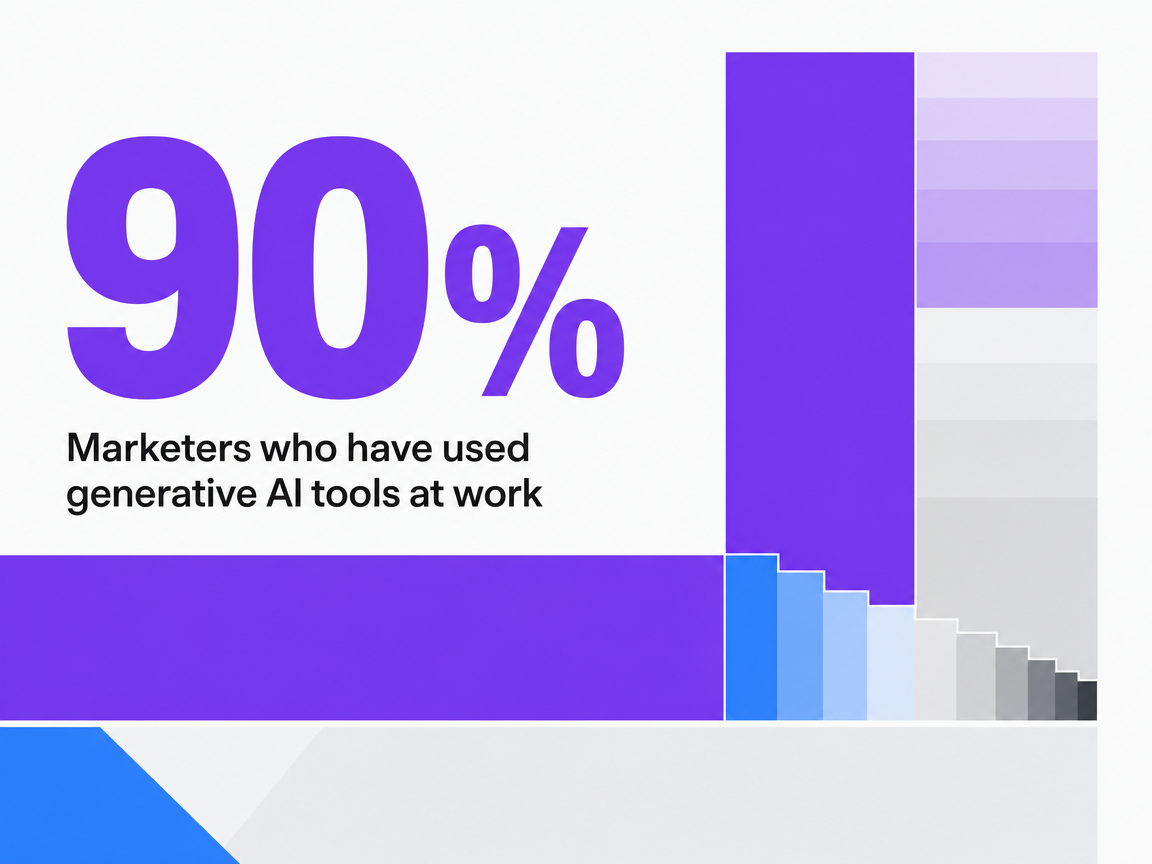 Marketers who have used generative AI tools at work
Marketers who have used generative AI tools at work
What the AI marketer does across channels, in one coordinated loop
The functional definition of an AI marketer is intentionally precise. It represents an execution layer that links six channel workflows to a unified set of pipeline KPIs, with human approval required between recommendation and publication. While the channels themselves are not new, their coordination is.
This coordinated loop addresses recurring barriers identified by Harvard's synthesis of AI marketing capabilities, such as strategy gaps, talent gaps, and over-reliance on isolated automation that fails to connect to revenue 1. For example, a ranked recommendation in an SEO tool might not account for a paid team pausing a campaign driving traffic to that page. Similarly, a content calendar might not reflect high-intent inquiries flagged by call intelligence about an underrepresented service.
The coordinated loop closes this gap through four key actions:
- It processes live signals from calls, forms, spend, and rankings.
- It prioritizes work based on projected pipeline impact rather than task age.
- It routes every recommendation through a human approval queue with supporting rationale.
- It executes approved work, feeding KPI results back into the signal set that informs subsequent rankings.
McKinsey's 2025 survey explicitly highlights this shift. Organizations achieving measurable value have integrated AI into core processes, with sales and marketing being prominent examples 3. The differentiator is not the quality of the AI model, but whether its output integrates into a governed workflow that a VP can forecast against, or if it merely produces a document that still requires human translation into a campaign brief.
Experience Predictable Pipeline Acceleration in One Week
See your team execute real campaigns and measure pipeline impact before making a commitment.
Where AI actually moves pipeline
AI's pipeline impact is concentrated in a few specific workflows, rather than across the entire marketing spectrum. McKinsey's 2025 State of AI survey identifies key enterprise use cases as content support for marketing strategy, conversational information capture, and contact-center or customer-service automation, with value shifting into core functions like sales and marketing 3. This focused list is crucial. VPs seeking predictable pipeline growth should prioritize investments in these proven areas.
Four workflows are particularly impactful:
Ranked content production tied to intent signals. : Content support for marketing strategy is the most common AI use case documented by McKinsey 3. Pipeline lift occurs when content production is prioritized by projected revenue impact—focusing on declining pages that still convert, service lines highlighted by inbound calls, or keywords where competitors are losing rank—rather than solely by editorial calendar schedules.
Inbound conversation intelligence. : Contact-center and customer-service automation is another top enterprise use case identified by McKinsey 3. For service industries, the pipeline mechanism involves call scoring: transcribing and classifying inbound calls by intent, disposition, and revenue potential. This data is then fed back into bid strategies and content priorities, creating a feedback loop between prospect inquiries and website content.
Paid media reallocation against qualified-lead economics. : Impact comes from shifting optimization targets from cost per click to cost per qualified conversation, using conversion and call data as feedback signals instead of platform-reported form fills.
Predictive prioritization across channels. : This coordination layer analyzes content performance, SERP movement, spend efficiency, and call outcomes collectively, then ranks the next set of actions across all these areas.
Currently, creative automation for brand campaigns and fully autonomous outbound marketing are not on this list. These remain higher-variance bets with less direct pipeline attribution. VPs aiming for a predictable forecast should fund the four workflows above first, treating others as capped-budget experiments.
Why most AI marketing pilots never become pipeline
A consistent failure pattern exists: a team conducts a generative AI pilot, achieves faster drafts and cheaper ad variants, reports productivity gains, but fails to demonstrate a corresponding increase in qualified leads, booked calls, or improved CAC. Harvard's synthesis of AI marketing capabilities directly attributes these failures to strategy gaps, talent gaps, and an over-reliance on isolated automation that never connects to revenue 1.
Three primary failure modes explain most of this gap:
- Pilots optimize for the wrong metric. Task speed is easily measured and celebrated, unlike pipeline growth. A team that halves the time to publish a blog post demonstrates productivity, not demand. Without a feedback mechanism linking published assets to calls, forms, and revenue, a pilot cannot differentiate between a fast content mill and a true pipeline engine.
- Tools operate in silos. The content writer's assistant does not communicate with the SEO auditor's crawler, which does not communicate with the paid platform's optimizer, nor with the call-tracking system. While each individual seat may become faster, the overall funnel does not. McKinsey's 2025 survey confirms this enterprise-level pattern: organizations realizing significant financial value have integrated AI into embedded, cross-functional processes, moving beyond point-solution experiments 3.
- Absence of an approval loop leads to lack of accountability. When AI output flows directly into a document that still requires human translation into a brief, review, and scheduling, the pilot inherits all the coordination costs it was intended to eliminate. This results in slower deployment than promised and a lack of clear attribution back to the original AI recommendation.
Pilots that successfully contribute to pipeline forecasts share one characteristic: the AI output integrates into a governed workflow that includes a human approver, a specific channel destination, and a measurable KPI. Anything less is merely a productivity demonstration.
Three operating models VPs are actually choosing between
Beyond vendor pitches, marketing VPs at growth-stage service businesses typically choose from three operating models. Each has its merits and distinct breaking points when pipeline forecasts tighten.
Traditional agency stack with point-tool support. This model involves a retainer agency for strategy and production, a paid media agency for ad buying, and an in-house team managing brand, brief writing, and reporting reconciliation. The primary predictability failure is coordination cost. Briefing cycles, revision rounds, and cross-vendor reporting consume significant time, and no single entity has a unified view of content performance, SERP movement, spend efficiency, and call outcomes. Harvard's analysis directly points to this pattern: over-reliance on isolated automation and disconnected execution is a recurring reason AI marketing investments fail to generate revenue 1.
In-house team expansion. This involves hiring specialists such as a content lead, an SEO specialist, a paid manager, and a marketing operations analyst. This improves coverage and builds institutional knowledge. The predictability failure here is fixed cost against variable pipeline. Each new channel or geography necessitates another hire, and individual productivity gains from generative AI—reported by 85% of generative AI-using marketers in the AMA's 2024 survey 2—do not automatically translate into cross-channel pipeline lift when team members still work in separate tools.
Coordinated AI marketing platform with approval workflow. This model features a single execution layer that processes signals across channels, prioritizes work by projected pipeline impact, routes recommendations to a human approver, and executes approved tasks. The critical predictability failure to monitor is governance drift. Speed without rigorous approval discipline introduces risks related to FTC substantiation and NIST AI Risk Management Framework (RMF) exposure, which is discussed in detail below.
The choice is not about which model is inherently superior, but which failure mode the VP is prepared to manage given their pipeline forecast.
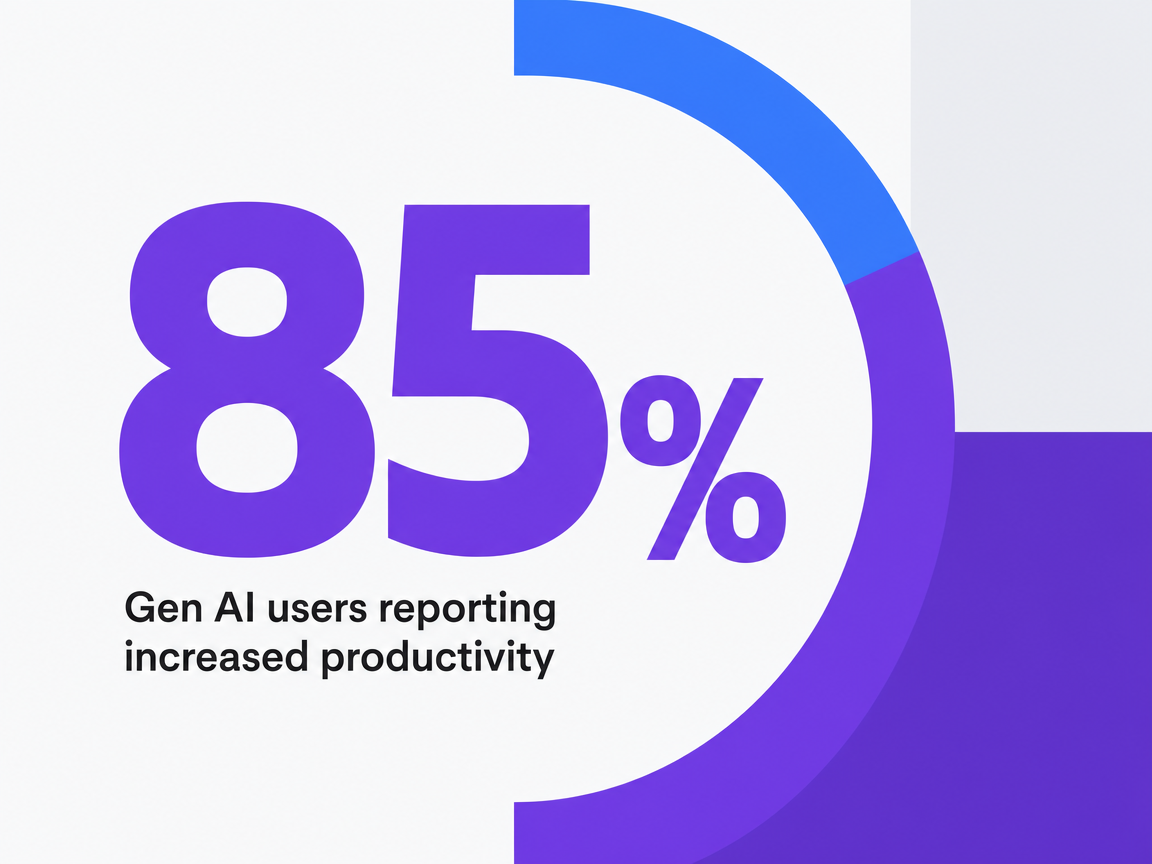 Gen AI users reporting increased productivity
Gen AI users reporting increased productivity
See How AI-Powered Marketing Drives Predictable Pipeline at Scale
Request a walkthrough of unified AI-driven workflows proven to reduce campaign cycle times, increase lead quality, and simplify multi-channel execution—without expanding your in-house team or managing multiple vendors.
If you manage multiple locations: consolidation economics
This section is written for VPs running marketing across a portfolio: DSO and MSO groups, home-services franchises, senior-living operators, and multi-office law firms. Single-location readers can skip ahead.
Multi-location economics alter the equation significantly. Each location has its own local SERP, Google Business Profile, call volume, and cost per qualified lead. A traditional agency stack multiplies these workflows by the number of locations. In-house expansion increases headcount proportionally. A coordinated AI execution layer, however, flattens this multiplier by applying the same governed loop across every location and prioritizing work across the entire portfolio.
The comparison below uses variables for retainer and headcount costs, allowing operators to input their specific figures. The anchored figure is the coordinated platform price after the two-week trial.
| Variable | Traditional agency stack + point tools | In-house team expansion | Coordinated AI marketing platform |
|---|---|---|---|
| Monthly cost structure | $R retainer + $P paid media fee + $T tool stack, per brand or region | $S per FTE × channels × locations, plus tools | $599/mo per workspace after trial, human approver time |
| Channels covered | Varies by vendor; content and SEO common, call intelligence rare | Whatever the team can staff | Content, SEO, paid, backlinks, social, call intelligence in one loop |
| Approval and oversight | Briefs, revision rounds, cross-vendor status meetings | Internal review by channel owner | Single approval queue with reasoning attached to each recommendation |
| KPI attribution surface | Reconciled manually across vendor reports | Depends on marketing ops maturity | Signals from calls, forms, spend, and rankings feed the same ranking engine |
| Time to published asset | Days to weeks per brief cycle | Bounded by team capacity | Hours after approval |
For portfolio operators, the attribution surface is critical. McKinsey's 2025 State of AI survey found that organizations achieving measurable financial value from AI have integrated it into embedded core processes, rather than isolated experiments, with sales and marketing being common embedded functions 3. For a 40-location DSO or a home-services franchise with 120 territories, "embedded" means a single signal set feeding a single ranking engine, not 40 or 120 disconnected reports.
The failure mode to watch in the platform column is governance drift across locations. Faster publishing across a portfolio proportionally increases the substantiation and disclosure surface, which is the focus of the next section.
Governance that makes AI marketing defensible
Speed without governance is a critical failure point for AI marketing programs. The FTC's advertising rules remain unchanged by faster production: claims in ads must be truthful, non-deceptive, fair, and substantiated by evidence before publication 5. This standard applies equally to headlines written by a person, a model, or a model with human edits. The production method does not alter the burden of proof.
Regulators have already demonstrated their willingness to act. In September 2024, the FTC launched Operation AI Comply, a law-enforcement initiative targeting deceptive AI claims, fake AI-generated reviews, and exaggerated AI capabilities. FTC Chair Lina Khan explicitly stated the standard:
"Using AI tools to trick, mislead, or defraud people is illegal" 6.
For a VP publishing content across numerous pages or locations, exposure scales with publication volume.
Two NIST resources provide an operational framework. The AI Risk Management Framework 1.0 outlines trustworthiness properties and lifecycle controls for AI systems, offering voluntary guidance for improved design, development, use, and evaluation 4. The companion Generative AI Profile, released in 2024, adds specific controls for generative AI related to confabulation, bias, privacy, and misuse—precisely the failure modes encountered in marketing content workflows 7.
Translated into a marketing operations loop, three controls are paramount:
Approval-first automation. : Nothing is published without a named human approver signing off on the specific asset, with the model's reasoning attached to the recommendation. This mechanism transforms speed into defensibility rather than exposure.
Substantiation attached to the claim. : Every factual or comparative claim in a published asset must include a source link or evidence note within the workflow record. If a claim cannot be substantiated at the time of approval, it is not published. This directly addresses the FTC's evidence-based standard 5 and the confabulation risk highlighted in NIST's Generative AI Profile 7.
Lifecycle logging. : The recommendation, approver, model output, edits, publish time, and downstream KPI are all recorded in a single place. NIST's AI RMF emphasizes this traceability as fundamental to trustworthy AI use throughout its lifecycle 4. For a VP, the practical benefit is the ability to reconstruct any claim months later without extensive investigation across multiple tools.
Governance is not a separate program; it is integral to the approval queue itself. A coordinated AI marketing loop that bypasses human approval and substantiation for every publication is not faster than an agency—it is faster at accumulating regulatory and brand risk.
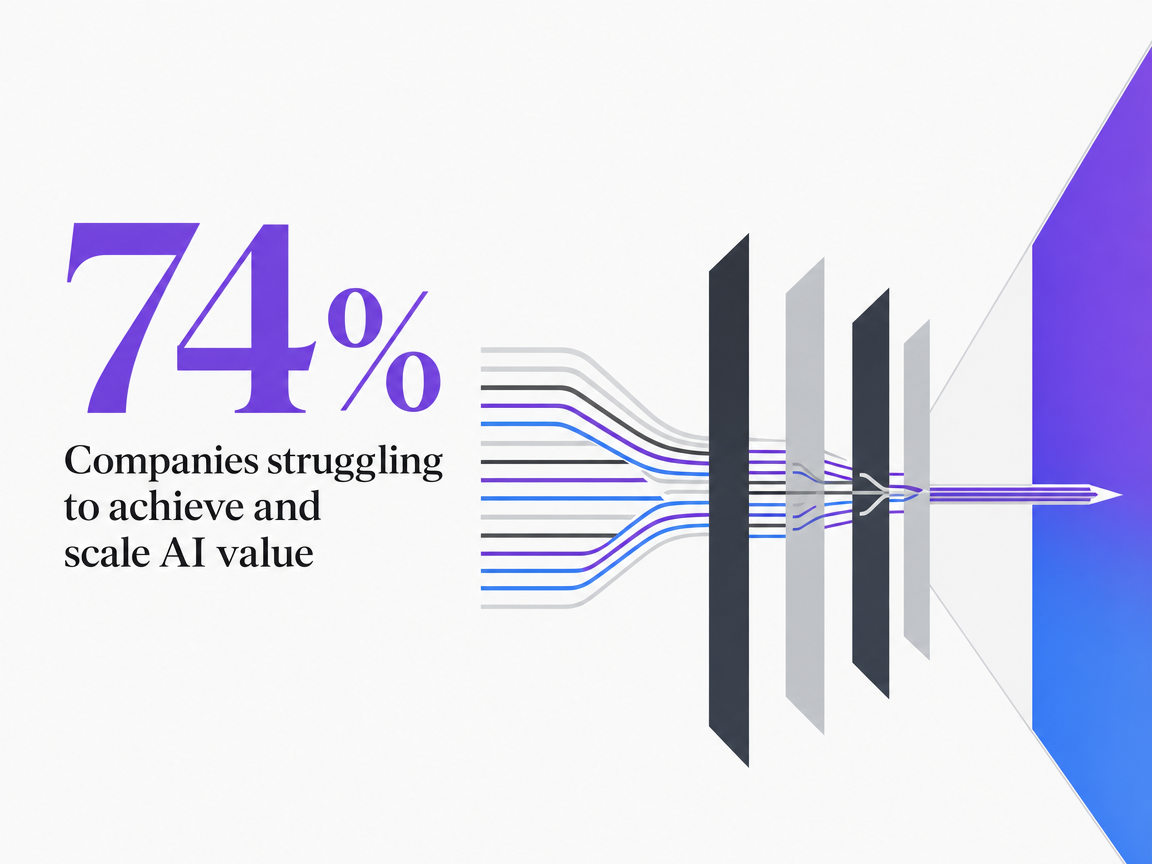 Companies struggling to achieve and scale AI value
Companies struggling to achieve and scale AI value
Disclosure, trust, and the audience already watching
Prospects consuming AI-assisted marketing content are increasingly aware of its origins. Pew's 2026 Americans and AI report indicates that about half of U.S. adults now use AI chatbots, and 38% of employed adults use them for work tasks 8. However, this familiarity has not necessarily led to comfort. A separate Pew analysis reveals that 50% of U.S. adults are more concerned than excited about AI's growing presence in daily life, with concerns primarily centered on creativity and trust, rather than utility 9.
This sentiment has practical implications for pipeline generation. A prospect skeptical of AI-generated copy is not necessarily skeptical of the product itself, but rather of the substantiation behind the claims. At this point, disclosure and human review become conversion levers, not just compliance tasks. An asset that clearly identifies the humans accountable for its claims and links factual statements to their sources will convert better with a skeptical audience than one that conceals its production method.
The operational adjustment is specific and manageable: attach the approver's name to substantive content in verticals where it's expected (e.g., legal, medical, financial), maintain visible evidence links for comparative and outcome claims, and subject AI-assisted assets to the same editorial standards as human-written content. The audience is already scrutinizing. Disclosure discipline transforms this scrutiny into trust, rather than churn.
Frequently Asked Questions
References
- 1.AI Will Shape the Future of Marketing.
- 2.Generative AI Takes Off with Marketers.
- 3.The State of AI: Global Survey 2025.
- 4.AI Risk Management Framework | NIST.
- 5.Advertising and Marketing.
- 6.FTC Announces Crackdown on Deceptive AI Claims and Schemes.
- 7.Artificial Intelligence Risk Management Framework: Generative Artificial Intelligence Profile.
- 8.Americans and AI 2026: Chatbots, Smart Devices and Views on Impact.
- 9.Key findings about how Americans view artificial intelligence.
- 10.Public Opinion | The 2025 AI Index Report | Stanford HAI.