How Does Automated Blog Writing for Marketing Teams Work?
Key Takeaways for Healthcare Marketing Leaders:
- Operational Efficiency: Automated pipelines reduce content production costs by 89% while delivering 1-hour turnaround times compared to weeks for traditional agencies.
- Quality Assurance: A 12-stage pipeline incorporating AI and expert review achieves a 96% publish rate without post-production edits.
- Brand Consistency: AI-driven brief extraction and digital style guides ensure unified voice across multi-location healthcare networks.
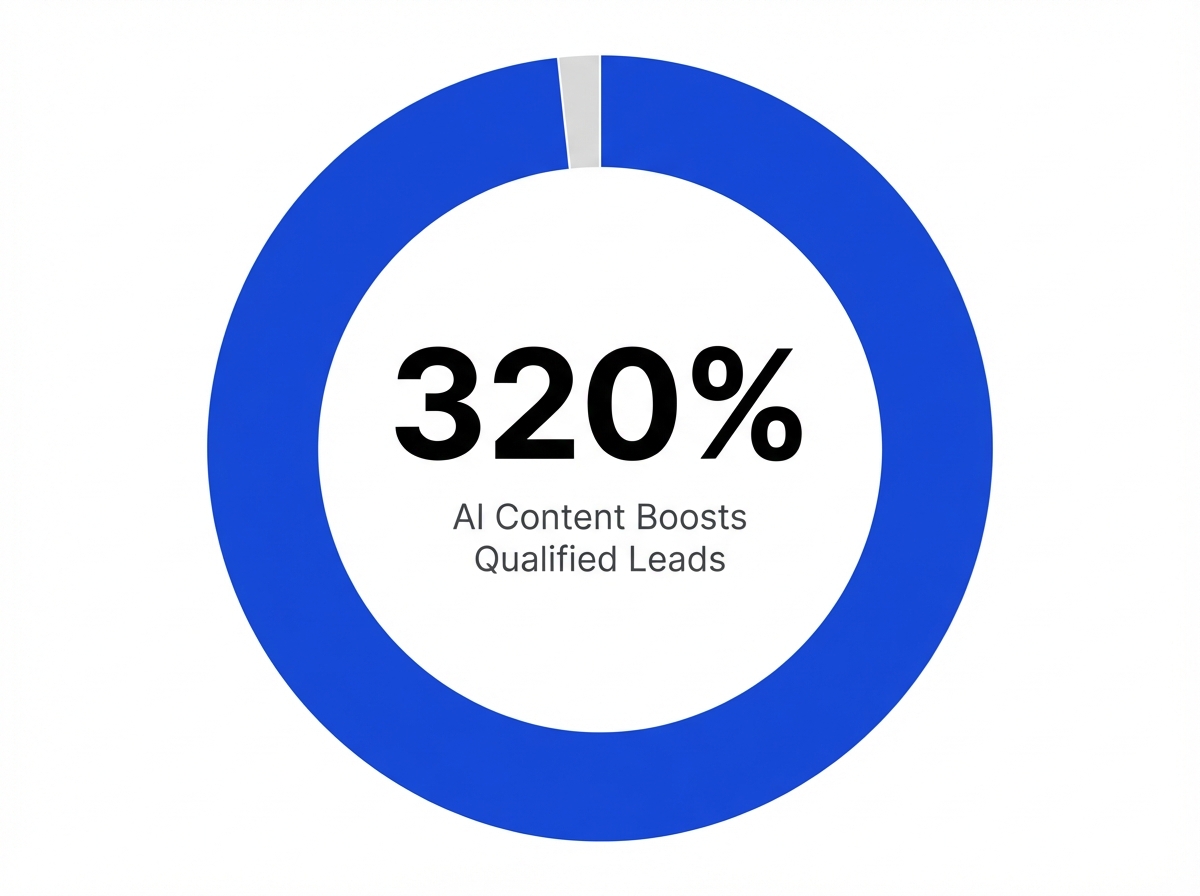
- Scalable Growth: Fixed-cost models allow teams to scale lead generation by 320% without adding headcount.
The Architecture of Automated Blog Writing for Marketing Teams
From Keyword Research to SEO Outline
Automated blog writing for marketing teams fundamentally restructures the content supply chain, moving from manual, linear processes to parallel, AI-driven operations. This transformation begins with sophisticated keyword research, where AI platforms analyze millions of data points in seconds—drawing from Google Search Console and competitor data—to identify high-intent patient search terms. Unlike manual spreadsheet analysis, these systems automatically group keywords by semantic similarity to form strategic content pillars9, 10.
 From Keyword Research to SEO Outline
For healthcare marketing VPs, this ensures that content strategy is built on data-backed decisions regarding which topics will drive qualified patient leads. The end-to-end workflow typically follows this sequence:
- AI-driven keyword research and clustering: Identifying high-value search terms and grouping them by intent.
- Competitive analysis and SERP intent mapping: Analyzing ranking factors to uncover content gaps.
- Automated SEO outline creation: Generating structured outlines with topic clusters and logical hierarchy.
- Integration with editorial calendars: Seamlessly pushing briefs to content management workflows.
Once keywords are clustered, the system generates outlines that incorporate must-cover topics, section hierarchy, and internal linking recommendations. This approach is ideal for organizations aiming to replace time-consuming manual planning. Research demonstrates that automated content pipelines cut manual research and outline creation time by up to 90%, freeing strategic resources for higher-value work1, 9.
AI Writing and Multi-Stage Quality Gates
AI writing systems generate full-length drafts using large language models (LLMs) trained on extensive healthcare and marketing data. While these systems rapidly transform outlines into articles, automation alone is insufficient for high-stakes fields like healthcare. To mitigate risk, multi-stage quality gates are implemented. A quality gate is a mandatory checkpoint where content must pass specific standards before advancing.
The decision logic for these gates ensures that only high-quality content proceeds to publication:
- Factual Accuracy Check: Does the draft meet medical and factual accuracy standards? (If yes, proceed).
- Compliance Verification: Are medical terminology and regulatory requirements verified? (If yes, proceed).
- Brand Voice Alignment: Is the tone consistent with organizational standards? (If yes, proceed).
- SEO Validation: Does the content pass the SEO checklist? (If yes, proceed).
- Engagement Review: Is the article engaging and readable? (If yes, Ready for publication).
For marketing teams, each stage addresses a distinct risk area. Initial AI output is reviewed for medical accuracy and jargon consistency. Next, brand voice validation algorithms compare drafts against digital style guides. Finally, SEO health and accessibility are checked. Systems with multi-stage quality gates achieve up to a 96% publish rate without post-production edits, dramatically reducing editorial costs1, 3.
Quality Assurance Systems That Deliver 96% Publish Rates
Automated Fact-Checking and Brand Voice Validation
Automated blog writing for marketing teams relies on advanced quality assurance (QA) systems that operate in real time. Fact-checking modules use natural language processing (NLP) to compare draft content against authoritative medical databases and regulatory standards. This ensures all claims are evidence-based and compliant with healthcare requirements, reducing human review time by over 60%3.
To maintain high standards across large volumes of content, the following automated checks are essential:
- Cross-referencing: Automated verification of medical and factual claims against trusted databases.
- Regulatory compliance: Scanning for adherence to HIPAA, FDA, and other industry guidelines.
- Brand voice analysis: Using digital style guides to enforce tone and terminology.
- Consistency scanning: Ensuring uniform language patterns across all assets.
- Risk flagging: Identifying ambiguous or unsupported statements for review.
Simultaneously, automated brand voice validation tools review each article for alignment with institutional style guides. These systems are particularly effective for multi-location healthcare organizations where unified communication is critical to patient trust. Studies show that automated QA platforms help achieve up to a 96% publish rate without manual edits1.
Expert Editing Within 12-Stage Pipelines
Within automated blog writing for marketing teams, expert editing is systematically layered into a 12-stage pipeline. This ensures clinical accuracy, regulatory compliance, and brand cohesion. Editorial quality assurance (QA) stages automatically trigger handoffs between digital tools and human experts, eliminating manual bottlenecks.
The 12-stage editorial review process typically includes:
- Initial AI draft review
- Medical subject-matter expert (SME) validation
- Compliance check for regulatory standards
- Brand voice and style calibration
- Clinical terminology scrutiny
- SEO optimization review
- Readability and accessibility assessment
- Fact verification with authoritative sources
- Citation and reference validation
- Plagiarism scan
- Editorial QA for structure and logic
- Final publication approval
This multi-stage process delivers measurable results: industry research shows that structured QA pipelines incorporating both automation and expert review achieve 96% publish rates without post-publication edits1, 3. For marketing VPs, this strategy suits teams seeking to reduce operational overhead while guaranteeing compliance and patient trust.
Brand Voice Training Through Brief Extraction
How AI Systems Learn Organizational Tone
AI systems establish organizational tone by processing large datasets of historical content, extracting stylistic fingerprints, and encoding these rules into digital style guides. For healthcare marketing teams, this means automated blog writing for marketing teams can reliably reproduce the subtle cues that distinguish a hospital’s patient communication from a specialty clinic. The process involves:
- Ingest and analyze existing content: AI reviews curated samples of published articles, emails, and landing pages.
- Extract linguistic features: Algorithms identify tone, vocabulary, sentence structure, and stylistic elements.
- Build digital style guide: The system codifies preferences (e.g., formal vs. conversational, clinical vs. empathetic).
- Continuous training: AI models are periodically retrained with fresh content to reflect brand evolution.
- Human-in-the-loop validation: Periodic expert review ensures nuanced messaging is preserved.
Recent developments show that regular retraining—using new campaign and patient-facing materials—prevents content staleness and keeps messaging aligned with brand evolution3. This approach is ideal for organizations requiring brand voice consistency across distributed teams.
Cut Blog Production Time by 90% with Automated Content Workflows
See how Vectoron's AI-driven, 12-stage content pipeline enables healthcare marketing teams to generate 3x more qualified leads with a 96% publish-ready rate—at a fraction of traditional agency costs.
Maintaining Consistency Across Multi-Location Content
Maintaining brand voice uniformity is a critical challenge for healthcare marketing VPs operating across multiple locations. Automated blog writing for marketing teams addresses this by leveraging centralized digital style guides augmented with location-specific notes. This ensures core messaging remains intact while accommodating regional differences.
Key mechanisms for ensuring consistency include:
- Centralized digital style guide: Core brand rules with location-specific addendums.
- AI-driven monitoring: Real-time detection of tone, terminology, and compliance deviations per site.
- Automated feedback loops: Continuous style calibration based on live content performance.
- Cross-location benchmarking: Dashboards providing visibility into voice adherence across the network.
- Scheduled expert review: Cycles to validate regional messaging accuracy.
Research shows that integrating these automated controls can help healthcare networks achieve up to a 96% publish rate without post-editing, preserving both global consistency and local relevance1, 3.
Cost-Efficiency: Automated Blog Writing for Marketing Teams vs. Traditional Models
89% Cost Reduction Compared to Agency Partnerships
Automated blog writing for marketing teams delivers a documented 89% reduction in content production costs versus traditional agency partnerships1. This efficiency stems from eliminating manual bottlenecks—such as project briefs, iterative revisions, and multi-party approvals—via end-to-end workflow automation. Marketing VPs can shift from expensive agency retainers to predictable, fixed-cost automation platforms.
| Metric | Traditional Agency Model | Automated Content Platform |
|---|---|---|
| Cost Structure | High Retainers ($50k-$150k/yr) | Fixed Monthly Subscription |
| Turnaround Time | 2-3 Weeks | 1 Hour |
| Publish Rate (No Edits) | Variable (High Revision Load) | 96% |
| Scalability | Linear (Requires Headcount) | Unlimited (Fixed Cost) |
By converting variable agency fees into a fixed monthly outlay, healthcare systems can publish more frequently and accelerate campaign cycles. Research indicates that these savings are not just theoretical—real-world implementations show lead generation rising by over 300% following automation1.
Scaling Content Without Proportional Headcount
Healthcare marketing VPs often face the challenge of expanding content output without expanding their teams. Automated blog writing for marketing teams addresses this by automating repetitive tasks such as keyword research, SEO outlining, draft writing, and quality assurance. This approach replaces the manual coordination that typically requires additional hires when scaling up.
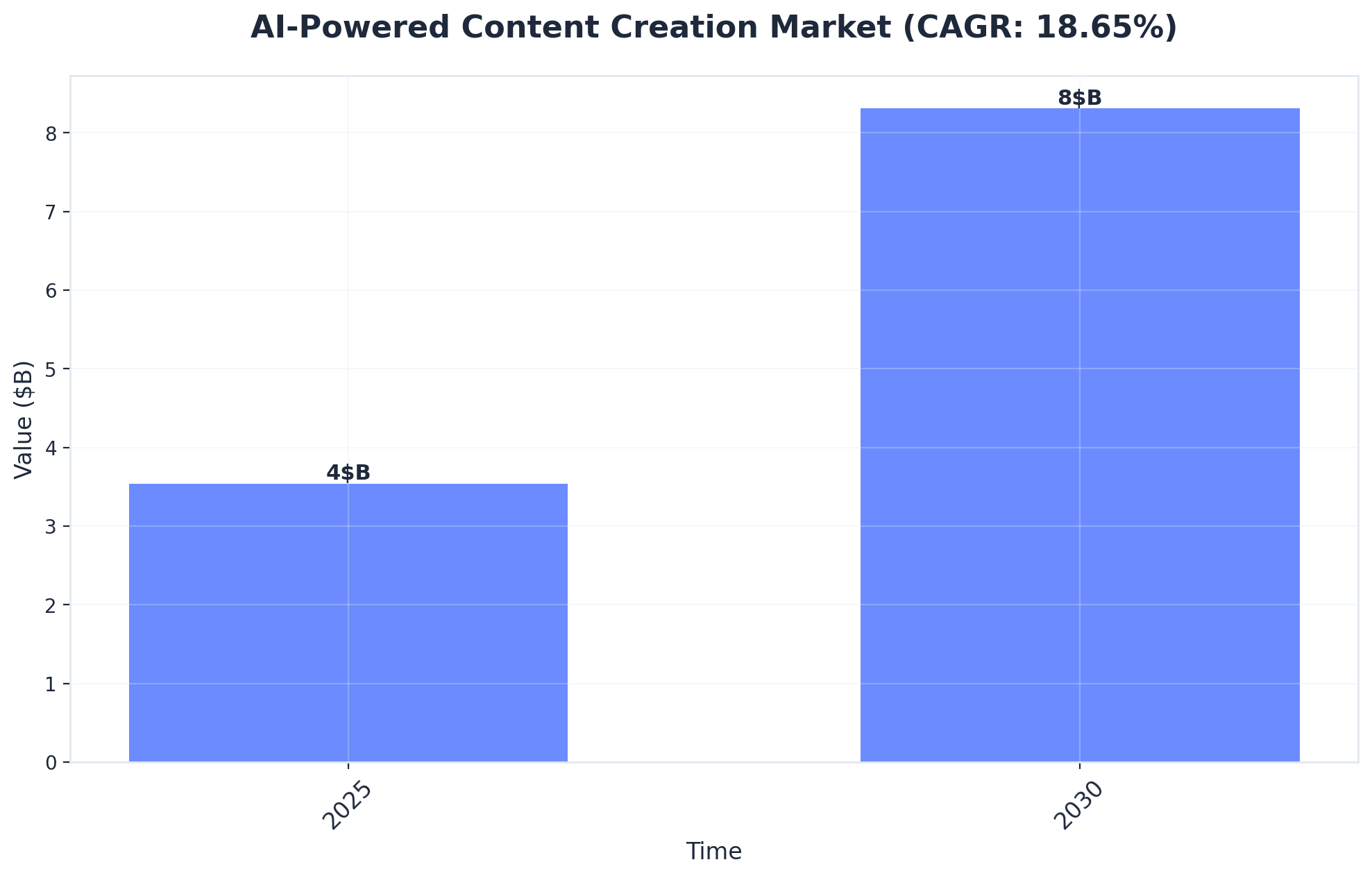 AI-Powered Content Creation Market (CAGR: 18.65%)
AI-Powered Content Creation Market (CAGR: 18.65%) (Source: AI-Powered Content Creation Market Analysis | 2025-2030)
Key enablers for scaling include:
- End-to-end workflow automation: Streamlining the process from ideation to publishing.
- AI-driven content generation: Utilizing multi-stage quality assurance to maintain standards.
- Integrated checkpoints: Automating editorial and compliance reviews.
- Multi-CMS distribution: Centralized scheduling for WordPress, Webflow, and other platforms.
- Real-time analytics: Data-driven performance optimization.
Organizations implementing AI-powered content pipelines report time savings exceeding eight hours per user per week1. This path makes sense for healthcare systems where content demand outpaces available headcount. Case studies show content turnaround times dropping from weeks to hours, with up to a 320% increase in qualified leads attributed to scalable automation1.
Frequently Asked Questions
Conclusion
Healthcare marketing organizations face mounting pressure to generate qualified patient leads across multiple locations while controlling production costs. Traditional content approaches—whether in-house teams or agency partnerships—struggle to deliver the volume and consistency required at scale. Research demonstrates that automated content pipelines can reduce production costs by 89% while increasing qualified lead generation by 320% compared to conventional methods.
The transformation centers on end-to-end automation: keyword research identifies high-intent patient searches, SEO outlining structures content for maximum visibility, AI writing generates drafts, expert editing ensures clinical accuracy, and quality assurance validates brand consistency before publishing. This systematic approach achieves a 96% publish rate without additional edits, eliminating the revision cycles that consume marketing resources.
The strategic advantage of automated content operations extends beyond cost reduction to competitive velocity. Organizations implementing these systems report 1-hour turnaround times versus 2-3 weeks with traditional agencies—a speed differential that enables rapid response to market opportunities, seasonal demand shifts, and competitive positioning needs. This operational agility transforms multi-location patient acquisition from a resource constraint into a scalable growth lever. As healthcare marketing continues its shift toward digital-first patient engagement, automated content pipelines will increasingly separate organizations that can cost-effectively dominate local search markets from those constrained by legacy production models. The question facing marketing leadership is no longer whether to automate content operations, but how quickly to implement systems that deliver measurable competitive advantage.
References
- 1.Content Marketing Automation: Your 2026 Guide.
- 2.The AI Content Production Pipeline Explained.
- 3.How to Build Your Content Quality Assurance Framework.
- 4.KPIs for Gen AI: Measuring Your AI Success.
- 5.Is a Marketing Agency Cheaper than an In-House Marketing Team?.
- 6.Cost Per Lead vs Cost Per Patient: The Healthcare Marketing Metrics That Actually Matter for Practice Growth.
- 7.The Modern B2B Healthcare Marketing Journey Playbook.
- 8.Customer Journey Stages: The Complete Guide.
- 9.Building an AI Agent for SEO Research and Content Generation.
- 10.How to Use AI for Keyword Research: A 6-Step Practical Guide.