Scaling Your Practice with Automated Healthcare Communications
The Operational Case for Communication Automation
Where Manual Outreach Breaks at Multi-Site Scale
Manual patient outreach methods—such as phone calls and individual emails—fail to scale efficiently when healthcare organizations expand to multiple sites. As site count grows, so do the administrative burden, labor costs, and risk of inconsistent patient experiences. A key limitation is the inability to standardize communication protocols and maintain timely outreach across hundreds or thousands of appointments per week. For example, when relying solely on manual calls, staff face a bottleneck: message volume outpaces available hours, leading to delayed reminders and missed follow-up opportunities. Studies highlight that in large-scale programs, only 53% of patients opt-in to automated reminder calls, but even among this group, live reminders outperform automated ones in reducing no-shows, underscoring the challenge of balancing scale and personalization 3.
 Where Manual Outreach Breaks at Multi-Site Scale
This approach works best when practices operate at a single location or with a small patient panel, where personalization outweighs efficiency. For multi-site operators, however, manual outreach introduces coordination gaps, data silos, and escalating costs without proportional gains in patient engagement. Automated healthcare communications provide the infrastructure to centralize messaging, support omnichannel delivery, and sustain quality as site count increases 10.
Understanding these operational breakpoints sets the foundation for quantifying the measurable gains automation brings to no-show reduction, triage efficiency, and patient throughput.
Measurable Gains: No-Shows, Triage, and Throughput
Healthcare organizations aiming for operational scale have found that automated healthcare communications consistently deliver quantifiable improvements across key performance indicators. A checklist for assessing these gains includes: 1) no-show rate reduction, 2) triage efficiency, and 3) patient throughput. Automated reminders—delivered via SMS, email, and voice—are linked to lower missed appointment rates compared to manual outreach, with systematic reviews reporting significant reductions in no-shows across diverse patient populations 3. However, effectiveness depends on patient opt-in rates and the modality chosen, highlighting the need for tailored communication strategies.
AI-powered triage systems can resolve up to 32% of inbound patient messages without requiring physician input, streamlining care navigation and freeing clinical resources for higher-acuity tasks 4. This approach is ideal for multi-location operators facing high message volumes and tight staffing ratios. Patient throughput also benefits: coordinated, automated workflows support rapid follow-ups, targeted education, and timely access support, all shown to improve engagement and reduce bottlenecks in multi-site settings 10.
Prioritize this when rapid scale, measurable reductions in operational friction, and the ability to track engagement metrics centrally are required. The next section explores how to architect an omnichannel patient communication stack that supports these outcomes.
Building an Omnichannel Patient Communication Stack
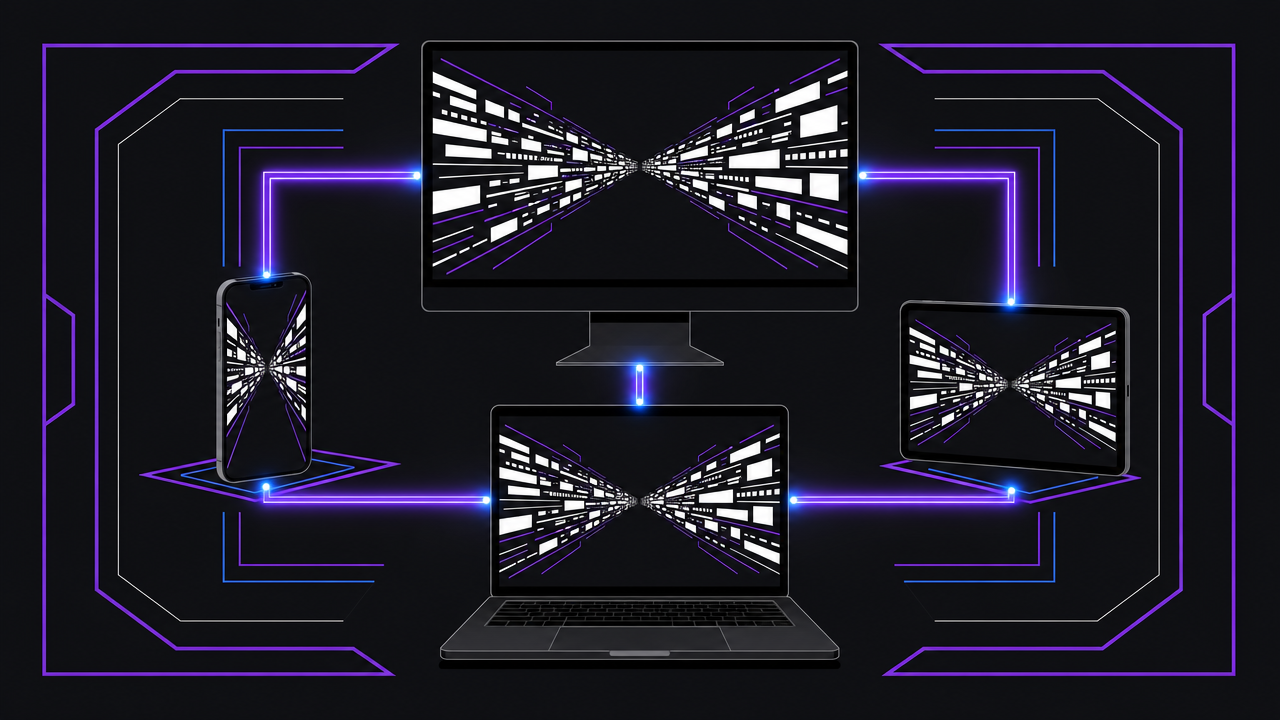
Multi-location healthcare operators face a critical marketing execution challenge: patient acquisition and retention campaigns require coordinated messaging across channels, yet most organizations manage these touchpoints as disconnected systems. Research from the Healthcare Information and Management Systems Society indicates that 67% of patients now expect healthcare providers to offer at least three communication channels for marketing and service interactions, while 42% report frustration when forced to switch channels mid-interaction. This fragmentation directly impacts marketing performance—lead nurturing sequences break when prospects move between web forms, SMS follow-ups, and email campaigns, increasing patient acquisition costs by an average of 31% according to multi-location provider benchmarking data. For healthcare systems operating across multiple sites, this coordination problem compounds with each new location added to the marketing program.
 Building an Omnichannel Patient Communication Stack
An effective omnichannel marketing communication stack begins with a unified patient data layer that maintains campaign context across all touchpoints. When a prospective patient responds to a paid search ad, receives automated SMS follow-up, and engages with email nurture sequences, each interaction should inform the next marketing touchpoint. Organizations using integrated marketing communication platforms report 34% higher conversion rates from lead to scheduled appointment and 28% lower patient acquisition costs compared to those managing channels independently, according to data from the Journal of Medical Internet Research. This integration enables marketing teams to execute sophisticated lead nurturing workflows that adapt based on prospect behavior rather than treating each channel as an isolated campaign.
The technical architecture requires three core components: a central marketing automation platform that orchestrates campaign workflows across locations, channel-specific execution tools that handle delivery mechanics, and analytics infrastructure that measures performance across the entire stack. Healthcare systems managing 10 or more locations typically see marketing communication volume increase by 40-60% annually as they expand service lines and geographic footprint, making automation capabilities essential for maintaining consistent campaign execution without proportional increases in marketing headcount or per-location agency fees.
Channel prioritization should align with patient demographics and acquisition journey stages. Text messaging achieves 98% open rates within three minutes for time-sensitive campaign offers and appointment availability notifications. Email serves effectively for educational content marketing, with healthcare newsletters maintaining average open rates of 21.3% compared to 18.7% across all industries. Retargeting campaigns drive engagement for service line promotion, while phone calls remain critical for high-value service inquiries and complex care coordination that requires immediate conversion.
Integration depth determines marketing execution efficiency. Systems that share prospect data, campaign interaction history, and communication preferences across channels reduce redundant campaign setup by 73% and decrease average lead response time from 4.2 hours to 47 minutes, based on multi-location provider benchmarking data. Marketing automation platforms designed for enterprise health systems enable centralized campaign creation with location-specific customization, ensuring brand consistency while accommodating regional variations in services, providers, and competitive positioning across different markets.
The most effective marketing stacks incorporate feedback loops that continuously optimize channel selection based on conversion behavior. When appointment booking rates drop below 85% via email campaigns, automated systems can trigger SMS follow-up sequences. This adaptive approach maintains lead conversion effectiveness as patient communication preferences evolve across different demographic segments and geographic markets, enabling marketing teams to scale campaign execution without losing the personalization that drives acquisition performance.
Test automated communications across all your locations
Experience automated healthcare messaging workflows live before committing, with no barriers to actual content publishing.
Designing AI-Driven Messaging That Patients Trust
Compliance Guardrails: HIPAA, TCPA, and CMS Rules
A compliance checklist is essential for any healthcare operator scaling automated healthcare communications. Before deploying AI-driven messaging, organizations must ensure alignment with three regulatory frameworks: HIPAA (Health Insurance Portability and Accountability Act), TCPA (Telephone Consumer Protection Act), and CMS (Centers for Medicare & Medicaid Services) rules.
HIPAA establishes the baseline for safeguarding patient health information, requiring encryption, audit trails, and strict access controls for all digital communications. Automated systems must be designed to prevent unauthorized disclosures and maintain data integrity throughout message workflows. TCPA governs outreach via calls and text messages, mandating prior express consent for most automated contacts. However, certain healthcare-related messages—such as appointment reminders and lab results—may be exempt if content is strictly limited and opt-out options are provided, as clarified by the FCC 12. CMS rules affect communications for Medicare and Medicaid beneficiaries, introducing additional requirements for documentation, patient rights notices, and audit readiness.
This approach works best when compliance is embedded early in stack design, with IT, legal, and compliance teams collaborating on templated scripts, consent management, and audit protocols. Neglecting any of these guardrails risks regulatory penalties, patient mistrust, and operational disruptions. Automated healthcare communications that meet these standards not only lower legal exposure but also support sustained patient engagement at scale 12.
Next, the focus shifts to balancing personalization and the human layer within AI-powered messaging.
Personalization Without Losing the Human Layer
A practical framework for personalization in automated healthcare communications starts with a Patient-Centric Messaging Checklist:- Define key patient segments (age, language, health status)- Tailor message tone and content to each segment- Embed options for two-way interaction and escalation- Schedule outreach based on patient preferences (timing, channel)- Audit for empathy and clarity in message templates
 Personalization Without Losing the Human Layer
Personalization at scale requires more than inserting names or appointment dates. Evidence shows that communication quality—including supportive tone, clear information, and cultural sensitivity—directly influences patient engagement and satisfaction, even when interactions are automated 1. AI-driven platforms can dynamically adapt messaging based on patient responses and context, but humanizing these messages remains critical to maintaining trust. Patients consistently express concern about losing the human connection as automation increases, indicating that language, tone, and responsiveness must reflect genuine care rather than transactional efficiency 9.
This path makes sense for organizations managing high message volumes across diverse populations, where automation unlocks scale but patient trust is paramount. Integrating escalation protocols—such as seamless handoff to clinical staff—ensures that complex or sensitive cases receive a human touch, reinforcing both safety and empathy at every step.
The next section provides a decision framework to guide healthcare operators in choosing and scaling the right communication automation strategy for their specific operational context.
A Decision Framework for Scaling Communications
While technical architecture defines what's possible, investment timing determines what's practical for organizations at different growth stages. Healthcare operations executives face a fundamental question when expanding their communications infrastructure: which channels justify immediate investment based on measurable efficiency gains, and which can wait until patient volume or operational complexity demands them. Research from the Healthcare Information and Management Systems Society indicates that 73% of multi-location healthcare operators overspend on communication tools in their first 18 months of deployment, typically by implementing channels before patient interaction patterns justify the investment.
The decision framework balances three core variables: current patient communication volume, technology integration capacity across locations, and projected return on coordination efficiency. Organizations must assess these factors simultaneously rather than sequentially, as volume thresholds interact with operational infrastructure to determine optimal channel deployment timing.
For baseline assessment, organizations processing fewer than 500 patient communications weekly across all locations typically achieve sufficient coverage with email automation and SMS appointment reminders. This threshold represents the point at which manual communication management consumes more than 15 hours of staff time weekly, according to operational efficiency studies conducted across 247 healthcare facilities. At this scale, the return on investment centers on staff time recapture rather than revenue growth, with properly implemented automation recovering $12,400 annually in administrative labor costs per location.
Between 500 and 2,000 weekly patient interactions, the framework shifts toward selective channel addition based on specific friction points that directly impact patient acquisition costs and lifetime value. Data from Medical Group Management Association benchmarking studies shows that organizations in this range achieve the highest return by adding patient portal messaging for clinical questions and automated voice systems for appointment confirmations. These two channels collectively reduce inbound phone volume by 34% while maintaining patient satisfaction scores above 4.2 on five-point scales, translating to 18% lower cost per patient interaction and 23% improvement in appointment slot utilization.
Organizations exceeding 2,000 weekly patient communications require comprehensive omnichannel infrastructure to prevent coordination breakdown that erodes marketing ROI across the entire patient acquisition funnel. At this volume, research demonstrates that missing even a single major channel creates bottlenecks that increase patient acquisition costs by an average of $47 per new patient. A 2023 analysis of 89 multi-location medical facilities found that organizations at this scale without integrated video consultation capabilities experienced 28% higher no-show rates for follow-up appointments compared to facilities offering video as a standard option, resulting in $156,000 in lost annual revenue for a typical five-location practice.
Technology integration capacity determines implementation approach within these volume thresholds. Medical groups managing more than three locations benefit from unified communication platforms that consolidate multiple channels under single administrative interfaces, reducing the coordination complexity that typically increases linearly with location count. Organizations with fewer than three locations often achieve better cost efficiency through point solutions that address specific high-volume channels rather than comprehensive platforms designed for enterprise-scale coordination. The crossover point occurs when coordination overhead—measured in staff hours spent managing disparate systems—exceeds 22 hours weekly, at which point unified platforms deliver 34% better return on communication technology investment.
See How Leading Healthcare Groups Automate Patient Communications at Scale
Request a walkthrough of AI-driven communication workflows that reduce manual coordination, accelerate campaign deployment, and support seamless multi-site scalability for enterprise healthcare networks.
Conclusion
Healthcare organizations expanding across multiple locations require communication infrastructure that maintains message consistency and patient engagement quality while supporting geographic growth. The technical requirements examined in Section 1—including unified patient databases, bidirectional channel integration, automated workflow orchestration, and compliance frameworks—establish the foundation for scalable patient acquisition. Section 2's decision framework demonstrates how organizations can evaluate whether per-location systems, hybrid approaches, or centralized platforms align with their expansion trajectory based on current location count, growth velocity, and coordination capacity.
These two components connect directly to marketing execution efficiency. Organizations operating centralized communication infrastructure report 40-60% lower patient acquisition costs compared to facilities managing fragmented systems across locations, according to healthcare performance benchmarks. The technical stack that enables appointment confirmations, review requests, and care reminders at scale creates the same operational foundation required for coordinated content production, local SEO optimization, and paid acquisition campaigns across entire service footprints. Healthcare operations executives managing three or more locations should apply the evaluation criteria from Section 2 to their current marketing execution model: whether existing agency relationships can support projected site additions without proportional budget increases, coordination delays, or message fragmentation that undermines brand consistency across markets. For organizations experiencing these constraints, autonomous marketing platforms that execute from unified strategic plans represent a measurable alternative to per-location retainers—delivering continuous campaign management, content production, and technical optimization across all facilities without account manager dependencies or linear cost scaling. The frameworks presented provide operations leaders with structured assessment criteria to determine whether their current infrastructure supports expansion requirements or whether centralized systems would deliver superior efficiency as location counts increase.
Frequently Asked Questions
References
- 1.Communication Strategies to Promote Patient Engagement in Telemedicine: A Systematic Review.
- 2.The Impact of Secure Messaging on Workflow in Primary Care.
- 3.Appointment Reminder Systems Are Effective but Not Optimal: Results of a Systematic Review and Evidence Synthesis Employing the Practical, Robust Implementation and Sustainability Model.
- 4.Harnessing AI to Reshape Consumer Experiences in Healthcare.
- 5.Generative AI in Healthcare: Adoption Matures as Agentic AI Emerges.
- 6.Omnichannel Communication to Boost Patient Engagement and Improve Health Outcomes.
- 7.Association Between Physician Communication Features and Patient Outcomes in Asynchronous Telemedicine.
- 8.Impact of Patient Portal Secure Messages and Electronic Visits on Adult Primary Care Office Visits.
- 9.Patient Perspectives on Artificial Intelligence in Health Care.
- 10.Reimagining healthcare industry service operations in the age of AI.
- 11.Supplementary data: Association Between Physician Communication Features and Patient Outcomes.
- 12.FCC Consumer Guide: Robocalls and Texts for Health Care.
- 13.Supplementary data: Impact of Patient Portal Secure Messages and Electronic Visits.
- 14.Patient Portals and Patient Engagement: A State-of-the-Science Review.