
Key Takeaways
- Content orchestration replaces production retainers when consumption data feeds topic selection and brief generation, with human editors retaining approval gates on structural changes and claims.
- Programmatic SEO and ranking recovery loops absorb monthly audit retainers by reading Search Console data daily and queuing refresh tasks against live SERP gaps.
- Lead scoring tied to pipeline stage ranks prospects by similarity to closed-won deals, concentrating SDR time on patterns that actually predict revenue.
- Conversation automation has matured into a defined Forrester category 3, handling inbound qualification while strategic outbound into named accounts stays with human SDRs.
- Intent-triggered nurture sequences replace time-based drips by routing leads based on behavioral signals like pricing page revisits or competitor comparison engagement.
- PPC bid logic and creative rotation automate weekly optimization and refresh cycles, leaving channel allocation and ICP-driven budget shifts to the growth director.
- Retargeting automation fixes the suppression lag that wastes spend on closed-won or active opportunities by syncing CRM status to ad platforms continuously.
- RevOps lifecycle reporting replaces static monthly decks with live dashboards that surface anomalies and attach behavioral context to leads at sales handoff.
- Coordinated multi-strategist execution through Vectoron aligns content, SEO, PPC, and backlink work against one plan, eliminating the coordination tax of running eight separate automations.
The Agency Line Item Audit
Before evaluating automation platforms, growth directors benefit from a different exercise: pulling the last twelve months of agency invoices and sorting every line item into two columns. One column lists work that produces a deliverable on a schedule — blog briefs, ranking reports, bid adjustments, nurture builds, monthly dashboards. The other lists work that requires judgment a contractor cannot reliably make from outside the business, such as strategic account qualification or executive positioning. The first column is the addressable surface for automation. The second is not.
Most retainers blur these together, which is why agency-replacement conversations stall. A $12,000 monthly content retainer typically covers brief generation, draft production, light SEO formatting, and a status call. Four distinct workflows, one invoice. Once those line items are separated, the question shifts from "can software replace our agency" to "which of these workflows already runs better as a continuous system than as a campaign deliverable."
Forrester's 2025 outlook frames this directly, identifying AI, ROI accountability, and digital execution as the variables reshaping B2B go-to-market teams 1. The implication for growth directors managing six-figure agency spend is operational, not philosophical: automation is becoming the layer the work runs on, while agency time gets reserved for the judgment calls that still pay for themselves.
Nine Automation Patterns That Map to Billable Work
Content Orchestration With Built-In Measurement
The content retainer is the most automatable line item on most B2B invoices, but only when the work is reframed. Traditional retainers bill for production volume — eight blog posts, two pillar pages, a monthly editorial calendar. Orchestrated content systems bill for outcomes against a measurement layer that runs continuously.
Forrester defines content intelligence as the capture, correlation, and analysis of data about content and its consumption to inform buyer and customer insights 2. That definition matters because it relocates the value of a content strategist from upstream brief-writing to downstream signal interpretation. When consumption data flows back into topic selection, brief generation, and refresh cadence, the production layer becomes a function the platform executes against a thesis the team still owns.
The workflow looks like this: search and engagement data identify topic gaps, the system drafts briefs with target keywords and competitive context, draft generation produces a first version, a human editor approves structural changes and claims, and post-publish performance data feeds the next brief cycle. The approval gates are not optional. They sit between draft and publish, and between performance signal and topic re-prioritization, because that is where editorial judgment still earns its keep.
Growth directors replacing a content strategist and writer slice of a retainer should expect the system to handle brief generation, draft production, on-page SEO formatting, and refresh triggers. They should not expect it to replace the person who decides which buyer problem the next quarter's content should solve.
Programmatic SEO and Ranking Recovery Loops
SEO retainers tend to combine three different jobs into one invoice: technical audits, content optimization, and ranking recovery on pages that have slipped. Automation handles the second and third reliably. The first still benefits from a human review at setup and on major template changes.
A ranking recovery loop reads position data from Search Console, flags URLs that have dropped against a benchmark window, pulls the current SERP for the target query, compares on-page coverage against ranking pages, and queues a refresh task with specific gaps identified. The loop runs daily. A human approves the refresh before publish. The same logic supports programmatic page generation for location pages, service-area combinations, or feature comparison pages, where a defined template plus a structured data source produces hundreds of pages without manual drafting.
The agency line item this displaces is the monthly SEO retainer that produces a ten-page audit deck and a list of recommended changes. The retainer's value was never the audit. It was the execution that followed. Once execution runs continuously against live data, the audit becomes a byproduct the team reads when it wants to, not a deliverable they pay for.
Lead Scoring Tied to Pipeline Stage, Not Form Fills
Most lead scoring models are still built on form-fill weights: a demo request scores 50 points, a whitepaper download scores 10, a pricing page visit scores 20. The model assumes intent maps to discrete actions. Pipeline data rarely supports that assumption.
A pipeline-stage scoring model inverts the logic. It starts with closed-won deals from the last twelve to eighteen months, traces the behavior pattern that preceded each opportunity creation event, and scores new leads against the strength of that pattern match. The scoring engine updates weights as new deals close. Form fills are inputs, not endpoints.
The operational difference is what sales teams do with the output. Traditional scoring delivers a queue of leads that crossed a threshold. Pipeline-stage scoring delivers a queue of leads that look like opportunities, ranked by similarity to deals the company actually closes. SDR time concentrates on the top of that queue.
Growth directors replacing a marketing operations contractor who maintains scoring rules in a spreadsheet should expect the model to retrain itself against CRM data on a defined cadence. They should also expect a quarterly review where someone qualified asks whether the patterns the model surfaces still match the buyer the company wants to win.
Conversation Automation for First-Touch Qualification
SDR agencies bill for human time on first-touch outreach: a researcher pulls a list, a writer drafts sequences, an SDR sends and follows up, a manager reports on connect rates. Conversation automation absorbs the qualification layer of that work.
Forrester positions conversation automation as a defined solution category for B2B vendor evaluation in its Q2 2025 landscape, signaling that the category has matured enough to be assessed against structured criteria rather than treated as experimental 3. That maturity matters operationally. It means growth directors can evaluate vendors against routing accuracy, integration depth, and handoff fidelity instead of betting on early-stage capability claims.
The workflow runs on the website, in email, and inside chat surfaces. A visitor arrives, the system asks two or three qualifying questions framed as helpful navigation, the answers route the conversation to a relevant resource, a booked meeting, or a human handler. The qualifying questions are written once, tested, and refined against conversion data. The handoff to a human happens when the conversation crosses a defined threshold — pricing questions, multi-stakeholder buying signals, specific compliance asks.
What this replaces is not the SDR who runs strategic outbound into named accounts. It replaces the SDR layer that qualifies inbound traffic and books meetings off MQLs. That distinction matters for in-house planning. The strategic outbound function still benefits from human judgment, account research, and persistence that conversation automation handles poorly.
Nurture Sequences Triggered by Intent Signals
The classic nurture sequence is time-based: day one welcome, day three case study, day seven webinar invite. It treats every lead as if they entered the funnel on the same trajectory. Intent-triggered sequences treat the lead's behavior as the signal that decides the next message.
Behavioral triggers include site revisits to a specific product page, repeated engagement with a competitor comparison resource, document downloads tied to a particular buying committee role, or external intent signals from third-party data providers. Each trigger maps to a sequence built for the buying stage that behavior implies. A lead who returns three times to a pricing page does not need a top-of-funnel educational email. They need a path to a conversation.
The agency line item this displaces is the marketing automation specialist who builds and maintains nurture programs inside a platform like Marketo or HubSpot. The work is operational, repetitive, and high-leverage when the trigger logic is mapped correctly. The judgment call that remains is which behaviors actually predict buying intent in the company's specific sales cycle — a question best answered by the in-house team who watches deals close and lose.
PPC Bid Logic and Creative Rotation
Paid media retainers often charge a percentage of spend or a flat monthly fee for bid management, creative testing, and reporting. Platform-native bidding algorithms already handle most bid optimization at the auction level. The agency work that adds value sits one layer above: portfolio allocation, creative pipeline, and negative keyword discipline.
An automation pattern that maps to this work pulls performance data across campaigns, identifies underperforming creative against a defined refresh window, generates new creative variants from a brand-approved component library, and queues them for human approval before activation. Negative keyword discovery runs on search query reports, flags terms that have spent over a threshold without conversion, and proposes additions. Bid strategy changes route to a human for any campaign over a defined budget threshold.
The work this replaces is the weekly optimization session a paid agency bills for and the monthly creative refresh. What it does not replace is the strategic call about which channels deserve more budget when the company changes ICP or launches a new product line. That decision belongs to the growth director, informed by data the platform surfaces.
Retargeting With Suppression and Frequency Caps
Retargeting is one of the easier workflows to automate and one of the most commonly mishandled in agency-run accounts. The mishandling pattern is familiar: a static audience that includes every site visitor from the last 180 days, ads served at uncapped frequency, no suppression for converted accounts or active opportunities.
The automation pattern is straightforward. Audiences refresh against behavioral windows that match the sales cycle. Converted accounts and active opportunities drop into suppression lists automatically as the CRM updates. Frequency caps prevent the same ad from serving more than a defined number of times per user per week. Creative rotates against engagement decay curves.
The CRM-to-ad-platform integration is the part most agencies still execute manually, which is why suppression often lags conversion by days or weeks. When the integration runs continuously, the waste in retargeting spend that comes from advertising to active customers or closed-lost accounts goes away. The displaced line item is the paid media coordinator who exports CRM lists, uploads them to ad platforms, and updates them on a schedule that is always behind the deal pace.
RevOps Handoff and Lifecycle Reporting
The monthly reporting deck is the most-billed and least-read deliverable in most agency relationships. A coordinator pulls data from four or five sources, formats it into slides, adds commentary, and presents it on a call. The team listens, asks two questions, and goes back to work.
A lifecycle reporting workflow replaces the deck with a live dashboard that updates against defined stage transitions: MQL to SQL conversion rate by source, opportunity creation velocity by campaign, pipeline coverage against quota by segment. The dashboard surfaces anomalies — a sudden drop in SQL conversion from a specific channel — without requiring a human to notice them in a static slide.
The handoff workflow between marketing and sales runs on the same data layer. A lead that crosses the qualification threshold routes to a specific sales rep with full behavioral context attached. The rep does not have to ask marketing what the lead engaged with. The system already attached the answer to the record.
What this replaces is the reporting analyst slice of an agency retainer and a meaningful portion of the time in-house marketing ops spends building dashboards manually. What it does not replace is the quarterly review where leadership decides what to do about the trends the dashboard surfaces.
Coordinated Multi-Strategist Execution (Vectoron)
The eight workflows above each replace a slice of agency work. The coordination problem they create is real: eight different automation systems still need someone to align them against a single growth plan. That alignment is the work most retainers actually justify, even when the underlying execution is repetitive.
Vectoron is built around the coordination layer rather than a single workflow. The platform deploys specialist strategists — Content, SEO, Conversion, PPC, Backlink — that share a single account-level view of GA4, Search Console, SEMrush, and Google Ads data, with a Lead Strategist coordinating priorities across them. Work routes through a Command Center where the in-house team approves strategy and publishing decisions before execution runs.
The structural difference from a fragmented stack is that recommendations from one specialist inform the others. When the SEO Strategist identifies a ranking recovery opportunity, the Content Strategist queues the refresh, and the Backlink Strategist evaluates whether external authority would accelerate recovery. The team approves the coordinated plan, not nine separate workflows that each ran their own logic.
The trial tier runs at $599 per month after a two-week evaluation period. For growth directors managing fragmented retainers across content, SEO, and paid media, the value test is not whether any single automation outperforms a specialist agency on its narrow slice. It is whether coordinated execution against one plan outperforms eight uncoordinated executions against eight invoices.
Test AI-Driven B2B Campaign Automation Now
Experience automated content and PPC execution on live campaigns before committing to a subscription.
Consolidation Economics: Fragmented Retainers vs. One Platform
The case for consolidating execution sits in the invoice stack, not the feature list. A growth team paying separate retainers for content, SEO, paid media, marketing automation, and reporting is also paying for the coordination overhead that connects them — status calls, handoff documents, conflicting recommendations, and the account manager whose job is to translate between specialists who do not share a data layer. Forrester's 2025 outlook frames this as the defining shift for B2B go-to-market teams: AI moves from a campaign tool to the operating layer the work runs on, with ROI accountability concentrated rather than distributed across vendors 1.
The table below shows how the line items collapse. Agency figures are presented as variables because no benchmark pricing appears in the supplied research; the consolidated column anchors to the disclosed $599 per month tier referenced earlier in this article.
| Workflow | Fragmented Agency Line Item | Consolidated Platform Tier |
|---|---|---|
| Content production | Retainer_content | $599/mo (post-trial, single account) |
| SEO execution | Retainer_seo | |
| PPC management | Retainer_ppc (often % of spend) | |
| Lead nurture and automation | Retainer_nurture | |
| Reporting and dashboards | Retainer_reporting | |
| Account coordination | Retainer_coordination (often bundled) |
The arithmetic matters less than the structural point. When six line items collapse into one operating layer, the coordination tax disappears with them. Growth directors should run the comparison against their own invoice history before assuming the consolidated tier is cheaper — it usually is, but the more durable gain is execution velocity that does not depend on five vendors agreeing on what to do next.
Where Automation Still Needs a Human in the Loop
The Stakeholder Trust Gap Directors Must Close Internally
The hardest part of replacing an agency is not the technical migration. It is the conversation with the VP of Sales who hears "AI is drafting our nurture sequences" and pictures hallucinated product claims landing in the inbox of a strategic account. That reaction is not unreasonable, and growth directors should plan for it.
Pew's 2025 survey of U.S. adults found that 50% are more concerned than excited about increased use of AI in daily life, while nearly three-quarters are willing to let AI assist at least a little with day-to-day tasks 5. The population studied is U.S. adults, not B2B buyers, so the figures do not predict how a CFO will react to an automated content pipeline. They do predict what the internal stakeholder coalition looks like before the rollout: half the room is wary by default, and most of the room will accept assistance once they see where the human approval gates sit.
The practical move is to document the approval gates before the demo, not after. Show finance the spend control points. Show sales the lead routing logic and the suppression rules that keep ads from chasing closed-won accounts. Show legal the publishing queue where claims get reviewed before they go live. The trust gap closes faster when the answer to "who is checking the AI" has a named person and a defined workflow attached to it.
 U.S. adults willing to let AI assist with day-to-day tasks
U.S. adults willing to let AI assist with day-to-day tasks
Claims Review, Substantiation, and Regulated Verticals
Automation that drafts copy does not automatically substantiate it. That distinction matters because regulators have made clear they will treat AI-generated marketing claims under the same standards as any other claims. The FTC's 2024 Operation AI Comply action targeted schemes that made false or misleading claims about AI-powered tools and consumer earnings, signaling that exaggerated performance language attached to automation is itself an enforcement target 7. A joint statement from the FTC, DOJ, CFPB, and EEOC put the broader principle plainly: there is no AI exemption to the laws on the books 8.
For B2B SaaS growth teams, the operational consequence is a publishing queue with a substantiation check inside it. Any draft that asserts a performance metric, a competitive comparison, or a regulated outcome routes to a named reviewer before publish. The system can flag claim-bearing language automatically — patterns like "X% faster," "the only platform that," or product capability statements that go beyond documented features — and hold those drafts until a human signs off. Teams selling into healthcare, financial services, or any audience covered by FTC advertising standards should treat this gate as non-negotiable.
The same logic applies to AI-generated competitive claims, customer outcome stories, and any copy that pulls from third-party data sources. Automation can produce the draft. The team's editor or legal reviewer still owns the publish decision. That is not a temporary constraint until the technology improves. It is the durable arrangement that lets growth directors run automated production at scale without inheriting regulatory risk in exchange.
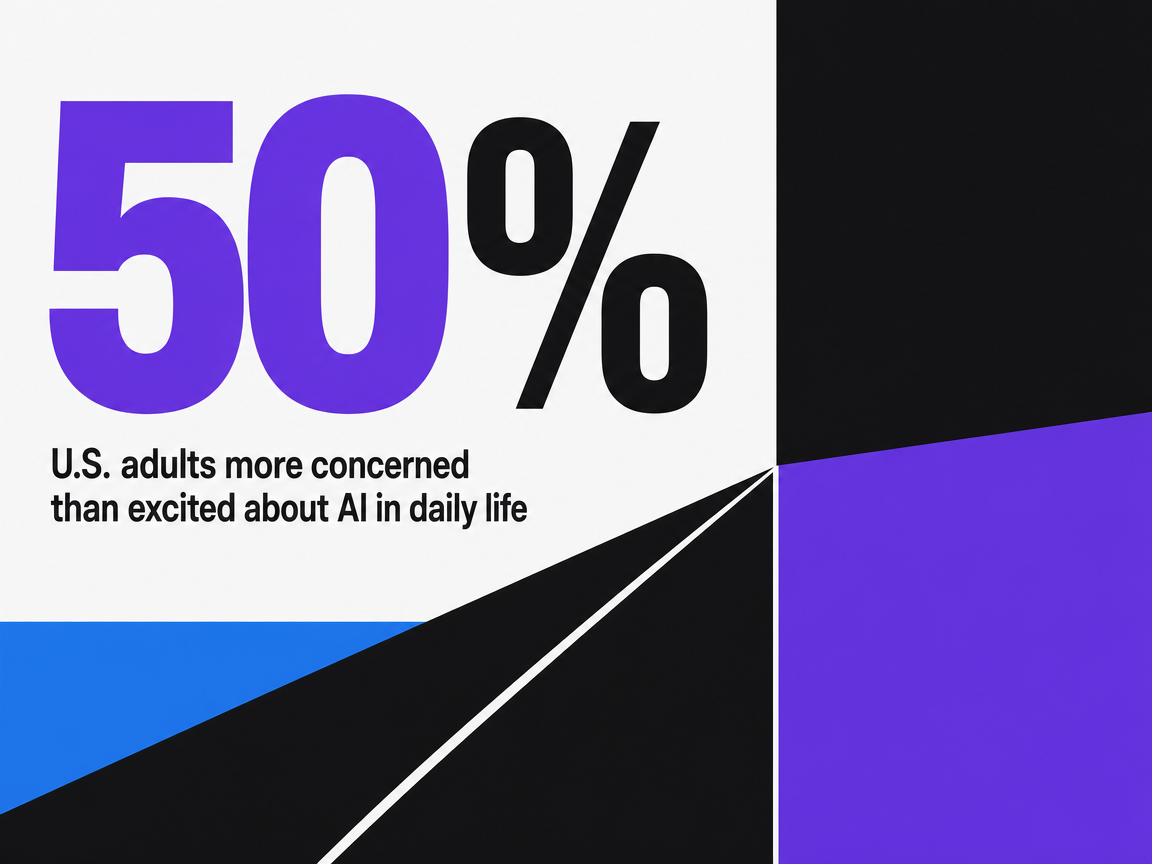 U.S. adults more concerned than excited about AI in daily life
U.S. adults more concerned than excited about AI in daily life
See How Automated B2B Campaigns Outperform Traditional Agency Models
Get a data-backed walkthrough of automation frameworks that replace manual agency work. Learn how SaaS and enterprise teams are achieving measurable ROI with scalable, AI-driven execution.
If You Manage Multiple Locations or Healthcare Clients
A note for a narrower reader: growth directors at agencies serving multi-location healthcare operators, or in-house teams running marketing across a portfolio of clinics, dental groups, or specialty practices. The economics and the compliance footprint both change at this scope.
On economics, the per-location billing model that dominates healthcare agency work compounds quickly. A retainer priced at a few thousand dollars per site multiplies across twenty or fifty locations into a six- or seven-figure annual line, most of which funds coordination — not net new execution. Account-level platforms that run one growth plan across all sites collapse the multiplier into a single program, with location-specific pages, campaigns, and reporting generated against shared templates and live data.
On compliance, the line that decides everything is HIPAA's business associate definition. HHS guidance is direct: if a vendor needs access to protected health information to provide its service, that vendor is a business associate and a business associate agreement is required 9. Most marketing automation work — SEO content, paid media, lead generation forms that do not request clinical detail — stays outside PHI. Workflows that touch appointment data, intake responses, or patient-identifying records do not. Confirm where the line sits with each vendor before the data starts flowing, and put the BAA in place before any workflow that approaches it goes live.
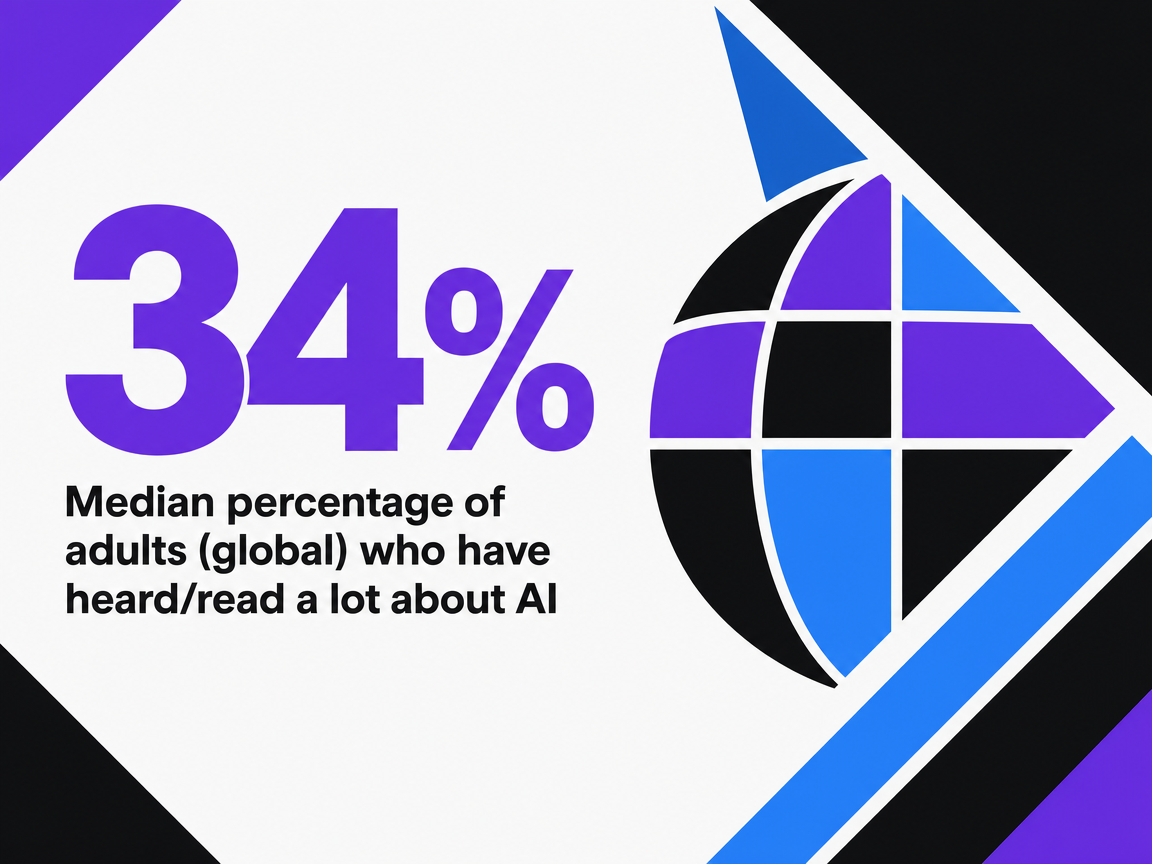 Median percentage of adults (global) who have heard/read a lot about AI
Median percentage of adults (global) who have heard/read a lot about AI
Frequently Asked Questions
References
- 1.Predictions 2025: B2B Marketing & Sales.
- 2.Getting Smart On Content Intelligence.
- 3.The Conversation Automation Solutions For B2B Landscape, Q2 2025.
- 4.How the US Public and AI Experts View Artificial Intelligence.
- 5.How Americans View AI and Its Impact on People and Society.
- 6.How Americans View Data Privacy.
- 7.FTC Announces Crackdown on Deceptive AI Claims and Schemes.
- 8.FTC Chair Khan and Officials from DOJ, CFPB and EEOC Release Joint Statement on Enforcement.
- 9.Is a software vendor a business associate of a covered entity?.
- 10.What may a HIPAA covered entity's business associate agreement authorize?.
- 11.How People Around the World View AI.
- 12.AI awareness around the world.
- 13.What Web Browsing Data Tells Us About How AI Appears Online.
- 14.The Federal Trade Commission 2023 Privacy and Data Security Update.
- 15.Examining the Data Practices of Social Media and Video Streaming Services.