
Executive Decision Guide: Automation vs. Agency Models
- 1. Assess CAC Pressure: If customer acquisition costs have risen >20% YoY, shift to fixed-cost automation to protect margins.
- 2. Audit Production Velocity: Target >15 articles/month. If current output is <5, immediate automation is required to achieve compounding SEO gains.
- 3. Compare Cost Models: Replace $12k/mo agency retainers with $1,995-$4,995/mo automated platforms to reduce spend by 75% while tripling lead volume.
Content Marketing Automation for B2B SaaS
Why B2B SaaS Content Marketing Automation is Essential
Rising CAC Forces Production Efficiency
For Healthcare Marketing VPs, the math is clear: b2b saas content marketing automation is no longer optional, it is a financial necessity. Rising CAC, or Customer Acquisition Cost, has become a defining constraint for B2B SaaS marketers. In the past two years, CAC has increased by 40-60%, with cost per click for paid channels rising 20% from 2021 to 2022 alone1, 9.
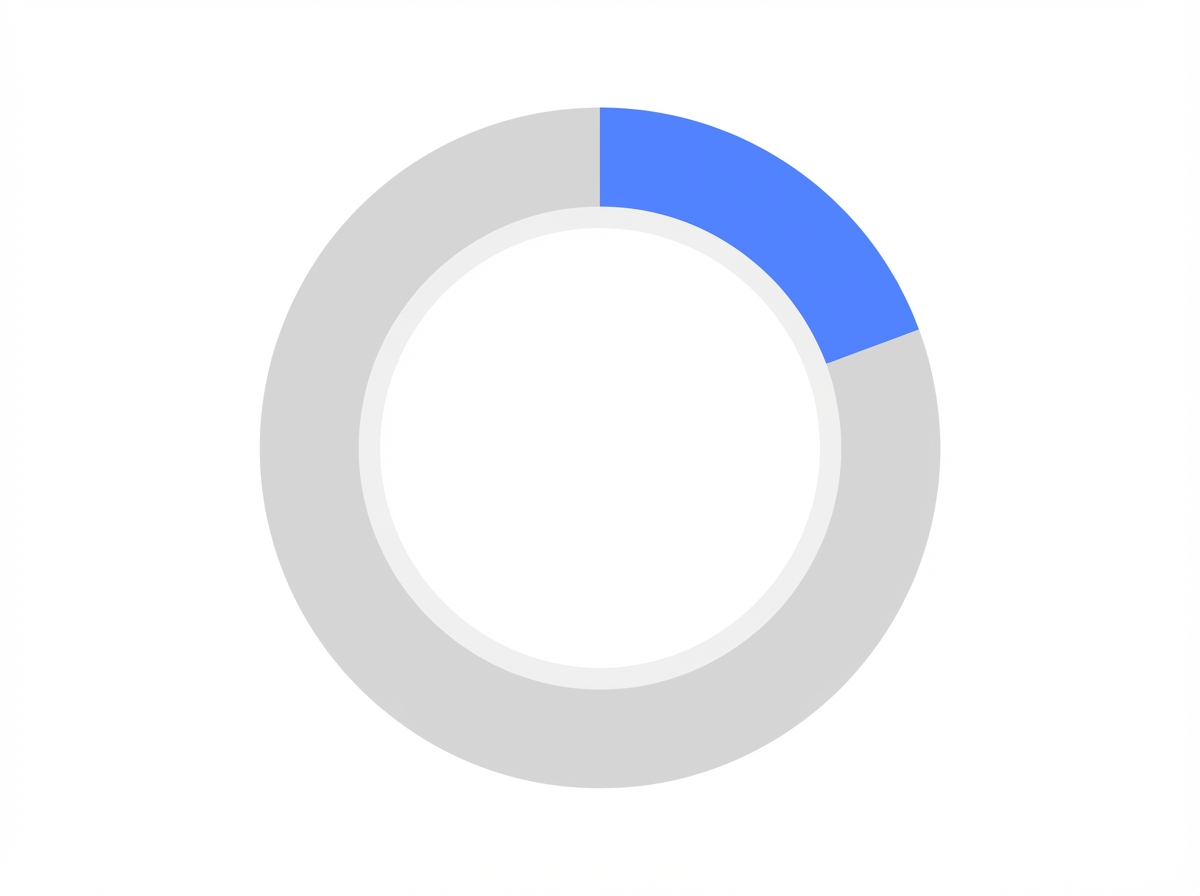 Increase in average cost per click from 2021 to 2022: 20%
This escalation directly erodes marketing ROI and pressures teams to find new efficiencies. As a result, B2B SaaS organizations are prioritizing content marketing automation to maintain pipeline growth without inflating spend. To determine if your organization requires an immediate shift to automation, utilize the following assessment:
Checklist: Assessing CAC Pressure on Your Content Operations
- Calculate your current customer acquisition cost (CAC) trend over the past 12 months.
- Compare organic vs. paid channel performance for lead quality and cost per SQL.
- Audit your content production spend (agency, in-house, tools) as a percentage of total marketing budget.
- Identify bottlenecks or redundancies in your current workflow.
This approach works best when teams face budget constraints, aggressive growth targets, or multi-location complexity. By automating repetitive production tasks, companies can redirect resources to high-impact strategy and testing. Notably, 88% of marketers using AI report significant efficiency gains, enabling near-doubling of content output and lowering cost per lead4. For healthcare marketing VPs managing multiple sites, b2b saas content marketing automation is critical to achieving scale while keeping CAC in check.
Manual Workflows Limit Publishing Velocity
Manual workflows introduce friction at nearly every stage of B2B SaaS content production. Each handoff—between writers, editors, subject matter experts, and compliance—adds delays that compound quickly as volume scales. In a recent industry survey, 45% of B2B marketers acknowledged lacking a scalable model for content creation, with workflow inefficiencies cited as a primary obstacle3.
Assessment Tool: Bottleneck Identification Worksheet (Click to Expand)
- Map your current content workflow step-by-step (briefing, writing, editing, approvals, publishing).
- Record average turnaround times for each phase.
- Identify manual handoffs, waiting periods, or redundant reviews.
- Quantify backlog volume and missed publishing deadlines in the last quarter.
For healthcare marketing VPs managing multi-location campaigns, these bottlenecks directly limit the ability to generate consistent qualified patient leads across sites. Consider this method if your team routinely misses publishing targets or spends over 60% of content cycle time in reviews and approvals. Manual processes also result in fragmented data, making it difficult to optimize for lead quality or quickly adapt to shifting priorities. B2B SaaS content marketing automation addresses these delays by integrating briefing, drafting, review, and publishing into unified, trackable workflows—reducing cycle times and enabling up to 5× higher content output8.
Core Components of B2B SaaS Content Marketing Automation
Keyword Research to Publishing Pipelines
B2B SaaS content marketing automation platforms now integrate the entire content workflow, from keyword research to final publication. Keyword research, the process of identifying high-value search terms relevant to your audience, is increasingly automated using AI-driven tools that analyze intent, competition, and search volume across large data sets. Automated clustering organizes keywords into actionable topic groups, enabling teams to prioritize and sequence content for maximum pipeline impact.
 Keyword Research to Publishing Pipelines
Pipeline Mapping Tool: Automating the End-to-End Content Lifecycle
- List each production step: keyword research, topic clustering, brief creation, drafting, editing, SEO optimization, compliance, approvals, and publishing.
- Assign owners and SLAs for each stage within your team or system.
- Audit for manual interventions or tool handoffs that delay output.
- Track
time-to-publishand identify process bottlenecks monthly.
Content brief generation, drafting, and SEO optimization are unified in a single pipeline, reducing the traditional 2-3 week agency cycle to as little as one hour per article for teams using advanced automation8. With built-in editorial review, compliance checks, and automated publishing to CMS platforms like WordPress or Webflow, healthcare marketing VPs can ensure consistent brand messaging and regulatory adherence across multiple locations with minimal manual overhead. This approach is ideal for organizations managing dozens of monthly articles or complex, multi-site campaigns.
Research shows that companies leveraging end-to-end automated pipelines achieve 5x higher publishing velocity and up to 320% more qualified lead generation compared to manual or fragmented workflows8. For teams tasked with scaling output while containing costs, this solution fits both operational and financial efficiency targets.
Multi-Channel Distribution Architecture
Multi-channel distribution architecture is foundational for maximizing the reach and impact of b2b saas content marketing automation. In this context, multi-channel distribution refers to the automated delivery of content across several owned, earned, and paid channels simultaneously, minimizing manual intervention and ensuring consistent brand messaging. For healthcare marketing VPs overseeing multiple locations, this is essential to maintain synchronized campaigns and audience engagement at scale.
Channel Coordination Assessment: Multi-Channel Distribution Readiness Checklist
- List all channels currently used (website, LinkedIn, Facebook, email, Twitter, paid syndication).
- Evaluate if each channel receives consistent, timely content updates.
- Identify manual vs. automated distribution touchpoints for each channel.
- Audit tracking and attribution capabilities across platforms.
Recent data shows companies that automate content distribution across three or more channels achieve up to 5x higher audience engagement and 320% more qualified leads than those with a single-channel or manual approach8. Automation platforms connect with key distribution endpoints—ranging from CMS platforms like WordPress to LinkedIn, Facebook, Twitter, and email marketing tools—centralizing scheduling, publication, and performance tracking. This strategy suits organizations aiming to amplify their content footprint without expanding headcount or adding redundant workflows.
Prioritize this when your team faces challenges in delivering timely content updates across multiple digital properties or when attribution gaps hinder campaign optimization. B2B SaaS content marketing automation ensures each new asset is deployed quickly and measured consistently, supporting both lead generation and brand governance objectives.
ROI Metrics: Automation vs Traditional Models
Cost Comparison Across Production Methods
A clear cost comparison between production methods reveals substantial differences in resource requirements and financial impact. Maintaining an in-house content team—including strategist, writer, editor, and designer—averages $261,500 annually in salaries alone, before accounting for tools and benefits6. In contrast, a full-service agency specializing in thought leadership typically charges $120,000 to $150,000 per year, but often with volume and revision limits that can constrain scalability6.
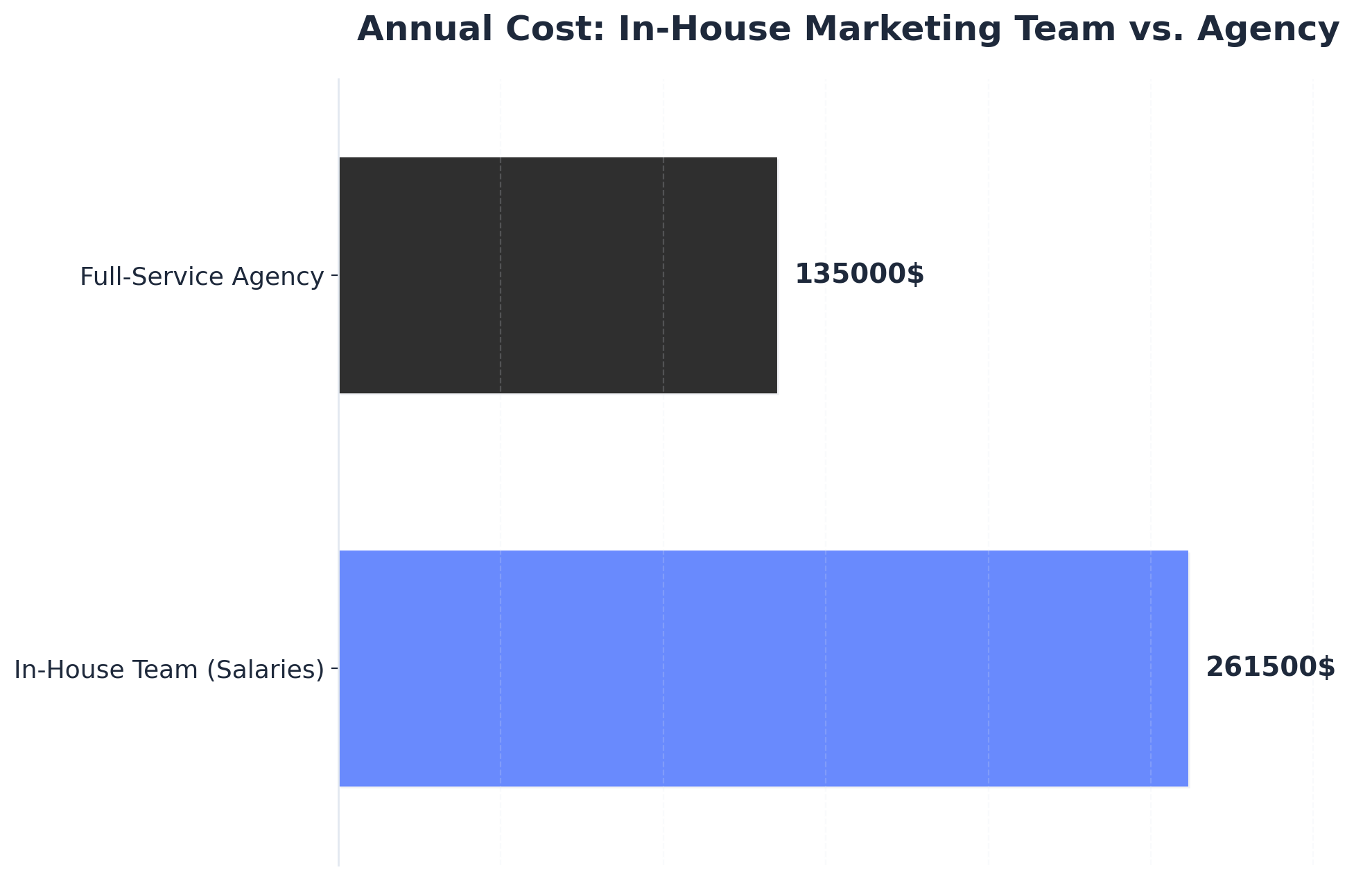 Annual Cost: In-House Marketing Team vs. Agency
Annual Cost: In-House Marketing Team vs. Agency (Compares the annual salary cost of a minimal in-house marketing team ($261,500) to the typical annual cost of a full-service thought leadership agency ($120,000-$150,000), showing agencies can be more cost-effective.)
| Production Model | Monthly Cost Estimate | Scalability | Cost Efficiency |
|---|---|---|---|
| Traditional Agency | $10,000 - $12,500 | Linear (Costs rise with volume) | Low |
| In-House Team | $21,000+ (Salaries) | Limited by Headcount | Medium |
| Automation Platform | $1,995 - $4,995 | Unlimited (Fixed Cost) | High (75% Reduction) |
By comparison, B2B SaaS content marketing automation platforms operate on fixed monthly subscriptions and deliver up to 80% cost reduction versus traditional agencies, while enabling 3-5x higher publishing velocity8. This approach is ideal for marketing VPs tasked with scaling output across multiple locations without increasing headcount or incurring unpredictable costs. As staffing and agency retainers continue to rise, automation provides a predictable and measurable path to cost efficiency and operational scale8.
Automate B2B SaaS Content and Triple Your Lead Pipeline
Discover how Vectoron’s AI-driven platform produces 320% more qualified leads while reducing production costs by 89%—all with automated, multi-location content operations tailored for enterprise B2B SaaS teams.
Lead Generation Performance Benchmarks
Quantitative benchmarks highlight the impact of b2b saas content marketing automation on lead generation. Organizations adopting automated, multi-channel content systems report up to 320% more qualified leads compared to those relying on traditional agency or manual methods8. For healthcare marketing VPs managing multi-location campaigns, this translates to a significantly higher volume of patient inquiries and a more predictable pipeline across all sites.
Lead Generation Benchmark Tool: Pipeline Performance Self-Assessment
- Track the number of qualified leads generated per month from organic content.
- Measure conversion rates from content-influenced sessions to SQLs (Sales Qualified Leads).
- Compare channel attribution data for automated vs. manual content workflows.
- Set quarterly targets for lead volume growth based on historical performance.
Industry research shows content marketing delivers an average return of $3 for every $1 invested, outperforming paid advertising by 67% and driving long-term pipeline acceleration5. B2B SaaS teams leveraging automated content production and distribution consistently achieve 5x higher traffic and up to 748% ROI on SEO-driven campaigns5. This path makes sense for organizations seeking to scale lead generation without proportionally increasing spend or headcount.
Implementation Framework for Marketing VPs
Assessing Your Content Operations Gaps
Effective implementation of b2b saas content marketing automation begins with a structured assessment of operational gaps. Nearly 45% of B2B marketers lack a scalable content creation model, with workflow inefficiencies and resource bottlenecks cited as leading challenges3. For healthcare marketing VPs, mapping each workflow stage and quantifying cycle times can reveal where manual processes restrict publishing velocity, create backlogs, or inflate costs.
Gap Analysis Tool: Content Operations Diagnostic Checklist
- Map current production workflow (from ideation to publishing).
- Document average turnaround times by content type and channel.
- Identify resource constraints: headcount, skills, software, and budget.
- Audit backlog, missed SLAs, and quality control issues over the last quarter.
- Review metrics for lead quality, velocity, and channel coverage.
Typical problem areas include excessive handoffs between roles, limited automation for SEO and distribution, and insufficient measurement tools. This approach works best when teams regularly miss publishing targets or experience rising cost per lead despite increased content spend. Conducting a quarterly gap assessment establishes a prioritized roadmap for automation, ensuring future investments target areas with the greatest impact on pipeline growth and ROI.
30-Day Automation Deployment Roadmap
A structured 30-day deployment roadmap enables B2B SaaS marketing leaders to rapidly implement content marketing automation while minimizing disruption. Start by translating operational gaps into measurable objectives—such as reducing average turnaround time or increasing monthly publish volume. In the first two weeks, focus on technical setup and integration, ensuring seamless data flow between automation tools and core platforms.
- Week 1: Finalize gap assessment, define automation objectives, and select pilot content workflows.
- Week 2: Configure automation platform, integrate with existing CMS and analytics, and migrate priority content templates.
- Week 3: Pilot initial production runs (e.g., blog posts, landing pages), validate workflow automations, and monitor cycle times.
- Week 4: Review performance data, refine workflow rules, train team on platform use, and scale up volume to target benchmarks.
Pilot runs in week three should prioritize high-impact content types, enabling early detection of process issues and benchmarking improvements in efficiency. Organizations that execute phased rollouts typically achieve a 2x to 3x increase in production velocity within the first month and report 88% higher efficiency by leveraging automation for repetitive tasks4. This method works when rapid operational gains are needed without expanding headcount or risking brand consistency. As the process matures, continuous monitoring and team enablement drive incremental ROI from b2b saas content marketing automation.
Frequently Asked Questions
Conclusion
The shift toward AI-powered content production represents a fundamental restructuring of marketing operations, not merely a tactical adjustment. Healthcare marketing teams operating across multiple locations face a quantifiable challenge: traditional agency models require 2-3 weeks per article at costs ranging from $500-$2,000 per piece, creating bottlenecks that directly limit patient acquisition velocity. Documented performance metrics demonstrate that automated content platforms deliver 320% more qualified leads while reducing production costs by 89% compared to agency retainers.
The operational advantage extends beyond cost reduction—platforms with 12-stage quality pipelines achieve 96% publish rates without requiring editorial intervention, eliminating the revision cycles that consume 40-60% of traditional production timelines. This quality consistency transforms content operations from unpredictable agency dependencies into reliable internal systems, enabling marketing teams to maintain publication schedules without the resource allocation variability that characterizes traditional models.
These quality benchmarks enable a fundamentally different pricing approach. The cost structure demonstrates measurable advantages: fixed-price models ($1,995-$4,995 monthly for 24-72 articles) provide unlimited scale without linear cost increases, while agency retainers expand proportionally with volume requirements. Budget analysis reveals three distinct advantages—75% cost reduction, 320% lead generation improvement, and elimination of per-article variable costs. This pricing structure transforms content from a variable expense tied to headcount into a predictable operational line item, enabling consistent patient lead generation across service lines and geographic markets without proportional budget expansion.
Combined, these metrics demonstrate that AI-powered platforms transform content from a resource-constrained bottleneck into a scalable patient acquisition engine. Marketing VPs managing simultaneous budget constraints and growth targets can evaluate operational restructuring through documented performance data rather than projected outcomes, with trial implementations providing direct measurement of lead quality, publication velocity, and cost efficiency against existing agency relationships.
References
- 1.Cost Cutting & Marketing Budgets in Uncertain Times.
- 2.How Automation Drives Business Growth and Efficiency.
- 3.B2B Content Marketing: 2025 Benchmarks & Trends.
- 4.The Ultimate Guide to B2B Content Marketing ROI.
- 5.45 Statistics Every Marketing Leader Should Know in 2026.
- 6.Digital Marketing Agency vs. In-House Marketing, Compared.
- In-House PR vs PR Agency: Complete Cost-Benefit Analysis 2026. https://obapr.com/resources/in-house-pr-vs-pr-agency-complete-cost-benefit-analysis-2026/"
- 8.Content at Scale for B2B SaaS.
- 9.2025 B2B SaaS Marketing Benchmarks Guide.
- 10.SaaS CAC Payback Benchmarks: 2025 Report.