
Key Takeaways
- Treat SEO automation as a task-allocation problem, not a yes/no question: roughly 70% of delivery can run autonomously while 30% stays human-led for judgment calls.
- Sort every task into four tiers—full auto, human-approved auto, AI-assisted human-led, and human-only—so each one sits at the lowest oversight level it can safely occupy.
- Governance is the load-bearing layer, mapping NIST AI RMF attributes like validity, transparency, and human oversight onto approval gates that keep output inside Google's people-first standard 6, 3.
- Name an owner for the automation stack, run quarterly task-tier reviews as tooling shifts, and tighten the approval gate before scaling volume across locations or brands.
The wrong question is killing agency margins
"Can SEO be automated?" is the wrong frame, and it is costing agency operators real margin. The yes/no debate keeps delivery teams stuck choosing between two losing positions: automate everything and risk a spam classification, or automate nothing and watch labor costs eat the retainer. Both paths end the same way.
The agencies pulling ahead right now treat automation as a task-allocation problem, not an identity question. They draw precise lines between machine-led execution and human-led judgment, then build the workflow around that boundary. Crawl audits, schema validation, internal link checks, draft production, rank monitoring, and reporting run on rails. Intent calls, E-E-A-T review, brand voice, and risk approval stay with strategists.
Google has been explicit that AI-generated content is acceptable when it is built to help people rather than manipulate rankings 2. The same documentation that defines people-first content also defines the quality bar that automated production has to clear 3. Neither document bans automation. Both define where it fails.
That distinction matters because the alternative is expensive. An agency that refuses to systematize repeatable work pays senior strategist hours for tasks a junior tool can finish in minutes. An agency that automates without governance ships scaled output that triggers exactly the enforcement Google described in its March 2024 spam update 5.
The rest of this analysis replaces the binary question with an operating model: which roughly 70% of an SEO engagement can run autonomously, which 30% stays human-led, and what governance layer holds the seam.
A task-allocation model for SEO delivery
Four automation tiers, from full auto to human-only
The framework that survives Google's enforcement and NIST's governance attributes is not a single automation switch. It is a four-tier allocation that assigns each SEO task to the lowest-oversight tier it can safely occupy.
Full auto : Covers tasks where the input is structured, the output is verifiable against a spec, and the failure mode is mechanical rather than editorial. Crawl monitoring, robots.txt validation, sitemap generation, canonical tag audits, schema markup validation, rank tracking, log file parsing, and scheduled performance reporting all sit here. Google's own starter documentation defines the technical surface these tools check against—unique page titles, meta descriptions, URL structure, navigation hierarchy, robots.txt directives 1. A script either finds a duplicate canonical or it does not.
Human-approved auto : Covers tasks where the machine produces the deliverable but a strategist signs off before anything ships. Keyword clustering from a seed list, internal link equity redistribution proposals, title tag and meta description rewrites at scale, schema deployment across templated page types, and first-draft content production from approved briefs all belong here. The work runs autonomously; the approval gate is non-negotiable.
AI-assisted, human-led : Inverts the ratio. The strategist owns the output and uses AI to compress research, draft alternates, or stress-test reasoning. Topical authority mapping, content brief construction, competitor gap interpretation, link prospect qualification, and editorial revisions sit here. The machine accelerates the strategist; it does not replace the judgment call.
Human-only : Covers tasks where the cost of a machine error exceeds any productivity gain. E-E-A-T signal review for YMYL content, brand voice arbitration, crisis response, manual action recovery, client strategy presentations, and final risk approval for regulated verticals stay with senior staff. These tasks are not slow because they are inefficient. They are slow because they require accountability that cannot be delegated to a model.
The matrix below maps the full task inventory against the four tiers.
Which 70% runs autonomously
The autonomous share of an SEO engagement is larger than most agency operators bill for, and that gap is where margin lives.
Technical SEO is the densest pocket. Crawl audits run on schedule, flag broken canonicals, surface orphaned pages, and validate hreflang without a strategist opening a spreadsheet. Schema deployment across templated page types—location pages, service pages, FAQ blocks, article markup—executes from a single rule set. Internal link equity redistribution, once a manual exercise of mapping anchor text across hundreds of URLs, now runs as a graph problem with human review on the output rather than human labor on the inputs.
Content production carries the next largest share. First-draft generation from approved briefs, meta description writing at scale, image alt text generation, FAQ block expansion, and on-page optimization against target keywords all run as templated workflows. The constraint is the brief and the approval gate, not the production method.
Reporting and monitoring close out the autonomous block. Rank tracking, GA4 anomaly detection, Search Console alert routing, competitor SERP movement tracking, and client-facing performance reports all run on rails. A strategist reviewing a dashboard at 9 a.m. is more useful than a strategist building the dashboard at 8:45.
Across a typical mid-market SEO engagement, these task categories absorb most of the recurring billable hours under traditional delivery. Moving them to autonomous tiers does not eliminate the work. It eliminates the labor cost of the work and reassigns the strategist's calendar to the 30% that actually requires judgment.
Which 30% stays human-led
The human-led 30% is not the leftover work. It is the work that determines whether the other 70% produces rankings or produces liability.
Search intent calls sit at the top of this list. A model can cluster keywords by semantic similarity. It cannot reliably distinguish whether "urgent care near me" demands a location page, a service page, or a triage tool—and the wrong answer costs the client conversions even if the page ranks. Intent calls require a strategist who has seen the SERP, the client's conversion data, and the competitor set in the same hour.
E-E-A-T review is the second pillar, and it tightens further for YMYL verticals. Healthcare, legal, and financial content carries a quality bar where automated production without expert review creates exactly the scaled, low-value output Google's ranking systems are built to demote in favor of helpful, reliable, people-first information 3. The author credential check, the medical or legal accuracy review, and the sourcing audit stay with humans.
Brand voice arbitration is the third. A model trained on a style guide will produce on-brand sentences most of the time. The exceptions—the launch announcement, the response to a negative review, the sensitive service-line page—are where the brand actually lives. Strategists own those calls.
Strategy itself rounds out the human block. Quarterly planning, competitive repositioning, client communication, and risk approval before publish all require accountability a model cannot carry. The strategist's role under this allocation is denser, not lighter. The work that remains is the work that was always worth paying for.
Governance is the operating constraint, not the optional layer
Every agency operator running AI-assisted SEO is building a system that needs a governance layer, whether they call it that or not. The NIST AI Risk Management Framework names the attributes that layer has to deliver: validity, reliability, safety, transparency, interpretability, privacy, and fairness, with human oversight as a live operating attribute rather than a checkbox 6. Those are not abstract policy goals. They map cleanly onto the failure modes a delivery team will actually hit.
Validity and reliability translate into rank stability monitoring and output spec-checking. If an automated content pipeline produces ten location pages a week, the governance question is whether the system reliably hits the brief, the schema spec, and the internal linking rule every time—not whether it can produce volume. Drift in any of those is the early signal that the pipeline is heading toward the kind of scaled low-quality output Google's March 2024 update was built to demote 5.
Transparency and interpretability translate into source attribution inside drafts and audit trails on every published change. A strategist approving a piece of AI-generated content needs to see which claims came from which sources, which sections were model-generated versus edited, and which prompts produced the output. Without that trail, the review gate is theater.
Human oversight is the attribute that holds the whole system together. It shows up as the approval gate before publish, the escalation path for YMYL content, and the rollback procedure when a deployment causes ranking drops. Agencies that treat oversight as a stage in the workflow keep automation inside the line Google's spam policy draws. Agencies that treat it as paperwork find out where the line is the hard way.
Governance is not the brake on automation. It is the load-bearing structure that lets automation run at the volumes that make the delivery economics work.
Test AI-driven SEO execution with real outputs
Experience hands-on, automated SEO strategy and content production using live data and publishable assets for your clients.
Tooling acceleration and what it changes for delivery stacks
The capability ceiling on automated SEO work is moving every quarter, and the budget behind that movement is not subtle. Private investment in generative AI reached $33.9 billion in 2024, up 18.7% from the prior year 8. That capital is funding the model layer, the orchestration layer, and the vertical tools agency operators are already plugging into their delivery stacks.
The practical consequence is that the line between human-approved auto and AI-assisted human-led keeps sliding. Tasks that required a strategist six quarters ago—competitive content gap analysis, entity extraction from SERP transcripts, schema generation against unfamiliar templates—now produce reliable first-pass output from off-the-shelf tools. A delivery stack built in early 2023 around a single LLM, a rank tracker, and a crawler is already two refresh cycles behind what current tooling supports.
For agency operators, the implication is not that the stack needs to be rebuilt every six months. It is that the task-allocation matrix has to be reviewed on the same cadence as the tooling. Work that sat in the human-led column last year may have moved into human-approved auto this year, and leaving it in the higher-oversight tier is a margin leak. Stack discipline becomes a recurring operational review, not a one-time procurement decision.
Agency staffing under AI-assisted delivery
The hiring market has already answered the question agency operators are still debating internally. In 2024, more than 66,000 U.S. job postings specifically called for generative AI as a skill, up from roughly 16,000 in 2023—a fourfold jump in a single year 10. That curve is not a tech-sector artifact. It runs through marketing, content, and analytics roles, which means the labor pool an agency competes in for SEO talent is repricing around AI fluency right now.
The staffing implication is not that strategist headcount collapses. PwC's labor analysis points the other direction: AI tends to raise the value of workers in highly automatable roles rather than displace them outright 9. Inside a delivery team, that shows up as a shift in what a senior SEO hire is actually paid to do. The work that justifies the salary moves from executing crawl audits and writing meta descriptions to designing the workflows that execute those tasks, reviewing the outputs, and owning the client-facing strategy calls.
For agency owners, the practical rewrite of the job description has three pieces:
- Technical SEO roles now require comfort with workflow orchestration—prompts, briefs, approval logic, and quality gates—not just on-page mechanics.
- Content roles compress around editorial judgment, source verification, and brand voice arbitration rather than first-draft production.
- A new role earns a slot on the org chart: someone who owns the automation stack itself, tracks tool releases against the task-allocation matrix, and reassigns work between tiers as capability moves.
That role did not exist on most agency org charts two years ago. It is now the position that determines whether the delivery economics actually clear.
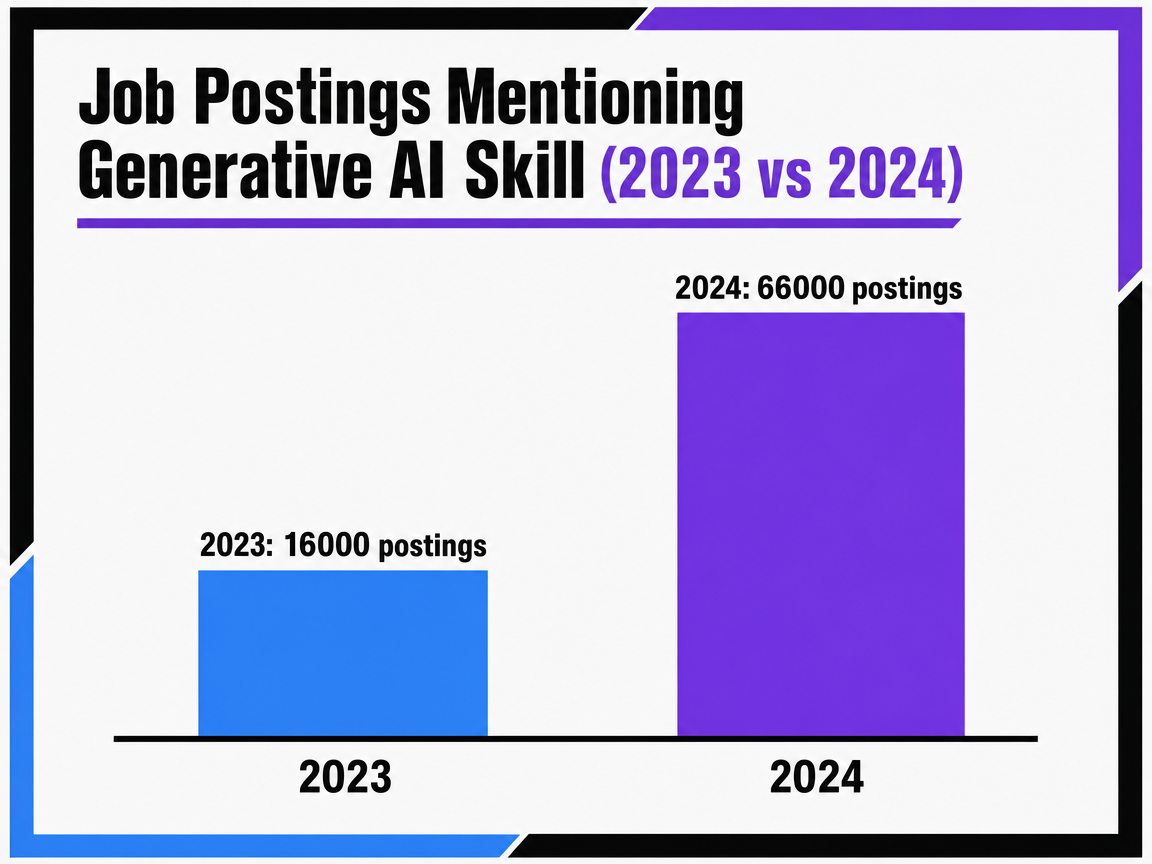 Job Postings Mentioning Generative AI Skill (2023 vs 2024)
Comparison of the number of job postings that specifically mentioned generative AI as a required skill in 2023 versus 2024.
Adoption resistance inside delivery teams
The internal pushback on AI-assisted SEO is usually framed as a tooling problem. It is a trust problem. Pew's 2025 workforce survey, measuring U.S. workers across industries rather than SEO specialists specifically, found 52% of respondents worried about AI's future impact on their work and only 36% hopeful 7. That sentiment travels into agency conference rooms whether the operator invites it or not.
Inside a delivery team, the resistance shows up in predictable places:
- Senior strategists who built their reputation on technical audits push back when those audits move to scheduled scripts.
- Content leads who hire and train writers resist briefs that route first drafts through a model.
- Account leads worry that clients will discover the production method and renegotiate the retainer.
None of those reactions are irrational. They are accurate readings of how the work was previously valued.
The agencies that move through this cleanly do two things. They make the new job description explicit—workflow design, output review, and strategy ownership rather than execution volume—so the senior roles can see where their value now sits. And they show the approval gate in operation, so the team sees that human judgment is denser in the new model, not absent from it.
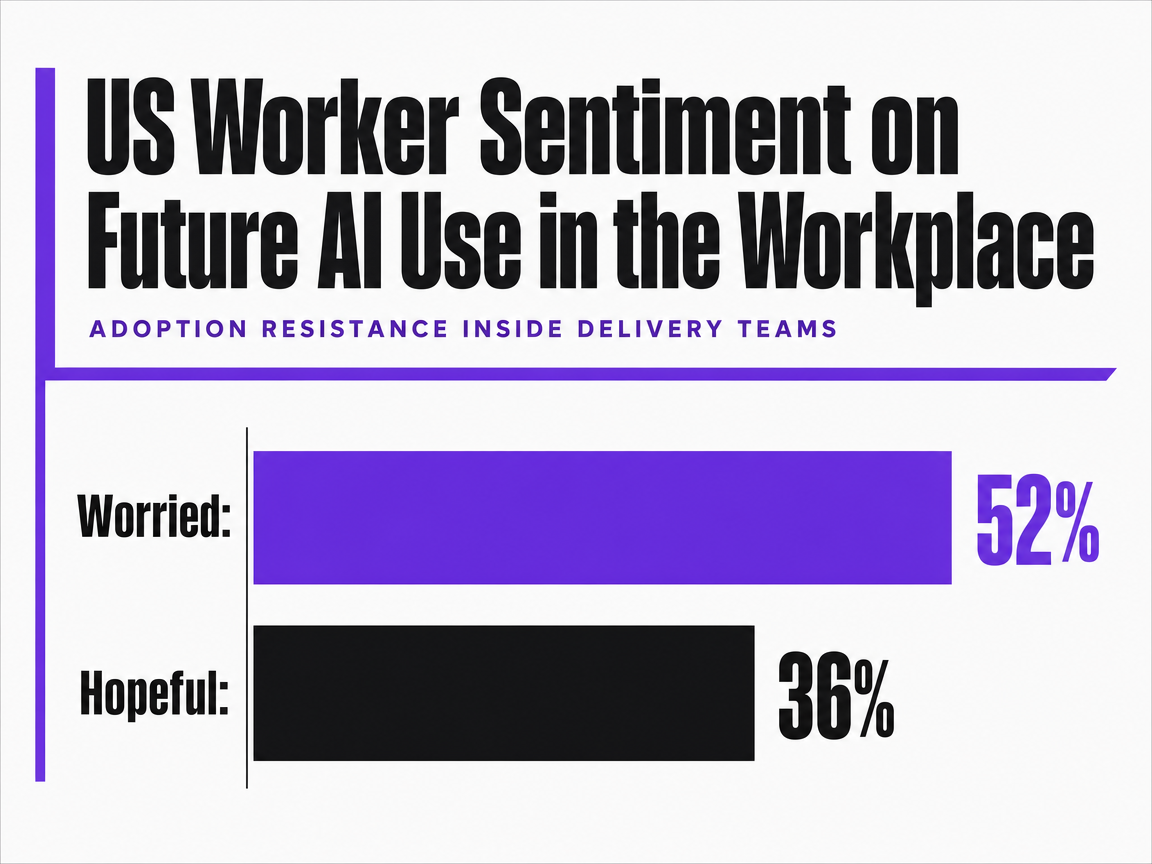 US Worker Sentiment on Future AI Use in the Workplace
Comparison of the percentage of U.S. workers who feel worried versus hopeful about the future impact of AI in their workplace.
See How AI-Driven SEO Outperforms Manual Campaigns—With the Data to Prove It
Request a demo of autonomous SEO operations that leverage AI for content, technical optimization, and backlink acquisition—benchmarked against leading agency workflows. Ideal for agencies scaling multi-client or multi-location delivery without expanding headcount.
If a single agency manages multiple locations or a portfolio of brands
The consolidation math: one approved strategy, many executions
The framework changes shape once the operator is running SEO across forty dental offices, twelve urgent care locations, or a portfolio of fifteen client brands. The task-allocation model from earlier in this analysis still holds, but the multiplier on the autonomous tiers is what makes the delivery economics work.
Under traditional agency delivery, each location or brand carries its own strategist hours, its own audit cycle, and its own content calendar. A multi-location operator with forty sites pays for forty technical audits, forty rounds of schema deployment, and forty content backlogs—even when thirty-eight of those sites share the same service taxonomy, the same canonical templates, and the same internal linking rules. The work is duplicative, but the billing model treats it as net new every cycle.
AI-assisted delivery inverts that math. One approved technical spec executes across all forty sites in the same crawl cycle. One approved content brief produces location-specific drafts that share a structure and diverge only on local entities, service nuances, and proof points. One approved internal linking rule applies across the entire portfolio's URL graph. Strategist judgment compounds horizontally instead of being re-spent on every site.
The constraint shifts from labor capacity to approval throughput. The bottleneck is no longer how many audits a team can run; it is how fast the strategist can review what the system already produced.
Delivery economics under traditional vs. AI-assisted models
The table below compares task volume against human hours under each model for a portfolio of forty sites running a standard monthly SEO cadence. Hours are illustrative ratios for comparison, not benchmarks pulled from a specific engagement.
| Task category | Monthly volume (40 sites) | Traditional human hours | AI-assisted human hours |
|---|---|---|---|
| Technical audits and crawl checks | 40 | ~80 | ~8 (review only) |
| Schema deployment and validation | 40 | ~60 | ~4 (spec approval) |
| Content drafts from approved briefs | 120 | ~360 | ~60 (editorial review) |
| Internal linking and canonical updates | 40 | ~80 | ~6 (rule approval) |
| Performance reporting | 40 | ~40 | ~4 (commentary) |
| Strategy, E-E-A-T review, client calls | 40 | ~120 | ~120 (unchanged) |
The line that does not move is the human-led 30%. Strategy, E-E-A-T review, and client accountability still consume the same hours per site because that work was never the inefficiency. The compression happens in the autonomous tiers, where forty parallel executions now share a single approval gate. That is where the multi-location consolidation argument actually clears—not in cheaper labor, but in collapsing duplicate review cycles into one.
What the next twelve months look like for SEO operators
The agencies that finish the next four quarters in the strongest position are the ones treating the task-allocation matrix as a living document. Three forces compound at once:
- Model capability keeps moving the boundary between human-approved auto and AI-assisted human-led.
- Google's enforcement keeps tightening around scaled low-effort output 5.
- The labor pool keeps repricing around AI fluency 10.
Operators who review their allocation quarterly capture the capability gains. Operators who set it once and forget it pay senior rates for work that has already moved down a tier.
The practical agenda is narrow:
- Name an owner for the automation stack itself.
- Run a quarterly task-tier review against current tooling.
- Tighten the approval gate before expanding volume, not after.
- Document the governance trail so a strategist signing off on AI-assisted output can show what the model produced, what the human changed, and why the published version is people-first 3.
The agencies that do this build a delivery operation that scales with the portfolio instead of with the headcount. Vectoron is built around that operating model.
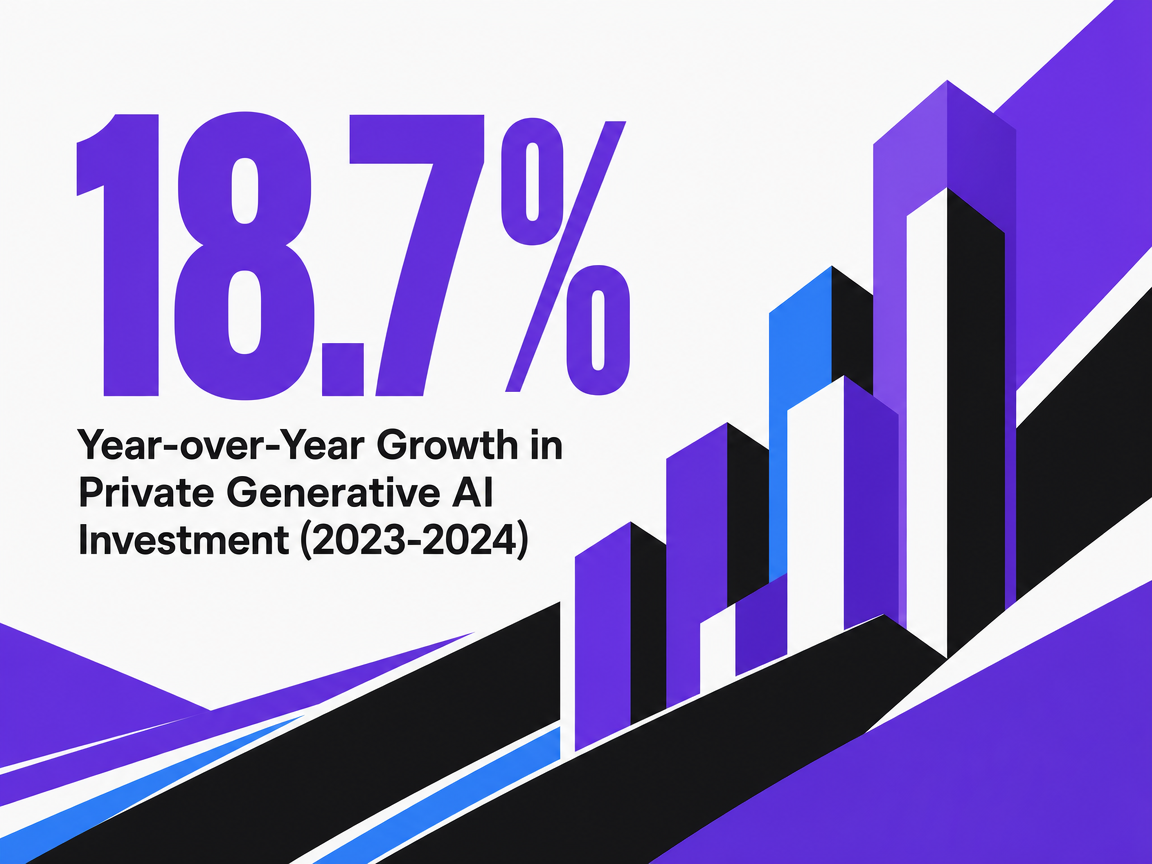 Year-over-Year Growth in Private Generative AI Investment (2023-2024)
Year-over-Year Growth in Private Generative AI Investment (2023-2024)
Frequently Asked Questions
References
- 1.Search Engine Optimization (SEO) Starter Guide.
- 2.Google Search's guidance about AI-generated content.
- 3.Creating helpful, reliable, people-first content.
- 4.Spam Policies for Google Web Search.
- 5.New ways we're tackling spammy, low-quality content on Search.
- 6.AI Risk Management Framework.
- 7.On Future AI Use in Workplace, US Workers More Worried Than Hopeful.
- 8.CHAPTER 4: Economy - Stanford HAI.
- 9.AI Jobs Barometer.
- 10.Lightcast and Stanford University: Annual AI Report 2025.
- 11.Search Engine Optimization Starter Guide.