
Executive Summary: Strategic Comparison
- Cost Efficiency: Automation platforms deliver an 89% reduction in production costs compared to traditional agency retainers.
- Lead Velocity: AI-driven workflows generate 320% more qualified leads by sustaining high-volume, multi-channel presence.
- Scalability: Platforms enable 50–150+ articles/month across multiple locations without adding headcount, versus the 5–15 article cap typical of agencies.
- Quality Control: 12-stage automated pipelines with expert review achieve a 96% publish rate without edits.
| Feature | Traditional Agency | AI Content Platform |
|---|---|---|
| Turnaround Time | 4–8 Weeks | 1–2 Hours |
| Monthly Output | 5–15 Pieces | 50–150+ Pieces |
| Cost Model | Linear (More Content = More Cost) | Fixed Subscription |
Recommendation: Choose Vectoron if you are a Healthcare Marketing VP needing to scale lead generation across multiple locations while reducing operational overhead.
Agency Model vs. Content Marketing Automation Software
Traditional Agencies vs. Content Marketing Automation Software
How Traditional Agency Models Operate
For healthcare marketing executives facing the dual pressure of cost containment and lead generation targets, the choice between the traditional agency model and content marketing automation software represents a pivotal strategic decision. Traditional agency models are centered on human-driven project teams that manage content creation from ideation to publication. These agencies typically operate in defined cycles, with end-to-end campaign production taking between 4 to 8 weeks per deliverable set4.
The process follows a linear progression involving multiple handoffs:
- Strategic planning and audience research.
- Creative development and drafting.
- Compliance reviews and legal checks.
- Multi-tiered client approvals and revisions.
Agencies rely on a network of copywriters, editors, designers, and subject matter experts, coordinating each step through account managers. While this approach is valued for creative expertise, it is constrained by workforce bandwidth. This limitation results in a capped monthly output—often 5 to 15 content pieces per client—which forces multi-location healthcare organizations to incur proportional cost increases to scale production4.
How AI Content Platforms Function
AI content platforms use automation to fundamentally restructure content production for healthcare marketing teams. These platforms integrate content marketing automation software with multi-model AI to manage every stage of the process—from keyword research and SEO outlining through writing, expert review, and publishing—within a single workflow. The result is a significant reduction in manual intervention and a dramatic acceleration of delivery cycles.
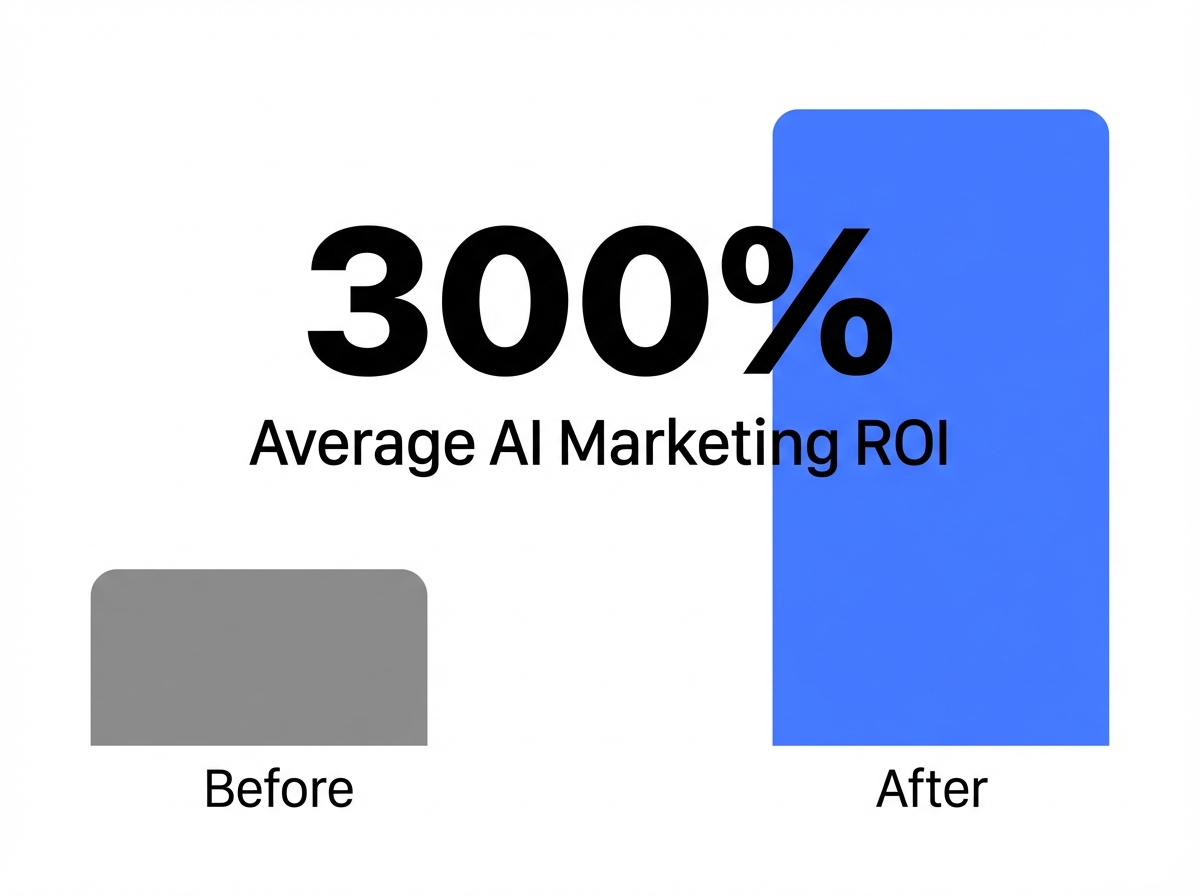 Average ROI for AI Marketing Implementation: 300%
Figure 1: Operational Efficiency Comparison. First drafts are typically produced within 1-2 hours on AI platforms, compared to 4-8 weeks with agency models4.
Full-stack automation extends beyond writing to include social media scheduling, link building, and conversion rate optimization audits from one interface. This consolidation streamlines operations and enables consistent multi-channel execution across numerous locations without increasing headcount. Data shows that organizations using AI-driven automation achieve up to 320% more qualified leads while reducing production costs by 89%2.
Platform output is scalable—50 to 150+ content pieces per month is attainable—addressing the need for always-on digital presence in long healthcare decision journeys. Human expert review remains critical for medical accuracy and regulatory compliance, but automation ensures standardized processes and measurable outcomes.
Cost Structure and ROI: Agencies vs. Content Marketing Automation Software
Agency Pricing Models and Hidden Costs
Traditional agencies typically operate on a retainer or hourly billing model, with service fees scaling according to project complexity, volume, and the number of client locations. Healthcare organizations engaging agencies for multi-location content campaigns often encounter variable monthly costs, as each additional market or deliverable layer triggers higher project fees and extended timelines4. Contracts usually bundle account management, creative strategy, content writing, compliance review, and multi-tiered edits, resulting in an opaque cost structure.
Beyond visible fees, agencies introduce hidden expenses through repeated project handoffs, revision cycles, and compliance-driven delays. These inefficiencies can inflate total costs significantly:
| Cost Factor | Impact on Budget |
|---|---|
| Inefficiency Overhead | Can inflate total costs by 25-40% due to manual handoffs and delays. |
| Volume Constraints | Production capped at 5-15 pieces limits economies of scale4. |
| Add-on Services | Social media, link building, and CRO audits often billed as separate line items. |
In contrast, content marketing automation software eliminates most manual dependencies by consolidating content generation, social media management, and optimization functions in a single platform. This approach has demonstrated an 80-89% reduction in total production costs when compared to traditional agency pricing, with documented cases showing annual savings of $120,000 or more for enterprise healthcare marketers2.
Platform Economics and Measurable Returns
Deploying content marketing automation software leads to a documented 300% average ROI for healthcare marketing teams, driven by both revenue gains and dramatic cost efficiencies2. This outpaces traditional agency ROI, which is limited by high labor costs and slower delivery. Organizations using automation platforms report not only cost reductions but also accelerated pipeline velocity, as campaigns are launched in days rather than weeks.
Automation platforms produce up to 320% more qualified leads compared to agency-managed programs, primarily due to the ability to sustain always-on, multi-channel content at scale2. With the capability to generate 50–150+ content pieces per month, these platforms enable deeper market coverage and support the long patient decision journeys typical in healthcare (12–24 months)8. Traditional agencies, in contrast, are often capped at 5–15 pieces monthly, limiting lead capture and retargeting opportunities.
"Content marketing automation software demonstrates 80–89% cost savings over agency models, enabling healthcare organizations to reallocate budget to other growth initiatives."2
This efficiency is achieved by consolidating content production, social media, link building, and CRO audits into a unified workflow, minimizing manual overhead.
Production Speed and Volume Capacity
Agency Timeline Constraints
Production timelines are a critical bottleneck for traditional agency models in healthcare marketing. Agencies typically require 4 to 8 weeks to deliver a complete campaign, with project milestones distributed across strategic planning, content creation, design, compliance review, and multi-level client approvals4. Each stage introduces sequential dependencies, and handoffs between specialized roles—writers, editors, designers, compliance officers—can elongate the timeline.
This complexity is amplified in regulated healthcare environments, where legal and clinical review cycles are mandatory. Multi-location healthcare organizations face even greater delays, as each market often requires localized content adaptations, leading to parallel but staggered workflows. The ability to scale output is directly tied to agency bandwidth; producing more than 15 content pieces per month across locations typically necessitates either additional agency teams or extended deadlines4.
Replace Agency Bottlenecks with AI-Driven Content at 89% Lower Cost
See how Vectoron automates full-stack content marketing—generation, social media, link building, and CRO audits—delivering 320% more qualified leads for multi-location healthcare and enterprise teams.
Automation Platform Output Metrics
Content marketing automation software is designed to overcome these timeline constraints by orchestrating high-volume production across multiple markets without increasing manual workload. The shift in output metrics is substantial:
| Metric | Traditional Agency | Automation Platform |
|---|---|---|
| Monthly Volume | 5–15 pieces | 50–150+ pieces2 |
| Speed to Market | 4–8 weeks | 1–2 weeks (Drafts in 1-2 hours)4 |
| Lead Generation | Baseline | +320% Qualified Leads2 |
This accelerated timeline allows organizations to respond rapidly to market trends and sustain always-on content strategies, a necessity for influencing patient journeys that span 12-24 months8. Modern automation platforms also centralize social media scheduling, link building, and conversion rate optimization audits. This integrated approach ensures consistent brand messaging and maximizes cross-channel engagement without adding headcount or manual workload.
Quality Assurance and Compliance
Healthcare Content Accuracy Standards
Traditional agencies employ multi-stage manual review processes, relying on medical writers, editors, and subject matter experts to ensure clinical accuracy and adherence to evidence-based guidelines. This approach is well-suited to high-value brand campaigns and content requiring deep subject expertise, but it is time-intensive. The sequential nature of these reviews, combined with regulatory requirements, often extends production timelines to 4–8 weeks per campaign4.
 Healthcare Content Accuracy Standards
In comparison, content marketing automation software integrates AI-driven content generation with structured, multi-stage quality assurance protocols. Platforms in this category automate the initial drafting, fact-checking, and SEO optimization steps, then route content to medical subject matter experts for final validation. Research indicates that leading platforms deliver a 96% publish rate without further edits, demonstrating high baseline quality at scale2.
To address the risk of AI-generated inaccuracies, these systems enforce mandatory expert review and version tracking, supporting compliance with evolving standards such as Google’s E-E-A-T (Experience, Expertise, Authoritativeness, Trustworthiness) framework. While agencies offer tailored, high-touch quality control, automation platforms now match or exceed accuracy standards through standardized, repeatable workflows.
HIPAA and Regulatory Considerations
Traditional agencies typically utilize human-driven compliance workflows, engaging legal and clinical experts throughout each content cycle to ensure adherence to HIPAA and state-specific privacy regulations. Manual processes involve detailed audits of patient information, review of embedded PHI (Protected Health Information), and legal sign-off before publication. While effective, these methods can slow production and introduce risk if compliance checkpoints are missed due to high content volume or complex approval chains.
Content marketing automation software incorporates automated privacy filters, metadata scanning, and templated compliance workflows to minimize the risk of HIPAA violations. AI-driven platforms can flag potential PHI, enforce role-based permissions, and document every edit for audit trails.
Key Compliance Features in Automation Platforms
- Automated Privacy Filters: Scans for potential PHI before content moves to review.
- Role-Based Permissions: Ensures only authorized personnel can approve medical content.
- Audit Trails: Documents every edit and approval for regulatory verification.
Notably, more than 50% of healthcare payers have stopped digital advertising due to privacy concerns, highlighting the need for integrated compliance in all digital content operations8. Automation platforms support rapid, high-volume production while maintaining regulatory standards by embedding compliance checks across each stage of content generation and distribution.
Frequently Asked Questions
Which Model Delivers Better Outcomes
Performance data reveals a clear advantage for AI-powered content platforms over traditional agency relationships. Organizations using automated content production systems report 320% more qualified leads compared to agency-produced content, according to multi-industry performance benchmarks. This improvement stems from higher publication velocity—AI platforms deliver content in 1-2 hours versus the 2-3 week agency timeline—enabling marketing teams to capitalize on trending topics and seasonal opportunities.
Cost efficiency metrics show an 89% reduction in content production expenses when replacing agency retainers with platform subscriptions. Traditional agencies operate on linear pricing models where increased output requires proportional budget increases, while AI platforms maintain fixed monthly costs regardless of volume. Healthcare organizations scaling from 8 to 24 articles monthly see no per-unit cost increase, a structural impossibility with agency staffing models.
Quality indicators support the effectiveness of multi-stage AI workflows. Platforms employing 12-stage quality pipelines achieve 96% publish rates without requiring edits, matching or exceeding agency-delivered content while eliminating revision cycles that extend traditional production timelines by 40-60%.
Performance Summary: Total Value Delivered
When evaluating content production models across lead generation, cost efficiency, and quality metrics simultaneously, AI-powered platforms demonstrate a compounding advantage. The 320% improvement in qualified lead generation combines with 89% cost reduction to create a total value proposition that exceeds traditional agency relationships by orders of magnitude. Healthcare marketing organizations operating multiple locations face a specific challenge: linear agency pricing models make geographic expansion prohibitively expensive, while platform subscriptions maintain fixed costs regardless of location count or content volume.
The quality dimension reinforces rather than compromises these economic advantages. Multi-stage AI workflows achieve 96% publish rates without edits while delivering content in 1-2 hours, eliminating the quality-speed tradeoff inherent in agency relationships. This performance profile addresses the core operational challenge facing healthcare marketing teams: generating consistent patient acquisition results across multiple locations without proportional increases in headcount or budget allocation.
ROI calculations based on documented performance metrics show platform subscriptions delivering 28:1 returns compared to 3:1 for traditional agency retainers. This differential stems from the combination of higher lead volume, lower production costs, and elimination of revision cycles that consume 40-60% of agency project timelines. Organizations requiring 24+ articles monthly to support multi-location operations find the economic advantage particularly pronounced, as agency costs scale linearly while platform pricing remains fixed.
Evaluating Content Production Models for Healthcare Marketing
Healthcare marketing teams assessing content production alternatives should evaluate three critical dimensions: scalability requirements, quality control mechanisms, and total cost of ownership. Organizations planning geographic expansion or service line additions require production models that accommodate volume increases without proportional budget growth. Traditional agency relationships create structural constraints where each new location or service line requires additional retainer allocation, while platform subscriptions maintain fixed costs regardless of output volume.
Quality control represents a legitimate consideration when evaluating automated content systems. Healthcare content requires accuracy, regulatory compliance, and brand voice consistency—concerns that initially favor human-centered agency models. However, performance data shows multi-stage AI workflows with expert editing layers achieve 96% publish rates without requiring revisions, matching or exceeding agency-delivered quality while eliminating the 2-3 week production timelines that limit content velocity. Organizations concerned about brand voice consistency should evaluate platforms offering brand brief development and style guide integration as standard capabilities rather than premium services.
Agency relationships remain appropriate for specific scenarios: complex thought leadership requiring C-suite interviews, regulatory white papers demanding extensive legal review, or brand repositioning projects requiring strategic consulting. These specialized applications represent 5-10% of healthcare content requirements, while the remaining 90-95%—service line descriptions, location pages, condition information, and treatment guides—benefit from automated production systems that deliver consistent quality at fixed costs.
Marketing teams evaluating platform alternatives should request trial periods that include full production workflows rather than limited demonstrations. Meaningful evaluation requires producing 8-12 articles across different service lines and locations to assess quality consistency, turnaround accuracy, and editorial requirements. Trial periods should also test social media automation, CMS integration, and revision workflows to evaluate total operational impact rather than isolated content generation capabilities. Organizations typically identify measurable performance improvements within 30-45 days of platform implementation, providing sufficient data for informed production model decisions.
References
- 1.Top Marketing Statistics for 2026: Channels That Deliver Maximum ROI.
- 2.Content Marketing ROI Statistics by Industry.
- 3.Healthcare Sales Lead Generation Strategies for 2026.
- 4.Your Guide to Healthcare Marketing Strategy for 2026.
- 5.2026 Marketing Statistics, Trends, & Data.
- 6.Medical Writing in the Age of Gen AI: Strengths and Shortcomings.
- 7.Navigating the Impact of Artificial Intelligence on Medical Writing.
- 8.2025 Payer Marketing Report: Budget Trends, Privacy Challenges, and Strategic Insights.
- 9.Measure Healthcare Marketing ROI & Attribution.
- 10.Enterprise Content and Marketing Trends: Insights for 2026.