
Streamlining Workflows with Content Publishing Automation
Key Takeaways
- Assessment Scoring Guide: Score your workflow bottlenecks (0-3 manual steps = low priority, 4-7 = moderate, 8+ = critical need for automation).
- Top 3 Success Factors: Achieving a 61% reduction in editorial overhead, a 30-50% faster time-to-publish, and up to 320% more qualified leads.
- Immediate Next Action: Conduct a comprehensive process audit to map all manual handoffs and identify integration points for enterprise content operations.
Implementing content publishing automation transforms enterprise marketing by replacing fragmented, manual workflows with streamlined, data-driven systems. For content operations managers, this shift eliminates bottlenecks, reduces costs, and scales output without requiring additional headcount.
Why Manual Publishing Bottlenecks Limit Scale
Quantifying Workflow Inefficiencies
A practical workflow efficiency checklist for enterprise content operations provides a clear baseline for quantifying bottlenecks caused by manual processes. Consider this method if your team struggles to identify exactly where delays occur.
| Efficiency Metric | Target Benchmark | Risk Indicator |
|---|---|---|
| Average hours per article | < 2 hours | > 5 hours |
| Manual handoffs | 1-2 steps | 4+ steps |
| On-schedule publish rate | 95%+ | < 80% |
These metrics expose the hidden friction in traditional content pipelines.
"Marketing teams typically spend up to 30% of their time on repetitive, non-strategic tasks such as uploading assets, coordinating approvals, and handling platform-specific formatting—activities that directly impact throughput." — McKinsey & Company3
Manual publishing workflows often involve 8-15 discrete steps, each introducing lag and risk of error. For example, Content Marketing Institute research found that inefficient workflows can delay publication by an average of 3-5 days per asset, with missed deadlines occurring in over 40% of cases for large organizations5. These inefficiencies compound as content volume increases, constraining the ability to scale output in response to business demand.
The True Cost of Manual Operations
To quantify the true cost of manual operations in content publishing, enterprise teams should use a cost impact assessment. This tool calculates total labor hours, average staff cost per hour, error remediation expenses, and the financial effect of delayed launches.
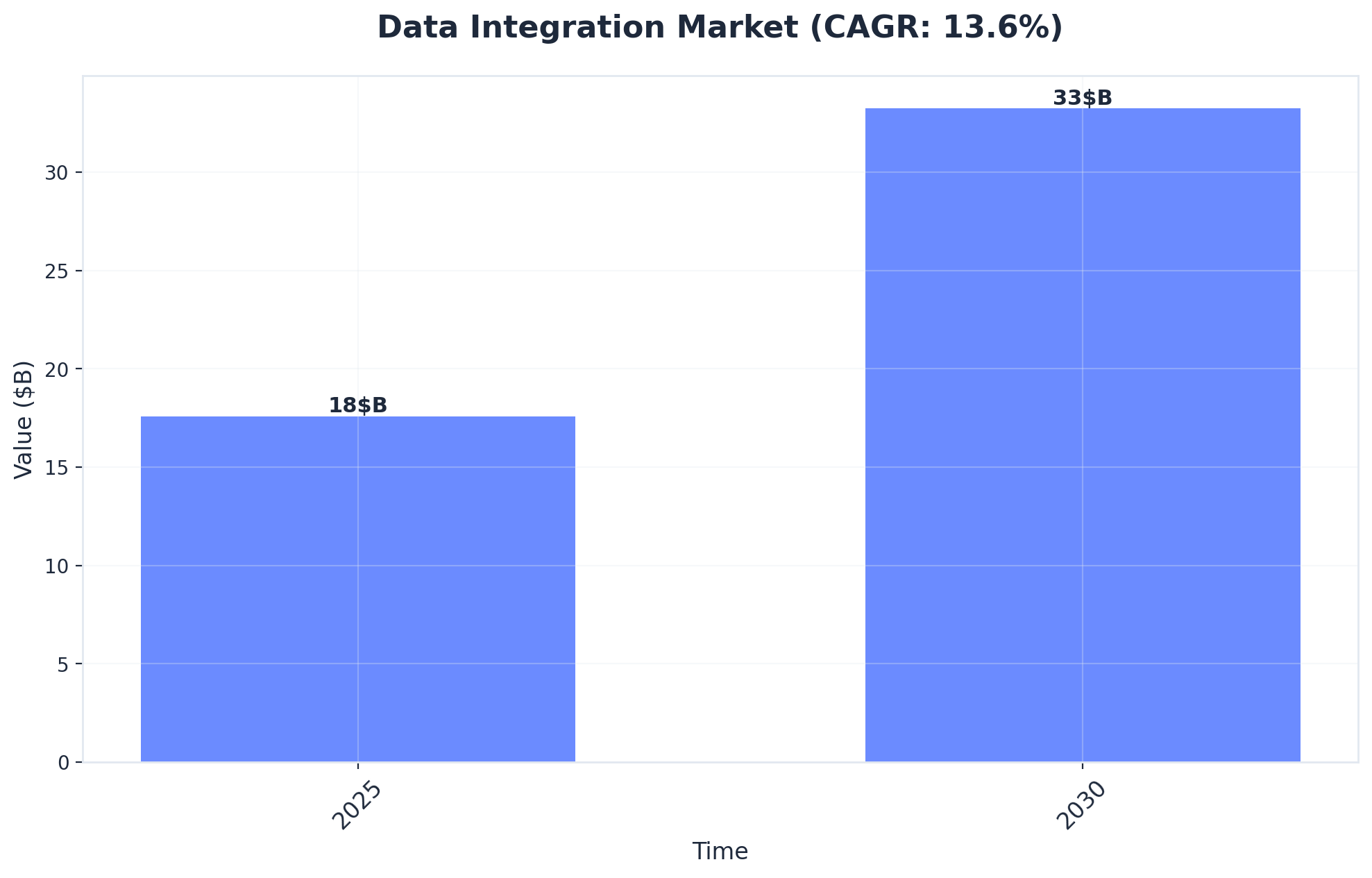 Data Integration Market (CAGR: 13.6%)
Data Integration Market (CAGR: 13.6%) (Source: Data Integration Market Report 2025-2030)
View Cost Impact Assessment Formula
Total Cost of Delay = (Average Daily Traffic Value × Days Delayed) + (Manual Hours × Hourly Rate) + Revision Overhead.
McKinsey data indicates that up to 30% of marketing team time is spent on manual, repetitive tasks, equating to substantial annual salary outlays for non-strategic work3. When publication delays average 3-5 days per asset, the opportunity cost includes lost traffic, slower lead generation, and diminished campaign impact5.
This strategy suits organizations that need to justify process investments with clear ROI benchmarks. In practice, large enterprises with 10+ content staff may see six-figure annual losses from inefficiencies, especially as volume increases. Error correction and rework also add measurable costs, often requiring additional review cycles or off-cycle approvals, compounding delays and resource drains.
By mapping these costs against automation scenarios, teams can model potential savings and project break-even timelines for investment. As the discussion moves forward, the next section will outline the core components that underpin effective automated publishing systems.
Core Components of Content Publishing Automation Systems
Content Creation and Optimization Engines
A practical assessment tool for evaluating content creation and optimization engines includes these criteria: AI model diversity (e.g., GPT-4, Claude, Gemini), integration with SEO tooling, multilingual support, automated editorial review, and compatibility with structured data formats. For enterprise content operations, these engines are the backbone of content publishing automation, enabling high-volume output while maintaining quality benchmarks.
Content Engine Architecture: AI Generation → SEO Optimization → Automated Editorial Review → CMS Sync
Figure 1: Standard architecture for an automated content creation and optimization engine.
Content creation engines use generative AI to produce articles, landing pages, and marketing collateral with turnaround times as low as one hour per asset, compared to the 2-3 weeks standard for manual agency workflows6. Optimization components layer in automated keyword targeting, internal linking, and SEO scoring based on real-time search data.
According to Gartner, organizations deploying end-to-end automation for content production realize 30–50% faster time-to-publish, and reduce editorial overhead by up to 61%1. Opt for this framework when large teams must scale output across multiple brands or languages without proportionally increasing headcount. For example, an enterprise with 12+ content staff can repurpose talent for strategy and analysis, rather than spending cycles on drafting and revision. The initial resource investment centers on training, integration, and process mapping, but ongoing maintenance remains minimal due to automated workflows.
Multi-Channel Distribution Infrastructure
A decision checklist for evaluating multi-channel distribution infrastructure should include: native integrations with leading CMS platforms (such as WordPress and Webflow), support for automated social media syndication, real-time analytics feedback loops, and role-based publishing controls. These features enable enterprise content operations to coordinate large-scale distribution without manual intervention or channel-specific bottlenecks.
Multi-channel distribution infrastructure is a foundational element of content publishing automation, enabling synchronized releases across web, social, and owned media from a single command center. Utilizing REST APIs and Automated Webhooks, these systems eliminate the need for manual data entry.
According to Gartner, organizations that deploy unified automation for distribution see a 30–50% reduction in manual handoffs and platform switching, leading to measurable gains in publishing speed and consistency1. Automated systems can schedule, publish, and update content across multiple channels simultaneously, minimizing the risk of version drift or publishing errors.
This path makes sense for enterprise teams that operate across multiple digital touchpoints or manage a portfolio of brands requiring consistent messaging. For instance, a content ops manager supporting both B2B and B2C lines may need to coordinate launches across a dozen channels with strict timing and compliance standards. The initial resource requirement centers on API integration and process mapping; maintenance time drops substantially after deployment due to automated task orchestration.
Building Your Content Publishing Automation Roadmap
Process Audit and Integration Planning
A process audit and integration planning checklist is an essential first step for enterprise teams pursuing content publishing automation. Mapping this landscape enables leaders to target automation efforts where they deliver maximum operational impact.
 Process Audit and Integration Planning
- Inventory every manual step in the current publishing workflow.
- Document all platform logins and cross-team handoffs.
- Identify approval or compliance checkpoints.
- Note system redundancies and legacy software bottlenecks.
Industry data shows that organizations that conduct thorough pre-automation audits report up to 50% faster time-to-publish post-implementation, while those that skip this stage tend to face higher integration costs and rework rates1. This approach is ideal for content operations managers seeking to minimize project risk and avoid downstream workflow disruptions.
The resource requirement for a comprehensive audit typically involves cross-functional workshops, stakeholder interviews, and system mapping sessions—often spanning 2-4 weeks, depending on team size and process complexity. Integration planning should prioritize systems with robust API support and proven compatibility with existing infrastructure, such as leading CMS, DAM, and analytics platforms. By aligning automation objectives with documented process pain points, teams can ensure a smoother, more cost-effective rollout.
Quality Assurance Framework Design
A quality assurance (QA) framework checklist for automated publishing environments should include automated editorial review, style and compliance validation, version control, and real-time error detection. Defining these components ensures content operations teams maintain standards as volume and velocity increase with content publishing automation.
// Example Automated QA Rule Configuration
{
  "brand_voice_check": true,
  "seo_score_minimum": 85,
  "compliance_flagging": ["HIPAA", "FINRA"],
  "auto_reject_on_plagiarism": true
}
Automated QA systems can scan for brand voice consistency, SEO compliance, and regulatory requirements—reducing manual review cycles and minimizing the risk of noncompliance. Industry research finds that organizations deploying automated QA in publishing workflows report up to 61% reductions in editorial overhead and significant decreases in post-publication errors1.
Consider this route if your enterprise supports multiple brands or operates in regulated environments, where maintaining uniform quality and compliance is non-negotiable. The initial resource requirement involves configuring automated rule sets, integrating with CMS and DAM platforms, and training teams on exception handling. Ongoing QA management typically requires less than 10% of the time spent on comparable manual processes, according to Gartner1.
Unlock 3× Faster Content Publishing with Enterprise-Grade Automation
See how top enterprise teams reduce manual handoffs and accelerate content workflows from research to publication using data-driven automation. Get a personalized walkthrough of Vectoron's end-to-end platform for high-volume, multi-channel publishing.
Measuring ROI and Performance Optimization
An effective performance measurement decision tree begins with establishing clear metrics before content production starts. Organizations tracking comprehensive analytics report 2.3 times higher content ROI compared to those monitoring basic engagement metrics alone, according to Content Marketing Institute research. The measurement framework should encompass traffic acquisition costs, conversion rates, customer lifetime value attribution, and revenue per published article to provide actionable insights.
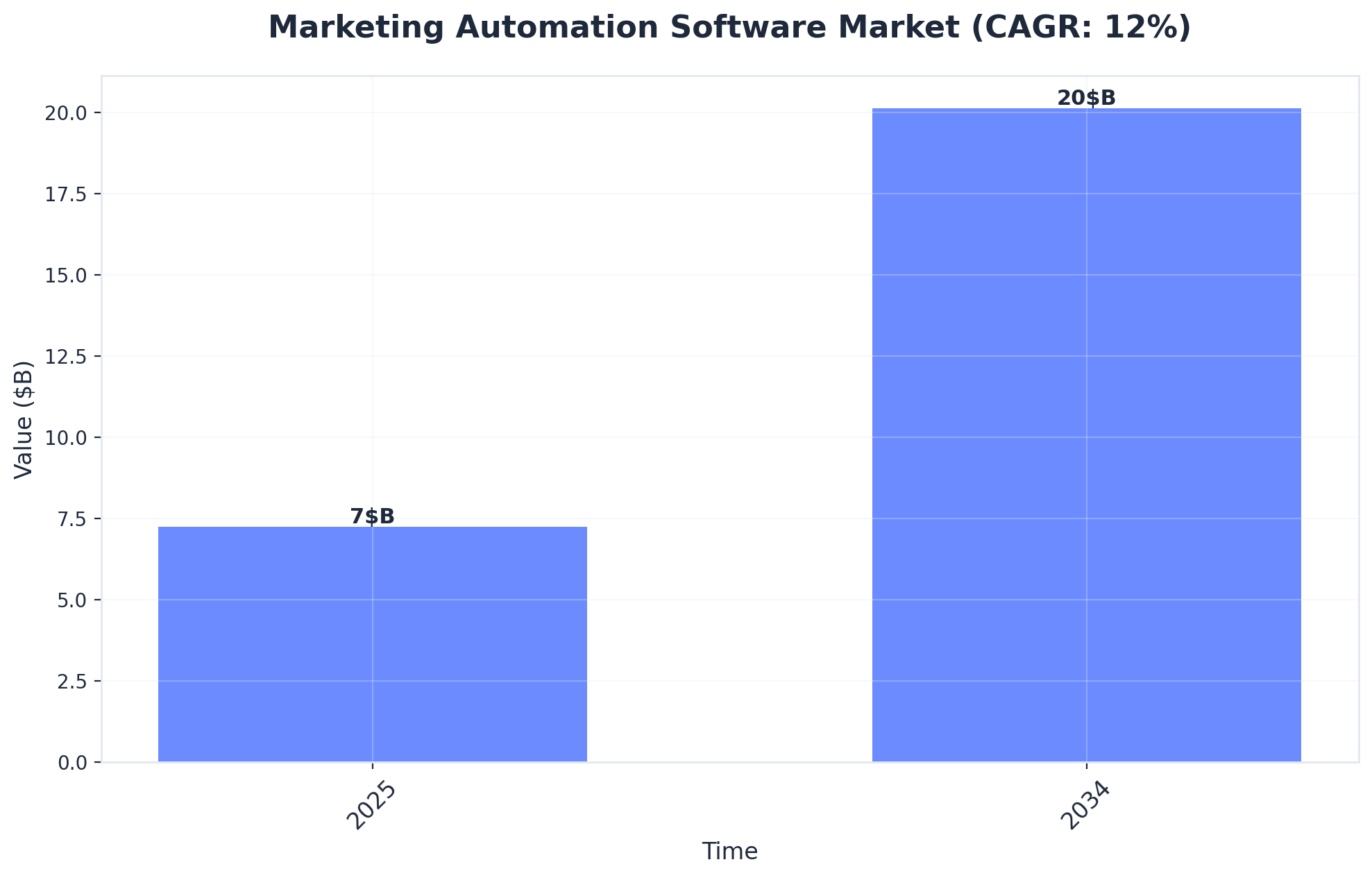 Marketing Automation Software Market (CAGR: 12%)
Marketing Automation Software Market (CAGR: 12%) (Source: Marketing Automation Market Size, Share Report [2026-2034])
Leading content operations teams implement multi-touch attribution models that track content influence across the entire buyer journey. Data from Demand Gen Report indicates that B2B buyers consume an average of 13 content pieces before making purchase decisions, making single-touch attribution models inadequate for accurate ROI calculation. Advanced analytics platforms now correlate specific content assets with pipeline velocity, revealing which topic clusters and content formats accelerate deal progression most effectively.
Performance optimization demands systematic A/B testing across multiple variables. Organizations conducting structured content experiments achieve 47% higher conversion rates than those relying on intuition-based decisions, per research from MarketingProfs. Testing priorities should include headline formulas, content depth variations, and strategic CTA positioning.
For instance, teams testing content depth often discover that 2,500-word articles generate 34% more qualified leads than 1,200-word pieces covering the same topics, despite requiring only 40% more production time. Statistical significance typically requires minimum sample sizes of 1,000 visitors per variation to generate reliable conclusions.
Automation significantly enhances measurement accuracy and optimization speed. Modern content platforms integrate directly with analytics tools to track performance metrics in real-time, eliminating manual data compilation that introduces lag and errors. Teams using automated performance dashboards reduce reporting time by 73% while improving decision-making speed, according to Gartner research. This solution fits teams that need to flag underperforming content automatically, enabling rapid optimization cycles that compound performance improvements over time.
The most sophisticated content operations establish feedback loops connecting performance data directly to production workflows. When analytics reveal high-performing content patterns, those insights inform keyword targeting, content structure, and topic selection for subsequent articles. Research from HubSpot demonstrates that organizations implementing data-driven content iteration cycles achieve 62% higher organic traffic growth year-over-year compared to teams producing content without systematic performance analysis.
Frequently Asked Questions
Conclusion
The evolution from periodic reporting to continuous optimization requires systematic infrastructure that connects measurement to action. Organizations implementing comprehensive analytics frameworks report 43% improvement in content efficiency within six months, according to Content Marketing Institute research. The integration of real-time dashboards, automated testing protocols, and multi-touch attribution creates the foundation for predictable content performance at scale.
Enterprise content operations managers who establish measurement-driven workflows position their teams for sustainable competitive advantage. The combination of automated analytics integration, systematic optimization processes, and strategic performance frameworks enables faster iteration cycles and more reliable outcomes than manual reporting approaches can deliver. Teams that build these capabilities achieve 2.8× higher ROI through the compounding effects of data-informed decision-making across every content touchpoint.
Prioritize this when the shift to performance-optimized content operations transforms marketing from a cost center into a revenue driver. Organizations that prioritize measurement infrastructure gain the ability to identify high-performing patterns and replicate success across campaigns. This systematic approach to content measurement creates differentiation that manual processes cannot match, enabling teams to scale output while improving results.
For enterprise teams looking to operationalize these insights, the Vectoron AI Content Platform replaces the traditional agency model with AI-powered content production. By delivering measurably better outcomes at a fraction of the cost, Vectoron enables marketing teams to scale without adding headcount.
References
- Gartner Marketing Automation & Content Management reports.
- Forrester Wave reports on marketing operations platforms.
- McKinsey studies on marketing productivity and workflow optimization.
- HubSpot State of Marketing Operations reports.
- Content Marketing Institute research on workflow efficiency.
- Harvard Business Review (content operations case studies).
- MIT Sloan Management Review (enterprise automation).
- NIST Cybersecurity Framework (for publishing security standards).
- Statista (publishing automation market data).
- G2 Crowd research (workflow automation tools).