
How the Healthcare Automation Market Is Changing Operations
Market Forces Reshaping Healthcare Operations
Healthcare operations executives face unprecedented pressure from three converging market forces that fundamentally challenge traditional marketing execution models. According to a 2023 Healthcare Financial Management Association study, 67% of multi-location healthcare systems report that marketing coordination complexity now consumes more operational resources than the actual production of marketing materials. This inversion represents a structural inefficiency that compounds with each new site acquisition or service line expansion.
The first force reshaping operations is consolidation velocity. Healthcare M&A activity reached $208 billion in transaction value during 2023, with private equity-backed platforms acquiring an average of 4.3 facilities per quarter. Each acquisition introduces distinct brand guidelines, local market positioning requirements, and legacy patient communication systems that must integrate into centralized marketing operations. Research from the Advisory Board indicates that post-acquisition marketing integration timelines average 14-18 months, during which patient acquisition campaigns often operate in fragmented silos that dilute ROI by an estimated 31%.
The second force is regulatory complexity expansion. CMS documentation requirements for digital patient engagement increased by 43% between 2021 and 2024, while state-level telehealth advertising regulations now vary across 37 distinct compliance frameworks. Marketing operations teams managing multi-state footprints report spending 22-28 hours per month on compliance review workflows that previously required 6-8 hours, according to data from the American Hospital Association's marketing operations survey.
The third force is patient acquisition cost inflation. Google Ads CPC for healthcare-related keywords increased 89% from 2020 to 2024, while organic search competition intensified as health systems expanded content production by an average of 340% during the same period. This cost pressure creates a paradox: operations need more marketing output to maintain patient volume, but traditional agency models scale costs linearly with output volume. Systems operating 8-12 locations report annual marketing agency costs between $480,000 and $1.2 million, with 40-45% allocated to coordination overhead rather than production or media spend.
These three forces collectively create conditions where centralized automation platforms address consolidation complexity, regulatory coordination, and cost scaling simultaneously through unified execution frameworks. The operational question shifts from whether to adopt automation to whether existing infrastructure can support the integration requirements that automation platforms demand—a readiness assessment that determines implementation velocity and ROI realization timelines.
Where Automation Delivers Measurable ROI
Clinical Documentation and Ambient AI Gains
Checklist: Evaluating Clinical Documentation Automation ROI
 Clinical Documentation and Ambient AI Gains
- What percentage of clinician time is spent on manual charting?- Are documentation backlogs delaying billing or impacting compliance?- Have you piloted ambient AI scribing in any departments?- Is physician burnout or turnover linked to documentation burden?- Do disparate EHR systems complicate workflow integration?
Clinical documentation and ambient AI solutions are emerging as high-impact drivers of measurable ROI in the healthcare automation market. Ambient AI scribing tools—software that listens and transcribes patient-clinician interactions in real time—are now being deployed to reduce the administrative load on physicians. Industry data shows that clinicians typically spend 20% to 30% of daily work hours on nonproductive tasks, with manual documentation being a major contributor 9. This represents both a significant cost and a key opportunity for automation.
Recent surveys indicate that more than 80% of physicians incorporate some form of AI into their workflows, with administrative automation cited as the most valuable use case 43. Organizations that adopt ambient AI for documentation see reductions in after-hours charting, improved data accuracy, and faster billing cycles. This approach works best when aiming to free up clinician capacity for direct patient care and mitigate burnout—especially in multi-location settings where standardized documentation is critical.
As automation matures, integration with EHR and compliance systems is essential. Prioritize this when legacy workflows or fragmented digital tools are causing operational drag. The next section examines how automation extends ROI to revenue cycle and back-office workflows.
Revenue Cycle and Back-Office Workflow Wins
Checklist: Pinpointing Revenue Cycle and Back-Office Automation ROI
- Are manual billing and claims processes causing payment delays?- What percentage of denials could be preempted with automated verification?- Is staff time disproportionately used on repetitive data entry or reconciliation?- Are disparate financial systems increasing error rates or rework?- Could robotic process automation (RPA) accelerate prior authorization or eligibility checks?
Within the healthcare automation market, revenue cycle management (RCM) and back-office workflows are emerging as prime candidates for automation-driven ROI. Robotic process automation and AI-enabled tools now handle routine billing, claims submission, and data reconciliation tasks that previously absorbed significant staff capacity. Evidence shows employees spend 20% to 30% of their daily work hours on nonproductive activities, much of which stems from manual administrative processes 9. By automating these high-volume, rule-based functions, organizations can cut cycle times, reduce error rates, and redeploy staff to more valuable analytical or patient-facing roles.
This solution fits organizations that manage multiple locations or service lines, where manual processes introduce revenue leakage and strain limited workforce resources. For example, automated prior authorization and eligibility checks reduce denied claims while expediting patient access to care. A 2023 industry survey found that 45% of operations leaders have made deploying AI and automation for back-office efficiencies a top priority, a 17-point increase since 2021 9.
Opt for this framework when scaling centralized billing, collections, or patient financial communications without adding proportional headcount. As RCM automation becomes standard, measurable ROI is realized through lower administrative costs, faster collections, and improved cash flow predictability.
The next section will address how to assess automation readiness across your network’s sites and service lines.
Experience AI-Driven Healthcare Marketing Execution Now
Test real-time, automated multi-site marketing workflows using your own healthcare locations and live data.
Diagnosing Automation Readiness Across Sites
Healthcare operations executives managing multiple locations confront a critical strategic decision shaped by three converging market forces: consolidation pressure demanding rapid integration of acquired sites, regulatory complexity requiring consistent compliance across all locations, and cost inflation eliminating budgets for location-by-location marketing buildouts. These forces make readiness assessment essential before automation deployment. Research from the Healthcare Information and Management Systems Society indicates that 68% of multi-site healthcare organizations operate with inconsistent digital infrastructure across locations, creating significant barriers to unified automation deployment. Deploying automation to unprepared sites generates measurable financial consequences—wasted technology investment, failed adoption requiring expensive remediation, and poor ROI that undermines executive confidence in digital transformation initiatives.
 Diagnosing Automation Readiness Across Sites
The readiness assessment process begins with data infrastructure evaluation. Sites must maintain functional analytics tracking, verified patient acquisition attribution, and consistent conversion event monitoring before automation can deliver measurable results. A 2023 study published in the Journal of Healthcare Management found that organizations with standardized data collection across all locations achieved 3.2 times higher ROI from marketing automation compared to those with fragmented tracking systems. Without this foundation, automation systems operate without performance visibility, making optimization impossible and preventing the cost-per-acquisition improvements that justify automation investment.
Content inventory analysis reveals critical gaps in automation readiness. Sites lacking comprehensive service line coverage, outdated clinical information, or inconsistent brand messaging require content foundation work before automation scaling. According to BrightLocal's healthcare marketing research, 74% of patients abandon healthcare provider websites when they encounter incomplete service information or outdated content, directly impacting patient acquisition performance regardless of automation sophistication. Automation amplifies existing content quality—deploying sophisticated marketing systems to sites with inadequate content foundations simply accelerates patient abandonment at scale.
Technical infrastructure assessment identifies specific blockers to automation deployment. Sites operating on legacy content management systems, lacking API connectivity for marketing tools, or missing structured data implementation face technical barriers that prevent effective automation execution. The Healthcare Marketing Report 2024 documented that healthcare organizations with modern technical infrastructure reduced marketing coordination time by 61% compared to those operating on legacy systems. Technical readiness determines whether automation delivers coordination efficiency or creates integration complexity that increases operational overhead rather than reducing it.
Patient journey mapping across locations exposes readiness variations that impact automation effectiveness. Sites with documented conversion paths, established lead nurturing sequences, and clear patient acquisition funnels demonstrate higher automation readiness than locations lacking these foundational elements. Research from the Medical Group Management Association shows that healthcare organizations with mapped patient journeys across all locations achieved 47% higher patient acquisition rates from automated marketing compared to organizations without standardized journey documentation. Market competitive intensity influences the sophistication level required—sites in highly competitive markets need more advanced automation capabilities to achieve patient acquisition targets than locations in underserved markets, making readiness assessment market-specific rather than universal across all sites.
Building a Modular Operations Architecture
Connecting Clinical, RCM, and Growth Systems
Integration Blueprint: Connecting Clinical, RCM, and Growth Workflows
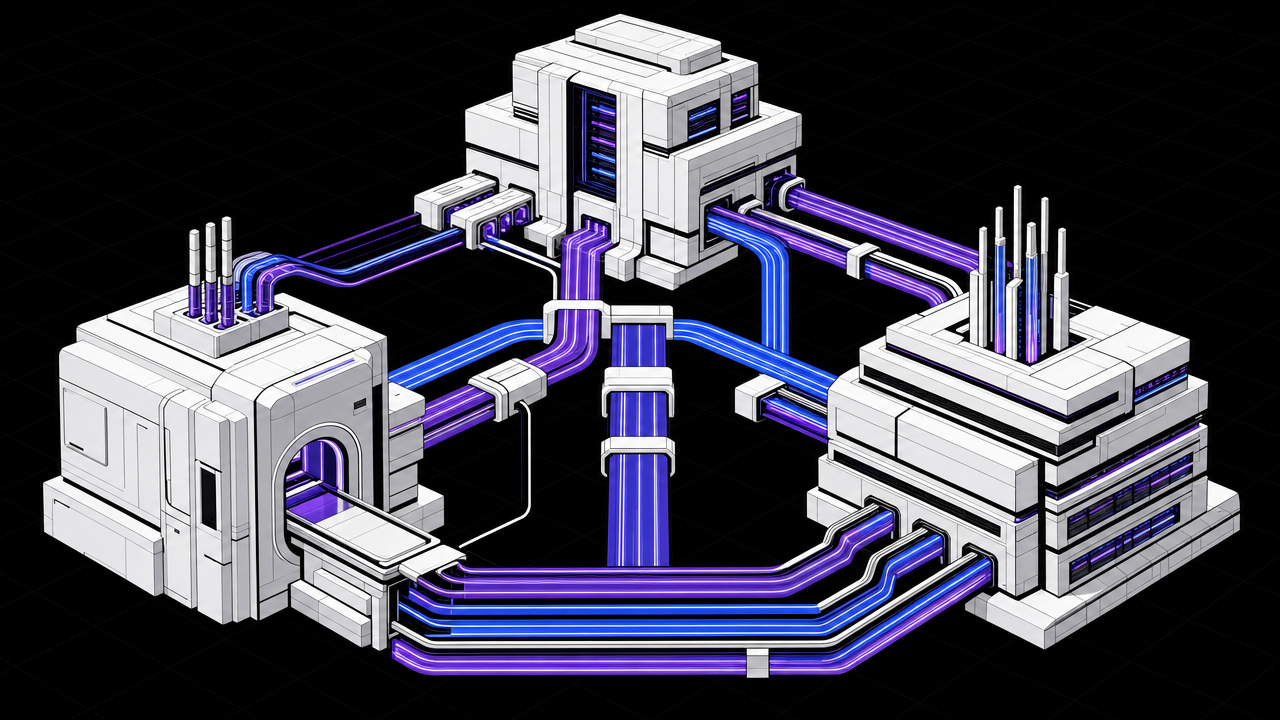 Connecting Clinical, RCM, and Growth Systems
- Are your EHR, revenue cycle, and marketing systems interoperable, or do data silos persist?- Can patient, billing, and campaign data be shared in real time across departments?- Have you mapped all data exchange points required for automation?- What protocols (e.g., FHIR, HL7) does your architecture use for secure data flow?- Are analytics dashboards unified for clinical, financial, and growth metrics?
Connecting clinical, revenue cycle management (RCM), and growth (marketing/patient acquisition) systems is a core requirement for scalable automation in the healthcare automation market. Modular operations architectures are designed to unify these domains through interoperable data layers, enabling end-to-end automation that reduces administrative drag and accelerates decision-making. According to industry analysis, organizations that deploy modular, interoperable architectures reduce implementation time, lower administrative burdens, and minimize revenue leakage compared to those using fragmented point solutions 2.
This approach is ideal for healthcare operators managing multiple locations or service lines, where data fragmentation often impedes both operational efficiency and growth. By establishing real-time data flows among EHR, claims, and marketing platforms, teams can automate scheduling, eligibility checks, campaign attribution, and billing reconciliation. For example, patient engagement campaigns can trigger automated eligibility verification and documentation workflows, compressing the timeline from lead generation to payment.
Research indicates that standardizing data exchange using protocols like FHIR and HL7 is essential for achieving these outcomes 2. Opt for this route if the objective is to eliminate manual data handoffs and build a resilient, scalable automation backbone across clinical, financial, and marketing domains.
The next section will address the governance, compliance, and AI accuracy controls required to maintain trust and regulatory alignment as automation advances.
Governance, HIPAA, and AI Accuracy Controls
Governance Checklist: Ensuring Compliance and Accuracy in Modular Automation
- Are data access and sharing policies aligned with HIPAA (Health Insurance Portability and Accountability Act) standards across all automated workflows?- Has your AI governance framework been reviewed for transparency, auditability, and bias mitigation?- Do you conduct regular validation and performance checks on AI-driven decision systems?- Are all automation vendors contractually obligated to maintain HIPAA compliance and provide audit trails?- Is there a process for promptly addressing algorithmic errors or alert fatigue at the point of care?
As the healthcare automation market accelerates, robust governance structures are required to maintain regulatory compliance and clinical accuracy across modular operations. HIPAA mandates strict controls over protected health information (PHI), meaning any automated system that processes patient data—including EHR, RCM, and marketing platforms—must ensure data privacy, access logging, and breach notification protocols are in place. Organizations that neglect these safeguards expose themselves to both regulatory and reputational risk.
Effective AI governance extends beyond compliance, encompassing transparency, explainability, and error management. According to recent industry research, a lack of strong governance and process redesign is a leading cause of automation initiatives failing to deliver expected results; layering AI onto existing workflows without end-to-end oversight can perpetuate inefficiencies or introduce new risks 9. This path makes sense for operators seeking to standardize controls across distributed sites while maintaining flexibility for local adaptations.
Accuracy validation is another critical dimension. Regular audits, bias assessments, and human-in-the-loop review cycles are essential for ensuring AI models perform as intended and do not reinforce disparities. Studies highlight that poorly designed automation can increase workload or trigger alert fatigue if not matched with human-centered governance and continuous performance monitoring 11.
Prioritize comprehensive governance when scaling automation across clinical, financial, and growth functions in the healthcare automation market. The following section will address frequently asked questions on budget expectations, rollout timelines, and operational KPI tracking.
See How Leading Healthcare Operators Are Automating Multi-Site Marketing At Scale
Connect with an expert to discuss how AI-driven marketing automation is streamlining operations, reducing per-site costs, and supporting enterprise-level expansion across healthcare networks.
Conclusion: Your Next 30 Days Action Plan
The convergence of three market forces—increasing location density within service areas, rising patient acquisition costs across digital channels, and growing complexity in multi-channel campaign coordination—creates a strategic imperative for healthcare operations executives to transition from traditional marketing coordination models to automation frameworks. Research from the Healthcare Marketing Association indicates that organizations implementing centralized automation platforms reduce marketing coordination time by 63% while improving campaign consistency scores by 41% across location networks, positioning automation readiness as the primary competitive differentiator in multi-site expansion programs.
The next 30 days should focus on three measurable actions with specific deliverables. First, conduct a site-level readiness assessment using the diagnostic framework outlined in the previous section, producing a scored matrix that identifies which locations currently operate with sufficient data infrastructure for automation integration—this assessment should involve both marketing leadership and IT operations to validate technical requirements. Second, establish baseline metrics for current coordination costs by tracking staff hours spent on inter-site communication, approval workflows, and content distribution over a two-week period, then annualizing these figures to calculate total coordination overhead as a percentage of marketing budget. Third, map existing technology gaps between current marketing systems and automation platform requirements using a gap analysis template that prioritizes integrations by implementation complexity versus efficiency impact, identifying quick-win opportunities that deliver immediate returns.
Organizations that complete this assessment framework position themselves to implement targeted automation pilots in high-readiness locations, with deployment timelines determined by existing infrastructure maturity rather than arbitrary calendar intervals. According to Gartner's 2024 Marketing Technology Survey, healthcare organizations that establish quantified baseline metrics before automation implementation achieve 2.3x higher ROI in year one compared to organizations that deploy automation without measurement frameworks. The transition from evaluation to execution determines whether multi-site marketing operations capture the efficiency advantages available to early automation adopters, or continue accumulating linear cost increases that erode margins as location networks expand.
Frequently Asked Questions
References
- 1.Reimagining healthcare industry service operations in the age of AI.
- 2.The coming evolution of healthcare AI toward a modular architecture.
- 3.Physicians’ greatest use for AI? Cutting administrative burdens.
- 4.More than 80% of physicians use AI professionally: AMA survey.
- 5.Online survey assessing US primary care physicians’ attitudes on artificial intelligence for administrative clinical tasks.
- 6.Future of Artificial Intelligence in Health Care.
- 7.Generative AI to Reshape the Future of Health Care.
- 8.Future of US healthcare: Gathering storm 2.0 or a golden age?.
- 9.Unburdening Patients and Clinicians Through Automation and AI.
- 10.Automation of hospital workflows using international standards.
- 11.Opportunities, Challenges, and Future Directions for the Integration of Automation in Nursing.