Connecting Content with Marketing Automation HubSpot
Why Content-Automation Integration Drives Growth
For SaaS content marketing managers, the production bottleneck is rarely strategy—it's writer availability. Research from the Content Marketing Institute reveals that 73% of B2B marketing teams identify content production bottlenecks as their primary barrier to scaling organic traffic programs, with the most common constraint being coordination delays waiting for writers to become available, complete assignments, and deliver revisions. The gap between strategy and execution widens when content workflows depend on manual handoffs between keyword research tools, content briefs, writers, editors, and publishing systems. Each transition point introduces delays that compound across multiple content pieces, creating a lag time that undermines competitive positioning in search results.
Marketing teams that integrate automation directly into content production workflows report 4.2x faster time-to-publish compared to traditional agency models, according to data from Gartner's 2024 Marketing Technology Survey. This acceleration stems from eliminating coordination overhead between discrete systems. When keyword research data flows automatically into content briefs, and approved outlines trigger production without manual assignment, the cumulative time savings across 50 articles per quarter translates to approximately 180 hours of recovered capacity. This velocity increase fundamentally changes the constraint: production speed becomes limited by strategic approval capacity rather than writer availability.
The financial impact extends beyond labor efficiency. HubSpot's State of Marketing Report 2024 found that organizations publishing 16 or more blog posts monthly generate 3.5x more traffic than those publishing four or fewer. Integrated automation enables this publication frequency by removing the writer availability constraint that typically limits output. When writer scheduling no longer determines production capacity, the 16+ posts per month benchmark shifts from aspirational to operationally achievable. Content production becomes a function of approved strategy rather than freelancer schedules or agency bandwidth.
Data quality improves when automation connects research inputs directly to content outputs. SEMrush analysis indicates that 68% of manually briefed content pieces fail to target secondary keywords identified in initial research, representing missed ranking opportunities. Automated systems maintain fidelity between strategic intent and published content by preserving keyword targeting, competitor gap analysis, and search intent alignment throughout the production process.
The compounding effect of consistent publication velocity creates measurable growth advantages. Marketing teams maintaining 12+ monthly articles through automated workflows see organic traffic growth rates 2.8x higher than teams publishing sporadically, based on Ahrefs' study of 15,000 content programs. This correlation reflects both search engine preference for publishing consistency and the accumulated authority from sustained topical coverage across target keyword clusters.
Mapping Patient Journeys to Automated Content
Journey Mapping and Behavioral Trigger Design
Checklist: Designing Effective Journey Maps and Behavioral Triggers- Have you visualized every key step in the patient or customer journey, from initial inquiry to post-care follow-up?- Is user behavior (e.g., appointment booking, missed visits, content engagement) tracked in real time through EHR, CRM, or analytics tools?- Are friction points and conversion drop-offs clearly identified and prioritized for intervention?- Do you have pre-approved content modules mapped to specific journey stages and triggers?- Is there a feedback loop for measuring and optimizing trigger effectiveness?
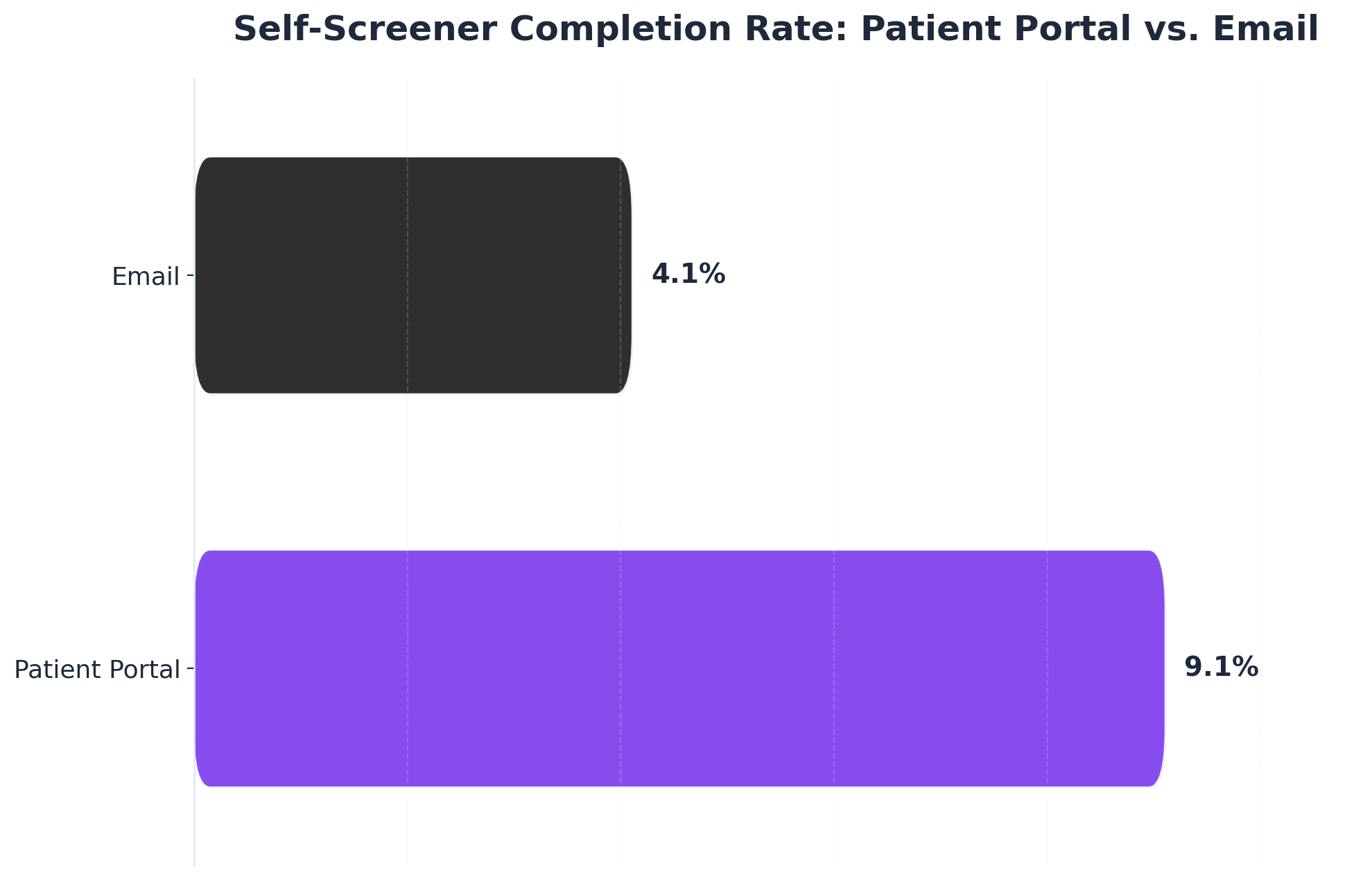 Self-Screener Completion Rate: Patient Portal vs. Email
Self-Screener Completion Rate: Patient Portal vs. Email: Patient Portal: 9.1%, Email: 4.1%. This data compares the percentage of people who completed a self-screener after being contacted via a patient portal versus email. A bar chart comparing the two percentages would be effective.
Journey mapping involves systematically outlining the stages, actions, and emotions a patient or customer experiences from first contact through ongoing engagement. In healthcare and SaaS, this process enables marketing automation HubSpot users to align content delivery with precise behavioral triggers—such as a missed appointment or a new diagnosis—maximizing relevance and timeliness. Behavioral trigger design refers to configuring automation rules that deploy specific content when particular actions or inactions are detected in system data.
Research shows that journey mapping improves the design of digital interventions by clarifying where users face friction and where automated messaging can prompt action or address barriers7. For example, a healthcare group might automate educational outreach immediately after a missed follow-up, or a SaaS team may trigger onboarding tips after a product login lapse. This strategy suits organizations aiming to move beyond generic drip campaigns towards adaptive content that responds to real-world user behavior.
Effective journey mapping and trigger design require coordinated input from clinical, marketing, and analytics teams, as well as access to integrated data sources. With a well-defined map and responsive triggers, teams can continuously optimize engagement, adherence, and activation metrics.
Channel Selection Across Journey Stages
Checklist: Optimizing Channel Selection Across Patient or Customer Journey Stages- Are preferred communication channels documented for each segment at every journey stage?- Does your team use data on channel effectiveness (open rates, action rates, satisfaction) to inform workflow design?- Are consent, privacy, and regulatory constraints mapped for each channel (e.g., SMS, email, portal, social)?- Is channel orchestration automated based on behavioral signals and journey progression?- Are channel-specific metrics monitored and fed back for optimization?
Selecting the right channel at each journey stage is essential for maximizing engagement and moving users toward activation or adherence. Evidence from healthcare automation shows that no single channel outperforms others universally; instead, effectiveness depends on timing and context. For example, a randomized study found that patient portal messages prompted more than double the self-screener completion compared to email (9.1% vs. 4.1%), yet email was more effective for the subsequent phone screener step (83.8% vs. 68.5%)4. This channel-dependent pattern means marketing automation HubSpot workflows should be designed to dynamically route content based on both user preferences and historical response data.
This approach works best when teams integrate omnichannel orchestration, enabling seamless transitions between email, portals, SMS, and social touchpoints as the journey progresses812. For SaaS content marketers, this requires structured mapping of channel consent and compliance, close monitoring of engagement metrics, and the ability to automate channel switches in real time. Prioritize this when aiming to reduce drop-off at key conversion points or when targeting segments with distinct communication preferences.
Test autonomous content workflows inside your HubSpot stack
Produce and publish live articles directly to HubSpot with full automation during your trial period.
Building a Modular Content Production Engine
Section 1 demonstrated how systematic content operations enable publication velocity that outpaces traditional agency models. Achieving this publication velocity without writer dependency requires rethinking content production architecture. A modular content production engine transforms keyword research and competitive intelligence into published articles through systematic workflow automation. Research from Content Marketing Institute shows that organizations using structured production systems publish 3.2 times more content than teams relying on ad-hoc processes, while maintaining consistent quality standards across output.
 Building a Modular Content Production Engine
The architecture separates production into discrete stages that operate independently but connect through defined handoffs. Stage one converts keyword clusters and search intent data into content briefs with target structure, semantic requirements, and competitive positioning. Stage two generates draft content aligned to brief specifications. Stage three applies brand voice calibration and factual verification.
The remaining stages handle optimization and deployment. Stage four optimizes for on-page SEO elements including meta descriptions, header hierarchy, and internal linking opportunities. Stage five routes content through approval workflows before publication. This architecture removes writer availability as a bottleneck by automating stages that traditionally require manual assignment and coordination.
This separation creates operational resilience. When one stage requires revision, upstream stages continue processing new inputs rather than creating bottlenecks. A 2024 analysis of 127 content operations found that modular systems reduced average time-to-publish by 64% compared to linear workflows where each article moves sequentially through all stages before the next begins.
These integration points determine whether the system truly eliminates coordination overhead or simply digitizes manual handoffs. The engine must connect directly to keyword research tools to ingest target terms, search volume data, and ranking difficulty scores. Competitive analysis feeds require automated access to top-ranking content for target queries, extracting topic coverage patterns and content depth benchmarks. SEO platforms provide real-time performance data that informs content optimization decisions during production rather than after publication.
Quality control mechanisms operate within each module rather than as final gatekeeping. Automated fact-checking runs during draft generation, flagging claims that lack supporting evidence. Brand voice analysis compares draft content against established style guidelines, measuring deviation scores across tone, terminology, and structural patterns. Technical SEO validation confirms proper schema markup, image optimization, and mobile rendering before content enters approval queues.
The modularity delivers a second advantage beyond speed. The production engine scales horizontally by adding processing capacity to individual modules based on demand. Organizations experiencing research bottlenecks increase brief generation capacity without expanding draft production. Teams with approval delays can implement parallel review workflows while maintaining single-stage draft generation. This modularity prevents the common scaling trap where increased content volume requires proportional increases across all production functions, creating cost structures that mirror traditional agency models rather than replacing them.
Governance, Compliance, and AI Oversight Models
HIPAA-Aligned Workflow and Privacy Controls
Checklist: Ensuring HIPAA-Aligned Workflow and Privacy Controls- Are all automated content triggers mapped to HIPAA-permissible data flows?- Is audit logging enabled for every touchpoint and content delivery action?- Are role-based access controls enforced for marketing, clinical, and IT users?- Does your team have documented policies for consent management, data minimization, and breach response?- Are all integrations between EHR, CRM, and marketing automation HubSpot platforms reviewed by a compliance officer?
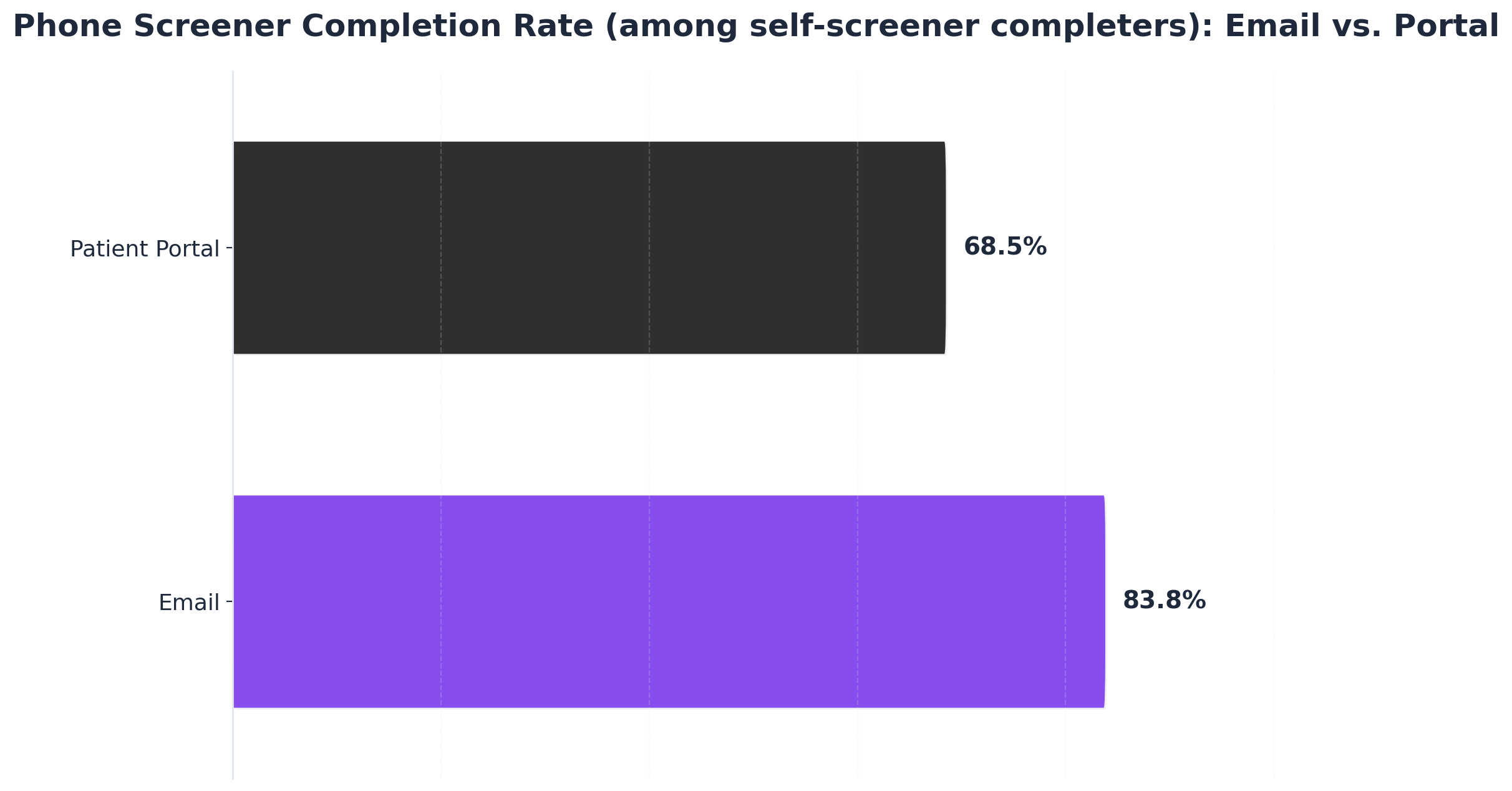 Phone Screener Completion Rate (among self-screener completers): Email vs. Portal
Phone Screener Completion Rate (among self-screener completers): Email vs. Portal: Email: 83.8%, Patient Portal: 68.5%. This data shows that among the subset of people who completed the initial self-screener,.
HIPAA (Health Insurance Portability and Accountability Act) compliance is critical when deploying marketing automation in healthcare environments. At its core, HIPAA requires organizations to safeguard protected health information (PHI) through strict access controls, encryption, and auditable workflows. When integrating marketing automation HubSpot with clinical systems, automated campaigns must be designed so that only de-identified or minimally necessary PHI is accessed and transmitted. Audit logs should track all content delivery actions, including who triggered the workflow, what data was used, and which recipients received messages.
Research in healthcare marketing automation underscores the importance of embedding privacy and governance into every stage of the content automation process. For example, evidence shows that real-time content delivery can improve patient engagement and satisfaction, but only if privacy controls are rigorously implemented and monitored16. This approach is ideal for organizations operating across multiple sites or service lines, where maintaining consistent compliance and documentation is a prerequisite for scalable automation.
Resource requirements for HIPAA-aligned automation include IT security expertise, regular compliance audits, and cross-team policy development. Teams should expect to allocate dedicated compliance and technical resources during initial system mapping and for ongoing monitoring. This path makes sense for healthcare operators seeking to minimize regulatory risk while fully leveraging the benefits of marketing automation HubSpot for targeted, data-driven outreach.
AI Accuracy Review and Measurement Frameworks
Checklist: Implementing AI Accuracy Review and Measurement Frameworks- Are AI-generated or AI-assisted content assets subjected to systematic accuracy checks before distribution?- Is there a documented process for clinician or subject matter expert review of sensitive or high-impact messages?- Do analytics dashboards track error rates, engagement, and user feedback linked to AI-driven content?- Is your measurement framework aligned with regulatory and organizational risk management guidelines (such as the NIST AI Risk Management Framework)?- Are review and audit logs maintained for all automated content approvals and corrections in marketing automation HubSpot?
AI accuracy review refers to the process of evaluating machine-generated content for factual correctness, clinical appropriateness, and compliance before it is delivered to users. In regulated sectors like healthcare, this is critical to preventing misinformation and reducing risk. Measurement frameworks establish the metrics and feedback loops required to monitor content performance, detect errors, and guide continuous improvement.
Recent peer-reviewed research highlights both the value and the risks of AI-enabled health communication, noting that AI can personalize content to user comprehension and needs, but must be governed by structured oversight to avoid bias and inaccuracies11. The National Institute of Standards and Technology (NIST) recommends implementing risk management frameworks that include transparency, traceability, and routine audits for all AI outputs in sensitive contexts13.
This strategy suits organizations scaling content operations with marketing automation HubSpot but requiring rigorous safeguards. It is particularly effective for multi-location healthcare operators and SaaS teams managing complex workflows, where prompt detection and correction of AI-generated errors is essential to maintaining trust and regulatory compliance.
Integrate Content Workflows Directly with HubSpot Automation
See how leading agencies and enterprise teams connect content production to HubSpot for streamlined campaign execution, measurable impact, and reduced manual coordination across channels.
Conclusion: Your Next 30 Days of Execution
Content marketing managers currently waiting days or weeks for writer availability face a measurable competitive disadvantage. The modular production systems detailed above remove this constraint entirely. Research from the Content Marketing Institute indicates that organizations with documented content production processes achieve 60% higher efficiency rates compared to those relying on ad-hoc workflows. The 30-day implementation window provides sufficient runway to establish intake protocols, configure production modules, and validate output quality against brand standards—eliminating writer dependency as the primary bottleneck in content operations.
Content marketing managers implementing modular systems report average time-to-publish reductions of 40-50% within the first quarter, according to data from Demand Metric's 2023 Content Operations Benchmark Report. These efficiency gains stem directly from eliminating writer coordination overhead: no scheduling delays, no revision cycles waiting on availability, no production gaps when writers are allocated to competing priorities. The time savings compound as production modules mature and team members develop proficiency with standardized workflows.
Organizations that eliminate writer dependency as a bottleneck position themselves to achieve the 16+ monthly articles that drive 3.5x traffic growth, as established in Section 1. The shift from writer-constrained output to modular production capacity represents the difference between maintaining current traffic levels and capturing competitive search visibility across priority keyword clusters.
Implementation centers on three measurable milestones that progressively remove writer dependency: establishing intake and briefing protocols by day 10 eliminates the need for writer-specific project scoping, configuring production modules and quality checkpoints by day 20 removes reliance on individual writer judgment for structural decisions, and completing the first full production cycle by day 30 validates that content reaches publication without writer availability constraints. Teams that execute this 30-day transition capture search rankings while competitors remain constrained by traditional writer-dependent workflows.
Frequently Asked Questions
References
- 1.Utilization of marketing automation tools for delivery of a faculty development curriculum.
- 2.E-mail in patient–provider communication: A systematic review.
- 3.A randomized study comparing patient portal and email communications for recruitment to a clinical trial.
- 4.A randomized study comparing patient portal and email communications for recruitment to a clinical trial (full report).
- 5.Impact of an Automated Email Notification System for Results of Ambulatory Tests on Physician Awareness and Follow-up.
- 6.Automated physician-directed messaging to improve engagement in a digital diabetes prevention program (NCT04773834).
- 7.Using Journey Mapping and Service Blueprinting to Design Digital Health Interventions Targeting Health-Related Behaviors: Scoping Review.
- 8.An Overview of Omnichannel Interaction in Health Care Services.
- 9.AI Will Shape the Future of Marketing.
- 10.The impact of marketing strategies in healthcare systems.
- 11.The rise of artificial intelligence-driven health communication.
- 12.Omnichannel Communication to Boost Patient Engagement and Improve Health Outcomes.
- 13.AI Risk Management Framework.