
Key Takeaways
- SEO labor is inverting rather than disappearing: agents now own monitoring, analysis, and production, while humans move up to decisioning, brand, and governance across a single approval surface.
- Treat SEO as five distinct layers — monitoring, analysis, production, decisioning, and governance — and automate them in that order instead of making one binary automate-or-not call.
- Measurement must shift from rank and clicks to AI-answer visibility, entity authority, and assisted conversion, since AI summaries are projected to exceed 75% of Google searches by 2028 4.
- Over the next two quarters, audit retainer tasks against the five-layer model, stand up AI-search tracking, then consolidate agents under one approval surface with NIST-aligned governance built in 8.
The Labor Mix Is Inverting, Not Disappearing
SEO is not being eliminated by AI. The work is being reassigned. Tasks that once filled a retainer agency's weekly status report — keyword tracking, log file review, on-page audits, schema deployment, draft production — are migrating to agentic systems that run continuously and at marginal cost. What stays human is narrower and more valuable: market positioning, brand voice, editorial judgment on regulated topics, and the cross-channel decisions that turn organic visibility into pipeline.
The macro evidence is hard to argue with. McKinsey estimates generative AI could add $2.6 to $4.4 trillion in annual economic value across 63 use cases, with marketing and sales among the functions most exposed to automation gains 2. Deloitte's 2026 enterprise survey describes the same pattern from the buyer side: companies are moving from isolated experiments to embedding AI inside customer-facing workflows, including content and search operations 7. The direction of travel is set.
What growth leaders often miss is the shape of the change. This is not a one-for-one swap of an SEO manager for a chatbot. It is an inversion of where labor sits in the stack. Agents now handle the volume tier — monitoring tens of thousands of queries, generating entity-aware drafts, flagging technical regressions — while human strategists move up to decisioning, governance, and the parts of search behavior that AI cannot yet model: buying committees, sales cycles, and brand equity.
The question for any Head of Growth is no longer whether to automate SEO. It is which layer to automate first, and what to keep under human control.
What Agents Already Do Better Than Retainer Teams
The honest comparison is not between an AI agent and a senior SEO strategist. It is between an AI agent and the third-week deliverable from a mid-tier retainer team: a technical audit spreadsheet, an entity gap analysis, twelve content briefs, and a backlog of internal link suggestions. That bundle is where agents have already pulled ahead, because the underlying work is pattern recognition and structured output at volume — exactly what Harvard's analysis of marketing automation flags as the first wave of displaced tasks. Copywriting, data mining, and visual creation that used to consume hours now run in minutes, freeing humans for judgment work 1.
Four task clusters illustrate the gap:
- Technical monitoring is the clearest: an agent watches Search Console, crawl logs, and Core Web Vitals across every URL continuously, not on a monthly cadence.
- Entity extraction and schema deployment, which used to require a developer ticket, now run as automated passes against a knowledge graph.
- Draft production at the brief-to-first-draft stage has collapsed from days to hours, with consistent application of internal linking rules and on-page structure.
- Competitor SERP analysis, once a manual exercise in tab-juggling, runs as a scheduled diff against a tracked set of queries.
None of this means a retainer team produces worse strategy. It means the retainer team is paid mostly for production hours that no longer cost what they used to. When an account manager's weekly status report consists of work an agent can do overnight, the economics of the retainer collapse before the strategy conversation even starts.
The labor that survives in-house, or in higher-value agency relationships, is the work agents still do poorly: positioning a product against a sales motion, deciding which entity territory is worth owning, and approving content where a regulator, a medical reviewer, or a brand standard has final say. That is a smaller surface than the old retainer covered, and it is the surface a modern SEO operating system should expose to humans by default.
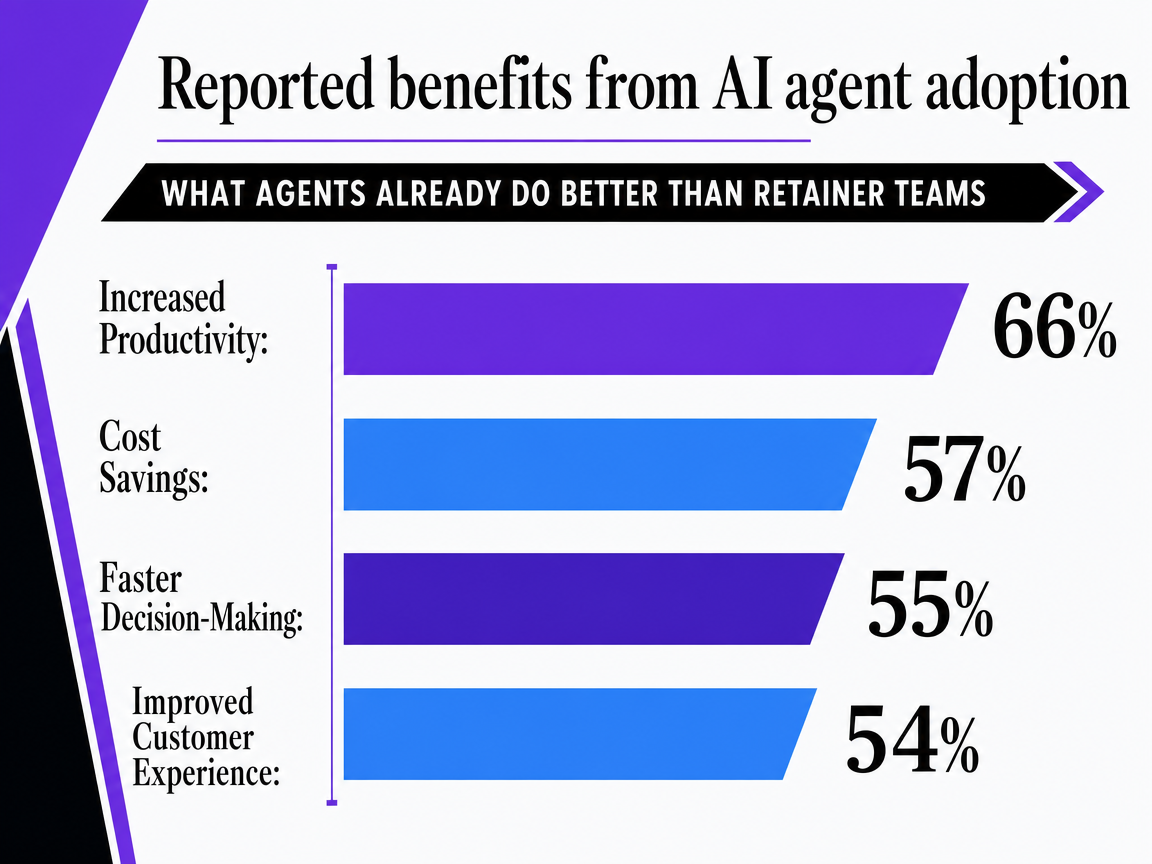 Reported benefits from AI agent adoption
A 2025 PwC survey of senior executives shows the percentage of AI agent adopters who report seeing specific business benefits.
The Five-Layer Automation Model for Modern SEO
A binary frame — automated or not — hides what is actually happening inside an SEO program. The work splits into five layers, each automating at a different speed: monitoring, analysis, production, decisioning, and governance. Treating them as one decision is how growth teams either overbuy point tools or underestimate where humans still belong. The model below maps each layer to who should own it now, based on what agents reliably do well and where their failure modes still demand a person in the loop.
Monitoring and Analysis: Fully Agent-Owned
The bottom two layers belong to agents without qualification. Monitoring is continuous data capture across Search Console, GA4, crawl logs, Core Web Vitals, SERP positions, and AI-answer citations. Analysis is the pattern detection that turns that stream into ranked issues: a sudden index drop on a service page, a competitor surfacing inside an AI Overview, a thin entity coverage gap on a high-intent query cluster.
Neither layer benefits from human pacing. A monthly audit cycle, the rhythm most retainers still run on, leaves three to four weeks of unflagged regressions on the table. McKinsey's 2025 survey shows that organizations capturing real value from AI consistently embed it into business processes rather than running it as a separate analytics function 3. The implication for SEO is direct: monitoring and diagnostic analysis should run as always-on services, not as deliverables.
Human time spent reading these dashboards is mostly waste. The job is reviewing what the agent has already flagged, not finding the issue.
Production and Entity Optimization: Agent-Led, Human-Reviewed
The middle layer is where most retainer hours used to live and where the labor inversion is most visible. Content drafts, internal linking passes, schema and entity markup, on-page restructuring, meta and heading optimization, FAQ extraction — all of it now runs as agent output reviewed by a human editor or subject-matter approver. Harvard's analysis of marketing automation places these exact tasks — copywriting, data mining, structured asset creation — in the first wave of work that collapses from hours to minutes once AI is embedded in the workflow 1.
Entity optimization deserves its own callout. Ranking in AI answers depends less on classic keyword density and more on whether a brand's products, people, locations, and service lines are unambiguously defined and linked across a site's knowledge graph. Agents handle that mapping at a scale no human team can match: extracting entities from existing content, deduplicating mentions, generating consistent schema, and watching for drift when new pages publish.
What stays human is approval, not production. A medical reviewer signs off on clinical accuracy. A brand editor catches voice misses. A compliance lead confirms claim language. The volume of these reviews is a fraction of what retainer teams used to bill for drafting.
Decisioning, Brand, and Governance: Human-Owned
The top two layers stay with people, and a Head of Growth who confuses this point will overspend on automation and underinvest in judgment. Decisioning is the choice of which entity territory to own, which content clusters map to revenue, how SEO interacts with paid, lifecycle, and sales motions, and when to walk away from a query because the AI answer will eat the click regardless. Brand is the voice, the point of view, the editorial standards that make content recognizable as the company's, not generic. Governance is the control system that decides what agents are allowed to publish, under what review, with what audit trail.
These are not romantic carve-outs for human work. They are the layers where AI failure modes are most expensive. A draft with a hallucinated statistic is recoverable. A brand voice that drifts across two thousand auto-generated pages is not, and a regulatory miss in a healthcare context can cost more than a year of organic gains. Deloitte's 2026 enterprise data shows that as companies scale AI in customer-facing functions, the binding constraint shifts from capability to governance and ROI measurement 7.
The operating-model implication is concrete: build a single human approval surface that spans every agent's output, and staff it with strategists rather than producers.
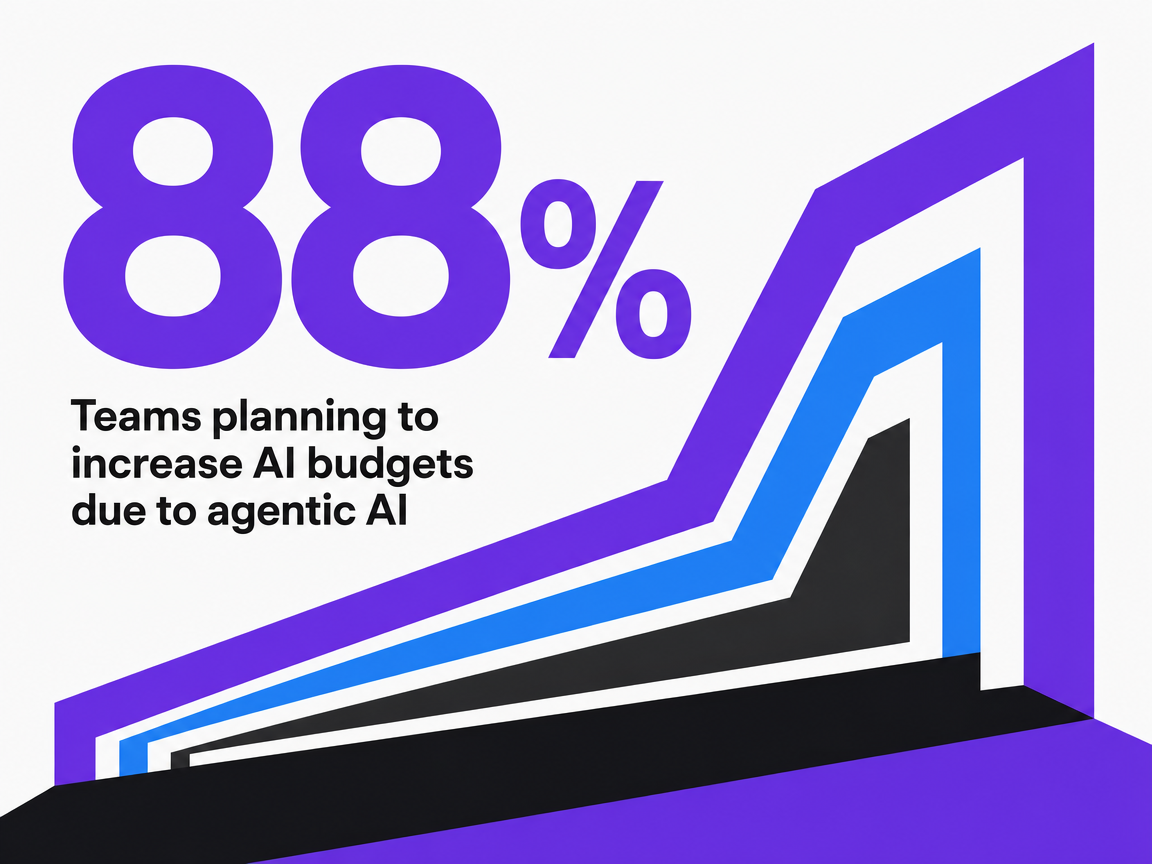 Teams planning to increase AI budgets due to agentic AI
Teams planning to increase AI budgets due to agentic AI
Experience Automated SEO Workflows in Action
Test end-to-end AI-driven SEO execution and publish live assets risk-free for seven days.
Why AI Search Forces a New Measurement Stack
The reporting model most SEO programs still run on — rank tracking, organic sessions, click-through rate — was built for a SERP that no longer behaves the way it used to. When the answer appears above the blue links, the click is not the conversion event it used to be, and the rank is not the visibility signal it used to be. Growth teams that keep optimizing for the old dashboard are measuring a smaller and smaller share of what their content actually does.
McKinsey's analysis of AI search puts numbers on the gap. Roughly 50% of consumers already use AI search, AI summaries are projected to exceed 75% of Google searches by 2028, and AI search could influence about $750 billion in consumer spending in that window. Yet only about 16% of brands systematically track how they perform inside AI-generated answers 4. Pew's 2025 survey of U.S. adults reinforces the consumer side: 65% report at least sometimes encountering AI summaries when they search, with mixed but rising engagement 9.
The implication for measurement is direct. A modern SEO stack needs to report on three things the old stack does not:
- AI-answer visibility: how often the brand's products, entities, and content are cited inside AI Overviews, Perplexity answers, ChatGPT search responses, and similar surfaces, and on which queries.
- Entity authority: whether the company's people, locations, and service lines are recognized as distinct entities by the systems generating those answers, not just as keywords on a page.
- Assisted conversion contribution: how organic and AI-search exposure influence pipeline through multi-touch attribution, since the click count alone now understates value on informational and mid-funnel queries.
This is where the labor inversion shows up in reporting. Tracking AI-answer citations across thousands of queries, deduplicating entity mentions, and stitching exposure to downstream pipeline are agent-scale problems. A retainer team running monthly rank exports cannot produce this view at the cadence decisions require. A Head of Growth who wants to defend SEO budget through 2026 needs a measurement layer that surfaces AI-search share and entity authority alongside the legacy metrics, and treats rank as a diagnostic input rather than the headline number.
The Scaling Gap Most Growth Teams Underestimate
Buying agents is not the same as scaling them. The pattern most growth teams fall into is to license three or four AI tools — a content generator, a rank tracker with AI features, a technical crawler, maybe a brief builder — and call the program automated. The output is faster drafts and prettier dashboards. The operating model underneath is unchanged.
McKinsey's 2025 global AI survey puts the gap in sharp relief. Roughly 66% of organizations have not yet scaled AI across the enterprise, remaining stuck in pilots and isolated use cases, while only about 34% have moved AI into core business processes with KPIs attached 3. The companies capturing real value are not the ones with the most tools. They are the ones that embedded AI inside workflows, connected it to performance data, and held it accountable to outcomes.
For SEO specifically, the scaling failure has a predictable shape. A content agent produces drafts, but the briefs still come from a human strategist working from last quarter's keyword export. A technical agent flags issues, but the tickets queue behind a quarterly sprint review. A rank tracker watches AI Overviews, but no one has decided which entity territories the brand will defend. Each agent works. The system does not, because nothing connects monitoring to analysis to production to approval in a single loop.
This is the difference between automating tasks and operating a system. A point tool replaces an hour of work. An operating system changes how decisions get made, what data flows where, and which humans see what at which stage. Growth teams that want durable gains from SEO automation should stop evaluating individual tools against feature checklists and start evaluating whether their stack closes the loop from data to decision to published asset to measured outcome — without a human courier between every step.
The practical test is simple. If an account manager, a project manager, or a weekly status meeting is still the connective tissue between agents, the program is automated in name only.
An AI-First SEO Operating System: Blueprint and Economics
The blueprint that follows describes how the five-layer model gets built in practice. It is not a tool stack. It is an operating system: a set of specialist agents wired into the same data sources, producing into the same approval surface, against a single account-level plan rather than a stack of per-site retainers.
Specialist Agents Under a Single Approval Surface
The architecture has two halves. The first is a set of specialist agents, each scoped to a discipline that used to occupy a full-time role on a retainer team:
- a content strategist agent that owns brief generation, draft production, and on-page structure;
- a technical SEO agent that watches crawl health, indexation, and Core Web Vitals;
- an entity and schema agent that maintains the knowledge graph across products, people, locations, and service lines;
- a backlink agent that runs prospecting and outreach;
- and a conversion agent that ties organic exposure to downstream pipeline signals.
Each runs continuously against the same account-level data — Search Console, GA4, SEMrush, ad platform exports — instead of pulling reports on a monthly cadence.
The second half is the human layer, and it is deliberately narrow. A single approval surface sits above the agents and exposes the decisions that still belong to people: which content goes live, which technical changes get pushed, which entity territories the brand will defend, which outreach lists get worked. McKinsey's enterprise research argues that durable AI value comes from integrating applied and generative AI inside data products rather than running parallel tools that never share state 6. The same logic applies to SEO. When every agent writes to and reads from the same account model, the strategist approves work in minutes that a retainer team would have packaged into a weekly status call.
The headcount math follows from the architecture. A program that used to require a project manager, two content producers, a technical specialist, and an account lead now requires one or two strategists making approval decisions across the same surface.
If You Manage Multiple Sites or Locations: Retainer vs Operating System
This section narrows to a specific operator profile: growth leaders responsible for more than one site, more than one location, or more than one service line under a single brand. Multi-location healthcare operators, SaaS companies with regional subdomains, and agencies running portfolios of client accounts all hit the same wall with traditional retainers — the model bills per site, scopes per site, and reports per site, while the strategy decisions are increasingly account-level.
The economics diverge sharply at scale. A retainer agency typically charges a monthly fee per site or location, with separate scopes of work, separate account managers, and separate reporting cycles. An AI-first SEO operating system runs a single account plan across the full footprint, with agents executing in parallel and one approval queue feeding every property.
| Dimension | Traditional Retainer Agency | AI-First SEO Operating System |
|---|---|---|
| Scope unit | Per site or per location | Account-level, all sites and service lines |
| Coordination overhead | Account managers, weekly status, manual handoffs | Single approval surface, no project manager layer |
| Content production cadence | Monthly or biweekly briefs, sequential drafting | Continuous brief-to-draft, parallel across properties |
| Technical SEO monitoring | Monthly or quarterly audits | Always-on, regression-flagged in hours |
| Pricing structure | Variable monthly retainer, scaled by site count | Platform subscription at the account level |
The point is not that one line item costs less than another. It is that the retainer model charges for coordination that the operating system removes. When a strategist approves twenty content pieces across eight locations in a single queue, the per-location overhead — the status meetings, the duplicated audits, the recycled briefs — stops existing. That is the economic case for treating SEO as a system to run, not a service to buy. Platforms built for this multi-site reality, including Vectoron, price at the account level for the same reason.
See What Autonomous SEO Execution Looks Like in Practice
Request a walkthrough of an AI-powered system coordinating SEO, content, and PPC—benchmarked to outperform manual agency models for multi-location growth teams.
Governance: The Control Layer Most SEO Automation Skips
Agents that publish at scale need a control layer, and most growth teams build that layer last instead of first. The risk profile of automated SEO is not abstract. A drifted brand voice across a thousand pages, a hallucinated clinical claim on a service-line landing page, an entity mismatch that contaminates a knowledge graph, or an outreach email that misrepresents a product are all production-volume problems that scale at the same rate as the content itself.
The NIST AI Risk Management Framework gives growth teams a usable backbone. Its four functions — govern, map, measure, and manage — translate directly to an SEO operating system: define who is accountable for what an agent publishes, map where each agent touches customer-facing surfaces, measure output against accuracy and brand standards before it ships, and manage incidents when something gets through 8. The framework is sector-agnostic on purpose, which means a Head of Growth has to translate it into specific controls: approval queues for regulated claims, version history on every agent-generated asset, red-team prompts run against new content templates, and a kill switch that pauses publishing when a metric drifts outside tolerance.
The practical mistake is treating governance as legal review at the end. Built correctly, it sits inside the same approval surface the strategists already use, with risk flags raised by the agents themselves before a human ever sees the draft.
What Growth Leaders Should Do in the Next Two Quarters
The restructure does not require a moonshot. It requires sequencing. Heads of Growth who try to swap the entire model at once tend to stall on procurement and change management; the teams making real progress are moving in two quarters of focused work.
- Quarter one is a measurement and inventory exercise. Audit every retainer line item and internal SEO task against the five-layer model and mark which ones are still being done by humans on a monthly cadence. Stand up AI-search visibility tracking alongside the legacy rank and traffic reports so the team has a baseline before the SERP shifts further — McKinsey's projection that AI summaries will exceed 75% of Google searches by 2028 is the timeline that should anchor the planning horizon 4. Decide which entity territories the brand will defend and write them down. None of this requires new tooling yet.
- Quarter two is the operating-model change. Consolidate monitoring, analysis, and production under agents wired to the same account-level data, and collapse the human layer to a single approval surface staffed by strategists rather than producers. Build the governance controls into that surface from day one rather than bolting them on later. Run the new model in parallel with the existing retainer scope on a defined set of properties for sixty days, compare output volume, time-to-publish, and AI-answer citations, and let the data decide what stays.
The teams that move now will spend 2026 compounding visibility while competitors are still debating whether SEO is automated.
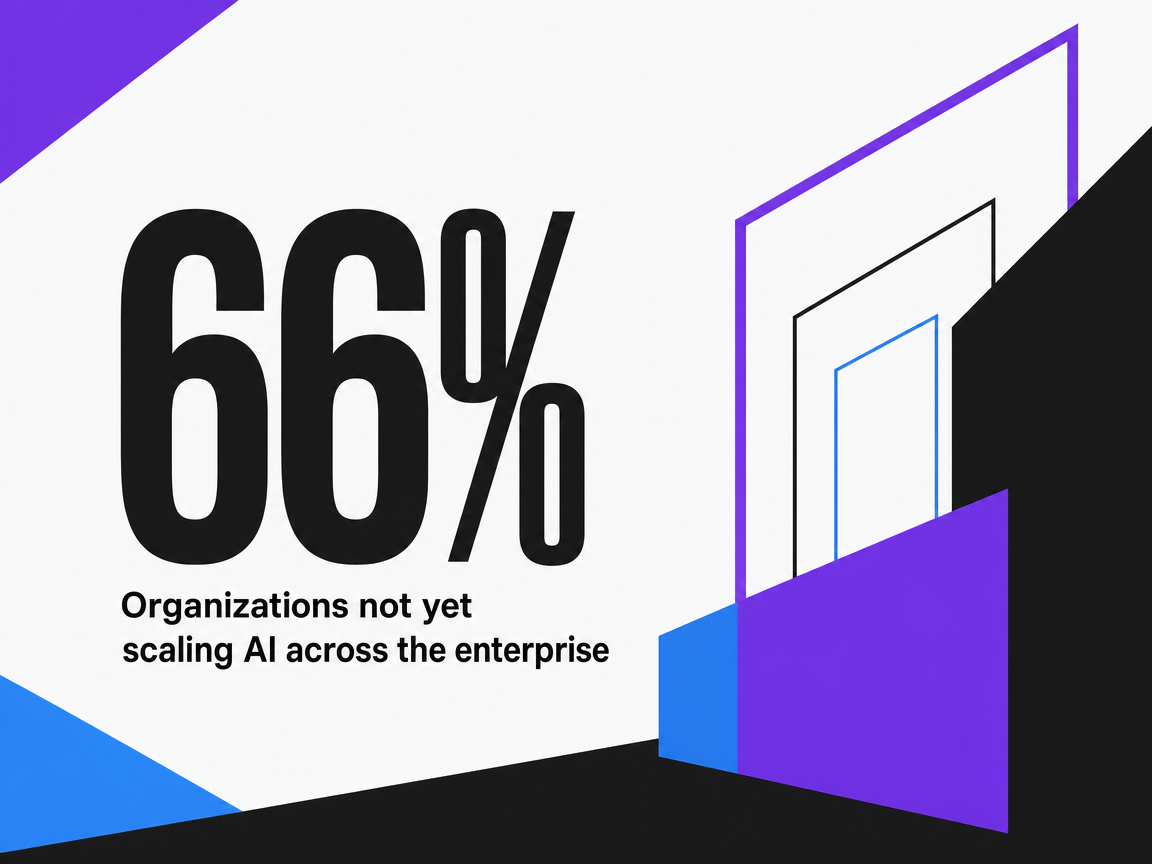 Organizations not yet scaling AI across the enterprise
Organizations not yet scaling AI across the enterprise
Frequently Asked Questions
References
- 1.AI Will Shape the Future of Marketing.
- 2.The economic potential of generative AI: The next productivity frontier.
- 3.The State of AI: Global Survey 2025.
- 4.Winning in the age of AI search.
- 5.The state of AI in early 2024.
- 6.AI-driven enterprise: Charting a path to 2030.
- 7.The State of AI in the Enterprise - 2026 AI report.
- 8.Artificial Intelligence Risk Management Framework - NIST.
- 9.Americans have mixed feelings about AI summaries in search results.