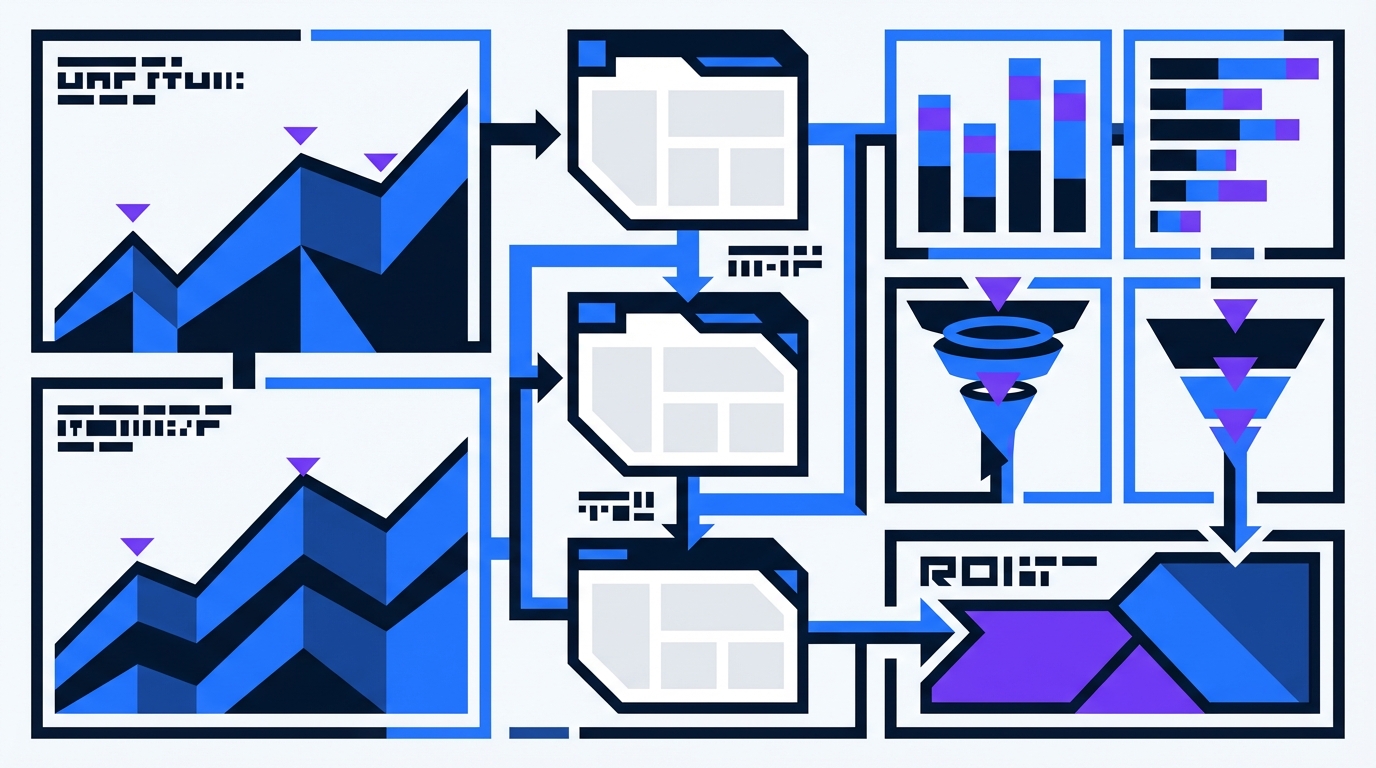
Executive Summary
- Shift to Event-Based Tracking: Move beyond session metrics to capture granular patient interactions like appointment bookings and telehealth inquiries.
- Automate with BigQuery: Reduce reporting labor by 90% and bypass GA4 interface limits by exporting data directly to cloud warehouses.
- Integrate Search Console: Unify organic query data with on-site behavior to identify high-value content gaps and optimization opportunities.
- Scale via AI Production: Leverage automated insights to drive high-volume, high-quality content production that replaces traditional agency models.
A Framework for Google Analytics Content Reporting
For healthcare Marketing VPs, the ability to correlate content production with patient acquisition is paramount. Establishing a robust google analytics content reporting infrastructure allows organizations to move beyond vanity metrics and focus on measurable outcomes. By integrating Google Analytics 4 (GA4), Search Console, and automated warehousing, marketing teams can track performance across multiple locations without adding headcount, ultimately driving a strategy that scales efficiently through AI-powered execution.
GA4 Foundations for Google Analytics Content Reporting
Event-Based Tracking vs Session Models
The fundamental shift from Universal Analytics to GA4 lies in the transition from session-based measurement to event-based tracking. In the legacy session model, user interactions were grouped within time-bounded visits, which often obscured the complexity of multi-device patient journeys. GA4 records every interaction—page views, video plays, form submissions—as a distinct event, providing the granularity required for accurate healthcare attribution.
For healthcare marketers, this distinction is critical. A patient may research a specialist on a mobile device, download a brochure on a desktop days later, and finally book an appointment via a tablet. Event-based tracking captures these distinct touchpoints as part of a cohesive narrative rather than disjointed sessions. This precision enables marketing teams to optimize google analytics content reporting for specific high-value actions, such as "Request Appointment" clicks, rather than generic traffic volume11.
| Feature | Session-Based (Legacy) | Event-Based (GA4) |
|---|---|---|
| Data Unit | Sessions (Time-bounded visits) | Events (Individual interactions) |
| Patient Journey | Fragmented across devices | Unified cross-platform view |
| Key Metric | Bounce Rate / Duration | Engagement Rate / Key Events |
Comparison of analytics models for healthcare tracking.
Industry data indicates that over 85% of enterprise analytics implementations have adopted event-based models to better align with complex user behaviors11. Marketing leaders should audit their current setup to ensure that content goals—awareness, engagement, conversion—are mapped to specific GA4 events.
Privacy Architecture and HIPAA Alignment
Privacy architecture in GA4 must be rigorously configured to align with HIPAA regulations. While GA4 offers privacy-centric features like IP anonymization and data retention controls, it is not inherently HIPAA-compliant out of the box. Healthcare organizations must ensure that no Protected Health Information (PHI) is transmitted to Google servers.
Critical Compliance Warning: GA4 should never be used to store or track PHI. Only de-identified, aggregate data should be processed. Ensure a Business Associate Agreement (BAA) is in place where applicable and that all data collection excludes personal identifiers like names, email addresses, or medical record numbers.
This architecture is essential for multi-location networks and hospital systems that face strict regulatory scrutiny. By implementing server-side tagging or data redaction protocols, marketing teams can maintain actionable reporting without compromising patient trust. Official guidance suggests that leveraging GA4’s granular data controls is now the standard for balancing marketing efficacy with compliance obligations11.
Search Console Integration for Google Analytics Content Reporting
Linking Process and Available Reports
Integrating Google Search Console with GA4 creates a unified view of organic search performance, bridging the gap between acquisition (search queries) and behavior (on-site engagement). This integration unlocks two critical reports: Google Organic Search Queries and Google Organic Search Traffic. These reports allow marketers to see not just how users found the site, but what they did after landing.
 Linking Process and Available Reports
View Integration Protocol
- Navigate to the Admin section of your GA4 property.
- Select Search Console Links under the Product Links column.
- Click Link and choose the Search Console property that matches your web stream.
- Select the appropriate Web Stream and review the configuration.
- Submit the link and wait approximately 48 hours for data population.
Once active, this connection provides up to 16 months of historical data, enabling long-term trend analysis1. This setup is particularly valuable for multi-location healthcare systems, as it consolidates data that would otherwise require manual extraction from separate properties. It ensures that google analytics content reporting reflects the full organic funnel.
Query Data for Content Optimization
Query-level data is the fuel for continuous content optimization. By analyzing the discrepancy between impressions and clicks, marketing teams can identify high-potential keywords that are underperforming. For instance, a high volume of impressions for "pediatric urgent care" combined with a low click-through rate (CTR) often indicates that meta titles or descriptions fail to match user intent.
Conversely, pages with high CTR but low engagement (short session duration) suggest that the content itself does not deliver on the promise of the search result. This insight loop allows teams to prioritize content refreshes effectively. Automated workflows can reduce the time spent on this analysis from hours to minutes, enabling teams to focus on strategy rather than data gathering9.
By feeding these insights back into the production pipeline, organizations can systematically improve their organic footprint. This data-driven approach aligns perfectly with AI-powered production models, where identified gaps can be rapidly filled with high-quality, optimized content.
Automated Monthly Reporting Workflows
BigQuery Export and Dashboard Creation
For healthcare organizations managing significant data volumes, the standard GA4 interface often imposes sampling limits and quota restrictions. Exporting data to BigQuery resolves these bottlenecks, offering a scalable, raw data environment for advanced analysis. This approach allows for the creation of custom dashboards that update in near real-time, bypassing the latency of standard connectors.
Implementing a BigQuery-powered workflow typically reduces query costs by 70–80% compared to third-party connectors and slashes dashboard refresh times to under 10 minutes5. The setup involves linking the GA4 property to a Google Cloud project and configuring a daily export schema. While the initial configuration requires 4–8 hours, the long-term efficiency gains are substantial for enterprise teams.
This infrastructure supports complex queries, such as joining online behavior data with offline CRM records, providing a holistic view of patient acquisition costs. It transforms reporting from a retrospective monthly chore into a proactive daily tool.
Unlock Data-Driven Content Growth with Automated Analytics Integration
Discover how Vectoron’s GA4 and Google Search Console automation delivers precise monthly content performance reports, actionable keyword insights, and continuous strategy optimization—at scale, across all your locations.
AI-Powered Report Generation in 15 Minutes
Modern analytics workflows leverage AI to synthesize vast datasets into executive narratives. By feeding structured data exports from GA4 and Search Console into AI analysis tools, marketing teams can generate comprehensive performance reports in roughly 15 minutes. These systems can identify anomalies, trend shifts, and keyword opportunities that might be missed during manual review.
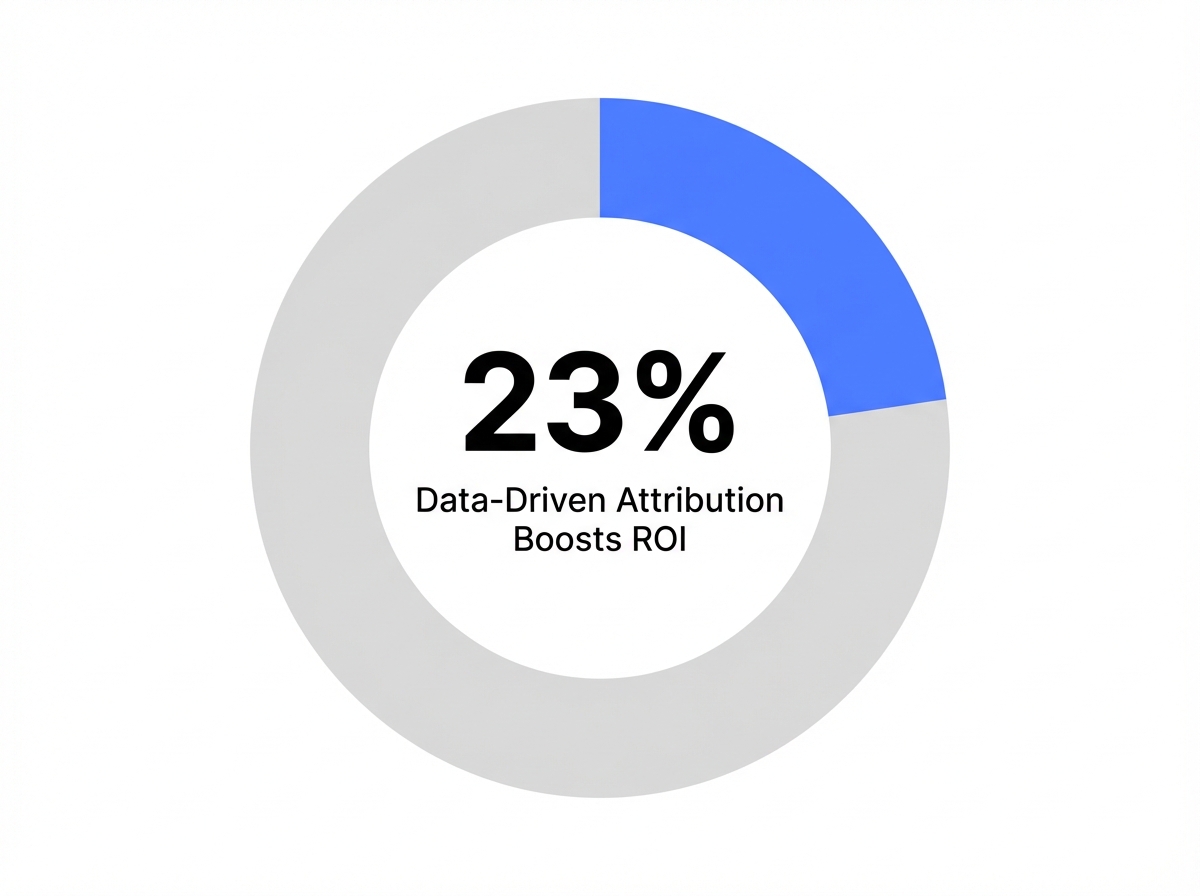 ROI Accuracy Improvement with Data-Driven Attribution: 23%
This capability is essential for scaling content operations. When reporting becomes instantaneous, the bottleneck shifts to execution. This is where platforms like Vectoron intervene, replacing the traditional agency model with AI-powered production that can immediately act on reporting insights. Instead of waiting weeks for an agency to interpret data and draft content, internal teams can deploy optimized articles within hours of identifying a need.
Early adopters of AI-automated reporting have documented a 40% reduction in administrative time and a 25% improvement in the accuracy of strategic insights9. This efficiency enables marketing VPs to maintain lean teams while delivering enterprise-grade results.
Attribution Models for Multi-Touch Journeys
Data-Driven vs Last-Click Attribution
Attribution modeling determines how credit for a conversion is distributed among the various touchpoints in a patient's journey. Traditional "Last-Click" models assign 100% of the credit to the final interaction, ignoring the educational content that may have influenced the decision weeks earlier. Data-Driven Attribution (DDA) uses machine learning to distribute credit based on the actual impact of each touchpoint.
For healthcare organizations, DDA is superior because patient journeys are rarely linear. A patient might read a blog post about symptoms, watch a physician video, and then search for the brand name to book an appointment. DDA ensures the blog post receives appropriate credit. However, DDA requires a minimum data volume—typically 600 to 1,000 conversions per month—to function reliably2,7.
Organizations falling below this threshold should consider linear or time-decay models until sufficient volume is achieved. Choosing the right model is critical for justifying content budgets, as it proves the ROI of top-of-funnel educational material.
Conversion Thresholds and 90-Day Windows
The default attribution window in GA4 is 90 days, which generally covers the decision cycle for most healthcare services. However, for high-stakes specialties like oncology or orthopedics, the consideration phase may extend beyond this period. Marketing VPs must evaluate whether the standard window captures the full influence of their content.
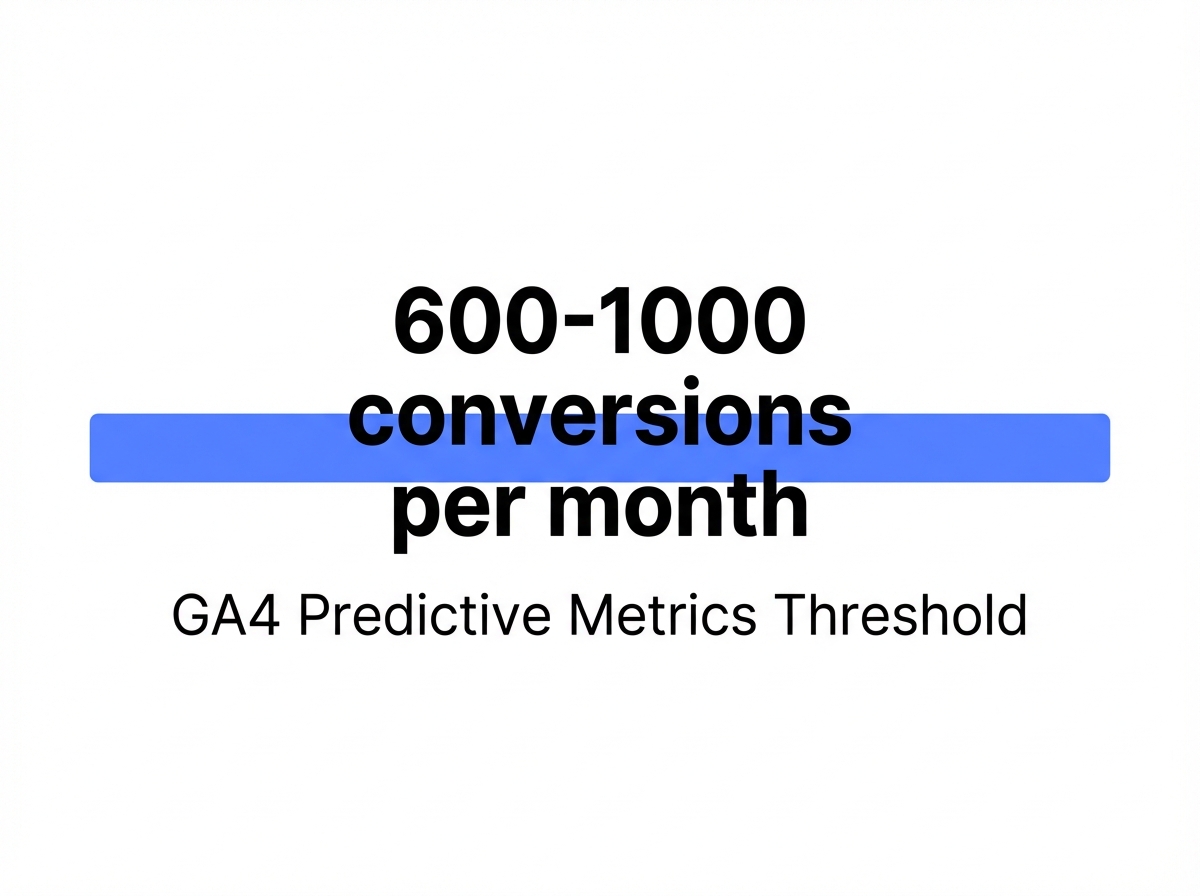 Conversion Threshold for GA4 Predictive Metrics: 600-1000conversions per month
To maintain eligibility for data-driven attribution, organizations must maintain consistent conversion volume. If conversions drop below the 600/month threshold, GA4 may revert to a rule-based model, potentially skewing reporting data. Aggregating conversions across locations or service lines can help smaller entities meet these requirements.
Properly configuring these windows ensures that the long-tail value of content is recognized. It shifts the conversation from "what did we book today?" to "how are we building the pipeline for next quarter?"—a perspective that aligns with sustainable growth strategies.
Frequently Asked Questions
Conclusion
The transition to automated analytics infrastructure represents a pivotal maturity milestone for healthcare marketing operations. By integrating GA4, Search Console, and BigQuery, organizations eliminate the manual labor of data collection, allowing teams to focus on strategic interpretation and action. This shift from reactive reporting to proactive intelligence is essential for identifying high-value patient acquisition channels and optimizing content performance in real-time.
However, superior measurement inevitably reveals the need for superior execution. As data exposes content gaps and opportunities, the traditional agency model—characterized by slow turnaround times and high costs—becomes the primary bottleneck to growth. To fully capitalize on these insights, marketing leaders must pair advanced analytics with scalable production capabilities.
Vectoron addresses this execution gap by providing an AI-powered content factory that delivers measurably better outcomes at a fraction of the cost of legacy agencies. By automating the end-to-end production pipeline, Vectoron enables healthcare teams to instantly act on analytics data, scaling content output to meet patient demand without increasing headcount. This alignment of precise measurement and rapid execution defines the future of high-performance healthcare marketing.
References
- 1.Connect Search Console to Google Analytics.
- 2.[GA4] Predictive Metrics.
- 3.Get Started with Attribution.
- 4.Search Essentials.
- 5.How to Create a Low-Cost, Lightning Fast GA4 Looker Studio Dashboard.
- 6.5-Step Content Marketing Measurement Framework.
- 7.A Guide to Attribution Models in GA4.
- 8.Data Storytelling That Works: 5 Proof-Backed Frameworks for Communicating Insights Clearly.
- 9.How to Automate Analytics Data Reporting using AI.
- 10.Track Revenue Better: Connect GA4 with Your CRM.
- 11.Introducing Google Analytics 4 (GA4).
- 12.Introducing Social Channels in Google Search Console.
- 13.Search Console API - Google for Developers.
- 14.[GA4] Set Up eCommerce Events - Analytics Help.
- 15.Measure eCommerce - Google for Developers.
- 16.Create or Modify Key Events - Analytics Help.
- 17.About Goals, Conversions, and Conversion Types - Analytics Help.
- 18.Content Distribution Strategy Guide for Modern Marketing Teams.
- 19.How to Measure Content Marketing: The (Updated) Essential Guide.