
Key Takeaways
- Per-link sticker prices mislead agency P&Ls because they ignore outreach hours, QA labor, tooling amortization, compliance overhead, and replacement costs that determine whether a retainer actually holds margin.
- Link spend has to sit inside the $500 to $5,000 monthly SEO envelope most clients fund 1, so set the envelope first and back into volume rather than quoting links upfront.
- Build a fully-loaded cost-per-qualified-link model across five variables: placement cost, outreach labor, QA vetting, tooling allocation, and compliance plus replacement overhead, since loaded labor varies far more than placement price.
- Price replacement risk into retainers using an observed twelve-month retention rate, because 20 to 35 percent decay quietly raises effective cost per retained link well above the original invoice.
- Treat FTC disclosure obligations as a named cost row, not a footnote, since sponsored placements, influencer links, and reviews carry drafting, review, and audit labor plus a discount on authority weight 2, 3, 4, 7, 10.
- Frame link cost against cluster-level organic revenue contribution rather than per-link price, using attribution, lift assumptions, and time-to-contribution lag to defend the spend 8.
- Use AI-coordinated execution to compress the briefing, drafting, anchor reconciliation, and verification labor that surrounds outreach, since cutting six strategist hours per placement to under two changes which acquisition model the retainer can fund.
- Defend renewals with three artifacts: a retainer reconciliation against the SEO envelope, a net-retained link inventory with replacement rate, and a cluster-level revenue view tying links to organic outcomes.
Why per-link price tags mislead agency P&Ls
Most pricing conversations about link building start in the wrong place. A prospect asks what a link costs. A competitor quotes $350. The sales team matches it. The retainer closes, and three months later the delivery lead is explaining why margin on that account is negative.
The per-link sticker is a vanity number. It captures the placement fee a vendor charges or the line item a freelance outreach contractor invoices. It does not capture the outreach hours burned on rejected prospects, the QA labor required to vet a domain before sign-off, the tooling allocation amortized across the campaign, the compliance overhead on any compensated placement, or the replacement cost when a link decays inside a six-month window. Strip those out and per-link pricing looks competitive. Add them back and the unit economics often invert.
Agency SEO leads running 10 to 50 accounts feel this immediately. The retainer that priced at market rates is delivering links that match the brief on paper and underperform in the index. The vendor invoice is predictable; the loaded cost is not. Forrester's framing on SEO ROI is useful here: the top challenge cited by marketers managing SEO programs is understanding the return on investment, which requires modeling benefits and costs together rather than pricing inputs in isolation 5.
The rest of this guide treats link cost the way a P&L owner should. Not as a list price to match, but as a fully-loaded cost-per-qualified-link that an agency can defend in margin reviews and renegotiate when client expectations drift past what the budget envelope will actually fund.
The SEO budget envelope links have to fit inside
Before any per-link math holds up, the retainer has to sit inside a budget the client will actually fund. Academic work on SEO economics anchors the range: most businesses spend between $500 and $5,000 per month on SEO, with local operators clustering near the $500 floor and national or international clients funding $2,500 to $5,000 per month 1. That envelope is the ceiling on everything a link program can absorb, including content production, technical fixes, reporting, and account management.
For a local services client at the bottom of that range, link acquisition competes with on-page work, local citations, and reporting overhead for the same $500. Two $250 placements consume the entire monthly retainer and leave nothing for the content those links are supposed to point at. The math does not work, and agencies that price link-heavy programs at this tier are either subsidizing the work or shipping placements that will not survive an algorithmic review.
National accounts at $2,500 to $5,000 per month have room, but not as much as the per-link sticker implies. If 40% of the retainer is realistically available for link acquisition after content, technical, and account management costs, a $5,000 retainer carries roughly $2,000 in monthly link spend. At a market-rate placement cost of several hundred dollars per qualified link, that funds a handful of placements before any loaded labor enters the equation.
The operational consequence is simple. Agency SEO leads who quote link volumes without first reconciling them against the client's total SEO envelope create delivery commitments the retainer cannot fund. The right sequence is to set the envelope, allocate the link share, and then back into a defensible volume and quality target. The per-link price is the last number in that chain, not the first.
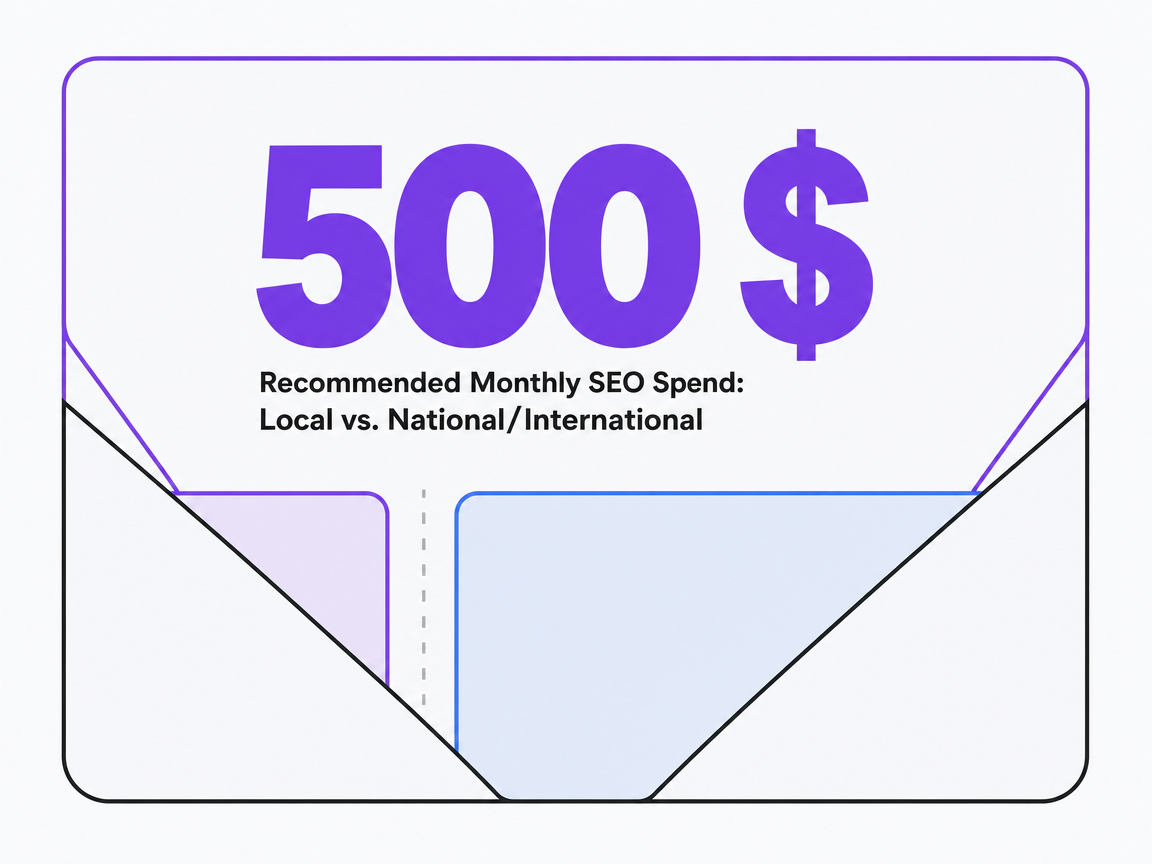 Recommended Monthly SEO Spend: Local vs. National/International
Recommended Monthly SEO Spend: Local vs. National/International
The fully-loaded cost-per-qualified-link model
The five variables that move authority outcomes
A cost-per-qualified-link model is only useful if it isolates the variables that actually move authority. Per-link sticker price is one of five, and not the largest.
- Direct placement cost. This is what a vendor charges for the link itself or what a publisher accepts for sponsored placement. It is the only number most retainers track, which is why most retainers misprice.
- Outreach labor. Prospecting lists have to be built, contacts verified, pitches written, follow-ups sequenced, and rejections logged. A junior outreach specialist running cold campaigns will burn six to twelve hours of labor per accepted placement at typical reply and conversion rates. That labor sits on the agency's payroll whether or not the placement clears QA.
- QA and vetting labor. Every prospective domain has to be checked against criteria the agency will defend: traffic patterns, topical relevance, outbound link profile, editorial standards, and signs of private network behavior. An hour of senior review per placement is conservative for agencies that care about retention.
- Tooling allocation. Outreach platforms, link databases, prospecting tools, and rank tracking all carry monthly fees that have to be amortized across active link campaigns. On a portfolio of 20 active accounts, tooling can add $50 to $150 of allocated cost per acquired link before any labor is counted.
- Compliance and replacement overhead. Any compensated placement carries disclosure obligations that affect editorial weight, and any placement carries a non-zero probability of decay, removal, or disavow within the window the client expects authority to compound. Forrester's ROI framing treats risk and flexibility as explicit cost factors in any SEO model, not afterthoughts 5.
Direct placement is the visible number. The other four are where margin lives or dies.
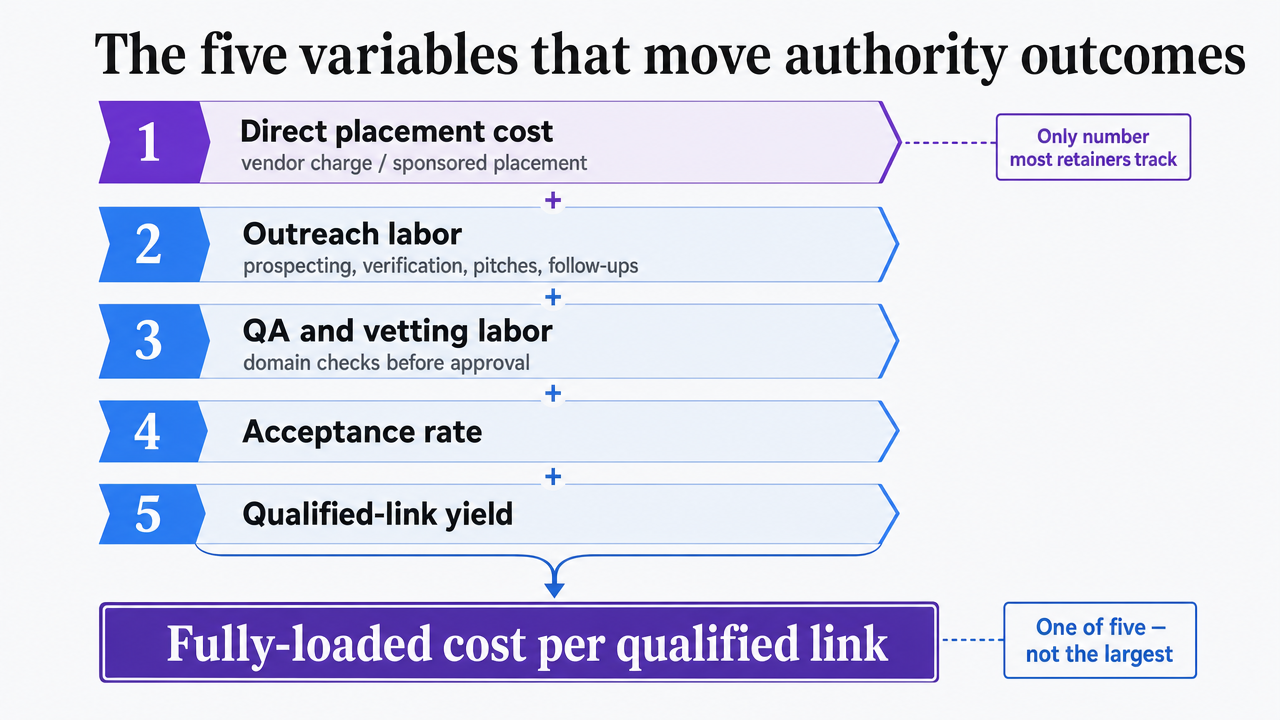 Process infographic visualizing the five named cost variables in the fully-loaded cost-per-qualified-link model described in this section
Comparing acquisition models: in-house, freelance, vendor, hybrid
Four acquisition models dominate agency delivery, and each loads the five variables differently. The exercise below uses the SEO budget envelope of $500 to $5,000 per month 1as the constraint, and treats per-link dollar figures as variables the agency populates from its own rate card rather than fixed market averages.
The in-house outreach team carries the lowest direct placement cost on links earned through pure relationship outreach, since the agency is not paying a vendor markup. It carries the highest labor cost. A two-person outreach pod with one senior strategist and one junior specialist consumes a fixed monthly payroll regardless of placement volume. On a national account funded near the top of the SEO envelope, that payroll allocation can absorb most of the budget available for link acquisition before any placement is secured.
The freelance outreach model trades fixed payroll for variable contractor rates. Direct placement cost stays low for earned links, and labor cost flexes with campaign volume. QA labor stays internal, because freelancers vary in vetting discipline and the agency owns reputational risk on every domain that ships. Tooling is often duplicated across freelancers, which inflates allocation.
The vendor pay-per-link model inverts the load. Direct placement cost is highest because the vendor bundles their own labor, tooling, and margin into the per-link price. Agency labor drops to brief writing, anchor strategy, and QA on what the vendor delivers. Replacement risk concentrates in vendor quality: a cheap vendor delivers links that decay faster, which raises the loaded cost retroactively even when the invoice looked competitive.
The hybrid model with AI-coordinated production keeps outreach relationships and editorial judgment in-house while compressing the briefing, drafting, and coordination labor that surrounds each placement. Direct placement cost matches the in-house model. Labor cost drops because the production layer absorbs the work that previously consumed senior strategist hours on rewrites and approvals. Tooling consolidates into the coordination layer rather than fragmenting across point solutions.
The pattern that emerges across all four is consistent. Direct placement cost varies by a factor of two or three across models. Loaded labor varies by a factor of five or more. Agencies that price link building off the placement line alone consistently misread which model is actually cheaper for a given retainer tier.
The practical exercise for an agency SEO lead is to build the comparison with the agency's real numbers: blended labor rate, tooling spend per active account, average QA hours per placement, observed replacement rate over the trailing twelve months. Once those variables are populated against the $500 to $5,000 monthly envelope 1, the model surfaces which acquisition mix the retainer can actually fund at target margin. In most agency books, the answer is not the model the sales team is quoting.
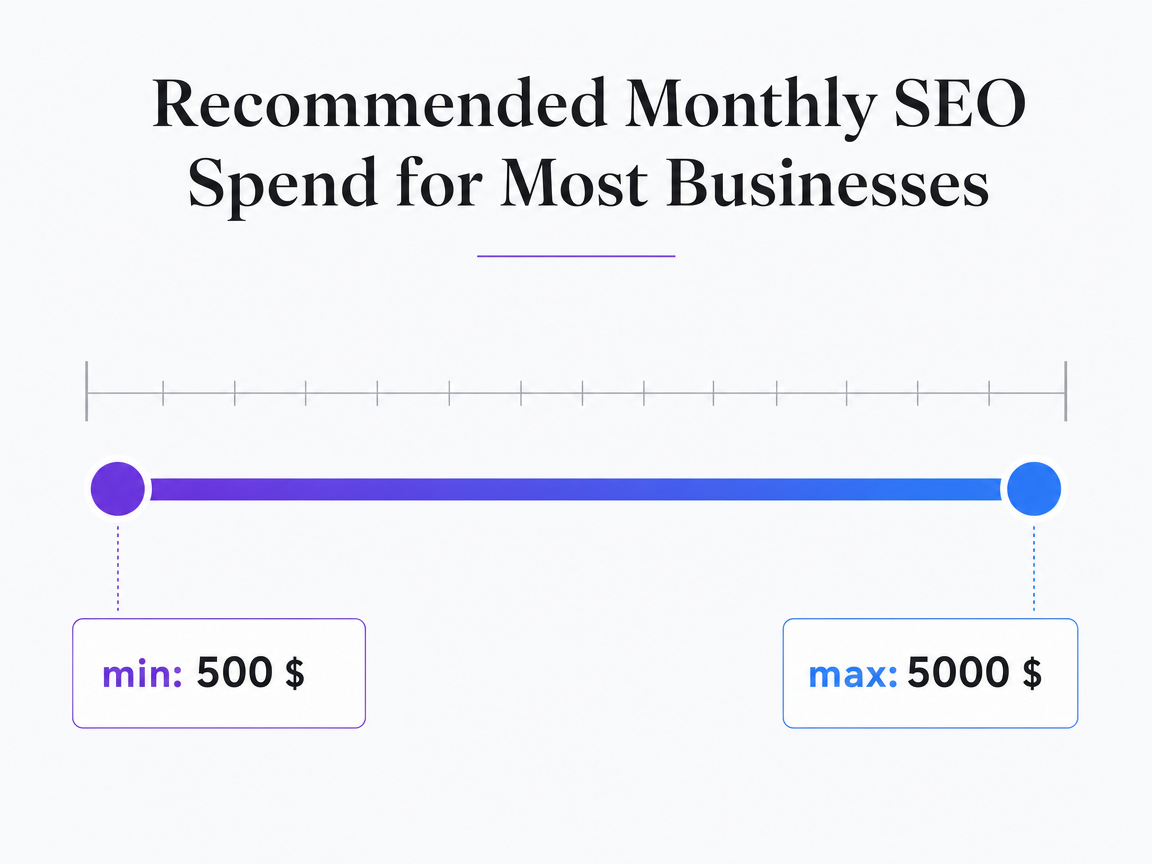 Recommended Monthly SEO Spend for Most Businesses
An academic paper citing marketing experts suggests that most businesses should budget between $500 and $5,000 per month for SEO.
Replacement risk and the half-life of a placed link
A link is not a fixed asset. It decays. The publisher restructures the post, the editor swaps the anchor, the domain changes hands, the page is deindexed, the link is nofollowed in a site-wide template change, or the placement gets flagged in a future spam update and disavowed defensively. Every one of those outcomes returns the placement to zero authority contribution while leaving the original cost on the books.
Replacement rate is the variable most agency retainers ignore. If 20% of placements decay within twelve months, the effective cost per retained qualified link is 25% higher than the invoiced cost. If decay runs at 35% on a vendor portfolio built from low-vetting suppliers, the loaded cost nearly doubles. The agency that priced the retainer off the original invoice is now subsidizing replacements out of margin.
The operational consequence is that replacement has to be priced into the model before the retainer is quoted, not after the first decay audit. Two inputs make the math defensible: an observed twelve-month retention rate by acquisition model, and a target net-link delivery commitment to the client. The gross placement volume the retainer has to fund is the net target divided by the retention rate. Agencies that skip this step quote gross volumes they cannot defend by month nine.
Forrester's ROI framework treats this as a standard risk adjustment in any program cost model 5. For link building, it is the difference between a retainer that holds margin and one that quietly inverts.
Test AI-driven link building workflows risk-free
Validate cost-efficient, scalable link acquisition with live campaigns before committing to a new process.
Compliance exposure as a line item, not a footnote
Compensated link tactics carry substantiation costs that most retainers never quantify. The FTC treats paid placements, sponsored content, influencer posts, and review-adjacent content as advertising the moment a material connection exists between the agency's client and the publisher carrying the link. That status pulls disclosure obligations into the campaign whether the brief calls them out or not.
Four bodies of guidance map cleanly onto the link tactics agencies actually deploy. Sponsored articles and native placements fall under the FTC's native advertising guide, which requires that disclosures be clear, prominent, and positioned so a reasonable consumer cannot miss them, including on social shares of the same content 2. Influencer-driven links sit under the disclosures brochure, which requires that any financial, employment, personal, or family relationship with a brand be disclosed in language as direct as "ad" or "sponsored" 3. The 2023 revised endorsement guides set the formal rulemaking basis for treating compensated placements as endorsements when they function as one 4, and the FTC's Q&A confirms that broad reading: a paid guest post or sponsored article containing a link is, in the agency's view, an endorsement requiring conspicuous disclosure 7. Review-adjacent content tightened further in 2024, when the FTC moved from guidance to formal rulemaking on consumer reviews and testimonials 10.
Each of those obligations carries a cost the link line item rarely captures. Disclosure language has to be drafted, reviewed by someone qualified to assess substantiation risk, embedded in the placement at the publisher's CMS, and audited periodically as posts get re-edited. On a portfolio of 30 sponsored placements per quarter, that is real legal-review and QA labor sitting outside the per-link invoice.
There is also a second-order cost. Conspicuous disclosure changes how search engines and downstream readers weight the placement. A clearly labeled sponsored post still earns a link, but it earns it as a paid endorsement rather than as editorial coverage, which affects the authority math the campaign was sold on. Agencies that priced the retainer assuming editorial weight are now delivering disclosed promotional weight at the same cost basis.
The operational fix is to treat compliance overhead as a named row in the cost-per-qualified-link model, not a footnote in the master services agreement. Three inputs make it tractable:
- a tactic-by-tactic map of which guidance applies,
- a fixed labor allocation per compensated placement for drafting and reviewing disclosure language, and
- a discount factor on the authority contribution of disclosed placements relative to earned editorial coverage.
Agencies that skip this work absorb the labor invisibly and misprice the authority outcome, which compounds across every renewal cycle the client signs.
Modeling links against organic revenue contribution
The conversation an agency SEO lead should be having with a client principal is not about per-link cost. It is about contribution margin per acquired link against organic revenue. Forrester's ROI work on SEO is explicit on this point: the benefits worth quantifying are increased site traffic, improved conversion rates, and cost savings relative to paid search, all attributable to the organic channel rather than to any single tactic in isolation 8.
That reframing changes the math an agency defends. A $400 placement that adds measurable rankings to a commercial cluster generating $40,000 in quarterly organic revenue is not expensive. A $150 placement that touches a non-commercial page on a domain the client cannot monetize is overpriced at any sticker. Cost only resolves once it is paired with the revenue contribution of the cluster the link points at.
Three inputs make the model defensible.
- The first is cluster-level revenue attribution: which URLs the link is meant to lift, what those URLs are worth in pipeline or booked revenue over a trailing window, and what share of organic visibility the campaign is contesting.
- The second is the lift assumption: how much of the cluster's growth is being attributed to acquired links versus content, technical, or brand inputs. Forrester's ROI framework treats this attribution discipline as the precondition for any defensible cost case 5.
- The third is the time-to-contribution lag, because authority compounds across quarters rather than within the month the invoice clears.
Agencies that report links as a volume metric lose this argument every renewal cycle. Agencies that report links as a cost input to cluster-level revenue keep the retainer and the pricing power that comes with it. The unit the client should see on the dashboard is contribution margin per qualified link retained, not gross placements shipped.
See How Top Agencies Quantify Link Building ROI—Without Inflating Costs
Request a data-driven assessment of your current link building spend versus market benchmarks, and discover scalable solutions to increase link quality and velocity while protecting margin.
Where AI-coordinated execution changes the labor math
The labor cost in link building does not sit in outreach. It sits in the work that surrounds outreach: briefing the writer, drafting the placement asset, routing it through editorial review, reconciling the anchor against the campaign sheet, chasing the publisher for the embed, verifying the live URL, and logging the placement against the cluster it was meant to support. On a 30-placement quarter, that coordination overhead can consume more senior strategist hours than the prospecting itself.
AI-coordinated execution compresses that middle layer. The outreach relationship stays human, because publisher trust and editorial judgment do not transfer to automation without quality loss. The judgment calls on domain vetting stay human, because the criteria are agency-specific and reputationally loaded. What changes is the production and coordination labor between those decisions. Draft assets get generated against approved briefs, anchor variants get queued against the campaign's distribution plan, disclosure language gets attached to compensated placements before the publisher sees them, and live-link verification gets logged without a strategist opening a spreadsheet.
The margin effect compounds where labor was leaking. If a senior strategist was spending six hours per placement on briefing, rewrites, and reconciliation, and that drops to under two, the loaded cost per qualified link falls by a number large enough to change which acquisition model the retainer can fund. Forrester's ROI framing treats labor compression as a legitimate cost-side input to any SEO program model, not a soft benefit 8.
The operational test for an agency SEO lead is narrow. Run the cost-per-qualified-link model with current labor allocations, then run it again with coordination labor reduced by a defensible factor. The retainer tiers that previously inverted often clear margin at the same client price.
Defending retainer margin in client conversations
The renewal call is where the cost model either holds or collapses. A client principal asks why the link budget is what it is, points at a competitor quote that looks cheaper, and waits for the agency to defend the number. Agencies that walk into that conversation with per-link sticker comparisons lose. Agencies that walk in with a fully-loaded cost-per-qualified-link, a retention rate on the trailing twelve months, and a contribution margin tied to cluster-level organic revenue rarely have the conversation a second time.
Three artifacts make the defense concrete.
- A retainer reconciliation showing how the SEO envelope was allocated across content, technical, link acquisition, and account management, framed against the $500 to $5,000 monthly range most businesses actually fund 1.
- A link inventory reporting net retained placements rather than gross shipped, with the replacement rate visible.
- A cluster-level revenue view that pairs acquired links to the URLs they were meant to lift, drawing on the ROI logic Forrester applies to organic programs 8.
The pricing power follows from the artifacts, not the pitch. Clients renew retainers they can audit. Agency SEO leads who run the link program on loaded economics, not list price, keep both the account and the margin. Platforms like Vectoron exist to compress the coordination labor that erodes that margin between renewals.
Frequently Asked Questions
References
- 1.The Significant Role of SEO in Effective Web Marketing.
- 2.Native Advertising: A Guide for Businesses.
- 3.Disclosures 101 for Social Media Influencers.
- 4.Guides Concerning the Use of Endorsements and Testimonials in Advertising.
- 5.The ROI Of SEO.
- 6.Digital Marketing Spend To Reach $146B By 2023 - Forrester.
- 7.FTC's Endorsement Guides: What People Are Asking.
- 8.You Can Quantify The ROI Of SEO - Forrester.
- 9.Guides Concerning the Use of Endorsements and Testimonials in Advertising.
- 10.Rule on the Use of Consumer Reviews and Testimonials.