Key Takeaways
- Eight articles a month is the cadence at which topical clusters compound within a single planning cycle, with one pillar plus three supporting pieces every two weeks.
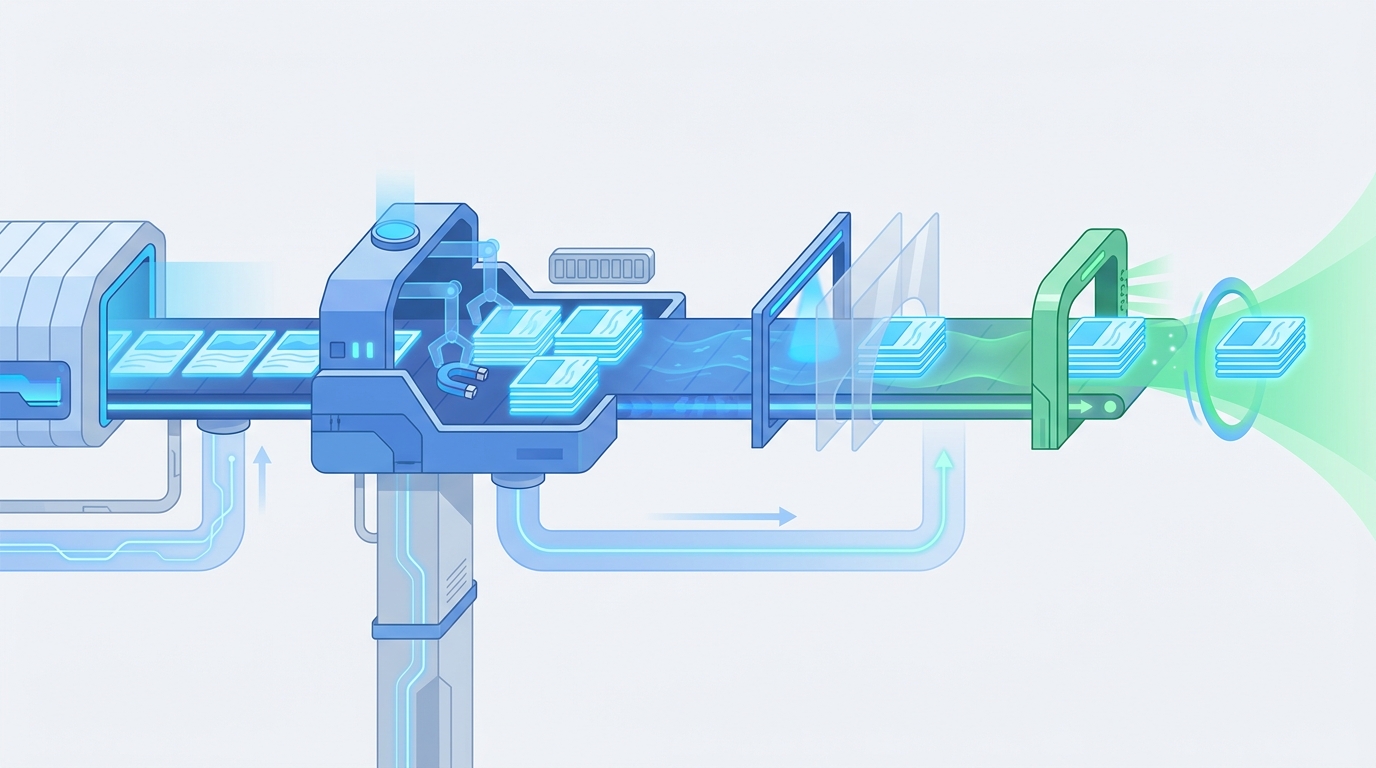
- Run production as a four-stage assembly line—strategy, brief, draft, QA and publish—with cycle-time budgets measured in hours rather than treating each article as bespoke.
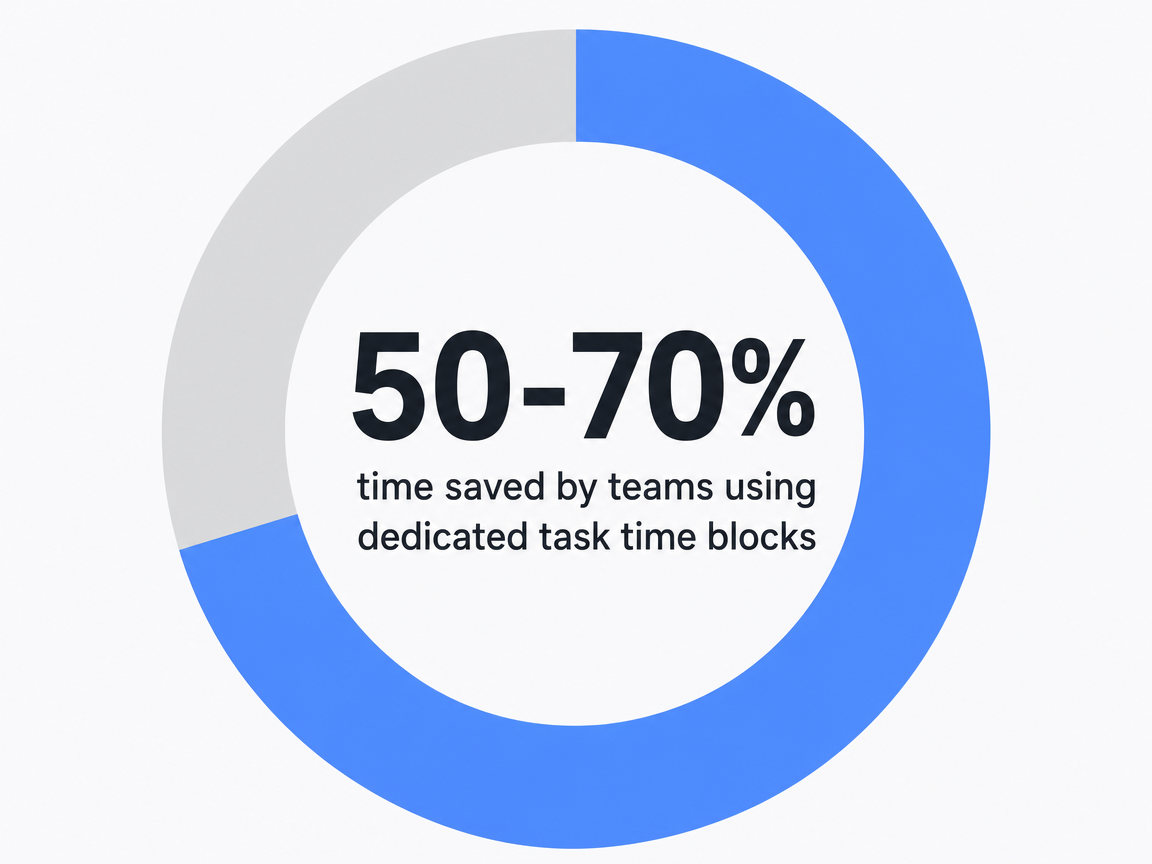
- Batch ideation, briefing, and drafting into dedicated time blocks to capture the 50-70% time savings reported by teams that abandon the one-piece-at-a-time model 2.
- Above six pieces a month, cycle-time-per-article replaces cost-per-article as the binding constraint, so reducing handoffs matters more than squeezing freelance unit price.
- Diagnose throughput leaks by timing brief approval, counting editorial WIP, and measuring CMS publish time—adding writers rarely fixes a constraint that lives upstream.
- Compose the monthly mix from the bottom up: two bottom-funnel, three mid-funnel, two awareness, and one rewrite slot pulled from inventory triage 7.
- Defend the cadence with slot-level KPIs—time-to-publish, 90-day ranking, and 180-day assisted conversions—so each article earns its place against pipeline, not aggregate traffic 10.
Why 8 Articles a Month Is the Throughput Floor for Topical Authority
Eight articles a month is not a vanity number. It is the cadence at which a topical cluster begins compounding fast enough to matter inside a single planning cycle. At three or four pieces a month, a content program spreads thin across pillar topics, never accumulating the supporting density that signals authority on a query cluster. At eight, a manager can ship one pillar plus three supporting pieces every two weeks and still hold quota for refreshes and bottom-funnel assets.
The economics underneath the cadence are shifting in the manager's favor. The share of marketers expecting content budgets to grow or hold steady jumped from 54.5% in 2024 to 88.2% in 2025, and the share planning to spend over $45,000 per month nearly tripled in the same window. Leadership is funding throughput. The constraint is no longer budget approval; it is the operating model that turns approved briefs into published URLs without writer headcount expansion.
The teams hitting eight a month have stopped treating each article as a bespoke project. They run a production assembly line with four discrete stages, cycle-time budgets measured in hours, and AI-assisted drafting positioned as a brief-execution layer rather than an experimental side channel 1. Volume follows from system design, not from heroics. The rest of this guide maps that system, stage by stage, and shows where capacity actually leaks for programs stuck in the three-to-four range.
The Production Assembly Line: Four Stages, Four Cycle-Time Budgets
Stage 1 — Strategy: Topic Selection and Inventory Triage
Strategy is the stage most teams skip and then pay for downstream. The cycle-time budget here is four to six hours per month, run as a single batched session covering all eight slots at once. Treating topic selection as a recurring monthly meeting—rather than a per-article decision—removes the largest single source of cognitive overhead in the program.
The session has three inputs: keyword opportunity data, a current content inventory, and competitor gap signals. Each candidate topic is scored against commercial intent, existing coverage on the domain, and search difficulty. Crucially, not every slot becomes a net-new article. Strong programs reserve two to three of the eight monthly slots for rewrite, overhaul, or combine decisions on existing URLs that are already ranking but underperforming 7. A page sitting at position 12 on a transactional query is usually a higher-leverage edit than a fresh awareness piece.
Inventory triage demands a classification system the whole team agrees on. Pages get tagged by funnel stage, last-updated date, and performance tier, which mirrors the lifecycle classification logic used in enterprise content management systems 5. Without that taxonomy, the strategy meeting devolves into argument about what to write next instead of what to retire, refresh, or expand.
The output of Stage 1 is a locked list of eight titles, each with a target keyword, intent classification, and a rewrite-or-net-new flag. No drafting begins until the list is signed off.
 time saved by teams using dedicated task time blocks: 50-70%
Stage 2 — Brief: The Single Highest-Leverage Document
The brief is where production speed is won or lost. A vague brief produces three drafts; a precise brief produces one. The cycle-time target is two to three hours per brief, batched across two sittings of four briefs each, for a total of roughly 16 to 24 hours of monthly briefing work.
Every brief should carry the same eight components: target keyword and secondary phrases, search intent classification, ranking competitor analysis, mandatory H2 structure, source requirements with linked URLs, internal link targets, word-count range, and the conversion path the article must support. Reusable templates handle the structural scaffolding, which fixes the thinking process and removes ambiguity for whoever drafts next 3.
Briefing latency is the silent killer of monthly cadence. When briefs trickle out one at a time, writers idle and the calendar slips. Batching the strategy session and the briefing session in the same week creates a queue depth that keeps the drafting stage continuously fed. Workflow automation supports this by centralizing brief storage, version control, and approval routing—removing the back-and-forth that typically adds days to each piece 1.
One operational rule separates programs that hit cadence from those that don't: a brief is not done until a non-author can read it and produce a usable outline without asking questions. If clarification is needed at the drafting stage, the brief failed, and the cost compounds across every subsequent piece in the queue.
Stage 3 — Draft: AI-Assisted Execution Between Brief and Editor
Drafting is where AI assistance changes the math. Positioned correctly, the AI layer sits between the approved brief and the human editor—executing the brief into a structured first draft rather than generating ideas from a blank prompt. This reframing matters. AI-as-ideation produces generic content that fails editorial review; AI-as-brief-execution produces a 70-80% complete draft the writer or editor finishes, not redoes.
The cycle-time target for this stage is four to six hours per article, inclusive of AI-assisted draft generation, fact-check pass, voice and example layering, and a multimedia pass. For an eight-article month, that compresses to roughly 32 to 48 hours of human drafting and editing time—work a single in-house writer can absorb without queue overflow.
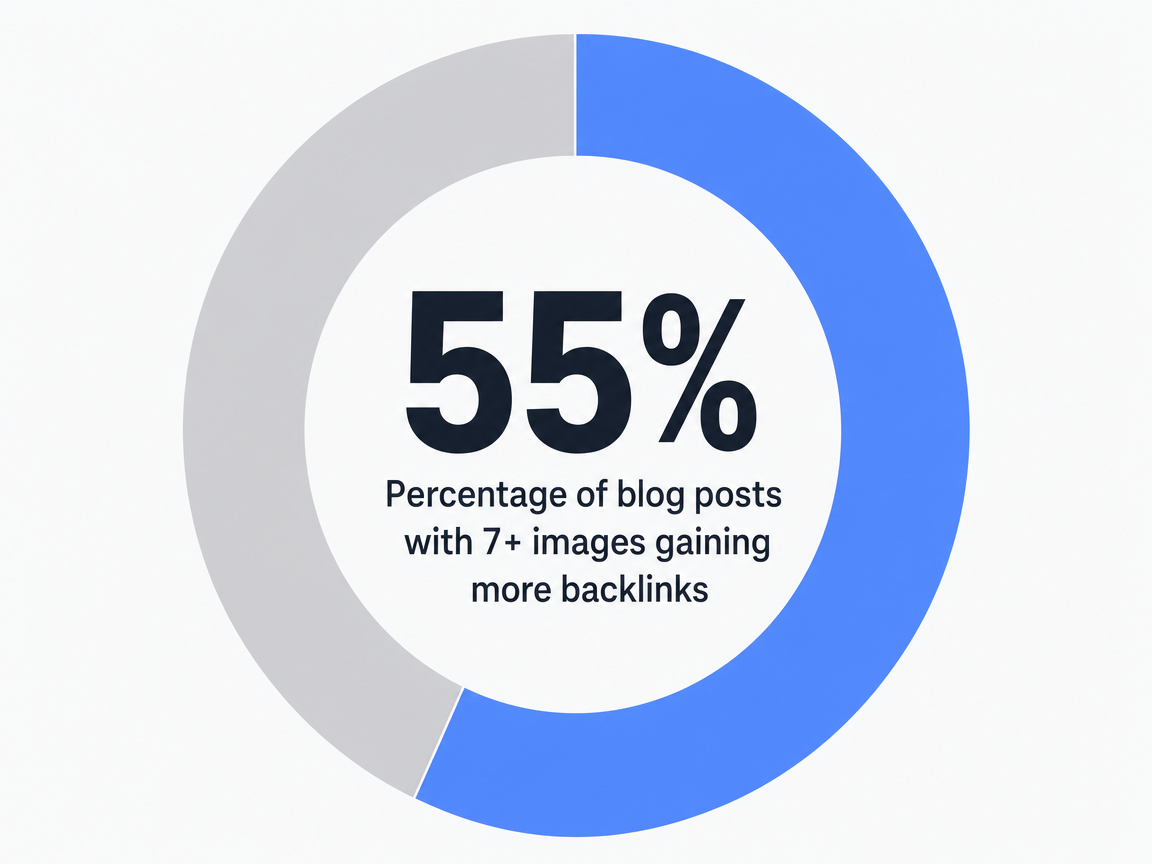
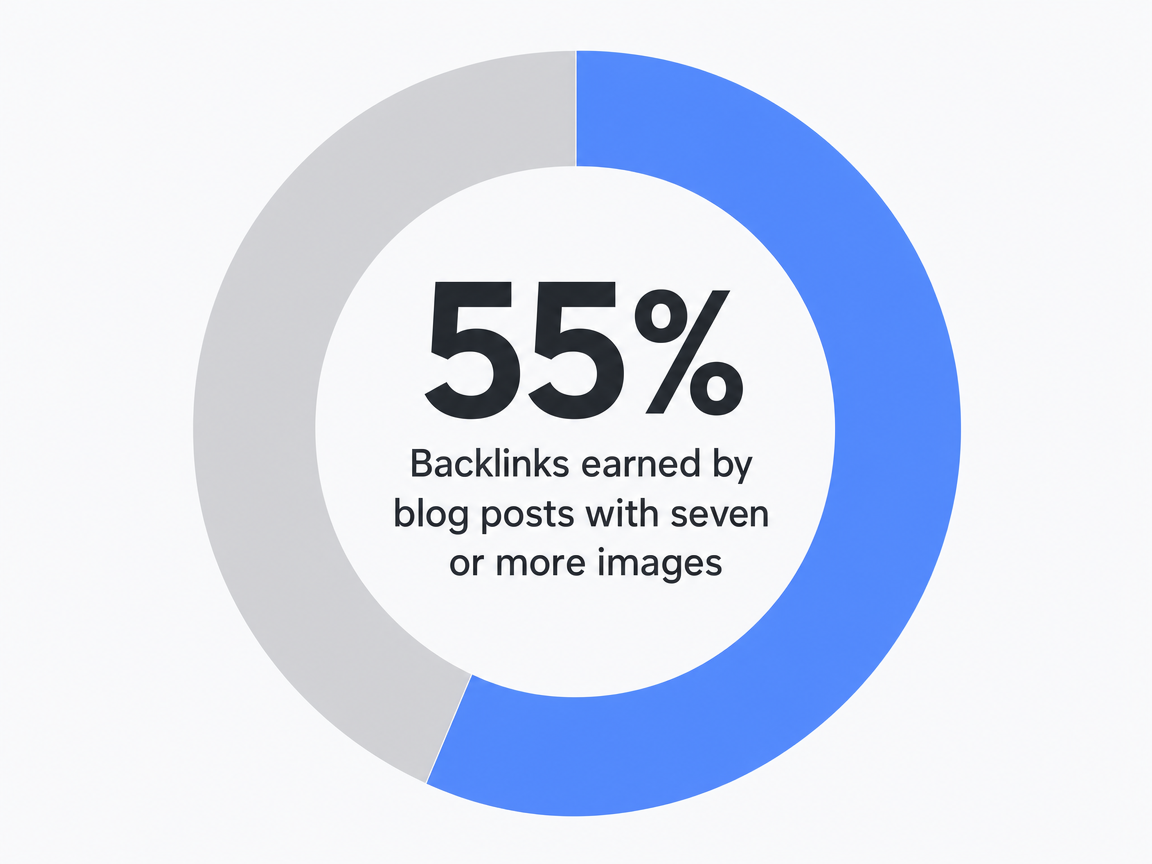
Multimedia is part of the draft cycle, not a separate workstream. Blog posts with seven or more images earn 55% more backlinks than those without, and articles containing at least one video generate 70% more traffic than text-only pieces 8. Treating image sourcing and chart creation as a post-publish afterthought is the most common reason cycle times balloon at the QA stage.
The handoff from AI draft to human writer requires a documented rule set: what the AI is allowed to produce, where human judgment is required, and which sections—original analysis, customer examples, expert quotes—must originate from a human source. Without that boundary, automation amplifies errors rather than productivity 6. The objective is acceleration with editorial integrity, not output for output's sake.
 Percentage of blog posts with 7+ images gaining more backlinks: 55%
Stage 4 — QA and Publish: Editorial Routing Without Bottlenecks
The final stage is where most programs lose their cadence advantage. A draft that took six hours to produce can sit in editorial queue for a week if QA routing is undefined. The cycle-time target for QA and publish is two to three hours per article, with a hard rule that no piece sits in any single reviewer's queue longer than 48 hours.
Effective routing splits QA into parallel tracks rather than sequential ones. Editorial review (voice, structure, argument quality), SEO review (on-page elements, internal links, schema), and legal or product accuracy review (where applicable) run simultaneously, not in series. Automated approval routing and centralized commenting eliminate the email threads that typically add 24-48 hours per handoff 1.
Publishing itself should be templated. CMS templates, image specifications, meta description patterns, and internal-link checklists turn a 45-minute publish task into a 15-minute one. The editor approves, the production assistant publishes, and the schema markup, social cards, and newsletter slot are pre-configured rather than improvised per piece.
The single most useful metric at this stage is editorial WIP—the number of articles in active review at any moment. Capping WIP at three forces the team to finish before they start, which is the operational discipline that turns eight monthly drafts into eight published URLs.
Batch Workflows and the Decision-Fatigue Math That Justifies Them
The case for batching is not aesthetic. It is arithmetic. Teams that consolidate similar tasks into dedicated time blocks—ideation in one session, briefing in another, drafting in a third—report 50-70% time savings within the first month of switching off the one-piece-at-a-time model 2. That figure is large enough to convert directly into staffing math: a writer producing four articles a month under an artisan workflow can plausibly produce six to seven under a batched one without working additional hours.
The mechanism is decision reduction. Every context switch—from outlining one piece to fact-checking another to selecting an image for a third—carries a cognitive tax that does not show up on the calendar but does show up in cycle time. A writer toggling between three articles in a single afternoon is not producing three articles' worth of output; they are producing roughly one and a half, with the rest absorbed by re-orientation.
Batching also exposes a second-order benefit most managers underestimate: error visibility. When eight briefs are written in two sittings, structural inconsistencies surface immediately. When eight drafts pass through editorial in the same week, voice drift becomes obvious. The single-piece workflow hides these signals across calendar weeks, which is why programs running it tend to plateau in quality even as volume grows.
One caveat applies. Batching a broken process accelerates the breakage. If brief templates are inconsistent or QA routing is undefined, time blocks amplify the defects rather than the throughput 6. The sequence matters: document the process first, then batch it, then automate the handoffs.
Publish Eight Data-Driven Articles in Seven Days
Experience automated content production and publish real, SEO-optimized articles before your trial ends.
Production Economics: Cost-Per-Article vs. Cycle-Time-Per-Article
Most content programs are budgeted on cost-per-article. Above six pieces a month, that metric stops being the binding constraint. Cycle-time-per-article takes over, because the calendar runs out before the budget does. A team paying $800 per freelance article still misses cadence if turnaround averages three weeks; a team paying more per piece but closing the loop in five days hits eight URLs and compounds traffic faster.
The shift shows up clearly when the three common production models are compared on the variables that actually move throughput.
| Model | Cost Driver | Typical Cycle Time | Articles/Month Capacity | Binding Constraint |
|---|---|---|---|---|
| In-house writer (1 FTE) | Fully-loaded salary ÷ output | 5–10 business days | 3–5 | Writer hours per piece |
| Freelance or agency | Per-article rate × volume | 10–21 business days | 4–8 (queue-dependent) | Briefing latency and revision rounds |
| AI-assisted in-house | Tooling + editor hours | 3–6 business days | 8–12 | Editorial WIP and QA routing |
The pattern is consistent. Cost-per-article models reward squeezing the unit price; cycle-time models reward removing handoffs. Workflow automation that centralizes briefs, version control, and approval routing collapses the dead time between stages, which is where most of the waste lives 1. The 50–70% time savings batched teams report do not come from writing faster—they come from deciding faster and waiting less 2.
The implication for budget defense is direct. A VP asking why throughput should double does not need a lower cost-per-article; they need a shorter cycle-time-per-article tied to a publishing calendar. Reframe the ask that way and the math stops being about saving money on writers and starts being about compounding search equity across a planning cycle.
Diagnosing Where Throughput Leaks: A Rebuild Path from 3 to 8
Briefing Latency: The Most Common Hidden Constraint
When a program plateaus at three or four articles, managers usually blame the writer. The data inside the calendar tells a different story. Brief approval is where most of the dead time hides—drafts wait on missing keyword targets, undefined H2 structures, or product accuracy questions that should have been resolved upstream.
The diagnostic is simple. Pull the last ten published articles and measure the elapsed days between brief assignment and brief approval. If that number exceeds three business days on average, the constraint is not drafting capacity. It is briefing throughput, and adding writers will not fix it.
The rebuild starts with brief templates that eliminate the most common back-and-forth: source links, competitor URLs, internal link targets, and a non-negotiable component checklist 3. Centralized brief storage with version control closes the second leak—reviewers commenting in email threads instead of on the document itself 1. Once briefs ship in batches of four with a 48-hour approval SLA, the drafting queue stays continuously fed and weekly output climbs without a single new hire.
 Backlinks earned by blog posts with seven or more images: 55%
Writer Queue Depth and Editorial WIP Limits
The second leak sits between the writer's desk and the editor's review. Programs running without a WIP cap accumulate four, five, sometimes seven half-finished drafts simultaneously. Each one degrades faster than the team can finish the others, and cycle time stretches from days into weeks.
Queue depth is measurable. Count the articles currently in any state between "brief approved" and "published." If that number exceeds six for a single-writer program, the team is starting faster than it can finish. The fix is a hard WIP limit—three articles in active editorial review at any moment, no exceptions. New drafts cannot enter QA until existing ones clear it.
This sounds restrictive until the throughput math runs. A team finishing three articles in five days produces twelve a month. A team juggling seven articles in fifteen-day cycles produces five. The constraint is not effort; it is concurrency. Documented routing rules, automated handoff notifications, and a single source of truth for draft status remove the coordination friction that makes WIP balloon in the first place 6. Finish before starting becomes the operational discipline that converts effort into published URLs.
CMS and Publishing Friction at the Tail End
The third leak is the one no one tracks because it feels too small to matter. A 45-minute publishing task repeated eight times costs six hours a month—nearly a full working day spent formatting, uploading images, configuring schema, and adjusting meta descriptions one piece at a time.
Audit the publishing step by timing it. If a finished, approved draft takes longer than 20 minutes to go live, the CMS workflow is the bottleneck, not the content. Templated post structures, pre-sized image specifications, schema patterns saved as reusable blocks, and a meta description checklist collapse that time by half or more.
Automated approval routing handles the final handoff—editor approves, production assistant publishes, social cards and newsletter slots populate from preset templates 1. The objective is to make publishing the cheapest stage in the pipeline, not the most variable one. When CMS friction drops below 20 minutes per piece, the eighth article of the month stops feeling like the one that broke the calendar.
Achieve Consistent, High-Volume Content Publication—Without Expanding Your Team
Discover a data-driven framework to turn keyword and competitor insights into 8+ published articles monthly. Streamline your entire content operation with measurable efficiency and quality—purpose-built for agencies and enterprise marketing leaders.
What the 8 Articles Should Actually Be: Mix, Refresh, and Funnel Position
Hitting eight published URLs a month is a hollow win if all eight target the same funnel stage. The composition of the calendar matters as much as the count. SaaS programs that compound traffic and pipeline together build the calendar from the bottom up—retention and activation pieces first, then mid-funnel comparison and use-case content, then awareness pieces that have somewhere to send the traffic they capture 4.
A defensible monthly mix looks roughly like this: two bottom-funnel assets (product comparisons, integration guides, jobs-to-be-done deep dives), three mid-funnel pieces (category education tied to commercial-intent keywords), two top-funnel awareness articles built around a pillar topic, and one rewrite or overhaul slot pulled from the inventory triage in Stage 1 7. The exact ratio shifts with program maturity, but the principle holds—every awareness piece needs a downstream conversion path already in place before it ships.
The rewrite slot is the one most managers undervalue. A page already ranking on page two of a transactional query rarely needs another supporting article; it needs an overhaul that addresses the gap competitors are filling. Reserving one of eight monthly slots for that work compounds existing equity faster than a net-new piece would, and it keeps the inventory honest 7.
Format mix inside each piece matters too. Articles carrying seven or more images and at least one embedded video earn measurably more backlinks and traffic than text-only equivalents 8. Treating multimedia as a calendar input—not a post-hoc decoration—is what makes the eighth article pull its weight instead of diluting the average.
Tying Cadence to Pipeline: KPIs That Defend the Investment
Eight published URLs a month is a production metric, not a business metric. Without a measurement framework that ties cadence to pipeline, the program is one budget review away from being cut back to four. Each piece on the calendar should carry an assigned KPI tied to a specific business goal—impressions for awareness pieces, assisted conversions for mid-funnel content, and SQL contribution for bottom-funnel assets 10.
The mistake most managers make is reporting a single composite metric. Aggregate organic traffic obscures whether the bottom-funnel comparison guides are actually generating trial signups or whether the awareness pieces are pulling the average up while contributing nothing downstream. Splitting the dashboard by funnel stage—and reporting cycle time alongside output—reframes the conversation from "are we publishing enough" to "is each slot earning its place."
A defensible reporting cadence pairs three numbers per article: time-to-publish from brief approval, ranking position at 90 days, and assisted conversions at 180 days 10. Programs that track only the first two optimize for speed and traffic; programs that track all three optimize for pipeline. The eighth article on the calendar is justified when its slot-level KPIs hold against the seventh, not when total output crosses an arbitrary threshold. That is the framing that turns throughput from a vanity stat into a funded line item—and the operating model that platforms like Vectoron are built to sustain without adding writer headcount.
Frequently Asked Questions
References
- 1.How to Optimize Your Content Workflow with Automation.
- 2.Batch Content Creation: The Complete Productivity Blueprint.
- 3.9 Article Templates I Use To Repeatedly Get Published In Fast Company and Entrepreneur.
- 4.My best SaaS content marketing strategy guide for 2025.
- 5.The guide to Enterprise Content Management (ECM).
- 6.Marketing Operations Services: Why Workflow Automation Starts.
- 7.How to Create a Winning Content Strategy to Increase Conversions.
- 8.8 SEO Tactics to Boost Organic Growth for Your Startup.
- 9.10 Effective Acquisition Strategies Healthcare Marketers Can Use to Attract High-Value Patients.
- 10.7 Content Marketing Goals, KPIs with Metrics for Tracking.