
A Framework for Marketing Team Content Scaling
Key Takeaways for Healthcare Leaders
- Solve the Headcount Trap: Decouple content volume from labor costs by replacing linear agency models with automated workflows that scale infinitely without adding staff.
- Strategic Automation: Implement a 12-stage quality pipeline that handles everything from keyword research to multi-CMS publishing, reducing production costs by up to 89%.
- Measurable Impact: Target a patient acquisition cost (CAC) under $300 and expect 2–3× organic traffic growth within 12 months through consistent, high-velocity output.
- Immediate Action: Shift focus from manual drafting to strategic oversight, reclaiming 40% of team bandwidth for high-value planning and analytics.
The Headcount Crisis in Marketing Team Content Scaling
Why Traditional Scaling Models Fail
For healthcare VPs, the primary obstacle to growth is often the linear relationship between output and overhead. Effective marketing team content scaling requires breaking this dependency, yet traditional methods—hiring more staff or outsourcing to agencies—inevitably hit a ceiling. As marketing teams attempt to meet multi-location content needs, they encounter operational pressures that degrade quality and speed.
Checklist: Signs Your Scaling Model Is Failing
- Reliance on incremental hires to manage workload surges.
- Overdependence on agency retainer models for volume or specialization.
- Inability to tailor content for every stage of the patient journey across multiple locations.
- Rising costs that outpace growth in qualified leads.
- Frequent delays due to compliance reviews and approval bottlenecks.
This approach is unsustainable. Research indicates that 61% of content teams report difficulty crafting material relevant to all buyer journey stages, while 42% of B2B marketers struggle with consistent production1. For healthcare, the challenge is amplified by compliance barriers, review cycles, and the necessity of maintaining E-E-A-T (Experience, Expertise, Authoritativeness, Trustworthiness) standards.
"Agency-based scaling, while offering flexibility, introduces significant cost without necessarily improving efficiency or lead quality."
Research shows that organizations maintaining traditional workflows see rising costs and operational complexity as content demand increases, yet fail to generate a proportional rise in qualified patient leads4. This strategy suits organizations with unlimited budgets and minimal regulatory oversight, but makes little sense for healthcare systems seeking measurable, cost-efficient growth across multiple service lines. As a result, high-performing marketing teams are increasingly shifting away from legacy models and toward automation-driven approaches for marketing team content scaling.
The Real Cost of Content Production
Healthcare marketing leaders frequently underestimate the true costs tied to content production across dispersed teams and multi-site operations. Teams relying primarily on manual processes typically see costs rise in direct proportion to increased content volume, a pattern that undermines sustainable marketing team content scaling.
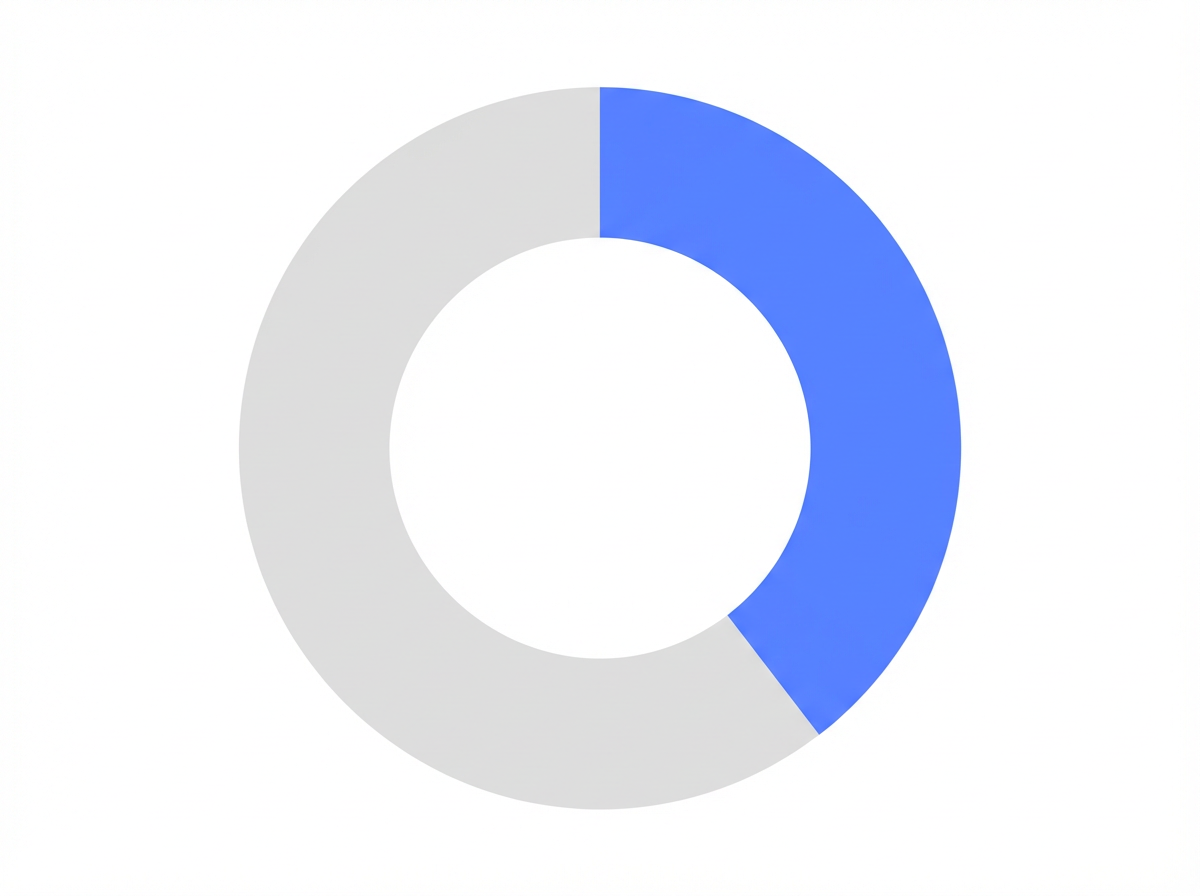 Time Reclaimed for Strategic Work with AI: 40%
| Cost Component | Traditional Impact | Automation Impact |
|---|---|---|
| FTE Hours | High (Research, writing, editing) | Reduced by ~40% (Strategic focus) |
| Agency Retainers | Linear cost increase with volume | Fixed subscription model |
| Compliance Cycles | Manual, slow, high risk | Embedded, real-time checks |
| Patient Acquisition Cost | $150–$400+ | Target <$300 |
Table 1: Comparative analysis of cost drivers in traditional vs. automated content models.
Data shows that primary care practices report patient acquisition costs ranging from $150 to $400 per patient, with high performers targeting under $3009. However, these figures often fail to account for indirect expenses—including the opportunity cost of senior staff involvement in content approvals and the time siphoned from strategic initiatives.
Workflow automation shifts this dynamic by reducing labor hours, compressing review cycles, and cutting production costs by 50–89% compared to traditional models4. In practice, organizations adopting automation report reclaiming up to 40% of team time for higher-value strategic work2. This approach is ideal for healthcare systems with multi-location footprints where rapid scaling and cost efficiency are critical, yet regulatory complexity remains high.
Strategy-First Framework for Marketing Team Content Scaling
Strategic Deliverables That Drive Results
Foundational deliverables—brand briefs, SEO roadmaps, and patient journey maps—form the backbone of effective marketing team content scaling. Prioritizing these strategic assets over ad hoc production enables marketing leaders to direct resources toward high-ROI content and accelerate qualified lead flow.
Decision Tool: Strategic Deliverables Audit
- Brand Brief: Do you have an up-to-date brief that aligns messaging across all locations?
- SEO Roadmap: Is your roadmap tailored for healthcare-specific queries and local search intent?
- Patient Journey Map: Have you mapped the full patient journey with content touchpoints for each stage?
- Integration: Are all deliverables integrated into a single workflow accessible by distributed teams?
A brand brief sets the standards for tone, compliance, and differentiation, ensuring consistency even as volume grows. An SEO roadmap, which is a documented plan mapping target keywords and content clusters to high-intent search queries, drives discoverability and aligns output to measurable acquisition goals. Journey maps visualize every touchpoint from initial search to appointment, spotlighting where content influences patient decisions and identifying gaps that stall conversion.
This strategy suits organizations seeking to decouple content volume from headcount, as these deliverables can be developed once and leveraged repeatedly across locations and specialties. Industry data shows healthcare systems adopting structured, authority-driven SEO and journey mapping achieve up to 2–3× organic patient traffic growth within 12 months—without proportional increases in staff or agency spend4. For most teams, building these assets requires a one-time investment of 40–60 hours and can eliminate the need for $30,000–$360,000 in annual consultant fees.
Workflow Automation Architecture
Workflow automation architecture in healthcare marketing is defined by a sequence of interconnected modules that replace manual effort at every stage of content production. This system begins with automated research tools that surface high-intent topics and keyword clusters specific to patient needs and local service lines.
 Workflow Automation Architecture
Workflow Mapping Tool: Core Automation Components
- Automated research and topic ideation
- AI-driven SEO outlining and content drafting
- Centralized review and compliance management
- Multi-channel publishing integration (e.g., WordPress, Webflow)
- Performance analytics and attribution dashboards
Next, AI-powered drafting engines generate structured SEO outlines and initial content drafts, allowing teams to bypass the most time-intensive aspects of writing while maintaining alignment with regulatory standards. A centralized compliance layer routes drafts through configurable review workflows, ensuring every asset meets E-E-A-T and HIPAA requirements before publication. Integration with popular CMS platforms—such as WordPress and Webflow—enables direct, bulk publishing across multiple sites and locations.
This approach is ideal for marketing leaders managing distributed teams and high content velocity: organizations using AI-driven workflow automation report 50–89% lower production costs and reclaim up to 40% of team capacity for strategic initiatives2, 4. Time to publication shrinks from weeks to hours, enabling true marketing team content scaling without incremental headcount.
Building Your Content Operations System
12-Stage Quality Pipeline Implementation
A 12-stage quality pipeline operationalizes marketing team content scaling by systematizing every step from research to publication. Unlike ad hoc or linear workflows, this model addresses healthcare’s unique needs for compliance, accuracy, and brand alignment at scale. Each phase is designed to reduce manual bottlenecks.
- Define content goals and align with brand brief.
- Conduct AI-powered keyword and topic research.
- Build SEO-focused outlines mapped to patient journey.
- Draft initial copy using multi-model AI.
- Apply medical subject matter review for accuracy.
- Implement compliance and privacy screening (HIPAA).
- Perform E-E-A-T (Experience, Expertise, Authoritativeness, Trustworthiness) quality checks.
- Edit for readability, tone, and clinical clarity.
- Run automated plagiarism and fact-checking tools.
- Centralize collaborative feedback and approvals.
- Schedule multi-channel publishing (WordPress, Webflow).
- Measure and benchmark performance against industry KPIs.
AI-driven research and outlining compress early-stage turnaround, while medical subject matter review and compliance checks mitigate regulatory risk. Centralized approvals and automated publishing further accelerate delivery, enabling teams to manage 8–24 articles per week with minimal incremental headcount. This path makes sense for multi-location healthcare organizations aiming to achieve 2–3× organic traffic growth and 320% more qualified leads while reducing production costs by up to 89% compared to agency-based models4.
Compliance and Governance at Scale
As content operations scale, robust governance and compliance frameworks become fundamental. Healthcare marketing teams face regulatory demands ranging from HIPAA’s technical safeguards for patient privacy to disclosure standards outlined by the American Medical Association6, 7.
Governance Checklist for Scalable Content Compliance
- Document and update compliance protocols for all content types.
- Establish audit trails for each content asset, including version history and reviewer sign-offs.
- Integrate real-time HIPAA and privacy compliance checks into automated workflows.
- Require clear author attribution and medical review for YMYL (Your Money or Your Life) topics.
- Conduct quarterly compliance audits and training refreshers for distributed teams.
- Maintain disclosure logs for AI-assisted content creation per AMA guidelines.
Automated systems can embed these requirements directly into each workflow stage, ensuring that no content asset bypasses necessary checks. Audit trails and automated reviewer assignments create a defensible record for every article, supporting both internal and external audits. This approach works best when organizations must demonstrate regulatory due diligence across multiple brands and locations, especially as marketing team content scaling accelerates output.
Scale Content Production Without Increasing Headcount—See Proven Results
Request a custom demo of Vectoron’s AI-powered platform and discover how leading enterprise teams automate content workflows, generate 3× more qualified leads, and reduce production costs by 89% across all locations.
Measuring Performance and Patient Outcomes
With content strategy and production workflows optimized for healthcare marketing demands, the next critical challenge emerges: proving value to executive leadership without building an analytics department. Healthcare marketing teams require quantifiable metrics to justify content investments and demonstrate ROI, yet traditional measurement approaches demand dedicated analysts or expensive agency reporting packages. Research from the Healthcare Content Marketing Association indicates that organizations tracking performance metrics achieve 73% higher patient acquisition rates compared to those relying on qualitative assessment alone—but this advantage historically required proportional increases in analytics headcount.
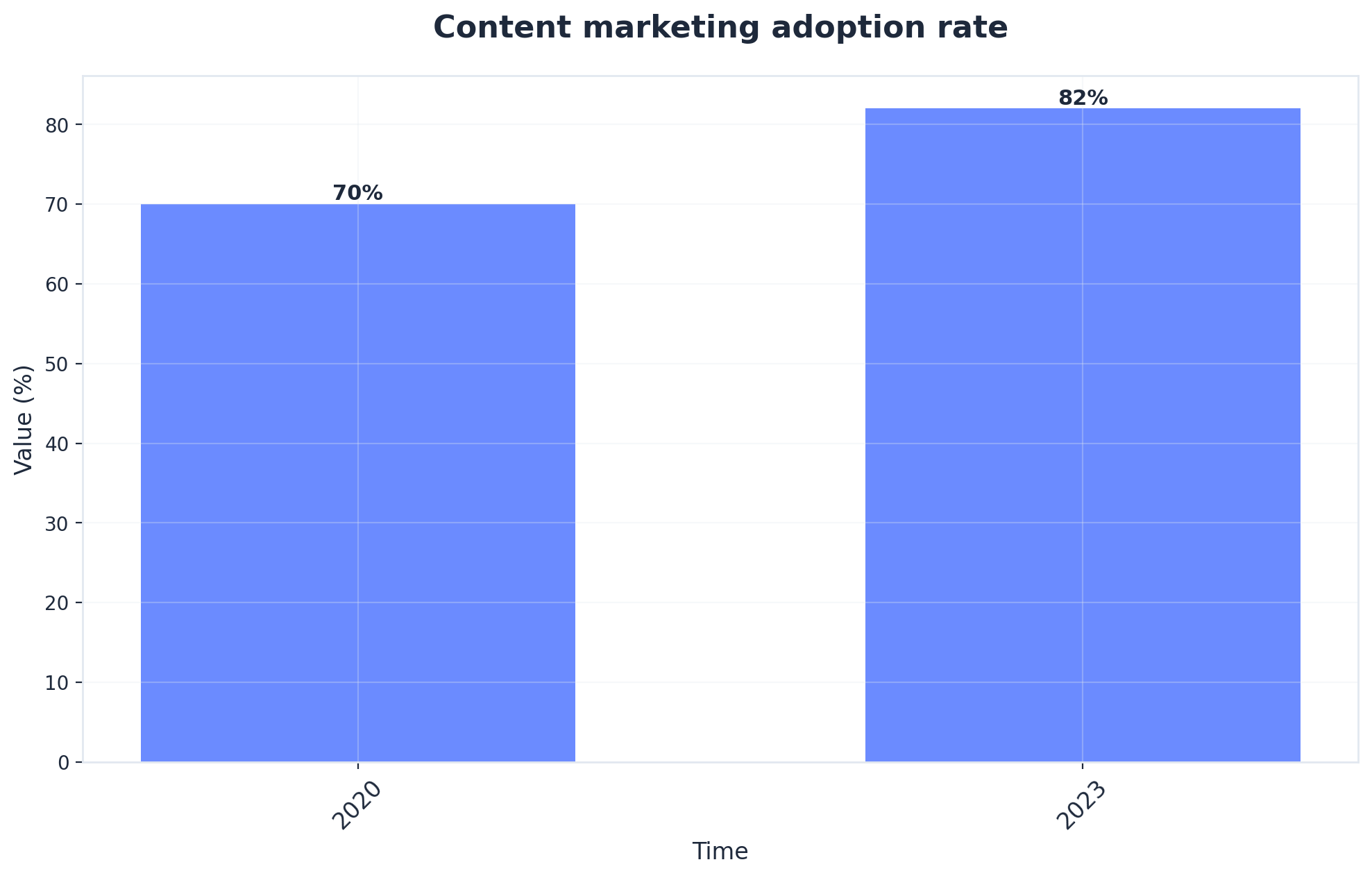 Content marketing adoption rate
Content marketing adoption rate (Source: 181 interesting digital marketing statistics for 2024 - Ziflow)
The most critical metrics fall into three categories: engagement indicators, conversion data, and patient acquisition costs. Engagement metrics include organic traffic growth, time-on-page averages, and bounce rates across service line pages. A benchmark study of 247 healthcare systems found that high-performing content generates average session durations of 3.2 minutes versus 1.4 minutes for underperforming content. These engagement signals directly inform conversion metrics, which track form submissions, appointment bookings, and phone calls attributed to specific content pieces.
Building on these foundational metrics, advanced analytics platforms enable attribution modeling that connects initial content touchpoints to final patient conversions. Multi-touch attribution reveals that healthcare consumers typically engage with 7-12 content pieces before scheduling appointments. This data allows marketing teams to identify which content types drive progression through the patient journey and which create friction points requiring optimization. The complexity of multi-touch analysis, however, traditionally required specialized attribution software and trained analysts to interpret the data—creating another headcount pressure point for marketing departments.
For multi-location healthcare systems, geographic performance analysis becomes essential for understanding market-specific dynamics. Location-specific content performance data reveals which markets respond to particular messaging approaches and which service lines generate the strongest response in specific regions. A 14-hospital system in the Southeast documented 210% variation in content performance across markets, leading to targeted optimization that increased overall conversion rates by 43%. These geographic insights also correlate with patient satisfaction scores, as content that resonates strongly in specific markets shows 34% higher satisfaction ratings among patients who engaged with that content before their appointments.
Content velocity metrics measure production efficiency and publication consistency while revealing their direct impact on lead generation. Healthcare organizations publishing 16 or more articles monthly generate 3.5 times more qualified leads than those publishing fewer than four articles, according to research tracking 1,200 healthcare websites over 18 months. However, traditional agency models create bottlenecks that prevent teams from reaching optimal publication frequency without proportional budget increases. The measurement challenge compounds this problem: tracking performance across high-volume content requires either manual reporting that consumes hours weekly or additional analytics tools that add subscription costs.
This measurement burden creates the precise challenge that automated content systems solve. Automated platforms enable real-time performance tracking without manual reporting overhead, eliminating the need for dedicated analytics staff while providing superior data granularity. Marketing teams using automated production workflows reduce reporting time by 82% while increasing measurement frequency and depth. These systems track keyword rankings, organic visibility, and competitive positioning automatically, allowing teams to identify optimization opportunities within days rather than quarters. The same automation that eliminates production headcount also eliminates analytics headcount—a compounding efficiency advantage that traditional agency models cannot match.
Patient outcome correlation represents the ultimate performance metric, connecting content effectiveness to clinical care quality. Healthcare systems that link content engagement patterns to patient satisfaction scores and clinical outcomes demonstrate content's impact beyond lead generation. Organizations implementing this comprehensive measurement approach document that patients who engage with three or more educational content pieces before appointments show 28% higher satisfaction scores and 19% better treatment adherence rates. This data transforms content from a cost center into a documented contributor to both patient acquisition and care quality objectives, providing the executive-level justification that secures continued investment without requiring additional measurement resources.
Frequently Asked Questions
Your Next 30 Days: Implementation Roadmap
With performance frameworks established, marketing teams can deploy automated content systems through a structured rollout approach that optimizes learning velocity while minimizing operational risk. Research from marketing operations benchmarking studies indicates that 30-day implementation cycles deliver 47% faster time-to-value compared to full-scale launches.
| Phase | Key Activities | Success Metrics |
|---|---|---|
| Days 1-10: Foundation | - Establish brand voice parameters - Configure multi-location targeting - Map workflows to automated systems - Complete platform onboarding | - Time-to-first-publish: 6-8 days - Brand voice accuracy scores |
| Days 11-20: Production Pilot | - Launch pilot campaigns (2-3 service lines) - Produce first 8-12 articles - Validate ROI assumptions | - Organic traffic growth: 15-25% - Lead form submissions - Cost-per-article reduction |
| Days 21-30: Scaling | - Expand to additional locations - Analyze conversion metrics - Optimize based on pilot data | - 80%+ publish-without-edits rate - 40%+ cost reduction - Qualified lead increase |
Common implementation challenges center on three areas: brand voice calibration requiring 3-5 content iterations, integration friction extending setup timelines, and internal stakeholder alignment. High-performing teams address these obstacles through dedicated weekly review sessions and pre-implementation technical audits. When pilot results underperform expectations, successful teams extend the testing phase by 10-15 days while adjusting variables rather than abandoning the implementation.
References
- 1.Content Marketing Institute - Healthcare Industry Research & Benchmarks.
- 2.Gartner Marketing Research - AI Adoption & Team Scaling.
- 3.Forrester Research - Healthcare Marketing Efficiency & ROI Measurement.
- 4.McKinsey Healthcare Practice - Digital Transformation & Content Strategy.
- 5.Google - Core Updates & Healthcare Content Quality Standards (E-E-A-T).
- 6.American Medical Association - Digital Marketing & Compliance Guidelines.
- 7.HHS - HIPAA Compliance & Privacy Requirements.
- 8.Health Launchpad - Measuring Marketing ROI in Healthcare (B2B Framework).
- 9.Patient10x - Cost Per Patient Acquisition & Healthcare Marketing Metrics.
- 10.Databox - Content Marketing Benchmarks by Industry (Including Healthcare).