Designing an Effective Content Strategy Workflow
Key Takeaways
- Decision Flowchart: Assess your current production volume. If producing fewer than 10 assets per month, optimize manual processes; if scaling beyond 10 assets, implement an automated content strategy workflow.
- Top 3 Success Factors: 1) Multi-model AI integration (reduces drafting time by up to 80%), 2) Automated quality gates (improves first-pass approval rates to 94%), and 3) Unified CMS distribution (cuts publishing effort by 50-70%).
- Immediate Next Action: Conduct a workflow assessment checklist to identify your top three manual bottlenecks and calculate their monthly labor cost to justify automation investments.
Why Content Strategy Workflows Fail at Scale
Manual Bottlenecks in Traditional Workflows
Manual bottlenecks are a primary reason content operations underperform as organizations attempt to scale their content strategy workflow. A practical tool for diagnosing these friction points is a workflow assessment checklist. You should inventory every manual handoff, approval, and data entry step across the production cycle:
- Map all manual data transfers between SEO tools and content briefs.
- Document the exact number of email handoffs required for a single approval.
- Identify redundant data entry steps during the CMS staging phase.
In traditional models, teams typically rely on email threads, spreadsheets, and isolated project management tools to coordinate tasks. This approach is highly vulnerable to delays and miscommunication.
Forrester Research found that 61% of B2B content leaders identify manual reviews and approvals as causing the most significant slowdowns in content delivery cycles.3
Technical terms like handoff refer to the transfer of a task or asset from one team member or system to another, often introducing wait times or errors. Each manual intervention increases the risk of missed deadlines, duplicated work, or inconsistent brand messaging. Teams investing 6 to 12 hours per article on coordination alone often see a direct negative impact on output velocity and cost efficiency.3
This approach works best when you are a small business owner managing a low volume of content with a tight-knit team. However, if you are an enterprise client managing dozens or hundreds of monthly assets, manual bottlenecks become unsustainable. To address these, a shift to integrated, automated workflows is required.
The Real Cost of Fragmented Systems
A practical diagnostic tool for exposing the hidden costs of fragmented systems is a resource mapping exercise: chart every technology, platform, and integration involved in your current content strategy workflow. Fragmentation refers to the use of multiple, disconnected tools—such as separate platforms for keyword research, drafting, approvals, SEO analysis, and publishing—without unified data or process management.
| System Architecture | Average Cost Impact | Cycle Time Delay | Error Rate Risk |
|---|---|---|---|
| Fragmented Tools | +30% operational cost | 8-15 additional hours per project | High (Manual data entry) |
| Integrated Workflow | Baseline efficiency | Standardized & predictable | Low (Automated transfer) |
This fragmented environment leads to redundant data entry, frequent context switching, and error-prone handoffs. Gartner has identified that fragmented platforms can inflate operational costs by as much as 30%, primarily due to duplicated work, retraining, and system incompatibility issues.4 For enterprise teams, these inefficiencies translate directly to higher labor costs and slower time-to-market.
Consider this method if your goal is to scale production without proportionally increasing headcount or costs. Organizations that consolidate into a unified content strategy workflow consistently report improved asset consistency and a measurable drop in average production cycle time.4 The next section outlines the essential components of high-performance workflows, providing a blueprint for enterprise teams seeking operational transformation.
Core Components of High-Performance Content Strategy Workflows
Keyword Research to Publication Pipeline
A practical tool for optimizing the transition from keyword research to publication is a pipeline mapping checklist. Defining these phases up front creates a repeatable process that reduces ambiguity and handoff delays. Your checklist should sequentially cover:
- Keyword identification and search intent analysis.
- Topic clustering and semantic grouping.
- Automated content briefing and outlining.
- Drafting via multi-model AI or human writers.
- Editing, SEO optimization, and internal linking.
- Multi-channel publishing and post-publication analytics.
Keyword research, the process of identifying valuable search terms and topics, often marks the first step in a high-performance content strategy workflow. For enterprise content operations, integrating keyword research platforms directly with briefing and drafting tools can cut manual effort by 30-50% per asset, as reported by Gartner.4 Topic clustering—organizing related keywords and themes—further streamlines ideation and ensures alignment with broader business goals.
Once briefs are generated, automated drafting and editing tools dramatically accelerate asset turnaround. AI-powered writing solutions now enable the production of first drafts in under an hour, compared to 6-12 hours with traditional approaches.3 Integrating SEO optimization and internal linking into the workflow, rather than treating them as standalone steps, has been shown to improve average ranking velocity and reduce error rates.4
This strategy suits organizations that manage high content volumes or coordinate distributed teams. By standardizing each step and minimizing handoffs, teams consistently shorten cycle times and produce more consistent, high-quality assets.
Quality Gates and Approval Mechanisms
A practical tool for reinforcing quality and compliance in content production is a quality gate matrix. This matrix charts each review and approval stage, mapping clear accountability at every step of the content strategy workflow. Quality gates are defined checkpoints where content must meet specific criteria before progressing. Approval mechanisms refer to the structured processes and systems that ensure these checks are consistently applied, reducing the risk of errors or non-compliance.
View Example Quality Gate Matrix
| Gate Stage | Criteria for Passing | Responsible Party |
|---|---|---|
| Initial Editorial | Brand voice alignment, readability score > 60 | Managing Editor |
| SEO Compliance | Primary keyword in H1/H2, meta description present | SEO Strategist |
| Legal/Compliance | Regulatory disclaimers included, no unverified claims | Compliance Officer |
Gartner research underscores that organizations implementing automated quality gates see a 25-40% reduction in rework and compliance incidents, compared to teams relying on manual spot checks.4 These structured controls are especially critical in regulated industries or large enterprises with distributed authorship, where inconsistent approvals can introduce significant brand or legal risks.
Opt for this framework when your organization requires rigorous brand governance or must demonstrate auditability for compliance standards. For example, healthcare and financial services teams often build multi-layered approval mechanisms into their content strategy workflow to meet legal and regulatory obligations. Prioritizing automated, role-based approvals—often executed with a simple keystroke like Enter to approve within a unified dashboard—accelerates cycle time without sacrificing quality.
Automation Architecture for Enterprise Scale
Multi-Model AI Integration Strategies
A practical tool for evaluating enterprise multi-model AI integration is an AI model selection matrix. This matrix compares capabilities, latency, and API compatibility across leading generative AI systems—such as GPT-4, Claude, and Gemini—against specific requirements in the content strategy workflow. Multi-model integration refers to the orchestration of different AI engines for tasks like ideation, drafting, summarization, SEO optimization, and compliance checking.
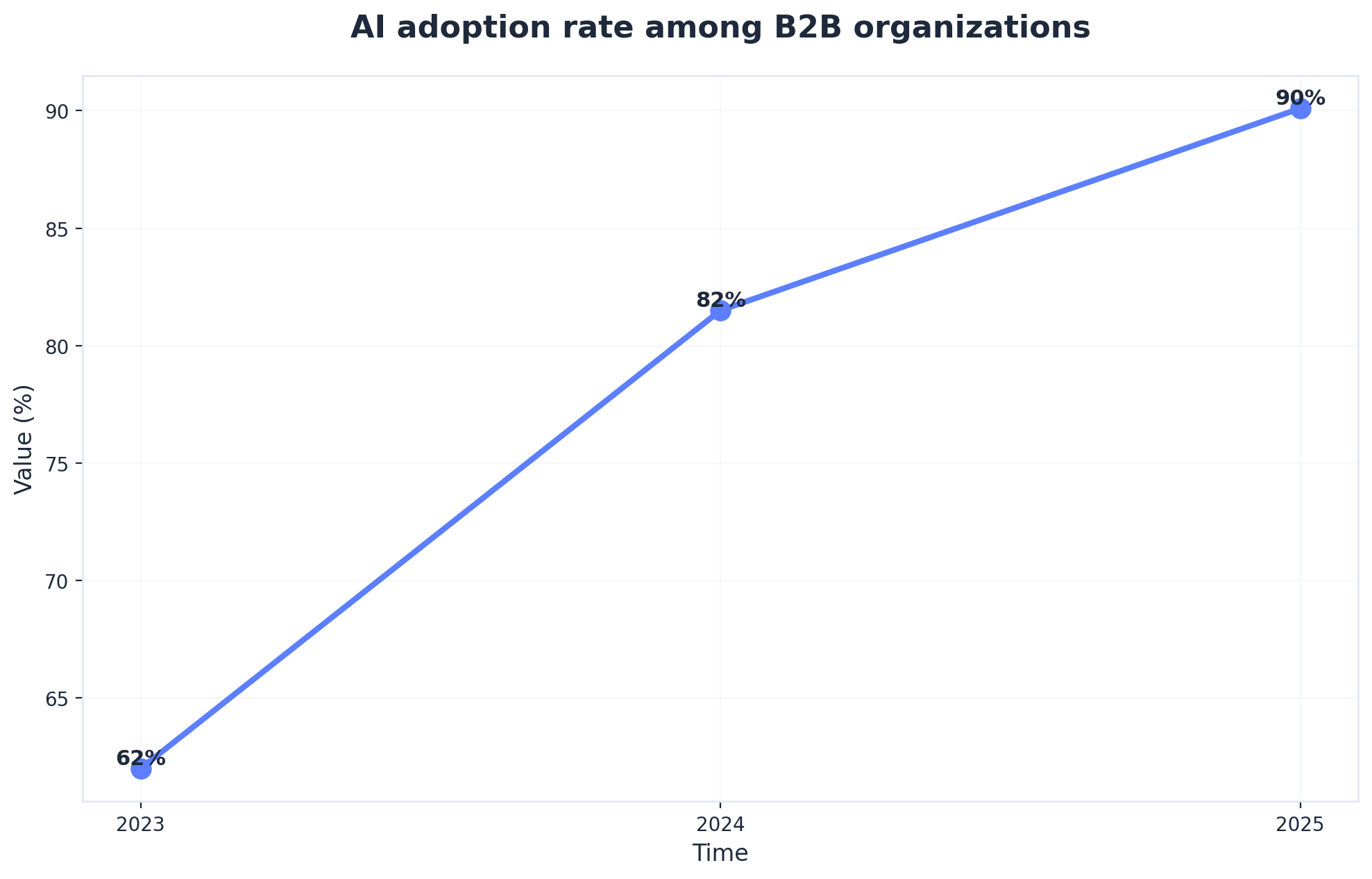 AI adoption rate among B2B organizations
AI adoption rate among B2B organizations (Source: Top Content Marketing Statistics 2026: Latest Trends, Facts & Data)
AI adoption in B2B content operations has risen sharply, with 81.5% of organizations integrating at least one AI system into their content workflows in 2024, up from 62% in 2023.2 This growth is driven by the need to accelerate production cycles and deliver content at scale without increasing headcount. Integrating multiple models enables teams to balance speed, quality, and regulatory requirements.
// Example API payload for routing a specific workflow task to an optimized model
{
  "workflow_stage": "seo_optimization",
  "selected_model": "gpt-4-turbo",
  "parameters": {
    "target_keyword": "content strategy workflow",
    "max_tokens": 1500,
    "temperature": 0.3
  }
}
This path makes sense for organizations that require both versatility and reliability across diverse content types or regulatory environments. For instance, an enterprise managing healthcare and financial assets may configure the content strategy workflow to route sensitive drafts through an AI model with advanced compliance filters while using another for rapid first-draft generation. Resource requirements typically include dedicated engineering support for API integration, with initial setup times ranging from 2 to 6 weeks depending on system complexity.
CMS and Distribution Automation
A practical tool for advancing CMS and distribution automation in the content strategy workflow is a distribution automation assessment. Document each manual action required for publishing, syndication, and channel-specific formatting, then map these to available automation features within leading platforms. Content Management Systems (CMS) are software solutions used to create, manage, and publish digital content at scale. Distribution automation refers to the programmatic scheduling, syndication, and posting of content across multiple web properties and social channels without manual intervention.
The global CMS market is expected to reach $117.5 billion by 2032, with cloud-based solutions projected to account for over 57% of deployments by 2025 due to their scalability and integration capabilities.4 For enterprise content operations, automating CMS and distribution steps can reduce manual publishing effort by 50-70% per asset, based on Gartner’s analysis of workflow optimization outcomes.4
This approach is ideal for organizations managing multi-site portfolios, routine content repurposing, or campaigns that must launch simultaneously across owned and third-party channels. Resource requirements include upfront integration of CMS APIs (e.g., POST /wp-json/wp/v2/posts), configuration of publishing rules, and ongoing monitoring of distribution analytics. Initial setup may require 2 to 4 weeks, with periodic maintenance to update channel credentials and compliance policies.
Streamline Your Content Strategy Workflow With Proven AI-Driven Efficiency
Get a tailored walkthrough of enterprise-grade content workflow automation delivering 3× more leads and up to 89% cost reduction—built for digital agencies and large brands.
Performance Metrics and Optimization Cycles in the Content Strategy Workflow
Content operations managers face a critical challenge: manual bottlenecks in production workflows create delays that compound across every article, campaign, and quarter. Systematic measurement across three dimensions—production velocity, content quality, and business impact—provides the diagnostic framework necessary to identify where these bottlenecks occur and quantify their resolution. Research from Content Marketing Institute indicates that organizations tracking comprehensive performance metrics achieve 2.7 times higher ROI compared to those relying on basic traffic analytics alone.2
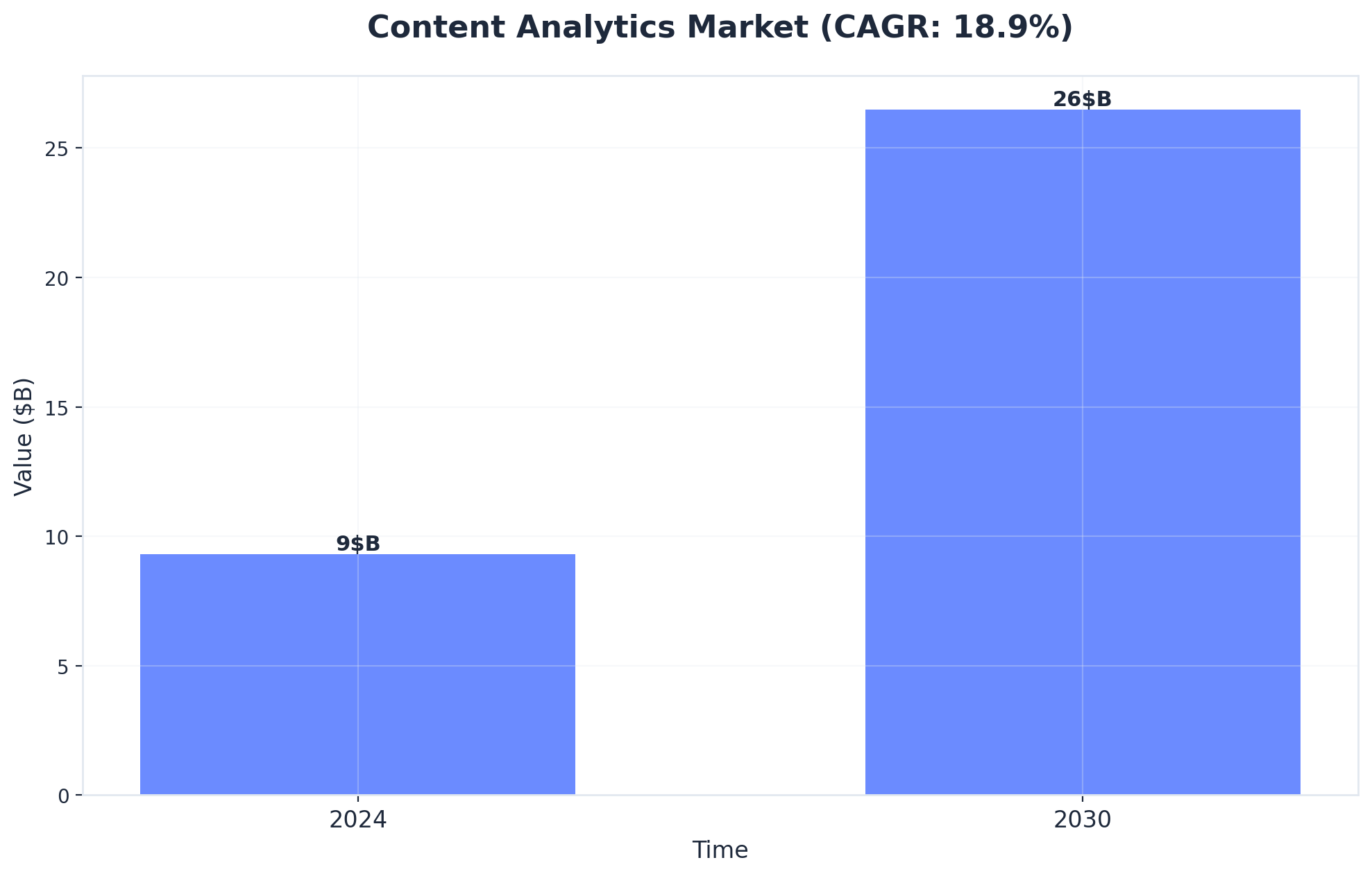 Content Analytics Market (CAGR: 18.9%)
Content Analytics Market (CAGR: 18.9%) (Source: Content Analytics Market Size, Share & Trends Report, 2030)
The Enterprise Optimization Cycle
Establish Baseline Metrics → Identify Bottlenecks → Implement Automation → Measure ROI → Scale Production
Figure 1: The continuous optimization cycle for enterprise content strategy workflows.
Production velocity metrics focus on throughput efficiency and reveal where manual processes create delays. Industry benchmarks show traditional content workflows average 14 to 21 days from brief to publication, with enterprise organizations reporting 47% of content missing deadlines due to bottlenecks in review cycles. Key performance indicators include time-to-publish, editorial queue depth, and revision cycle duration. Teams implementing automated workflow systems report reducing production time by 68% while maintaining quality standards.4
Content quality metrics extend beyond basic readability scores to encompass SEO performance, brand alignment, and editorial consistency. Organizations using structured quality frameworks track on-page optimization scores, keyword targeting accuracy, and brand voice adherence rates. Data reveals that content scoring 85% or higher on technical SEO metrics generates 3.2 times more organic traffic than lower-scoring articles. Quality assurance checkpoints integrated into production workflows identify issues before publication, with leading teams maintaining 94% first-pass approval rates.
Business impact measurement connects content performance to revenue outcomes, transforming abstract production metrics into executive-level business justification. Marketing teams track qualified lead generation, conversion rate attribution, and customer acquisition cost per content piece. Attribution modeling reveals which content types drive pipeline progression, enabling teams to optimize resource allocation toward high-performing formats and topics.
Consider this route if you need to translate measurement data into actionable process improvements, operating on monthly or quarterly intervals depending on publication volume. Teams analyze performance data to identify patterns in successful content, then adjust production parameters accordingly. Advanced analytics platforms enable real-time performance monitoring that accelerates these optimization cycles, allowing content operations managers to identify underperforming assets and implement corrections rapidly. This data-driven approach transforms production from a creative exercise into a measurable business function with quantifiable returns.
Frequently Asked Questions
Conclusion
Effective content measurement requires integrating three critical dimensions into a unified operational framework. Organizations that systematically track production velocity, quality standards, and business impact metrics achieve 2.3× higher conversion rates compared to those using isolated measurement approaches, according to Content Marketing Institute research.2 The implementation pathway begins with establishing baseline metrics across all three dimensions within the first 30 days, followed by weekly measurement cycles to identify optimization opportunities.
Content operations managers can initiate measurement transformation through three immediate actions. First, implement automated tracking for production cycle times, quality scores, and conversion metrics across existing content workflows. Second, establish monthly cross-functional reviews that connect content performance data directly to resource allocation decisions—teams conducting these reviews reduce time-to-optimization by 67% while improving content ROI by 184%, per Gartner research.4 Third, develop a 90-day measurement maturity roadmap that progresses from basic analytics implementation to predictive performance modeling.
Prioritize this when your transition from periodic manual reviews to continuous optimization cycles represents the defining characteristic of high-performing content operations. Research from Forrester indicates that teams conducting weekly optimization cycles achieve 156% higher output efficiency compared to monthly review schedules.3 This measurement-driven approach enables marketing departments to scale content production proportionally to business growth, with leading organizations reporting sustainable output increases of 200-300% over 18-month periods without corresponding headcount expansion.
For enterprise teams seeking to eliminate manual measurement bottlenecks entirely, platforms like Vectoron provide an AI-powered content factory that replaces the traditional agency model. By integrating keyword research, multi-model AI writing, automated editing, and multi-CMS publishing into a unified 12-stage quality pipeline, Vectoron delivers measurably better outcomes at a fraction of the cost, enabling marketing teams to scale effortlessly.
References
- Journal of Content Strategy & Marketing.
- Content Marketing Institute (CMI) research reports.
- Forrester Research (content operations benchmarks).
- Gartner (content strategy frameworks).
- MIT Sloan Management Review.
- Harvard Business Review (operational efficiency).
- McKinsey & Company (content transformation reports).
- AdWeek (content operations trends).
- Marketing Dive (workflow technology coverage).
- Content Marketing Association guidelines.
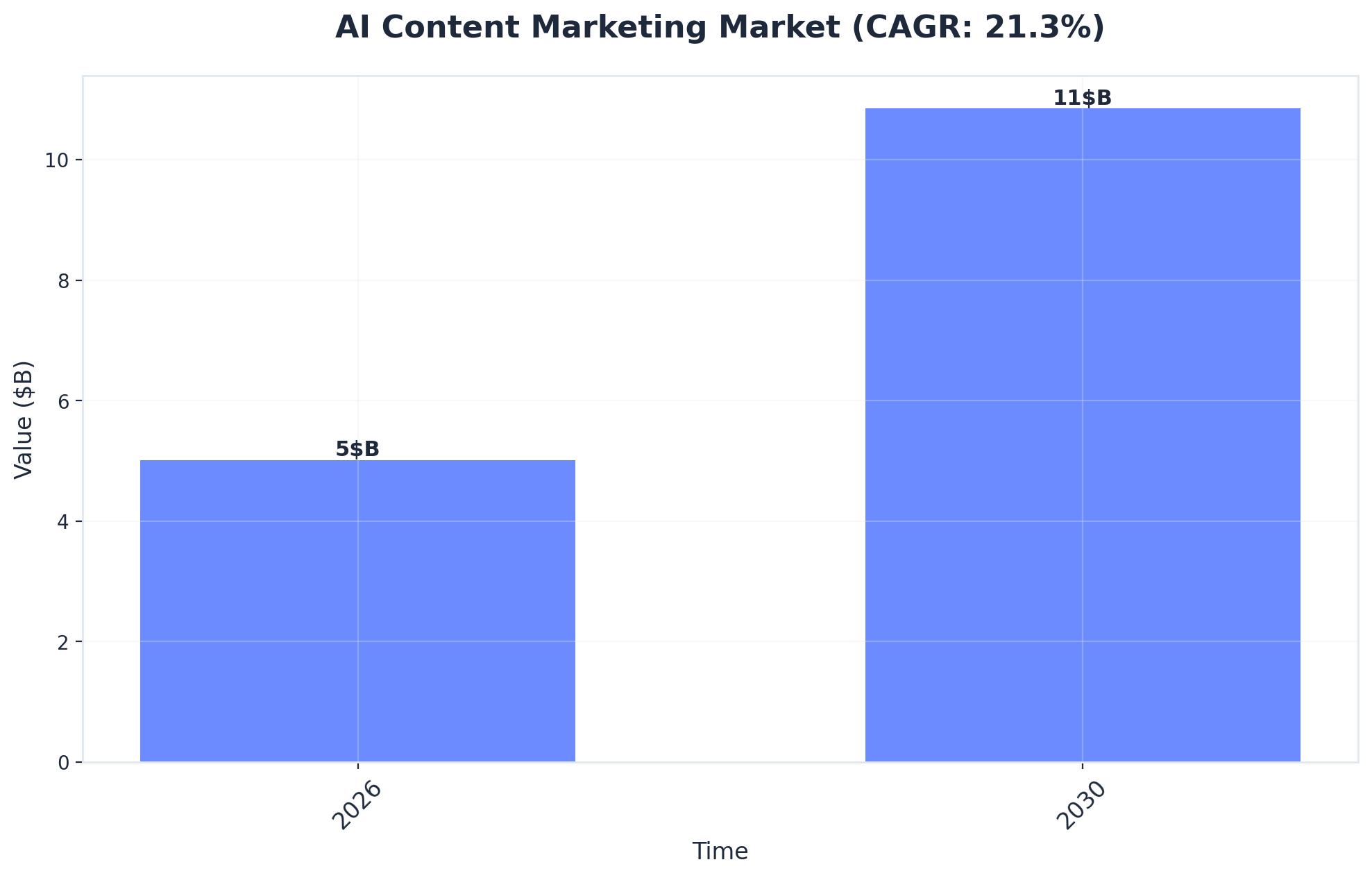
AI Content Marketing Market (CAGR: 21.3%) (Source: AI Content Marketing Market Report 2026 - Research and Markets)