
Key Takeaways
- Scaling an agency depends on redesigning the operating model into four governed layers—Signal, Strategy, Production, and Measurement—each with defined inputs and approval gates rather than adding headcount.
- Senior judgment should concentrate on four decisions: positioning, channel mix, measurement framework, and final approval, while briefing, QA, and reporting are systematized to prevent coordination overhead from consuming strategist hours.
- Throughput per senior hour replaces utilization as the meaningful metric, since automating commodity output protects margin while brand-effect work drives disproportionate business results per the IPA Databank 6.
- Sequencing matters: instrument measurement on two or three pilot accounts first, codify QA and approval criteria next, and connect Signal feeds last—defining gate criteria before selecting tools 4.
The bottleneck isn't talent, it's the operating model
Agencies rarely scale by simply adding more strategists. Scaling occurs when the operational flow of work transforms. A 12-person content team managing 40 accounts operates fundamentally differently from a 4-person team handling 10 accounts. It involves distinct inputs, approval processes, and potential failure points.
The March 2023 CMO Survey highlighted that marketers consider "having the right operating model" as crucial as talent for future organic revenue growth 7. This insight, from client-side CMOs, suggests that if buyers prioritize structure over headcount, agencies cannot continue to price services solely based on hours logged.
Gartner defines marketing operations as the function overseeing campaign planning, technology, and performance measurement across a marketing program 10. Most independent agencies lack a dedicated marketing operations function. Senior strategists often absorb these responsibilities—writing briefs, managing revisions, and reconciling reports—which limits their capacity for strategic thinking and caps growth.
This article conceptualizes a campaign as a governed workflow with four distinct layers: Signal, Strategy, Production, and Measurement. Each layer has defined inputs, prioritized tasks, and an approval gate before progressing. The objective is not to reduce team size but to elevate human judgment to where it has the most impact and to systematize coordination tasks that currently consume valuable time in status meetings.
Why the traditional agency campaign math stopped working
Clients are absorbing the work agencies used to sell
The percentage of marketers operating an in-house agency increased from 58% in 2013 to 82% in 2023, according to ANA research 8. The primary driver for this shift was cost efficiency, indicating that clients found they could produce work more affordably than agencies were charging.
This trend redefines pricing discussions. For years, independent agencies priced campaign production assuming clients lacked the internal capabilities. Services like design systems, paid media trafficking, landing page development, social calendars, and reporting were typically agency-provided due to client staffing limitations. The 24-point increase in in-house agencies demonstrates that this assumption is no longer valid.
Deloitte's 2026 CMO Survey identifies operating model redesign as a key lever CMOs are using for growth 9. Coupled with ANA data, it's clear that clients are not only insourcing execution but also restructuring their operations around it. Agencies that continue to sell production hours at traditional rates are directly competing with internal client teams that do not need to defend a gross margin.
The strategic imperative for agencies is to move upstream. Services like positioning, measurement design, cross-channel orchestration, and access to specialized tools are more challenging for clients to build internally and justify hiring for. Agencies that focus senior talent on these areas—and systematize the production layer that clients can now replicate—retain the parts of the campaign where pricing power still exists.
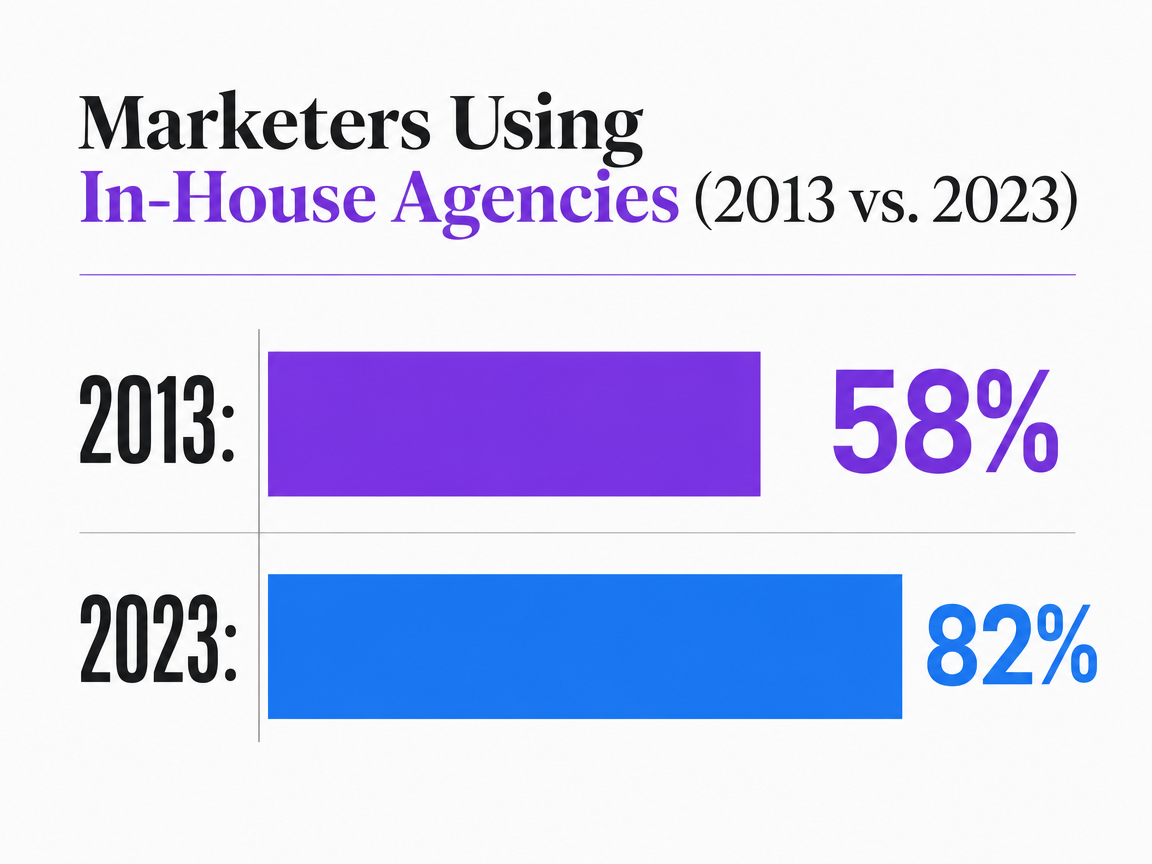 Marketers Using In-House Agencies (2013 vs. 2023)
Data from the ANA shows the percentage of marketers using an in-house agency grew from 58% in 2013 to 82% in 2023.
Where senior hours actually leak in a campaign
When agency leaders examine where campaign margins erode, the issue is rarely the work itself but the extensive coordination surrounding it. This includes brief drafting and revision cycles, multiple kickoff calls, status meetings to synchronize freelancers, and reconciling various tracking spreadsheets before quarterly business reviews.
McKinsey's analysis of agile marketing squads revealed they execute campaigns two to three times faster than non-agile teams and reduce execution costs by 10–30%, while accelerating idea testing five to ten times 2. While this study focused on marketing organizations restructuring with cross-functional squads, the underlying principle applies: speed and cost improvements stem from eliminating handoffs, not from intensifying efforts on existing ones.
In traditional agency campaigns, senior strategist time is typically consumed in three areas:
- First, translating client discussions into detailed briefs for junior staff or freelancers.
- Second, quality assurance (QA) of deliverables, often leading to revisions that could have been avoided with a more precise brief—which the strategist lacked time to write due to ongoing QA.
- Third, presenting work in client-preferred formats, frequently requiring deliverables to be rebuilt into specific deck templates.
These activities do not scale. Each new account adds another brief-to-QA-to-present cycle, diverting senior strategists from the strategic thinking that justifies their fees. Forrester's marketing operations blueprint suggests that clarifying purpose, remit, roles, and metrics before implementing technology is key 4. This is because coordination overhead is primarily a process and role issue, not a tooling problem. Systematizing the briefing process and QA gates is where significant time savings can be realized.
A four-layer campaign engine: Signal, Strategy, Production, Measurement
Signal: the inputs that decide what gets built
Every campaign begins with a decision about what to create. In most agencies, this decision is made during a kickoff call, refined in a brief, and validated weeks later with the first draft. The Signal layer replaces this sequence with a standardized set of inputs accessible to any account team.
The Signal layer comprises data feeds that answer three critical questions before a strategist begins a brief: the client's current pipeline performance, successful channel data from comparable accounts, and competitive activity. This includes call transcripts, form-fill quality scores, cost-per-lead by campaign, keyword trends, and creative fatigue indicators. It also incorporates qualitative inputs typically gathered manually by senior strategists, such as sales call insights, CRM notes, and seasonality patterns.
McKinsey's operating model framework positions data alongside people, process, and technology as essential interconnected elements for scalable campaigns 1. Agencies often miss this connection, with data scattered across various sources, forcing strategists to act as the integration layer. A functional Signal layer ensures inputs are pre-joined and ranked, allowing strategy discussions to focus on "what to do" rather than "what is this data."
Strategy: where senior judgment is concentrated, not diluted
The Strategy layer is where an agency's true value is generated, yet it is frequently compromised by downstream coordination tasks. When a senior strategist spends a significant portion of their week rewriting briefs and managing revisions, the hours logged as "strategy" are not genuinely strategic.
A layered model focuses senior judgment on four key campaign decisions: the positioning approach, the channel mix, the measurement framework, and final approval. All other tasks—brief formatting, asset variations, QA checklists, and reporting—are coordination activities that should not consume senior time. Forrester's blueprint emphasizes this sequence: purpose, remit, roles, metrics, then technology 4. Implementing a project management tool before defining which decisions require senior approval will only accelerate existing inefficiencies.
The March 2023 CMO Survey indicated that client-side marketers prioritize the right operating model alongside talent for future organic revenue growth 7. From an agency perspective, this means the value clients pay for is increasingly the judgment applied to the model, not the hours spent on deliverables. Agencies that concentrate senior time on these four decisions can charge for strategy without requiring a strategist's direct involvement in every deliverable. Work passes through an approval gate, but the strategist defines the criteria once, rather than reviewing each deliverable individually.
Production: the layer that must be systematized, not staffed
Production is the layer where agency margins either grow or shrink. It's also where adding personnel yields the least return, as each new producer introduces coordination costs that increase exponentially with team size. Two freelancers require one handoff, but ten freelancers require forty-five.
McKinsey's research on agile squads, which restructure around cross-functional execution rather than sequential briefing, identified consistent improvements:
- idea testing is 5–10 times faster,
- campaign execution 2–3 times faster,
- execution costs drop by 10–30%,
- and marketing revenue increases by 20–30% 2.
While this study focused on marketing organizations, the core insight remains: improvements come from integrating the brief-to-produce-to-QA loop into a single governed workflow, not from speeding up individual steps.
For agencies, systematizing production involves codifying three elements:
- the template library (formats, dimensions, tone, and brand guidelines that juniors or machines can execute without constant strategist input),
- the QA rubric (objective checks performed before human review, allowing senior time to focus on judgment rather than minor errors),
- and the approval gate (who signs off, based on what criteria, and within what timeframe).
This approach redefines staffing. Instead of asking how many producers are needed for 40 accounts, the question becomes how many accounts one production system can handle before the approval gate becomes the bottleneck—a much more manageable problem than continuous hiring.
Measurement: the discipline that closes the loop
A campaign without a predefined, measurable outcome is merely a deliverable. The Measurement layer transforms the other three layers into a system that continuously improves rather than simply repeating processes.
The IPA's guidance on effectiveness emphasizes embedding measurement as a daily practice, not just a post-campaign report 5. In an agency context, this means three actions occur before production begins:
- the primary business metric is identified and instrumented;
- secondary diagnostic metrics, explaining primary metric movement, are agreed upon with the client;
- and the counterfactual (e.g., a holdout group, prior-period baseline, or matched-market comparison) is determined in the same discussion.
Effective measurement also feeds back into the Signal layer for subsequent campaigns. What proved successful on one account becomes an input for another. Without this feedback loop, every campaign is a bespoke effort, preventing the agency from building a pattern library that enables junior staff to produce high-quality work. With it, the model continuously refines itself, embodying the true definition of a scalable engine.
Test a Scalable Campaign Workflow in Action
Run live campaigns and measure process efficiency in your agency environment before making a commitment.
Throughput per senior hour: the metric agencies should be watching
Traditional utilization rates and effective hourly rates were designed for a billing model where a strategist's time was the product. In a layered campaign engine, a strategist's time is the limiting factor for campaign processing. The critical metric becomes throughput per senior hour: the number of governed campaigns moving from Signal to Measurement per hour of senior judgment applied.
The implications are clear. An agency where a senior strategist personally handles every brief, revision, and reporting deck will manage four to eight active campaigns, depending on complexity. Conversely, an agency where the strategist defines gate criteria once and approves against them can process three to five times that volume with the same person, not because the strategist works faster, but because coordination tasks are removed from their schedule.
McKinsey's operating model research defines a modern setup as connected people, processes, data, and technology focused on data-driven personalization at scale 1. Throughput per senior hour is the operational measure of this definition. It assesses the actual connectivity of these four elements; when they are disconnected, the strategist becomes the integration point, and throughput declines.
Agencies tracking this metric quickly adjust two behaviors. They stop rewarding strategists for being indispensable to individual accounts and start incentivizing the design of gate criteria that allow more accounts to pass through approval without compromising quality. This marks the transition from a studio model to an engine model.
Protecting brand-effect work while automating commodity output
A layered production system presents a temptation: to automate an increasing portion of campaigns until deliverables are fully automated. While this reduces costs, it also diminishes the value clients are willing to pay a premium for.
The IPA Effectiveness Databank, analyzing over 800 campaigns, found that 93% of trust-building campaigns reported very large business effects, compared to 66% of all for-profit campaigns 6. This indicates brand-effect campaigns are approximately 41% more effective at driving business outcomes. While the sample is self-selected, the significant difference between trust-building work and other campaigns remains consistent.
Applied to a scalable production model, this suggests a clear direction. Commodity output—such as programmatic creative variants, keyword-cluster content, paid social iterations, and standard reporting—is ideal for automation. Here, the marginal cost of additional assets approaches zero, and the effectiveness ceiling of any single unit is low. Conversely, brand-effect work—positioning, narrative architecture, and campaign ideas that build trust—is where senior human judgment creates disproportionate business impact. Automating this area risks destroying the core value proposition.
The layered engine enables this distinction. Production capacity handles the volume that clients might otherwise insource, while senior time is reserved for the high-impact work that demonstrably moves the business, as evidenced by the databank.
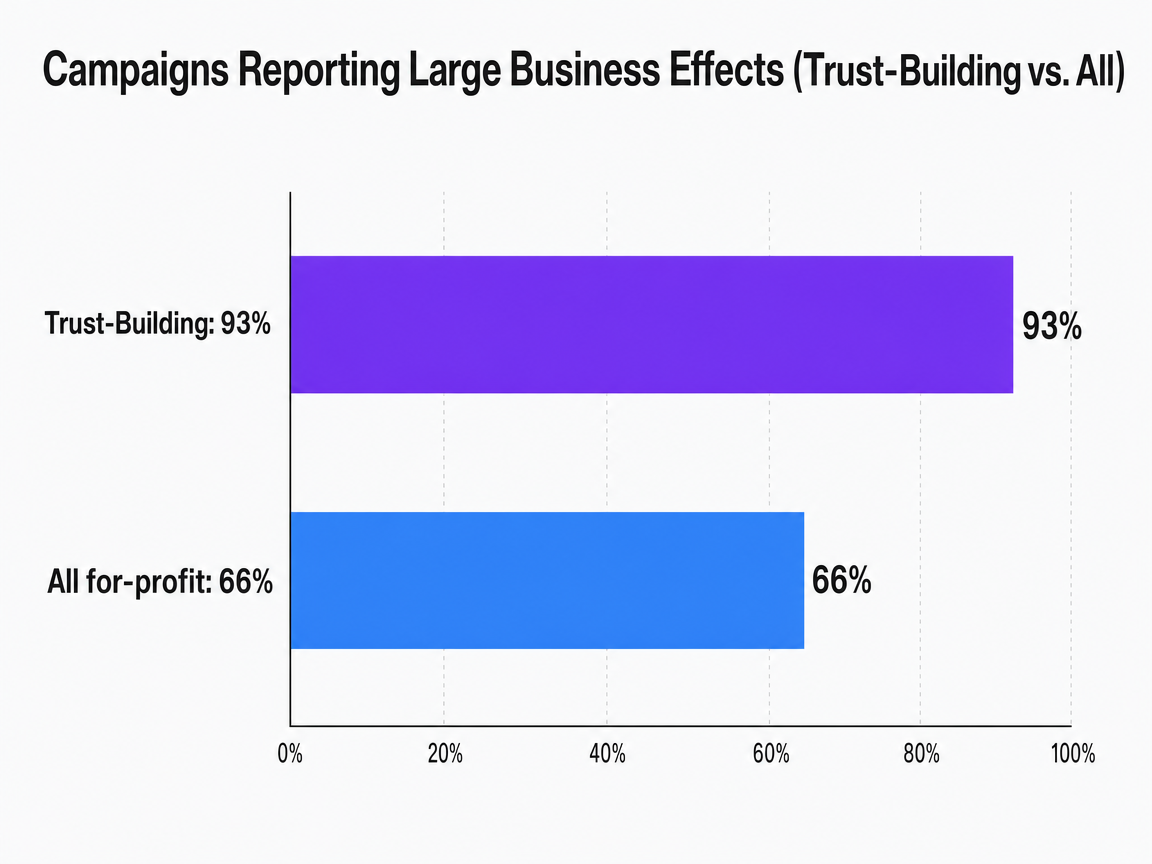 Campaigns Reporting Large Business Effects (Trust-Building vs. All)
93% of trust-building campaigns report very large business effects, compared to 66% of all for-profit campaigns.
See How Leading Agencies Are Scaling Campaign Delivery Without Adding Overhead
Get a detailed walkthrough of an AI-powered campaign workflow that reduces production bottlenecks and preserves client oversight—supported by benchmarks from top-performing agency teams.
Portfolio economics: what changes at 50+ concurrent campaigns
The preceding discussion assumed a single agency managing a defined set of accounts. However, when the same operating model is applied across 50 or more concurrent campaigns, the dynamics shift, and constraints move from delivery capacity to portfolio governance.
At a single-account scale, the strategist is the primary constraint. At a portfolio scale, constraints emerge in two areas: the quality of ranked priorities from the Signal layer and the throughput of the approval gate feeding Production. Neither scales linearly by simply adding people. A senior strategist reviewing 50 campaign approvals weekly requires pre-applied gate criteria and pre-flagged exceptions; otherwise, reviews become superficial, leading to quality degradation.
Portfolio-scale economics also alter the marginal cost of running an additional campaign. In a traditional agency, campaign 51 costs roughly the same as campaign 5 due to individual briefing chains and coordination overhead. In a layered engine, the marginal cost curve bends downward. The Signal layer and template library are largely fixed investments amortized across the entire portfolio. The Measurement layer's pattern library improves with each additional campaign, enhancing average outcomes without requiring proportional senior time.
McKinsey's agile squad research reported 10–30% lower execution costs and 20–30% higher marketing revenue for organizations that restructured around cross-functional execution 2. While this study focused on marketing organizations rather than multi-account agencies, the directional gains hold: cost improvements come from fixed-cost amortization and reduced coordination, both of which compound with portfolio size.
Two governance shifts are crucial at this scale:
- Cross-account learning must be an explicit workflow, not informal conversations; insights from one account are useless if other teams don't access them.
- Additionally, the approval gate needs tiered criteria, allowing routine variations to pass through objective checks while brand-effect work still receives senior review.
Agencies managing 50+ concurrent campaigns without these shifts risk operating 50 versions of a 5-account model, which erodes portfolio margins.
Implementation: sequencing the redesign without stopping delivery
An agency managing 40 accounts cannot halt delivery to overhaul its operating model. The redesign must occur concurrently with live campaigns, making sequencing more critical than ambitious scope.
Media Sense's staged approach to operating model redesign suggests starting with a gap analysis, reviewing the existing agency and vendor ecosystem, and developing a roadmap of quick-win initiatives before addressing deeper structural changes 3. For agencies, this translates into three sequential steps:
- First, instrument the Measurement layer on two or three willing accounts: define the primary metric, agree on the counterfactual, and establish reporting to build the pattern library.
- Second, codify the QA rubric and approval gate criteria for a high-volume channel, typically paid social or content.
- Third, once these two steps are functional, connect the Signal layer feeds to ensure pre-joined, ranked priorities.
Forrester's blueprint outlines a similar sequence: purpose, remit, roles, metrics, then technology 4. Agencies often err by reversing this order. Acquiring a workflow platform before defining gate criteria merely accelerates existing inefficiencies. Defining gate criteria first, then selecting tools to enforce them, is what transforms redesign into increased throughput.
Pilot accounts should be chosen for their willingness to experiment, not their size. Two mid-tier clients who trust the agency and are open to new approaches can help establish a working template within a quarter. This template can then be rolled out to the remaining accounts, one channel at a time, while protecting senior time throughout the transition.
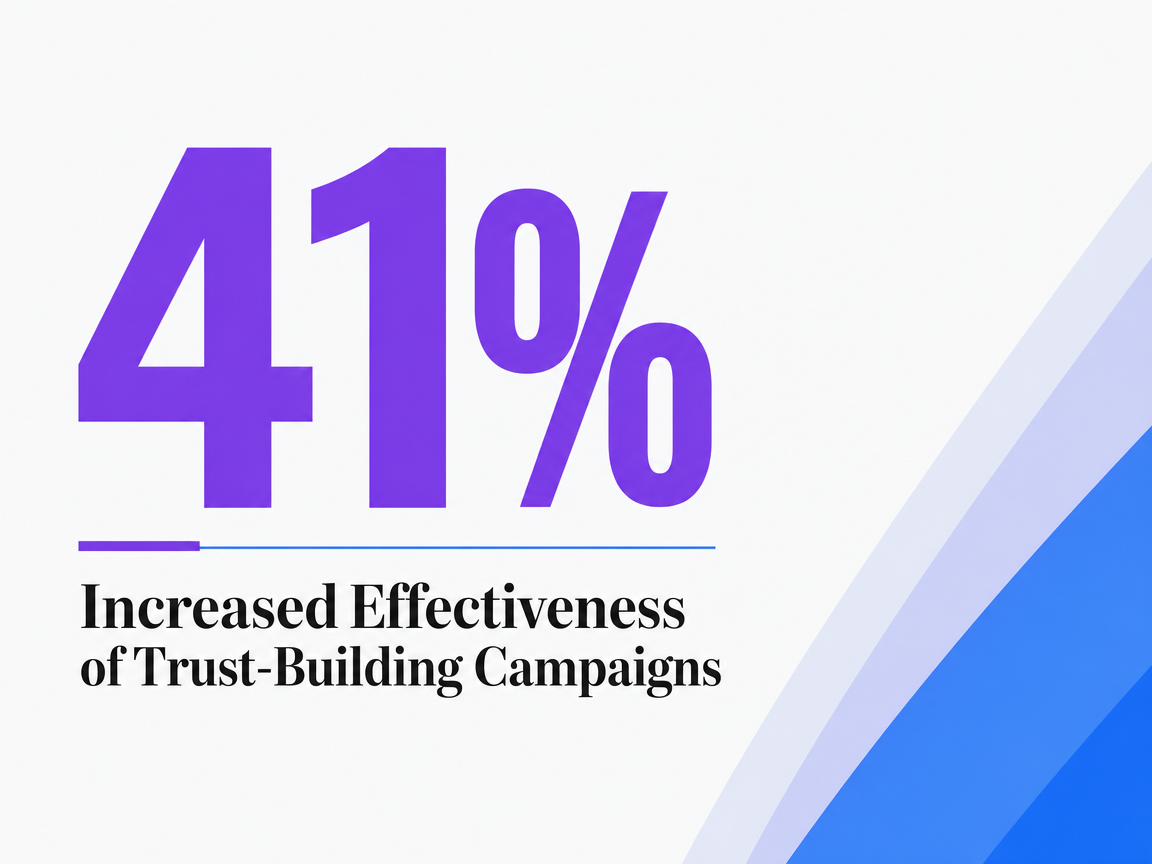 Increased Effectiveness of Trust-Building Campaigns
Increased Effectiveness of Trust-Building Campaigns
Frequently Asked Questions
References
- 1.Connecting for growth: A makeover for your marketing operating model.
- 2.When agile marketing breaks the agency model.
- 3.Reimagining The Future Marketing Operating Model.
- 4.Bolster Your B2C Marketing Operations Function With This Step-By-Step Blueprint.
- 5.IPA REPORT: Making Effectiveness Work.
- 6.IPA releases IPA Effectiveness Databank analysis.
- 7.The CMO Survey – Topline Report March 2023.
- 8.ANA: In-house agency trend continues to gain steam.
- 9.2026 CMO Survey | Deloitte US.
- 10.A Guide to Marketing Ops Organization Structures.