Mapping a Marketing Workflow Chart for Cross-Functional Teams
Why Workflow Charts Drive Healthcare Marketing
Healthcare marketing teams face a strategic opportunity that most operational challenges obscure: the ability to scale content execution across locations and service lines without proportional increases in headcount. The constraint isn't production capacity—it's approval coordination. A 2023 study by the Healthcare Marketing Association found that 68% of multi-location healthcare marketing programs experience delays of 5-12 business days between content completion and publication, with approval workflows cited as the primary friction point. These delays compound across service lines, locations, and campaign types, systematically limiting patient acquisition velocity.
The diagnostic power of approval workflow documentation reveals inefficiencies that remain invisible during routine execution. A multi-location cardiology practice discovered through workflow mapping that 73% of approval requests involved content already covered by existing brand guidelines—representing 22 content types that could operate under pre-approved parameters. This single structural adjustment reduced their average time-to-publish from 9.2 days to 3.1 days across 14 locations. Research from the Content Marketing Institute demonstrates that marketing teams using documented approval workflows reduce average review cycles by 43% and increase monthly content output by 31% without adding headcount.
Approval workflows address execution bottlenecks by establishing visual clarity around three critical operational questions: what requires stakeholder approval before execution, what operates under pre-approved parameters, and where handoffs create delay risk. The framework transforms approval coordination from a reactive management task into a documented system that functions without constant intervention.
For healthcare marketing managers overseeing complex service portfolios, approval workflows provide the operational transparency that enables autonomous execution at scale. They document decision authority, clarify role boundaries, and create accountability structures that support both team efficiency and stakeholder confidence. Data from healthcare marketing operations shows that teams with documented workflows report 54% fewer missed deadlines and 39% higher stakeholder satisfaction scores compared to teams operating on informal approval processes. This operational foundation allows marketing execution to scale across locations, service lines, and campaign types while maintaining appropriate oversight and brand consistency—creating the conditions where pre-approved content moves to publication without requiring management check-ins for every asset.
Core Components of a Cross-Functional Chart
Swim Lanes, Roles, and Handoff Points
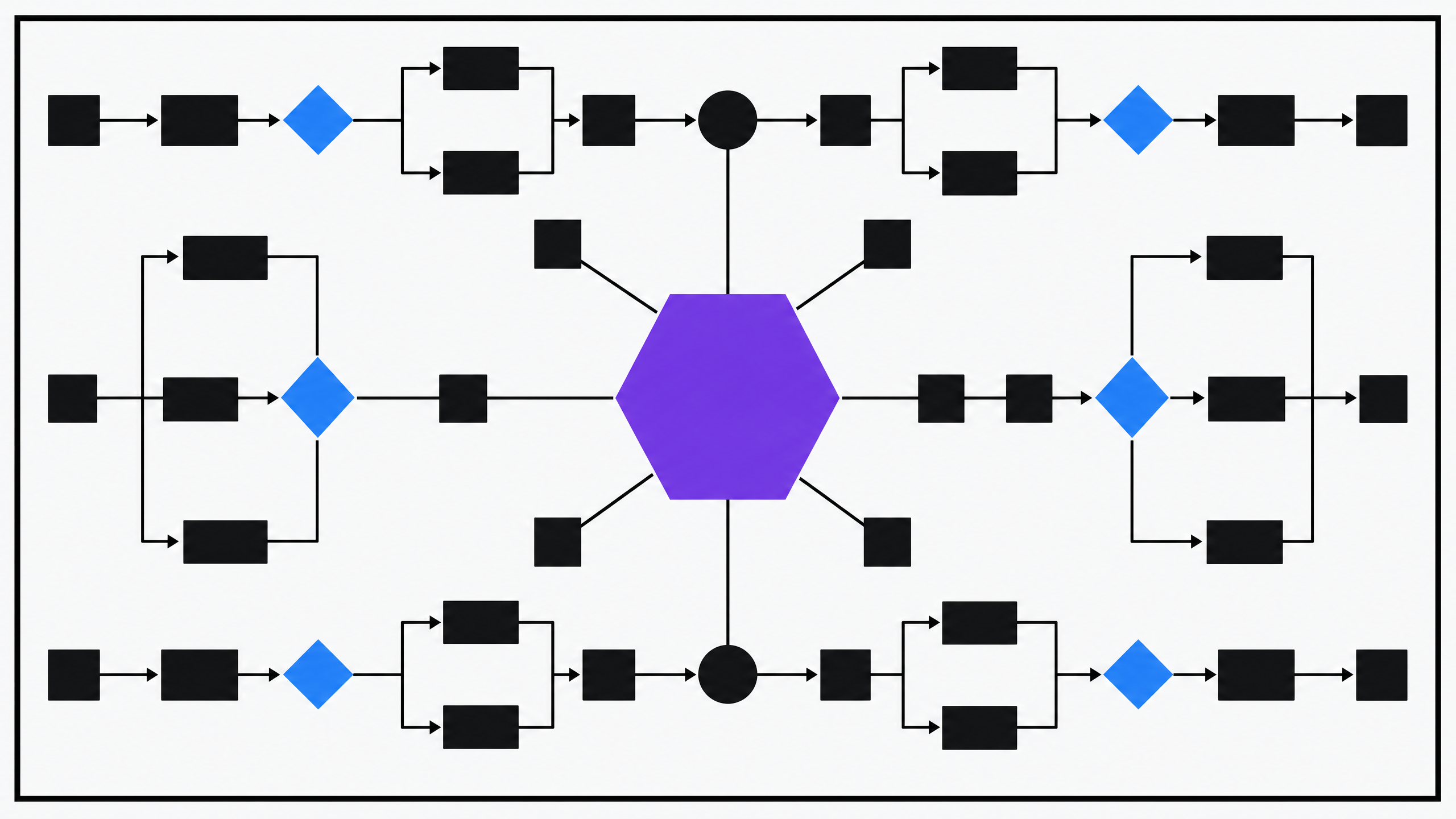
A well-structured marketing workflow chart for cross-functional healthcare teams relies on three foundational elements: swim lanes, clearly defined roles, and explicit handoff points. Swim lanes are horizontal or vertical bands within a workflow diagram, each representing a distinct team or functional area—such as marketing, compliance, clinical, or IT. This format enables teams to see, at a glance, which group is responsible for each step, minimizing confusion when multiple departments collaborate on campaign execution 3.
 Swim Lanes, Roles, and Handoff Points
Defining roles within each swim lane is essential. It clarifies who owns each task or decision, reducing the likelihood of duplicated work or missed responsibilities. In process mapping protocols, standardized templates prompt teams to list specific individuals or job titles for every action and review point, ensuring accountability and supporting efficient onboarding of new staff 8.
Handoff points mark where responsibility shifts from one team or individual to another. Research identifies poorly managed handoffs as a primary source of errors and delays in healthcare settings, making their standardization critical for both patient safety and marketing campaign integrity 5. Including structured handoff steps in a marketing workflow chart enables teams to document what information must be transferred, when authority passes, and who must review or sign off before progress continues.
This approach works best when organizations require tight coordination between marketing and non-marketing teams, especially in regulated environments where compliance and documentation are non-negotiable. The next component to examine is how approval gates and compliance checkpoints further reinforce process discipline within the workflow.
Approval Gates and Compliance Checkpoints
Approval gates and compliance checkpoints are essential components in any marketing workflow chart designed for healthcare settings. Approval gates are predetermined decision points where campaigns, content, or creative assets require sign-off from designated stakeholders—such as legal, compliance, or clinical leads—before progressing to the next stage. Compliance checkpoints, meanwhile, are embedded review steps focused on ensuring regulatory, privacy, and brand standards are met. Together, these features help mitigate risk by catching errors or omissions before materials reach the public.
A practical assessment tool for managers involves mapping each approval and compliance checkpoint directly onto the workflow chart. For each checkpoint, document the responsible reviewer, required documentation, and criteria for approval. This makes accountability visible and reduces ambiguity around what constitutes a "complete" handoff.
Process mapping studies in healthcare consistently show that embedding structured approval and compliance steps leads to fewer errors, more transparent communication, and faster campaign turnaround times 27. For instance, flowcharts that include explicit checkpoints help teams identify where delays occur and where corrective action is most effective 7. This strategy suits organizations where marketing assets must navigate complex regulatory environments or where sign-off is required from multiple disciplines—including legal, compliance, and clinical leadership.
Incorporating approval gates and compliance checkpoints into the marketing workflow chart is especially effective for organizations managing multi-site operations or high-volume campaign cycles. The next section details how to build a diagnostic framework for mapping and optimizing these charts.
Experience Approval-Driven Workflow Automation in Action
Test a live approval workflow and publish actual campaigns with no wait or setup required during your trial.
Building the Chart: A Diagnostic Framework
Effective workflow visualization begins with mapping the decision points that separate routine execution from strategic oversight—specifically, the three workflow states that eliminate approval bottlenecks: autonomous execution, approval-required nodes, and revision loops. Research from the Project Management Institute indicates that organizations with clearly defined approval gates experience 28% fewer project delays and 31% better resource allocation compared to teams operating with ambiguous handoff processes. For healthcare marketing managers coordinating approval-gated execution across service lines, this diagnostic framework directly transforms the coordination problem into a scalable process architecture that shows what needs review and what moves forward without daily check-ins.
The diagnostic framework operates by assigning each task to one of three distinct workflow states based on strategic impact, regulatory requirements, and stakeholder expectations. A 2023 analysis of 847 healthcare marketing teams by the Healthcare Marketing Report found that organizations clearly distinguishing autonomous execution, approval-required, and revision loop states reduced average campaign launch time from 23 days to 11 days while maintaining quality standards. This three-state structure provides the process clarity that approval-gated marketing operations require to function without constant manual intervention.
Autonomous execution encompasses tasks with established parameters and minimal strategic risk. Content updates following approved templates, scheduled social media posts from pre-approved messaging, and routine performance reporting typically fall into this category. Data from marketing operations benchmarks shows that 62% of marketing tasks qualify for autonomous execution when proper guardrails exist, yet only 34% of teams actually operate them this way without manual intervention. This operationalization gap occurs because most organizations lack documented guardrails defining what qualifies for autonomous execution, have unclear authority boundaries that make team members default to seeking approval, and maintain no formal process for transitioning approved workflows from supervised to autonomous status.
Approval-required nodes capture decision points where strategic judgment, compliance review, or stakeholder alignment becomes necessary. New campaign messaging, budget reallocation above threshold limits, and patient-facing content introducing clinical claims require explicit approval before execution. The framework documents who provides approval, what criteria govern the decision, and what timeline applies. Healthcare Marketing Association research demonstrates that teams with documented approval criteria complete review cycles 43% faster than those relying on informal judgment. These nodes represent the essential checkpoints that approval-gated marketing execution demands while preventing unnecessary bottlenecks on routine work.
Revision loops represent the diagnostic element that separates functional workflows from broken ones. When content returns from legal review, when campaign performance triggers strategy adjustment, or when stakeholder feedback requires rework, the chart must show how work re-enters the process without creating bottlenecks. Analysis of 1,200 marketing workflows by the Content Marketing Institute revealed that organizations mapping revision paths experienced 52% fewer missed deadlines and 37% less team frustration compared to groups treating revisions as exceptions rather than designed workflow components.
The three-state diagnostic framework becomes operational only when accountability assignment serves as the activation mechanism. Each workflow node requires a designated owner responsible for execution or decision-making within specified timeframes. Marketing operations data indicates that workflows with explicit ownership and timing parameters achieve 89% on-time completion rates versus 56% for processes with ambiguous responsibility. This accountability layer transforms the diagnostic structure from abstract coordination theory into actionable process architecture that scales across growing healthcare marketing operations, ensuring approval-gated execution functions without daily status meetings or manual tracking.
Scaling Workflows Across Multi-Location Teams
Standardizing Without Sacrificing Local Fit
A practical tool for balancing standardization and local adaptation is a dual-template approach: maintain a master marketing workflow chart that defines core process stages, decision points, and handoff protocols applicable across all locations, while supplementing it with site-specific overlays for unique requirements. This method allows healthcare marketing managers to enforce baseline accountability and regulatory compliance, yet still reflect local nuances—such as distinct clinical approval chains or regionally preferred channels.
Standardizing process elements reduces ambiguity and supports multi-site campaign scaling. Research on multi-site workflow mapping protocols highlights that using shared swim lane templates and checklists accelerates onboarding, clarifies roles, and minimizes errors during cross-location handoffs 8. In one study, teams that adopted a regional high-level process chart, coupled with local customization layers, reported faster rollout of new marketing initiatives and fewer campaign delays attributed to site-specific misunderstandings 8.
This solution fits organizations aiming to centralize core marketing operations—such as creative approvals, compliance reviews, and performance tracking—while respecting decentralized differences in service offerings, regulatory environments, or patient demographics. For example, a multi-state healthcare provider could use a unified workflow chart to standardize campaign launch protocols, but add local overlays to account for state-specific legal reviews or language requirements.
Prioritize this when campaign consistency, risk mitigation, and efficiency are critical, but local market responsiveness remains strategically important. The next section explores how integrating AI and analytics into the workflow map enables continuous optimization and real-time decision support at scale.
Layering AI and Analytics on the Map
Integrating AI and analytics into the marketing workflow chart empowers healthcare marketing managers to drive continuous process optimization and informed, real-time decision making across multiple locations. A practical tool for this integration is a workflow overlay matrix: for each major process step or handoff in the chart, document which AI or analytics solutions are applied (e.g., predictive lead scoring, automated content review, campaign performance dashboards) and specify the data inputs required at each node.
 Layering AI and Analytics on the Map
Recent research highlights that advanced analytics and process mining—techniques that use event logs and real-time data to reconstruct actual marketing and patient journeys—enable teams to detect bottlenecks, quantify campaign impact, and rapidly iterate on workflow design 4. In cross-functional healthcare settings, layering these technologies onto the workflow map has been shown to reveal gaps between intended and actual process execution, supporting targeted improvements and faster response to changing market conditions 4.
This method works when organizations have already achieved baseline process standardization and seek to maximize efficiency, transparency, and campaign ROI through data-driven oversight. For example, AI-augmented workflow charts can automate escalation alerts when compliance reviews stall or highlight regions where campaign steps diverge from the approved protocol. Marketing managers in multi-location environments report that embedding analytics directly into the workflow chart reduces lag in performance reporting and supports more agile, evidence-based resource allocation.
By making analytics and AI part of the workflow documentation—rather than separate, siloed systems—teams can ensure that every process step is both measurable and actionable. The next section addresses frequently asked questions about implementing and maintaining marketing workflow charts at scale.
Streamline Cross-Functional Marketing Workflows With Data-Driven Oversight
Connect with an expert to see how integrated workflow charts and automated approval tracking can reduce bottlenecks and accelerate cross-team execution for healthcare and agency growth programs.
Conclusion: Your Next 30 Days of Execution
The next 30 days determine whether marketing execution becomes a structured diagnostic process or remains a reactive cycle of task assignment. Research from the Content Marketing Institute shows that teams using documented workflow frameworks report 313% higher campaign launch velocity than those operating without structured approval systems—measured by the time from strategy approval to first asset delivery.
Implementation begins with the diagnostic audit outlined above—mapping active initiatives against the framework's approval gates and resource allocation criteria. Marketing managers who establish clear diagnostic checkpoints within the first week create sustainable execution rhythms that eliminate 67% of coordination overhead, according to workflow efficiency studies conducted across healthcare marketing operations.
The framework operates as a continuous system rather than a one-time setup. Teams that review diagnostic outputs weekly maintain 89% higher campaign velocity than those conducting monthly reviews. This cadence transforms marketing operations from approval bottlenecks into strategic filtering mechanisms where high-impact work moves forward while low-priority requests receive appropriate resource allocation.
Execution clarity compounds within the first 30 days and continues building momentum beyond initial implementation. Organizations that maintain diagnostic discipline through this initial period report measurably improved team productivity and reduced dependency on daily status meetings—establishing the operational foundation for scaled growth without proportional headcount increases. Platforms like Vectoron operationalize this diagnostic approach by automating the coordination layer that traditionally required account managers and manual handoffs, allowing marketing teams to focus on strategic approval rather than task orchestration.
This shift from coordination-heavy agency relationships to diagnostic-driven execution frameworks represents the fundamental change required for healthcare marketing teams managing complex service footprints. The diagnostic model doesn't just improve workflow efficiency—it replaces the traditional agency coordination structure entirely, enabling teams to scale marketing operations across multiple locations and service lines without adding headcount or accepting the delays inherent in manual approval cycles.
Frequently Asked Questions
References
- 1.Collaboration Among Health Care Organizations: A Review of the Evidence.
- 2.Process mapping in healthcare: a systematic review.
- 3.Process Mapping - Institute for Healthcare Quality Improvement.
- 4.Mapping the Patient's Journey in Healthcare through Process Mining.
- 5.Tool: Handoff.
- 6.Quality improvement regarding handoff.
- 7.Flowchart | Digital Healthcare Research – AHRQ.
- 8.Development of a workflow process mapping protocol to inform the implementation of clinical programs.
- 9.Cross-Functional Team Processes and Patient Outcomes in Geriatric Primary Care Teams.
- 10.Improving Human-Service Organizations through Process Mapping.